Books like ACOTAR with slow-burn romance

Best overall: The Cruel Prince. Best for an arranged-marriage slow burn: The Bridge Kingdom. Best for friendship before desire: Radiance. These five books like ACOTAR put earned trust ahead of easy attraction; this 2026 guide explains which kind of waiting each delivers.
- For books like ACOTAR slow burn readers should start with The Cruel Prince for dangerous faerie politics and prolonged distrust.
- Choose The Bridge Kingdom for a marriage built around opposing loyalties, not immediate emotional safety.
- Choose Radiance for friendship-first romance; choose Emily Wilde’s Encyclopaedia of Faeries for scholarly friction and folklore.
- GetSimilarBooks offers five hand-curated read-alikes, plus an email-gated personalized list of 20–30 titles.
The right match depends on what you want delayed: attraction, trust, confession, or commitment. GetSimilarBooks lets you start with a title you enjoyed and request a free personalized list when you want recommendations beyond these five.
What ACOTAR’s Relationship Arc Means for These Read-Alikes
ACOTAR can mean A Court of Thorns and Roses, the opening novel, or Sarah J. Maas’s wider series. Those are different reference points. A reader seeking fairy-tale danger wants something different from a reader chasing the emotional rebuilding and relationship development of A Court of Mist and Fury.
This list favors the latter reading experience: relationships that change as characters revise what they believe about each other. It does not treat fae, enemies-to-lovers, and explicit sex as interchangeable signals of a match.
Slow burn describes the pace of emotional progress, not the amount of sexual detail. A closed-door romance can move quickly; an adult romance can make trust take its time.
What makes the best ACOTAR slow-burn read-alike?
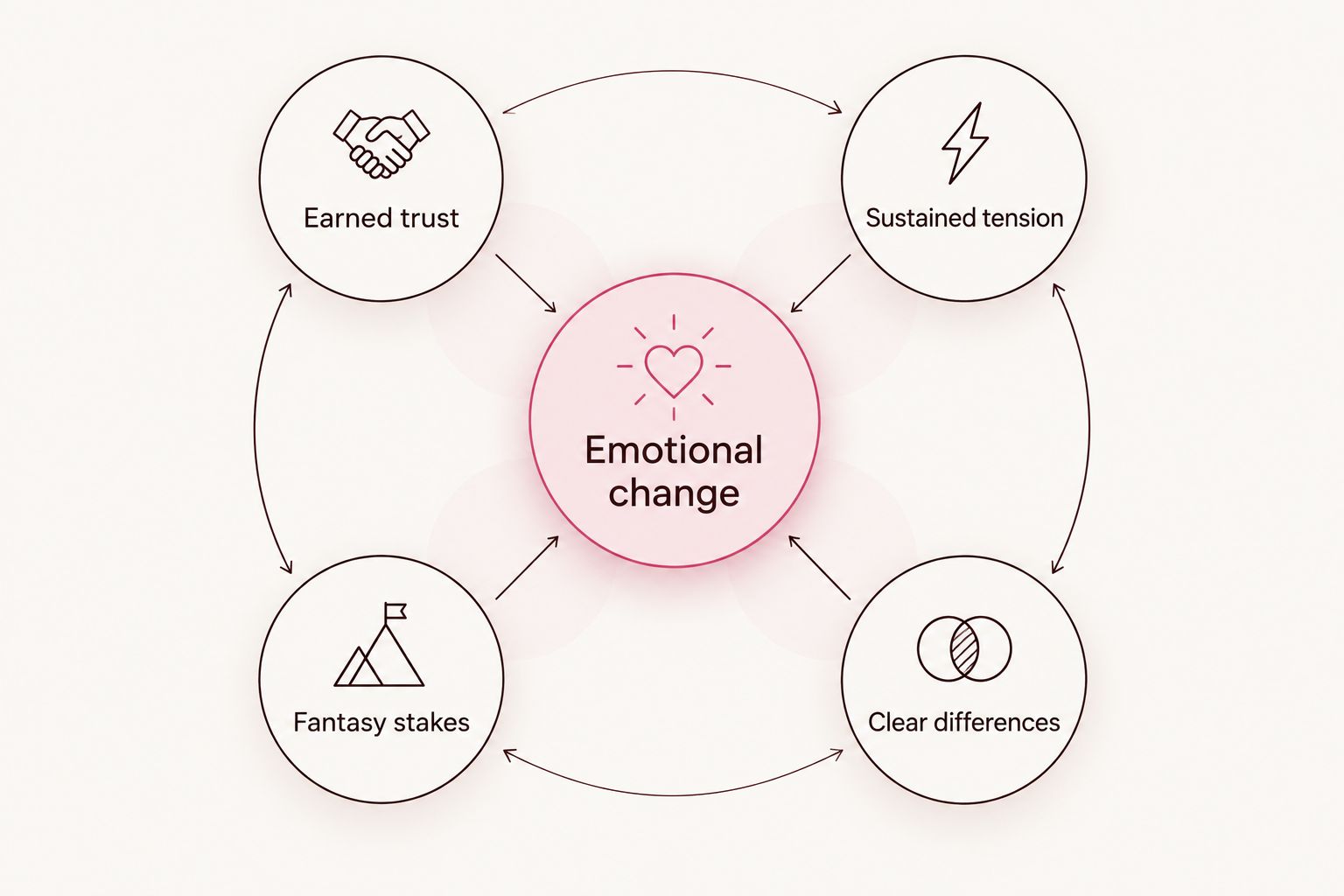
For this 2026 shortlist, the strongest matches combine a recognizable romantic obstacle with fantasy stakes that make that obstacle matter.
- Earned trust: Actions change the relationship. Attraction alone does not settle the conflict.
- Sustained tension: The wait contains meaningful encounters, not repeated misunderstandings that reset the same argument.
- Fantasy stakes: Courts, magic, borders, or folklore shape what the characters can risk.
- Emotional change: The leads reconsider each other rather than simply admit an obvious attraction.
- Clear differences: You know whether you are getting YA court intrigue, adult political fantasy, or a quieter romantic story.
A shared genre label is not enough. The useful question is whether the book delays the part of the relationship you most enjoy watching develop.
ACOTAR slow-burn read-alikes at a glance
The order moves from dangerous faerie courts toward less literal matches. Later does not mean worse. It means the recommendation preserves a particular reading pleasure while changing more of the surrounding story.
| Book | Best for | Standout matching quality | Key limitation |
|---|---|---|---|
| The Cruel Prince by Holly Black | Hostile faerie-court tension | Attraction tangled with ambition, distrust, and unequal power | YA political fantasy; romance is not the sole focus |
| The Bridge Kingdom by Danielle L. Jensen | Arranged marriage and opposing loyalties | Intimacy develops inside a political deception | Human kingdoms rather than a fae-centered magical world |
| One Dark Window by Rachel Gillig | Gothic atmosphere and dangerous secrets | Romantic trust grows alongside concealed magical danger | A more concentrated cast and setting than ACOTAR |
| Emily Wilde’s Encyclopaedia of Faeries by Heather Fawcett | Scholarly friction and folklore | Affection emerges through attention, help, and contrasting temperaments | Quieter romantic presentation, without ACOTAR’s explicit heat |
| Radiance by Grace Draven | Friendship-first adult romance | An arranged marriage becomes companionship before desire | Little of the adversarial courtship that drives enemies-to-lovers |
1. The Cruel Prince: best for hostile faerie-court tension
Holly Black’s The Cruel Prince follows Jude, a mortal raised among faeries who wants power in a world that treats her humanity as a weakness. Her conflict with Cardan places attraction inside a larger struggle over status, survival, and control.
Best for: Readers who want the faerie court to remain genuinely threatening. This is the closest setting-and-tension match here, especially if you enjoy characters whose romantic feelings do not make them safe or straightforward.
The slow burn stretches across the three novels of The Folk of the Air trilogy. Political choices keep changing what a romantic gesture means. You are not simply waiting for a confession; you are deciding whether either character can afford to believe one.
The Cruel Prince pros:
- Faerie rules and unequal power make the setting consequential.
- Jude has ambitions beyond the romantic relationship.
- Suspicion keeps attraction from becoming easy reassurance.
The Cruel Prince cons:
- Bullying and cruelty are part of the relationship’s starting point.
- The YA presentation does not reproduce ACOTAR’s adult sexual detail.
The meaningful difference is emphasis. Black gives court maneuvering substantial room, so choose another title if you need romantic intimacy to dominate every stage of the story.
Verdict: Read The Cruel Prince first for dangerous fae and a relationship that takes time to become legible.
2. The Bridge Kingdom: best for arranged-marriage distrust
Danielle L. Jensen’s The Bridge Kingdom centers on Lara, a princess trained to undermine the kingdom she enters through marriage. Her relationship with Aren develops under the pressure of conflicting loyalties and knowledge he does not share.
Best for: Readers who want attraction tested by a concrete political betrayal. The marriage creates proximity without creating trust. That distinction gives the romance its tension.
The ACOTAR connection is the shifting understanding of an apparent enemy. Lara must examine the story she has been taught about another kingdom, while the relationship makes that examination personal. The fantasy here rests more on geography, political control, and conflict than on faerie magic.
The Bridge Kingdom pros:
- The central obstacle has consequences beyond the couple.
- Forced proximity creates opportunities for observation and changing judgment.
- Lara’s divided loyalties give romantic progress a clear cost.
The Bridge Kingdom cons:
- Deception is foundational, not a brief misunderstanding.
- Readers looking specifically for fae courts will not find that setting.
This is not a gentle trust-building story. Choose it when you want tenderness to become difficult because the characters’ responsibilities pull them apart, rather than because neither will start a conversation.
Verdict: Read The Bridge Kingdom for marriage first, trust later, and political stakes that complicate both.
3. One Dark Window: best for gothic secrets and romance
Rachel Gillig’s One Dark Window follows Elspeth Spindle, whose hidden magical condition includes a presence she calls the Nightmare. Her connection with Ravyn develops inside a mist-bound kingdom where magic carries danger and secrecy shapes survival.
Best for: Readers who want romantic tension wrapped in an unsettling magical atmosphere. The match is less about an expansive faerie court and more about concealed vulnerability: what happens when closeness threatens to expose something dangerous?
The romantic and magical plots work alongside each other. Elspeth cannot separate growing trust from the risks attached to her secret. The story continues in Two Twisted Crowns, making the two-novel Shepherd King sequence a more contained commitment than a sprawling fantasy series.
One Dark Window pros:
- The gothic setting gives romantic scenes a distinct atmosphere.
- Secrets create an obstacle with consequences beyond embarrassment.
- The card-based magic gives the fantasy plot its own identity.
One Dark Window cons:
- The romance shares attention with a substantial magical mystery.
- The enclosed mood differs from ACOTAR’s broader court-and-community appeal.
Choose this for a darker texture, not as a substitute for every ACOTAR trope. It makes the strongest match when hidden power and the risk of being known matter more to you than fae politics.
Verdict: Read One Dark Window when you want intimacy to feel dangerous because of what remains concealed.
4. Emily Wilde’s Encyclopaedia of Faeries: best for quiet romantic friction
Heather Fawcett’s Emily Wilde’s Encyclopaedia of Faeries follows a scholar researching faeries in a remote northern village. Her charming academic colleague, Wendell Bambleby, complicates both the fieldwork and her preferred distance from other people.
Best for: Readers who want affection revealed through attention rather than grand declarations. Emily and Wendell’s contrasting temperaments create a different kind of friction from openly hostile enemies-to-lovers.
The ACOTAR connection is the unsettling otherness of faeries. These are not merely attractive humans with magical accessories. The romance, however, takes a quieter route through scholarly habits, practical help, irritation, and the difficulty of recognizing care.
Emily Wilde’s Encyclopaedia of Faeries pros:
- Folklore gives the faeries an identity beyond the romance.
- Contrasting personalities make ordinary exchanges revealing.
- The journal format keeps Emily’s particular perspective central.
Emily Wilde’s Encyclopaedia of Faeries cons:
- The romantic presentation is less explicit than ACOTAR’s.
- Fieldwork and folklore take substantial space alongside the relationship.
This is the right outward step if you want to keep dangerous faerie strangeness but leave behind the expectation of constant romantic escalation. It rewards attention to small shifts rather than demanding a dramatic confrontation in every scene.
Verdict: Read Emily Wilde’s Encyclopaedia of Faeries for scholarly friction, strange folklore, and understated affection.
5. Radiance: best for friendship before desire
Grace Draven’s Radiance begins with a political marriage between Brishen, a Kai prince, and Ildiko, a human woman. Each initially finds the other physically unappealing by the standards of their own people, but mutual respect gives them somewhere to begin.
Best for: Readers who want emotional safety to develop before sexual attraction. This is the list’s furthest step from hostile courtship. The attraction is delayed without making kindness scarce.
The useful ACOTAR connection is intimacy across unfamiliar cultures and bodies. The difference is the relationship’s starting position: Brishen and Ildiko cooperate. Their growing companionship, rather than a need to defeat each other, carries the romantic development.
Radiance pros:
- Respect gives the relationship a believable foundation.
- Cultural differences create specific moments of adjustment.
- Friendship receives space before desire becomes central.
Radiance cons:
- It does not supply prolonged enemies-to-lovers hostility.
- Readers seeking constant romantic uncertainty will find a more cooperative pairing.
Choose this when the pleasure of ACOTAR was being understood and accepted, not necessarily the struggle before that acceptance. Slow burn does not require the characters to treat one another badly.
Verdict: Read Radiance for a patient adult romance built on companionship rather than conquest.
How this 2026 ranking works
The order follows closeness to ACOTAR’s combination of otherworldly danger, unequal power, and changing romantic trust. It is a fit ranking, not a claim that one author writes better books than another.
The Cruel Prince retains the strongest faerie-court connection. The Bridge Kingdom preserves politically compromised intimacy. One Dark Window emphasizes hidden danger, while Emily Wilde’s Encyclopaedia of Faeries and Radiance offer quieter alternatives to adversarial courtship.
Content also changes the fit. These books include different combinations of violence, coercion, political danger, and sexual content. Check detailed content information when a particular subject is a firm boundary; a brief comparison cannot replace it.
Which ACOTAR slow burn should you choose?
Start with The Cruel Prince if dangerous fae and difficult trust are your priorities. Choose The Bridge Kingdom instead if you want an adult relationship shaped by marriage and divided loyalties. Pick Radiance if you want the waiting without sustained hostility.
For your 2026 reading list, decide what you want preserved before deciding what you want repeated. Fae, explicit heat, political intrigue, and patient emotional development do not always arrive together.
GetSimilarBooks is best for fantasy-romance readers who want title-based, hand-curated read-alikes. Five suggestions form the preview; an email-gated personalized list expands that to 20–30 titles.
Find your next slow burn
Start with a book you enjoyed. Request GetSimilarBooks’ free personalized list of 20–30 titles.
FAQ
What are the best books like ACOTAR with slow-burn romance in 2026?
Start with The Cruel Prince for dangerous faerie-court tension, The Bridge Kingdom for arranged-marriage distrust, or Radiance for friendship before desire. Each delays a different part of the relationship, so choose according to whether you want hostility, divided loyalties, or growing companionship.
Is The Cruel Prince as spicy as ACOTAR?
No. The Cruel Prince is YA fantasy and does not reproduce ACOTAR’s adult sexual detail. Choose it for political tension and a difficult romantic relationship, not as a heat-level match.
Which book should I read after A Court of Mist and Fury?
Choose The Bridge Kingdom if changing your understanding of an apparent enemy was the main appeal. Choose Radiance if acceptance and emotional companionship mattered more than hostility.
Does slow burn mean there is no spice?
No. Slow burn describes the pace of relationship development, while spice describes sexual detail. A book can delay trust or intimacy and still include explicit scenes.
Which ACOTAR read-alike has a gentler central relationship?
Radiance is the clearest choice here for a cooperative central pairing. Brishen and Ildiko build respect and friendship rather than sustaining an adversarial courtship.
Which recommendation has faeries but quieter romance?
Emily Wilde’s Encyclopaedia of Faeries combines faerie folklore with a quieter romantic presentation. Its scholarly perspective and understated affection differ from ACOTAR’s more dramatic romantic style.
How can I get more personalized fantasy-romance recommendations?
GetSimilarBooks lets you enter a title you enjoyed and receive five hand-curated read-alikes. You can also request a free, email-gated personalized list of 20–30 titles.
One last thing
Before choosing your next book, finish this sentence: “I want them to wait because…” Your answer is more useful than the phrase “slow burn.”
If the answer is “they cannot trust each other,” start near the top. If it is “I want friendship to become something else,” skip straight to Radiance. The closest match to your preferred relationship is not always the book with the most similar creatures.
Related guides
- Books like ACOTAR: five picks, closest match first
- Books like Fourth Wing with slow-burn romance
- Books like Fourth Wing with less spice
- Books like Fourth Wing with enemies-to-lovers romance
Leave a Reply