Books like Fourth Wing told from both sides of the romance

Best overall: Blood & Steel; best for romantic deception: The Bridge Kingdom; best for a quieter wartime romance: Divine Rivals. These books like Fourth Wing with dual POV give you both romantic leads’ perspectives; this 2026 list ranks them from the closest training-and-danger match to alternatives that change the setting and pace.
- Blood & Steel leads these books like Fourth Wing with dual POV for combat training and a guarded mentor romance.
- The Bridge Kingdom gives both romantic leads perspectives while making divided loyalty the central obstacle.
- The Hurricane Wars pairs opposing combatants with conflicting loyalties and a politically constrained attraction.
- Reign & Ruin favors political partnership; Divine Rivals favors letters and emotional intimacy.
- Choose by what you want to understand: attraction, withheld information, or competing loyalties.
Why this matters
Dual POV changes the experience of a guarded love interest. Instead of interpreting every warning or retreat through the heroine, you also see what the other person fears, wants, and misunderstands. That can deepen the romance, but it removes some uncertainty.
Fourth Wing primarily follows Violet’s perspective. Occasional access to Xaden does not make its main narrative an evenly shared account, so these recommendations focus on books that regularly follow both romantic leads.
GetSimilarBooks is best for fiction readers who want read-alike recommendations tied to a book they already enjoyed. You can enter a title at GetSimilarBooks for five hand-curated suggestions, then request a free personalized list of 20–30 titles by email.
What makes the best dual-POV Fourth Wing read-alike?
The ranking uses these criteria, not a shared romantasy label:
- Both perspectives: Both romantic leads receive meaningful viewpoint space within the recommended book, not only in a sequel or bonus chapter.
- Danger under pressure: Training, war, espionage, or political threats force consequential choices.
- Romantic friction: Attraction collides with a concrete obstacle, such as incompatible loyalties or unequal authority.
- Character agency: Both leads have goals beyond becoming a couple.
- Meaningful differences: Each recommendation states what you lose alongside what you gain.
For this 2026 reading list, narrative fit comes before publication recency. None of these books duplicates Violet’s story, and none needs to. The useful question is which part of Fourth Wing you want to experience from both sides.
Dual-POV read-alikes at a glance
| Rank | Book and author | Best for | Standout match | Key limitation |
|---|---|---|---|---|
| 1 | Blood & Steel — Helen Scheuerer | Training and a guarded mentor romance | Martial ambition, dangerous preparation, and romantic resistance | Not a dragon-rider college |
| 2 | The Bridge Kingdom — Danielle L. Jensen | Deception and divided loyalty | Both leads assess a relationship shaped by enemy interests | Espionage replaces magical training |
| 3 | The Hurricane Wars — Thea Guanzon | Opposing combatants | Attraction entangled with war and political demands | More geopolitical setup than academy structure |
| 4 | Reign & Ruin — J. D. Evans | Political partnership | Two capable magic users weigh attraction against responsibility | Court maneuvering replaces training trials |
| 5 | Divine Rivals — Rebecca Ross | Emotional intimacy during war | Rival writers develop a connection through letters | Less combat-driven and less sexually explicit |
These are dual-perspective recommendations, not promises of equal chapter counts. All five use third-person narration to enter both leads’ viewpoints rather than giving you two alternating first-person narrators.
1. Blood & Steel: best for training and a guarded mentor romance
Best for: readers who want the training pressure and resistant attraction of Fourth Wing.
Helen Scheuerer’s Blood & Steel follows Althea, usually called Thea, as she pursues a place among an elite warrior order. Wilder, the warrior involved in her training, supplies the other side of a romance shaped by resistance, authority, and danger.
The match is specific: a determined heroine pushes toward a martial role while a more experienced man complicates both her progress and her feelings. Both viewpoints let you distinguish outward restraint from inward attraction. You spend less time asking whether he cares and more time watching how that conflicts with his responsibilities.
The important difference is the institution. Blood & Steel is not a dragon-rider college, and its training relationship is not an exact replacement for Violet and Xaden’s dynamic. Choose it for the heroine’s martial ambition and the tension around her instructor, not for bonded creatures.
Blood & Steel pros:
- Combat preparation makes the heroine’s goal concrete.
- Both leads have interior lives beyond their spoken disagreements.
- The training relationship creates a sustained obstacle to intimacy.
Blood & Steel cons:
- The mentor dynamic brings an imbalance of authority.
- Dragon bonds are not the central attraction.
Mature-content note: expect explicit sexual content and violence.
Verdict: Buy if training and a guarded romantic lead are your priorities; skip if dragons are essential.
2. The Bridge Kingdom: best for deception and divided loyalty
Best for: readers who want to understand both sides of a romance built on mistrust.
Danielle L. Jensen’s The Bridge Kingdom follows Lara, a trained princess sent into a politically arranged marriage, and Aren, the king she marries. Their perspectives expose the competing duties beneath a relationship neither can treat as purely personal.
This is the strongest choice here when your favorite Fourth Wing tension involved information, allegiance, and the fear of trusting the wrong person. You understand more than either character can safely say aloud. That changes the suspense: the question becomes what each person will do with incomplete knowledge.
The difference is equally clear. The Bridge Kingdom trades magical schooling for espionage, diplomacy, and the strategic importance of a kingdom. Lara arrives with extensive preparation rather than entering the story as an inexperienced recruit.
The Bridge Kingdom pros:
- Both viewpoints make divided loyalty central rather than decorative.
- The marriage premise forces sustained proximity.
- Political stakes give romantic choices consequences beyond the couple.
The Bridge Kingdom cons:
- It does not provide a magical training environment.
- Deception can make the relationship uncomfortable rather than reassuring.
Mature-content note: expect sexual content and violence.
Verdict: Buy if you want attraction complicated by conflicting duties; skip if your main interest is learning a magic system.
3. The Hurricane Wars: best for romance across enemy lines
Best for: readers who want both combatants’ perspectives on a politically constrained attraction.
Thea Guanzon’s The Hurricane Wars follows Talasyn and Alaric, opposing figures in a conflict involving powerful light and shadow magic. The narrative follows both characters as hostility, attraction, and political pressures become difficult to separate.
The Fourth Wing connection is not simply an intimidating romantic lead. Both stories make attraction inseparable from a larger conflict, and both ask what private feelings mean when public loyalties pull elsewhere. Here, access to both viewpoints makes the distance between personal desire and official responsibility especially visible.
The difference is scale and emphasis. The Hurricane Wars spends more time establishing its conflict and political circumstances than recreating an academy routine. Its romance requires patience with prolonged antagonism and an elaborate setting.
The Hurricane Wars pros:
- Both leads carry loyalties that cannot disappear for convenience.
- Their magical opposition gives the conflict a tangible form.
- Political constraints sustain tension beyond initial attraction.
The Hurricane Wars cons:
- The opening asks you to absorb substantial worldbuilding.
- Hostility remains a major part of the relationship.
Mature-content note: expect war violence and sexual content.
Verdict: Buy if opposing loyalties drive your interest; skip if you want a straightforward training-to-romance progression.
4. Reign & Ruin: best for capable partners under political pressure
Best for: readers who want mutual respect alongside attraction and magical stakes.
J. D. Evans’s Reign & Ruin follows Naime, a politically constrained heir, and Makram, a powerful mage with responsibilities of his own. Their viewpoints make the developing relationship part of a wider negotiation over power, duty, and cooperation.
Choose this after Fourth Wing if you want both leads to think seriously about the consequences of being together. Attraction does not erase their judgment. The pleasure lies in seeing two capable people recognize each other while deciding what trust requires.
This is a more distant match because court politics replace the academy’s physical training and immediate survival tests. The romantic friction also comes less from sustained personal hostility. Do not choose it expecting another hostile instructor or a procession of dangerous lessons.
Reign & Ruin pros:
- Both leads have meaningful political responsibilities.
- Magical abilities matter to the wider conflict.
- Mutual respect gives the romance a different source of momentum.
Reign & Ruin cons:
- Political discussion takes space that combat occupies in Fourth Wing.
- It is not the strongest choice for readers seeking prolonged romantic antagonism.
Mature-content note: expect explicit sexual content and violence.
Verdict: Buy if competence and political partnership appeal; skip if deadly training is nonnegotiable.
5. Divine Rivals: best for letters and emotional intimacy during war
Best for: readers who want both romantic perspectives without another combat-training story.
Rebecca Ross’s Divine Rivals follows Iris and Roman, rival newspaper writers whose connection develops through enchanted correspondence. Both viewpoints reveal the gap between professional friction and private vulnerability as war reaches into their lives.
The Fourth Wing match is emotional rather than structural. You get attraction under external pressure, people carrying private burdens, and a relationship that matters within a dangerous world. Reading both perspectives makes small acts of attention carry weight.
The difference is substantial. Journalism and letters replace warrior training, and the romantic register is less sexually explicit than Fourth Wing’s. Pick it because you want closeness and wartime stakes, not because you expect similar combat scenes.
Divine Rivals pros:
- Both perspectives make the correspondence emotionally legible.
- Professional rivalry gives the leads a relationship outside romance.
- War provides consequences beyond workplace competition.
Divine Rivals cons:
- It offers little of the martial-training experience.
- Its quieter romantic approach will not satisfy a search for more explicit scenes.
Mature-content note: expect war-related violence, grief, and sexual content.
Verdict: Buy if emotional intimacy is the priority; skip if you mainly want combat and explicit romance.
How this 2026 ranking works
Blood & Steel comes first because training, martial ambition, and a resistant romantic relationship overlap directly with Fourth Wing. The Bridge Kingdom follows for divided loyalty. The Hurricane Wars keeps war and antagonism prominent, while Reign & Ruin and Divine Rivals move outward toward partnership and intimacy.
This is a comparison of narrative features, not a claim that a curator personally read every book for this article. GetSimilarBooks provides hand-curated read-alike suggestions; the ranking here explains the specific matches and differences so you can judge the fit.
Which dual-POV read-alike should you choose?
Start with Blood & Steel if you are undecided. It preserves the clearest combination of training pressure, ambition, danger, and a guarded romantic lead.
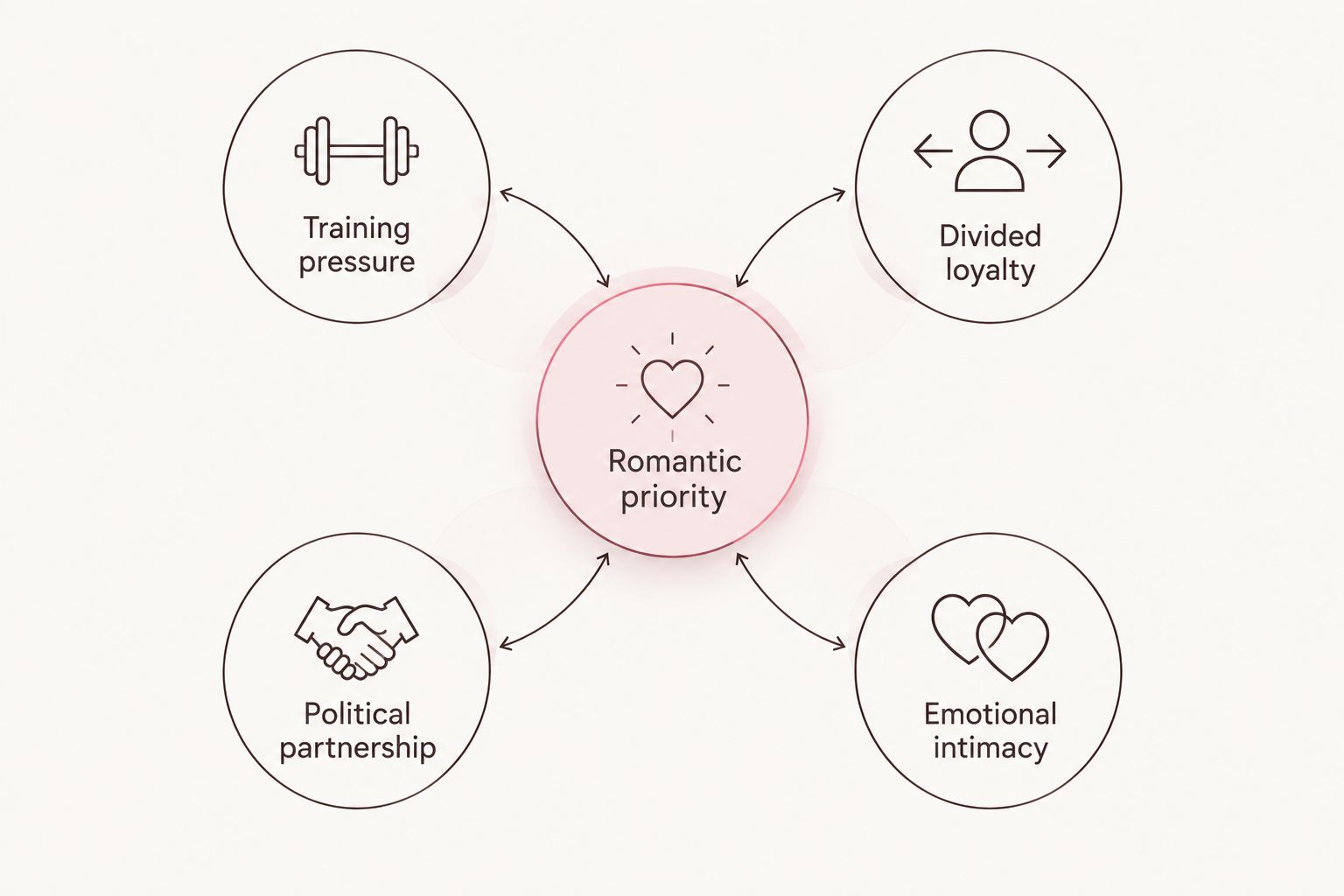
For your 2026 reading list, choose by the part you would miss most:
- Training pressure: Blood & Steel.
- Divided loyalty: The Bridge Kingdom or The Hurricane Wars.
- Political partnership: Reign & Ruin.
- Emotional intimacy: Divine Rivals.
If campus routines and institutional danger matter more than access to the love interest’s thoughts, use the military-academy read-alikes instead. Dual POV describes who tells the story, not what kind of story it is.
GetSimilarBooks can also help you move beyond this shortlist. Start with the five-title preview, then request the free personalized list of 20–30 titles by email.
Find your next read-alike
Enter a book you enjoyed for five curated suggestions, then request a longer personalized list by email.
FAQ
What’s the best book like Fourth Wing with dual POV?
Blood & Steel is the closest match on this list for training pressure, a determined heroine, and a guarded romantic lead. The Bridge Kingdom is the better choice if divided loyalty matters more than combat preparation.
Is Fourth Wing itself a dual-POV romance?
Fourth Wing primarily follows Violet rather than regularly dividing its main narrative between both romantic leads. Access to Xaden in additional material or isolated sections is different from a consistently dual-perspective novel.
Are these books written in alternating first person?
No. Blood & Steel, The Bridge Kingdom, The Hurricane Wars, Reign & Ruin, and Divine Rivals use third-person narration that follows both romantic leads. Dual POV does not necessarily mean alternating first-person chapters.
Is The Serpent and the Wings of Night dual POV?
The Serpent and the Wings of Night primarily follows Oraya, so it is not included as a regular dual-POV match here. A book can resemble Fourth Wing in danger and romantic tension without meeting this viewpoint requirement.
Which dual-POV Fourth Wing read-alike has less explicit romance?
Divine Rivals is the less sexually explicit choice among these recommendations. It centers emotional intimacy and correspondence, but it still contains mature material and wartime violence.
Which book should I choose for enemies-to-lovers tension?
Choose The Hurricane Wars for opposing combatants or The Bridge Kingdom for attraction complicated by deception and national loyalty. Neither recreates Fourth Wing’s dragon-rider academy.
Do I need to read these books in the order listed?
No. These are separate recommendations, not a connected reading order. Start with the book whose romantic obstacle interests you most, then follow that book’s own series order.
One last thing
For your 2026 choice, decide whether you want to understand the love interest sooner or remain uncertain alongside the heroine. Dual POV often gives you the first experience. If interpreting a guarded character was your favorite part of Fourth Wing, more access to his thoughts is a trade-off, not an automatic improvement.
Related guides
- Books like Fourth Wing with dragons and rider bonds
- Books like Fourth Wing with less spice
- Books like Fourth Wing with enemies-to-lovers romance
Leave a Reply