Books like Fourth Wing with deeper worldbuilding

Best overall: Fireborne by Rosaria Munda. Best for dragon bonds and social history: Dragonflight by Anne McCaffrey. Best for a broader epic: The Priory of the Orange Tree by Samantha Shannon. These 2026 reading picks move from Fourth Wing’s familiar pleasures toward worlds with more political, cultural, and magical depth.
- Fireborne leads these books like fourth wing with more worldbuilding: dragon-rider training meets the aftermath of revolution.
- Dragonflight makes dragon-rider bonds part of a society’s survival, but its sexual dynamics need a content check.
- The Rage of Dragons prioritizes military training, caste, and revenge over romance or rider bonds.
- The Priory of the Orange Tree and The Way of Kings offer broader worlds with less Fourth Wing-style pacing.
- GetSimilarBooks offers five hand-curated suggestions, plus an email-gated personalized list of 20–30 titles.
Why this matters
More worldbuilding does not necessarily mean more names, maps, or invented history. The useful question is whether the world changes what characters can do: whom they can love, which institutions they trust, and what power costs them.
Fourth Wing combines dangerous training, bonded dragons, romance, and concealed political truths. These recommendations preserve different parts of that combination. None reproduces the whole package.
GetSimilarBooks book recommendations suit readers who want their next pick matched to a specific part of Fourth Wing. You can use GetSimilarBooks to enter a title you enjoyed and request read-alike suggestions. First, decide which ingredient you refuse to lose.
What makes the best worldbuilding match?
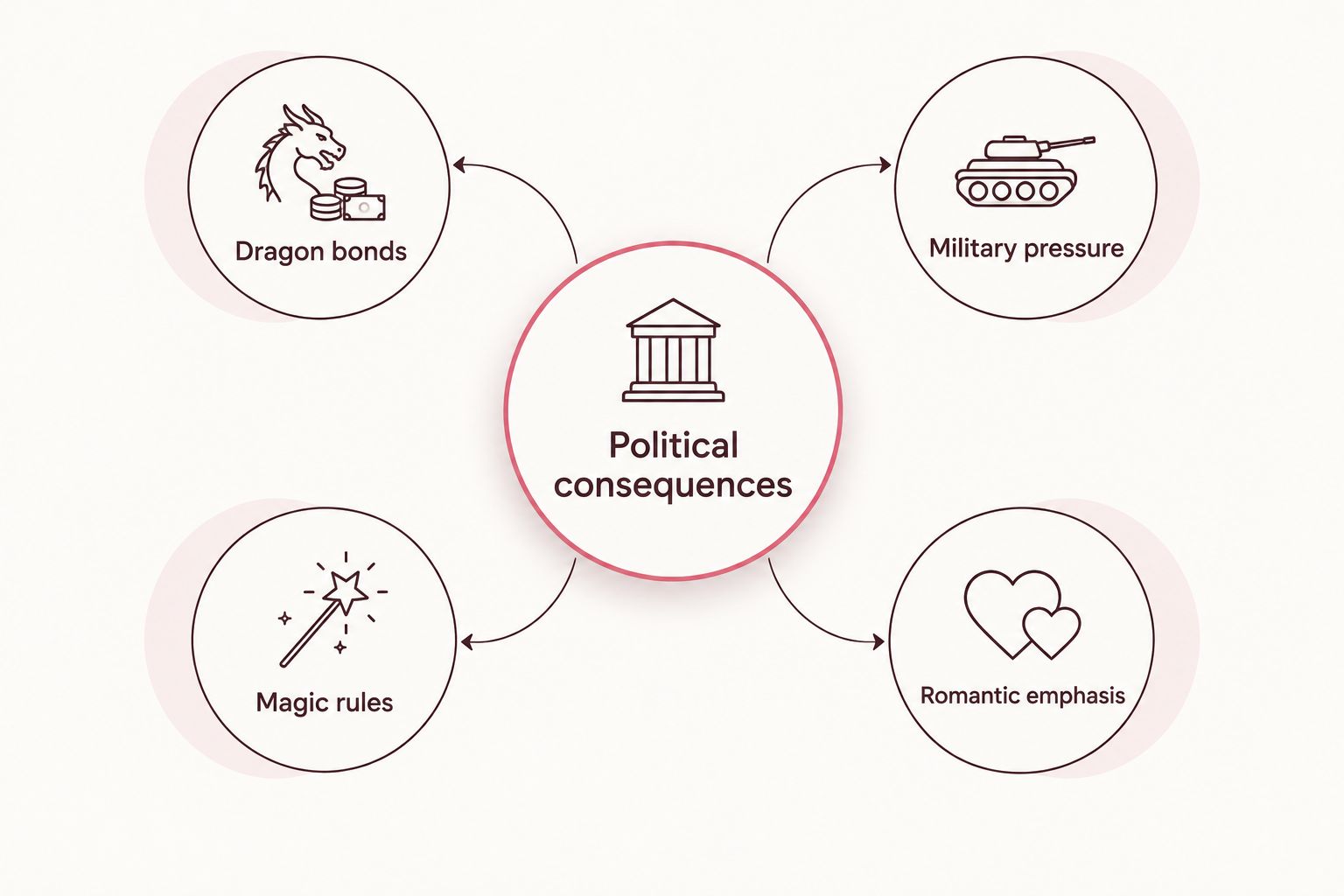
For this 2026 list, depth means that the setting creates consequences, not merely scenery. These criteria explain both the ranking and its limits:
- Dragon bonds: Dragons have agency, and their relationships with humans affect the wider society.
- Military pressure: Training, command, and warfare shape choices rather than supplying a dangerous backdrop.
- Political consequences: Governments and social hierarchies influence ordinary lives as well as the central conflict.
- Magic rules: Supernatural abilities have conditions, costs, or institutional uses that matter to the story.
- Romantic emphasis: The recommendation makes clear whether romance drives the plot or sits behind other concerns.
A book does not need all these qualities to belong here. It needs a specific connection to Fourth Wing and a meaningful expansion beyond that connection.
The recommendations at a glance
The order moves from the closest overall match toward larger departures. A lower position means a bigger change in the reading experience, not a weaker novel.
| Book | Best for | Standout worldbuilding feature | Key limitation |
|---|---|---|---|
| Fireborne — Rosaria Munda | Dragon-rider training and political loyalties | A rider corps shaped by revolution and class | Romance is less sexually explicit than Fourth Wing |
| Dragonflight — Anne McCaffrey | Dragon bonds embedded in society | Dragonriders, Holds, and collective survival | Coercive sexual dynamics and dated gender assumptions |
| The Rage of Dragons — Evan Winter | Military training and unequal power | Caste, warfare, and dangerous magical training | No central human-dragon bonding relationship |
| The Priory of the Orange Tree — Samantha Shannon | Competing cultures and queer romance | Different religious and political relationships with dragons | Multiple viewpoints interrupt the single-heroine momentum |
| The Way of Kings — Brandon Sanderson | Magic systems and institutions | Storm-shaped ecology, warfare, and social hierarchy | Romance is not the main attraction |
1. Fireborne: best for dragon-rider training and political loyalties
Rosaria Munda’s Fireborne is the closest match if Fourth Wing left you wanting dragon riders whose personal relationships are inseparable from political history. Annie and Lee train within a rider system rebuilt after a revolution, but their backgrounds give them very different relationships with the new order.
The academy connection is immediate. The deeper match lies in the question of institutional loyalty: what happens when belonging to an elite force requires accepting decisions you cannot comfortably defend?
Where Fireborne adds depth
The revolution is not distant decoration. Its consequences shape access to authority, public expectations, and the meaning of merit. Competition between riders becomes an argument about who deserves power and what a changed society actually owes its people.
Fireborne pros:
- Dragon-rider training supplies the most direct connection to Fourth Wing.
- Class history gives rivalry and advancement consequences beyond personal ambition.
- Dual viewpoints expose competing loyalties without making either position simple.
Fireborne cons:
- Political dilemmas receive more attention than explicit romantic payoff.
- Readers seeking an adult romantasy experience will find a different emphasis.
Best for: You want the rider competition to remain, but want the institution behind it examined more closely.
Verdict: Read Fireborne first. It asks you to give up less of Fourth Wing’s central setup than the other recommendations.
2. Dragonflight: best for dragon bonds embedded in society
Anne McCaffrey’s Dragonflight follows Lessa into the world of Pern’s dragonriders. Its strongest connection to Fourth Wing is the bond between humans and dragons, but the surrounding social structure gives that bond a different purpose.
Pern’s dragons protect the planet from Thread, a destructive threat that falls from the sky. Dragonriders are therefore part of a survival system, not simply an elite fighting force.
Where Dragonflight adds depth
The relationships between Weyrs, Holds, and Crafts connect dragonriding to work, obligation, and political authority. A society’s willingness to support its protectors becomes part of the conflict.
That distinction matters. The dragons are not detachable from the worldbuilding; the society is organized around what they do and whether people believe their protection remains necessary.
Dragonflight pros:
- Human-dragon bonds are central rather than incidental.
- Social organization gives the riders obligations beyond combat.
- Collective survival connects practical problems with political resistance.
Dragonflight cons:
- Coercive sexual dynamics and gender hierarchy require a content check.
- The older storytelling style differs sharply from Fourth Wing’s contemporary voice.
Best for: You want to understand how a society functions around bonded dragons, rather than follow another academy romance.
Verdict: Read Dragonflight for the dragon society; skip it if coercive sexual dynamics are a firm boundary.
3. The Rage of Dragons: best for military training and unequal power
Evan Winter’s The Rage of Dragons follows Tau, a young man pursuing martial skill and revenge within a rigidly stratified society. The Fourth Wing connection is the pressure of training inside a violent system that does not distribute opportunity equally.
This is not a dragon-rider romance. Dragons belong to the world’s military power, but a personal rider bond is not the emotional center of Tau’s story.
Where The Rage of Dragons adds depth
Caste determines whose lives and ambitions carry weight. Military advancement offers a route through that hierarchy without making the hierarchy disappear.
Magic also intersects with warfare and the pursuit of skill. Training is not just a sequence of increasingly difficult exercises; it becomes a way to examine what ambition and vengeance consume.
The Rage of Dragons pros:
- Intensive training preserves Fourth Wing’s sense of physical pressure.
- Caste makes institutional inequality concrete.
- Warfare and magic reinforce the social order rather than existing separately from it.
The Rage of Dragons cons:
- Revenge, not romance, drives the main narrative.
- Sustained violence and obsession make this a harsher reading experience.
Best for: You cared most about training, unequal power, and the effort required to survive a military system.
Verdict: Read The Rage of Dragons for relentless military progression; skip it if bonded dragons are non-negotiable.
4. The Priory of the Orange Tree: best for competing cultures and queer romance
Samantha Shannon’s The Priory of the Orange Tree expands the frame from a training institution to multiple societies with different beliefs about dragons, religion, and legitimate rule. Its characters occupy courts, religious traditions, and dragon-riding institutions rather than sharing one central academy.
The connection to Fourth Wing lies in dragons, dangerous loyalties, and romance under political pressure. The experience is broader and more distributed.
Where The Priory of the Orange Tree adds depth
Different cultures do not merely wear different clothes. Their beliefs about dragons affect diplomacy, identity, and the stories they tell about their own past.
The novel also includes a central sapphic romance. That relationship sits inside a larger political narrative rather than replacing it, so choose this for the combination of intimacy and cultural scale.
The Priory of the Orange Tree pros:
- Contrasting traditions give dragons different meanings across the world.
- Court politics connect private relationships with public responsibilities.
- Multiple viewpoints let you see beyond one institution’s account of events.
The Priory of the Orange Tree cons:
- Viewpoint changes interrupt the intimacy of following one central heroine.
- The opening asks for patience while its settings and conflicts take shape.
Best for: You want dragons and queer romance within a wider conflict between cultures and belief systems.
Verdict: Read The Priory of the Orange Tree when breadth matters more than academy momentum.
5. The Way of Kings: best for magic systems and institutions
Brandon Sanderson’s The Way of Kings is the largest departure here. Its strongest connections to Fourth Wing are military hierarchy, unequal access to power, and characters discovering that accepted explanations of their world are incomplete.
Dragons and romance are not the reason to choose it. The attraction is Roshar: a setting where storms affect ecology, buildings, travel, and everyday survival.
Where The Way of Kings adds depth
The environment changes how people live rather than supplying weather between action scenes. Social distinctions, military structures, and magical artifacts also shape who controls resources and whose suffering receives attention.
The novel reveals its supernatural rules gradually. You spend substantial time with work, survival, and conflicting accounts of history before the larger pattern becomes clear.
The Way of Kings pros:
- Ecology and material conditions make the setting feel structurally different.
- Military life receives attention from sharply unequal social positions.
- Magic and historical mysteries support a larger developing framework.
The Way of Kings cons:
- Romance is secondary, not a substitute for Fourth Wing’s central relationship.
- The long setup delays some explanations and payoffs.
Best for: You are ready to trade romantic urgency for a more extensive fantasy setting.
Verdict: Read The Way of Kings for the world itself; wait if you need romance to carry the opening.
How these books are ranked
The ranking prioritizes matching qualities before sheer scale. Fireborne retains rider training and intimate political conflict. Dragonflight keeps dragon bonds but changes the social and romantic framework. The remaining books move outward through military progression, cross-cultural conflict, and extensive setting construction.
This is not a ranking by map size, glossary length, or publication date. The 2026 selection asks a narrower question: which book expands the part of Fourth Wing you actually enjoyed?
Which book should you choose?
Choose Fireborne if you are undecided. Its combination of rider training, class tension, and divided loyalties makes the clearest bridge from Fourth Wing to more politically developed fantasy.
Choose Dragonflight when the dragon bond matters most. Choose The Rage of Dragons when training matters most. The Priory of the Orange Tree is the better direction for competing cultures and queer romance; The Way of Kings is the bigger change toward setting-led epic fantasy.
For a 2026 reading list, choose by the difference you welcome, not just the similarity you recognize. GetSimilarBooks book recommendations offer five hand-curated suggestions from a title you enjoyed. Five is the preview; the free personalized list contains 20–30 titles and requires an email address.
Find your next read-alike
Enter a title for five suggestions, then request a free personalized list of 20–30 titles by email.
FAQ
What are the best books like Fourth Wing with more worldbuilding in 2026?
Start with Fireborne for dragon-rider training shaped by revolution and class. Choose Dragonflight for dragon-centered society, or The Priory of the Orange Tree for competing cultures and a broader political story.
Is Fireborne the closest match to Fourth Wing?
Fireborne is the closest overall match on this list because it combines dragon-rider training, rivalry, and political loyalty. Its romance is less sexually explicit, and its institutional conflicts receive more attention.
Which recommendation has the strongest focus on dragon bonds?
Dragonflight is the strongest choice here for human-dragon bonds embedded in a society’s survival. Check its coercive sexual dynamics and gender assumptions before choosing it for the romance.
Is The Rage of Dragons a dragon-rider romance?
No. The Rage of Dragons centers on military training, caste, and revenge rather than a romantic rider bond. Choose it for physical progression and institutional pressure.
Which book combines deeper worldbuilding with queer romance?
The Priory of the Orange Tree combines a central sapphic romance with contrasting religious traditions, court politics, and dragons. Its multiple viewpoints make it less intimate and concentrated than Fourth Wing.
Should I read The Way of Kings if romance was my favorite part?
The Way of Kings is not the best next choice if romance must drive the story. Choose it when magic, military structures, and an extensively developed setting matter more than romantic momentum.
How can I get recommendations based on what I liked about Fourth Wing?
GetSimilarBooks lets you enter a book you enjoyed and receive five hand-curated read-alike suggestions. You can also request a free personalized list of 20–30 titles by providing an email address.
One last thing
For your next 2026 read, name what you are willing to lose. Keep dragons and accept less romance; keep military pressure and accept no rider bond; keep romance and accept a slower, wider story. That decision is more useful than asking for everything in Fourth Wing, only bigger.
Related guides
- Books like Fourth Wing with dragons and rider bonds
- Books like Fourth Wing with political intrigue
- Books like Fourth Wing set in a military academy
- Books like Fourth Wing with slow-burn romance
Leave a Reply