Books like Harry Potter set in boarding schools

Best overall: The Iron Trial. Best for gentle boarding-school mishaps: The Worst Witch. Best for a darker adult take: A Deadly Education. These six books like Harry Potter put school life at the center, with the closest matches first and the more substantial departures last.
- For a books like Harry Potter boarding school search, start with The Iron Trial by Holly Black and Cassandra Clare.
- The Worst Witch suits readers who want magical lessons, friendship, and mishaps rather than an escalating war.
- Choose The Marvellers for an outsider entering a magical boarding school with a broader cultural perspective.
- Carry On foregrounds queer romance; A Deadly Education makes the boarding school itself a survival problem.
What Makes a Harry Potter Boarding-School Read-Alike?
A magical school is not automatically a Hogwarts read-alike. You might miss the friendships, the lessons, the hidden passages, or the feeling that an unfamiliar place is becoming home. Those are different reading needs.
This 2026 guide separates them. GetSimilarBooks offers five hand-curated read-alike suggestions from a title you enjoyed, plus a free personalized list of 20–30 titles when you provide your email. Here, the narrower question is which boarding-school book belongs next on your reading list.
Start with The Iron Trial if you want magical education, a central friendship group, and a mystery about the protagonist’s place in that world. Choose another entry when a particular part of school life matters more than overall resemblance.
What makes the best Harry Potter boarding-school read-alike?
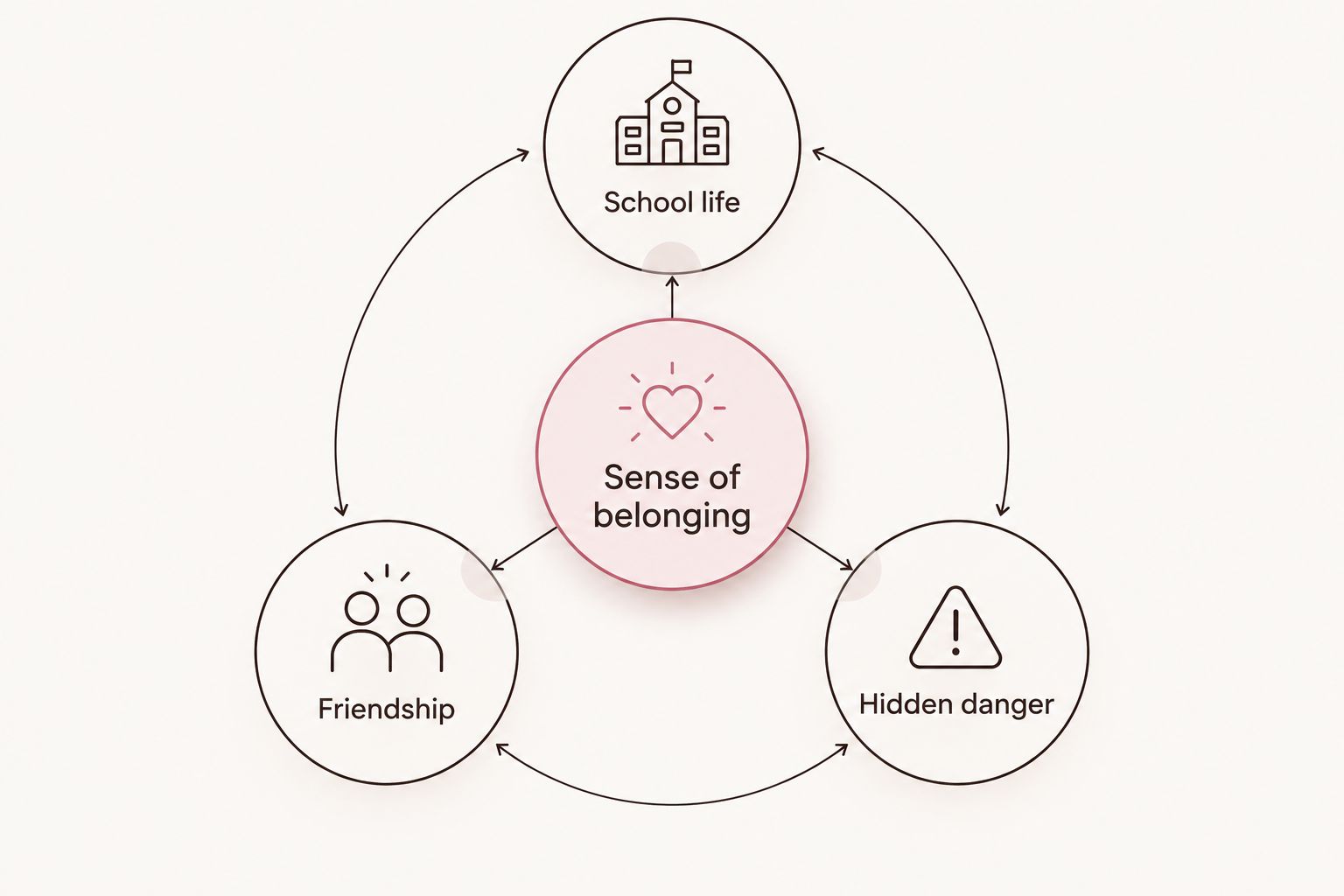
The ranking uses these criteria for your 2026 reading list:
- School life: Lessons, accommodation, rules, and classmates shape the story rather than decorate it.
- Friendship: Relationships develop through shared school experiences, not just a common enemy.
- Hidden danger: Something beneath the institution’s ordinary routines gives you a reason to keep reading.
- Sense of belonging: The protagonist must work out whether this unfamiliar community has a place for them.
- Meaningful difference: Each recommendation offers something beyond familiar magical-school furniture.
The first four qualities explain the appeal. The last prevents the list from becoming a collection of castles and uniforms. A book can echo Hogwarts strongly while taking a very different position on whether its school deserves your trust.
Boarding-school books at a glance
| Book | Best for | Standout matching quality | Key limitation |
|---|---|---|---|
| The Iron Trial | The closest overall match | An outsider, magical training, and a central friendship trio | Its school is underground, not a castle |
| The Worst Witch | Gentle school-day comfort | Boarding routines, spell lessons, and student mishaps | The tone is younger and the stories are shorter |
| The Marvellers | Belonging across magical cultures | An outsider entering an established magical institution | Its magic is not a familiar wand-and-spell system |
| The School for Good and Evil | Fairy-tale roles and school rivalries | Boarding-school divisions tied to identity | The fairy-tale framework dominates the curriculum |
| Carry On | Queer romance in a familiar school setting | A magical boarding school and a contentious roommate relationship | It begins late in the characters’ schooling |
| A Deadly Education | Adult survival-school fantasy | Lessons, alliances, and danger within a residential school | The school offers little Hogwarts-style comfort |
1. The Iron Trial: best for the closest overall match
The Iron Trial by Holly Black and Cassandra Clare follows Callum Hunt into the Magisterium, a school his father has taught him to fear. Magical training and his friendships with Aaron and Tamara give the story its strongest Harry Potter connection.
The match is structural, not just decorative. An uncertain newcomer enters a hidden magical institution, finds companions, and confronts questions that reach beyond the classroom. The underground setting gives the school a different physical character from Hogwarts.
The Iron Trial pros:
- Magical lessons are central to the plot.
- The friendship trio gives you a familiar emotional entry point.
- Callum’s distrust complicates the excitement of entering a magical world.
The Iron Trial cons:
- Readers avoiding chosen-one stories will find familiar territory here.
- The subterranean school does not supply castle-and-countryside atmosphere.
Best for: Readers who want the closest combination of school discovery, friendship, and larger mystery.
The book opens the 5-book Magisterium series. Treat it as the beginning of a continuing story, not a self-contained school adventure.
Verdict: Buy if you want the most direct next step after Harry Potter.
2. The Worst Witch: best for gentle boarding-school mishaps
The Worst Witch by Jill Murphy follows Mildred Hubble at Miss Cackle’s Academy for Witches. Classes, flying practice, friendships, and mistakes make school itself the attraction.
This is the right match when you miss ordinary magical routines more than an expanding conflict. Mildred’s difficulty getting things right keeps the story close to the experience of being a pupil. It is also a younger, lighter read than the later Harry Potter books.
The Worst Witch pros:
- Boarding-school routines remain in the foreground.
- Mildred’s mistakes give the magic an approachable, comic quality.
- Friendship matters alongside classroom performance.
The Worst Witch cons:
- The shorter stories offer less room for elaborate mysteries.
- Readers wanting older protagonists or substantial romance should look elsewhere.
Best for: Readers who want magical school to feel comforting rather than threatening.
For a 2026 comfort-reading choice, this is the gentlest option on the list. Choose it for the pleasure of returning to lessons and dormitories, not for a replacement for Harry Potter’s later stakes.
Verdict: Buy for school-day warmth; skip if you want an older-reader tone.
3. The Marvellers: best for belonging across magical cultures
The Marvellers by Dhonielle Clayton follows Ella Durand to the Arcanum Training Institute, a magical school in the sky. Ella enters as the institution’s first Conjuror, making acceptance and prejudice central to her school experience.
The Harry Potter connection lies in discovering an unfamiliar institution while finding friends within it. The difference is equally important: Ella’s background is not simply something to leave behind. Her existing identity shapes how the school receives her.
The Marvellers pros:
- The school has its own magical practices and traditions.
- Friendship provides support against exclusion.
- Ella’s outsider position gives school rules a personal consequence.
The Marvellers cons:
- Readers must learn a new magical vocabulary and institutional structure.
- The treatment of prejudice makes this more than an uncomplicated school escape.
Best for: Readers who want magical discovery alongside questions about who gets welcomed into a school.
Choose this over The Iron Trial when belonging matters more to you than a familiar adventure structure. The strongest connection is emotional: entering an extraordinary place does not guarantee that its established community will accept you.
Verdict: Buy for magical-school wonder with a sharper focus on inclusion.
4. The School for Good and Evil: best for fairy-tale school rivalries
The School for Good and Evil by Soman Chainani sends friends Sophie and Agatha into an institution that trains fairy-tale heroes and villains. Its divided school turns questions of appearance, character, and belonging into everyday pressures.
The match is strongest if you enjoyed student rivalries and arguments about where someone belongs. The departure is the fairy-tale logic. Lessons concern the roles students are expected to occupy in stories, rather than a broad education in wizardry.
The School for Good and Evil pros:
- School divisions create immediate tension.
- An existing friendship is tested by institutional expectations.
- Fairy-tale conventions give the curriculum a distinct purpose.
The School for Good and Evil cons:
- Beauty and romantic expectations occupy significant space.
- The exaggerated fairy-tale tone differs from Hogwarts’ everyday school texture.
Best for: Readers who want rival groups and a friendship tested by competing identities.
Choose this when the sorting question interests you more than the spellwork. The institution’s labels are part of the conflict, not a reliable guide to understanding its pupils.
Verdict: Buy for fairy-tale school politics; skip for a conventional wizard-school curriculum.
5. Carry On: best for queer romance at a magical boarding school
Carry On by Rainbow Rowell follows Simon Snow at Watford, where magical-school danger intersects with his difficult relationship with his roommate, Baz. The resemblance to familiar chosen-one fiction is deliberate.
The important difference is where the story starts. Simon is already deep into his school experience, so you do not receive the same gradual introduction to lessons and traditions. Relationships and the strain of being assigned a heroic role take priority.
Carry On pros:
- The residential school matters to the central relationship.
- Queer romance is central rather than peripheral.
- The story questions the expectations placed on a chosen hero.
Carry On cons:
- It offers less first-year discovery than the earlier recommendations.
- Readers uninterested in romance will lose a major source of its appeal.
Best for: Readers who want a familiar magical-school outline with a different romantic center.
If you finished Fourth Wing wanting another relationship-driven fantasy, this is the bridge on this list. Expect a different tone and setting, not another military academy. Content includes violence and strong language.
Verdict: Buy when the roommate relationship interests you as much as the school.
6. A Deadly Education: best for an adult survival-school story
A Deadly Education by Naomi Novik follows El at the Scholomance, a school where magical education is inseparable from staying alive. Student alliances matter because danger is built into the residential experience.
This is the furthest recommendation from Hogwarts as a comforting destination. The school has no reassuring staff structure to make danger feel exceptional. El’s voice is abrasive, and the story pays close attention to unequal access to protection.
A Deadly Education pros:
- The school’s conditions shape nearly every decision.
- Alliances give friendship practical stakes.
- Magical privilege has consequences beyond classroom success.
A Deadly Education cons:
- The dense explanation of magic slows the opening.
- Persistent danger makes this a poor choice for cozy escapism.
Best for: Adult readers who want to reconsider the magical boarding school as a hostile institution.
Content includes frequent threats of death and monster violence. For a 2026 reading list built around darker academy fiction, choose it because the school is dangerous, not because it resembles a safe home.
Verdict: Buy for survival and institutional critique; skip for Hogwarts-style comfort.
How the books are ranked
The order moves from close structural matches toward books that reinterpret the setting. Magical lessons, friendship, and discovering school life carry the most weight at the top. Romance and institutional danger become stronger deciding factors farther down.
This is a fit ranking, not a claim that one novel is universally better. GetSimilarBooks recommendations are most useful when you name the quality you want repeated rather than only the book you finished.
Which boarding-school book should you choose?
Choose The Iron Trial if you are undecided. It supplies the clearest combination of magical training, a central friendship group, and an unfolding mystery.
Choose The Worst Witch for gentler school routines, Carry On for queer romance, or A Deadly Education for adult danger. GetSimilarBooks is best for readers who want book recommendations matched to a title they already enjoyed.
Find your next school story
Enter a title for five suggestions, then request a free personalized list of 20–30 books by email.
FAQ
What is the closest boarding-school book to Harry Potter?
The Iron Trial by Holly Black and Cassandra Clare is the closest overall match on this list. It combines magical schooling, a central friendship trio, and a mystery surrounding its protagonist.
Which book should I choose if I mainly miss Hogwarts lessons?
Choose The Worst Witch by Jill Murphy for magical classes, boarding routines, and pupil mishaps. Its younger tone makes it a better match for gentle school life than for the later Harry Potter books’ danger.
Are all these books actually set at boarding schools?
Yes, all six recommendations feature residential magical schools. Their institutions differ substantially, from Miss Cackle’s Academy to the survival-focused Scholomance.
Which recommendation has queer romance?
Carry On by Rainbow Rowell puts the relationship between Simon and Baz at the center. Choose it for romance within a magical boarding-school setting rather than a first-year introduction to magic.
Is A Deadly Education suitable for someone wanting cozy fantasy?
A Deadly Education is not a good match for cozy magical-school reading. Its students face persistent danger, and the institution provides little of Hogwarts’ reassuring atmosphere.
Which book focuses most directly on being an outsider at school?
The Marvellers by Dhonielle Clayton makes Ella Durand’s reception as the school’s first Conjuror central to her experience. Friendship and magical discovery sit alongside prejudice and exclusion.
Where should I start with magical boarding-school books in 2026?
Start with The Iron Trial for the closest overall Harry Potter match. If you already know you want comfort, romance, or adult danger instead, choose The Worst Witch, Carry On, or A Deadly Education respectively.
One last thing
Ask whether you want the school to become a home or remain a problem. That distinction separates these recommendations more clearly than castles, uniforms, or spells.
For your next 2026 read, choose the feeling first. GetSimilarBooks can help you build outward from the title that delivered it.
Related guides
- Books like Fourth Wing set in a military academy
- Books like Fourth Wing with found family
- Books like Fourth Wing for young adult readers
- Books like Fourth Wing with queer romance
Leave a Reply