Books like Harry Potter for adult readers

Best overall: A Deadly Education. Best for a darker university-age cast: The Magicians. Best standalone for magical discovery: Piranesi. These are the strongest starting points for books like Harry Potter for adults in 2026, but each preserves a different part of the experience.
- A Deadly Education leads these books like harry potter for adults for its dangerous school, alliances, and magical rules.
- The Magicians suits readers who want magical education complicated by adult dissatisfaction, sex, and difficult friendships.
- Ninth House replaces boarding-school adventure with occult societies, institutional power, and a murder investigation.
- Piranesi is the standalone choice for wonder and discovery, not school rivalries or spell lessons.
What to Look for in Books Like Harry Potter for Adults
Wanting another Harry Potter does not necessarily mean wanting another chosen one. You might miss the lessons, the friendships, the secret world beside ordinary life, or the pleasure of discovering how everything connects.
Those needs lead to different books. An adult fantasy can reproduce the school setting while discarding the warmth. Another can preserve the wonder without including a school at all.
GetSimilarBooks is a free book recommendation tool for readers who want read-alikes tied to a book they already enjoyed. You can enter a favorite title at GetSimilarBooks for five hand-curated suggestions, then request a personalized list of 20–30 titles by email.
What makes the best books like Harry Potter for adults?
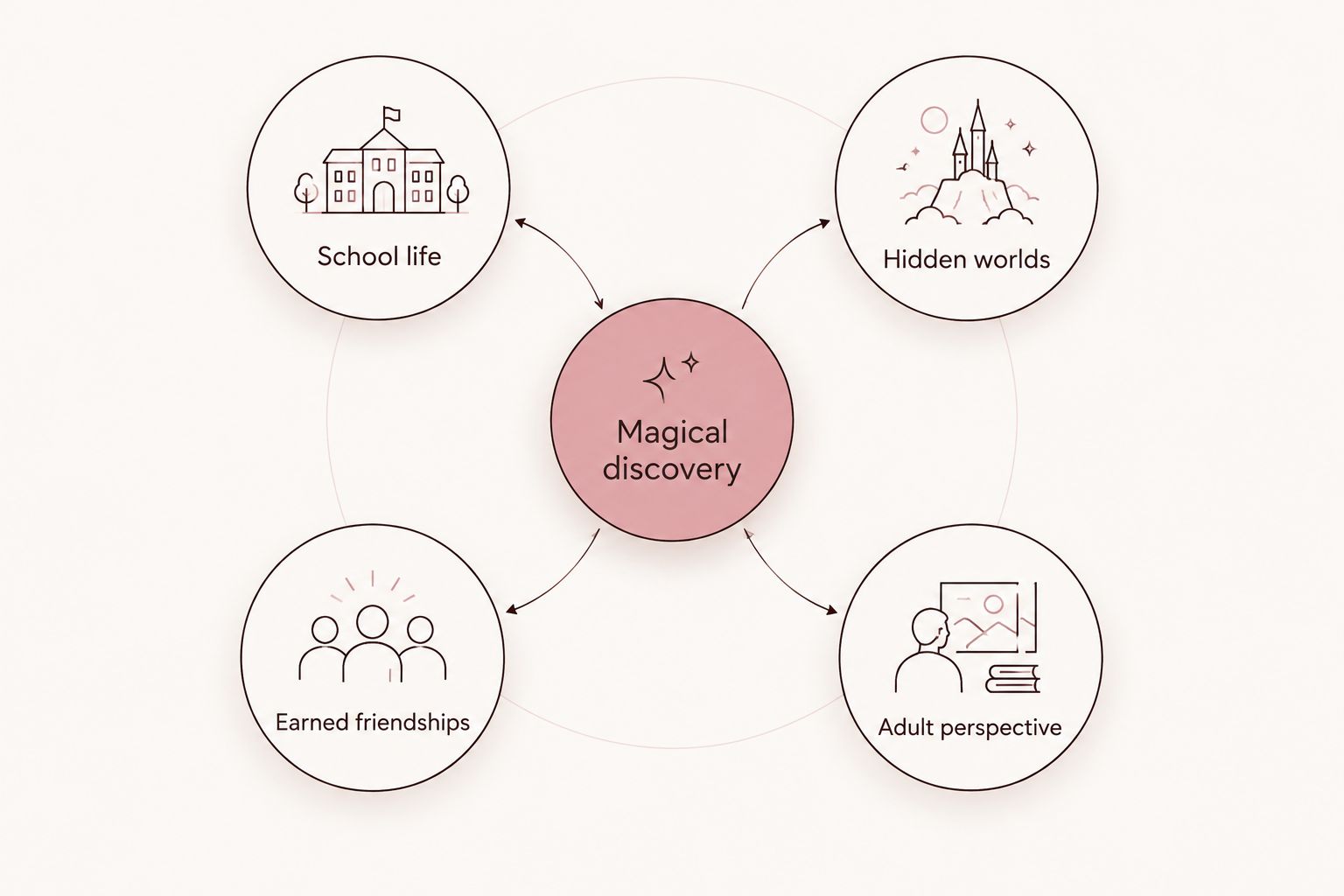
These recommendations prioritize specific reading experiences rather than the presence of wands or young protagonists. For your 2026 reading list, decide which of these qualities matters most:
- School life: Lessons, rivalries, teachers, and rules shape the story rather than decorate it.
- Hidden worlds: Magic exists beyond what ordinary people understand, and discovering it changes the protagonist's life.
- Earned friendships: Relationships develop through shared pressure, disagreement, and difficult choices.
- Magical discovery: Learning how the world works is part of the pleasure, not background information.
- Adult perspective: Power, responsibility, class, trauma, or disillusionment complicate the adventure.
Adult perspective does not require explicit sex or relentless violence. It can also mean greater moral ambiguity, slower storytelling, or a protagonist who questions whether belonging to a magical institution is desirable.
The recommendations at a glance
The order moves from recognizable magical education toward books that preserve discovery while changing the setting and structure. The limitation column matters as much as the match.
| Book and author | Best for | Specific match | Key limitation |
|---|---|---|---|
| A Deadly Education — Naomi Novik | Dangerous school life | Magical education, student alliances, survival | Much less comforting than Hogwarts |
| The Magicians — Lev Grossman | University-age disillusionment | Hidden magical college and demanding study | An unhappy, frequently abrasive central cast |
| Ninth House — Leigh Bardugo | Occult campus mystery | Secret societies and concealed magical power | Sexual violence and trauma are significant |
| The Name of the Wind — Patrick Rothfuss | Lessons and earned expertise | University study, rivalry, and magical systems | The central series remains unfinished |
| Jonathan Strange & Mr Norrell — Susanna Clarke | Adult magical society | Rival magicians and an expanding magical world | Historical pacing rather than school adventure |
| Piranesi — Susanna Clarke | Standalone wonder | An extraordinary setting revealed through discovery | No school, student ensemble, or spell curriculum |
1. A Deadly Education: best for dangerous magical school life
Naomi Novik's A Deadly Education is the closest starting point if Hogwarts itself was the attraction. El attends the Scholomance, a school where surviving the environment is inseparable from getting an education. Alliances matter because isolation carries real consequences.
The match is structural: students learn magic, assess one another, and prepare for dangers shaped by the institution. The difference is emotional. This school is not a reassuring refuge from the outside world, and El's prickly narration resists the welcoming tone you might expect.
A Deadly Education pros:
- Magical lessons and school rules directly affect survival.
- Student alliances give friendship practical and emotional weight.
- The completed trilogy spans 3 novels, providing a defined reading path.
A Deadly Education cons:
- Explanations of magic and school logistics interrupt the action.
- Constant danger leaves less room for cozy school routines.
Best for: Readers who want classrooms, rivalries, and a growing circle of allies, with harsher consequences.
Verdict: Buy if the school experience matters most and you accept losing much of Hogwarts's comfort. Start with A Deadly Education, not a later installment.
2. The Magicians: best for magical education without escapist comfort
Lev Grossman's The Magicians follows Quentin Coldwater into Brakebills, a hidden college for magic. It offers the discovery that a secret magical education exists, then questions whether getting that education resolves anything important in a person's life.
This is the clearest match for readers who want the students to be older and their problems less innocent. Magical ability coexists with dissatisfaction, sexual complications, and damaged relationships. The 3-novel trilogy offers a completed arc, but the opening book is deliberately uncomfortable company.
The Magicians pros:
- A concealed magical college provides an immediate point of connection.
- Difficult study makes magic feel like an acquired discipline.
- The story examines the gap between childhood fantasy and adult experience.
The Magicians cons:
- Quentin's unhappiness and self-absorption can be exhausting.
- Sexual violence and other mature material require content consideration.
Best for: Readers who want a university-age magical cast and a direct challenge to wish-fulfillment fantasy.
Verdict: Buy if you want the fantasy of magical admission questioned rather than protected. Skip this choice if warmth and dependable companionship are your main requirements.
3. Ninth House: best for an occult mystery on an adult campus
Leigh Bardugo's Ninth House follows Alex Stern into the concealed occult activities of Yale's secret societies. Her position gives her access to an institution whose magical practices are entangled with privilege, influence, and harm.
The Harry Potter connection is a hidden magical order operating inside a recognizable world. A dangerous mystery pulls the protagonist beyond official explanations. The important difference is that Yale is not presented as a conventional school for learning spells, and the investigation carries more weight than classroom progression.
Ninth House pros:
- Secret societies make institutional power part of the mystery.
- Alex's outsider position creates friction with the people around her.
- The campus setting supports an atmosphere of concealed danger.
Ninth House cons:
- Sexual violence, abuse, drug use, and trauma are substantial elements.
- Readers seeking magical lessons will find a different kind of campus story.
Best for: Readers who preferred hidden motives, forbidden knowledge, and investigations to sporting competitions or lessons.
Verdict: Buy if you want occult suspense with an adult protagonist. Skip it when your next read needs to feel safe or restorative.
4. The Name of the Wind: best for magical study and earned expertise
Patrick Rothfuss's The Name of the Wind follows Kvothe's account of his childhood, travels, and education at the University. Learning magic requires effort, and money, reputation, and rivalry affect his access to that education.
Choose this for the satisfaction of watching someone acquire knowledge inside an institution. Classes and teachers matter, but the University is only part of a larger life story. The narrative also spends substantial time on music, hardship, and the difference between a person's history and their legend.
The Name of the Wind pros:
- Magical instruction gives you processes to understand rather than unexplained power.
- Financial pressure makes educational access a recurring concern.
- Music and storytelling give the protagonist interests beyond magic.
The Name of the Wind cons:
- The central Kingkiller Chronicle sequence remains unfinished in 2026.
- The framed life story takes detours rather than maintaining a school-year structure.
Best for: Readers who loved lessons, academic competition, and watching skill develop through practice.
Verdict: Buy if the learning process matters more than having a completed central series. Wait if an unresolved larger story would spoil your enjoyment.
5. Jonathan Strange & Mr Norrell: best for a wider adult magical society
Susanna Clarke's Jonathan Strange & Mr Norrell imagines magic returning to an alternate England during the Napoleonic era. Two very different magicians become central to that return, with ambition, rivalry, and conflicting ideas about magic shaping their relationship.
The connection is the sense that magic has a history, institutions, and consequences beyond the protagonist's immediate needs. The difference is scale and tempo. This is historical fantasy concerned with society and power, not a school adventure driven by a close student group.
Jonathan Strange & Mr Norrell pros:
- Magical history makes the world feel larger than the main characters.
- The central rivalry gives competing approaches to magic real weight.
- Footnotes extend the folklore and historical texture.
Jonathan Strange & Mr Norrell cons:
- The deliberate pace asks for patience before major threads converge.
- Historical manners and digressions replace the immediacy of student adventures.
Best for: Readers who want the magical world to expand into politics, scholarship, and adult ambition.
Verdict: Buy if you want to inhabit a magical society rather than enroll in another school. Skip it when you need quick pacing and a compact cast.
6. Piranesi: best for standalone wonder and discovery
Susanna Clarke's Piranesi centers on a man documenting an immense House filled with statues, halls, and tides. His observations gradually change what the reader understands about his circumstances.
The match is not a magical education plot. It is the experience of entering an extraordinary place and learning its meaning alongside the protagonist. This is the furthest recommendation from Harry Potter's structure, but a strong choice if discovering the world mattered more than battles or school rivalries.
Piranesi pros:
- The setting is central to both atmosphere and discovery.
- The protagonist's attentive observations give the strange world emotional warmth.
- It tells a self-contained story in 1 novel.
Piranesi cons:
- There is no equivalent to a bustling school community.
- Explaining its central mystery in advance diminishes the reading experience.
Best for: Readers who want wonder, a distinctive setting, and a standalone rather than another long series.
Verdict: Buy if discovery is the feeling you want back. Skip it if you specifically need lessons, rival students, and a group adventure.
How these books are ranked
This 2026 list ranks similarity by the criteria above, not by sales or a claim that every book provides the same experience. School life comes first; hidden institutions and magical discovery carry the later recommendations.
An adult protagonist is not a requirement. An adult perspective is. That distinction keeps A Deadly Education relevant while making room for the very different pleasures of Jonathan Strange & Mr Norrell and Piranesi.
Which book should you choose?
Start with A Deadly Education if you cannot decide. It preserves the clearest combination of magical education, student relationships, institutional rules, and escalating danger.
Choose The Magicians instead if you specifically want older students and a less reassuring account of finding magic. Choose Piranesi if you want a complete, self-contained experience without committing to another sequence.
For a narrower match, tell GetSimilarBooks which part you want to keep: school life, friendship, discovery, or an adult cast. The book you loved is the starting point; the reason you loved it determines the next choice.
Find your next read-alike
Enter a favorite for five suggestions, then request a personalized list of 20–30 titles by email.
FAQ
What’s the best book like Harry Potter for adults?
A Deadly Education by Naomi Novik is the best starting point for magical school life, student alliances, and dangerous institutional rules. Its atmosphere is harsher and less comforting than Hogwarts.
Is The Magicians really an adult Harry Potter?
The Magicians shares the discovery of a hidden magical education, but it challenges the idea that magic makes life satisfying. Its university-age cast, sexual content, and disillusionment create a substantially different reading experience.
Which recommendation is a standalone?
Piranesi is a standalone that emphasizes wonder and discovery rather than school life. Jonathan Strange & Mr Norrell also tells a self-contained story, with a broader historical setting and more deliberate pacing.
Can adults enjoy A Deadly Education even though the characters are teenagers?
Yes. A Deadly Education uses its school setting to examine unequal resources, survival, and responsibility. Choose it for those concerns and its student relationships, not because it has an adult-aged cast.
Which books offer a completed series in 2026?
The Scholomance trilogy, beginning with A Deadly Education, and The Magicians trilogy are completed sequences. The central Kingkiller Chronicle sequence, beginning with The Name of the Wind, remains unfinished.
Is Ninth House a cozy magical school book?
No. Ninth House is an adult occult mystery involving secret societies, violence, and trauma. Its campus setting does not make it a comforting classroom fantasy.
How can I get recommendations based on what I liked about Harry Potter?
Enter the title into GetSimilarBooks for five hand-curated read-alike suggestions. You can also request an email-gated personalized list of 20–30 titles, using your preferred reading qualities to guide your choice.
One last thing
Before choosing your next book in 2026, finish this sentence: I want the feeling of discovering something, belonging somewhere, or learning something difficult. Those are different requests. Picking one is more useful than asking for the same story with older characters.
Related guides
- Books like Fourth Wing set in a military academy
- Books like Fourth Wing with found family
- Books like Fourth Wing with deeper worldbuilding
- Standalone books like Fourth Wing
Leave a Reply