Books like Verity with unreliable narrators

Best overall: Gone Girl by Gillian Flynn. Best for an openly untrustworthy voice: Sometimes I Lie by Alice Feeney. Best for memory gaps: The Girl on the Train by Paula Hawkins. These books like Verity with unreliable narrators are ordered from close domestic suspense to a more distant Gothic match, with the differences spelled out for your 2026 reading list.
- Gone Girl leads these books like Verity with unreliable narrators for competing accounts of an intimate relationship.
- Sometimes I Lie puts an admitted liar at the center; expect less romantic tension than Verity.
- The Girl on the Train makes memory and observation the problem, rather than a discovered manuscript.
- GetSimilarBooks offers five hand-curated read-alike suggestions and an email-gated personalized list of 20–30 titles.
Why this matters
The useful question after Verity is not simply whether another thriller has a twist. It is what makes the account difficult to trust: deliberate deception, missing memories, a persuasive document, or a narrator whose judgment keeps getting in the way.
GetSimilarBooks is a book recommendation tool for readers who want their next choice tied to a book they enjoyed. Enter a title at GetSimilarBooks for 5 hand-curated read-alike suggestions; the free personalized list of 20–30 titles requires an email address.
This list stays with one specific need: narrators who make you question the story you are receiving. It does not treat an unpleasant character, a concealed culprit, and an unreliable narrator as interchangeable.
What makes the best Verity read-alike?
For this 2026 shortlist, the strongest matches share a reading experience, not just a thriller label.
- Narrative uncertainty: The account itself gives you reasons to question its completeness or accuracy.
- Intimate stakes: Marriage, attraction, family, or a household makes trust consequential rather than abstract.
- Competing accounts: What someone says conflicts with another voice, a memory, or a written record.
- Enclosed tension: A home or tightly connected social circle limits the distance between suspicion and danger.
- Meaningful difference: Each recommendation has a clear departure from Verity, especially around romance, pacing, or structure.
A good match preserves the reason you kept reading, not every feature of the original. If the manuscript was your favorite element, that points toward a different choice than the attraction between Lowen and Jeremy.
The recommendations at a glance
The order moves outward from domestic mistrust toward Gothic interpretation. It is not an ordering of literary quality.
| Book | Best for | Standout match | Key limitation |
|---|---|---|---|
| Gone Girl — Gillian Flynn | Competing accounts of a marriage | Intimacy becomes a contest over whose story you accept | More caustic than romantic |
| Sometimes I Lie — Alice Feeney | An explicitly untrustworthy narrator | The narrator warns you that lying is part of the problem | Less sustained romantic tension |
| The Girl on the Train — Paula Hawkins | Memory gaps and uncertain observation | A witness cannot confidently reconstruct what she experienced | Less enclosed than Verity |
| The Turn of the Key — Ruth Ware | A written defense inside a threatening household | A nanny tells her story in a letter to a lawyer | Romance is not the central draw |
| Rebecca — Daphne du Maurier | Gothic jealousy and limited perspective | A narrator interprets a marriage through insecurity and a predecessor's shadow | Not the same kind of deception-driven thriller |
1. Gone Girl: best for competing accounts of a marriage
Gillian Flynn's Gone Girl follows a wife's disappearance and the scrutiny surrounding her husband. Its 2 narrators, Nick and Amy, place the marriage at the center of the uncertainty: the relationship looks different depending on whose account you are reading.
That is the strongest connection to Verity. Private life becomes evidence, and an intimate account does not become trustworthy merely because it sounds revealing. You read for the distance between a convincing story and a credible one.
The meaningful difference: Gone Girl turns a sharper, more satirical eye on marriage and public perception. Do not choose it expecting Verity's particular mixture of attraction, proximity, and dread.
Gone Girl pros:
- Competing perspectives make trust part of the structure.
- The marriage supplies both emotional stakes and grounds for suspicion.
- Public appearances complicate what happens in private.
Gone Girl cons:
- The tone is cutting rather than tender.
- Romantic tension is not the same kind of reward as in Verity.
Best for: Readers who kept comparing the manuscript with the people standing outside it.
Verdict: Buy Gone Girl for marital mistrust and competing versions of intimacy. Choose it first if you want another relationship in which the story itself becomes contested ground.
2. Sometimes I Lie: best for an openly untrustworthy voice
Alice Feeney's Sometimes I Lie centers on Amber, who is in a coma and can hear what happens around her. The opening establishes that she sometimes lies; the question of reliability is an invitation, not a late surprise disclosed by this recommendation.
The match with Verity is the pressure to interpret a narrator while continuing to depend on her. You cannot simply set the account aside. It is your route into the story, even when you have reasons to resist it.
The meaningful difference: Sometimes I Lie makes unstable narration more immediately explicit. Verity's appeal also rests on the charged relationship between the person reading a document and the household surrounding her; Feeney's setup places you inside the uncertain voice itself.
Sometimes I Lie pros:
- The premise establishes narrative doubt immediately.
- Past and present give you material to compare.
- The narrator's restricted situation creates close psychological tension.
Sometimes I Lie cons:
- It is a weaker fit if attraction was your main reason for reading Verity.
- Its structure asks you to keep track of shifting information.
Best for: Readers who want to question individual statements, not merely guess the culprit.
Verdict: Buy Sometimes I Lie for direct, sustained distrust of the narrator. Read it without searching for detailed explanations of the ending.
3. The Girl on the Train: best for memory gaps
Paula Hawkins's The Girl on the Train follows Rachel, a commuter whose observations of a couple become entangled with a disappearance. Alcohol-related memory gaps make her attempts to reconstruct events difficult, including for Rachel herself.
The connection to Verity is the gap between apparent knowledge and dependable evidence. Watching people does not mean understanding them. Remembering something does not settle exactly what happened.
The meaningful difference: This is not chiefly a story about a dangerous written account discovered inside a household. Its uncertainty grows through observation, memory, and intersecting perspectives across connected lives.
The Girl on the Train pros:
- Memory has a concrete role in the uncertainty.
- Domestic relationships remain central to the suspense.
- Other perspectives complicate Rachel's understanding.
The Girl on the Train cons:
- Alcohol misuse is a substantial part of the reading experience.
- The setting is less tightly contained than Verity's household.
Best for: Readers who want an uncertain witness rather than an account built around admitted lying.
Verdict: Buy The Girl on the Train for memory-based suspense. Skip it if you specifically want another writer entering a house and finding a troubling text.
A distinction matters here: missing memories are not proof of deliberate deception. The interest lies in what Rachel can establish, what she assumes, and what remains outside her recall.
4. The Turn of the Key: best for a written defense
Ruth Ware's The Turn of the Key is framed through a nanny's letter to a lawyer after a child's death. She recounts taking a job in a remote Scottish household equipped with smart-home technology.
The letter supplies the strongest Verity connection. You receive an account written for a purpose, by someone with a personal stake in how it is understood. That does not settle whether it is truthful; it tells you to consider its audience as well as its contents.
The meaningful difference: The household, caregiving role, and apparent threats do more of the suspense work than romantic attraction. The technology also changes the atmosphere: this is not simply an old house with unexplained noises.
The Turn of the Key pros:
- A written account invites close attention to wording and omission.
- A live-in job puts the narrator inside an unfamiliar family's private life.
- The house creates tension through both isolation and surveillance.
The Turn of the Key cons:
- A child's death is part of the stated premise.
- It is not a close substitute for Verity's romantic component.
Best for: Readers who found the act of reading Verity's manuscript more unsettling than the attraction surrounding it.
Verdict: Buy The Turn of the Key for a document-framed household thriller. Move it above the memory-based choices if written testimony is your main interest.
5. Rebecca: best for Gothic jealousy and limited perspective
Daphne du Maurier's Rebecca follows an unnamed young woman who marries Maxim de Winter and moves to Manderley. Her understanding of the marriage forms under the influence of his first wife Rebecca's continuing presence in the household's memory.
This is the furthest match, and the distinction matters. The narrator's insecurity and limited knowledge shape how she interprets people; that is not the same proposition as an openly dishonest narrator.
The meaningful difference: Rebecca offers Gothic atmosphere, social unease, and jealous interpretation rather than Verity's contemporary thriller structure. Choose it for the unsettling experience of entering a home already organized around another woman.
Rebecca pros:
- The house and the marriage are inseparable sources of tension.
- The narrator's self-doubt affects what she notices and believes.
- A predecessor's presence shapes the current relationship.
Rebecca cons:
- The pacing is more gradual than the closer thriller matches.
- It is a poor choice if deliberate narratorial lying is your strict requirement.
Best for: Readers who want the household, jealousy, and uncertain judgment more than twist-driven momentum.
Verdict: Buy Rebecca for Gothic interpretation; skip it for an exact unreliable-narrator replacement. Its distance from Verity is part of the recommendation, not a detail to conceal.
How this 2026 reading order works
The ranking gives the most weight to intimate mistrust and an account you must actively assess. Gone Girl leads because competing accounts and a troubled marriage work together. Sometimes I Lie follows for its explicit challenge to the narrator's credibility.
The later choices isolate different parts of the experience. The Girl on the Train emphasizes memory, The Turn of the Key emphasizes written testimony, and Rebecca emphasizes interpretation inside a marriage.
Use this shorter route if one feature matters more than the overall match:
- Competing accounts: Choose Gone Girl.
- Broken memory: Choose The Girl on the Train.
- Written testimony: Choose The Turn of the Key.
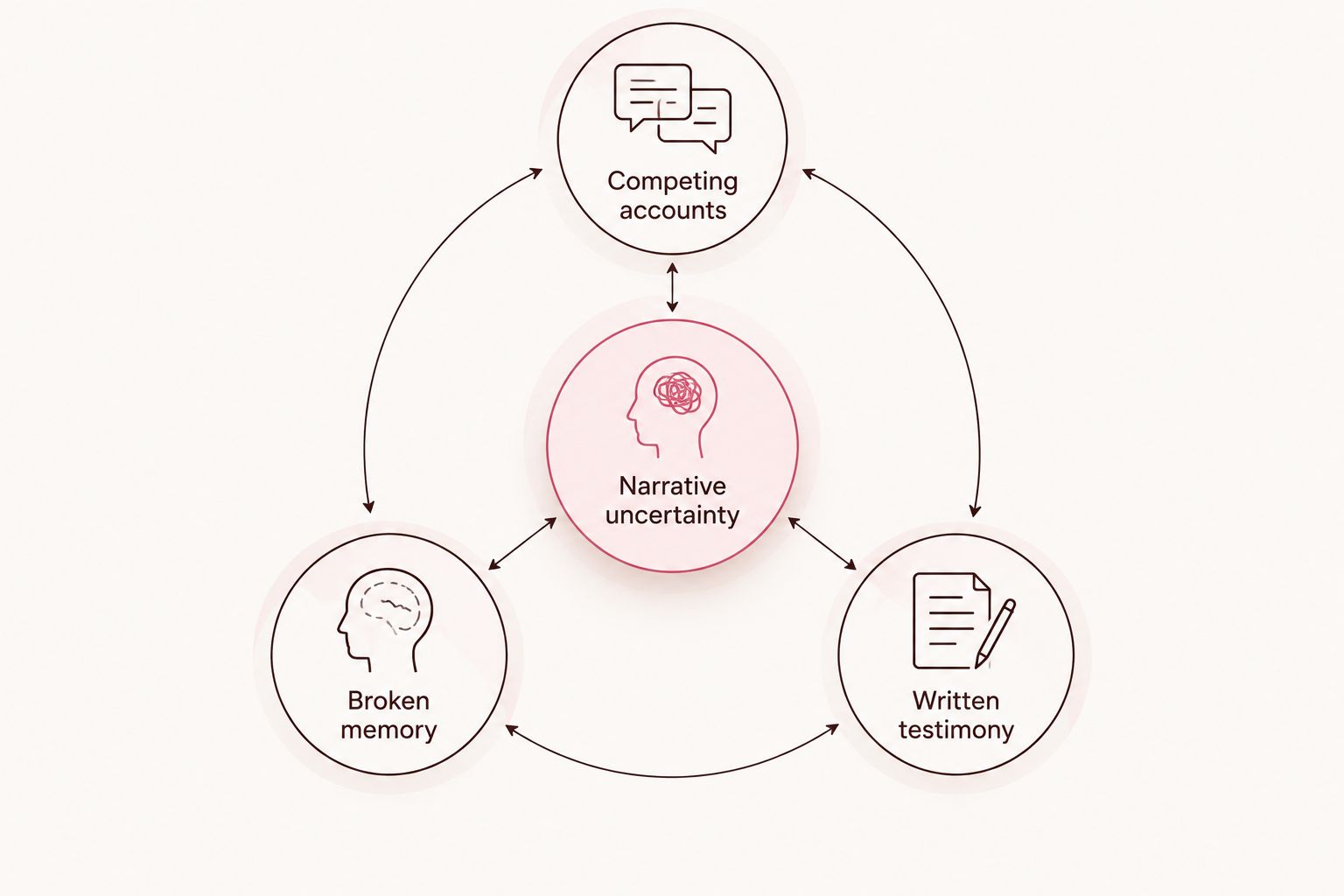
These are reading-fit judgments, not claims that every narrator deceives in the same way. That distinction keeps the recommendations useful without explaining away their surprises.
Which book should you choose?
Start with Gone Girl if you are undecided. It is the clearest default here for a relationship whose private history becomes a struggle over credibility.
Choose Sometimes I Lie instead if you want the narrator's trustworthiness questioned from the outset. Choose Rebecca only when you actively want a change of pace and a Gothic household rather than another contemporary domestic thriller.
GetSimilarBooks book recommendations are best for readers who want their next choice tied to a title they already enjoyed. For your next 2026 read, request the free personalized list when a broader selection is more useful than another fixed ranking.
Find your next read
Enter a title for five read-alikes, or share your email for a personalized list of 20–30 titles.
FAQ
What’s the best book like Verity with an unreliable narrator?
Gone Girl by Gillian Flynn is the strongest overall recommendation here for competing accounts of an intimate relationship. It is more caustic than romantic, so choose it for marital mistrust rather than a similar love story.
Should I read Sometimes I Lie or The Girl on the Train after Verity?
Choose Sometimes I Lie for an openly untrustworthy voice; choose The Girl on the Train for memory gaps and uncertain observation. Both make you assess the account, but they create that uncertainty differently.
Which recommendation is closest to Verity’s manuscript setup?
The Turn of the Key is the best choice here for a written account produced by someone with a personal stake in its reception. Its letter-to-a-lawyer framing differs from Verity’s manuscript, but both ask you to examine the purpose behind a text.
Is Rebecca really an unreliable-narrator thriller like Verity?
Rebecca is a more distant match built around limited perspective, insecurity, and Gothic suspense. It belongs here for readers interested in uncertain interpretation, not as an interchangeable example of deliberate narratorial deception.
Do these Verity recommendations contain major spoilers?
This guide describes premises and narrative structures without revealing the central solutions. It identifies Amber’s admitted lying in Sometimes I Lie because that is established at the opening, not a concealed ending.
Are these books good choices if I mainly liked Verity’s romance?
This list is a stronger fit for narrative distrust than for romance. Gone Girl centers a marriage, but its tone is caustic; The Turn of the Key prioritizes household suspense rather than romantic development.
How do I get a personalized list of books after Verity?
Enter a title in GetSimilarBooks for five hand-curated read-alike suggestions. The free personalized list contains 20–30 titles and requires an email address.
One last thing
For your 2026 reading list, write down what you believed at the midpoint of your next thriller—and the detail that persuaded you. Do it before the explanation arrives.
That small reading habit separates a persuasive narrator from persuasive evidence. It also gives you a better request for your next recommendation: not merely another twist, but another book that made you trust the wrong kind of detail.
Related guides
- Books like Verity: five unsettling reads ranked by fit
- Books like ACOTAR: five picks, closest match first
- Standalone books like Fourth Wing
Leave a Reply