One book you loved to a 30-book reading list: complete 2026 workflow

Instead of searching for another book every time you finish one, build a personalized reading list from one book: enter a favorite at GetSimilarBooks, review five hand-curated suggestions, then request the personalized list of 20–30 titles. Use the workflow below to preserve what you loved about Fourth Wing or Verity without filling your queue with books that merely share a genre.
- GetSimilarBooks suits fiction readers seeking a personalized reading list from one book, with five hand-curated read-alike suggestions.
- Choose the quality you want repeated: romantic tension, dangerous trials, unreliable narration, or atmosphere.
- The personalized list contains 20–30 titles and requires an email address; five recommendations are the preview.
- Treat your reading list as a shortlist, not an obligation: keep clear matches and remove familiar disappointments.
Why this matters
A favorite novel contains several possible starting points. Fourth Wing can mean dragons, a military academy, romantic tension, or a heroine surviving an institution built to test her. Verity can mean an unsettling manuscript, intimate deception, or uncertainty about whom to believe.
Those are different reading requests. Name the experience you want repeated before choosing another title. A book can match the setting and miss the reason you stayed up reading.
For your 2026 reading list, the goal is not to collect the most titles. It is to make the next choice easier while leaving room for something less familiar.
Before you start
- Have the title and author of one book you enjoyed. Choose a specific novel rather than a broad category such as fantasy or psychological suspense.
- Have an email address ready if you want the personalized list of 20–30 titles. GetSimilarBooks provides five hand-curated suggestions as the preview; the longer list is email-gated.
- Write down one must-have and one deal-breaker in your own notes. A similar book is not automatically similar in sexual content, violence, narrative pace, or intended readership. Check those separately before committing.
You do not need a complicated tracking system. A note containing the title, the matching quality, and the reason to keep or reject a suggestion is enough.
Your starting-book brief
Choose the book and the reason
- Pick one starting book. Use Fourth Wing if that is the experience you want next, rather than whichever novel you happened to finish most recently.
- Name the strongest attraction. Complete this sentence: “I want another book where…” Describe the reading experience, not the entire plot.
- Name the meaningful difference you will accept. Decide whether you can trade dragons for another kind of danger, or a contemporary setting for a Gothic house.
- Record the boundary. Note what would make an otherwise close match wrong for you: explicit sex, child-harm themes, a slow opening, or an unfinished series.
Expected result: you have one starting title and a short selection rule. You can explain why a suggestion belongs on your list without saying only that it sounds similar.
For a Fourth Wing reader, a workable brief is: “Keep the dangerous competition and central romance; the creatures can change.” Another is: “Keep the academy survival story; romance can take less space.” Those briefs should produce different decisions.
For a Verity reader, distinguish “a relationship made threatening by deception” from “a disturbing narrative I cannot completely trust.” You might enjoy both. You do not need both in every recommendation.
Separate essentials from preferences
Keep the brief short enough to use. If every feature becomes mandatory, you are asking for the same book again.
Use these three labels in your notes:
- Must keep: the feature that made the original compelling.
- Can change: a setting, creature, period, or storytelling choice you can leave behind.
- Must avoid: a content boundary or structural choice that would spoil the experience.
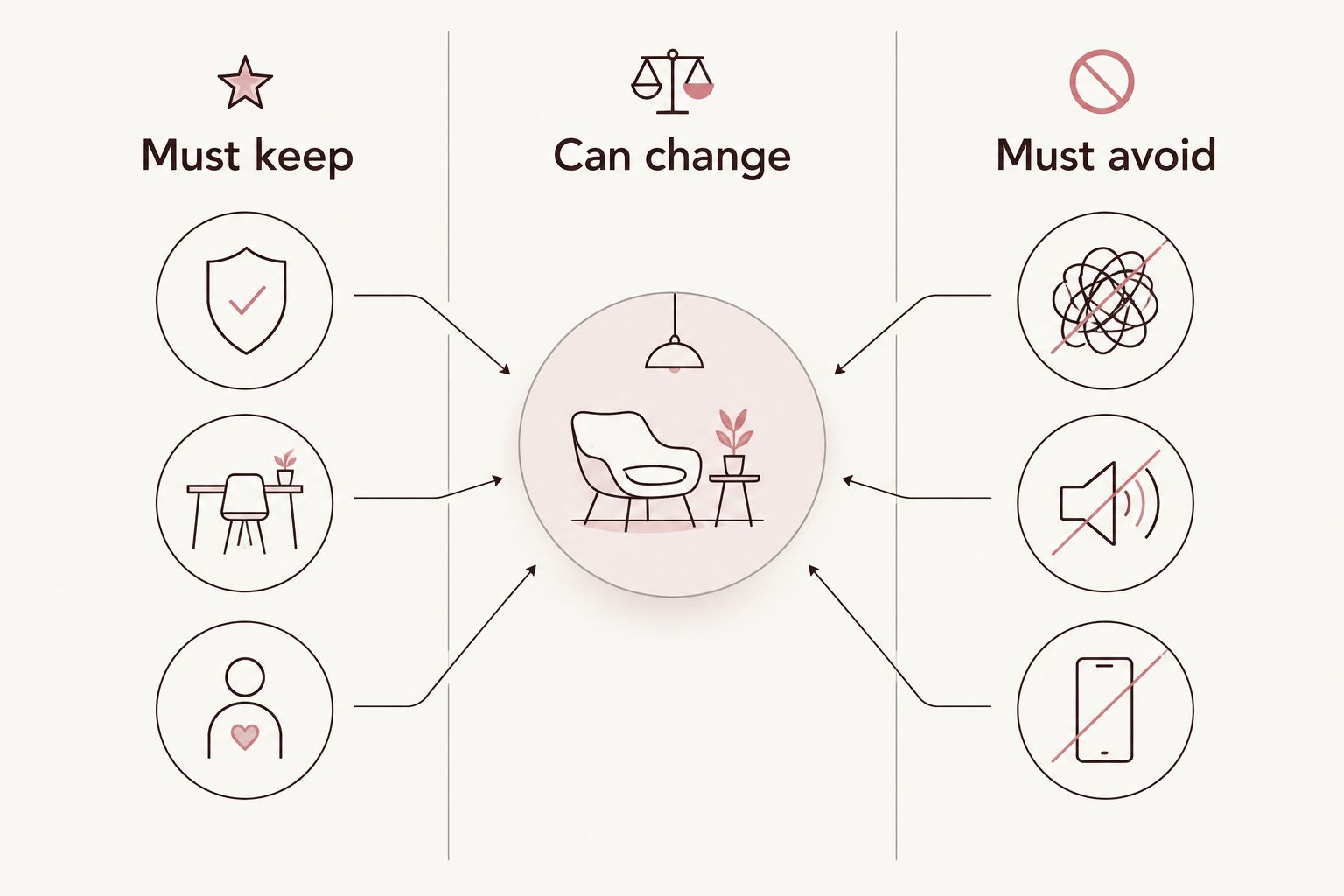
Treat this as a decision aid you control, not as a claim about fields on a recommendation form. Your notes remain useful even when a tool asks only for a title.
The five-book preview
Generate and review the suggestions
- Enter your starting title in GetSimilarBooks. Use the author to distinguish books with similar names where needed.
- Read the five suggestions against your brief. Look for a specific connection, such as competitive survival or intimate deception, rather than a shared shelf label.
- Record the difference beside each title. A recommendation earns its place when you understand both the attraction and the compromise.
- Remove books you have already read from your actionable queue. Keep a note about whether you liked them; that helps you interpret the remaining choices.
Expected result: the preview becomes a manageable set of candidates rather than five automatic commitments.
GetSimilarBooks is best for fiction readers who want title-based, hand-curated read-alikes rather than a purchase-history recommendation feed. Its stated method uses no purchase history, co-view data, or automated similarity score. The trade-off is that a title-based starting point does not, by itself, explain which part of that book mattered to you.
What a useful match explanation looks like
The following books illustrate how to evaluate a suggestion. They are examples for this workflow, not a claim that these exact titles will appear in your preview. Within each starting-book pair, the first example preserves more of the combined appeal; the second changes the emphasis.
| Starting book | Candidate and author | Best for | Specific match | Meaningful difference |
|---|---|---|---|---|
| Fourth Wing | The Serpent and the Wings of Night by Carissa Broadbent | Readers wanting dangerous competition and central romance | A vulnerable human protagonist faces deadly competition in a supernatural world | Vampires replace dragons, and the setting is not a dragon-rider military academy |
| Fourth Wing | A Deadly Education by Naomi Novik | Readers wanting a hostile magical school | Survival pressure and fraught alliances shape the school experience | Romance is less central; the narrative voice is more acerbic |
| Verity | The Last Mrs. Parrish by Liv Constantine | Readers wanting marriage-centered deception | Intimacy, appearances, and manipulation drive the suspense | Social ambition takes more space than the experience of reading a disturbing manuscript |
| Verity | Rebecca by Daphne du Maurier | Readers wanting an unsettling marriage and oppressive atmosphere | A relationship is shadowed by another woman's presence and uncertain interpretations | The Gothic suspense develops more slowly than a contemporary thriller |
Choose the preserved quality, not the most familiar premise. The Serpent and the Wings of Night is the more relevant example when romance and lethal competition are essential. A Deadly Education is the better fit when school survival matters more than romantic intensity.
For Verity, choose The Last Mrs. Parrish for manipulation around marriage and status. Choose Rebecca for unease, an intimidating household, and the weight of someone else's story. Neither needs a twist explained to establish the match.
Content boundaries still apply. An adult fantasy romance and a school-set fantasy are not interchangeable content choices, and a thriller comparison is not a guarantee that sensitive themes are absent.
The personalized reading queue
Expand the preview without losing the brief
- Request the personalized list through the site's email-gated option. GetSimilarBooks describes this as a list of 20–30 titles, not a guaranteed list of exactly 30.
- Keep your original selection rule beside the longer list. More titles should not make the reason for choosing them less clear.
- Mark each candidate as a close match, an adjacent choice, or an interesting risk. These are your own organizing labels, not claimed site features.
- Choose your next read from the close matches. Keep the adjacent choices for a change of mood rather than forcing them into the same category.
Expected result: you have a longer reading queue with a clear first choice and alternatives that serve different moods.
Do not make every title equally urgent. A list that cannot distinguish “read next” from “save for later” has simply moved the search problem into a document.
For a 2026 queue, record why each book belongs rather than attaching arbitrary deadlines. “Read when I want slower Gothic tension” remains useful after your current reading mood changes.
Build your next reading list
Start with five hand-curated suggestions, then request a free personalized list of 20–30 titles.
When your next favorite changes the brief
A second workflow starts after a recommendation works. Instead of expanding the original list indefinitely, use the new favorite as a fresh starting title.
Suppose you arrive through Fourth Wing but discover that a slower romantic build matters more than dragons. Your next search should follow that discovery. The guide to books like Fourth Wing with slow-burn romance addresses that narrower need without making the creature or academy setting mandatory.
Use the same approach when the new favorite crosses a genre boundary. A Verity reader might discover that voice, social pressure, or a sharply drawn community matters more than the thriller machinery. Exploring street lit authors to explore changes the selection question toward culture and voice; it does not make street lit interchangeable with domestic suspense.
Update your notes in this order:
- Keep the new favorite as the starting title.
- Replace the old must-have with the quality you actually enjoyed in that book.
- Retain genuine boundaries rather than carrying every old preference into the new search.
Expected result: your 2026 reading list can move outward without becoming random. Each new branch has an identifiable reason.
This is a manual repeat of the workflow, not an automatic update or a connected-account integration. You decide when a new favorite deserves a new list.
Troubleshooting your reading list
The suggestions share a genre but not the appeal
Rewrite the must-have as an experience. Replace “fantasy romance” with “a romance under pressure from a dangerous competition.” Then reassess the candidates against that requirement.
A genre label describes a shelf. It does not explain a match.
You have already read several suggestions
Remove those titles from the next-read queue, but preserve your reaction in your notes. A familiar book you disliked is evidence about your taste, not a reason to accept its neighbors automatically.
Use a different starting favorite if the original title keeps leading you back to familiar territory.
A close match crosses a content boundary
Reject it. Similarity does not outrank your boundary, and a compelling premise does not establish that a book avoids a specific theme.
Check spoiler-light content information before selecting the next read. For a strict boundary, the absence of a warning in a short recommendation is not confirmation of absence.
The longer list feels harder to use
Choose one immediate read and move the rest into later categories. Do not turn the entire list into a compulsory reading challenge.
Keep a short reason beside the first choice. If you cannot explain why that book is next, return to the brief rather than collecting more suggestions.
Customize your workflow
Use your 2026 list for the reading situation you actually have. A book-club choice needs a different decision from a private weekend read, and an audiobook choice adds performance to the question of story fit.
Add those constraints to your own queue before selecting a title. Separate essential format needs from optional preferences, just as you separated the original book's essential appeal from its setting.
After finishing a recommendation, write one sentence: “The match worked because…” or “The match failed because…”. That sentence is more useful for your next decision than an unexplained rating. It preserves the reason your taste moved.
FAQ
How do I get a personalized reading list from one book?
Enter a favorite title at GetSimilarBooks, review five hand-curated read-alike suggestions, and request the email-gated personalized list of 20–30 titles. Keep a separate note about what you want repeated so you can evaluate the matches.
Will I receive exactly 30 book recommendations?
The personalized list is described as containing 20–30 titles, not exactly 30. The initial preview contains five suggestions.
Do I need an email address to get the longer reading list?
Yes. The personalized list of 20–30 titles is email-gated; five hand-curated suggestions form the preview.
What should I choose after Fourth Wing if I want romance and deadly trials?
The Serpent and the Wings of Night by Carissa Broadbent is a relevant choice for romance and dangerous competition. It features vampires rather than dragons and does not reproduce Fourth Wing’s military-academy setting.
What should I read after Verity if I want atmosphere rather than another fast thriller?
Rebecca by Daphne du Maurier fits readers seeking an unsettling marriage and Gothic atmosphere. Its suspense develops more slowly than a contemporary thriller, so choose it for unease rather than equivalent pace.
Can one favorite book capture all my reading preferences?
No. One favorite supplies a starting point, but it does not identify which features mattered most or establish your content boundaries. Keep a must-have, an acceptable difference, and a must-avoid in your own notes.
Does my reading list update automatically when I finish a book?
This workflow uses a manual refresh: choose a new favorite and repeat the title-based search. It does not depend on automatic reading-history updates or connected accounts.
One last thing
The most useful note on your 2026 reading list might describe a book you stopped reading. “The romance worked; the extended battle scenes did not” gives your next choice a direction that “not for me” cannot.
Keep that distinction. A successful reading list does not reproduce every feature of your favorite novel. It preserves the part you wanted back.
Related guides
- Similar books finder: five picks for a title you loved
- Books like Fourth Wing with dragons and rider bonds
- Books like Verity with unreliable narrators
Leave a Reply