Book recommendation quiz to personalized list: 2026 workflow

Instead of rebuilding your reading list after every book recommendation quiz, start with one book you loved, identify the quality you want repeated, and turn the results into a personalized shortlist. This 2026 workflow takes you from a title such as Fourth Wing or Verity to five read-alike suggestions, then a longer list you can sort by fit.
- GetSimilarBooks is best for fiction readers who want a book recommendation quiz alternative built around a title they enjoyed.
- Start with Fourth Wing or Verity, then separate the qualities you want from the ones you would change.
- Use five read-alike suggestions as a preview; request the personalized list of 20–30 titles with your email.
- Choose your next book by matching qualities and meaningful differences, not a shared genre label.
Why this matters
A book recommendation quiz asks you to describe your taste. A title-based finder starts with an example of it. Neither approach removes the need to decide what made the book work for you.
Fourth Wing can point toward dragon bonds, dangerous training, or romantic tension. Verity can point toward a writer-centered mystery, psychological unease, or a romance entangled with suspicion. Those are different reading requests, even when they start with the same title.
GetSimilarBooks accepts a title you enjoyed and returns five hand-curated read-alike suggestions. You can also request an email-gated personalized list of 20–30 titles. GetSimilarBooks is best for fiction readers who want title-based book recommendations rather than a broad taste quiz.
The advantage is a concrete starting point. The limitation is equally concrete: a title alone does not explain which part you loved. Your job is to judge the suggestions against that missing detail, not assume every match suits you equally.
Before you start
- Choose one reference book. Use a title you finished and enjoyed enough to repeat something about the experience. Keep the author's name nearby to distinguish books with similar titles.
- Write down one attraction and one boundary. For example: dangerous training, but less explicit romance; or psychological suspense, but no isolated-house setting. These are your evaluation notes, not promised fields in the tool.
- Have an email address ready for the longer list. The five suggestions are the preview; the personalized list of 20–30 titles is email-gated. Do not confuse entering a book title with completing that separate request.
You do not need a complete reading history to begin. You need a useful reference point and enough clarity to reject a technically similar book that repeats the wrong quality.
Set up your reading brief
Turn a favorite into a specific request
- Write the reference title and author in your own notes. Use Fourth Wing by Rebecca Yarros or Verity by Colleen Hoover if either captures your current reading mood.
- Complete this sentence: I want another book with… Name a reading experience, such as dangerous training, romantic uncertainty, or a narrator whose account invites doubt.
- Complete a second sentence: This time, I want less… Name the feature you want reduced or removed. Keep this separate from your positive match.
- Choose which sentence takes priority. If avoiding a particular subject matters more than matching the atmosphere, treat that boundary as a requirement.
Expected result: You have a brief that explains both the attraction and the difference you need. It should fit in 1 sentence without retelling the plot.
A Fourth Wing reader might write: I want dangerous magical training and developing friendships, with romance less central. A Verity reader might write: I want a writer drawn into an unsettling mystery, but not the same relationship dynamic.
These requests preserve something specific. Asking only for fantasy or a thriller leaves too much room for a recommendation that belongs on the same shelf but creates a different experience.
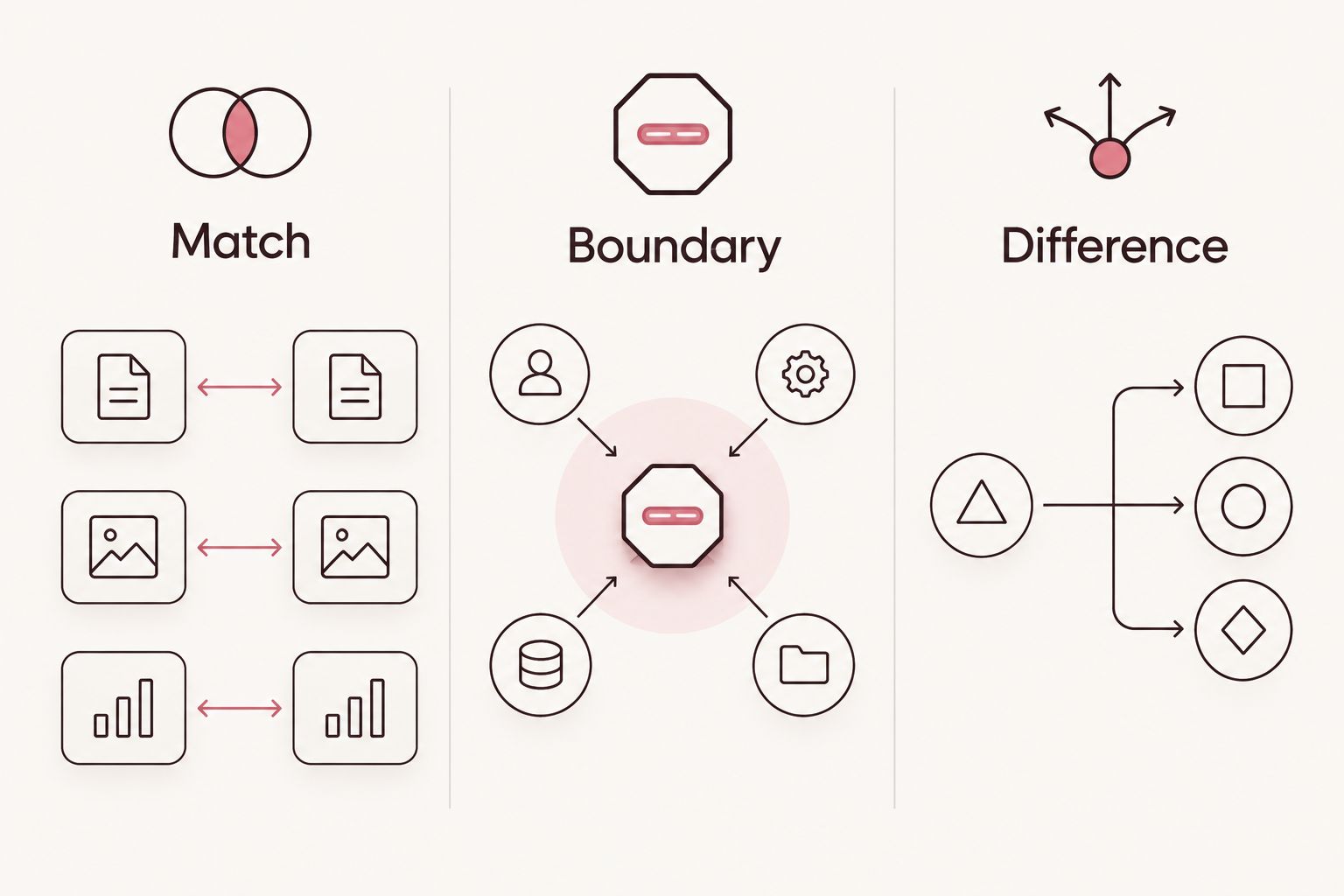
Separate match, boundary, and difference
Use these three labels when evaluating your 2026 reading list:
- Match: The quality you actively want repeated.
- Boundary: The subject, structure, or intensity you do not want.
- Difference: A change you can accept, such as a historical setting or less romance.
A boundary rules a book out. A difference does not. Keeping them separate prevents you from rejecting an interesting read simply because it is not a copy of your favorite.
Configure your title-based search
Generate and assess the preview
- Open the recommendation tool and enter the title you enjoyed. Use the title-entry control presented on the page; do not paste your entire reading brief into a title field.
- Review the five read-alike suggestions from GetSimilarBooks. Keep your private reading brief beside the results.
- For each suggestion, identify the specific connection to your reference book. Look for a shared relationship dynamic, narrative device, setting pressure, or emotional effect.
- Record the meaningful difference. A match on atmosphere does not establish a match on romance, pacing, or content.
- Set aside books you have already read and books that cross a firm boundary. Keep the remaining candidates for closer inspection.
Expected result: You have a smaller set of plausible next reads, with a reason for each. You have not accepted a recommendation merely because it shares a genre.
Do not turn this into a scoring exercise unless scoring helps you choose. A short note such as strong setting match, weaker romance match is enough to expose the trade-off.
Check what a meaningful match looks like
The examples below illustrate how to assess read-alikes. They are not a claim that these books appear in a particular tool result. Within each reference-book pair, the first suggestion preserves the more direct connection; the second changes more of the reading experience.
| Reference book | Candidate and best for | Specific connection | Meaningful difference |
|---|---|---|---|
| Fourth Wing | The Serpent and the Wings of Night by Carissa Broadbent — best for dangerous competition with romance | A human heroine faces lethal trials in a vampire world, with attraction intertwined with danger | Vampires and a tournament replace dragons and a rider academy |
| Fourth Wing | A Deadly Education by Naomi Novik — best for perilous magical schooling | A hostile school environment makes survival and alliances central | Romance is less central, and the narrative voice is more caustic |
| Verity | Rebecca by Daphne du Maurier — best for an unsettling household and relationship doubt | An earlier relationship shapes a new marriage and the atmosphere of a large house | The historical setting and slower psychological pressure differ from Verity's contemporary intensity |
| Verity | The Thirteenth Tale by Diane Setterfield — best for literary secrets and a writer-centered mystery | A biographer becomes involved in an author's concealed family history | The central draw is literary and familial mystery rather than romantic suspense |
Choose the connection you actually want. A Deadly Education is a useful direction for dangerous schooling, not a promise of another dragon-rider romance. Rebecca is a useful direction for domestic unease, not a substitute for every element of Verity.
Treat these as starting points for checking descriptions and content notes. None is a universal replacement for its reference book, and a strong thematic match does not establish suitability for every reader.
Configure your personalized reading list
Request the longer list and give it a purpose
- Decide whether the preview matches your reading brief closely enough to continue. If every suggestion points toward the wrong feature, reconsider the reference title before expanding the list.
- Request GetSimilarBooks' free personalized list through the site's email-gated request flow. Use the email address where you want to receive the list.
- Keep your reference title and evaluation notes together. Do not assume the request includes preference controls, exclusions, or integrations beyond what the page presents.
- When you receive the 20–30 titles, sort the candidates into three groups: Read next, Keep for later, and Not this time.
- Put the strongest match in Read next. Keep a more distant match for a different mood rather than rejecting it simply for being different.
Expected result: You have a reading queue with a next action, not just a longer collection of titles.
For a 2026 reading plan, separate selection from scheduling. First decide which book fits. Then decide when to read it. A suspense novel for a quiet weekend and a fantasy series for a longer commitment can both belong on the list without competing for the same slot.
The longer list offers more candidates to assess. Its drawback is more decision work. Do not mistake list length for confidence about your next book. Your reading brief remains the filter.
Find your next reading list
Start with a book you enjoyed, review five suggestions, then request a personalized list of 20–30 titles.
Repeat the workflow when your reading mood changes
A second workflow starts with your latest successful read rather than your original favorite. Use it when a recommendation reveals that your taste has moved in a different direction.
- Finish the new book before treating it as a reliable reference. An appealing premise does not tell you whether the full reading experience worked.
- Rewrite your attraction and boundary. Keep the qualities you still want, and remove preferences that no longer describe your mood.
- Enter the new reference title and review its suggestions as a separate search.
- Compare the new candidates with your existing list. Keep repeated titles only once in your own notes, while retaining the different reasons they appealed.
Expected result: Your list follows your current interests instead of repeating an old request indefinitely.
For example, a Fourth Wing reader who enjoys A Deadly Education might next prioritize narrative voice and difficult alliances over dragon bonds. A Verity reader who enjoys Rebecca might pursue atmosphere and relationship doubt rather than another writer-centered premise.
Keep the earlier list. A changed mood does not make it a bad list; it makes it a list for another moment.
Troubleshooting
The results repeat the wrong part of the reference book
Rewrite your reading brief before requesting more titles. If you wanted Fourth Wing's friendships but assessed every suggestion through its romance, the evaluation drifted from the original need. Try a reference book that expresses the desired quality more clearly.
A promising match raises content concerns
Check book-specific content notes before choosing. Shared genre, tone, or audience does not establish that two books contain the same material. Do not treat a read-alike description as a complete content advisory.
You have already read several suggestions
Mark those titles as read in your own notes and evaluate the remaining candidates. A familiar recommendation can confirm a connection, but it does not solve your next-read decision. Use the longer list to inspect additional possibilities without assuming it excludes your reading history.
The personalized-list email is not in your inbox
Check spam, junk, and any inbox filters you use. Confirm that you completed the request with the intended address. Do not assume a delivery deadline or an immediate arrival time.
The list is good, but you still cannot choose
Return to your highest-priority criterion and choose the candidate that satisfies it most clearly. Move the rest into Keep for later. Your task is to pick the next book, not settle every future reading decision.
Customize your workflow
Once the basic process works, narrow the question. For your 2026 reading queue, ask whether you want the same emotional effect, the same relationship structure, or the same setting pressure. Choose one as the main requirement.
A broader list helps you discover possibilities. A narrower request helps you act. Use the workflow from one favorite to a longer reading list when you want to organize the expanded results rather than run another search.
Keep your notes outside the tool if that suits your routine. No account connection or automated reading-tracker workflow is needed for the selection method described here.
FAQ
What’s the best way to use a book recommendation quiz after Fourth Wing?
Identify which part of Fourth Wing you want repeated before assessing the results. Dragon bonds, dangerous training, and romantic tension lead to different recommendations, so choose the main attraction and name one boundary.
Is GetSimilarBooks a quiz or a similar-books finder?
GetSimilarBooks is a title-based book recommendation tool. You enter a book you enjoyed and receive five hand-curated read-alike suggestions, with an email-gated personalized list of 20–30 titles also offered.
Do I need an email address to request the longer personalized list?
Yes. The personalized list of 20–30 titles is email-gated, so have the address you want to use ready when you request it.
How do I find books like Verity without repeating its romance?
Make psychological suspense, literary secrets, or atmosphere your main matching criterion rather than romance. The Thirteenth Tale is a direction to investigate for a writer-centered mystery, with a different emphasis on family history and literary secrets.
What if I have already read the recommended books?
Set the familiar titles aside and assess the remaining suggestions against your reading brief. Keep your own record of books already read rather than assuming the recommendation request includes your reading history.
Should I take a new book recommendation quiz every time I finish a book?
Repeat the process when your reading goal changes, not simply because you finished a book. Keep a 2026 shortlist of strong candidates and revise it when a new favorite gives you a better reference point.
One last thing
A useful rejection improves your reading brief. If a suggestion matches the setting but misses the voice, record that distinction. Voice matters more than setting is a better instruction for your next decision than simply writing not for me.
You do not need every recommendation to fit. You need to understand why the next one does.
Related guides
- Best book recommendation quizzes for your next read
- Books like Fourth Wing with slow-burn romance
- Books like Verity with unreliable narrators
Leave a Reply