Books like Verity without a romance plot

Best overall: The Push by Ashley Audrain. Best for hidden accounts: The Silent Patient by Alex Michaelides. Best for a threatening child: Baby Teeth by Zoje Stage. These books like Verity without romance keep the distrust, disturbing family dynamics, or uncertain evidence—not a central love story—for your 2026 reading list.
- The Push leads these books like Verity without romance for its intimate voice and disturbing family conflict.
- The Silent Patient fits readers who want a written account, withheld information, and psychological suspense.
- Baby Teeth centers on a mother-child struggle, not romantic attraction.
- Without a romance plot does not mean without marriage, infidelity, sexual content, or abuse.
Why this matters
Verity combines several reading experiences: an unsettling household, a disturbing written account, uncertainty about whom to believe, and a sexual relationship. Remove the romance, and the strongest replacement depends on which remaining element held your attention.
A marriage under pressure is not the same thing as a romance plot. These recommendations include spouses, affairs, and damaged relationships. Their central questions concern danger, responsibility, or concealed events—not whether a couple will get together.
GetSimilarBooks is a book recommendation tool for readers who want read-alikes matched to what they enjoyed. For this search, the useful distinction is simple: keep the psychological pressure; remove romantic pursuit as the main attraction.
What makes the best books like Verity without romance
The selection criteria for this 2026 list are about the reading experience, not a shared thriller label:
- No central courtship: Attraction must not supply the book's main forward motion. A troubled marriage can still qualify.
- Intimate danger: The threat comes close to home, family, identity, or a trusted relationship.
- Uncertain evidence: A narrator, diary, memory, or interpretation gives you something to question.
- Specific overlap: Each recommendation preserves an identifiable part of Verity, rather than merely promising a twist.
- An honest difference: Pacing, structure, and emotional emphasis matter as much as similarities.
Order carries meaning. The first recommendation preserves Verity's domestic and maternal unease. The later recommendations move toward stranger structures and quieter gothic suspense.
The recommendations at a glance
| Book | Best for | Standout match with Verity | Key limitation |
|---|---|---|---|
| The Push — Ashley Audrain | Motherhood and disputed perception | An intimate account of a family coming apart | Emotional damage matters more than a puzzle |
| The Silent Patient — Alex Michaelides | Hidden accounts and withheld information | A written record complicates a psychological mystery | Infidelity remains important |
| Baby Teeth — Zoje Stage | A threatening child inside the family | Domestic fear and competing perspectives | More confrontation than investigation |
| The Last House on Needless Street — Catriona Ward | Deep uncertainty about perception | Conflicting accounts resist a simple explanation | Stranger and less straightforward |
| We Have Always Lived in the Castle — Shirley Jackson | Quiet gothic distrust | An insular household and a distinctive narrator | Less momentum than a contemporary thriller |
1. The Push: best for motherhood and disputed perception
Ashley Audrain's The Push follows Blythe, a mother who fears something is wrong in her relationship with her daughter. Her husband interprets events differently. The book makes that disagreement intimate, exhausting, and difficult to put aside.
This is the closest match if Verity's treatment of motherhood disturbed you more than its romantic relationship interested you. Both books place a mother's account under pressure and make the family home feel unsafe. The Push keeps its attention on motherhood, inherited damage, and the consequences of not being believed.
The difference is emphasis. The Push is more invested in emotional experience than in an outsider uncovering a household's secrets. Its marriage matters because it shapes credibility and isolation, not because it offers a love story to root for.
The Push pros:
- A close, personal voice makes uncertainty feel immediate.
- Family conflict supplies the tension without a central courtship.
- Motherhood is central rather than background motivation.
The Push cons:
- Readers seeking a procedural investigation should choose elsewhere.
- Harm involving children makes this an emotionally severe recommendation.
Best for: You want Verity's maternal dread with the romance removed.
Verdict: Buy The Push for the closest emotional match.
2. The Silent Patient: best for hidden accounts and withheld information
Alex Michaelides's The Silent Patient centers on Alicia Berenson, who stops speaking after killing her husband, and Theo Faber, a psychotherapist determined to understand her. Alicia's diary adds another account for you to examine.
Choose this for the experience of reading material that seems revealing while still leaving important questions unresolved. That relationship between a written record and an outside interpretation is the clearest connection to Verity. The suspense asks you to evaluate accounts, motives, and omissions.
The setting changes the experience. Instead of placing a writer inside another author's home, The Silent Patient builds its inquiry around psychotherapy and a killing. It has no central courtship, but marital betrayal remains part of the story; this is not a recommendation for avoiding infidelity.
The Silent Patient pros:
- A diary gives readers a concrete account to question.
- The central inquiry supplies a clear narrative direction.
- Suspense does not depend on wanting a romantic pairing to succeed.
The Silent Patient cons:
- Relationship betrayal remains important to the mystery.
- The investigative focus offers less sustained domestic intimacy than The Push.
Best for: You liked Verity's manuscript and the problem of deciding what it proves.
Verdict: Buy The Silent Patient for the written-account mystery, not for another dark romance.
3. Baby Teeth: best for a threatening child inside the family
Zoje Stage's Baby Teeth follows Suzette and her daughter Hanna through alternating perspectives. Hanna's hostility toward her mother and attachment to her father turn the household into a contest over control and belief.
The match is the fear that danger exists inside an ordinary family while another family member fails to recognize it. If Verity left you thinking about children, parental intentions, and the gap between appearance and private behavior, Baby Teeth keeps those concerns close.
The difference is structural. You spend time with both mother and daughter rather than following an outsider's discovery. The book emphasizes an escalating struggle more than the interpretation of a recovered document.
Baby Teeth pros:
- Alternating perspectives make the family conflict immediate.
- Domestic tension remains central throughout the premise.
- The parental relationship matters without becoming a romance plot.
Baby Teeth cons:
- Hostility between parent and child is the main experience, not a secondary element.
- Readers wanting a concealed-history investigation get less of that here.
Best for: You want the unsettling-child element to become the main story.
Content note: Threats and violence within a family, including harm involving a child.
Verdict: Buy Baby Teeth for direct domestic menace; skip it if child-centered cruelty is your limit.
4. The Last House on Needless Street: best for uncertain perception
Catriona Ward's The Last House on Needless Street brings together a secluded man, a missing-child case, and accounts that do not fit comfortably together. Its narrators require close attention. Explaining too much about their relationship would damage the reading experience.
This is the recommendation for readers who finished Verity wanting to reconsider what they had accepted as evidence. The connection is interpretive unease: an account can be detailed and still leave you with the wrong understanding.
The difference is considerable. The Last House on Needless Street is stranger, more structurally disorienting, and closer to psychological horror than a conventional domestic thriller. Do not choose it expecting Verity's pacing or romantic tension.
The Last House on Needless Street pros:
- Conflicting accounts make perspective part of the mystery.
- The isolated setting sustains unease without a central romance.
- Structural uncertainty gives attentive readers something to work through.
The Last House on Needless Street cons:
- Deliberate confusion delays a clear view of events.
- Its unusual narrative approach is a larger departure from Verity.
Best for: You want to question the frame of the story, not just a character's honesty.
Content note: Child abuse, trauma, and disturbing material.
Verdict: Buy The Last House on Needless Street if uncertainty is the attraction; skip it if you need immediate clarity.
5. We Have Always Lived in the Castle: best for quiet gothic distrust
Shirley Jackson's We Have Always Lived in the Castle follows Merricat Blackwood, who lives with her sister Constance and their uncle after a poisoning killed other members of their family. Hostile neighbors and an arriving cousin disturb their enclosed world.
The match is a household whose routines and explanations deserve scrutiny. Merricat's voice creates unease without requiring a succession of thriller set pieces. If Verity's house interested you as a place of private rules and concealed history, Jackson offers a quieter version of that discomfort.
The difference is pace and purpose. This is gothic fiction, not a contemporary thriller built around romantic suspense. Questions of power, belonging, and intrusion matter more than a rapid investigation.
We Have Always Lived in the Castle pros:
- A distinctive narrator makes ordinary details feel consequential.
- The house and family history carry the tension.
- No central love story is needed to organize the suspense.
We Have Always Lived in the Castle cons:
- Its restrained pace will not satisfy every page-turner reader.
- The unease is more important than a neatly explained sequence of revelations.
Best for: You want an unsettling household and a narrator worth questioning, without thriller speed.
Verdict: Buy We Have Always Lived in the Castle for atmosphere; skip it if momentum is your first requirement.
Choose the part of Verity you want to keep
For your 2026 reading queue, make the decision before you collect more titles. Choose the element you want repeated:
- Maternal dread: Start with The Push.
- Written evidence: Choose The Silent Patient.
- Family menace: Choose Baby Teeth.
- Uncertain perception: Choose The Last House on Needless Street.
- Gothic distrust: Choose We Have Always Lived in the Castle.
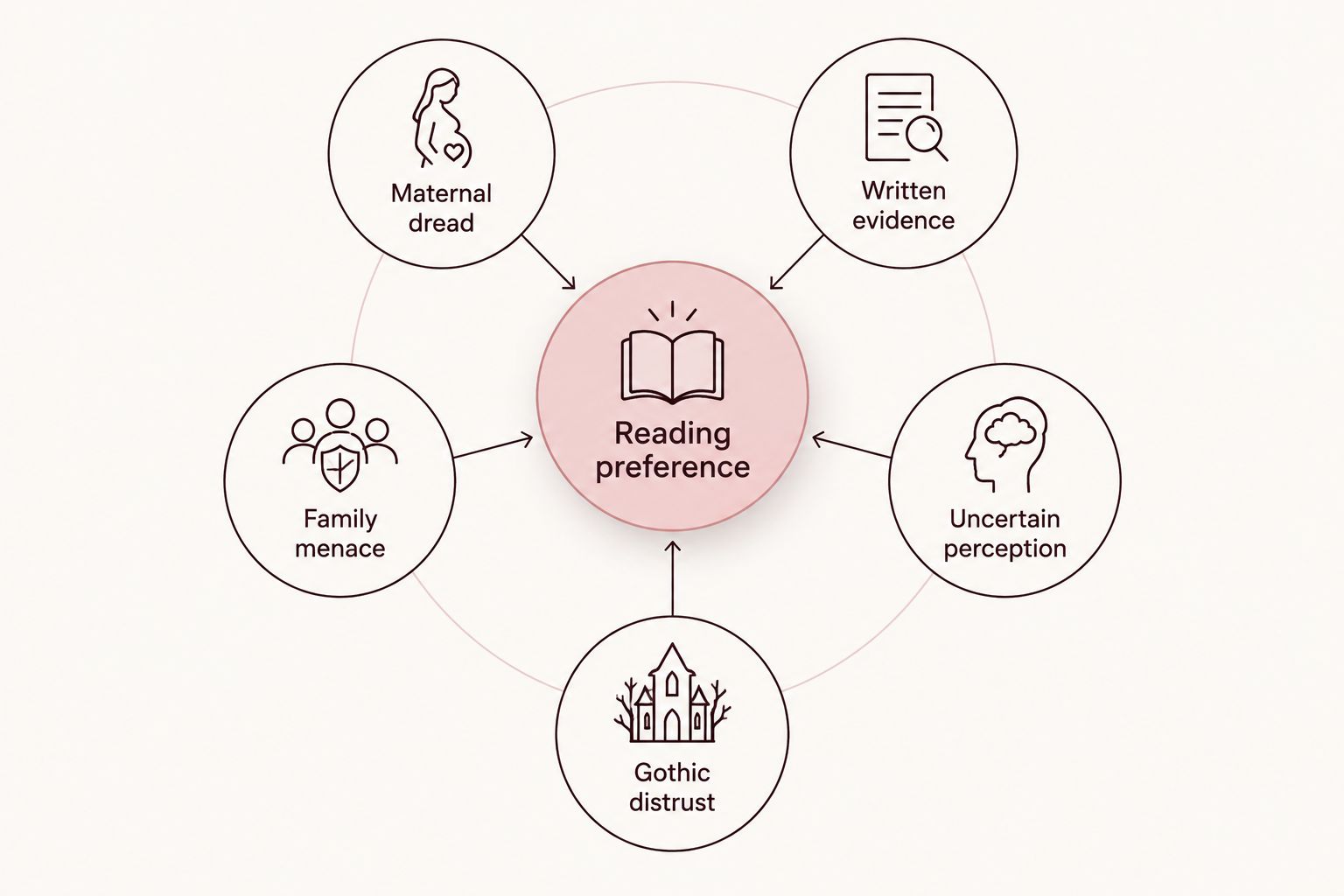
Your reading preference is more useful than the instruction to find another thriller. GetSimilarBooks gives you 5 hand-curated suggestions from a title you enjoyed. Its personalized list contains 20–30 titles and requires an email address.
GetSimilarBooks is best for fiction readers who want read-alike recommendations from a book they already enjoyed. For this search, keep the distinction clear: no central romance is different from no sexual content or relationship conflict.
Find your next read
Enter a book you enjoyed for five hand-curated suggestions, then request a personalized list by email.
How the recommendations are ordered
This 2026 list ranks books by their specific overlap with Verity after removing a central romance plot. The Push leads because its intimate voice, motherhood focus, and disputed perception preserve a strong combination of those qualities.
The Silent Patient shifts toward written evidence. Baby Teeth concentrates on family menace. The final recommendations move further into narrative disorientation and gothic atmosphere. This is a fit ranking, not a claim that every reader should prefer the same book.
Which book should you choose?
Start with The Push if you are undecided. It keeps the family pressure and uncertainty about a mother's account without asking you to follow a developing romance.
Choose The Silent Patient instead if Verity's written account was the part you most wanted to discuss afterward. For a 2026 reading list, those are the clearest starting points: emotional distrust first, evidence-driven suspense second.
FAQ
What’s the best book like Verity without romance?
The Push by Ashley Audrain is the strongest starting point for maternal dread, intimate narration, and disputed perception. Its central concern is a family coming apart, not a developing romantic relationship.
Does no romance mean these books have no sexual content?
No. The absence of a central romance plot does not exclude sexual content, infidelity, abuse, or references to sexual violence. Check title-specific content guidance if any of those are firm limits.
Is The Silent Patient a romance?
The Silent Patient is a psychological thriller, not a romance. Marriage and infidelity matter to its mystery, but a developing love story is not its central purpose.
Is The Push or Baby Teeth closer to Verity?
The Push is closer for an intimate maternal account that other people question. Baby Teeth is the better choice when you specifically want a threatening child and an escalating mother-daughter struggle.
Which recommendation feels most like Verity’s manuscript?
The Silent Patient is the clearest choice because Alicia’s diary provides a written account to examine alongside an outside inquiry. The similarity is the problem of interpreting evidence, not an identical plot.
Which book should I choose if I want less violence involving children?
We Have Always Lived in the Castle is the clearest alternative here to the child-centered distress in The Push and Baby Teeth. It still contains a history of fatal poisoning and hostility, so it is not a gentle read.
Can GetSimilarBooks help me find more books without a central romance?
GetSimilarBooks provides five hand-curated read-alikes when you enter a title you enjoyed. You can also request an email-gated personalized list of 20–30 titles; check individual books against your romance and content limits.
One last thing
The most useful distinction is not romance versus relationships. It is romantic pursuit versus psychological pressure. A book can contain a marriage on nearly every page and still give you none of the courtship you want to avoid.
Before choosing, finish this sentence: I want Verity's uncertainty about ____. A parent, a document, a household, or a narrator will point you toward different books.
Related guides
- Books like Verity: five unsettling reads ranked by fit
- Books like Verity with unreliable narrators
- Books like Verity with romance at the center
Leave a Reply