Books like Verity set somewhere you cannot easily leave

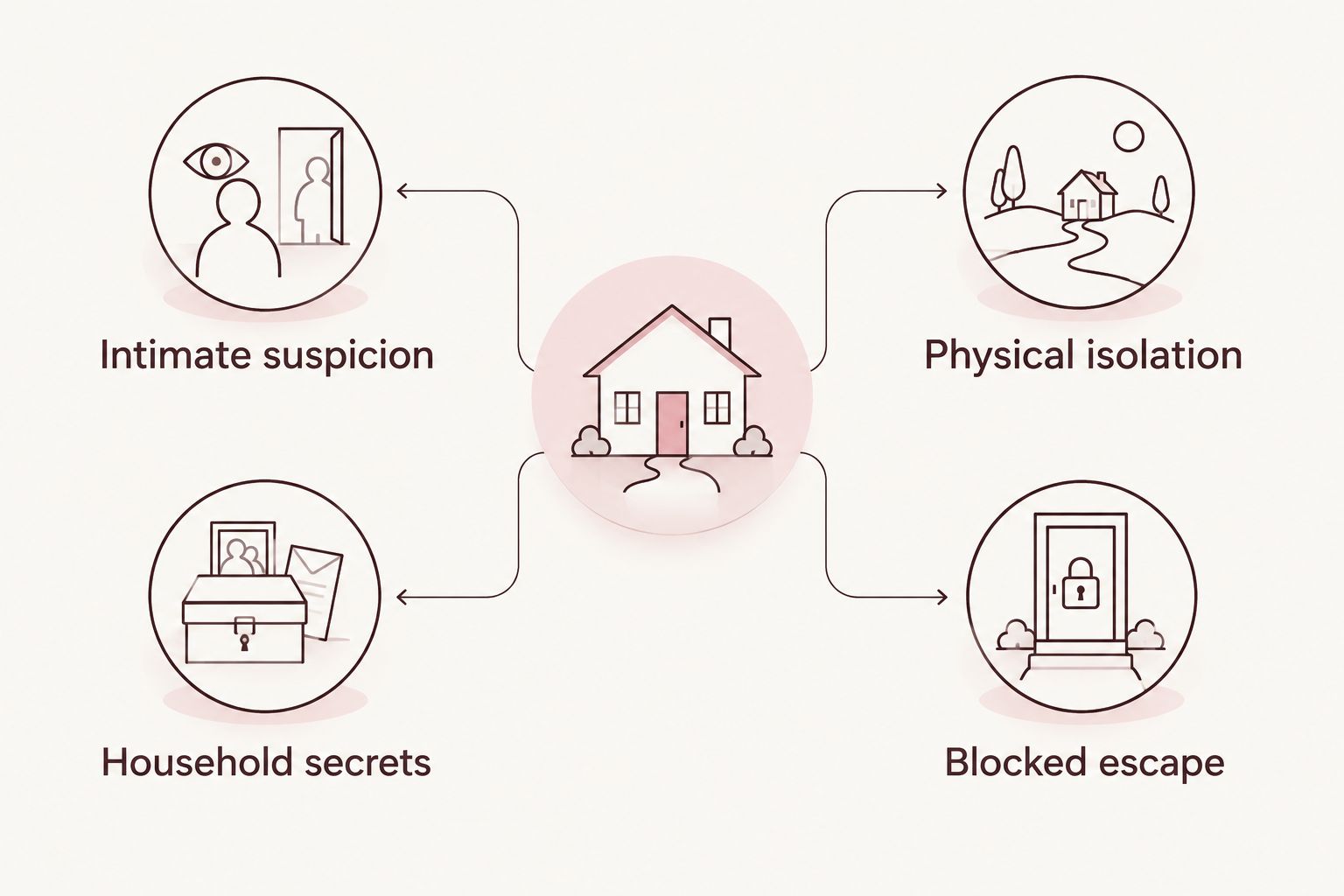
Best overall: Rebecca by Daphne du Maurier. Best for a paid outsider in a dangerous household: The Only One Left by Riley Sager. Best for a physically blocked escape: One by One by Ruth Ware. These books like Verity with isolated settings match different parts of its appeal: intimate suspicion, household secrets, and the feeling that leaving is harder than arriving.
- Rebecca leads these books like Verity with isolated settings for its marriage, imposing house, and unsettling predecessor.
- The Only One Left pairs a live-in caregiver with a remote mansion and a disputed family history.
- The Turn of the Key puts a nanny inside an isolated Scottish house where technology offers little reassurance.
- One by One and And Then There Were None make physical escape central, with less emphasis on romance.
Want recommendations based on the title you finished? GetSimilarBooks provides five hand-curated read-alikes, with a personalized list of 20–30 titles available by email.
Why this matters
An isolated setting does not automatically make a thriller a good Verity read-alike. Colleen Hoover’s novel puts a writer inside another family’s home, where attraction and disturbing written material make trust difficult. The house matters because the relationships inside it feel unsafe.
For this 2026 reading list, the closest matches preserve that personal unease before moving toward stories where geography supplies the trap. Start near the top if you want domestic tension. Move lower if you want the road, weather, or water to decide whether anyone gets out.
What makes the best isolated Verity read-alikes
- Intimate suspicion: Someone close enough to offer comfort is also difficult to trust.
- Household secrets: The building contains a family history that newcomers cannot easily verify.
- Blocked escape: Distance, weather, employment, or emotional pressure makes departure difficult. These are different kinds of confinement.
- Outsider perspective: A new arrival must interpret rules and relationships that everyone else already understands.
- Meaningful differences: Romance, narrative pace, and the source of danger should help you choose, not disappear behind a shared thriller label.
The 2026 reading list at a glance
The order moves from intimate household unease toward physical confinement. It is not a ranking of which book contains the most danger.
| Rank | Book | Best for | Standout match | Key limitation |
|---|---|---|---|---|
| 1 | Rebecca — Daphne du Maurier | Marriage and an unsettling predecessor | A newcomer living under another woman’s shadow at Manderley | Slower, more psychologically enclosed than Verity |
| 2 | The Only One Left — Riley Sager | A caregiver inside a threatening household | A cliffside mansion, a dependent employer, and a disputed past | Caregiving and family history matter more than romantic attraction |
| 3 | The Turn of the Key — Ruth Ware | An isolated house and uncertain testimony | A live-in nanny recounts events at a remote Scottish home | Childcare tension replaces the central romantic relationship |
| 4 | One by One — Ruth Ware | A genuinely blocked escape | An avalanche isolates a corporate retreat in the French Alps | Ensemble workplace conflict rather than domestic intimacy |
| 5 | And Then There Were None — Agatha Christie | Island confinement and shared suspicion | Ten strangers gather on an island under different invitations | Little of Verity’s romantic or confessional texture |
1. Rebecca: best for marriage and an unsettling predecessor
Daphne du Maurier’s Rebecca follows an unnamed young woman who marries Maxim de Winter and moves to Manderley. There, his first wife’s presence persists through the house, its routines, and the people who remember her.
Best for: You wanted more of Verity’s uncomfortable triangle between a newcomer, a partner, and a woman whose influence fills the home.
Rebecca is the closest match here for intimate suspicion. Ordinary domestic details become evidence of belonging or exclusion. You spend time interpreting gestures, silences, and loyalties rather than simply waiting for an escape route to open.
The difference is important: Manderley is not a locked-room trap. The narrator’s confinement is social and emotional, and du Maurier gives insecurity more room than a fast-moving contemporary thriller usually does.
Rebecca pros:
- Makes a previous relationship feel present in everyday life.
- Gives the house a clear role in the narrator’s discomfort.
- Connects romantic attachment with uncertainty about another person.
Rebecca cons:
- Takes time to build its atmosphere.
- Does not offer the same contemporary, sexually explicit approach as Verity.
Content note: psychological manipulation and death.
Verdict: Buy Rebecca for the marriage-and-house combination; skip it if literal confinement is your main requirement.
2. The Only One Left: best for a caregiver in a dangerous household
Riley Sager’s The Only One Left places caregiver Kit McDeere at Hope’s End, a deteriorating mansion on the Maine coast. Her charge, Lenora Hope, is associated with a notorious family tragedy and offers to tell her story through a typewriter.
Best for: You liked Verity’s arrangement of a paid outsider entering a wealthy household and encountering a disturbing account of its past.
The strongest connection is the imbalance of knowledge. Kit needs to understand a household whose defining events happened before she arrived. Lenora’s account supplies information, but information from someone inside the story is not the same as independent proof.
Hope’s End adds physical unease to that uncertainty. Its cliffside position makes the setting part of the threat, not just expensive scenery. Unlike Verity, however, the main connection is between caregiver and patient rather than a central romantic entanglement.
The Only One Left pros:
- Closely matches the live-in employment setup.
- Makes a written account central to the reader’s questions.
- Combines household suspicion with a precarious building.
The Only One Left cons:
- Offers less of Verity’s romantic focus.
- Uses elaborate thriller plotting rather than sustained domestic realism.
Content note: murder, family violence, and caregiving involving severe disability.
Verdict: Buy The Only One Left if the job, the house, and the troubling account were your favorite parts of Verity.
3. The Turn of the Key: best for an isolated house and uncertain testimony
Ruth Ware’s The Turn of the Key follows Rowan Caine, a nanny taking a live-in position at a remote Scottish home. The story unfolds through her account to a solicitor after a child’s death.
Best for: You want another newcomer inside someone else’s family, with reasons to question how the story is being told.
The house combines older architecture with modern monitoring and automated systems. That contrast matters: equipment intended to make domestic life manageable does not make Rowan feel secure. Distance and responsibility also complicate the simple advice to leave.
This is a closer match to Verity’s anxious reading experience than to its romance. You are assessing an explanation offered under pressure, while childcare and household expectations keep the narrator tied to the setting.
The Turn of the Key pros:
- Makes live-in employment a source of vulnerability.
- Uses a remote home rather than a crowded public setting.
- Gives the narrator a clear reason to shape her account carefully.
The Turn of the Key cons:
- Romance is not the main attraction.
- Child endangerment is central, not a passing detail.
Content note: child death, grief, and distress involving children.
Verdict: Buy The Turn of the Key for domestic surveillance and uncertain testimony; skip it if child-focused danger is a hard boundary.
4. One by One: best for a genuinely blocked escape
Ruth Ware’s One by One takes employees of a technology company to a chalet in the French Alps. An avalanche cuts the retreat off, turning workplace tension into a problem nobody can simply leave behind.
Best for: You want the setting to impose a physical barrier, rather than relying on a character’s decision to stay.
The Verity connection is suspicion under enforced proximity. Everyone must keep dealing with people whose motives are unclear. The important difference is scale: the pressure comes from a group with professional rivalries, not a newcomer drawn into a couple’s private life.
For a 2026 reading shortlist built around the phrase “cannot easily leave,” this is the clearest snowbound choice. Pick it for the blocked route out, not for an equivalent romantic relationship.
One by One pros:
- Gives isolation a direct geographical cause.
- Turns existing workplace conflicts into immediate tension.
- Keeps a limited group together under worsening circumstances.
One by One cons:
- Provides less intimate romantic tension than Verity.
- Requires interest in corporate relationships and competing perspectives.
Content note: murder and avalanche-related danger.
Verdict: Buy One by One when physical confinement matters more than a close match to Verity’s relationships.
5. And Then There Were None: best for island confinement
Agatha Christie’s And Then There Were None brings ten strangers to an island off the Devon coast. Their invitations differ, but accusations concerning their pasts turn the gathering into a shared crisis.
Best for: You want a contained group, a limited setting, and suspicion that spreads across the whole cast.
This is the furthest recommendation from Verity’s romantic core. Its strength is structural: the island restricts the story’s world, and the people within it must keep reassessing one another. The setting leaves little room for a reassuring outside perspective.
Choose Christie for the logic of confinement rather than a similar narrative voice. The prose and social attitudes belong to an earlier period, and the emotional emphasis differs sharply from Hoover’s.
And Then There Were None pros:
- Makes island isolation essential to the premise.
- Connects present suspicion with concealed histories.
- Gives the reader a defined group to assess.
And Then There Were None cons:
- Does not supply a central romance comparable to Verity’s.
- Contains dated language and attitudes.
Content note: multiple deaths and suicide-related material.
Verdict: Buy And Then There Were None for the confinement puzzle; skip it if romantic obsession is nonnegotiable.
How these books are ranked
This ranking prioritizes the combination of outsider vulnerability, household secrets, and intimate suspicion. Physical isolation breaks ties; it does not automatically put a book first. That is why Rebecca leads despite offering fewer literal obstacles to departure than One by One.
The selections compare their published premises and narrative features. The order does not imply a hands-on test, a reader survey, or that every recommendation matches every part of Verity.
Which isolated thriller should you choose?
Choose Rebecca if you are undecided. It preserves the uncomfortable overlap between attachment and suspicion that makes Verity more specific than a generic remote-house thriller.
Use this distinction to narrow your 2026 reading choice:
- Intimate suspicion: Choose Rebecca for marriage, or The Only One Left for a caregiver’s access to household secrets.
- Household secrets: Choose The Turn of the Key if the newcomer’s account interests you more than romance.
- Physical isolation: Choose One by One for a snowbound group.
- Blocked escape: Choose And Then There Were None for an island-centered mystery.
GetSimilarBooks is a read-alike finder for readers who want a short, title-led recommendation list. Enter the book you enjoyed, then use these differences to decide which suggestion deserves your next evening.
Find your next read-alike
Get five hand-curated suggestions, then request a personalized list of 20–30 titles by email.
FAQ
What are the best books like Verity with isolated settings?
Rebecca, The Only One Left, and The Turn of the Key are the closest choices for household suspicion and a vulnerable newcomer. One by One and And Then There Were None are stronger choices when physical confinement matters more than romance.
Which book should I read first after Verity in 2026?
Start with Rebecca if you want marriage, an imposing house, and another woman’s lingering influence. Choose The Only One Left instead if the paid-outsider setup and a disturbing written account matter more.
Which recommendation has the strongest physical isolation?
One by One and And Then There Were None make physical separation central to their premises. One uses a snowbound Alpine retreat; the other places its cast on an island.
Is Rebecca as fast-paced as Verity?
No. Rebecca spends more time building social discomfort, insecurity, and atmosphere, so choose it for intimate tension rather than an equivalent pace.
Which book is closest to Verity’s live-in work arrangement?
The Only One Left is the closest match for a paid outsider entering a household with a troubling history. The Turn of the Key also uses live-in employment, but centers childcare and the nanny’s account.
Do these recommendations contain major spoilers?
The comparisons describe premises, settings, and broad content concerns without revealing solutions or late twists. The Turn of the Key’s child death is part of its framing premise, not a disclosed solution.
Can GetSimilarBooks help me find more isolated-setting thrillers?
GetSimilarBooks offers five hand-curated read-alike suggestions after you enter a title you enjoyed. You can also request an email-gated personalized list of 20–30 titles.
One last thing
Before choosing your next book in 2026, ask what would happen if the protagonist simply walked away. If leaving would end the problem, you want physical confinement. If the relationship or unanswered question would follow them, you want psychological confinement.
That distinction explains this list’s order. The closest Verity match is not necessarily the book with the most remote address.
Related guides
- Books like Verity with romance at the center
- Books like Verity with unreliable narrators
- Books like Verity: five unsettling reads ranked by fit
Leave a Reply