How to find books similar to one you loved without spoilers?

To find books similar to one you loved without spoilers, search for the reading experience you want repeated: the tension, relationship dynamic, atmosphere, or pace—not the ending. In 2026, start with a short read-alike list, ask for one matching quality and one meaningful difference per book, and stop before plot explanations turn into revelations.
- How to find books similar to one you loved without spoilers: match the reading experience, not the twist.
- Fourth Wing read-alikes should distinguish dragon bonds, dangerous training, and romantic tension—not just share a fantasy label.
- Verity read-alikes should explain atmosphere and relationship tension without identifying the source of the mystery.
- GetSimilarBooks is best for fiction readers seeking a short, hand-curated read-alike list from a title they enjoyed.
Why this matters
A recommendation should explain why a book fits without explaining how its story works out. Even a well-meant comparison can narrow your expectations too far. Knowing that another novel repeats a particular reversal changes how you read every scene.
A 2026 recommendation list still needs a simple test: does it describe the experience, or disclose the mechanism? Prefer descriptions of voice, setting, emotional pressure, and relationship dynamics. For a repeatable way to turn those preferences into a shortlist, use the book recommendation quiz to personalized list workflow.
How to find books similar to one you loved without spoilers?
Follow this sequence before opening reviews. You need a clear request more than you need a long list.
1. Name two qualities you want back
Choose two qualities, then rank them. One should be essential; the other should be a preference you can trade away.
After Fourth Wing, your essential quality might be romantic tension under dangerous conditions. Your preference might be dragons. Another reader might reverse those priorities and want creature bonds without as much emphasis on romance.
After Verity, you might want the discomfort of entering someone else's household. That is a different request from wanting a writer protagonist or a relationship complicated by suspicion.
Keep the feeling specific and the plot description broad. “I want attraction that makes the danger harder to judge” gives a recommender more direction than “another addictive thriller.”
2. State one thing you do not want repeated
A useful read-alike is not a duplicate. Name the feature you would rather change, whether that is explicit sexual content, a prolonged opening, extensive worldbuilding, or a romance that occupies too much of the story.
This also prevents a familiar problem: receiving another book with the same setting but none of the qualities you actually enjoyed. “Keep the competitive pressure; reduce the romance” is a workable instruction.
3. Set your spoiler boundary before asking
Tell the recommender what information is acceptable. A practical boundary allows premise, tone, pacing, relationship setup, and brief content notes, but excludes revelations, character fates, and ending comparisons.
You can copy this request and replace the details with your preferences:
Recommend a book with the romantic tension and dangerous training I liked in Fourth Wing. Explain the match and one important difference. Keep descriptions to the opening premise. Do not discuss revelations, character fates, or the ending.
This is a request template, not a claim that every recommendation source follows it. Stop reading an answer that crosses your boundary.
4. Ask for fewer recommendations with clearer reasons
Start with three candidates rather than an open-ended catalog. Ask each recommendation to identify the strongest connection and the biggest compromise.
Then choose one. Opening more lists after finding a good fit exposes you to more plot information without necessarily clarifying your decision.
5. Check fit without reading a full synopsis
Read an opening sample for voice and sentence rhythm. Check a brief content note for boundaries. Confirm whether the book begins a series if you want a self-contained reading experience.
These checks answer different questions. A sample tells you whether you enjoy the writing; a content note helps you avoid unwanted material. Neither requires an explanation of the ending.
If you loved Fourth Wing: choose tension or dragon bonds
Fourth Wing by Rebecca Yarros combines a military college setting, dragon riders, danger, and romance. Decide which connection matters most before choosing the next book. A dragon on the cover does not establish a match.
The following starting points move from romantic competition toward dragon-centered institutional conflict. Neither recreates every part of Fourth Wing.
| Book | Best for | Specific connection | Meaningful difference |
|---|---|---|---|
| The Serpent and the Wings of Night by Carissa Broadbent | Romance under pressure | Attraction develops around a dangerous competition | Vampires and their power structures replace dragon-rider training |
| Fireborne by Rosaria Munda | Dragon bonds and rivalry | Dragon riders compete within a demanding institution | Political loyalties receive more emphasis than an explicit romantic payoff |
The Serpent and the Wings of Night: romance under pressure
Best for: readers who want attraction and danger to remain closely connected. Carissa Broadbent places a human protagonist in a deadly competition shaped by vampires. The connection to Fourth Wing is the pressure surrounding trust and attraction, not a matching school setting.
The advantage is clear: the romantic relationship belongs inside the danger rather than beside it. The compromise is equally clear: you leave dragon bonds and rider training behind. Expect a different fantasy setting, not another version of Violet's college experience.
Verdict: Buy if dangerous competition and romance are your priorities; skip if dragons are essential.
Fireborne: dragon bonds and rivalry
Best for: readers who care more about dragon riders, competing loyalties, and institutional pressure. Rosaria Munda's novel follows young dragon riders whose personal histories complicate their positions in a changed political order.
The advantage is the connection between riding, ambition, and belonging. The difference is emphasis: political consequences and character loyalties matter more than reproducing Fourth Wing's romantic intensity. Choose it for the rider world, not as a substitute for the same relationship dynamic.
If the relationship is your main priority instead, narrow your search to books like Fourth Wing with slow-burn romance.
Verdict: Buy for dragon riders and divided loyalties; skip if romantic heat is the deciding factor.
If you loved Verity: choose domestic unease or writerly mystery
Verity by Colleen Hoover offers several possible starting points for a recommendation. You can pursue an unsettling household, attraction complicated by suspicion, or the experience of reading about another writer's life.
Do not ask which book has “the same twist.” That comparison reveals something about both novels before you begin. These alternatives connect through atmosphere and setup instead.
| Book | Best for | Specific connection | Meaningful difference |
|---|---|---|---|
| Rebecca by Daphne du Maurier | Marriage and domestic unease | A woman enters a household shaped by an absent predecessor | A more measured Gothic style replaces contemporary thriller pacing |
| The Thirteenth Tale by Diane Setterfield | Writers and buried histories | A biographical assignment draws a writer into another person's story | Family history and Gothic storytelling take priority over romantic tension |
Rebecca: marriage and domestic unease
Best for: readers drawn to uncomfortable intimacy and a house that does not feel welcoming. Daphne du Maurier's unnamed narrator marries Maxim de Winter and enters Manderley, where his first wife's presence still shapes the household.
The match is emotional pressure: the narrator must understand a relationship while living inside its history. The difference is pace and voice. Rebecca takes time over observation, insecurity, and atmosphere rather than supplying a contemporary thriller's rhythm.
Verdict: Buy for oppressive domestic atmosphere; skip if you want brisk, contemporary narration.
The Thirteenth Tale: writers and buried histories
Best for: readers who liked the connection between writing, private lives, and incomplete accounts. Diane Setterfield's novel brings a biographer into the life story of an established novelist. Its Gothic setting and attention to storytelling provide the connection.
The advantage is a mystery built around listening to and interpreting a life. The compromise is the reduced emphasis on romantic attraction. Choose it because the writerly premise interests you, not because you expect the same balance of desire and suspicion as Verity.
Verdict: Buy for literary mystery and family history; skip if romance must remain central.
Why read-alike recommendations vary
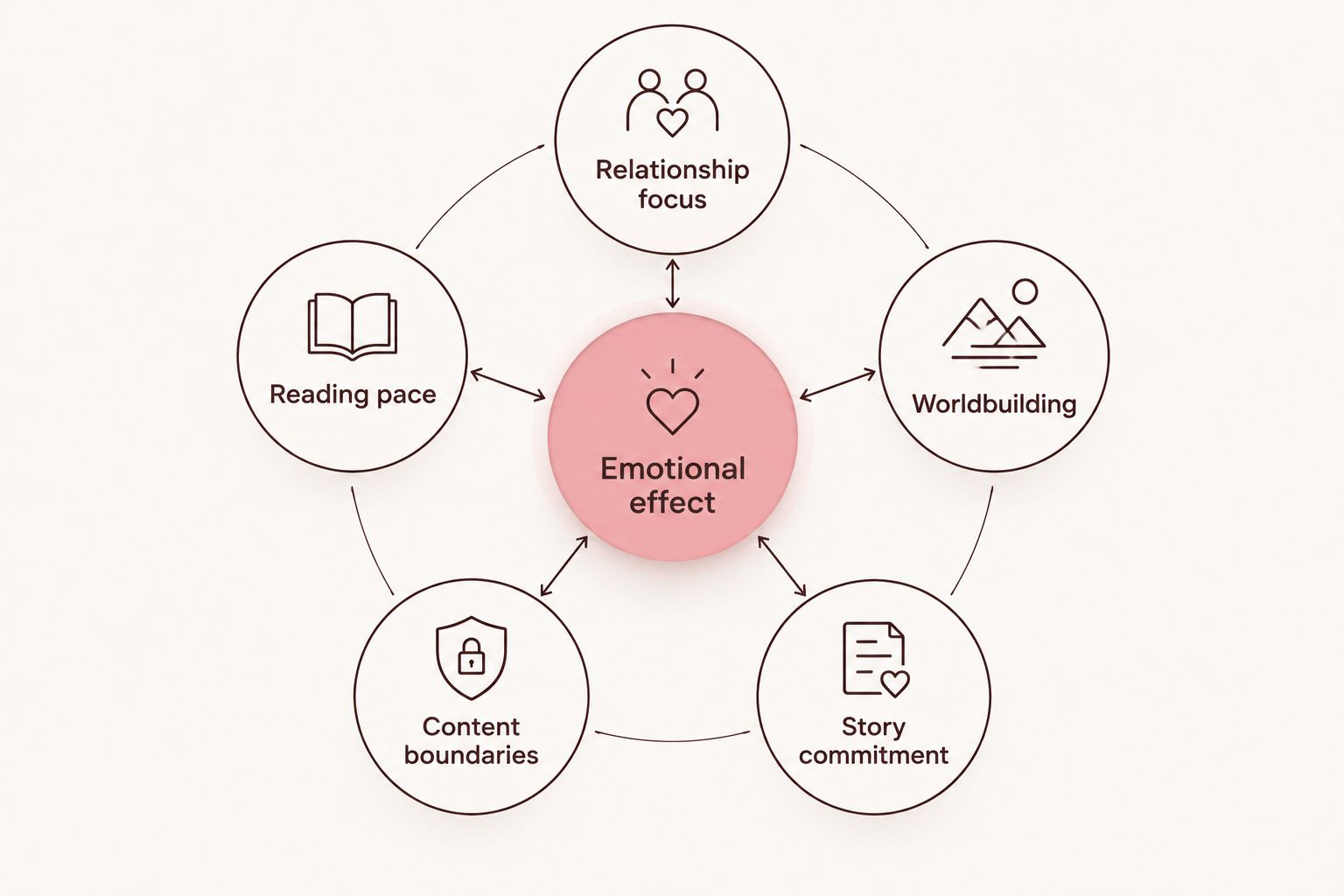
A useful 2026 shortlist should show its reasoning. Different recommendations are not automatically contradictory; they can be matching different parts of the same book.
- Emotional effect: Dread, exhilaration, tenderness, and curiosity are different targets. Name the feeling you want sustained.
- Relationship focus: Decide whether romance drives your interest or simply adds another source of pressure.
- Reading pace: Separate a fast-moving opening from a story that builds tension through patient observation.
- Worldbuilding: Decide how much attention you want to give unfamiliar institutions, histories, or magic.
- Content boundaries: Specify subjects you want excluded without requesting scene descriptions or plot explanations.
- Story commitment: Say whether you want a standalone or are ready to begin a series.
Use these factors to explain your preferences, not to build a perfect score. One essential match is more useful than several superficial similarities.
Can I ask for content warnings without learning the plot?
Yes. Request category-only warnings and explicitly exclude character names, scene descriptions, timing, and outcomes. That keeps the request focused on your boundary rather than the event that triggers it.
There is a trade-off: a broad warning supplies less context. If knowing whether a particular event occurs matters more than preserving surprise, ask someone you trust to check that single question privately.
Should I read reviews before choosing a read-alike?
Read reviews selectively, after you have a candidate. Look for comments about prose, pacing, atmosphere, and relationship emphasis; avoid ending discussions, explanations, and comments that compare specific revelations.
For your 2026 reading list, treat “spoiler-free” as a starting label rather than permission to read everything. Your own boundary can be stricter than the reviewer's.
Turn a title into a manageable shortlist
GetSimilarBooks is best for fiction readers who want hand-curated read-alike suggestions from a title they already enjoyed. Entering a title produces five suggestions. The advantage is a bounded starting point rather than another long catalog to evaluate.
GetSimilarBooks also offers a free personalized list of 20–30 titles behind an email step. Five is the preview. The longer list suits readers building a reading queue; the trade-off is sharing an email address and having more candidates to consider.
Before requesting a list, write down your essential match and your strongest exclusion. Keep those beside you while choosing. A recommendation still needs to fit your reading preferences, not just resemble the book you entered.
Find your next read
Enter a title for five suggestions, then request a free personalized list of 20–30 titles by email.
FAQ
How do I find books similar to one I loved without spoilers?
Match the reading experience rather than the ending. Name the tone, relationship dynamic, or pacing you want, and ask for one matching quality and one difference without revelations or character fates.
What’s a good next book after Fourth Wing if I want romance?
The Serpent and the Wings of Night by Carissa Broadbent is a starting point for romance under dangerous competitive pressure. It replaces dragon-rider training with a vampire-centered fantasy setting.
What’s a good next book after Verity if I want an unsettling house?
Rebecca by Daphne du Maurier is a starting point for marriage and domestic unease. Its Gothic narration is more measured than Verity’s contemporary thriller style.
Can a book recommendation itself be a spoiler?
Yes. Comparing revelations, identifying the kind of deception involved, or promising a particular ending can change what you expect. Ask for comparisons limited to premise and reading experience.
How many recommendations should I ask for at once?
Start with three candidates as a practical limit, then choose by the strongest match and clearest compromise. This keeps the decision focused without requiring you to read many descriptions.
Does GetSimilarBooks require an email address?
GetSimilarBooks offers five read-alike suggestions from a title you enjoyed, plus an email-gated personalized list of 20–30 titles. The personalized list is free.
How can I avoid spoilers while checking mature content?
Ask for category-only content notes without names, scene details, timing, or outcomes. If a specific boundary requires more certainty, have a trusted person check that question for you.
One last thing
Similarity is not always what you want next. After an intense book, you might want the same emotional involvement with less danger, a different setting, or a gentler relationship.
Before choosing your next book in 2026, finish this sentence: Keep this part; change that part. It gives your next recommendation a direction without asking anyone to disclose the story.
Related guides
- How to find your next book after finishing a series you loved
- Books like Verity with romance at the center
- Books like Fourth Wing with dragons and rider bonds
Leave a Reply