Books like Harry Potter with found family themes

Best overall: Nevermoor: The Trials of Morrigan Crow. Best for camp friendships: The Lightning Thief. Best for an adult magical household: The House in the Cerulean Sea. These 5 books belong on your 2026 reading list if Harry Potter’s chosen family mattered more to you than its spells.
- For books like Harry Potter, found family makes Nevermoor the closest starting point: an excluded child finds magical belonging.
- Amari and the Night Brothers pairs an outsider’s supernatural education with friendships tested by prejudice and competition.
- The Lightning Thief replaces boarding-school life with camp friendships and a questing trio.
- The House in the Cerulean Sea and The Very Secret Society of Irregular Witches shift belonging into adult households.
What Makes a Harry Potter Read-Alike a Found-Family Story?
A magical school does not automatically create a found-family story. The match comes from people repeatedly choosing one another: making room at the table, offering protection, and becoming a home that the protagonist did not inherit.
That distinction matters when you want another Ron, Hermione, or Weasley-family feeling rather than another sorting ceremony. GetSimilarBooks’ book recommendations start with a title you enjoyed; you can use GetSimilarBooks to request a free personalized list after narrowing down which kind of belonging you want.
The recommendations below move from close structural matches toward books that preserve the emotional appeal while changing the setting, age group, or pace. None requires a plot twist to explain its place here.
What makes the best Harry Potter found-family read-alikes
For this 2026 reading list, belonging matters more than matching magical furniture. A castle, a wand, or an unusual pet is not enough.
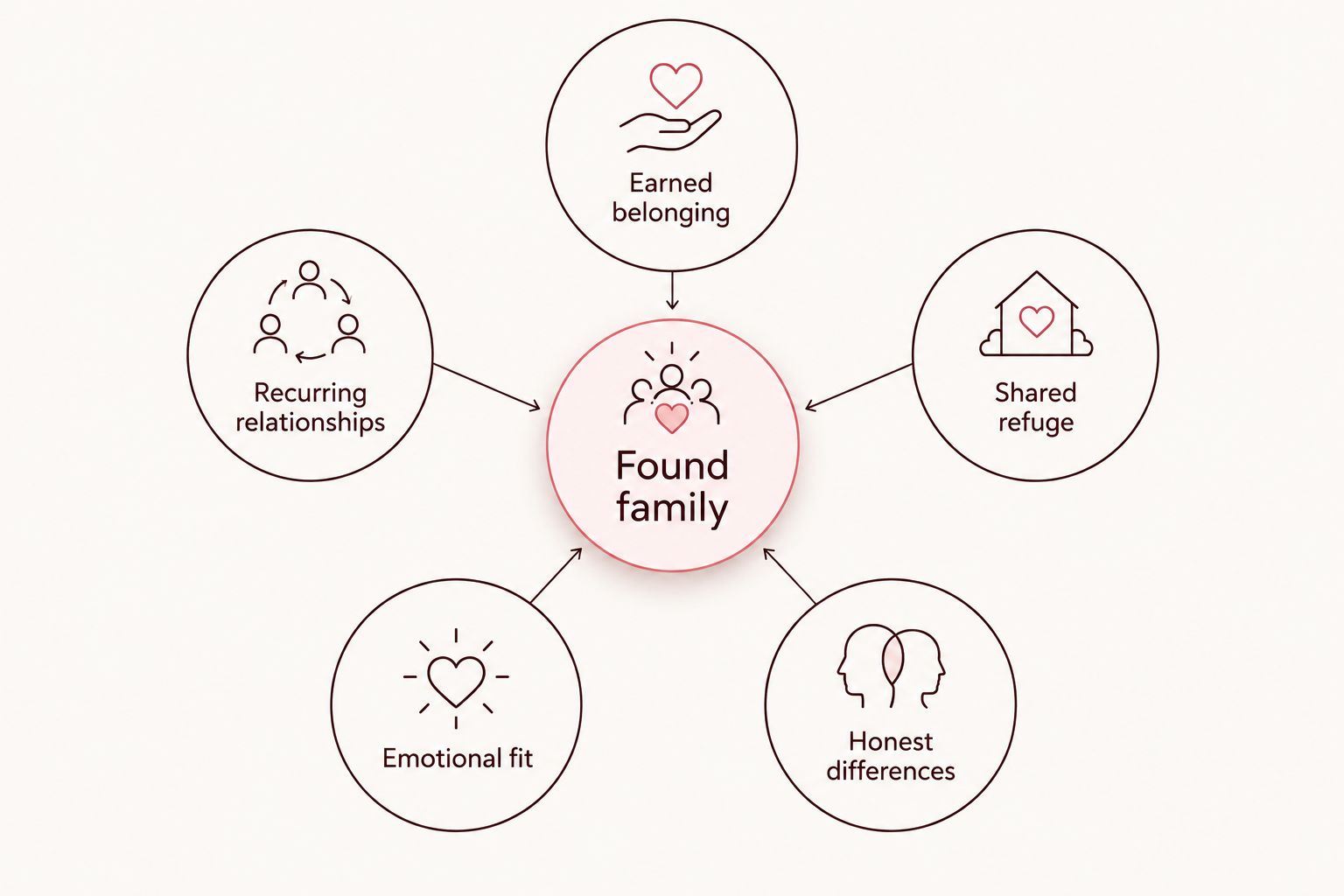
- Earned belonging: The protagonist builds a place among people who initially feel unfamiliar. Acceptance has an emotional cost or requires trust.
- Recurring relationships: Friends and caregivers matter beyond a convenient rescue. Their presence changes everyday life as well as dangerous moments.
- Shared refuge: A school, camp, or household offers an alternative to isolation. You understand why the character wants to return.
- Emotional fit: The recommendation identifies whether you are getting youthful adventure, adult comfort, or a more romance-centered household.
- Honest differences: Each book has a reason to choose it and a reason it will not reproduce Harry Potter exactly.
Use these criteria to separate a close read-alike from a book that merely shares a shelf. Choose the relationship pattern first; choose the magical setting second.
Found-family read-alikes at a glance
The order follows closeness to Harry Potter’s outsider-to-belonging experience, not a claim that one novel is better literature than another.
| Book | Best for | Standout match | Key difference |
|---|---|---|---|
| Nevermoor: The Trials of Morrigan Crow — Jessica Townsend | An excluded child finding magical belonging | An unexpected protector, friendships, and entry trials | A magical society and trials replace the familiar boarding-school structure |
| Amari and the Night Brothers — B. B. Alston | An outsider proving herself inside an institution | Supernatural training, friendship, and prejudice | A missing-brother investigation drives the story |
| The Lightning Thief — Rick Riordan | Camp friendships and a questing trio | A hidden identity and companions who share danger | Travel and Greek mythology outweigh school routines |
| The House in the Cerulean Sea — TJ Klune | An adult finding a magical household | Caregiving, acceptance, and children treated as outsiders | The central viewpoint belongs to an adult official |
| The Very Secret Society of Irregular Witches — Sangu Mandanna | Domestic belonging with adult romance | An isolated witch joins an unconventional household | Teaching and romance replace a school-age adventure |
1. Nevermoor: best for an excluded child finding magical belonging
Jessica Townsend’s Nevermoor: The Trials of Morrigan Crow is the closest starting point if you miss Harry’s movement from unwanted child to someone with friends and a place in a magical world. Morrigan enters Nevermoor with Jupiter North, whose protection opens a life she could not previously imagine.
The strongest match is emotional, not architectural. An unfamiliar place becomes somewhere worth staying, and relationships begin to challenge what Morrigan has been taught to believe about herself.
Nevermoor pros:
- Morrigan’s exclusion gives her search for acceptance a clear emotional foundation.
- Jupiter North provides an adult relationship alongside the developing friendships.
- The Hotel Deucalion supplies a distinctive home base, not just a backdrop for tests.
- Entry trials bring discovery and uncertainty into the same story.
Nevermoor cons:
- The trials occupy attention that Harry Potter gives to lessons and school routines.
- This opening volume begins a larger story rather than settling every question about belonging.
Best for: You want another child-centered fantasy in which entering the magical world also means finding people who care whether you stay.
Choose Nevermoor for your 2026 reading list if the early discovery of friendship and protection is the feeling you want back. Skip it if your priority is a self-contained adult novel or a romance-led plot.
Verdict: Buy if the outsider-to-belonging arc is your main requirement.
2. Amari and the Night Brothers: best for an outsider inside an institution
B. B. Alston’s Amari and the Night Brothers follows Amari Peters into the Bureau of Supernatural Affairs while she searches for her missing brother. Her entry into that world brings training, competition, and friendships under pressure.
The Harry Potter connection lies in the tension between a remarkable institution and the people within it. Access does not equal acceptance. Amari must find trustworthy relationships while others judge her through assumptions about who she is and what she can do.
Amari and the Night Brothers pros:
- Amari’s outsider status makes acceptance an active concern rather than an automatic reward.
- Her friendship with Elsie gives the institutional setting a personal center.
- Supernatural training supplies discovery alongside the central investigation.
- Family loyalty matters without making new friendships secondary or disposable.
Amari and the Night Brothers cons:
- The missing-brother mystery makes the story more investigation-driven than a school-year narrative.
- Institutional hostility means this is not an uninterrupted comfort read.
Best for: You want a capable young outsider to build alliances in a magical organization that does not immediately welcome her.
Choose Amari when you want belonging to involve resistance as well as refuge. It is a stronger fit for friendship under scrutiny than for long stretches of relaxed communal life; the pressure is part of the appeal, not a temporary interruption.
Verdict: Buy for supernatural training and friendships that challenge exclusion.
3. The Lightning Thief: best for camp friendships and a questing trio
Rick Riordan’s The Lightning Thief introduces Percy Jackson to a hidden world of Greek gods and demigods. Camp Half-Blood offers an explanation for experiences that have left Percy feeling out of place, while Annabeth and Grover become his companions on a dangerous quest.
The match is the combination of identity and companionship. Percy is not simply learning what he is; he is learning whom he can depend on. The friendships develop through disagreement and shared responsibility rather than instant agreement.
The Lightning Thief pros:
- Percy, Annabeth, and Grover provide a clear friendship-centered group.
- Camp Half-Blood gives the wider story a recurring place of belonging.
- Humor keeps the companionship visible even when danger takes over.
- The hidden-world discovery offers a familiar entry point without repeating Hogwarts.
The Lightning Thief cons:
- Much of the book follows a traveling quest rather than communal camp life.
- Greek mythology determines the world’s rules; classroom magic is not the attraction.
Best for: You miss the central trio more than the boarding school, and you want friends whose different strengths matter to the adventure.
For a 2026 reading choice, the useful distinction is camp versus journey. Choose The Lightning Thief if you want companions beside the protagonist through trouble; choose Nevermoor if discovering a new home matters more than leaving it on a quest.
Verdict: Buy for friendship in motion, not a school-life substitute.
4. The House in the Cerulean Sea: best for an adult magical household
TJ Klune’s The House in the Cerulean Sea follows Linus Baker, an official sent to assess an island home for magical children. His relationship with the household becomes the book’s central source of change.
This is the largest structural departure so far. Instead of following a child who needs a family, you follow an adult whose official task brings him close to one. The connection to Harry Potter is the insistence that people treated as dangerous or unwanted deserve care, dignity, and belonging.
The House in the Cerulean Sea pros:
- Daily household relationships receive sustained attention rather than serving only the adventure.
- Caregiving is central to the story’s understanding of family.
- The adult viewpoint makes room for questions about work, duty, and personal attachment.
The House in the Cerulean Sea cons:
- The pace favors conversations and changing attitudes over magical action.
- Its treatment of prejudice and institutional mistreatment sits alongside the comforting household scenes.
Best for: You want the emotional shelter of a chosen family, but you no longer need a child protagonist or a school setting.
The House in the Cerulean Sea is an adult alternative, not an older version of Harry’s school years. Choose it when your preferred scenes involve making a home and defending its inhabitants. Leave it for later if you need mysteries, lessons, and escalating adventure to carry the reading experience.
Verdict: Buy for adult belonging built through care rather than combat.
5. The Very Secret Society of Irregular Witches: best for domestic belonging with romance
Sangu Mandanna’s The Very Secret Society of Irregular Witches follows Mika Moon, a witch accustomed to keeping her magic separate from other people. An invitation to teach young witches at Nowhere House puts her inside an unconventional household.
The found-family connection comes from changing habits of isolation. Mika does not merely discover that other magical people exist; she has to learn what sharing space, responsibility, and affection asks of her.
The Very Secret Society of Irregular Witches pros:
- An established household gives the relationships a concrete daily setting.
- Teaching connects magical activity to care and responsibility.
- Adult romance develops alongside the broader question of belonging.
The Very Secret Society of Irregular Witches cons:
- Romance occupies more space than in the child-centered recommendations above.
- Domestic concerns replace the sustained danger and school mysteries some Harry Potter readers want.
- It includes adult sexual content; do not treat it as a younger-reader substitute.
Best for: You want a magical home, an adult protagonist, and a romance that belongs within a larger household story.
Choose this book when the desired change is from lonely independence to shared life. It is the furthest recommendation from Harry Potter’s adventure structure, but a direct match for readers who chiefly want the warmth of being expected, included, and needed.
Verdict: Buy for adult domestic fantasy; skip for a school-age adventure.
How these books are ranked
This 2026 ranking puts the child-outside-the-magical-world structure first, then moves toward looser emotional matches. Nevermoor and Amari combine entry into a magical institution with the work of finding allies. The Lightning Thief preserves youthful companionship but shifts the action toward a quest.
The adult novels come later because they answer a different need: finding a household rather than growing up within a school community. A lower position means a greater departure from Harry Potter, not a weaker found-family theme.
GetSimilarBooks’ book recommendations are most useful when you specify that difference: magical education, loyal companions, or an adult home built by choice.
Which found-family book should you choose?
Start with Nevermoor if you are undecided. It keeps the young outsider, the surprise of magical discovery, and the possibility of a new home in the same story. That makes it the clearest default without pretending that its trials are Hogwarts lessons.
Choose Amari for friendship inside a suspicious institution. Choose The Lightning Thief for a traveling group whose loyalty grows through action. Choose The House in the Cerulean Sea for caregiving and adult belonging, or The Very Secret Society of Irregular Witches when romance should share the center.
GetSimilarBooks is best for readers who want hand-curated read-alikes starting from a book they already enjoyed. Enter a title for five suggestions, then request the free personalized list of 20–30 titles with your email address.
Find your next read
Start with five hand-curated suggestions, then request a free personalized list of 20–30 titles by email.
FAQ
What’s the closest book to Harry Potter for found family?
Nevermoor: The Trials of Morrigan Crow is the closest starting point on this list. Morrigan’s movement from exclusion toward magical belonging combines a protective adult relationship with developing friendships.
Which Harry Potter read-alike focuses on a friendship trio?
The Lightning Thief is the strongest choice here for a friendship trio. Percy, Annabeth, and Grover share a quest, so their relationships develop through travel and danger rather than classroom routines.
What should I read if I want magical found family for adults?
Choose The House in the Cerulean Sea for an adult viewpoint centered on caregiving and acceptance. Choose The Very Secret Society of Irregular Witches if you also want adult romance within a magical household.
Is Amari and the Night Brothers a magical-school book?
Amari and the Night Brothers uses supernatural training within the Bureau of Supernatural Affairs rather than a conventional boarding school. Its missing-brother investigation and institutional competition give it a different structure from Harry Potter.
Which recommendation has adult sexual content?
The Very Secret Society of Irregular Witches includes adult sexual content. It is an adult romantic fantasy, not a direct replacement for Harry Potter for younger readers.
Do I need a magical school to get the same found-family feeling?
No. The Lightning Thief uses camp and a questing group, while The House in the Cerulean Sea uses a household. The stronger connection is people repeatedly choosing to care for one another.
How can I get more personalized found-family recommendations?
GetSimilarBooks provides five hand-curated read-alike suggestions when you enter a book you enjoyed. You can also request a free personalized list of 20–30 titles with your email address.
One last thing
Before choosing your next book in 2026, name the Harry Potter scene you actually miss. A shared meal points toward a household story; friends standing together under pressure points toward a quest or institutional conflict.
That is a better instruction than “more magic.” Ask for the relationship you want to return to, not just the setting you recognize.
Related guides
- Books like Harry Potter for adult readers
- Books like Harry Potter set in boarding schools
- Books like Harry Potter with darker themes
- Books like Fourth Wing with found family
Leave a Reply