Is Harry Potter appropriate for 8 year olds?

Yes—Harry Potter and the Sorcerer’s Stone is a reasonable starting point for an 8-year-old who enjoys suspense, especially when you read it together. That is not a recommendation for the whole series: even the first book includes cruelty, danger, and frightening scenes, and later books make death and violence more central.
- Is Harry Potter appropriate for 8 year olds? Start with the first book and reassess before each sequel.
- Reading ability and comfort with frightening content are separate questions; finishing the words does not settle both.
- Book 4 marks a substantial increase in violence; do not promise the whole series after Book 1.
- GetSimilarBooks offers title-based read-alikes; check each recommendation separately for content suitability.
Is Harry Potter appropriate for 8 year olds?
The first book is the strongest starting point. The later books need separate decisions. Treat these recommendations as content guidance, not official age ratings. The comparisons below refer to J. K. Rowling’s novels, not their film adaptations, and avoid revealing major twists.
| Book | Best for | Main appeal | Main caution | Reading decision |
|---|---|---|---|---|
| Harry Potter and the Sorcerer’s Stone | A shared introduction | Magical discovery, friendship, and school life | Family cruelty, a threatening forest, and a dangerous ending | Start here together |
| Harry Potter and the Chamber of Secrets | Readers comfortable with creature horror | A school mystery and familiar friendships | Attacks, threatening messages, giant spiders, and a giant snake | Check creature fears first |
| Harry Potter and the Prisoner of Azkaban | Readers ready for sustained dread | A mystery involving Harry’s past | Dementors, frightening memories, and a threatening atmosphere | Reassess after Book 2 |
| Harry Potter and the Goblet of Fire | Readers ready for a darker turn | A magical competition and a wider world | A student’s death, blood, and torture | Do not treat it as an automatic next step |
| Harry Potter and the Order of the Phoenix | Readers comfortable with prolonged distress | Resistance, friendship, and institutional conflict | Cruel punishment, isolation, and bereavement | Preview before continuing |
| Harry Potter and the Half-Blood Prince | Readers ready for darker character history | Secrets, relationships, and the approaching conflict | Disturbing memories, violence, and death | Reassess emotional readiness |
| Harry Potter and the Deathly Hallows | Readers ready for a war-centered conclusion | Loyalty, difficult choices, and resolution | Persecution, torture, and repeated deaths | Make a separate decision |
If your child wants another magical adventure instead, the guide to books like Harry Potter for middle schoolers offers a different reading path. A middle-school recommendation still needs a content check for an 8-year-old.
Why this matters
A child can read difficult words without wanting to spend bedtime imagining the scene those words describe. Independent reading skill does not establish emotional readiness. Neither does enthusiasm for magic.
For your family’s 2026 reading plan, separate three decisions: whether your child wants the story, whether the content suits them, and whether they can comfortably read it alone. Reading aloud helps with vocabulary and discussion. It does not remove frightening material.
Book 1: Start with magical discovery, not a series commitment
Harry Potter and the Sorcerer’s Stone balances danger with the pleasure of finding friends and discovering a magical school. That makes it the clearest place to test whether the series suits your child. In some editions, the title is Harry Potter and the Philosopher’s Stone; it is the same novel.
The opening includes Harry’s mistreatment by his relatives. Later scenes include a troll, a frightening encounter in the forest, and a dangerous confrontation. Those details matter if your child finds adult cruelty or bodily danger especially upsetting.
Best for: A child who enjoys mysteries and can discuss scary scenes with you. Read it together if you are unsure; pause without making finishing the book a goal.
Book 2: Check reactions to spiders, snakes, and unseen threats
Harry Potter and the Chamber of Secrets returns to the familiar school setting, but its central mystery puts students under an unseen threat. Familiar characters do not make the atmosphere harmless. The book includes giant spiders and a giant snake.
Best for: A child who liked the first book’s mystery and is comfortable with threatening creatures. The meaningful difference is the sustained fear around attacks at school, rather than danger concentrated mainly near the ending.
If your child already avoids stories about spiders or snakes, that is a specific reason to wait. You do not need to test that boundary just because the first book went well.
Book 3: Expect a heavier emotional atmosphere
Harry Potter and the Prisoner of Azkaban introduces Dementors, creatures associated with despair and frightening memories. The threat is emotional as well as physical. Harry’s family history also becomes more important.
Best for: A reader who enjoys an intricate mystery and can manage a sustained sense of danger. The book offers friendship and humor, but neither cancels its darker atmosphere.
Ask about the feeling of the previous book, not only whether your child understood its plot. A child who loved the mystery but disliked carrying its fear into bedtime has given you a useful distinction.
Book 4: Treat the darker turn as a new decision
Harry Potter and the Goblet of Fire expands the story through a dangerous magical competition. Its ending also brings a substantial change in intensity, including a student’s death and scenes involving blood and torture. This is more than a longer school adventure.
Best for: A reader already comfortable with darker fantasy and consequential violence. The competition supplies clear goals and suspense; the later violence changes what completing the book asks of the reader.
Do not promise Book 4 simply because your child finished Book 3. Read the ending yourself before deciding. You can explain the type of content without naming who is harmed or revealing the resolution.
Book 5: Consider cruelty and distress, not just monsters
Harry Potter and the Order of the Phoenix includes institutional cruelty, humiliating treatment, and painful punishment. Harry also experiences anger and isolation. These are sustained parts of the reading experience, not just isolated frightening encounters.
Best for: A reader interested in resistance and friendship under pressure. Its strength is the conflict between young people and an abusive authority; that same conflict is a reason to pause for a child sensitive to unfair punishment.
A child who handles fantasy creatures comfortably can still find this book’s human cruelty upsetting. Ask about those themes separately.
Book 6: Look beyond the school setting
Harry Potter and the Half-Blood Prince retains school life and developing relationships while examining a darker personal history. Disturbing memories, dangerous magic, and death sit alongside the familiar routines. The setting has not disappeared, but its sense of safety has changed.
Best for: A reader interested in character motives and the larger conflict. The trade-off is that discovery increasingly concerns cruelty and loss rather than the wonder that defines much of the first book.
If magical lessons and friendship were your child’s main reasons for reading, ask whether they still want the story it has become. Continuing is a choice, not an obligation.
Book 7: Make a separate decision about war and loss
Harry Potter and the Deathly Hallows centers on a dangerous conflict rather than an ordinary school year. It includes persecution, torture, and repeated deaths. Wanting to know the ending does not make those elements easier to read.
Best for: A reader ready for a war-centered conclusion and difficult choices about loyalty. The book provides resolution, but reaching it involves sustained danger and grief.
For an 8-year-old, do not let the appeal of completing the set replace a content decision. You can stop earlier and return when your child wants that different reading experience.
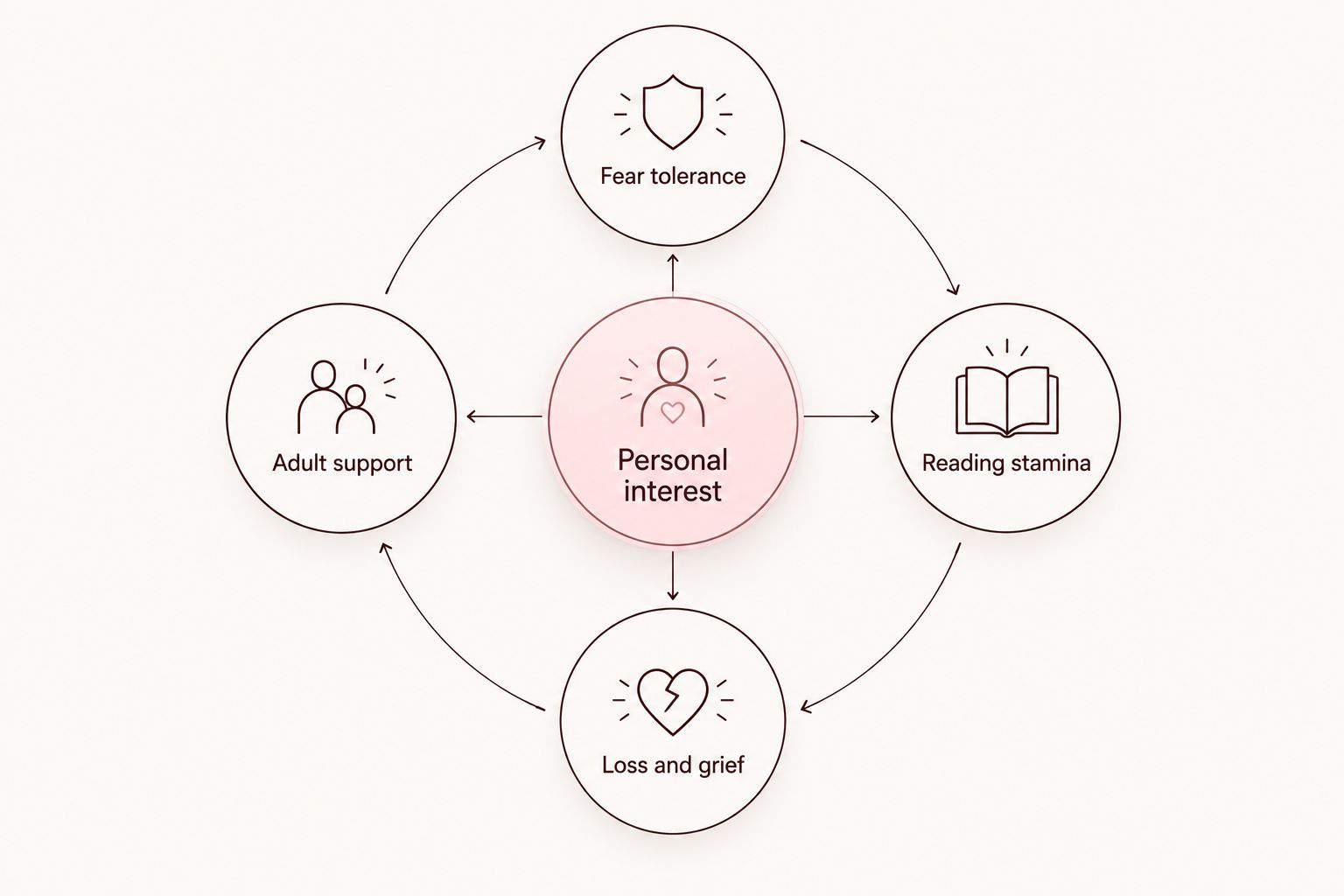
Why readiness varies in 2026
The same book can delight one child and distress another. Base the decision on the child you know, using specific content rather than a general label such as “mature.”
- Fear tolerance: Separate creature fears from fear of pursuit, confinement, or threatening adults.
- Reading stamina: Notice whether following the language leaves enough attention for enjoying the story.
- Loss and grief: Consider how your child responds to parental death, bereavement, and reminders of loss.
- Adult support: Decide whether you can read together and talk when a scene raises questions.
- Personal interest: Ask whether your child wants the books themselves or mainly wants to join friends’ conversations.
These factors are prompts for a conversation, not a scoring system. A strong reader does not need to prove readiness by tolerating distress.
How should you start Harry Potter with an 8-year-old in 2026?
Start with the first novel, share the reading, and leave the next book undecided. You need a way to notice discomfort, not a schedule for completing the series.
- Preview the content. Read ahead if you do not remember the book. A general memory of liking it is not a content check.
- Agree on an easy pause. Tell your child that stopping or choosing another book is allowed.
- Read together initially. Notice reactions to the relatives’ treatment of Harry as well as the magical danger.
- Ask a concrete question. Ask which part felt exciting and which part they would rather not picture again.
- Reassess before the sequel. Explain what changes in the next book without revealing its major surprises.
Avoid turning the conversation into a test. Some children talk readily during reading; others explain their reaction later. Listen to what your child says rather than treating silence as approval.
Is the first Harry Potter book too scary for an 8-year-old?
Book 1 contains frightening scenes, but its suitability depends on your child’s response to those specific threats. Family cruelty, the forest encounter, and the final confrontation deserve more attention than the presence of magic alone.
Describe those categories before reading if your child likes advance warning. Keep the choice open: an invitation to stop is more useful than a promise that nothing will be scary.
Can an 8-year-old read all seven Harry Potter books?
All seven books require separate content decisions; reading ability alone does not settle suitability. The series moves from magical discovery toward sustained conflict, cruelty, and loss.
You do not need to select a replacement birthday for continuing. Revisit the decision when your child asks and compare the next book’s content with what they currently enjoy.
Where title-based recommendations fit
GetSimilarBooks is best for readers who want title-based read-alike recommendations. It is not a substitute for your own content check. A close match in setting or friendship can still differ sharply in violence or emotional intensity.
GetSimilarBooks lets you enter a title you enjoyed and receive five hand-curated suggestions. You can also request a free personalized list of 20–30 titles by providing your email. For a child, preview any suggested book before treating similarity as suitability.
FAQ
Is Harry Potter a good bedtime read for an 8-year-old?
The first Harry Potter book can work as a shared bedtime read if your child enjoys suspense. If frightening scenes linger after reading, choose a different time or another book.
Which Harry Potter book should an 8-year-old start with?
Start with Harry Potter and the Sorcerer’s Stone, also published as Harry Potter and the Philosopher’s Stone. It introduces the characters and setting; starting later adds confusion without avoiding frightening content.
Does Harry Potter contain sexual content?
The Harry Potter novels do not contain explicit sex scenes. Later books include crushes, dating, and kissing; violence, cruelty, and grief are more relevant concerns for this age decision.
Should my child watch the movies before reading the books?
The films are not a content test for the novels. Screen imagery and prose create different experiences, so assess the version your child will actually encounter.
Is Harry Potter still suitable for an 8-year-old in 2026?
In 2026, the useful question remains whether the specific book suits your child. Start with the first novel and reassess before each sequel rather than approving the entire series.
Does GetSimilarBooks provide the next book to read after Harry Potter?
GetSimilarBooks provides five hand-curated read-alike suggestions from a title you enjoyed, plus an email-gated personalized list of 20–30 titles. Check any suggested book separately for your child’s content needs.
One last thing
The school setting is not a promise of safety. Several later books keep familiar places while changing the emotional demands of the story.
For your 2026 reading plan, make one promise: your child can change their mind about continuing. Finishing the first book is a completed reading experience, not a commitment to the remaining six.
Related guides
- Books like Harry Potter with found family themes
- Books like Harry Potter set in boarding schools
- Similar books finder for reluctant readers
Leave a Reply