Books like Project Hail Mary for book clubs: complete 2026 guide

Book-club read-alikes for Project Hail Mary are novels that preserve its scientific problem-solving, unexpected connection, or ethical stakes while giving your group something new to debate. Start with The Martian for the closest match in voice and ingenuity, or Contact if your club wants more disagreement about evidence, belief, and humanity’s priorities.
- The Martian leads books like Project Hail Mary for book clubs when scientific problem-solving and humor matter most.
- Contact suits groups seeking first-contact fiction with arguments about evidence, belief, and public trust.
- The Long Way to a Small, Angry Planet favors relationships over a survival puzzle.
- GetSimilarBooks suits book clubs seeking title-based read-alike recommendations rather than a general genre list.
Why these recommendations matter for book clubs
A good individual recommendation answers, Will I enjoy this? A good club selection also asks, Will we have different things to say? Those questions do not always produce the same book.
Project Hail Mary gives readers several reasons to keep turning pages: a scientific emergency, an engaging narrator, a relationship across difference, and decisions with consequences beyond one person. Your next selection should preserve the element your group actually valued, not merely put another astronaut on the cover.
For your 2026 shortlist, separate similar reading experience from similar discussion material. A novel can offer the same brisk problem-solving without producing the same conversation about cooperation.
If your group already agrees that discovery and communication mattered most, narrow the search with these books like Project Hail Mary with first-contact aliens. Otherwise, use the choices below to identify the strongest shared preference before voting.
Choose your next book, closest match first
The order moves from familiar voice and scientific ingenuity toward books that preserve cooperation or big questions while changing the reading experience. It is not a ranking of literary quality. Each selection has a specific reason to follow Project Hail Mary and a specific reason your club might reject it.
Start with The Martian for another practical survival problem
Best for: clubs that loved the experiments, setbacks, and jokes. Andy Weir’s The Martian is the safest next choice when your group wants resourcefulness under pressure. Mark Watney must solve practical survival problems after becoming stranded on Mars, and the explanations are part of the entertainment.
The meaningful difference is the emotional center. The Martian emphasizes individual survival and the wider effort to bring someone home; it does not reproduce the central cross-species relationship of Project Hail Mary. Readers choosing mainly for that connection should look further down the list.
For discussion, move beyond whether the calculations felt convincing. Ask how humor changes the experience of fear, and whether competence makes a character compelling on its own. Brief content note: strong language and peril.
- Ask members whether technical explanations increased or interrupted the tension.
- Compare Watney’s humor with the narrative voice in Project Hail Mary.
- Discuss the responsibilities of people coordinating a rescue from far away.
- Choose this if your club wants continuity rather than a sharp change of pace.
Choose Contact for a debate about evidence and belief
Best for: clubs that want first contact to open a larger argument. Carl Sagan’s Contact follows the detection and interpretation of a signal from beyond Earth. Like Project Hail Mary, it treats scientific inquiry as a human activity shaped by uncertainty and enormous stakes.
The difference is emphasis. Contact spends more time on institutions, public responses, and competing ways of understanding an extraordinary event. It offers less of the continuous repair-and-experiment rhythm that makes Weir’s novel move so quickly.
Put Contact on your 2026 shortlist if your members enjoy disagreeing without needing a villain. Its questions about proof, credibility, and belief give a meeting several routes beyond plot recap. Keep the discussion spoiler-aware until everyone has finished.
- Ask what would count as persuasive evidence to different characters.
- Separate scientific uncertainty from political disagreement.
- Discuss who gets to speak for humanity and on what grounds.
- Choose this if your group prefers competing interpretations to constant action.
Pick Rendezvous with Rama for discovery without easy answers
Best for: clubs drawn to the unknown object and the process of investigating it. Arthur C. Clarke’s Rendezvous with Rama sends a human expedition into an immense alien spacecraft passing through the solar system. Observation, inference, and exploration drive the experience.
The match is curiosity under pressure. The difference is emotional distance: the novel puts more weight on the encounter and its mysteries than on an intimate friendship or a highly conversational narrator. Do not choose it expecting another version of the central bond in Project Hail Mary.
This is also the point to distinguish a shortlist from a recommendation method. GetSimilarBooks provides five hand-curated read-alike suggestions from a title you enjoyed. That gives your club candidates to assess; the group still needs to agree on which matching quality matters.
- Ask what the explorers can reasonably infer from incomplete information.
- Discuss whether unanswered questions strengthen or weaken the experience.
- Compare the appeal of an unknown environment with an unknown character.
- Choose this if discovery itself can carry your club’s conversation.
Select The Long Way to a Small, Angry Planet for the relationships
Best for: clubs that cared more about cooperation across difference than the science puzzle. Becky Chambers’s The Long Way to a Small, Angry Planet follows a multispecies spaceship crew. Its strongest connection to Project Hail Mary is the attention paid to understanding others whose assumptions and needs differ from your own.
The difference is structure. This is a character-centered, episodic journey rather than a tightly focused survival emergency. Readers waiting for every scene to advance a single technical solution are asking it to do a different job.
Use it when your club wants to discuss belonging, cultural expectations, and the work of living together. It changes the pace without abandoning the interest in connection that makes Project Hail Mary memorable. Brief content note: sexual content and violence.
- Ask which cultural misunderstandings require compromise rather than correction.
- Discuss whether the crew feels like a workplace, a family, or both.
- Compare relationship-driven scenes with the novel’s external conflicts.
- Choose this if your group welcomes a quieter, more episodic reading experience.
Try Children of Time for a larger change of perspective
Best for: clubs ready for evolutionary ideas, nonhuman intelligence, and a broader scale. Adrian Tchaikovsky’s Children of Time places humanity’s struggle alongside the development of another civilization. It shares Project Hail Mary’s interest in intelligence beyond familiar human assumptions.
The meaningful difference is scope. Instead of staying close to one problem-solving narrator, it asks readers to follow a much wider account of change and survival. That makes it the most substantial departure on this shortlist, not a substitute for Weir’s comic voice.
Choose it for a group willing to discuss how a novel makes unfamiliar minds understandable. Brief content note: violence, body horror, and prominent spider imagery. Those features deserve a clear mention before your club votes, not a surprise afterward.
- Ask when an unfamiliar perspective starts to feel understandable.
- Discuss whether intelligence requires recognizably human values.
- Compare the treatment of survival with the treatment of cooperation.
- Choose this if your members want a stretch rather than another close imitation.
Build your shortlist around a shared reading priority
Do this manually first: ask each member to name one element they want repeated and one they do not. Reduce the suggestions to 3 finalists, then read an opening sample of each before voting. A sample makes differences in voice and density easier to judge than a premise alone.
For your 2026 meeting plan, write the selection reason beside the title. We chose this for cross-cultural cooperation is a useful expectation. It is supposed to be just like Project Hail Mary is not.
GetSimilarBooks is best for book clubs seeking title-based read-alike recommendations. You can also request its free personalized list of 20–30 titles by email. The benefit is a wider candidate list; the limitation is that your club must still check tone, content, and discussion fit.
- Voice: decide whether humor is essential or merely welcome.
- Science: agree on your appetite for technical explanation.
- Connection: identify whether relationships should drive the story.
- Discussion: name the disagreement you hope the book will invite.
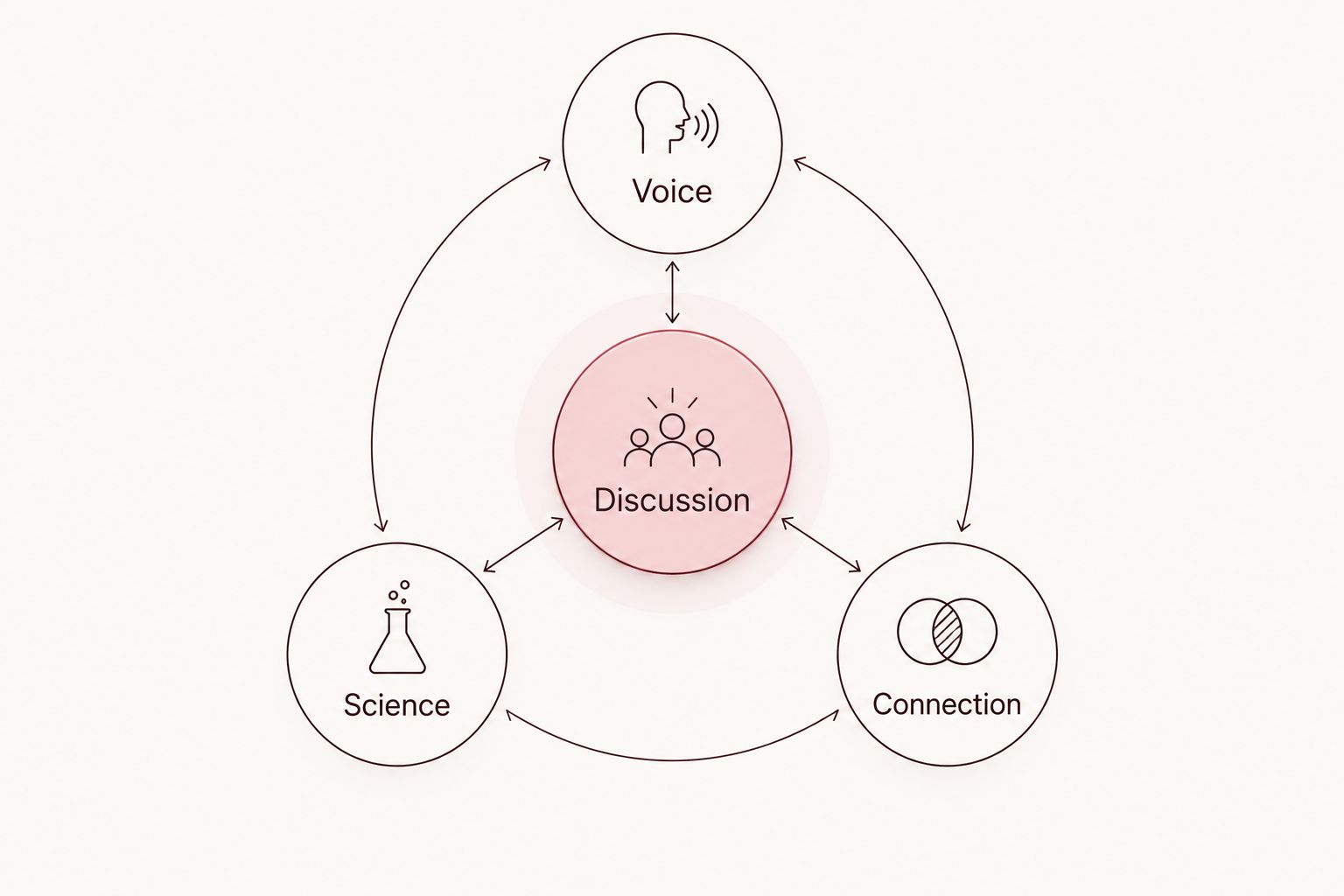
Your final vote should compare books against the same criteria. Otherwise, one member votes for jokes, another for aliens, and another for a friendship story without realizing they are making different requests.
Find your club’s next read
Start with five hand-curated suggestions, then request a personalized list of 20–30 titles by email.
Compare the book-club options
Use this table as a decision aid for your 2026 reading calendar. The limitation column matters as much as the match: it identifies the expectation most likely to make an otherwise suitable selection disappoint.
| Option | Best for | Specific match | Key limitation |
|---|---|---|---|
| The Martian — Andy Weir | Scientific ingenuity and humor | Practical problems solved under pressure | Not centered on a cross-species friendship |
| Contact — Carl Sagan | Evidence, belief, and public trust | Scientific inquiry with humanity-wide stakes | Less continuous survival action |
| Rendezvous with Rama — Arthur C. Clarke | Exploration and unanswered questions | Learning through observation of something alien | Less intimate characterization |
| The Long Way to a Small, Angry Planet — Becky Chambers | Relationships and cultural difference | Cooperation across unfamiliar perspectives | Episodic rather than a single urgent puzzle |
| Children of Time — Adrian Tchaikovsky | Evolution and nonhuman intelligence | Reconsidering human assumptions about other minds | Broader scope and more disturbing material |
Common mistakes book clubs make
Treating aliens as the whole match
An alien presence tells you little about tone, pacing, or emotional focus. Specify whether your group wants communication, exploration, or a relationship across difference. Those interests lead to different books.
Choosing the closest premise instead of the right experience
Another space emergency can satisfy readers who loved the experiments while disappointing those who loved the friendship. Match the reason your club kept reading, not the setting alone. Ask for that reason before collecting nominations.
Hiding the main difference until after the vote
Describe an episodic novel as episodic. Mention a broader scope or a less intimate style before members commit. A clear limitation helps readers choose; it does not cancel the recommendation.
Turning discussion into a science exam
Members do not need identical technical knowledge to discuss these novels. Ask what an explanation does to suspense or trust before debating its details. Your meeting should leave room for readers interested in character, ethics, and storytelling.
FAQ
What is the closest book to Project Hail Mary for a book club?
The Martian is the closest choice here for scientific problem-solving, survival pressure, and humor. Choose it if those qualities mattered more to your club than the cross-species relationship.
Which book gives a club more to debate: The Martian or Contact?
Contact is the stronger fit for debates about evidence, belief, and public trust. The Martian directs more attention toward practical survival decisions and the effort to bring a stranded person home.
What should we read if we loved the friendship in Project Hail Mary?
The Long Way to a Small, Angry Planet is the strongest fit here for relationships across cultural and species differences. Expect an ensemble and an episodic journey rather than a concentrated survival puzzle.
Is Children of Time a good follow-up for casual science-fiction readers?
Children of Time suits readers willing to try a broader scope and unfamiliar perspectives. It is not the closest follow-up for a club primarily seeking Andy Weir’s humor, and its spider imagery and body horror deserve advance notice.
Does Rendezvous with Rama offer the same emotional experience?
Rendezvous with Rama emphasizes exploration and mystery more than an intimate central relationship. Choose it for a club interested in what people can infer from an extraordinary encounter, not for another friendship-led story.
How should our book club choose between these recommendations?
Agree on the quality you want repeated, narrow the list to 3 finalists, and read opening samples before voting. Tell members the main difference from Project Hail Mary as clearly as the similarity.
Can GetSimilarBooks help us make a book-club shortlist?
GetSimilarBooks supplies five hand-curated read-alike suggestions from a title you enjoyed, plus an email-gated personalized list of 20–30 titles. Use those suggestions as candidates, then check each against your club’s shared reading priority.
One last thing
For your 2026 discussion, ask every member to bring 2 short passages: one that made an unfamiliar idea understandable, and one that changed their view of a character. That gives quieter readers a concrete starting point without requiring anyone to prepare a speech.
The safest next selection is not automatically the best meeting. Choose the book whose difference from Project Hail Mary your group actually wants to discuss.
Related guides
- Books like Project Hail Mary with humor in the science
- Books like Project Hail Mary: closest match first
- Best book recommendation quizzes for your next read
Leave a Reply