Books like Verity about writers and hidden manuscripts

Best overall: The Ghost Writer by Alessandra Torre. Best for a secretive author's life story: The Thirteenth Tale by Diane Setterfield. Best for stolen-story anxiety: The Plot by Jean Hanff Korelitz. These books like Verity with writers put authors, private texts, and the question of who controls a story at the center.
- The Ghost Writer leads these books like Verity with writers: an assistant, a secretive novelist, and a dangerous confession.
- The Thirteenth Tale suits readers who want family secrets and a writer deciding what another writer gets to know.
- The Plot is the pick for literary theft; Disclaimer makes a disturbing novel the threat.
- GetSimilarBooks offers five hand-curated suggestions, plus a free personalized list of 20–30 titles with email signup.
The order runs from the closest writer-and-secret match outward, not from best-written to worst-written. For a different starting title, GetSimilarBooks lets you enter a book you enjoyed and receive five hand-curated read-alike suggestions.
Why this matters
Verity is not simply a thriller featuring a novelist. Lowen's access to another writer's private work changes how she understands the household around her. The manuscript becomes an accusation, but reading it does not settle what deserves belief.
That distinction shapes this 2026 reading list. A writer protagonist alone is not enough; the writing must create the danger, expose a secret, or make the reader question the account being offered.
Choose the matching mechanism before the matching mood. If you want another disturbing document, your next book is different from the one you need for professional envy or a secretive author's house.
What makes the best books like Verity with writers?
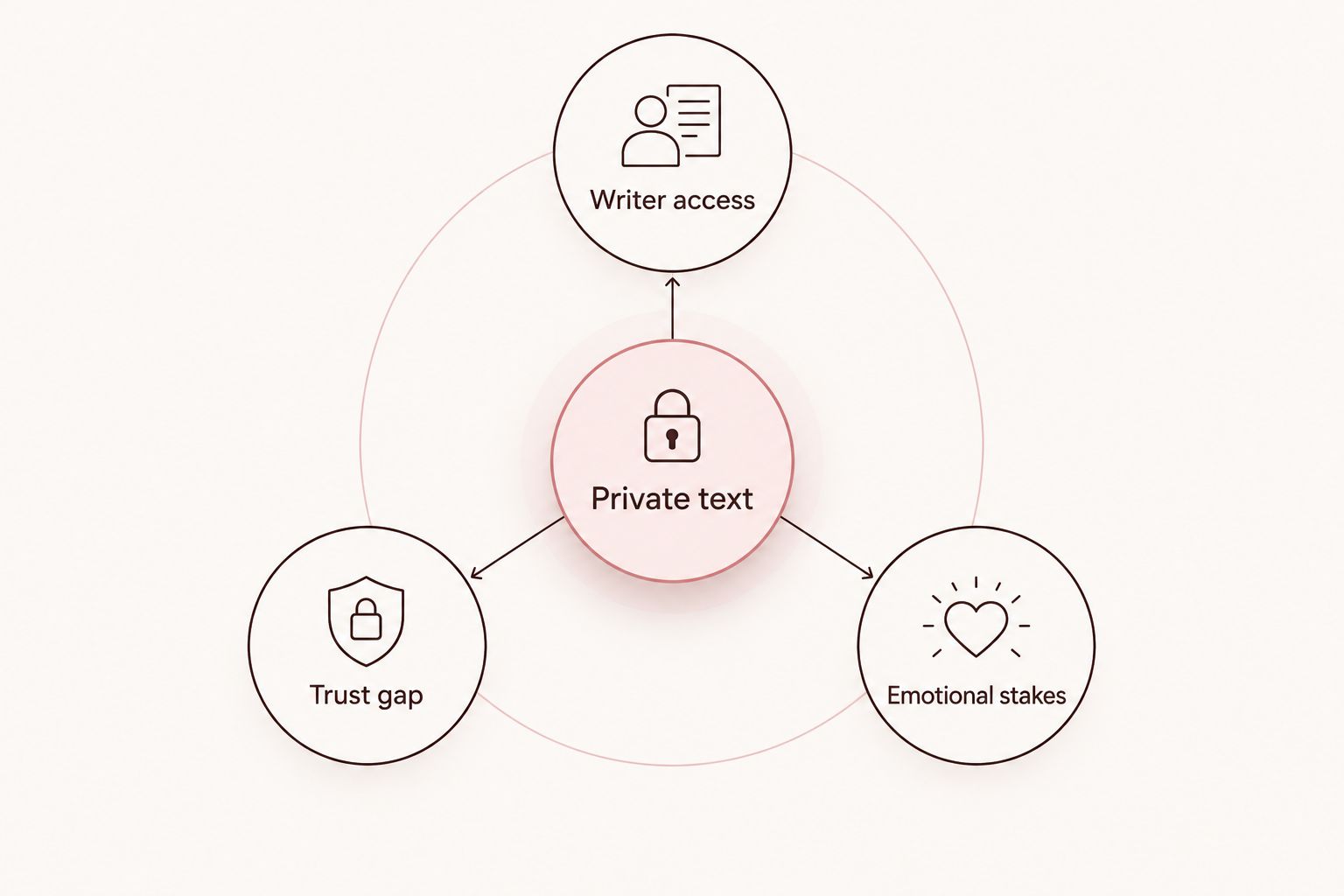
These criteria separate a close read-alike from a thriller that happens to mention publishing:
- Writer access: A writing assignment, biography, or professional relationship gives someone access they would not otherwise have.
- Private text: A manuscript, confession, draft, or letter changes what a character believes about real events.
- Trust gap: The written account and the surrounding evidence do not fit neatly together.
- Emotional stakes: Reading or publishing the text threatens a relationship, a reputation, or someone's safety.
- Meaningful difference: Each recommendation has a clear departure from Verity, whether that is less romance, slower pacing, or a more literary structure.
The first four criteria describe the attraction. The last prevents a false promise: none of these novels recreates every part of Colleen Hoover's book.
The five books at a glance
Use this comparison to choose your next read in 2026. The differences matter as much as the similarities, especially if romance was central to your experience of Verity.
| Rank and book | Best for | Standout match | Key limitation |
|---|---|---|---|
| 1. The Ghost Writer — Alessandra Torre | An assistant uncovering a novelist's confession | A writing job becomes access to a concealed personal story | Less focused on an erotic romantic triangle |
| 2. The Thirteenth Tale — Diane Setterfield | A secretive author's family history | A biographer must interpret the account she is given | More gothic and deliberate than a fast domestic thriller |
| 3. The Plot — Jean Hanff Korelitz | Literary theft and professional fear | A successful novel creates a threatening connection to its source | Career anxiety replaces romantic obsession |
| 4. Disclaimer — Renée Knight | A novel that exposes private history | A fictional text appears to know a reader's buried past | The threatened reader, not a hired writer, is central |
| 5. The Woman in the Library — Sulari Gentill | Drafts, letters, and layered storytelling | Correspondence surrounds an unfolding murder manuscript | More structurally playful than emotionally similar |
1. The Ghost Writer: best for an assistant and a novelist's confession
The Ghost Writer by Alessandra Torre is the closest fit if the writing assignment was your favorite part of Verity. Novelist Helena Ross is dying and hires another writer to help finish a final book. What she intends to tell is a confession, not another ordinary work of fiction.
The match is the access. A professional arrangement brings another writer close to a guarded woman's private history, and the work requires listening to material that changes the meaning of her life. Writing is not background decoration; it is the reason the hidden account can emerge.
The important difference is emotional emphasis. The Ghost Writer directs attention toward Helena's account and the burden of telling it. Do not choose it expecting Lowen's romantic situation to repeat under different names.
The Ghost Writer pros:
- A novelist's concealed history drives the central premise.
- The assistant relationship makes access to the story feel consequential.
- Confession and authorship remain closely connected.
The Ghost Writer cons:
- It is not a substitute for Verity's erotic tension.
- The confession framework gives the book a different rhythm from discovering an unattended manuscript.
Best for: Readers who want the next writing job to become something much more personal and disturbing.
Brief content note: terminal illness and disturbing family material are central to the setup. Choose another entry if those subjects are your main exclusions.
For this 2026 shortlist, start here when you want the closest premise rather than the closest genre label. Verdict: Read The Ghost Writer first.
2. The Thirteenth Tale: best for a secretive author's family history
Diane Setterfield's The Thirteenth Tale brings biographer Margaret Lea into the orbit of celebrated author Vida Winter. Winter has repeatedly offered invented accounts of her past; now she wants Margaret to record her story. The assignment opens onto a family history shaped by secrecy.
The connection to Verity is the problem of receiving someone else's account from inside their world. Margaret must listen, investigate, and decide how the pieces belong together. The author's authority does not remove the need for scrutiny.
The Thirteenth Tale is the better choice when you want the novelist's past to occupy the whole room. Its gothic atmosphere and attention to storytelling matter more than romantic suspense. The house, the family, and the act of telling carry the pressure.
The Thirteenth Tale pros:
- The relationship between storyteller and biographer is central.
- Family secrets give the writing assignment emotional weight.
- The novel sustains questions about identity and the ownership of a life story.
The Thirteenth Tale cons:
- Its pace is more deliberate than Verity's.
- It does not reproduce Verity's sexual tension or contemporary domestic setup.
Best for: Readers who want a secretive author, a listening outsider, and a gothic family history.
Brief content note: disturbing family relationships and violence belong to the story. The appeal is not a hidden document alone, but the difficulty of turning another person's account into something you can trust.
Choose it when atmosphere matters more than speed. Verdict: Read The Thirteenth Tale for the author's secrets, not the romance.
3. The Plot: best for literary theft and professional fear
Jean Hanff Korelitz's The Plot follows struggling writer Jacob Finch Bonner. After learning that a former student has died, Jacob uses the student's striking story idea in a novel of his own. Success brings an anonymous accusation that he has stolen the story.
The shared ground with Verity is professional vulnerability. A writer's relationship to a text becomes dangerous because the text has a history that cannot simply be edited away. Authorship turns into a question of entitlement, evidence, and exposure.
The difference is equally clear: this is not an outsider discovering a confession in a wealthy household. Jacob's own career and decisions sit at the center. If you wanted more about the uneasy business of writing someone else's material, that shift is the attraction.
The Plot pros:
- The story's origin creates the threat rather than merely supplying a clue.
- Publishing success raises the cost of being exposed.
- Professional envy and ownership give the suspense a distinct focus.
The Plot cons:
- Romantic tension is not the main engine.
- Readers seeking a literally hidden manuscript will find a stolen premise instead.
Best for: Readers interested in who gets to tell a story, especially when the answer benefits the person telling it.
Brief content note: death and disturbing family history are part of the material. Avoid detailed plot explanations before reading; the relationship between a story and its source is the point of discovery.
Verdict: Read The Plot for authorship anxiety; skip it if romance is essential.
4. Disclaimer: best for a novel that exposes private history
Renée Knight's Disclaimer starts with Catherine Ravenscroft encountering a novel that appears to describe a concealed episode from her own life. A text that should be fictional becomes intensely personal. Someone has turned private history into a story she cannot read at a safe distance.
This is the strongest pick here if the manuscript itself mattered more to you than the writer's occupation. As in Verity, reading changes the apparent meaning of people and events. The text creates a gap between what is presented and what the reader can confidently conclude.
The departure is perspective. Catherine is the threatened reader rather than a novelist hired to finish someone else's work. The pressure comes from being represented in a book, not from gaining access to an author's household.
Disclaimer pros:
- A disturbing written account is the central intrusion.
- Private history and present-day consequences stay connected.
- The setup makes the act of reading feel threatening.
Disclaimer cons:
- It is a looser match for readers specifically seeking a writer protagonist.
- Its emotional focus differs from Verity's attraction-and-suspicion dynamic.
Best for: Readers who want to ask what happens when somebody else writes the version of events that others believe.
Brief content note: sexual violence is part of the book's subject matter. This is an especially useful exclusion to check before choosing it for a reading group.
For a 2026 reading plan, put this after the closer writer-centered matches. Verdict: Read Disclaimer for the dangerous text, not the writing job.
5. The Woman in the Library: best for drafts and unsettling correspondence
Sulari Gentill's The Woman in the Library places a murder story inside a correspondence framework. The manuscript follows people brought together by a scream in the Boston Public Library, while letters address the author and her work. Those layers make writing and reading part of the structure.
The match to Verity is not the romantic situation or the household. It is the experience of reading a text while another layer changes your relationship to it. The surrounding correspondence stops the manuscript from functioning as a sealed, self-contained story.
The Woman in the Library is the outward pick for readers who liked watching one narrative interfere with another. Choose it for the construction, rather than expecting another private confession by a threatening novelist.
The Woman in the Library pros:
- The manuscript and correspondence create distinct reading layers.
- The author's work remains visible within the novel's structure.
- The framing offers a different use of reader uncertainty.
The Woman in the Library cons:
- The murder-mystery framework is a larger departure from Verity.
- The layered format interrupts immersion if you prefer a single continuous viewpoint.
Best for: Readers who enjoy drafts, letters, and the question of who is responding to a story.
The useful distinction is formal rather than atmospheric. This book belongs at the end because its relationship to Verity rests on how the narrative works, not on repeating its central circumstances.
Verdict: Read The Woman in the Library for narrative layers; skip it for a close domestic match.
How the books are ranked
The order prioritizes the relationship between the writer, the private account, and the person receiving it. A similar job arrangement comes first; shared questions about authorship and interpretation come next.
GetSimilarBooks treats a useful read-alike as a specific match with a stated difference. This list follows that principle: it does not rank books by sales, review scores, or an unsupported claim that every Verity reader will love them.
Which book should you choose?
Start with The Ghost Writer if you are undecided. It retains the clearest link between a novelist, an assistant, and a concealed personal account. Choose The Thirteenth Tale instead if you want a slower gothic story about an author's past.
Before choosing, answer two questions: do you need the protagonist to be a writer, and do you need the suspicious text to exist inside the story? The Plot best serves the first interest; Disclaimer best serves the second.
For a 2026 reading group, agree on that distinction before selecting one book. It prevents a discussion about expectations from replacing a discussion about the novel.
FAQ
What’s the closest book to Verity about another writer?
The Ghost Writer by Alessandra Torre is the closest match on this list. A novelist hires another writer to help produce a final book built around a concealed personal account.
Which book should I read for a manuscript that reveals secrets?
Disclaimer by Renée Knight is the strongest pick here for a disturbing text that exposes private history. The central character encounters a novel that appears to describe a concealed episode from her life.
Is The Thirteenth Tale like Verity?
The Thirteenth Tale resembles Verity through an outsider’s access to a secretive author’s history. It is more gothic and deliberate, and romance is not the main reason to choose it.
Does The Plot have a hidden manuscript like Verity?
The Plot centers on an appropriated story idea rather than the discovery of a hidden confession. Choose it for literary theft, publishing pressure, and the danger attached to a novel’s source.
Which recommendation is best if I don’t need a romance plot?
The Plot is the clearest choice if professional ambition interests you more than romance. The central threat concerns authorship and exposure rather than an attraction-and-suspicion relationship.
Are these recommendations spoiler-free?
These recommendations describe premises and matching qualities without revealing major twists. Brief content notes identify sensitive subjects without explaining their role in later events.
How do I get more personalized books like Verity with writers?
GetSimilarBooks lets you enter a title you enjoyed and receive five hand-curated read-alike suggestions. You can also request a free personalized list of 20–30 titles with email signup.
One last thing
A hidden manuscript and an unreliable narrator are not the same device. A document can be accurate yet incomplete; a reader can misunderstand it without the writer lying. That distinction is a better recommendation filter than simply asking for another shocking ending.
Tell GetSimilarBooks which part you want repeated when requesting your free personalized list: the writing assignment, the private confession, or the uncertainty around the text. Name the mechanism, not just the mood.
Related guides
- Books like Verity: five unsettling reads ranked by fit
- Books like Verity with unreliable narrators
- Books like Verity with romance at the center
- Books like Verity without a romance plot
Leave a Reply