How accurate is the science in Project Hail Mary?

The science in Project Hail Mary is strongest in its use of measurement, motion, and relativity; its central biology and propulsion system depend on invented premises. For readers choosing it in 2026, the distinction is simple: Andy Weir uses real scientific reasoning to explore a fictional scientific breakthrough, not to describe a mission we can currently build.
- How accurate is the science in Project Hail Mary? Its physics is grounded; its central biology is speculative.
- Andy Weir makes experiments and engineering constraints central to the story, but consistency is not proof of feasibility.
- Choose The Martian next for practical troubleshooting; choose Contact for scientific investigation and first-contact questions.
How accurate is the science in Project Hail Mary?
Project Hail Mary is convincing about how scientists solve problems, but its central discoveries are fiction. The useful distinction is between established science, plausible extrapolation, and inventions that make the story possible.
This spoiler-light breakdown names the book's central energy premise without revealing later discoveries or the ending.
| Scientific element | Assessment | What you should take from it |
|---|---|---|
| Measurement and experiments | Grounded in scientific practice | Observations, hypotheses, and tests drive the problem-solving. |
| Acceleration and apparent gravity | Based on established physics | Sustained acceleration can produce a weight-like sensation inside a spacecraft. |
| Relativity | Based on established physics | Travelers and observers can experience different elapsed times. |
| Astrophage | Fictional biology | Its extraordinary energy behavior is a story premise, not an observed organism. |
| Interstellar propulsion | Depends on the fictional premise | Correct equations do not establish that the necessary fuel exists. |
| Long-duration human spaceflight | Mixes real constraints with speculative solutions | Keeping people alive involves more than reaching the destination. |
Treat the table as a map, not a numerical accuracy score. A percentage would hide the difference between a sound physical principle and an invented biological mechanism.
Why this matters
A scientific novel can get its calculations right while depending on something that has never been demonstrated. That does not make the calculations worthless. It changes what they establish.
For a 2026 reading decision, ask whether you want credible reasoning or a forecast of achievable technology. Project Hail Mary offers the former. Its pleasure comes from watching a problem become measurable, then watching a proposed solution encounter another constraint.
GetSimilarBooks is best for readers who want hand-curated read-alikes based on a book they already enjoyed. For this novel, the useful matching qualities are experimental problem-solving, scientific curiosity, and humor under pressure—not merely a spacecraft on the cover.
The physics: established principles, extraordinary circumstances
The book's treatment of motion gives you a useful starting point. Acceleration, rather than speed alone, determines the force you feel during a change in motion. A spacecraft moving steadily does not pin its occupants against a wall simply because it is traveling fast.
Under sustained acceleration, however, the interior can feel as though it has a floor. An acceleration of approximately 9.81 meters per second squared corresponds to familiar Earth-surface gravity. The principle is established; providing sustained thrust is the engineering challenge.
Rotation offers another route to apparent gravity. In a rotating habitat, the floor pushes occupants toward the center of their circular path. The experience depends on the rotation rate and distance from the axis, not on a machine creating a new gravitational field.
These distinctions matter because the novel makes physical circumstances into questions characters can investigate. A strange observation is not automatically a mystery without an answer. It can be evidence about where someone is and how their surroundings move.
The strength is the link between observation and explanation. The limitation is that explaining an effect does not prove that a particular spacecraft design is practical.
Does Project Hail Mary get relativity right?
The underlying principle is real: elapsed time depends on an observer's path through spacetime. At speeds approaching the speed of light, the difference between a traveler's elapsed time and an Earth-based observer's elapsed time becomes substantial.
The speed of light in vacuum is exactly 299,792,458 meters per second under the SI definition. A spacecraft with mass cannot reach that speed through ordinary acceleration. High-speed travel also does not remove the need to account for acceleration and braking.
You do not need to calculate the journey to follow the story. Just keep separate the time experienced aboard a spacecraft and the time measured by someone elsewhere. Relativity allows those clocks to disagree without either clock being broken.
The biology: a fictional organism carries the premise
Astrophage is the book's central scientific invention. Its role as an extraordinary energy carrier makes the mission possible, but that role is not evidence that such an organism exists or can be engineered.
The important distinction is between energy accounting and an energy-storage mechanism. Physics describes a relationship between mass and energy. That relationship does not give us a demonstrated biological process for storing and releasing energy in the way the novel requires.
A story can therefore respect conservation laws while inventing the machinery that operates within them. Saying that a mechanism does not obviously violate an equation is a much weaker claim than saying scientists have shown it works.
In a 2026 reality check, read Astrophage as the permission the novel asks you to grant. Once that permission is granted, the interesting question becomes whether its consequences remain consistent—not whether the organism has crossed from fiction into laboratory science.
Is the alien biology realistic?
Alien biology is speculative because there is no confirmed extraterrestrial life against which to check the book's organisms. Researchers can evaluate constraints involving chemistry, temperature, energy, and environments. They cannot verify a fictional species by comparing it with an observed alien counterpart.
That leaves room for informed invention, but not for certainty. A biological explanation can be imaginative and internally consistent without being an established account of how life elsewhere works.
This is also where a spoiler-free assessment should stop. Explaining later biological discoveries would answer story questions you are better off encountering in the novel.
The engineering: a solution still needs a working system
The spacecraft's propulsion is not an independent confirmation of the book's realism. It depends on the fictional energy premise. Once that premise enters the design, calculations can describe its consequences without demonstrating that the engine can actually be built.
Real spacecraft engineering must account for energy supply, waste heat, structural loads, radiation, navigation, and failure recovery. A solution that addresses thrust alone is not a complete mission architecture. You still have to keep equipment and occupants functioning throughout the journey.
Long-duration medical support deserves the same caution. The novel's arrangements for keeping people alive through an interstellar mission should not be read as established clinical capability. They serve the mission the story needs.
Read the engineering as constrained invention, not a construction manual. Its appeal is that solutions have consequences. Its limitation is that fictional enabling technology remains fictional even when the surrounding arithmetic is careful.
Why scientific accuracy varies across the book
Different parts of Project Hail Mary make different kinds of claims. These factors explain why a single label such as “realistic” does not settle the question:
- Established physics: Motion and relativity have experimental foundations outside the novel. Their basic principles do not depend on accepting the fictional organisms.
- Invented biology: Astrophage supplies capabilities the story needs. Internal consistency cannot establish that those capabilities exist in nature.
- Engineering dependencies: A propulsion concept inherits the uncertainty of its fuel and energy-storage assumptions.
- Unknown environments: Claims about life beyond Earth involve conditions and organisms that have not been directly verified.
- Narrative compression: A novel selects the experiments and explanations that move its story. It is not a complete research record or spacecraft safety assessment.
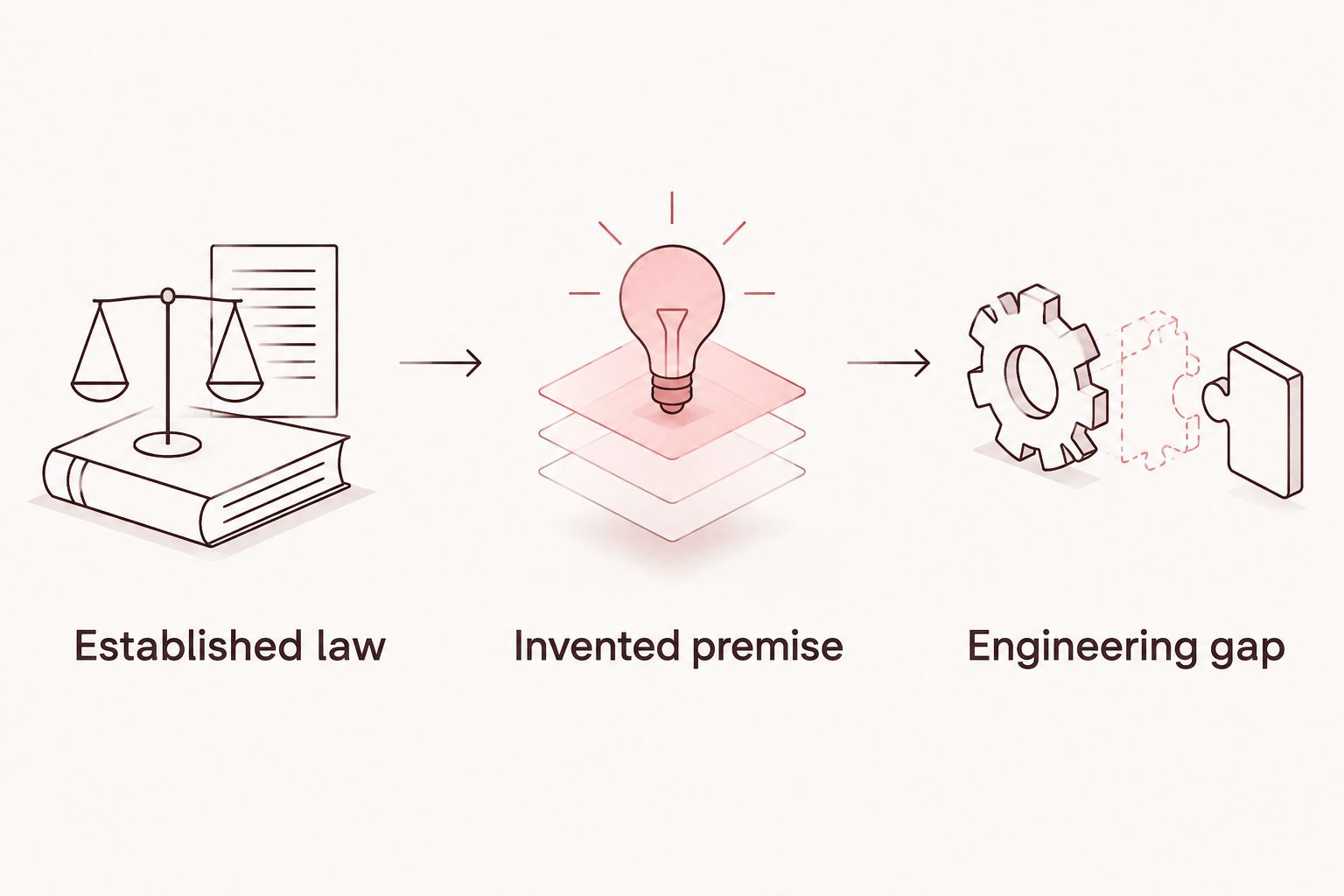
For a practical reading test, use these three questions in order:
- Established law: Is the explanation using a known physical principle?
- Invented premise: Does it require an organism, material, or capability introduced by the story?
- Engineering gap: Even if the principle works, has the practical system been demonstrated?
That sequence prevents a common mistake: treating a correct equation as proof of everything attached to it.
What should you read next for the same scientific appeal?
For your next read in 2026, choose the part of Project Hail Mary you want repeated. A close match in problem-solving can matter more than a shared setting. These recommendations move from practical troubleshooting toward a broader interest in scientific discovery.
| Book | Best for | Specific match | Meaningful difference |
|---|---|---|---|
| The Martian by Andy Weir | Resourceful scientific troubleshooting | An isolated protagonist uses calculations, experiments, and humor to address survival problems. | The setting and central problems are closer to familiar spaceflight; it does not offer the same first-contact focus. |
| Contact by Carl Sagan | Scientific investigation and first-contact questions | Evidence, interpretation, and the implications of extraterrestrial intelligence drive the story. | It gives more space to institutions, belief, and public consequences than to hands-on survival repairs. |
The Martian: best for practical problem-solving
The Martian is the closest recommendation here if you liked watching a frightening problem become a sequence of smaller tasks. Andy Weir again makes explanation part of the entertainment. Humor sits beside technical trouble rather than replacing it.
The meaningful difference is scope. The Martian centers on survival in a recognizable planetary setting, rather than the same kind of interstellar discovery. That tighter focus is a strength if you want resourcefulness; it is a limitation if your favorite element was encountering something radically unfamiliar.
Verdict: choose The Martian for the closest match in troubleshooting and voice.
Contact: best for scientific curiosity
Contact is a better match for the question “What would evidence of extraterrestrial intelligence mean?” than for “How do I fix this failing system?” Carl Sagan makes scientific inquiry central while also examining how people and institutions interpret extraordinary evidence.
The gain is a wider discussion of discovery and its consequences. The trade-off is a different pace and less of the improvised-repair rhythm that drives Project Hail Mary.
Verdict: choose Contact for investigation and first-contact ideas, not identical pacing.
GetSimilarBooks gives you five hand-curated read-alike suggestions from a title you enjoyed, with an email-gated personalized list of 20–30 titles. That is useful when you know the starting book but need to distinguish scientific problem-solving from other reasons you liked it.
Find your next science-fiction read
GetSimilarBooks offers five hand-curated suggestions, plus a personalized list of 20–30 titles after email signup.
FAQ
Is Project Hail Mary scientifically accurate in 2026?
Project Hail Mary combines established physics with speculative biology and technology. Its use of experiments is convincing, but its central energy organism and mission-enabling systems are not demonstrated scientific capabilities.
Is Astrophage a real organism?
Astrophage is a fictional organism in Project Hail Mary. Its extraordinary energy behavior is part of the novel’s premise, not an observed biological discovery.
Is the artificial gravity in Project Hail Mary possible?
Acceleration and rotation can produce weight-like effects inside a spacecraft. Those principles are real, but providing a practical system requires solving engineering problems beyond stating the principle.
Do astronauts really experience time differently during space travel?
Astronauts can experience different elapsed time from people on Earth because of relativity. The difference depends on motion and gravity; it becomes especially significant for hypothetical travel near the speed of light.
Can I enjoy Project Hail Mary without knowing physics?
You can enjoy Project Hail Mary without prior physics study because explanations are part of the narrative. Expect scientific reasoning to occupy substantial space rather than remain background decoration.
What’s the closest book to Project Hail Mary for scientific problem-solving?
The Martian by Andy Weir is the closest recommendation here for scientific troubleshooting, an isolated protagonist, and humor under pressure. Its central survival problems are more closely tied to familiar spaceflight than Project Hail Mary’s interstellar premise.
Does checking the science spoil Project Hail Mary?
Detailed scientific discussions can spoil Project Hail Mary by revealing what characters discover and why those discoveries matter. For a first read, stick to broad distinctions between established physics and fictional biology.
One last thing
The most useful distinction is not “accurate or inaccurate.” It is “observed, inferred, or invented?” An explanation can be internally consistent and still belong in the invented category. That is not a flaw unique to this book; it is a boundary worth noticing while you read.
For your 2026 reading list, name the experience you want before choosing another space novel. “Experiments that change the plan” is a sharper request than “more science fiction.” It gives you a way to judge a recommendation without needing the next book to repeat the same plot.
Related guides
- Is Project Hail Mary hard science fiction?
- Books like Project Hail Mary, closest match first
- Books like Project Hail Mary with first-contact aliens
- Books like Project Hail Mary with humor in the science
Leave a Reply