Is Project Hail Mary hard science fiction?

Yes. Project Hail Mary is hard science fiction with an accessible, conversational voice. Andy Weir makes experiments, engineering constraints, and scientific reasoning central to the story, but its speculative biology is fiction—not established science, and not a promise that every premise is physically possible.
- Is Project Hail Mary hard science fiction? Yes: scientific problem-solving drives the plot, despite speculative biological premises.
- Project Hail Mary explains its science through problems and experiments; you do not need a technical background.
- The Martian is the closest next read for practical problem-solving, isolation, and humor.
- Getsimilarbooks offers hand-curated read-alikes when you want to match a specific reading experience, not just a genre.
Is Project Hail Mary hard science fiction?
Yes, because science determines what the characters can discover and do. Ryland Grace does not merely inhabit a futuristic setting. He observes unfamiliar conditions, forms explanations, tests them, and changes his approach when the evidence demands it.
That distinction matters more than the presence of spacecraft. A story can take place in space while treating technology as background scenery. In Project Hail Mary, understanding a material, a biological process, or a physical constraint changes the available choices.
| Feature | What Project Hail Mary does | What that means for you |
|---|---|---|
| Scientific method | Makes observation and experimentation part of the action | You follow the reasoning behind discoveries |
| Engineering constraints | Gives practical limits consequences | Solutions require more than a convenient invention |
| Speculative biology | Builds the central problem around imagined organisms | Scientific detail does not make every premise real |
| Explanatory narration | Lets Grace explain problems in everyday language | Technical subject matter stays approachable |
| Character and humor | Gives the scientific work emotional stakes | The book is not a textbook disguised as fiction |
For your 2026 reading list, the useful label is accessible hard science fiction. It tells you both how the story works and how it feels to read.
If you have already finished it, the guide to books like Project Hail Mary, closest match first helps separate the science appeal from the humor, isolation, and relationships.
Why this matters
The word hard describes the role of science, not a required level of reading difficulty. Confusing those meanings sends readers away from books they would enjoy—and toward books that share a shelf label but deliver a different experience.
If you loved Fourth Wing, do not expect romance to organize this story. If you loved Verity, do not expect domestic suspicion to be its main engine. Project Hail Mary creates much of its tension through incomplete information and practical problems, rather than those books' central relationship dynamics.
For someone choosing a first science-fiction novel in 2026, that is a useful distinction. You can enjoy suspense, a readable narrator, and high stakes while trying a story whose central question is often: what can the evidence tell us?
Why the hard-science label varies
Hard science fiction is a critical description, not a certification. Readers disagree about where to draw its boundaries because they give different weight to scientific plausibility, internal consistency, and the amount of explanation on the page.
These are the relevant factors for Project Hail Mary:
- Scientific method: Grace repeatedly learns through observation and testing. The method matters as much as the answer.
- Physical constraints: Movement, energy, materials, and survival impose limits. Those limits help generate the plot.
- Speculative premises: The novel invents biology essential to its story. Accepting that invention is part of reading it.
- Internal consistency: Discoveries establish rules that shape later decisions. The story asks you to remember what has been learned.
- Explanatory style: Scientific reasoning receives substantial space, but humor and plain-language explanations make it readable.
The strongest classification is therefore not everything here is real. It is science and engineering are the story's main problem-solving tools.
You do not have to defend every fictional mechanism to use that description. Equally, you should not recommend the novel as a source of verified biology just because its explanations sound persuasive.
Does hard science fiction mean difficult to read?
No. Project Hail Mary is technically focused without requiring you to solve its problems yourself. Grace explains what he notices, why it matters, and what he intends to try. You can follow the consequences even when you do not retain every technical detail.
The real reading preference is whether you enjoy explanations interrupting forward motion. For some readers, the explanation is the action. For others, it slows the moment they wanted to reach.
Ask yourself whether you like watching a character work through a problem before seeing the result. If the process interests you, the scientific passages belong to the attraction. If you only want the outcome, the same passages will feel longer.
You can also lose track of a technical explanation without losing the whole story. Focus on the immediate question, the constraint preventing an easy solution, and what the experiment changes. That keeps the causal thread intact.
Is the science in Project Hail Mary real?
Project Hail Mary combines real scientific concepts with invented biological premises. Its use of scientific reasoning does not turn its fictional organisms or all their properties into established discoveries.
A useful distinction is between a method and a premise. Measuring something, testing an explanation, and revising a conclusion are recognizable scientific practices. The thing being measured can still be entirely fictional.
That is also why hard science fiction and scientifically flawless are not interchangeable. The first describes a literary approach. The second is a much stronger claim about accuracy, and it is not necessary to make that claim to recommend the book.
For a 2026 book-club discussion, ask where the novel earns your trust through explanation and where it asks you to accept an invention. That question produces a better conversation than trying to classify the entire book as either fact or fantasy.
What should you read next for the same scientific appeal?
The closest match depends on what you want repeated. Practical troubleshooting, the search for extraterrestrial intelligence, and a large speculative biological idea lead to different books.
The order below moves from the closest match in reading experience toward a more substantial change. None duplicates every part of Project Hail Mary.
| Book | Best for | Specific match | Meaningful difference |
|---|---|---|---|
| The Martian by Andy Weir | Practical problem-solving and humor | A resourceful narrator works through survival problems using science | More grounded survival logistics; less emphasis on unfamiliar biology |
| Contact by Carl Sagan | Evidence and the search for extraterrestrial intelligence | Scientific discovery raises questions about communication and understanding | More attention to institutions, belief, and public disagreement |
| Children of Time by Adrian Tchaikovsky | Speculative biology and unfamiliar intelligence | Biological ideas shape how intelligence and civilization develop | A broader historical scale and less of a single-person troubleshooting voice |
The Martian: best for practical problem-solving
The Martian is the closest next read if you want another funny, technically minded survival story. Andy Weir again makes practical reasoning central to the tension. The pleasure lies in watching a character identify a problem, account for constraints, and attempt a workable response.
Its main difference is the kind of uncertainty involved. The Martian concentrates on survival in a recognizable planetary environment rather than making unfamiliar biology the central mystery. That gives its problems a more logistical character.
The limitation is equally clear: the shared author and problem-solving style mean this is not a radical change of reading experience. If the explanations were your least favorite part of Project Hail Mary, choosing more of that approach will not fix the mismatch.
Verdict: Read The Martian for the closest match in scientific troubleshooting and humor.
Contact: best for evidence and communication
Contact is the next choice if scientific discovery interested you more than survival logistics. Carl Sagan makes the search for extraterrestrial intelligence a question of evidence, interpretation, and human response.
The match is not simply that both books involve space. Both give scientific inquiry narrative weight and ask what understanding something unfamiliar demands of people. That is the connection to follow.
The difference is pace and emphasis. Contact gives more room to institutions, competing beliefs, and the consequences of discovery beyond an individual problem-solver. Readers seeking a steady sequence of practical fixes should expect a different rhythm.
Verdict: Read Contact for scientific inquiry; skip it as a substitute for Weir's comic survival voice.
Children of Time: best for speculative biology
Children of Time is the more adventurous choice if unfamiliar intelligence was the draw. Adrian Tchaikovsky uses evolution and biological difference to shape a story about civilization and survival.
Its strongest connection to Project Hail Mary is curiosity about minds that do not share human assumptions. The biological idea changes how the story works rather than serving as decoration.
The difference is substantial. Children of Time works across a much broader timescale and does not offer the same close, conversational relationship with a single scientific problem-solver. Its darker survival pressures also change the mood.
Verdict: Read Children of Time for biological imagination, not for another version of Grace.
Choose the quality you want repeated
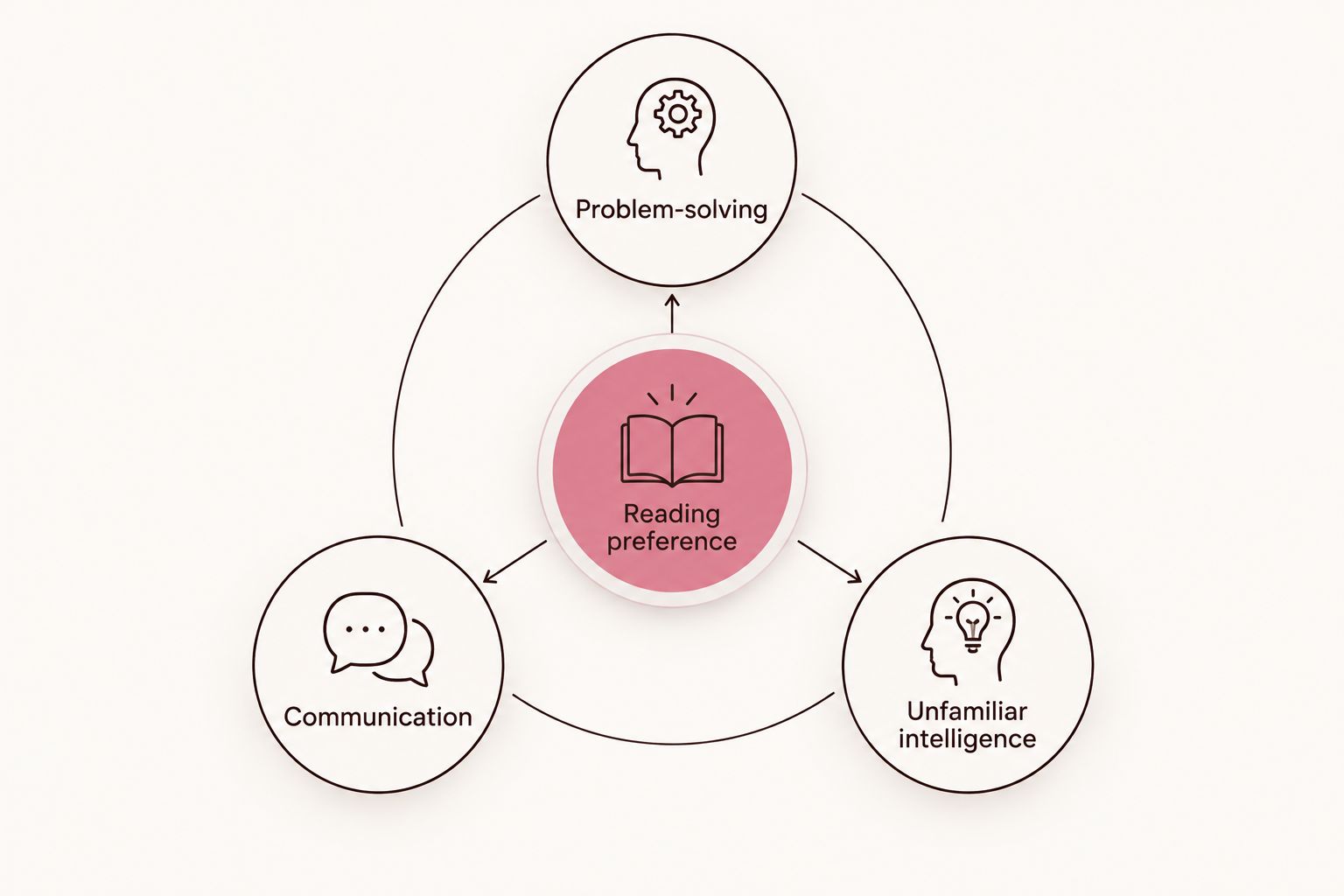
Before adding another title to your 2026 reading list, finish this sentence: I want another book that makes me feel… Then identify what produced that feeling.
- Problem-solving: You enjoyed watching an apparently impossible situation become understandable through patient work. Start with The Martian.
- Communication: You cared about how people establish meaning when their assumptions do not line up. Consider Contact, with its wider social focus.
- Unfamiliar intelligence: You wanted the story to challenge what a mind or civilization looks like. Consider Children of Time.
A genre label cannot make this choice for you. Two hard-science-fiction novels can differ sharply in warmth, narrative scale, humor, and the amount of time spent explaining an idea.
The distinction also helps when a recommendation disappoints you. You did not necessarily choose a bad book. You may have matched its subject while missing the voice or emotional experience you wanted.
Turn that preference into a personal list
Getsimilarbooks is best for fiction readers who want hand-curated read-alikes from a book they already enjoyed. Enter a title at Getsimilarbooks to receive 5 hand-curated suggestions. The free personalized list expands that to 20–30 titles and requires an email address.
Use the comparison above to clarify what you are looking for before requesting your list. More scientific problem-solving is a different reading need from more stories about unfamiliar intelligence. Both can begin with the same favorite book.
Getsimilarbooks offers a small preview rather than asking you to start with a long catalog. The trade-off is straightforward: the larger personalized list is email-gated. Choose the preview if you only want a few possibilities to investigate.
FAQ
Is Project Hail Mary hard science fiction or soft science fiction?
Project Hail Mary is best described as accessible hard science fiction. Scientific reasoning and engineering constraints drive its plot, although its central biological premises are speculative.
Do I need to understand physics before reading Project Hail Mary?
You do not need prior physics knowledge to follow Project Hail Mary. Grace explains the practical importance of discoveries as the story develops; enjoying explanations matters more than knowing equations.
Is Project Hail Mary scientifically accurate?
Project Hail Mary uses real scientific concepts alongside invented biology. Treat its problem-solving methods and its fictional premises as different things rather than assuming every detailed explanation describes established science.
Is Project Hail Mary harder to read than The Martian?
Project Hail Mary asks you to accept more speculative biology than The Martian, but that does not automatically make it harder to read. Both use conversational narration and explanations tied to immediate problems.
Can I read Project Hail Mary as a standalone in 2026?
Yes. Project Hail Mary is a standalone novel, so you do not need to read another Andy Weir book first in 2026. The Martian is a separate story, not a prerequisite.
What should I read after Project Hail Mary if I liked the science?
Read The Martian for practical scientific problem-solving and humor. Choose Contact for evidence and communication, or Children of Time for speculative biology and unfamiliar intelligence.
One last thing
Recommend the mechanism, not just the setting. Saying you want another space book leaves room for almost any kind of story. Saying you want a character to test an idea, fail, learn, and try again identifies a much more useful reading preference.
That is the part of Project Hail Mary the hard-science label captures best. The discoveries are not simply information delivered between action scenes. Understanding is how the action moves.
Related guides
- Books like Project Hail Mary with humor in the science
- Books like Project Hail Mary with first-contact aliens
- Books like Project Hail Mary for book clubs
Leave a Reply