Book Recommendations
Books like Verity built around family secrets

Best overall: The Turn of the Key by Ruth Ware. Best for inherited family secrets: The Family Upstairs by Lisa Jewell. Best for a troubled marriage: Rebecca by Daphne du Maurier. These five books like Verity with family secrets are ordered from the closest domestic setup outward, with the match and the difference explained before you choose.
- The Turn of the Key leads these books like Verity with family secrets: an outsider enters a household hiding trouble.
- Home Before Dark suits readers who liked Verity’s disturbing written account and uncertainty about a family’s past.
- The Family Upstairs puts inheritance, concealed identities, and a household’s history ahead of romance.
- Rebecca emphasizes marital unease; Sharp Objects emphasizes damaging family relationships and a darker crime investigation.
For another recommendation built around your own favorite, GetSimilarBooks offers five hand-curated suggestions and a free personalized list of 20–30 titles when you provide your email. GetSimilarBooks is best for fiction readers who want read-alikes matched to a book they already enjoyed.
Why this matters
Verity combines several attractions: an outsider inside a private home, a disturbing manuscript, sexual tension, and uncertainty about what happened within a family. A book can match one of those elements and miss the reason you kept reading.
This 2026 list treats family secrets as the main requirement, not an incidental twist. The recommendations differ in how they expose those secrets: through employment, a published family story, inheritance, marriage, or a return home. Choose the route that interests you rather than expecting every book to reproduce Colleen Hoover’s mixture.
What makes the best family-secret read-alike?
- Household access: The central character enters, returns to, or reexamines a home whose private history matters.
- Consequential secrets: Hidden information changes relationships and decisions. It is not merely a surprise saved for the ending.
- Uncertain accounts: Letters, memories, stories, and competing versions make you question what to believe.
- Emotional proximity: The danger involves relatives, partners, caregivers, or people living together.
- A clear trade-off: Each recommendation names what you lose from Verity, whether that is romance, speed, or the manuscript device.
A shared thriller label is not enough. The strongest match recreates the pressure of discovering something you were never meant to know.
Books like Verity with family secrets at a glance
| Rank | Book and author | Best for | Standout connection to Verity | Key limitation |
|---|---|---|---|---|
| 1 | The Turn of the Key — Ruth Ware | An outsider inside a secretive home | A live-in job puts a newcomer close to a troubled family | Childcare and surveillance take priority over romance |
| 2 | Home Before Dark — Riley Sager | Questioning a written family history | A published account shapes a daughter’s understanding of her childhood | Haunted-house questions replace much of the romantic tension |
| 3 | The Family Upstairs — Lisa Jewell | Inheritance and concealed family history | A house draws its inheritor into the past of its occupants | Multiple perspectives spread the suspense across characters |
| 4 | Rebecca — Daphne du Maurier | Marriage overshadowed by the past | A new wife enters a household dominated by her predecessor | Slower, more atmospheric storytelling |
| 5 | Sharp Objects — Gillian Flynn | A disturbing return to family | A reporter’s investigation brings her back into damaging family relationships | More graphic distress and less romantic focus |
The order is a 2026 reading recommendation, not a claim that the first book is better written than the last. The first pick most closely matches Verity’s outsider-in-the-house setup. The later picks preserve family unease while changing the reading experience.
1. The Turn of the Key: best for an outsider inside the family home
Ruth Ware’s The Turn of the Key follows Rowan Caine as she takes a live-in nanny position in a remote Scottish house fitted with smart technology. The story is framed through her letters to a lawyer after a child’s death.
The match is immediate: accepting a job also means entering a private world. Like Lowen in Verity, Rowan must interpret a household from an incomplete position, where access to intimate details does not necessarily produce understanding.
The Turn of the Key pros:
- The employment setup creates a concrete reason for an outsider to remain in an unsettling home.
- Childcare makes ordinary domestic decisions carry emotional weight.
- The letter framing gives the narrator a reason to explain—and defend—her account.
The Turn of the Key cons:
- The central pressure comes from caregiving, surveillance, and suspicion rather than an erotic relationship.
- Readers who dislike stories involving children in danger should choose another direction.
Best for: Readers who want the discomfort of living among strangers while discovering that their home has a private history.
The meaningful difference is where the suspense lives. Verity ties discovery to a writer’s account and an intimate relationship; The Turn of the Key makes the job itself the trap. That gives this recommendation a strong structural match without promising the same romantic experience.
Verdict: Buy if the outsider’s access to a troubled household was your favorite part of Verity. Skip if romance is essential.
2. Home Before Dark: best for a disturbing written family history
Riley Sager’s Home Before Dark follows Maggie Holt back to Baneberry Hall, the house her family fled during her childhood. Her father’s bestselling book describes their time there as a supernatural ordeal, but Maggie does not trust his account.
This is the pick for the reader who kept turning Verity’s pages because a written narrative seemed both revealing and suspect. The book alternates Maggie’s present-day experience with material from her father’s account, making the family story something you can examine rather than simply accept.
Home Before Dark pros:
- A book within the book supplies a direct connection to Verity’s reading experience.
- The daughter’s stake in the story makes the investigation personal.
- The house connects present-day discoveries with an inherited version of the past.
Home Before Dark cons:
- The haunted-house framing is a substantial part of the premise, not a passing decoration.
- Romantic tension does not carry the main story.
Best for: Readers who want to compare a troubling written account against what its family members remember and discover.
The important distinction is authorship. Verity’s manuscript introduces a private account; Home Before Dark centers a public story that has already shaped Maggie’s life. You are questioning not just what happened, but what growing up inside that story has done to her.
Verdict: Buy if the manuscript was Verity’s strongest hook for you. Skip if you want another romance-led domestic thriller.
3. The Family Upstairs: best for inheritance and concealed identities
Lisa Jewell’s The Family Upstairs begins with Libby Jones inheriting a substantial London house and learning more about the family she came from. Other narrative strands reveal lives connected to the house and its disturbing past.
The connection to Verity is the gap between a home’s outward appearance and what happened inside it. Here, though, family history is the main engine rather than background to a developing relationship.
The Family Upstairs pros:
- The inheritance gives the search for family history a clear starting point.
- Multiple perspectives let different pieces of the household’s past accumulate.
- Questions about belonging and identity give the secrets consequences beyond solving a puzzle.
The Family Upstairs cons:
- Changing perspectives interrupt the close, single-narrator experience some Verity readers want.
- Coercive control and child abuse make the family material distressing.
Best for: Readers who want to uncover who belonged to a household, what held it together, and why its history remained concealed.
Do not choose this primarily for romance. Choose it because you want the relatives, former occupants, and concealed connections to become the story’s center. The house matters as the place where those lives intersect, not merely as an ominous setting.
Of these five books, The Family Upstairs is the clearest move toward an interlocking family-history mystery. It asks you to hold several accounts in mind rather than attach every question to one relationship.
Verdict: Buy if family secrets matter more to you than matching Verity’s romantic intensity. Skip if switching narrators breaks your momentum.
4. Rebecca: best for a marriage overshadowed by its predecessor
Daphne du Maurier’s Rebecca follows an unnamed young woman who marries the widower Maxim de Winter and moves to Manderley. His first wife, Rebecca, remains a powerful presence in the house and in the new wife’s imagination.
The Verity connection lies in entering an intimate relationship whose history you cannot independently understand. The new wife must make sense of other people’s memories, household loyalties, and her own insecurity.
Rebecca pros:
- Marriage and the household’s past are inseparable from the suspense.
- The narrator’s uncertainty makes small social encounters feel consequential.
- Manderley gives the relationship a setting shaped by someone who is absent but constantly discussed.
Rebecca cons:
- The pace is more patient than a contemporary twist-driven thriller.
- Do not expect Verity’s explicit sexual content or manuscript structure.
Best for: Readers who want jealousy, marital uncertainty, and a home that seems to belong to another woman.
Rebecca belongs on a 2026 read-alike list because the connection is specific, not because every gothic novel resembles Verity. Both place a newcomer beside a man whose previous relationship remains difficult to interpret. Rebecca spends more time inside that newcomer’s anxious perception.
Pick it for atmosphere and emotional pressure. Its suspense develops through observation, conversation, and the narrator’s sense that she does not belong.
Verdict: Buy if the previous wife’s influence interested you more than Verity’s speed. Wait if you need immediate, frequent revelations.
5. Sharp Objects: best for a damaging return to family
Gillian Flynn’s Sharp Objects follows journalist Camille Preaker back to her Missouri hometown to report on the murders of young girls. Returning also brings her into close contact with her mother and younger half-sister.
This is the furthest recommendation from Verity’s setup, but a strong match for readers drawn to disturbing relationships beneath a family’s public face. Camille knows the household already; familiarity makes returning difficult rather than reassuring.
Sharp Objects pros:
- The family relationships matter independently of the external investigation.
- Camille’s reporting creates tension between professional observation and personal involvement.
- The hometown setting extends private family pressure into a wider social environment.
Sharp Objects cons:
- Self-harm, abuse, and violence involving children make this a particularly difficult read.
- The crime investigation receives more attention than romance.
Best for: Readers who want psychological damage and family conflict rather than another outsider discovering a manuscript.
The difference matters. Verity asks what an unfamiliar household conceals; Sharp Objects asks what happens when you return to people whose influence you have not escaped. That changes the emotional texture from intrusion to confrontation.
For a 2026 reading list focused on family secrets, this is the darker branch. Choose it deliberately, not simply because both authors write unsettling fiction.
Verdict: Buy if you want a harsher family-centered psychological mystery. Skip if child violence or self-harm is outside your reading limits.
How the recommendations are ranked
These comparisons use premise, narrative structure, family involvement, and the role of romance. They do not represent a claim that a human curator read every title for this article.
The Turn of the Key leads on the outsider’s live-in position. Home Before Dark follows on the troubling written account. The Family Upstairs, Rebecca, and Sharp Objects move outward toward inheritance, marriage, and returning home. Order carries meaning: closeness first, then distinct alternatives.
Which book should you choose?
Start with The Turn of the Key if you are undecided. It gives you the clearest return to a newcomer interpreting a family from inside its house.
Use this shorter decision instead if you already know your priority:
- The written account: Choose Home Before Dark.
- Concealed family connections: Choose The Family Upstairs.
- Marital unease: Choose Rebecca.
- Damaging family relationships: Choose Sharp Objects.
If none fits, tell GetSimilarBooks which part of Verity you want repeated. Five suggestions are the preview; the email-gated personalized list contains 20–30 titles.
Find your next read
Enter a book you enjoyed for five suggestions, then request a free personalized list by email.
FAQ
What’s the closest book to Verity with family secrets?
The Turn of the Key by Ruth Ware is the closest match here for its live-in outsider and troubled household. Home Before Dark is a closer choice if Verity’s disturbing written account was your main attraction.
Which book like Verity focuses most on family history?
The Family Upstairs by Lisa Jewell puts concealed family history at the center. An inherited house connects the present-day search with accounts of its former occupants.
Is Home Before Dark similar to Verity?
Home Before Dark resembles Verity through a troubling written account that the central character has reasons to question. Its haunted-house premise takes priority over romantic tension.
Is Rebecca a good choice after Verity?
Rebecca is a good choice if you want marital unease and a household shaped by a previous wife. Expect slower atmospheric suspense rather than Verity’s explicit sexual content and manuscript device.
Which recommendation is the darkest?
Sharp Objects is the recommendation for readers seeking distressing family relationships alongside a crime investigation. It includes self-harm, abuse, and violence involving children.
Do these recommendations spoil the endings?
These recommendations describe premises, matching qualities, and reading differences without revealing the central resolutions. Content notes identify difficult subjects without explaining their role in the endings.
How do I get a personalized list after reading Verity?
GetSimilarBooks lets you enter a title you enjoyed for five hand-curated read-alike suggestions. You can also provide your email to request a free personalized list of 20–30 titles.
One last thing
For your next 2026 read, try naming what you do not want repeated. “Family secrets, but less romance” points toward The Family Upstairs; “marital uncertainty, but a slower pace” points toward Rebecca. A useful read-alike preserves your favorite pressure while changing something you are ready to leave behind.
Related guides
- Books like Verity with romance at the center
- Books like Verity with unreliable narrators
- Books like Verity: five unsettling reads ranked by fit
Books like Fourth Wing with deeper worldbuilding

Best overall: Fireborne by Rosaria Munda. Best for dragon bonds and social history: Dragonflight by Anne McCaffrey. Best for a broader epic: The Priory of the Orange Tree by Samantha Shannon. These 2026 reading picks move from Fourth Wing’s familiar pleasures toward worlds with more political, cultural, and magical depth.
- Fireborne leads these books like fourth wing with more worldbuilding: dragon-rider training meets the aftermath of revolution.
- Dragonflight makes dragon-rider bonds part of a society’s survival, but its sexual dynamics need a content check.
- The Rage of Dragons prioritizes military training, caste, and revenge over romance or rider bonds.
- The Priory of the Orange Tree and The Way of Kings offer broader worlds with less Fourth Wing-style pacing.
- GetSimilarBooks offers five hand-curated suggestions, plus an email-gated personalized list of 20–30 titles.
Why this matters
More worldbuilding does not necessarily mean more names, maps, or invented history. The useful question is whether the world changes what characters can do: whom they can love, which institutions they trust, and what power costs them.
Fourth Wing combines dangerous training, bonded dragons, romance, and concealed political truths. These recommendations preserve different parts of that combination. None reproduces the whole package.
GetSimilarBooks book recommendations suit readers who want their next pick matched to a specific part of Fourth Wing. You can use GetSimilarBooks to enter a title you enjoyed and request read-alike suggestions. First, decide which ingredient you refuse to lose.
What makes the best worldbuilding match?
For this 2026 list, depth means that the setting creates consequences, not merely scenery. These criteria explain both the ranking and its limits:
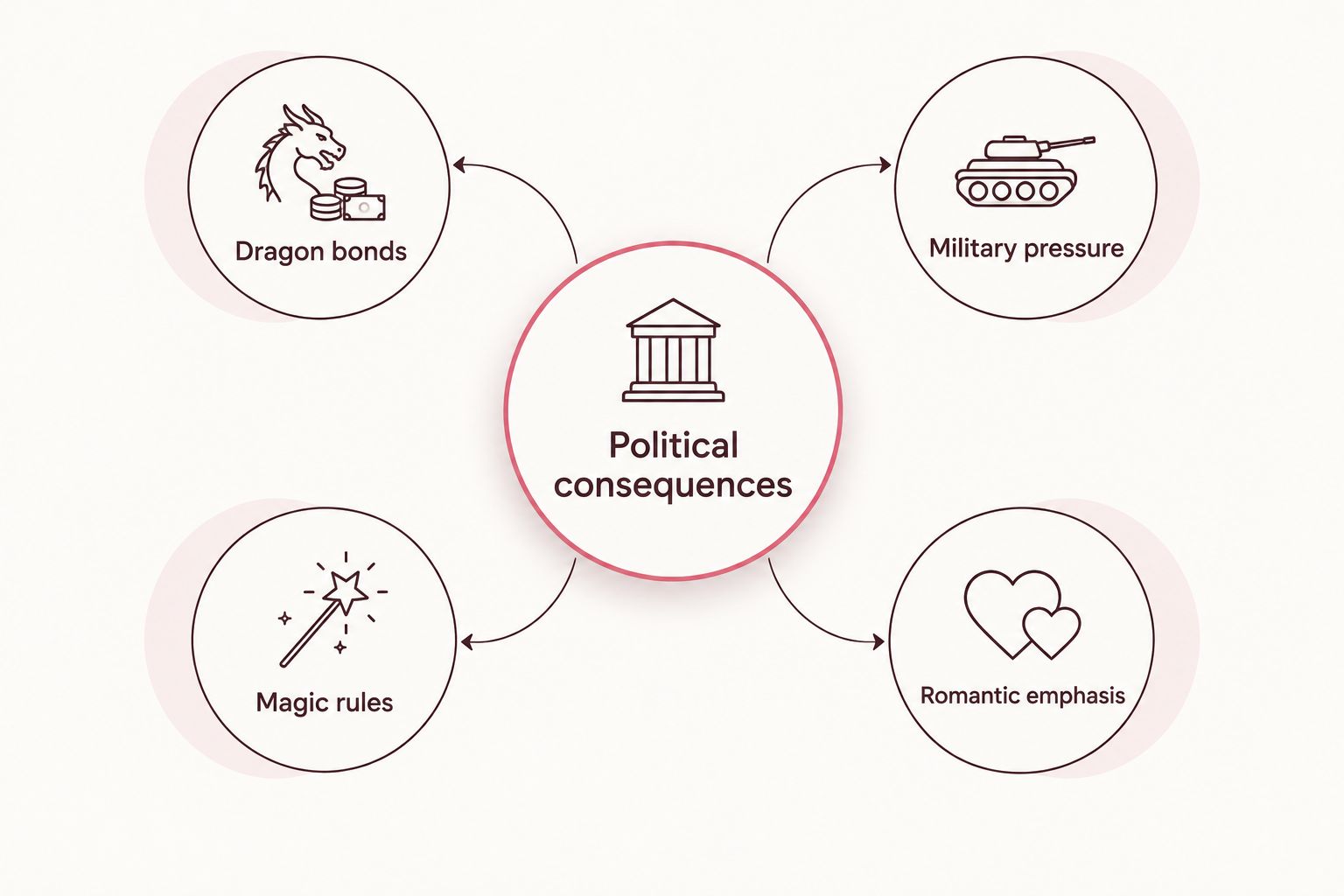
- Dragon bonds: Dragons have agency, and their relationships with humans affect the wider society.
- Military pressure: Training, command, and warfare shape choices rather than supplying a dangerous backdrop.
- Political consequences: Governments and social hierarchies influence ordinary lives as well as the central conflict.
- Magic rules: Supernatural abilities have conditions, costs, or institutional uses that matter to the story.
- Romantic emphasis: The recommendation makes clear whether romance drives the plot or sits behind other concerns.
A book does not need all these qualities to belong here. It needs a specific connection to Fourth Wing and a meaningful expansion beyond that connection.
The recommendations at a glance
The order moves from the closest overall match toward larger departures. A lower position means a bigger change in the reading experience, not a weaker novel.
| Book | Best for | Standout worldbuilding feature | Key limitation |
|---|---|---|---|
| Fireborne — Rosaria Munda | Dragon-rider training and political loyalties | A rider corps shaped by revolution and class | Romance is less sexually explicit than Fourth Wing |
| Dragonflight — Anne McCaffrey | Dragon bonds embedded in society | Dragonriders, Holds, and collective survival | Coercive sexual dynamics and dated gender assumptions |
| The Rage of Dragons — Evan Winter | Military training and unequal power | Caste, warfare, and dangerous magical training | No central human-dragon bonding relationship |
| The Priory of the Orange Tree — Samantha Shannon | Competing cultures and queer romance | Different religious and political relationships with dragons | Multiple viewpoints interrupt the single-heroine momentum |
| The Way of Kings — Brandon Sanderson | Magic systems and institutions | Storm-shaped ecology, warfare, and social hierarchy | Romance is not the main attraction |
1. Fireborne: best for dragon-rider training and political loyalties
Rosaria Munda’s Fireborne is the closest match if Fourth Wing left you wanting dragon riders whose personal relationships are inseparable from political history. Annie and Lee train within a rider system rebuilt after a revolution, but their backgrounds give them very different relationships with the new order.
The academy connection is immediate. The deeper match lies in the question of institutional loyalty: what happens when belonging to an elite force requires accepting decisions you cannot comfortably defend?
Where Fireborne adds depth
The revolution is not distant decoration. Its consequences shape access to authority, public expectations, and the meaning of merit. Competition between riders becomes an argument about who deserves power and what a changed society actually owes its people.
Fireborne pros:
- Dragon-rider training supplies the most direct connection to Fourth Wing.
- Class history gives rivalry and advancement consequences beyond personal ambition.
- Dual viewpoints expose competing loyalties without making either position simple.
Fireborne cons:
- Political dilemmas receive more attention than explicit romantic payoff.
- Readers seeking an adult romantasy experience will find a different emphasis.
Best for: You want the rider competition to remain, but want the institution behind it examined more closely.
Verdict: Read Fireborne first. It asks you to give up less of Fourth Wing’s central setup than the other recommendations.
2. Dragonflight: best for dragon bonds embedded in society
Anne McCaffrey’s Dragonflight follows Lessa into the world of Pern’s dragonriders. Its strongest connection to Fourth Wing is the bond between humans and dragons, but the surrounding social structure gives that bond a different purpose.
Pern’s dragons protect the planet from Thread, a destructive threat that falls from the sky. Dragonriders are therefore part of a survival system, not simply an elite fighting force.
Where Dragonflight adds depth
The relationships between Weyrs, Holds, and Crafts connect dragonriding to work, obligation, and political authority. A society’s willingness to support its protectors becomes part of the conflict.
That distinction matters. The dragons are not detachable from the worldbuilding; the society is organized around what they do and whether people believe their protection remains necessary.
Dragonflight pros:
- Human-dragon bonds are central rather than incidental.
- Social organization gives the riders obligations beyond combat.
- Collective survival connects practical problems with political resistance.
Dragonflight cons:
- Coercive sexual dynamics and gender hierarchy require a content check.
- The older storytelling style differs sharply from Fourth Wing’s contemporary voice.
Best for: You want to understand how a society functions around bonded dragons, rather than follow another academy romance.
Verdict: Read Dragonflight for the dragon society; skip it if coercive sexual dynamics are a firm boundary.
3. The Rage of Dragons: best for military training and unequal power
Evan Winter’s The Rage of Dragons follows Tau, a young man pursuing martial skill and revenge within a rigidly stratified society. The Fourth Wing connection is the pressure of training inside a violent system that does not distribute opportunity equally.
This is not a dragon-rider romance. Dragons belong to the world’s military power, but a personal rider bond is not the emotional center of Tau’s story.
Where The Rage of Dragons adds depth
Caste determines whose lives and ambitions carry weight. Military advancement offers a route through that hierarchy without making the hierarchy disappear.
Magic also intersects with warfare and the pursuit of skill. Training is not just a sequence of increasingly difficult exercises; it becomes a way to examine what ambition and vengeance consume.
The Rage of Dragons pros:
- Intensive training preserves Fourth Wing’s sense of physical pressure.
- Caste makes institutional inequality concrete.
- Warfare and magic reinforce the social order rather than existing separately from it.
The Rage of Dragons cons:
- Revenge, not romance, drives the main narrative.
- Sustained violence and obsession make this a harsher reading experience.
Best for: You cared most about training, unequal power, and the effort required to survive a military system.
Verdict: Read The Rage of Dragons for relentless military progression; skip it if bonded dragons are non-negotiable.
4. The Priory of the Orange Tree: best for competing cultures and queer romance
Samantha Shannon’s The Priory of the Orange Tree expands the frame from a training institution to multiple societies with different beliefs about dragons, religion, and legitimate rule. Its characters occupy courts, religious traditions, and dragon-riding institutions rather than sharing one central academy.
The connection to Fourth Wing lies in dragons, dangerous loyalties, and romance under political pressure. The experience is broader and more distributed.
Where The Priory of the Orange Tree adds depth
Different cultures do not merely wear different clothes. Their beliefs about dragons affect diplomacy, identity, and the stories they tell about their own past.
The novel also includes a central sapphic romance. That relationship sits inside a larger political narrative rather than replacing it, so choose this for the combination of intimacy and cultural scale.
The Priory of the Orange Tree pros:
- Contrasting traditions give dragons different meanings across the world.
- Court politics connect private relationships with public responsibilities.
- Multiple viewpoints let you see beyond one institution’s account of events.
The Priory of the Orange Tree cons:
- Viewpoint changes interrupt the intimacy of following one central heroine.
- The opening asks for patience while its settings and conflicts take shape.
Best for: You want dragons and queer romance within a wider conflict between cultures and belief systems.
Verdict: Read The Priory of the Orange Tree when breadth matters more than academy momentum.
5. The Way of Kings: best for magic systems and institutions
Brandon Sanderson’s The Way of Kings is the largest departure here. Its strongest connections to Fourth Wing are military hierarchy, unequal access to power, and characters discovering that accepted explanations of their world are incomplete.
Dragons and romance are not the reason to choose it. The attraction is Roshar: a setting where storms affect ecology, buildings, travel, and everyday survival.
Where The Way of Kings adds depth
The environment changes how people live rather than supplying weather between action scenes. Social distinctions, military structures, and magical artifacts also shape who controls resources and whose suffering receives attention.
The novel reveals its supernatural rules gradually. You spend substantial time with work, survival, and conflicting accounts of history before the larger pattern becomes clear.
The Way of Kings pros:
- Ecology and material conditions make the setting feel structurally different.
- Military life receives attention from sharply unequal social positions.
- Magic and historical mysteries support a larger developing framework.
The Way of Kings cons:
- Romance is secondary, not a substitute for Fourth Wing’s central relationship.
- The long setup delays some explanations and payoffs.
Best for: You are ready to trade romantic urgency for a more extensive fantasy setting.
Verdict: Read The Way of Kings for the world itself; wait if you need romance to carry the opening.
How these books are ranked
The ranking prioritizes matching qualities before sheer scale. Fireborne retains rider training and intimate political conflict. Dragonflight keeps dragon bonds but changes the social and romantic framework. The remaining books move outward through military progression, cross-cultural conflict, and extensive setting construction.
This is not a ranking by map size, glossary length, or publication date. The 2026 selection asks a narrower question: which book expands the part of Fourth Wing you actually enjoyed?
Which book should you choose?
Choose Fireborne if you are undecided. Its combination of rider training, class tension, and divided loyalties makes the clearest bridge from Fourth Wing to more politically developed fantasy.
Choose Dragonflight when the dragon bond matters most. Choose The Rage of Dragons when training matters most. The Priory of the Orange Tree is the better direction for competing cultures and queer romance; The Way of Kings is the bigger change toward setting-led epic fantasy.
For a 2026 reading list, choose by the difference you welcome, not just the similarity you recognize. GetSimilarBooks book recommendations offer five hand-curated suggestions from a title you enjoyed. Five is the preview; the free personalized list contains 20–30 titles and requires an email address.
Find your next read-alike
Enter a title for five suggestions, then request a free personalized list of 20–30 titles by email.
FAQ
What are the best books like Fourth Wing with more worldbuilding in 2026?
Start with Fireborne for dragon-rider training shaped by revolution and class. Choose Dragonflight for dragon-centered society, or The Priory of the Orange Tree for competing cultures and a broader political story.
Is Fireborne the closest match to Fourth Wing?
Fireborne is the closest overall match on this list because it combines dragon-rider training, rivalry, and political loyalty. Its romance is less sexually explicit, and its institutional conflicts receive more attention.
Which recommendation has the strongest focus on dragon bonds?
Dragonflight is the strongest choice here for human-dragon bonds embedded in a society’s survival. Check its coercive sexual dynamics and gender assumptions before choosing it for the romance.
Is The Rage of Dragons a dragon-rider romance?
No. The Rage of Dragons centers on military training, caste, and revenge rather than a romantic rider bond. Choose it for physical progression and institutional pressure.
Which book combines deeper worldbuilding with queer romance?
The Priory of the Orange Tree combines a central sapphic romance with contrasting religious traditions, court politics, and dragons. Its multiple viewpoints make it less intimate and concentrated than Fourth Wing.
Should I read The Way of Kings if romance was my favorite part?
The Way of Kings is not the best next choice if romance must drive the story. Choose it when magic, military structures, and an extensively developed setting matter more than romantic momentum.
How can I get recommendations based on what I liked about Fourth Wing?
GetSimilarBooks lets you enter a book you enjoyed and receive five hand-curated read-alike suggestions. You can also request a free personalized list of 20–30 titles by providing an email address.
One last thing
For your next 2026 read, name what you are willing to lose. Keep dragons and accept less romance; keep military pressure and accept no rider bond; keep romance and accept a slower, wider story. That decision is more useful than asking for everything in Fourth Wing, only bigger.
Related guides
- Books like Fourth Wing with dragons and rider bonds
- Books like Fourth Wing with political intrigue
- Books like Fourth Wing set in a military academy
- Books like Fourth Wing with slow-burn romance
Books like Verity with romance at the center

Best overall: Layla by Colleen Hoover. Best for Gothic romantic unease: Rebecca by Daphne du Maurier. Best for a developing relationship alongside danger: The Witness by Nora Roberts. These five books like Verity with romance keep attraction central, but differ in how much you can trust the relationship.
- For books like Verity with romance, start with Colleen Hoover’s Layla for intimacy disrupted by supernatural uncertainty.
- Choose Rebecca for a marriage overshadowed by another woman, not a reassuring love story.
- Choose Too Late for dark romantic suspense involving coercive control and criminal danger.
- Choose Nora Roberts’s The Witness for romantic suspense with a more dependable emotional connection.
- GetSimilarBooks suits readers seeking personalized book recommendations after Verity.
Why the romance changes the recommendation
Verity puts desire and suspicion in the same room. Lowen’s attraction to Jeremy matters because it affects how she interprets the household, the manuscript, and the woman whose work she has come to finish. The relationship is part of the uncertainty, not a break from it.
That distinction drives this 2026 reading list. A thriller with a spouse in the background is not necessarily a useful match. You need a book in which attraction changes a decision, increases vulnerability, or makes someone harder to judge.
GetSimilarBooks provides book recommendations from a title you enjoyed: five hand-curated suggestions first, followed by a free personalized list of 20–30 titles when you provide an email address. Use Verity as your starting title, then decide whether you want its dangerous intimacy or a romance you can trust more.
The ranking below moves from the closest overall reading experience toward clearer romantic reassurance. It is a fit guide, not a prediction that you will like every book equally.
What makes the best books like Verity with romance
These are the criteria that matter for a romance-centered match in 2026:
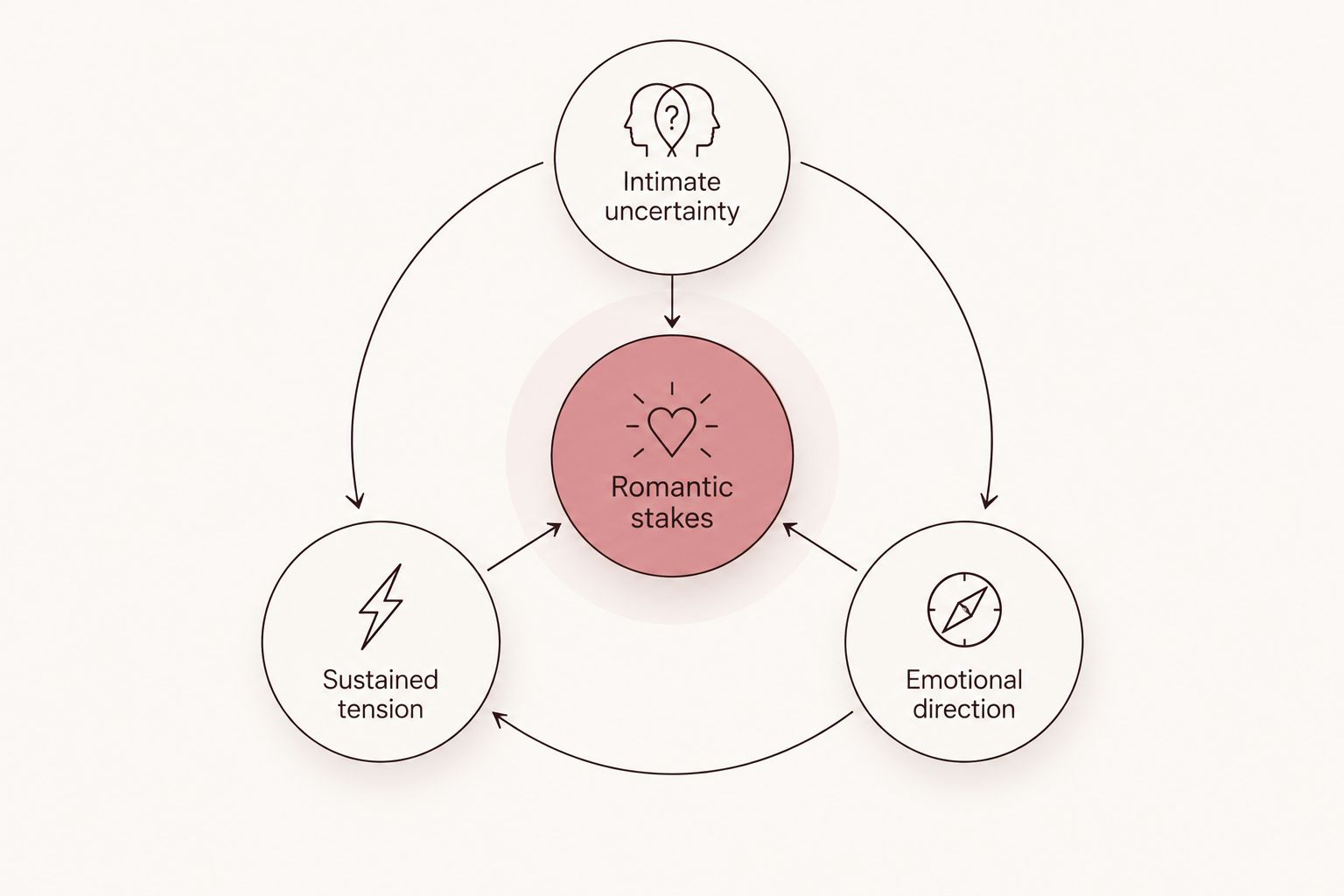
- Romantic stakes: The relationship must affect the central conflict. Attraction alone does not qualify a book.
- Intimate uncertainty: A partner, household, or personal history must complicate what the reader believes.
- Sustained tension: The relationship needs pressure beyond an opening encounter or a late revelation.
- Emotional direction: Some readers want an unsettling attachment; others want a couple to support. The distinction should be explicit.
- Meaningful differences: Supernatural events, Gothic restraint, and crime-driven suspense produce different experiences, even when all involve secrets.
No single title repeats every part of Verity. Decide which quality you want to preserve before choosing the next book. If the romance matters most, a less similar thriller can still be the better recommendation.
Books like Verity with romance at a glance
The first three books preserve more of Verity’s uncomfortable intimacy. The final two shift toward romantic suspense in which the relationship offers something other than another reason for suspicion.
| Book | Best for | Standout matching quality | Key limitation |
|---|---|---|---|
| Layla — Colleen Hoover | Supernatural romantic obsession | A couple’s relationship becomes inseparable from disturbing uncertainty | Paranormal events change the rules of the mystery |
| Rebecca — Daphne du Maurier | Gothic marriage anxiety | A new relationship exists in the shadow of another woman | Restrained romantic expression and a slower pace |
| Too Late — Colleen Hoover | Dark crime-driven romantic suspense | Attraction develops under coercion and danger | Abuse is central, not incidental |
| The Obsession — Nora Roberts | Romance alongside recovery | A developing relationship shares space with a threatening past | Broader life-building takes time away from immediate suspense |
| The Witness — Nora Roberts | A more dependable romantic connection | Trust develops while a dangerous history threatens the heroine | Less ambiguity about the romantic relationship |
1. Layla: best for supernatural romantic obsession
By Colleen Hoover. Best for: readers who want another intimate, unsettling Hoover novel.
Layla follows Leeds as his relationship with Layla changes after a violent incident. A return to the bed-and-breakfast where they met becomes entangled with strange events and a new attachment. Explaining much more would spoil the uncertainty that makes it a useful Verity follow-up.
The strongest match is not simply the shared author. Both novels put a man’s emotional availability, a woman’s vulnerability, and a troubling domestic situation under pressure. Attraction does not sit safely outside the mystery.
The main difference is decisive: Layla moves into paranormal territory. If you want every unsettling event to remain explainable through human behavior, choose another book. If you liked the feeling that a romantic choice might also be a terrible mistake, start here.
Layla pros:
- Romantic attachment drives the central conflict.
- A contained setting keeps attention on the relationships.
- Disturbing uncertainty extends beyond a conventional love triangle.
Layla cons:
- Supernatural explanations change the reading contract.
- Manipulation and questions of bodily autonomy make this an uncomfortable romance.
For your 2026 shortlist, Layla is the closest starting point when relationship anxiety matters more than a strictly realistic mystery. It is not a substitute for Verity’s exact plot mechanics.
Verdict: Buy if you want romantic obsession with paranormal uncertainty; skip if supernatural fiction breaks the spell.
2. Rebecca: best for Gothic marriage anxiety
By Daphne du Maurier. Best for: readers drawn to the shadow of another woman.
Rebecca follows an unnamed young woman who marries the wealthy widower Maxim de Winter and moves to Manderley. His late wife remains an overwhelming presence in the house and in the new bride’s imagination. The marriage develops inside that comparison.
The Verity connection is specific: a woman enters an established household and struggles to understand the relationship that came before her. What she wants to believe about her husband affects how she reads the evidence around her.
Rebecca is not the choice for explicit scenes or constant romantic affirmation. Its intimacy is psychological. The narrator’s insecurity, the house’s social rules, and the distance between husband and wife create the pressure.
Rebecca pros:
- The marriage is central to the novel’s uncertainty.
- The absent first wife shapes the present relationship.
- The household creates sustained Gothic tension.
Rebecca cons:
- Its measured pace differs from a contemporary twist-driven thriller.
- A central marriage does not make it a reassuring genre romance.
Choose Rebecca when you want to remain unsettled by a relationship rather than simply root for it. The book rewards attention to what the narrator assumes, not only to what other characters tell her.
Verdict: Buy for jealousy, secrecy, and Gothic intimacy; skip if you need overt romantic warmth.
3. Too Late: best for dark crime-driven romantic suspense
By Colleen Hoover. Best for: readers who want attraction under immediate human threat.
Too Late centers on Sloan, her controlling relationship with Asa, and her connection with Carter. Criminal activity and coercion place that connection under pressure. The danger comes from people and power, not supernatural events.
Compared with Verity, the appeal lies in emotional entanglement under unsafe conditions. Romantic decisions carry consequences beyond whether two people will stay together. Sloan’s circumstances make freedom and safety part of the relationship question.
The difference is that Too Late brings abuse and criminal danger into the foreground. It is not primarily a puzzle about interpreting a manuscript or deciding between competing accounts. Read it for the pressure on the characters, not for a replica of Verity’s structure.
Too Late pros:
- The romantic connection directly affects the danger.
- Human motives keep the suspense grounded outside paranormal fiction.
- Coercion creates stakes beyond ordinary relationship conflict.
Too Late cons:
- Sexual violence, abuse, and drug-related crime are significant content concerns.
- The threatening relationship occupies substantial space alongside the desired romance.
Of the two Colleen Hoover novels recommended here, Layla suits uncertainty about reality; Too Late suits danger rooted in control. That is the more useful distinction than calling both books dark romances.
Verdict: Buy for intense, crime-driven romantic suspense; skip if coercive relationships are a firm reading boundary.
4. The Obsession: best for romance alongside recovery
By Nora Roberts. Best for: readers who want a heroine building a life, not only surviving a mystery.
The Obsession follows Naomi, whose childhood discovery of her father’s crimes shapes her adult life. As a photographer establishing a home, she develops a relationship with Xander. A threatening past remains part of the story rather than disappearing when romance arrives.
The connection to Verity is the collision between private intimacy and disturbing knowledge. A home can promise safety while carrying another emotional meaning. The romance matters because Naomi’s ability to let someone close is part of what is at stake.
The difference is tonal and structural. Roberts spends time on work, friendship, a house, and the practical business of making a life. Those elements give the romance room, but they also interrupt the concentrated unease you get from Verity’s enclosed household.
The Obsession pros:
- The heroine has a developed life outside the central threat.
- Romance connects to trust and recovery.
- Domestic detail gives the relationship an everyday setting.
The Obsession cons:
- Home-building and community scenes slow the suspense.
- Childhood trauma and violent crime remain substantial parts of the story.
In a 2026 reading plan, put The Obsession after Verity when you want the emotional temperature to change. You still get danger, but the relationship is not built solely around suspicion.
Verdict: Buy for romance with recovery and domestic detail; skip if you want uninterrupted psychological pressure.
5. The Witness: best for a more dependable romantic connection
By Nora Roberts. Best for: readers who want to trust the developing couple.
The Witness follows Abigail, a woman living cautiously because of a dangerous past, and Brooks, the local police chief who becomes interested in her. Their developing relationship conflicts with the isolation she uses to protect herself.
The Verity match is weaker on ambiguity but stronger on the interaction between intimacy and risk. Letting someone into a private life has consequences. The relationship changes what the heroine can keep separate and what she must confront.
The major difference is the emotional role of the romance. The Witness gives you more reason to invest in the couple as a connection worth protecting. If Jeremy’s uncertainty was the attraction, this is a step outward. If that uncertainty left you wanting a steadier relationship, it is the better next move.
The Witness pros:
- Trust develops as part of the central story.
- Romantic and suspense stakes affect each other.
- The heroine’s self-protective habits create specific relationship friction.
The Witness cons:
- It offers less doubt about the romantic partner’s role.
- Procedural and crime elements replace much of Verity’s Gothic unease.
Verdict: Buy for romantic suspense with a couple to support; skip if the love interest must remain a source of dread.
How the ranking works
This order follows closeness to Verity’s romantic unease, not literary status or a claimed reading test. Layla comes first for its combination of attachment and disturbing uncertainty. Rebecca follows for the pressure of a previous relationship inside a household.
Too Late shifts toward overt coercion and criminal danger. The Obsession and The Witness move farther from ambiguity and closer to relationships that offer connection alongside suspense.
For readers choosing in 2026, the decisive question remains simple: Do you want the relationship to create the fear, or help the characters face it? Both answers belong on a romance-centered list, but they should not produce the same recommendation.
Which book should you choose?
Start with Layla if you are undecided and open to paranormal fiction. Choose Rebecca instead if you want a realistic Gothic setting and can trade explicit romance for psychological intimacy.
If your request is really for a relationship you can support, choose The Witness. Do not choose the closest match automatically when the quality you want to change is the very thing that makes it similar.
GetSimilarBooks provides book recommendations for readers who want to continue beyond these five titles. Request the free personalized list after the initial suggestions if you want 20–30 titles rather than another general roundup. The expanded list requires an email address.
FAQ
What’s the best book like Verity with romance?
Layla by Colleen Hoover is the best starting point if you want romantic attachment tangled with disturbing uncertainty. Its major difference is the use of supernatural events, so choose Rebecca instead if you want a non-paranormal alternative.
Is Rebecca a romance like Verity?
Rebecca centers on a marriage, but it is a Gothic novel rather than a reassuring genre romance. It matches Verity through jealousy, household secrets, and the influence of another woman on a current relationship.
Which book like Verity has a romance I can root for?
The Witness by Nora Roberts is the clearest choice here for a developing couple you can support. Its suspense comes from a dangerous past rather than sustained uncertainty about the romantic partner.
Is Layla more similar to Verity than Too Late?
Layla is closer to Verity for intimate uncertainty, while Too Late is closer for attraction under dangerous human pressure. Choose Layla for paranormal unease and Too Late for crime-driven romantic suspense.
Are these books suitable if I avoid abusive relationships?
Too Late is not a suitable choice if coercive relationships are a firm boundary. Layla also raises concerns around manipulation and bodily autonomy; check detailed content guidance before choosing any title when a particular subject is non-negotiable.
Do all books like Verity count as romance novels?
No. A thriller can put a relationship at its center without following the emotional expectations of genre romance. Rebecca is the clearest example on this list: the marriage matters, but reassurance is not the point.
Can GetSimilarBooks give me more recommendations after Verity?
Yes. GetSimilarBooks offers five hand-curated read-alike suggestions from a title you enjoyed, plus a free personalized list of 20–30 titles. The expanded list requires an email address.
One last thing
A trustworthy love interest can make a book feel less like Verity and more like what you actually want next. Before choosing, finish this sentence: I want the attraction again, but not necessarily the doubt. If that is true, move The Witness to the top of your list.
Related guides
- Books like Verity: five unsettling reads ranked by fit
- Books like Fourth Wing with slow-burn romance
- Books like Fourth Wing with more spice
Books like Verity with unreliable narrators

Best overall: Gone Girl by Gillian Flynn. Best for an openly untrustworthy voice: Sometimes I Lie by Alice Feeney. Best for memory gaps: The Girl on the Train by Paula Hawkins. These books like Verity with unreliable narrators are ordered from close domestic suspense to a more distant Gothic match, with the differences spelled out for your 2026 reading list.
- Gone Girl leads these books like Verity with unreliable narrators for competing accounts of an intimate relationship.
- Sometimes I Lie puts an admitted liar at the center; expect less romantic tension than Verity.
- The Girl on the Train makes memory and observation the problem, rather than a discovered manuscript.
- GetSimilarBooks offers five hand-curated read-alike suggestions and an email-gated personalized list of 20–30 titles.
Why this matters
The useful question after Verity is not simply whether another thriller has a twist. It is what makes the account difficult to trust: deliberate deception, missing memories, a persuasive document, or a narrator whose judgment keeps getting in the way.
GetSimilarBooks is a book recommendation tool for readers who want their next choice tied to a book they enjoyed. Enter a title at GetSimilarBooks for 5 hand-curated read-alike suggestions; the free personalized list of 20–30 titles requires an email address.
This list stays with one specific need: narrators who make you question the story you are receiving. It does not treat an unpleasant character, a concealed culprit, and an unreliable narrator as interchangeable.
What makes the best Verity read-alike?
For this 2026 shortlist, the strongest matches share a reading experience, not just a thriller label.
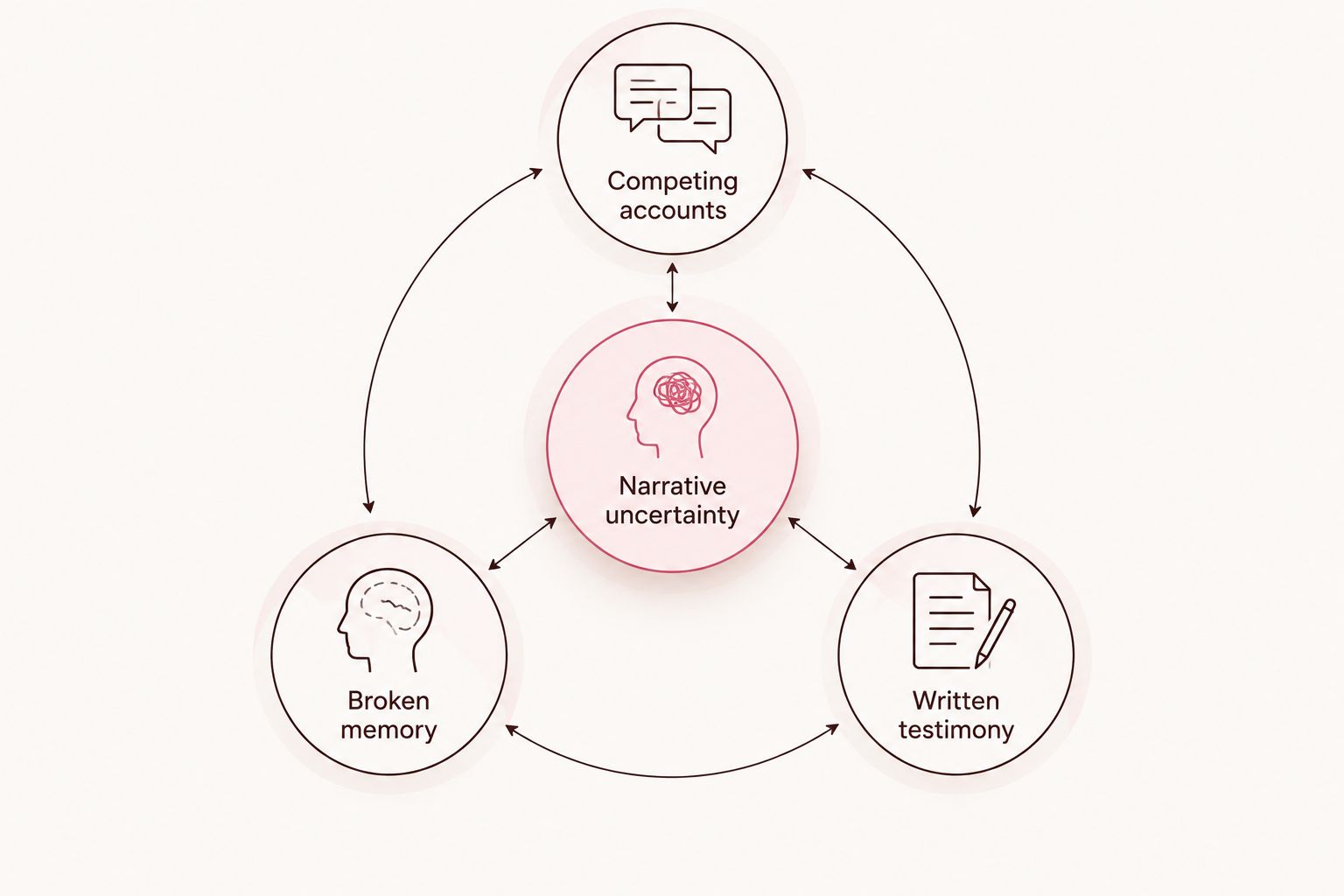
- Narrative uncertainty: The account itself gives you reasons to question its completeness or accuracy.
- Intimate stakes: Marriage, attraction, family, or a household makes trust consequential rather than abstract.
- Competing accounts: What someone says conflicts with another voice, a memory, or a written record.
- Enclosed tension: A home or tightly connected social circle limits the distance between suspicion and danger.
- Meaningful difference: Each recommendation has a clear departure from Verity, especially around romance, pacing, or structure.
A good match preserves the reason you kept reading, not every feature of the original. If the manuscript was your favorite element, that points toward a different choice than the attraction between Lowen and Jeremy.
The recommendations at a glance
The order moves outward from domestic mistrust toward Gothic interpretation. It is not an ordering of literary quality.
| Book | Best for | Standout match | Key limitation |
|---|---|---|---|
| Gone Girl — Gillian Flynn | Competing accounts of a marriage | Intimacy becomes a contest over whose story you accept | More caustic than romantic |
| Sometimes I Lie — Alice Feeney | An explicitly untrustworthy narrator | The narrator warns you that lying is part of the problem | Less sustained romantic tension |
| The Girl on the Train — Paula Hawkins | Memory gaps and uncertain observation | A witness cannot confidently reconstruct what she experienced | Less enclosed than Verity |
| The Turn of the Key — Ruth Ware | A written defense inside a threatening household | A nanny tells her story in a letter to a lawyer | Romance is not the central draw |
| Rebecca — Daphne du Maurier | Gothic jealousy and limited perspective | A narrator interprets a marriage through insecurity and a predecessor's shadow | Not the same kind of deception-driven thriller |
1. Gone Girl: best for competing accounts of a marriage
Gillian Flynn's Gone Girl follows a wife's disappearance and the scrutiny surrounding her husband. Its 2 narrators, Nick and Amy, place the marriage at the center of the uncertainty: the relationship looks different depending on whose account you are reading.
That is the strongest connection to Verity. Private life becomes evidence, and an intimate account does not become trustworthy merely because it sounds revealing. You read for the distance between a convincing story and a credible one.
The meaningful difference: Gone Girl turns a sharper, more satirical eye on marriage and public perception. Do not choose it expecting Verity's particular mixture of attraction, proximity, and dread.
Gone Girl pros:
- Competing perspectives make trust part of the structure.
- The marriage supplies both emotional stakes and grounds for suspicion.
- Public appearances complicate what happens in private.
Gone Girl cons:
- The tone is cutting rather than tender.
- Romantic tension is not the same kind of reward as in Verity.
Best for: Readers who kept comparing the manuscript with the people standing outside it.
Verdict: Buy Gone Girl for marital mistrust and competing versions of intimacy. Choose it first if you want another relationship in which the story itself becomes contested ground.
2. Sometimes I Lie: best for an openly untrustworthy voice
Alice Feeney's Sometimes I Lie centers on Amber, who is in a coma and can hear what happens around her. The opening establishes that she sometimes lies; the question of reliability is an invitation, not a late surprise disclosed by this recommendation.
The match with Verity is the pressure to interpret a narrator while continuing to depend on her. You cannot simply set the account aside. It is your route into the story, even when you have reasons to resist it.
The meaningful difference: Sometimes I Lie makes unstable narration more immediately explicit. Verity's appeal also rests on the charged relationship between the person reading a document and the household surrounding her; Feeney's setup places you inside the uncertain voice itself.
Sometimes I Lie pros:
- The premise establishes narrative doubt immediately.
- Past and present give you material to compare.
- The narrator's restricted situation creates close psychological tension.
Sometimes I Lie cons:
- It is a weaker fit if attraction was your main reason for reading Verity.
- Its structure asks you to keep track of shifting information.
Best for: Readers who want to question individual statements, not merely guess the culprit.
Verdict: Buy Sometimes I Lie for direct, sustained distrust of the narrator. Read it without searching for detailed explanations of the ending.
3. The Girl on the Train: best for memory gaps
Paula Hawkins's The Girl on the Train follows Rachel, a commuter whose observations of a couple become entangled with a disappearance. Alcohol-related memory gaps make her attempts to reconstruct events difficult, including for Rachel herself.
The connection to Verity is the gap between apparent knowledge and dependable evidence. Watching people does not mean understanding them. Remembering something does not settle exactly what happened.
The meaningful difference: This is not chiefly a story about a dangerous written account discovered inside a household. Its uncertainty grows through observation, memory, and intersecting perspectives across connected lives.
The Girl on the Train pros:
- Memory has a concrete role in the uncertainty.
- Domestic relationships remain central to the suspense.
- Other perspectives complicate Rachel's understanding.
The Girl on the Train cons:
- Alcohol misuse is a substantial part of the reading experience.
- The setting is less tightly contained than Verity's household.
Best for: Readers who want an uncertain witness rather than an account built around admitted lying.
Verdict: Buy The Girl on the Train for memory-based suspense. Skip it if you specifically want another writer entering a house and finding a troubling text.
A distinction matters here: missing memories are not proof of deliberate deception. The interest lies in what Rachel can establish, what she assumes, and what remains outside her recall.
4. The Turn of the Key: best for a written defense
Ruth Ware's The Turn of the Key is framed through a nanny's letter to a lawyer after a child's death. She recounts taking a job in a remote Scottish household equipped with smart-home technology.
The letter supplies the strongest Verity connection. You receive an account written for a purpose, by someone with a personal stake in how it is understood. That does not settle whether it is truthful; it tells you to consider its audience as well as its contents.
The meaningful difference: The household, caregiving role, and apparent threats do more of the suspense work than romantic attraction. The technology also changes the atmosphere: this is not simply an old house with unexplained noises.
The Turn of the Key pros:
- A written account invites close attention to wording and omission.
- A live-in job puts the narrator inside an unfamiliar family's private life.
- The house creates tension through both isolation and surveillance.
The Turn of the Key cons:
- A child's death is part of the stated premise.
- It is not a close substitute for Verity's romantic component.
Best for: Readers who found the act of reading Verity's manuscript more unsettling than the attraction surrounding it.
Verdict: Buy The Turn of the Key for a document-framed household thriller. Move it above the memory-based choices if written testimony is your main interest.
5. Rebecca: best for Gothic jealousy and limited perspective
Daphne du Maurier's Rebecca follows an unnamed young woman who marries Maxim de Winter and moves to Manderley. Her understanding of the marriage forms under the influence of his first wife Rebecca's continuing presence in the household's memory.
This is the furthest match, and the distinction matters. The narrator's insecurity and limited knowledge shape how she interprets people; that is not the same proposition as an openly dishonest narrator.
The meaningful difference: Rebecca offers Gothic atmosphere, social unease, and jealous interpretation rather than Verity's contemporary thriller structure. Choose it for the unsettling experience of entering a home already organized around another woman.
Rebecca pros:
- The house and the marriage are inseparable sources of tension.
- The narrator's self-doubt affects what she notices and believes.
- A predecessor's presence shapes the current relationship.
Rebecca cons:
- The pacing is more gradual than the closer thriller matches.
- It is a poor choice if deliberate narratorial lying is your strict requirement.
Best for: Readers who want the household, jealousy, and uncertain judgment more than twist-driven momentum.
Verdict: Buy Rebecca for Gothic interpretation; skip it for an exact unreliable-narrator replacement. Its distance from Verity is part of the recommendation, not a detail to conceal.
How this 2026 reading order works
The ranking gives the most weight to intimate mistrust and an account you must actively assess. Gone Girl leads because competing accounts and a troubled marriage work together. Sometimes I Lie follows for its explicit challenge to the narrator's credibility.
The later choices isolate different parts of the experience. The Girl on the Train emphasizes memory, The Turn of the Key emphasizes written testimony, and Rebecca emphasizes interpretation inside a marriage.
Use this shorter route if one feature matters more than the overall match:
- Competing accounts: Choose Gone Girl.
- Broken memory: Choose The Girl on the Train.
- Written testimony: Choose The Turn of the Key.
These are reading-fit judgments, not claims that every narrator deceives in the same way. That distinction keeps the recommendations useful without explaining away their surprises.
Which book should you choose?
Start with Gone Girl if you are undecided. It is the clearest default here for a relationship whose private history becomes a struggle over credibility.
Choose Sometimes I Lie instead if you want the narrator's trustworthiness questioned from the outset. Choose Rebecca only when you actively want a change of pace and a Gothic household rather than another contemporary domestic thriller.
GetSimilarBooks book recommendations are best for readers who want their next choice tied to a title they already enjoyed. For your next 2026 read, request the free personalized list when a broader selection is more useful than another fixed ranking.
Find your next read
Enter a title for five read-alikes, or share your email for a personalized list of 20–30 titles.
FAQ
What’s the best book like Verity with an unreliable narrator?
Gone Girl by Gillian Flynn is the strongest overall recommendation here for competing accounts of an intimate relationship. It is more caustic than romantic, so choose it for marital mistrust rather than a similar love story.
Should I read Sometimes I Lie or The Girl on the Train after Verity?
Choose Sometimes I Lie for an openly untrustworthy voice; choose The Girl on the Train for memory gaps and uncertain observation. Both make you assess the account, but they create that uncertainty differently.
Which recommendation is closest to Verity’s manuscript setup?
The Turn of the Key is the best choice here for a written account produced by someone with a personal stake in its reception. Its letter-to-a-lawyer framing differs from Verity’s manuscript, but both ask you to examine the purpose behind a text.
Is Rebecca really an unreliable-narrator thriller like Verity?
Rebecca is a more distant match built around limited perspective, insecurity, and Gothic suspense. It belongs here for readers interested in uncertain interpretation, not as an interchangeable example of deliberate narratorial deception.
Do these Verity recommendations contain major spoilers?
This guide describes premises and narrative structures without revealing the central solutions. It identifies Amber’s admitted lying in Sometimes I Lie because that is established at the opening, not a concealed ending.
Are these books good choices if I mainly liked Verity’s romance?
This list is a stronger fit for narrative distrust than for romance. Gone Girl centers a marriage, but its tone is caustic; The Turn of the Key prioritizes household suspense rather than romantic development.
How do I get a personalized list of books after Verity?
Enter a title in GetSimilarBooks for five hand-curated read-alike suggestions. The free personalized list contains 20–30 titles and requires an email address.
One last thing
For your 2026 reading list, write down what you believed at the midpoint of your next thriller—and the detail that persuaded you. Do it before the explanation arrives.
That small reading habit separates a persuasive narrator from persuasive evidence. It also gives you a better request for your next recommendation: not merely another twist, but another book that made you trust the wrong kind of detail.
Related guides
- Books like Verity: five unsettling reads ranked by fit
- Books like ACOTAR: five picks, closest match first
- Standalone books like Fourth Wing
Books like Fourth Wing with queer romance

Best overall: Dragonfall by L. R. Lam. Best for dragon-rider bonds: So Let Them Burn by Kamilah Cole. Best for deadly trials: The Final Strife by Saara El-Arifi. These books like Fourth Wing with queer romance lead this 2026 reading list because they match specific parts of the experience, not just the fantasy label.
- For books like Fourth Wing with queer romance, start with Dragonfall for dangerous attraction between a thief and a dragon.
- So Let Them Burn matches dragon-rider bonds, but its sister-centered story gives romance less space.
- The Final Strife matches deadly trials; The Priory of the Orange Tree favors dragons and sapphic political fantasy.
- The Midnight Lie suits readers who want sapphic attraction across a dangerous social divide rather than dragon combat.
Why this matters
Fourth Wing combines several pleasures: dragon bonds, dangerous training, romantic friction, and institutions that conceal the truth. A queer fantasy recommendation needs to identify which of those pleasures survives the switch. A dragon on the cover does not guarantee a similar reading experience.
The five recommendations below move from the closest combined match toward more selective alternatives. Each puts queer relationships in the main narrative rather than treating a queer supporting character as enough.
GetSimilarBooks is best for readers who want book recommendations matched to a particular reading experience. You can enter a title in GetSimilarBooks for five hand-curated suggestions, then request a free personalized list of 20–30 titles by email. For this 2026 shortlist, the useful question is narrower: which part of Fourth Wing do you want back?
What makes the best queer Fourth Wing read-alike?
These are the ranking criteria. No single recommendation reproduces every element.
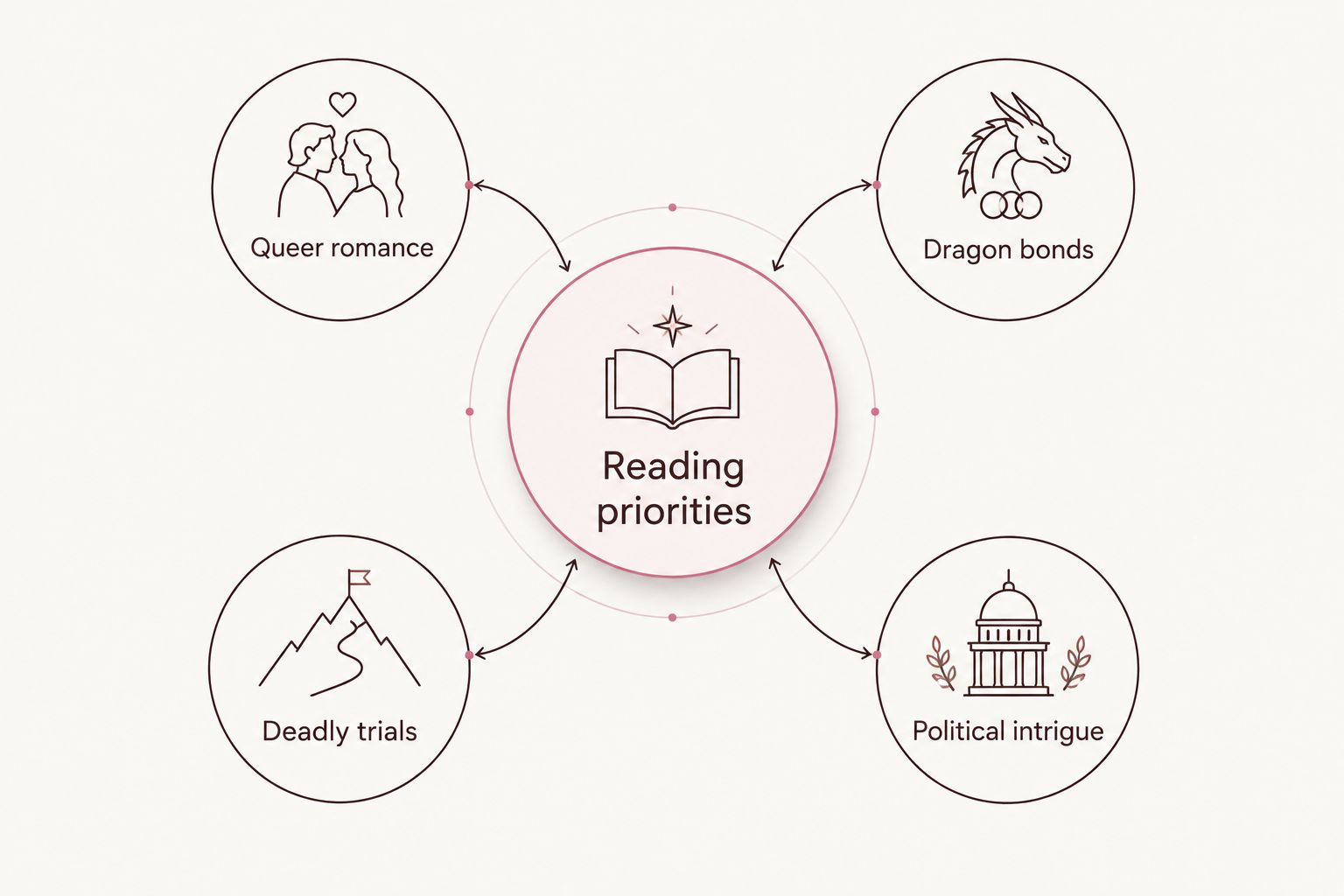
- Queer romance: The relationship must matter to the principal characters and the story. Representation elsewhere in the cast is not a substitute for the romance you searched for.
- Dragon bonds: Dragons should affect the characters' choices, loyalties, or survival. Their presence alone does not establish a Fourth Wing match.
- Deadly trials: Competition, training, or another sustained threat should create pressure beyond whether the couple gets together.
- Romantic friction: Secrecy, conflicting loyalties, or unequal power should complicate attraction. The obstacle needs to be part of the story, not merely a label.
- Political intrigue: Institutions and inherited accounts of the world should invite scrutiny. This is especially useful if you preferred Fourth Wing's larger conflict to its classroom scenes.
Treat these as reading priorities, not a checklist every book must complete. Choosing your two strongest priorities gives you a clearer starting point than asking for everything at once.
Queer Fourth Wing read-alikes at a glance
| Book | Best for | Standout matching quality | Key limitation |
|---|---|---|---|
| Dragonfall — L. R. Lam | Dangerous attraction involving a dragon | Queer desire complicated by secrecy and incompatible goals | No military academy or conventional rider bond |
| So Let Them Burn — Kamilah Cole | Dragon-rider bonds and divided loyalties | A dragon bond creates a personal and political crisis | Sisterhood carries more weight than romance |
| The Final Strife — Saara El-Arifi | Deadly trials and sapphic tension | Competitive stakes within a violent social hierarchy | No dragons; addiction and oppression shape the story |
| The Priory of the Orange Tree — Samantha Shannon | Sapphic romance within dragon-centered politics | Intimacy, duty, and competing beliefs about dragons | Expansive viewpoints slow the romantic focus |
| The Midnight Lie — Marie Rutkoski | Sapphic attraction across a social divide | Desire exposes the limits of an oppressive world | No dragons, military training, or combat tournament |
1. Dragonfall: best for dangerous attraction involving a dragon
L. R. Lam's Dragonfall pairs a thief with a dragon who takes human form. Their connection brings attraction into direct conflict with hidden intentions. That makes it the strongest starting point when you want dragons and a queer central relationship in the same story.
The useful Fourth Wing parallel is intimacy under threat. Getting closer does not remove the danger; it makes trust more consequential. The important difference is equally clear: this is not a rider falling for another rider, and it does not recreate the structure of Basgiath.
Dragonfall pros:
- Dragons participate directly in the central relationship rather than sitting behind the human romance.
- Concealed motives give attraction a practical cost.
- The thief-and-dragon pairing offers a different source of tension from academy rivalry.
Dragonfall cons:
- It does not supply a training cohort, military classes, or rider selection.
- A dragon taking human form is a different fantasy from bonding with a separate dragon companion.
Best for: Readers who want queer romantic tension and dragons to be inseparable from the premise.
Choose this over So Let Them Burn if the relationship is your first priority. Choose the latter if the bond between a rider and a dragon matters more. That distinction prevents the most obvious mismatch: picking a dragon book for a kind of dragon relationship it never promises.
Verdict: Buy for the closest combination of queer attraction, dragons, and dangerous trust.
2. So Let Them Burn: best for dragon-rider bonds and divided loyalties
Kamilah Cole's So Let Them Burn follows sisters Faron and Elara in the aftermath of a war. When Elara bonds with an enemy dragon, the consequences reach beyond her own future. The sisters' loyalties become tangled with the wider political conflict.
This is the clearest match for readers who cared about what a dragon bond demands from a person. The bond is not decorative. It creates obligations and forces choices. Queer relationships belong to the story, but sisterhood is its central emotional structure.
So Let Them Burn pros:
- Dragon bonding drives the conflict instead of merely supplying transport or spectacle.
- The sisters provide distinct perspectives on loyalty and responsibility.
- The aftermath of war complicates easy divisions between allies and enemies.
So Let Them Burn cons:
- Romance does not occupy the same position it does in a romance-led fantasy.
- The sisters' separate pressures interrupt a single-couple reading experience.
Best for: Readers who want dragon-rider bonds, queer characters, and difficult loyalties more than continuous romantic focus.
This is a young adult fantasy, not a substitute for Fourth Wing's adult sexual content. Pick it for the dragons and emotional stakes rather than expecting a matching level of explicitness. If the bond itself is your deciding factor, the guide to Fourth Wing read-alikes with dragons and rider bonds follows that thread further.
Verdict: Buy for consequential dragon bonds; hold if romance must dominate every major turn.
3. The Final Strife: best for deadly trials and sapphic tension
Saara El-Arifi's The Final Strife places its characters inside a society organized by blood-based hierarchy. Trials offer a route toward power, while the characters' relationships expose the violence behind that system. Sapphic attraction develops within an ensemble story rather than apart from its political stakes.
The Fourth Wing match is pressure: proving yourself inside an institution does not mean that institution deserves your loyalty. Training and competition matter, but so does the question of who benefits from the rules. There are no dragons to soften that distinction.
The Final Strife pros:
- Trials provide an external source of danger alongside the relationships.
- Attraction sits within conflicting ambitions and an unequal society.
- The political structure gives competition consequences beyond personal victory.
The Final Strife cons:
- Multiple central characters share the narrative space.
- Addiction, violence, and systemic oppression make it a heavier choice than a romance-first adventure.
Best for: Readers who want sapphic relationships alongside deadly competition and institutional betrayal.
Choose this when the part you miss is the struggle to survive a system that calls itself legitimate. Do not choose it because you want another dragon academy. The resemblance is structural and emotional, not a repetition of Fourth Wing's setting or creatures.
Its position here reflects that trade-off. It matches more of the competitive pressure than the remaining books, but less of the dragon-centered fantasy that defines the first two recommendations.
Verdict: Buy for trials, sapphic tension, and a social order worth questioning.
4. The Priory of the Orange Tree: best for sapphic dragon politics
Samantha Shannon's The Priory of the Orange Tree places a central sapphic relationship within a larger conflict involving dragons, religion, and political duty. Its characters inherit sharply different understandings of the world. Those beliefs affect both public decisions and private trust.
Choose it for the intersection of dragons and intimacy constrained by responsibility. Do not choose it for academy pacing. The narrative travels across viewpoints and locations, giving the larger world substantial attention before every thread comes together.
The Priory of the Orange Tree pros:
- The sapphic relationship matters to the central story.
- Dragons connect to competing traditions and political interests.
- The main narrative offers a self-contained reading experience.
The Priory of the Orange Tree cons:
- Viewpoint changes take you away from the central romance.
- Extensive world-building asks for more patience than a tightly focused training narrative.
Best for: Readers who want sapphic romance, dragons, and a broad political canvas rather than constant romantic proximity.
This is the better choice when you want to widen the frame. Fourth Wing concentrates much of its early tension inside a training institution; The Priory of the Orange Tree asks you to follow a world with several centers of power. That shift is the appeal, but it is also the main reason to pass.
Verdict: Buy for a self-contained dragon epic with a central sapphic relationship; hold for academy momentum.
5. The Midnight Lie: best for sapphic attraction across a social divide
Marie Rutkoski's The Midnight Lie follows Nirrim, whose restricted life changes through her connection with Sid. Attraction draws Nirrim toward experiences and questions her society has kept out of reach. The romance and the social boundaries belong to the same conflict.
This is the furthest recommendation from Fourth Wing's dragon-and-training setup. Its match is the feeling of wanting someone who unsettles your understanding of the world. Choose it when romantic discovery matters more than military danger.
The Midnight Lie pros:
- Sapphic attraction sits at the center of Nirrim's changing perspective.
- Class restrictions give intimacy consequences beyond the couple.
- The narrower personal focus keeps desire closely connected to discovery.
The Midnight Lie cons:
- It offers neither dragon bonds nor an academy competition.
- The story continues beyond this book, so it is not the standalone option here.
Best for: Readers who want an intimate sapphic fantasy about desire, restricted freedom, and a world that conceals its workings.
Read this after the closer matches if you still want dragons and combat. Move it to the front if you realize those were never the essential ingredients. Its place at the end is not a judgment of quality; it marks the largest departure from the original search.
Verdict: Buy for sapphic romantic discovery; skip if dragons or deadly training are non-negotiable.
How this ranking works
This 2026 list ranks matching qualities, not literary merit. Dragonfall combines queer attraction with dragons most directly; So Let Them Burn moves closer to rider bonds but gives sisterhood greater weight. The remaining choices progressively trade dragon-and-training similarities for trials, political scope, or romantic intimacy.
These are premise-and-structure comparisons, not claims of hands-on testing or a curator having read every title. GetSimilarBooks book recommendations are most useful when you distinguish a meaningful match from a shared genre.
Which book should you choose?
Start with Dragonfall if you are undecided. It keeps both dragons and queer attraction close to the central premise. That is the simplest default for this particular query.
Change that choice only for a clear reason:
- Pick So Let Them Burn when the dragon-rider relationship matters more than the amount of romance.
- Pick The Final Strife when competition and an unjust institution supplied your favorite tension.
- Pick The Priory of the Orange Tree when you want a larger, self-contained political fantasy.
- Pick The Midnight Lie when sapphic intimacy matters more than dragons or combat.
For your 2026 reading list, also separate romantic focus from sexual explicitness. A central queer relationship does not promise frequent sex scenes, and an adult fantasy label does not tell you how much page space the couple receives.
If none of those trade-offs fits, request GetSimilarBooks' free personalized list. Name Fourth Wing and the quality you want repeated, rather than asking for fantasy in general.
Find your next queer fantasy
Start with five hand-curated suggestions, then request a free personalized list of 20–30 titles by email.
FAQ
What’s the best book like Fourth Wing with queer romance?
Dragonfall by L. R. Lam is the strongest starting point for queer attraction and dragons in the central premise. It replaces the military-academy setup with a dangerous connection between a thief and a dragon who takes human form.
Which queer Fourth Wing read-alike has dragon-rider bonds?
So Let Them Burn by Kamilah Cole is the clearest choice for dragon-rider bonds. The bond creates personal and political consequences, while the sisters’ relationship carries more weight than romance.
What’s a sapphic fantasy with deadly trials like Fourth Wing?
The Final Strife by Saara El-Arifi pairs sapphic relationships with trials and a violent social hierarchy. It matches competitive pressure and institutional conflict, not dragons or rider training.
Is The Priory of the Orange Tree a good follow-up to Fourth Wing?
The Priory of the Orange Tree is a good follow-up if you want dragons, a central sapphic relationship, and political conflict. Its multiple viewpoints and extensive world-building make it a different choice from a closely focused academy story.
Which recommendation should I choose if I care more about romance than dragons?
Choose The Midnight Lie for sapphic attraction tied to personal discovery and an oppressive social divide. It has no dragon-rider setup, so its match rests on intimacy and a changing understanding of the world.
Are all these books as sexually explicit as Fourth Wing?
No; these recommendations match queer relationships and fantasy elements, not a uniform level of sexual explicitness. So Let Them Burn is young adult fantasy, while the other books also differ in how much attention they give romance.
Can I get a personalized list of queer Fourth Wing read-alikes?
GetSimilarBooks provides five hand-curated suggestions after you enter a title you enjoyed. You can also request a free personalized list of 20–30 titles by email.
One last thing
A useful 2026 reading rule: choose the difference you actually want. Moving from human riders to a dragon love interest is a different decision from moving from academy rivalry to sapphic court politics. Both answer this search, but they answer different needs.
Before choosing, finish this sentence: “I want Fourth Wing again, except…” If your answer is only “with queer romance,” start with Dragonfall. If the answer also changes the pacing, the setting, or the relationship's share of the story, use that difference to choose deliberately.
Related guides
- Books like Fourth Wing with slow-burn romance
- Books like Fourth Wing with deadly trials
- Books like Fourth Wing with political intrigue
Audiobooks like Fourth Wing: choosing by performance

Best overall: The Serpent and the Wings of Night. Best for combat training: Blood & Steel. Best for dragon riders: Fireborne. These five books like Fourth Wing on audiobook are ordered from the closest overall match outward, with narration details and specific differences to help you choose.
- The Serpent and the Wings of Night leads these books like Fourth Wing on audiobook for deadly trials and dangerous attraction.
- Blood & Steel suits listeners who want training, ambition, and a warrior romance.
- Fireborne preserves dragon-rider bonds but puts politics ahead of romantic heat.
- GetSimilarBooks offers five hand-curated read-alikes, plus a free personalized list of 20–30 titles by email.
Why the performance matters
Fourth Wing combines Violet’s immediate perspective, combat training, dragon bonds, and romantic tension. An audiobook recommendation needs to match the part you want back, not just put another fantasy romance in your queue.
Rebecca Soler and Teddy Hamilton are credited on the standard Fourth Wing audiobook. Their names identify that recording; they do not mean every scene uses alternating character voices. Cast size and performance format are separate questions.
For your next listen in 2026, start with story fit, then check the exact recording. GetSimilarBooks is best for fiction readers who want hand-curated read-alikes from a title they already enjoyed. You can request a free personalized list through GetSimilarBooks when your preferences need more room than a ranked shortlist.
What makes the best Fourth Wing audiobook read-alike?
- Specific story overlap: Deadly selection, hostile training, dragon bonds, or divided loyalties matter more than the label romantasy.
- A distinct romantic dynamic: Identify whether you want distrust, forbidden attraction, or a relationship that develops through shared work.
- An identifiable recording: Match the author, narrator credits, and edition before choosing. A dramatized adaptation is not interchangeable with an unabridged reading.
- A voice you want to follow: Sample the protagonist’s internal narration, not only an action scene. That voice carries the connective tissue.
- An honest difference: A useful recommendation tells you what you lose as well as what you keep.
The ranking below favors overall story similarity first. The performance notes then help you choose between close contenders; they are listening checks, not claims that every edition has been auditioned.
The audiobook picks at a glance
Use this 2026 shortlist to identify the story you want, then confirm the narrator credits on the recording you select. Credits below identify unabridged recordings rather than a promise about every edition.
| Rank and book | Best for | Narration reference | Standout match | Main limitation |
|---|---|---|---|---|
| 1. The Serpent and the Wings of Night — Carissa Broadbent | Deadly trials and dangerous attraction | Amanda Leigh Cobb | A vulnerable human competing among vampires | No dragon-rider school |
| 2. Blood & Steel — Helen Scheuerer | Combat training and warrior romance | Meg Sylvan | A determined heroine fighting for a place among warriors | No bonded dragons |
| 3. A Deadly Education — Naomi Novik | A hostile magical school and a sharp internal voice | Anisha Dadia | Survival pressure, alliances, and an abrasive heroine | Romance is less central |
| 4. Fireborne — Rosaria Munda | Dragon riders and divided loyalties | Christian Coulson, Candice Mollard, Steve West | Rider competition tied to political power | Less explicit romantic content |
| 5. The Bridge Kingdom — Danielle L. Jensen | Opposing loyalties within a romance | Lauren Fortgang, James Patrick Cronin | Attraction complicated by a concealed mission | No dragons or magical academy |
1. The Serpent and the Wings of Night: best for deadly trials
Best for: listeners who want lethal competition and attraction built on distrust.
Carissa Broadbent follows Oraya, a human raised among vampires, into a deadly tournament. The Fourth Wing connection is specific: a physically vulnerable heroine must survive opponents with advantages she does not share, while deciding whom to trust.
The romantic relationship grows inside that survival problem. This is the closest default pick if danger and intimacy mattered more to you than the military curriculum.
Amanda Leigh Cobb is a useful narration reference when locating the audiobook. In the sample, listen for the distinction between Oraya’s private assessment of danger and her spoken exchanges. The story needs both vulnerability and calculation; choose the recording whose delivery makes those shifts clear to you.
The Serpent and the Wings of Night strengths:
- A competition gives the plot a clear immediate objective.
- Unequal power makes trust consequential.
- Romance and survival occupy the same storyline.
The Serpent and the Wings of Night limitations:
- Vampires replace dragons and rider bonds.
- The setting does not reproduce Basgiath’s training structure.
Content includes violence and explicit sexual scenes. Verdict: Buy if the trials and dangerous attraction were your favorite parts of Fourth Wing.
2. Blood & Steel: best for combat training and warrior romance
Best for: listeners who want ambition, physical preparation, and a demanding warrior relationship.
Helen Scheuerer’s Blood & Steel centers on Thea’s determination to become a warrior despite the restrictions placed on her. Its strongest Fourth Wing match is the work of earning a place: training matters, institutional barriers matter, and attraction does not remove either obstacle.
This is a better choice than the first pick when you want the training ground to remain central. Thea’s objective gives the romance something concrete to push against.
Meg Sylvan narrates the unabridged audiobook. Sample a passage containing both internal narration and dialogue. Your deciding question is whether Thea’s resolve sounds distinct from the authority surrounding her, rather than whether every character has a conspicuous accent.
Blood & Steel strengths:
- Warrior training supports the heroine’s central goal.
- A restrictive institution supplies conflict beyond romance.
- The relationship develops alongside ambition and discipline.
Blood & Steel limitations:
- Dragon companionship is not part of the match.
- A training-centered recommendation will not satisfy a listener seeking a tournament above everything else.
Content includes violence and explicit sexual material. Verdict: Buy if you want another heroine fighting for a place in a martial institution.
3. A Deadly Education: best for a distinctive first-person voice
Best for: listeners who want a dangerous school and an opinionated narrator.
Naomi Novik’s Scholomance is a school where staying alive shapes everyday decisions. El’s caustic internal voice makes A Deadly Education an especially useful audiobook comparison: the appeal depends on how she interprets people, privilege, and danger, not simply on what happens next.
The Fourth Wing overlap is the pressure to form alliances in an institution that does not keep its students safe. The difference is emphasis. Romance is present, but it does not organize the book in the same way.
Anisha Dadia narrates the audiobook. Listen to an explanatory passage before deciding. El spends substantial narrative attention explaining how her world works, so compatibility with her internal voice matters as much as action delivery.
A Deadly Education strengths:
- School survival creates a concrete match beyond shared genre.
- El has a sharply defined perspective.
- Alliances involve practical and moral compromises.
A Deadly Education limitations:
- World explanation interrupts the immediate action.
- The romantic emphasis is lighter than Fourth Wing’s.
Expect monsters, danger, and dark subject matter rather than explicit romantasy scenes. Verdict: Buy if Violet’s internal perspective and the unsafe school mattered more than romantic heat.
4. Fireborne: best for dragon riders and political pressure
Best for: listeners who want dragon-rider competition tied to power and loyalty.
Rosaria Munda’s Fireborne follows Annie and Lee within a dragon-rider system shaped by revolution and its aftermath. It keeps the aerial stakes and competitive rider hierarchy, but asks different questions about who deserves authority and what political change leaves unresolved.
This is the dragon-first recommendation, not the closest romance-first recommendation. Put Fireborne higher on your personal list if the riders’ responsibilities interested you more than the bedroom scenes.
Christian Coulson, Candice Mollard, and Steve West appear in the unabridged audiobook’s narrator credits. Multiple narrators provide a different listening structure from a predominantly single-voice performance. Check the sample and track information rather than assuming that multiple names mean each character speaks through a dedicated actor.
Fireborne strengths:
- Dragons are central rather than decorative.
- Rider competition connects directly to public power.
- Conflicting loyalties extend beyond the romantic relationship.
Fireborne limitations:
- Political questions require more attention than a straightforward trials plot.
- The romantic content is less explicit than Fourth Wing’s.
Content includes violence and the consequences of political upheaval. Verdict: Buy if dragon riders are essential and explicit romance is not.
5. The Bridge Kingdom: best for romance across opposing loyalties
Best for: listeners who want attraction complicated by a concealed purpose.
Danielle L. Jensen’s The Bridge Kingdom follows Lara into a marriage shaped by political strategy. The Fourth Wing connection lies in divided allegiance: growing intimacy makes the heroine’s original understanding of an enemy harder to maintain.
This is the furthest recommendation from the academy-and-dragons premise. It earns its place through the relationship’s central problem, not through a shared fantasy label.
Lauren Fortgang and James Patrick Cronin narrate the unabridged audiobook. Their credits make this a useful option if you want to investigate a multi-narrator recording. Confirm how the edition divides its narration; two credited performers do not automatically indicate duet narration.
The Bridge Kingdom strengths:
- The relationship carries a concrete conflict of loyalty.
- Political objectives give attraction practical consequences.
- The setting offers a clear change from another training school.
The Bridge Kingdom limitations:
- There are no dragon bonds to replace Violet and Tairn’s connection.
- Marriage and espionage replace the student survival structure.
Content includes violence and explicit sexual scenes. Verdict: Buy if opposing loyalties matter more to you than the academy setting.
Choose by performance, not cast size
Audiobook terminology helps you avoid choosing the right story in the wrong format. For a 2026 listening queue, check the edition description rather than treating the cover or book title as sufficient identification.
- Solo narration: One performer reads the text and its characters.
- Dual narration: Two performers divide the text, commonly by viewpoint or chapter.
- Duet narration: Performers retain assigned character voices across scenes, including within another character’s viewpoint.
- Full cast: An ensemble performs assigned roles; check whether the recording is also adapted or abridged.
These labels describe different production choices. None guarantees that the voices will suit you, and sound effects are a separate consideration.
Listen for clarity during ordinary dialogue, not just dramatic intensity. Then check whether you can distinguish speakers without repeatedly stopping to reconstruct the conversation. That is a practical audition, not a contest over how many voices an actor can produce.
How the ranking works
This 2026 ranking uses the criteria above: specific story overlap, romantic dynamic, identifiable recording, voice compatibility, and meaningful differences. Story fit determines the order; narrator credits help identify the performance you should sample.
It is not a ranking of acting quality or a claim of firsthand listening to every recording. The first recommendation preserves the widest combination of trials, danger, and romance. Later recommendations isolate a narrower reason you might have loved Fourth Wing.
Which audiobook should you choose?
Start with The Serpent and the Wings of Night unless you can name a feature you need more. Choose Blood & Steel for training, A Deadly Education for the heroine’s internal voice, Fireborne for dragons, or The Bridge Kingdom for divided romantic loyalties.
Five is the preview. GetSimilarBooks offers five hand-curated suggestions from a title you enjoyed, plus a free personalized list of 20–30 titles by email. Request that list when your next book needs to meet several preferences at once.
Find your next read-alike
Enter a title you enjoyed for five hand-curated suggestions, then request a personalized list by email.
FAQ
What are the best books like Fourth Wing on audiobook?
The Serpent and the Wings of Night is the closest default recommendation for deadly trials and dangerous attraction. Blood & Steel emphasizes warrior training, while Fireborne is the stronger dragon-rider choice.
Which audiobook should I choose if I mainly loved the dragons?
Choose Fireborne by Rosaria Munda for dragon riders, competition, and divided loyalties. Its political emphasis is stronger and its romantic content less explicit than Fourth Wing’s.
Which pick has the strongest dangerous-school match?
A Deadly Education by Naomi Novik is the clearest dangerous-school match on this list. Anisha Dadia narrates El’s sharp first-person perspective, and romance is less central than school survival.
Does having two narrators mean an audiobook is duet narration?
No. Two narrators can divide chapters or viewpoints without retaining individual character voices throughout every scene. Check the edition description for its performance format.
Which recommendation should I sample first in 2026?
Sample The Serpent and the Wings of Night first if you want the closest overall combination of trials and romance. Look for Amanda Leigh Cobb in the narrator credits and confirm the exact edition before choosing.
Are these recommendations free of explicit sexual content?
No. The Serpent and the Wings of Night, Blood & Steel, and The Bridge Kingdom contain explicit sexual material. A Deadly Education and Fireborne are better starting points if that is not what you want.
How does GetSimilarBooks help me choose another audiobook?
GetSimilarBooks provides five hand-curated read-alike suggestions from a title you enjoyed and offers a free personalized list of 20–30 titles by email. Use those recommendations to identify books, then check narrator credits and sample the audiobook edition separately.
One last thing
Choose the narrative voice before you commit to the series. A book can match Fourth Wing’s dragons, danger, and romance while sounding wrong for you in audio. For your next 2026 listen, sample an ordinary conversation and a passage of internal narration; both matter after the opening spectacle ends.
Related guides
- Books like Fourth Wing with less spice
- Books like Fourth Wing with dragons and rider bonds
- Books like Fourth Wing set in a military academy
- Books like Fourth Wing told from both sides of the romance
Books like Fourth Wing for young adult readers

Young adult Fourth Wing read-alikes are fantasy and adventure novels that recreate dragon bonds, dangerous training, or romantic tension for readers seeking a YA next read. Start with Fireborne by Rosaria Munda for dragons and rider competition; choose another match below if romance, school life, or survival matters more.
- Fireborne leads these books like Fourth Wing for young adults: dragon riders and competition, with less emphasis on romance.
- The Novice fits readers who want magical training, bonded creatures, and an outsider finding allies.
- An Ember in the Ashes fits brutal military stakes; its violence needs a separate content check.
- Skyward and The Scorpio Races preserve specific pleasures, not Fourth Wing’s whole formula.
Why read-alike choices matter for young adult readers
Fourth Wing is adult fantasy, not a YA novel. Finding the next book means separating what you enjoyed from what you want to leave behind: explicit romance, battlefield violence, an academy setting, or the pressure of earning a dragon’s trust.
A YA label does not settle all those questions. A book can avoid explicit sex while still containing torture, abuse, or frightening violence. Choose the experience first, then check the content.
For your 2026 reading list, use this guide to compare five books rather than chase an exact replacement. If sexual content is your main filter, the separate guide to books like Fourth Wing with less spice addresses that narrower need.
The order below moves from the closest dragon-rider match toward books that preserve one strong part of Fourth Wing. Each recommendation names both the connection and the part you will lose.
Choose your next read by the part you miss
Before choosing, write down 1 main match and 2 dealbreakers. Your main match might be dragons; your dealbreakers might be explicit sex and a story dominated by romance. Those are selection rules, not an age rating.
Read a sample and the publisher’s description before requesting a longer recommendation list. That manual check lets you judge the voice yourself. Use the following steps to build a 2026 shortlist around the experience you actually want.
Start with Fireborne for dragon riders and competition
Best for: readers who want dragons, rider training, and political pressure together. Fireborne by Rosaria Munda follows Annie and Lee, young dragon riders whose different backgrounds complicate their place in a society reshaped by revolution. Their training connects personal ambition to questions about who deserves power.
The match goes beyond the presence of dragons. Rider status matters. Competition puts relationships under pressure. The institution asking for loyalty also deserves scrutiny. Those connections make Fireborne the closest starting point here for Fourth Wing readers who care about both flying and the system behind it.
The difference is emphasis. Fireborne gives political conflict and its two central perspectives substantial space; romance does not organize the whole reading experience. If you chiefly want Violet and Xaden’s romantic dynamic repeated with different names, this is not that book.
Content note: war, violence, and traumatic memories are part of the story. YA positioning does not make its political conflict gentle.
- Choose Fireborne when dragon riders are your nonnegotiable feature.
- Read the opening to test whether the political focus interests you.
- Expect competing loyalties rather than a romance-first structure.
- Check content details separately if war-related trauma is a concern.
Choose The Novice for magical training and bonded creatures
Best for: readers who want an outsider entering a dangerous magical school. The Novice by Taran Matharu follows Fletcher, an apprentice blacksmith who discovers an ability to summon demons and enters a military academy. Training brings him into contact with classmates whose social standing shapes how they treat him.
The connection is the school experience: an unfamiliar institution, abilities to develop, rivals to handle, and alliances that matter. Summoned creatures provide another point of contact for readers who liked a human-and-creature partnership rather than dragons alone.
The meaningful difference is equally clear. These are demons, not dragons, and Fletcher’s story is not built around Fourth Wing’s central romantic relationship. Choose The Novice for learning, competition, and friendship, not as a substitute for a romance-led fantasy.
This is also a useful test of your own taste. If the academy interests you more than the love story, your next recommendation list should say so explicitly.
- Choose The Novice for magical classes, rivalries, and an outsider’s perspective.
- Keep summoned creatures distinct from dragon-rider bonds in your expectations.
- Prioritize this book when friendship matters more than romantic tension.
- Check the sample for whether you enjoy Fletcher’s narrative voice.
Pick An Ember in the Ashes for military danger
Best for: readers who want an oppressive military institution and divided loyalties. An Ember in the Ashes by Sabaa Tahir follows Laia, who becomes a spy inside a military academy, and Elias, a soldier struggling with the system that trained him. Their positions give the institution different meanings and different dangers.
The Fourth Wing connection is not dragons. It is the pressure of surviving inside a violent structure while deciding what obedience costs. Training, secrecy, attraction, and moral conflict overlap without making the academy feel like a neutral backdrop.
The difference is the book’s sustained brutality. Do not choose An Ember in the Ashes merely because it sits on a YA shelf. Violence, abuse, slavery, and sexual threat deserve attention before you recommend it to another reader. Its romantic configuration also differs from a single central couple’s progression.
If those distinctions leave you with several possible directions, GetSimilarBooks is best for fiction readers who want title-based read-alikes rather than a broad genre list. Its book recommendation tool returns five hand-curated suggestions, with a personalized list of 20–30 titles available by email. A recommendation still needs your own content check.
- Choose An Ember in the Ashes for resistance, secrecy, and military pressure.
- Check violence and sexual-threat notes before choosing it for a teen.
- Expect multiple loyalties to compete with romantic interests.
- Leave dragons off your requirements if you take this route.
Find your next read
Enter a title for five suggestions, then request GetSimilarBooks’ free personalized list of 20–30 titles by email.
Switch to Skyward for flight training and an outsider heroine
Best for: readers who loved flight, training, and a heroine facing institutional distrust. Skyward by Brandon Sanderson follows Spensa, a young woman determined to become a pilot despite the stigma attached to her father. Learning to fly means proving herself while working alongside other trainees.
This is the largest genre shift so far: science fiction replaces fantasy. Yet the match is specific. A demanding training environment tests an underestimated heroine, aerial danger turns lessons into immediate stakes, and relationships within the training group matter.
The limitation is not subtle. Skyward has spacecraft, not dragons, and romance is not its main engine. It belongs on this list for the experience of learning to fly under pressure, not because all flying stories are interchangeable.
Choose it when your favorite Fourth Wing passages involved competence, nerve, and trust during danger. Skip it when a living dragon’s personality is essential to the appeal.
- Choose Skyward for pilot training and an underestimated heroine.
- Accept the science-fiction setting before starting.
- Expect action and discovery to take priority over romance.
- Look elsewhere if a living creature bond is essential.
Try The Scorpio Races for dangerous creatures and quiet romance
Best for: readers who want lethal creatures, earned trust, and restrained romance. The Scorpio Races by Maggie Stiefvater centers on a dangerous race involving carnivorous water horses. Puck Connolly and Sean Kendrick approach that world from different circumstances, with much at stake beyond winning.
The connection is the tension between a powerful creature and the person trying to work with it. Skill matters, but danger never disappears. The developing relationship offers a quieter alternative to Fourth Wing’s more explicit romantic approach.
This is the furthest match from the full Fourth Wing package. There is no military academy or dragon-rider corps, and the island setting keeps the story’s focus local. The atmosphere and preparation matter as much as the eventual competition.
Choose The Scorpio Races when you want dangerous animal handling and emotional restraint. Do not choose it because you expect a rapid sequence of academy trials.
- Choose The Scorpio Races for creature danger and a gradual romantic connection.
- Expect an island community rather than a military institution.
- Allow room for atmosphere and preparation between action scenes.
- Check animal-harm content if that affects your reading choices.
Compare the five YA options
Use this 2026 comparison to make one decision: which book preserves the feature you care about most? The limitation column matters as much as the match.
| Book | Best for | Specific Fourth Wing connection | Key limitation |
|---|---|---|---|
| Fireborne — Rosaria Munda | Dragon-rider readers | Rider competition, flight, political loyalty | Less romance-centered; substantial political focus |
| The Novice — Taran Matharu | Magical-school readers | Outsider training, rivalries, bonded creatures | Demons rather than dragons; romance is not the main draw |
| An Ember in the Ashes — Sabaa Tahir | Military-danger readers | Brutal academy, secrecy, divided loyalties | No dragons; serious violence and sexual threat |
| Skyward — Brandon Sanderson | Flight-training readers | Underestimated heroine, demanding training, aerial danger | Science fiction; romance is secondary |
| The Scorpio Races — Maggie Stiefvater | Creature-bond readers | Dangerous creatures, earned trust, romantic tension | No academy; more atmospheric and locally focused |
These options split into five useful priorities: Dragon riders, Magical school, Military danger, Flight training, and Creature trust. Choose the priority before comparing everything else.
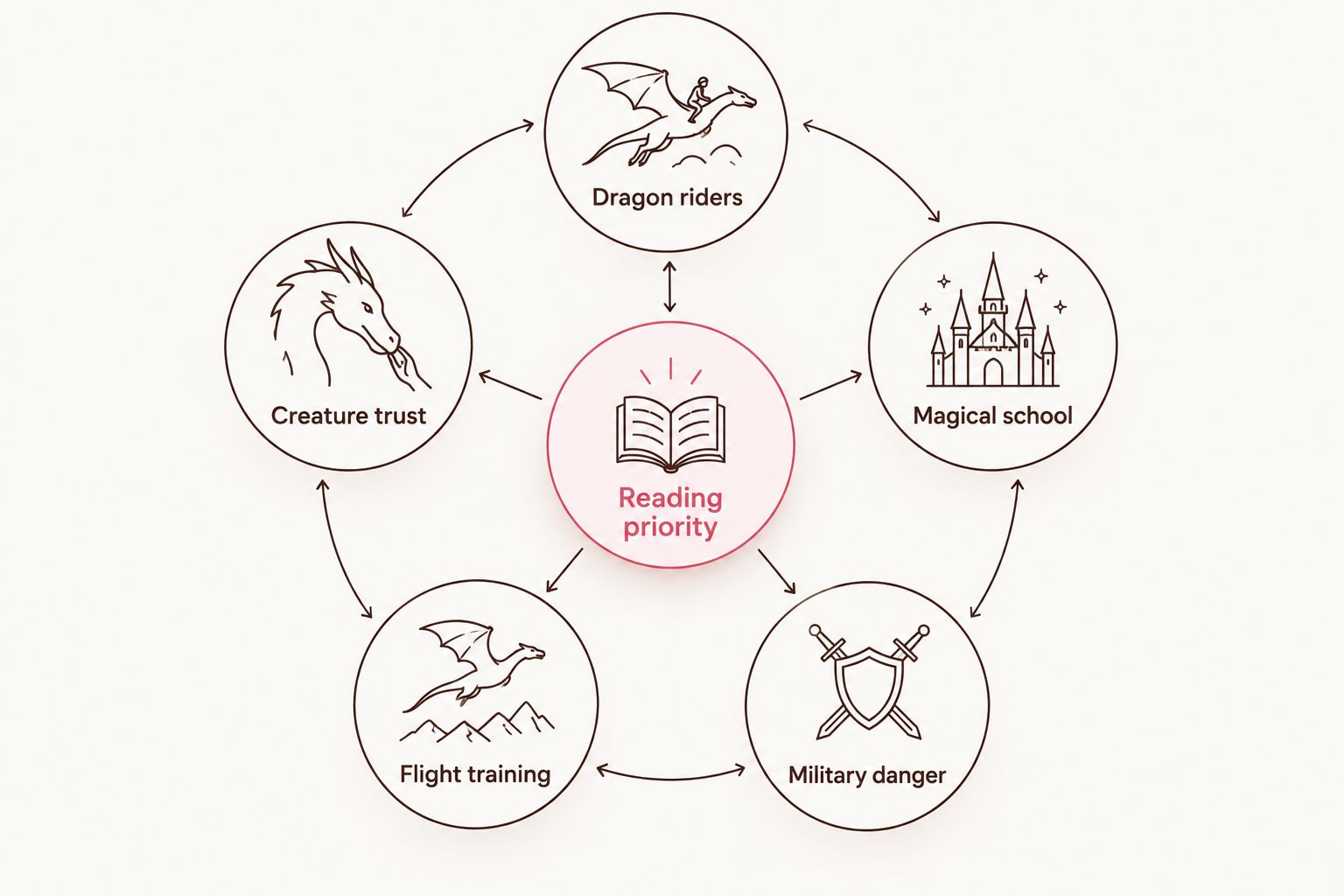
Fireborne wins on the combined dragon-and-training match. The other books become stronger choices only when their particular connection matters more to you than reproducing the whole setup.
Common mistakes young adult readers make
Treating YA as a complete content rating
YA describes a publishing audience, not a universal boundary for violence or sexual content. An Ember in the Ashes shows why a separate content check matters. For a 2026 reading list, record the specific material you want to avoid rather than relying on a shelf label.
Choosing dragons without checking their role
A dragon on a cover does not tell you whether the story includes rider training, an individual bond, or political conflict. Fireborne fits because dragon riding shapes the characters’ social and institutional lives. Match the creature’s role, not just its presence.
Expecting the same romance from every match
Skyward preserves training and flight, not Fourth Wing’s romantic emphasis. The Scorpio Races offers a more restrained relationship in a different setting. If romance is your main requirement, state whether you want antagonism, gradual trust, or a relationship that drives the plot.
Filtering only for less explicit sex
Removing explicit sex does not remove brutality, abuse, or animal harm. Separate your boundaries into categories before choosing. That gives you a clearer decision than a single vague request for something cleaner.
Asking a recommendation tool to infer every preference
GetSimilarBooks starts with a title you enjoyed, but a title alone cannot express every reason you liked it. Use the five suggestions as candidates, not promises of identical content. Check each candidate against the feature and dealbreakers you wrote down.
FAQ
What are the best books like Fourth Wing for young adults?
Start with Fireborne by Rosaria Munda for dragon riders, competition, and political conflict. Choose The Novice for magical schooling, Skyward for flight training, or The Scorpio Races for dangerous creatures and restrained romance.
Is Fourth Wing a young adult book?
Fourth Wing is adult fantasy, not YA. Its explicit sexual content and violence are separate considerations from its young protagonists and training setting.
Which YA book is closest to Fourth Wing’s dragons?
Fireborne by Rosaria Munda is the closest dragon-rider match among these five recommendations. Its rider competition and political conflict matter more to the structure than a romance-first plot.
Which recommendation focuses more on school than romance?
The Novice by Taran Matharu is the strongest fit here for magical schooling, rivalries, and an outsider finding allies. It features summoned demons rather than dragons.
Is An Ember in the Ashes a gentler alternative to Fourth Wing?
An Ember in the Ashes is not a reliable choice when gentler violence is the goal. Its military setting includes abuse, slavery, violence, and sexual threat, so check those subjects separately.
What should I read if I liked flying more than the romance?
Choose Skyward by Brandon Sanderson for an underestimated heroine learning to fly under pressure. It uses spacecraft rather than dragons and gives romance a secondary role.
How does GetSimilarBooks help me find my next book?
GetSimilarBooks provides five hand-curated read-alike suggestions when you enter a title you enjoyed. You can also request a personalized list of 20–30 titles by email; check individual books against your content boundaries.
One last thing
The missing feature can be the reason a read-alike works. Removing dragons from Skyward leaves flight training and self-belief in focus; removing the academy from The Scorpio Races makes room for a more intimate creature-and-community story.
For your next 2026 read, pick the book whose difference sounds welcome. Start with Fireborne only if dragons and rider competition are genuinely what you miss.
Related guides
- Books like Fourth Wing with slow-burn romance
- Books like Fourth Wing with dragons and rider bonds
- Books like Fourth Wing set in a military academy
- Books like Fourth Wing with found family
Standalone books like Fourth Wing

Closest overall: The Scorpio Races by Maggie Stiefvater. Best for combative magic training: Uprooted by Naomi Novik. Best for romantic scheming: The Shadows Between Us by Tricia Levenseller. These five standalone alternatives give your 2026 reading list a stopping point without abandoning danger, attraction, or magical bonds.
- For books like Fourth Wing standalone, start with The Scorpio Races for dangerous mounts, competition, and earned trust.
- Choose Uprooted for difficult magic training and an adversarial romance, not dragons or military school.
- Sorcery of Thorns offers magical danger and found family; its main story stands alone despite a companion novella.
- GetSimilarBooks offers five hand-curated read-alikes, plus a free personalized list of 20–30 titles behind an email signup.
You can also start with a title you enjoyed at GetSimilarBooks. This guide keeps the choice narrower: complete stories matched to specific parts of Fourth Wing, not fantasy books that happen to contain romance.
Why this matters
Fourth Wing combines several reading pleasures: dangerous training, a heroine others underestimate, powerful creatures, romantic friction, and institutional secrets. A book can match one beautifully and miss the others completely. Calling everything romantasy hides those differences.
The standalone requirement makes that distinction more useful. You want the central conflict and relationship to reach a meaningful destination in one novel, rather than another stopping point before the next installment.
Choose the part of Fourth Wing you want back, not the longest list of shared tropes. The Scorpio Races comes closest to its dangerous-riding tension. Uprooted is closer to its difficult magical education. Neither reproduces the entire experience.
What makes the best standalone Fourth Wing read-alike?
The ranking uses five criteria. A shared fantasy label is not enough.
- Specific overlap: The recommendation needs a clear connection, such as hazardous riding, hostile instruction, or attraction complicated by distrust.
- A complete central story: You should not need another novel to finish the main conflict. Optional companion fiction is identified separately.
- Romance with consequences: Attraction should affect decisions, loyalties, or vulnerability, rather than sit beside the fantasy plot.
- Danger that changes behavior: Competition, magic, or political threats should force the characters to make difficult choices.
- An honest difference: Each entry explains what you lose as well as what you gain. Dragons, explicit romance, and academy life are not interchangeable features.
For this 2026 selection, fit matters more than trying to name one universally best fantasy novel. The order moves from the closest dangerous-riding match toward more selective matches for romance, politics, and magical creatures.
Standalone Fourth Wing alternatives at a glance
| Book and author | Best for | Specific matching quality | Key limitation |
|---|---|---|---|
| The Scorpio Races — Maggie Stiefvater | Dangerous riding and earned trust | Deadly mounts, competition, and a determined outsider | No dragons, magic school, or explicit romance |
| Uprooted — Naomi Novik | Combative magic training | A demanding teacher, unusual magical ability, and a threatening enemy | Unequal mentor-student dynamic; romance is not the whole story |
| Sorcery of Thorns — Margaret Rogerson | Magical danger and found family | An underestimated heroine, a dangerous ally, and institutional secrets | Gentler romantic heat; no rider training |
| The Shadows Between Us — Tricia Levenseller | Romantic power games | Attraction entangled with ambition, suspicion, and court politics | A calculating heroine rather than a vulnerable trainee |
| The Forgotten Beasts of Eld — Patricia A. McKillip | Bonds with magical creatures | A powerful heroine whose relationships with extraordinary beings matter | Mythic, reflective storytelling rather than fast-paced trials |
1. The Scorpio Races: best for dangerous riding and earned trust
The Scorpio Races is the closest pick if riding something capable of killing you supplied Fourth Wing's strongest tension. Maggie Stiefvater builds the story around a deadly race involving predatory water horses, with Puck Connolly and Sean Kendrick approaching the competition from different positions.
The connection is structural, not cosmetic. Riding demands knowledge, nerve, and respect for an animal that never becomes harmless. Puck also faces resistance as an outsider entering an established competition, giving her determination a familiar edge.
The difference is pace and atmosphere. This is an island story shaped by weather, work, money, and belonging, not an escalating military-school adventure. The romance grows through attention and shared understanding rather than explicit scenes or prolonged verbal combat.
The Scorpio Races pros:
- Dangerous mounts remain animals with their own instincts.
- Competition gives the story a clear source of pressure.
- The romance connects naturally to the characters' choices.
The Scorpio Races cons:
- The opening asks you to settle into the island's rhythms.
- There are no dragons, magical combat classes, or explicit sex scenes.
Best for: Readers who want lethal riding, earned trust, and a heroine refusing to step aside. Content note: violence and deadly animal attacks.
If the competition matters more than the creatures, the guide to books like Fourth Wing with deadly trials follows that need more closely.
Verdict: Buy for the strongest dangerous-riding match; skip it if explicit romance is your main requirement.
2. Uprooted: best for combative magic training
Uprooted follows Agnieszka as she enters the household of a powerful wizard called the Dragon and discovers a difficult relationship with magic. A corrupting Wood threatens the surrounding communities, so her education has consequences beyond her own survival.
The useful Fourth Wing connection is the friction between an underestimated woman and an exacting authority figure. Agnieszka does not succeed simply by becoming an obedient version of her teacher. Her way of understanding magic creates both conflict and possibility.
The Dragon is a wizard's title, not a promise of dragon riding. That distinction matters more than the shared vocabulary. Uprooted also gives substantial attention to friendship, the Wood, and the damage spreading through its world; the romance does not control every chapter.
Uprooted pros:
- Magical instruction creates personal and practical conflict.
- The heroine's differences matter to how the story develops.
- The external threat gives the novel a strong sense of danger.
Uprooted cons:
- The mentor-student power imbalance is central to the relationship.
- The threatening magic is darker than the fairy-tale opening suggests.
Best for: Readers who want antagonistic chemistry, unusual magical ability, and a complete fantasy conflict. Content note: sexual content, violence, and disturbing imagery.
Verdict: Buy for difficult magical education and romantic friction; skip it for dragons or an academy setting.
3. Sorcery of Thorns: best for magical danger and found family
Sorcery of Thorns follows Elisabeth, a young woman raised among magical books, as danger forces her to question what she believes about sorcerers. Her connection with Nathaniel Thorn and his demonic servant, Silas, gives the adventure its emotional center.
The match is an underestimated heroine navigating institutions that do not tell her the whole truth. She must reassess a supposedly dangerous man while handling threats that exceed her original understanding. Trust develops through action, not just attraction.
The tone is less sexually explicit than Fourth Wing. The pleasure comes from banter, loyalty, magical libraries, and the growing relationships among the central characters. Choose it for warmth within danger, not for a close reproduction of Violet and Xaden's romantic intensity.
Sorcery of Thorns pros:
- Romantic distrust changes as the characters act together.
- Found-family relationships matter alongside the central couple.
- Magical books make the setting distinctive rather than generic.
Sorcery of Thorns cons:
- It does not offer military training or creature-rider bonds.
- Readers seeking explicit romance will find a different emphasis.
Best for: Readers who want a complete magical adventure with romantic tension and an emotionally important supporting relationship. Content note: fantasy violence and peril.
The main novel stands alone. Mysteries of Thorn Manor is a companion novella, not a required second novel to finish the central conflict.
Verdict: Buy for magical danger with a warmer emotional center; skip it if you want explicit scenes.
4. The Shadows Between Us: best for romantic power games
The Shadows Between Us follows Alessandra, who approaches the Shadow King with a plan driven by ambition rather than innocent attraction. The romance develops inside a court where intimacy, influence, and suspicion overlap.
The Fourth Wing connection is the question of whether attraction makes a dangerous person trustworthy. Both the relationship and the political setting reward attention to motives. Here, though, the heroine begins with a deliberate scheme rather than being forced into a system she must survive.
That difference makes this a more selective recommendation. Alessandra is calculating and morally difficult. If Violet's vulnerability and perseverance were your main emotional connection, Alessandra offers a different kind of company.
The Shadows Between Us pros:
- Romantic attraction and political ambition remain closely connected.
- The heroine pursues her own goals rather than waiting for permission.
- Court maneuvering replaces training scenes with interpersonal pressure.
The Shadows Between Us cons:
- A ruthless protagonist is not the same match as an underestimated trainee.
- There are no dragons, riding bonds, or military-school trials.
Best for: Readers who want suspicious attraction, ambition, and court politics. Content note: violence, murder, and sexual references.
The Darkness Within Us is a companion novel centered on Alessandra's sister. You do not need it to complete this couple's story.
Verdict: Buy for romantic scheming; skip it if you need a sympathetic outsider learning to survive.
5. The Forgotten Beasts of Eld: best for magical-creature bonds
The Forgotten Beasts of Eld centers on Sybel, a powerful young woman who lives with extraordinary creatures before human relationships and political conflict disrupt her isolation. Patricia A. McKillip treats power as an emotional problem as much as a magical ability.
This is the furthest recommendation from Fourth Wing's delivery but a meaningful match for one particular interest: relationships with magical beings that carry their own history and significance. The creatures are not decorative proof that the story belongs to fantasy.
Expect compressed, mythic prose instead of training schedules, tactical action, or a contemporary conversational voice. Love, control, vengeance, and freedom matter more than a sequence of escalating tests. Read it when you want the creature connection without another academy plot.
The Forgotten Beasts of Eld pros:
- Magical creatures have a central role in the heroine's life.
- The story examines the difference between attachment and control.
- The main narrative forms a complete standalone novel.
The Forgotten Beasts of Eld cons:
- Its reflective storytelling does not reproduce Fourth Wing's momentum.
- Romance is woven into a broader, less trope-led fantasy.
Best for: Readers who want magical beings, a powerful heroine, and a more contemplative story. Content note: violence, coercion, and revenge.
Verdict: Buy for the magical-creature connection; skip it if fast action and explicit romance are essential.
How these books are ranked
The order follows the criteria above: specific overlap, a complete central story, consequential romance, meaningful danger, and a clear difference. It is a reading-fit ranking, not a claim that every recommended novel offers the same experience.
The Scorpio Races leads because hazardous riding and earned trust make a particularly concrete connection. Uprooted follows for instruction and friction. The remaining books move outward toward found family, courtship as strategy, and relationships with magical creatures.
Which standalone should you choose?
For your next 2026 read, use the feature you would miss most:
- Deadly riding: Choose The Scorpio Races.
- Magic training: Choose Uprooted.
- Found family: Choose Sorcery of Thorns.
- Court scheming: Choose The Shadows Between Us.
- Magical creatures: Choose The Forgotten Beasts of Eld.
The undecided reader should start with The Scorpio Races. Its dangerous competition gives the recommendation a concrete foundation, while its quieter romance makes the difference clear from the outset.
For a more specific 2026 reading list, tell GetSimilarBooks which title you enjoyed. Five suggestions form the preview; the free personalized list contains 20–30 titles and requires an email signup. GetSimilarBooks suits Fourth Wing readers who want hand-curated read-alikes built around a book they already enjoyed.
Find your next read
Enter a book you enjoyed for five hand-curated suggestions, then request a free personalized list by email.
FAQ
What’s the closest standalone book to Fourth Wing?
The Scorpio Races is the closest pick here for dangerous riding, competition, and earned trust. Its mounts are predatory water horses rather than dragons, and its romance is quieter and not explicit.
Which standalone should I read after Fourth Wing in 2026?
Start with The Scorpio Races if you want danger built around riding. Choose Uprooted instead if difficult magic training and an adversarial romantic dynamic matter more.
Does Uprooted actually have dragon riders?
No. The Dragon in Uprooted is a wizard’s title, not a dragon that the heroine rides. The connection to Fourth Wing is magical instruction, danger, and romantic friction.
Is Sorcery of Thorns still a standalone if it has a novella?
Yes. Sorcery of Thorns completes its central story in the main novel. Mysteries of Thorn Manor is a companion novella rather than a required continuation of an unresolved main conflict.
Do I need to read The Darkness Within Us after The Shadows Between Us?
No. The Shadows Between Us completes its central couple’s story. The Darkness Within Us is a companion novel centered on Alessandra’s sister.
Which of these books has less spice than Fourth Wing?
The Scorpio Races and Sorcery of Thorns are the clearest choices for romance without explicit sex scenes. Both still contain danger and violence, so less explicit romance does not mean an entirely gentle story.
How can I get a personalized Fourth Wing reading list in 2026?
Enter a title you enjoyed into GetSimilarBooks for five hand-curated read-alike suggestions. You can also request a free personalized list of 20–30 titles through an email signup.
One last thing
A standalone does not have to be the only book in its fictional world. The useful question is whether the novel finishes the story you started. Optional companion fiction gives you somewhere else to go; an unresolved central conflict requires you to keep going. For this reading list, that distinction matters more than a series label.
Related guides
- Books like Fourth Wing with dragons and rider bonds
- Books like Fourth Wing set in a military academy
- Books like Fourth Wing with less spice
Completed series for readers who loved Fourth Wing

Best overall: The Aurelian Cycle, starting with Fireborne. Best for a lethal school: The Scholomance. Best for an adult romantic arc: The War of Lost Hearts. These five completed series offer different parts of the Fourth Wing experience, with their main stories finished in 2026.
- For books like Fourth Wing completed series readers can finish, start with Rosaria Munda’s The Aurelian Cycle.
- Choose The Scholomance for a dangerous school, or The Prison Healer for deadly trials and healing skills.
- The War of Lost Hearts offers adult fantasy romance, but not a dragon-rider academy.
- GetSimilarBooks suits readers seeking book recommendations matched to what they loved, rather than a shared genre label.
Why this matters
A completed series solves the waiting problem. It does not automatically solve the matching problem. A dragon story with little romance and a romantic fantasy without dragons answer different needs.
For your 2026 reading list, the useful question is what you want to repeat: Violet’s resourcefulness, the rider bonds, the dangerous training, or the attraction complicated by secrets. These recommendations separate those qualities rather than pretending every book delivers all of them.
GetSimilarBooks offers five hand-curated read-alike suggestions from a title you enjoyed. For this list, the order moves from the closest dragon-and-war match toward books that preserve a narrower part of the appeal.
What makes the best completed Fourth Wing read-alike?
- Finished main story: The central series has an ending. Completion here refers to the named sequence, not a promise that its author will never revisit the setting.
- Pressure with consequences: Training, trials, or military conflict must shape the characters’ decisions, not simply decorate the setting.
- Earned attachment: Friendships and romantic relationships matter because danger tests them.
- A specific matching quality: Each recommendation needs more than a fantasy label. Dragons, survival skills, healing, and forbidden attachments offer different connections.
- An honest difference: Romance intensity, narrative voice, and the heroine’s role can change your experience more than a familiar premise.
No title below reproduces every part of Fourth Wing. Choose the feature you refuse to lose, then accept the clearest trade-off.
Completed series at a glance
All five named main sequences are complete in 2026. The book counts below cover those sequences, not related short fiction or separate companion series.
| Series and author | Best for | Start with | Main-series length | Key limitation |
|---|---|---|---|---|
| The Aurelian Cycle — Rosaria Munda | Dragon riders and divided loyalties | Fireborne | 3 books | Romance is less explicit and less dominant |
| The Scholomance — Naomi Novik | A school built around survival | A Deadly Education | 3 books | No dragons or military training |
| The Prison Healer — Lynette Noni | Deadly trials and a healer heroine | The Prison Healer | 3 books | The opening setting is a prison, not an academy |
| An Ember in the Ashes — Sabaa Tahir | Military oppression and dangerous loyalties | An Ember in the Ashes | 4 books | Violence and political struggle outweigh romantic comfort |
| The War of Lost Hearts — Carissa Broadbent | Adult romance and healing through war | Daughter of No Worlds | 3 books | No school competition or rider bonds |
1. The Aurelian Cycle: best for dragon riders and divided loyalties
Rosaria Munda’s trilogy starts with Fireborne, followed by Flamefall and Furysong. It follows Annie and Lee, dragon riders whose shared upbringing does not erase their very different relationships to their country’s former ruling order.
This is the closest match when Fourth Wing left you wanting more aerial combat, competitive training, and relationships strained by political allegiance. The dragons belong to a military and social system. Becoming a rider means taking a position inside that system, not escaping it.
The important difference is emphasis. Fireborne gives political responsibility and competing perspectives more space than explicit romance. Expect decisions about power to carry as much weight as attraction.
The Aurelian Cycle pros:
- Dragon riders and aerial conflict sit at the center of the story.
- Training and competition create pressure within personal relationships.
- Contrasting viewpoints complicate simple divisions between loyalists and rebels.
The Aurelian Cycle cons:
- The romantic content is less explicit than Fourth Wing.
- Political debate takes space that a romance-first reader might want spent elsewhere.
Best for: Readers who want dragons, rider competition, and divided loyalties before they want another version of Violet and Xaden.
If the bond with the dragon matters more than the completed-series requirement, the guide to Fourth Wing read-alikes with dragons and rider bonds narrows that particular need.
Verdict: Buy The Aurelian Cycle for the closest dragon-rider match on this list.
2. The Scholomance: best for a school built around survival
Naomi Novik’s completed trilogy runs from A Deadly Education through The Last Graduate to The Golden Enclaves. Its magical school contains monsters, scarce safety, and students whose alliances can determine whether they survive.
El’s voice makes the difference. She is abrasive, funny, and deeply suspicious of other people’s motives. If you liked watching Violet assess threats and turn an apparent disadvantage into a workable strategy, El offers another heroine who thinks hard about survival.
The school is not a military academy. There are no dragon-rider placements, and the danger does not follow an orderly training curriculum. Romance matters, but the trilogy also asks who receives protection and who gets left exposed.
The Scholomance pros:
- Everyday school decisions carry survival consequences.
- A sharp first-person voice keeps the danger personal.
- Friendship develops through difficult choices rather than instant group loyalty.
The Scholomance cons:
- El’s dense, digressive narration will not suit every reader.
- The romance is less explicit than Fourth Wing, and there are no dragons.
Best for: Readers who want the lethal-school feeling and a resourceful, socially isolated heroine.
Read the opening voice before committing to the trilogy. The narration is not incidental packaging; El’s running judgments are a large part of the experience.
Verdict: Buy The Scholomance for school survival, not military romantasy.
3. The Prison Healer: best for deadly trials and a healer heroine
Lynette Noni’s trilogy consists of The Prison Healer, The Gilded Cage, and The Blood Traitor. The first book follows Kiva, a young healer working inside a brutal prison, where survival depends on skills that do not look like conventional strength.
The connection to Violet is specific: both heroines must make knowledge useful in a setting that rewards physical power. Kiva’s healing work gives her a role within an institution she cannot simply leave. A sequence of deadly trials adds another direct point of contact.
This is a survival-and-secrets recommendation, not a dragon recommendation. Its romantic thread is less explicit than Fourth Wing, and the prison setting creates a different kind of confinement from a training college.
The Prison Healer pros:
- A healer heroine offers a meaningful alternative to brute-force competence.
- Deadly trials give the opening book a clear source of pressure.
- Secrets complicate trust and the developing romantic relationship.
The Prison Healer cons:
- Readers seeking aerial battles or rider bonds will not find them here.
- The romance does not match Fourth Wing in explicitness.
Best for: Readers who followed Violet for her resourcefulness, care for others, and ability to endure dangerous tests.
Keep this one spoiler-free. Detailed explanations of later relationships and allegiances would remove part of the reason to read it. The premise provides enough information to judge the match.
Verdict: Buy The Prison Healer for trials and practical intelligence under pressure.
4. An Ember in the Ashes: best for military oppression
Sabaa Tahir’s four-book sequence begins with An Ember in the Ashes and continues through A Torch Against the Night, A Reaper at the Gates, and A Sky Beyond the Storm. Laia’s effort to save her brother intersects with Elias’s life inside a brutal military order.
The Fourth Wing connection is institutional violence: what happens when the organization demanding your loyalty does not deserve it? Military training, resistance, and dangerous attachments make the overlap concrete. The story also gives characters reasons to mistrust the roles assigned to them.
This is a darker recommendation than a simple academy-romance label suggests. Captivity, torture, and violence are part of the reading experience. The main four-book arc is complete in 2026; related fiction in the setting is separate from that sequence.
An Ember in the Ashes pros:
- Military discipline and political oppression directly shape the plot.
- Multiple perspectives show the cost of resistance from different positions.
- Romantic attachments exist alongside difficult questions of loyalty.
An Ember in the Ashes cons:
- Sustained brutality makes this a poor choice for a comforting romantic escape.
- The broader conflict takes more attention than a single central couple.
Best for: Readers who want the machinery of military power challenged, not merely a romance staged inside it.
Choose this when your strongest response to Fourth Wing concerned secrecy, obedience, and the price of dissent. Choose another entry if dragons or explicit romance are essential.
Verdict: Buy An Ember in the Ashes for resistance inside a violent military world.
5. The War of Lost Hearts: best for an adult romantic arc
Carissa Broadbent’s completed trilogy begins with Daughter of No Worlds, followed by Children of Fallen Gods and Mother of Death & Dawn. Tisaanah seeks the training and power she needs after escaping slavery, while her relationship with the withdrawn mage Max develops alongside a widening conflict.
The match is emotional rather than architectural. You get a determined heroine, difficult magical training, a central romance, and a war that makes private happiness harder to protect. You do not get a dragon academy.
This is the strongest choice here if the young-adult approach of the earlier recommendations leaves out something you want. It includes explicit sexual content and traumatic material, including slavery and violence. The relationship has room to develop beyond initial hostility or attraction.
The War of Lost Hearts pros:
- The central romance has sustained importance across the trilogy.
- Magical training connects personal ambition with larger obligations.
- Trauma and recovery affect how the characters form attachments.
The War of Lost Hearts cons:
- The opening is slower than a succession of academy trials.
- Readers seeking dragons, school rankings, or rider bonds need another choice.
Best for: Adult fantasy-romance readers who want a finished romantic and wartime arc rather than a matching school setting.
Verdict: Buy The War of Lost Hearts when the relationship matters more than the academy.
How the ranking works
The order prioritizes concrete overlap with Fourth Wing: dragon riders first, then a lethal school, trials, military oppression, and finally adult romantic development. Completion is the entry requirement, not a measure of literary quality.
This is a reading-fit guide for 2026, not a claim that every recommendation has been personally tested or that one series wins every category. The first pick is the safest setting match. The last asks you to trade the setting for the relationship.
Which completed series should you choose?
Start with Fireborne if you cannot name one feature you want above all the others. Dragons, training, competitive pressure, and political loyalties give The Aurelian Cycle the broadest overlap.
If you can name the feature, let it decide:
- School survival: Choose The Scholomance.
- Deadly trials: Choose The Prison Healer.
- Military resistance: Choose An Ember in the Ashes.
- Adult romance: Choose The War of Lost Hearts.
GetSimilarBooks offers a free personalized list of 20–30 titles behind an email request. Name the part of Fourth Wing you want repeated and the difference you will not enjoy; those details are more useful than asking for fantasy alone.
Find your next finished story
Start with a title you loved, then request your free personalized list of 20–30 books.
FAQ
What’s the closest completed series to Fourth Wing?
The Aurelian Cycle by Rosaria Munda is the closest match on this list for dragon riders, competitive training, and divided political loyalties. Its three-book main story is complete, but its romance is less explicit than Fourth Wing.
Which completed series has a dangerous school like Fourth Wing?
The Scholomance by Naomi Novik is the strongest school-survival match here. It follows students facing monsters and unequal protection inside a magical school, rather than soldiers training with dragons.
Which completed Fourth Wing read-alike has the most adult romance?
The War of Lost Hearts is the adult fantasy-romance choice on this list. It includes explicit sexual content and a central relationship, but it does not reproduce the dragon-rider academy setting.
Is The Prison Healer trilogy finished in 2026?
Yes. Lynette Noni’s trilogy is complete in 2026 and consists of The Prison Healer, The Gilded Cage, and The Blood Traitor. Choose it for a healer heroine, dangerous trials, and secrets that complicate trust.
Do all these completed series have dragons?
No. The Aurelian Cycle is the dragon-rider recommendation; the other selections match different qualities, including lethal schooling, trials, military pressure, and romance. A shared fantasy category does not mean a shared reading experience.
Can I read just the first book of these series?
You can sample any first book, but these recommendations concern completed series rather than standalone novels. Expect unresolved threads that continue into later volumes.
How can I get recommendations based on what I liked about Fourth Wing?
GetSimilarBooks lets you enter a title you enjoyed and receive five hand-curated read-alike suggestions. You can also request a free personalized list of 20–30 titles through email.
One last thing
A finished series can still have a first-book cliffhanger. Completion means the next installment exists, not that every volume closes neatly. If stopping at an unresolved ending frustrates you, plan to read the whole sequence rather than treating the opening book as a standalone.
Related guides
- Books like Fourth Wing set in a military academy
- Books like Fourth Wing with deadly trials
- Books like Fourth Wing told from both sides of the romance
Books like Fourth Wing with slow-burn romance

Best overall: The Serpent and the Wings of Night. Best for training-ground tension: Blood & Steel. Best for a longer romantic wait: The Cruel Prince. These books like Fourth Wing with slow burn romance make attraction compete with danger, divided loyalties, or hard-earned trust. This 2026 reading list starts with the closest match and moves outward.
- The Serpent and the Wings of Night leads these books like Fourth Wing with slow burn romance: deadly trials, reluctant allies.
- Blood & Steel suits readers who want warrior training and attraction complicated by a mentor relationship.
- The Hurricane Wars puts enemies-to-lovers tension inside a political alliance rather than a military academy.
- The Cruel Prince offers a longer romantic wait; romance stays secondary to court intrigue.
- GetSimilarBooks offers five hand-curated read-alikes, plus a free personalized list of 20–30 titles behind an email signup.
Why this matters
A slow burn is not simply a romance with fewer explicit scenes. You want reasons for the characters to hesitate: incompatible loyalties, dangerous secrets, an unequal position, or trust that costs something to give. Attraction can arrive early while commitment takes much longer.
GetSimilarBooks is best for readers who want book recommendations built around a particular favorite. Enter that title at GetSimilarBooks for five hand-curated suggestions. For this list, the useful question is narrower: which part of Violet and Xaden's tension do you want again?
What makes the best slow-burn Fourth Wing read-alike?
Use these criteria to choose your next book in 2026. A shared fantasy label does not make two reading experiences alike.
- Romantic friction: The relationship needs an obstacle beyond two people refusing to have an obvious conversation.
- Earned trust: Cooperation should change what the characters believe about each other. Attraction alone is not enough.
- Delayed payoff: Distinguish a relationship that develops within one book from a romantic arc that stretches across a series.
- Fantasy pressure: Trials, training, warfare, or court politics should actively complicate the relationship.
- Reading commitment: Decide whether you want romance at the center or can accept it as a smaller thread inside a larger fantasy story.
The strongest match combines several of these qualities. A book can deliver excellent romantic friction without delivering dragon bonds, an academy, or Fourth Wing's level of explicit content.
Slow-burn Fourth Wing read-alikes at a glance
| Book and author | Best for | Standout matching quality | Key limitation |
|---|---|---|---|
| The Serpent and the Wings of Night — Carissa Broadbent | Deadly trials and reluctant allies | Survival forces cooperation before trust feels safe | Vampire competition, not dragon-rider training |
| Blood & Steel — Helen Scheuerer | Training-ground tension | A would-be warrior and her reluctant mentor | The mentor dynamic creates an unequal starting position |
| The Hurricane Wars — Thea Guanzon | Political enemies-to-lovers | Opposing loyalties complicate a necessary alliance | More diplomacy and worldbuilding than academy life |
| An Ember in the Ashes — Sabaa Tahir | High-stakes fantasy with romantic restraint | Resistance, military brutality, and dangerous attachments | Romance shares space with multiple character arcs |
| The Cruel Prince — Holly Black | A longer wait and court maneuvering | Hostility, ambition, and shifting power | Romance is a subplot, not the main engine |
1. The Serpent and the Wings of Night: best for deadly trials
Carissa Broadbent's The Serpent and the Wings of Night follows Oraya, a human raised by a vampire ruler, into a lethal competition. Her alliance with the vampire Raihn creates the closest match here to Fourth Wing's mixture of survival pressure and dangerous attraction.
The relationship works because needing someone does not make trusting them sensible. Cooperation gives Oraya and Raihn reasons to reassess each other, while the competition keeps that reassessment risky. You get a romantic arc tied to what the characters do under pressure, not just what they notice about each other.
The meaningful difference is the setting. This is vampire fantasy built around a tournament, not an academy story with lessons, dragon selection, and a continuing military curriculum.
The Serpent and the Wings of Night pros:
- Deadly trials give the reluctant alliance an immediate purpose.
- Oraya's vulnerability among vampires makes trust consequential.
- Romance stays central without removing the survival plot.
The Serpent and the Wings of Night cons:
- It does not reproduce the dragon-and-rider bond.
- The wider story continues beyond this book; do not choose it for a self-contained ending.
Content note: Explicit sexual content and graphic violence.
Best for: Readers who want danger to accelerate intimacy without making trust easy.
Verdict: Read. This is the default recommendation when you want the closest combination of trials, attraction, and divided loyalties.
2. Blood & Steel: best for training-ground tension
Helen Scheuerer's Blood & Steel follows Althea, who wants to become a warrior in a world that restricts that ambition. Wilder becomes her reluctant mentor, putting their attraction inside a relationship already shaped by instruction, authority, and competing expectations.
Choose this for the training rather than for an identical enemies-to-lovers setup. Althea has a goal that exists outside the romance. Her pursuit of that goal keeps the relationship attached to physical effort, discipline, and the question of who gets to wield power.
The important difference is the mentor dynamic. If your favorite part of Violet and Xaden's relationship was watching an uneven balance of knowledge and experience become emotionally complicated, that is a relevant match. If you want equal-footed rivals from the outset, choose elsewhere.
Blood & Steel pros:
- Warrior training gives the heroine a concrete ambition.
- A reluctant mentor creates sustained proximity and friction.
- The relationship develops alongside a broader fantasy conflict.
Blood & Steel cons:
- The unequal starting position will not suit readers avoiding mentor romances.
- Slow-building attraction does not mean a low-spice reading experience.
Content note: Explicit sexual content and violence.
Best for: Readers who want a determined trainee, a difficult mentor, and romantic tension inside demanding training.
Verdict: Read. Pick Blood & Steel when the work of becoming a warrior matters as much as the eventual relationship.
3. The Hurricane Wars: best for political enemies-to-lovers
Thea Guanzon's The Hurricane Wars places Talasyn and Alaric on opposing sides of a war. Their light and shadow magic gives their conflict a direct fantasy dimension, while political necessity forces them into closer contact.
This is the choice when you want the hostility to have a public cause. The problem is not simply that the characters find each other irritating. Their loyalties and histories make attraction difficult to separate from the conflict around them.
Compared with Fourth Wing, the emphasis shifts toward political arrangements and extensive worldbuilding. You spend less time in a contained training environment and more time understanding the forces that make cooperation necessary. That difference matters if academy routines were part of the appeal.
The Hurricane Wars pros:
- Opposing wartime loyalties give the antagonism substance.
- Political pressure keeps proximity from feeling accidental.
- Contrasting magical abilities connect the romantic pairing to the fantasy premise.
The Hurricane Wars cons:
- The worldbuilding asks for more patience than a straightforward trial sequence.
- Readers seeking a training cohort or dragon companions should look elsewhere.
Content note: War violence and explicit sexual content.
Best for: Readers who want political enemies forced toward intimacy without quickly resolving their differences.
Verdict: Read. Choose The Hurricane Wars for the argument between attraction and allegiance, not for an academy replacement.
4. An Ember in the Ashes: best for romance under military pressure
Sabaa Tahir's An Ember in the Ashes follows Laia, who enters a military academy as a spy, and Elias, a soldier struggling against the brutality of the system that trained him. The setting supplies a strong connection to Fourth Wing's military danger, but the romantic structure is different.
Attachment develops inside a story about oppression, resistance, and survival. The characters have urgent goals beyond becoming a couple. That makes the emotional hesitation meaningful, though it also means romance does not control every major turn.
Choose this if you want the fantasy plot to retain its weight. Do not choose it expecting a single romantic pairing to receive the same concentrated attention as Violet and Xaden throughout the opening book.
An Ember in the Ashes pros:
- Military brutality makes personal loyalties dangerous.
- Laia and Elias bring different relationships to the same oppressive system.
- Romantic restraint leaves room for resistance and moral conflict.
An Ember in the Ashes cons:
- Multiple attachments complicate a straightforward central-couple reading.
- The violence is substantial; less explicit romance does not mean a gentle story.
Content note: Torture, slavery, violence, and threats of sexual violence.
Best for: Readers who want military stakes and developing attachments without making romance the whole story.
Verdict: Read if fantasy comes first. Skip it for this particular mood if you want a tightly focused romantasy pairing.
5. The Cruel Prince: best for a longer romantic wait
Holly Black's The Cruel Prince follows Jude, a mortal trying to secure power and belonging in a dangerous faerie court. Her antagonistic relationship with Cardan sits inside a larger story of ambition, vulnerability, and political maneuvering.
The matching quality is the unstable relationship between desire and distrust. Jude does not stop wanting power because attraction enters the picture. That gives the romantic thread a different shape from a story built around training together and gradually becoming dependable partners.
This is the furthest match from Fourth Wing on the list. There are no dragon-rider bonds, and romance is not the opening book's main engine. The appeal is a longer emotional wait, with court intrigue carrying much of the immediate momentum.
The Cruel Prince pros:
- Jude's independent ambition keeps the heroine's goals in view.
- Shifting power gives the antagonism consequences beyond flirtation.
- The romantic thread has room to develop across The Folk of the Air trilogy.
The Cruel Prince cons:
- Bullying and cruelty are part of the central dynamic.
- Readers wanting prominent romance immediately will find a different emphasis.
Content note: Bullying, violence, and coercive power dynamics; less sexually explicit than Fourth Wing.
Best for: Readers willing to exchange immediate romantic focus for a longer, politically tangled payoff.
Verdict: Read for patience. Skip it if your next book needs romance at the center from the start.
How the recommendations are ordered
This 2026 list ranks matching qualities, not overall literary quality. The Serpent and the Wings of Night comes first because deadly trials and a necessary alliance connect closely to Fourth Wing's romantic pressure. Blood & Steel follows for training and mentor tension.
The remaining choices move outward: political enemies, military fantasy with several emotional threads, then court intrigue with a slower romantic arc. No ranking here claims timed reading tests or that a human curator personally read every title for this article.
One distinction should guide your choice: a slow burn measures relationship development, not the absence of explicit scenes. Several adult recommendations here combine a gradual build with explicit content later.
Which book should you choose?
Start with The Serpent and the Wings of Night if you are undecided. It preserves the clearest combination of lethal competition, reluctant cooperation, and attraction that creates problems rather than solving them.
For your 2026 reading queue, switch to Blood & Steel if training is essential. Choose The Hurricane Wars for political antagonism, An Ember in the Ashes for a heavier fantasy emphasis, or The Cruel Prince when you want the relationship to take the longer road.
If none matches the exact quality you want, request GetSimilarBooks' free personalized list. The tool offers five suggestions first; the email-gated list expands that to 20–30 titles.
FAQ
What’s the closest book to Fourth Wing with slow-burn romance?
The Serpent and the Wings of Night is the closest pick here. Its deadly competition and reluctant alliance connect romantic trust directly to survival, though vampires replace the dragon-rider setting.
Which recommendation has training like Fourth Wing?
Blood & Steel is the strongest fit for training-ground tension. Althea’s ambition to become a warrior develops alongside her complicated relationship with her reluctant mentor, Wilder.
Does slow-burn romance mean less spice?
No. Slow burn describes how a relationship develops, while spice describes sexual explicitness. The Serpent and the Wings of Night and Blood & Steel combine gradual romantic development with explicit content.
Is The Cruel Prince a good choice after Fourth Wing?
The Cruel Prince is a good choice if you want antagonism, court politics, and a longer romantic wait. It is a weaker match if you want romance to dominate immediately or need dragon-rider training.
Which book puts political enemies-to-lovers first?
The Hurricane Wars is the clearest choice for political enemies-to-lovers. Talasyn and Alaric’s opposing wartime loyalties make cooperation and attraction difficult to separate from public conflict.
Which recommendation is less sexually explicit than Fourth Wing?
The Cruel Prince is less sexually explicit than Fourth Wing. It still contains bullying, violence, and coercive power dynamics, so lower explicitness does not mean lighter subject matter.
How do I get more personalized Fourth Wing read-alikes?
Enter Fourth Wing into GetSimilarBooks to receive five hand-curated read-alike suggestions. An email signup gives you access to a free personalized list of 20–30 titles.
One last thing
For your 2026 reading list, name what you want delayed: attraction, trust, commitment, or physical intimacy. Those are different requests. A book can make its characters desire each other early and still spend most of its story making trust difficult.
Choose the obstacle before choosing the trope. That is a better filter than asking for enemies-to-lovers and hoping the pacing follows.
Related guides
- Books like Fourth Wing with less spice
- Books like Fourth Wing with dragons and rider bonds
- Books like Fourth Wing set in a military academy
- Books like Fourth Wing with enemies-to-lovers romance