Book Recommendations
Books like Project Hail Mary with humor in the science

Best overall: The Martian. Best for an inventive, talkative narrator: We Are Legion (We Are Bob). Best for dry humor: All Systems Red. This 2026 guide ranks funny books like Project Hail Mary by how closely their humor connects to science, problem-solving, and life under pressure.
- For books like Project Hail Mary, funny scientific problem-solving makes The Martian the closest match.
- We Are Legion (We Are Bob) pairs engineering puzzles with a conversational narrator and a broader space adventure.
- All Systems Red delivers dry humor and reluctant teamwork, but less scientific explanation.
- Redshirts and The Hitchhiker’s Guide to the Galaxy favor satire over realistic science.
Want recommendations built around your own favorite title? GetSimilarBooks gives you 5 hand-curated recommendations, with an email-gated personalized list of 20–30 titles for a longer reading queue. GetSimilarBooks is best for readers seeking book recommendations from a title they already enjoyed.
Why this matters
Project Hail Mary is funny without treating its central problem as a joke. Ryland Grace observes, guesses, tests, and revises. His voice makes the explanations readable; the explanations make his small victories satisfying.
That combination is narrower than funny science fiction. A book can offer excellent jokes and almost none of the pleasure of watching someone work out how an unfamiliar system behaves.
The distinction matters here. The first recommendations preserve the problem-solving experience. The later recommendations trade scientific detail for sharper comedy. Order carries meaning.
What makes the best funny Project Hail Mary read-alike?
For this 2026 list, a shared spaceship setting is not enough. These are the matching qualities that determine the order:
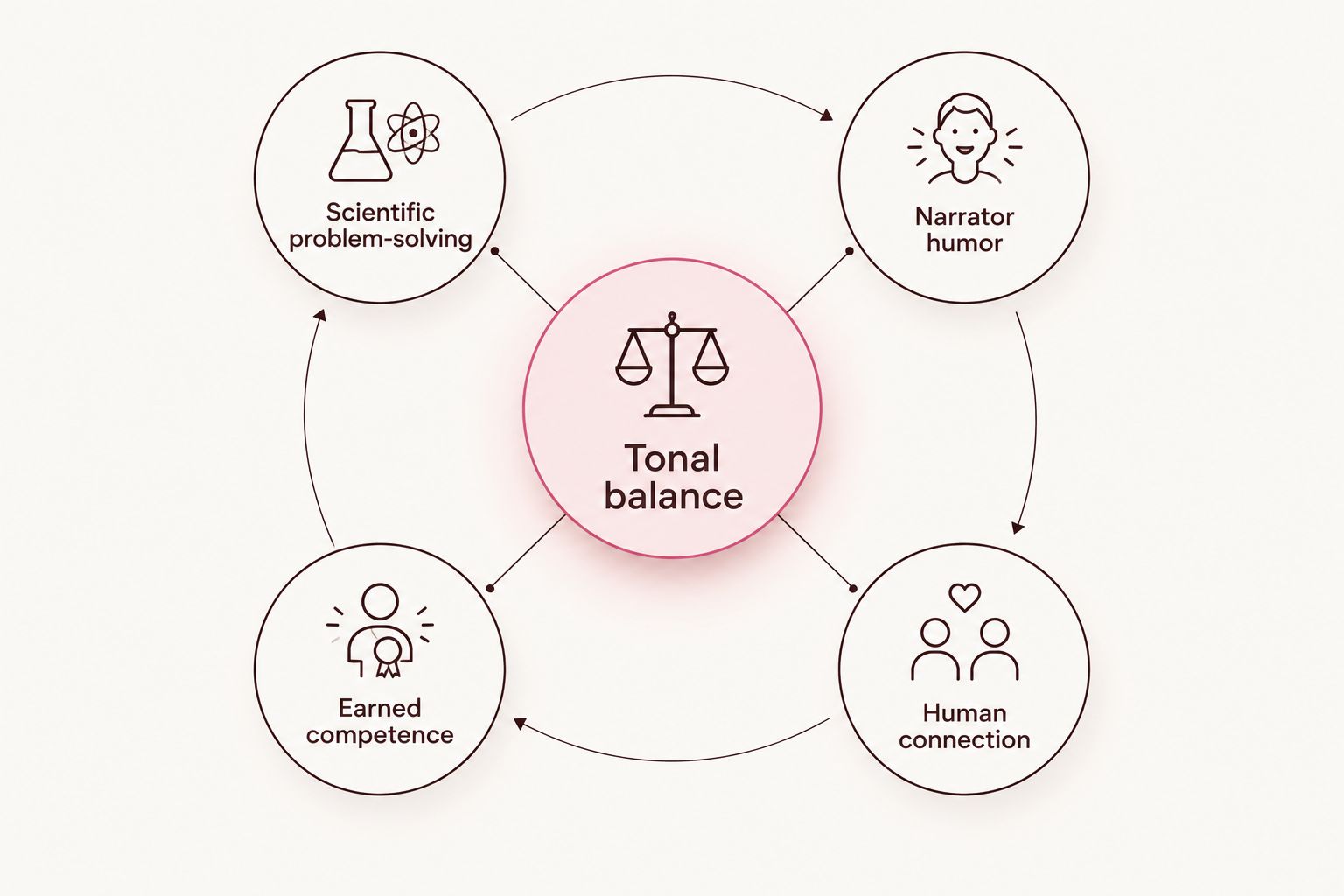
- Scientific problem-solving: Characters make progress through observation, experiments, engineering, or practical reasoning.
- Narrator humor: The comic voice belongs to the person facing the problem, rather than sitting outside the story.
- Earned competence: Solutions require work. An explanation matters more when you understand what could go wrong.
- Human connection: Cooperation, friendship, and reluctant trust give the technical material an emotional purpose.
- Tonal balance: Humor relieves pressure without making every threat meaningless.
Decide which quality you want before choosing. If you want experiments, start at the top. If you want a funny voice more than scientific detail, the middle picks offer a different route.
Funny books like Project Hail Mary at a glance
The Martian is the closest match in method and voice. Each subsequent book moves farther from realistic scientific troubleshooting and toward another kind of comic pleasure.
| Book | Best for | Standout matching quality | Key limitation |
|---|---|---|---|
| The Martian by Andy Weir | Survival through practical science | A stranded scientist explains solutions with gallows humor | No equivalent central alien relationship |
| We Are Legion (We Are Bob) by Dennis E. Taylor | A chatty engineering-led space adventure | Technical puzzles, an informal narrator, and expanding possibilities | A more sprawling story that continues across a series |
| All Systems Red by Martha Wells | Dry humor and reluctant teamwork | A capable, anxious narrator who would rather avoid people | Less scientific explanation; more action and security work |
| Redshirts by John Scalzi | Space-adventure satire | Characters question the lethal logic of their assignments | Its puzzles concern storytelling more than physical science |
| The Hitchhiker’s Guide to the Galaxy by Douglas Adams | Absurd cosmic comedy | Comic explanations turn the universe into the joke | Little interest in realistic experimentation |
1. The Martian: best for survival through practical science
Andy Weir’s The Martian follows astronaut Mark Watney after he is stranded on Mars. Survival becomes a sequence of practical problems involving food, equipment, communication, and an environment that does not forgive mistakes.
This is the strongest recommendation if your favorite Project Hail Mary passages involved Grace working something out. Watney explains his reasoning in an informal voice. The jokes sit beside the calculations rather than replacing them.
The specific match: A scientifically capable narrator uses humor to keep an overwhelming situation manageable. Progress feels satisfying because you understand the obstacle and the proposed solution.
The meaningful difference: The Martian emphasizes isolation, survival logistics, and the effort to bring someone home. It does not recreate the discovery-led relationship at the heart of Project Hail Mary. Its narrator also uses frequent strong language.
The Martian pros:
- Scientific explanations are central to the action.
- Watney’s gallows humor keeps technical passages conversational.
- Practical constraints give each successful repair or experiment weight.
The Martian cons:
- The survival structure is less focused on discovering unfamiliar life.
- Readers who disliked extended technical explanations will encounter them again.
Best for: Readers who want another resourceful scientist talking through an apparently impossible assignment.
Verdict: Read The Martian first for the closest combination of science and humor.
2. We Are Legion (We Are Bob): best for an expansive engineering adventure
Dennis E. Taylor’s We Are Legion (We Are Bob) follows Bob Johansson, whose consciousness becomes the basis of an artificial intelligence operating a space probe. The premise opens into exploration, engineering, and questions about identity.
Bob’s informal narration supplies the main connection. He approaches extraordinary circumstances with curiosity, technical interests, and pop-culture references. Working out what he can build becomes part of the pleasure.
The specific match: Technical problem-solving remains entertaining because the narrator sounds like someone thinking aloud. New capabilities create new problems rather than ending the story’s practical challenges.
The meaningful difference: The story spreads outward. Project Hail Mary concentrates attention on a mission; We Are Legion increasingly divides attention among different developments and versions of its central character. It also starts a continuing series.
We Are Legion (We Are Bob) pros:
- Engineering decisions help drive the plot.
- An approachable voice keeps speculative ideas easy to follow.
- Exploration gives the scientific curiosity room to expand.
We Are Legion (We Are Bob) cons:
- Pop-culture references are a larger part of the comic voice.
- The widening scope reduces the tight, isolated-mission feeling.
Best for: Readers who want more technical playfulness and are happy to follow a story beyond a single novel.
Verdict: Read We Are Legion (We Are Bob) for the engineering voice, not an identical emotional arc.
3. All Systems Red: best for dry humor and reluctant teamwork
Martha Wells’s All Systems Red introduces Murderbot, a security construct that has overridden its governor module. It wants to watch entertainment rather than deal with humans. Protecting a survey team makes that preference difficult to maintain.
The humor comes from the gap between Murderbot’s abilities and its discomfort with social interaction. It can assess danger more easily than it can handle people expressing concern.
The specific match: Competence and connection share the page. A narrator who resists emotional involvement still has to decide what other people mean to it. That tension gives the dry observations more weight than a stream of detached jokes.
The meaningful difference: All Systems Red is a novella with a security-and-action plot. You get assessments, investigation, and decisive action rather than long explanations of physics or chemistry. It begins The Murderbot Diaries, so the larger character development continues elsewhere.
All Systems Red pros:
- The distinctive narrator supplies humor without stopping the action.
- Reluctant cooperation gives the danger personal stakes.
- The shorter form offers a compact change of pace after Project Hail Mary.
All Systems Red cons:
- Scientific experimentation is not the main attraction.
- Combat and bodily injury are part of the story.
Best for: Readers who miss the funny voice and growing trust more than the laboratory work.
Verdict: Read All Systems Red for character-driven humor; skip it if detailed science is essential.
4. Redshirts: best for questioning space-adventure logic
John Scalzi’s Redshirts follows low-ranking crew members aboard a starship whose away missions are disturbingly dangerous. They begin paying attention to patterns that their working lives give them good reason to question.
The book turns familiar space-television conventions into problems its characters must confront. Why does an assignment behave this way? What changes when someone notices the pattern?
The specific match: Characters observe something strange and try to understand its rules. The humor grows from recognizing a contradiction between what they are told and what they experience.
The meaningful difference: Redshirts investigates narrative logic rather than offering Project Hail Mary’s kind of scientific explanation. Its central pleasure depends on enjoying a story that examines the conventions of other stories. Familiarity with television space adventures helps the jokes land.
Redshirts pros:
- Questions and observations give the satire a plot to follow.
- Crew interactions provide a more social kind of humor.
- The premise offers a clear change from lone-scientist survival.
Redshirts cons:
- Scientific realism is not the organizing principle.
- The metafictional approach can interrupt immersion if you prefer a self-contained fictional world.
Best for: Readers who want an investigation with jokes about the rules of space adventures.
Verdict: Read Redshirts when you want satire; skip it when you want experiments.
5. The Hitchhiker’s Guide to the Galaxy: best for cosmic absurdity
Douglas Adams’s The Hitchhiker’s Guide to the Galaxy sends Arthur Dent into space after the destruction of Earth. Alien bureaucracy, improbable situations, and the Guide’s explanatory digressions shape the comedy.
Explanations are often the joke. Where Andy Weir makes an extraordinary problem understandable, Adams makes the supposedly understandable world look ridiculous.
The specific match: An ordinary-seeming viewpoint helps you enter an enormous, unfamiliar universe. Comic explanations keep the reading conversational even when the setting becomes strange.
The meaningful difference: Scientific plausibility is not the point. Arthur is not a Watney-style engineer steadily converting knowledge into control. The universe resists that kind of orderly treatment, and much of the humor depends on the mismatch.
The Hitchhiker’s Guide to the Galaxy pros:
- Narration and explanatory asides are central comic strengths.
- The cosmic scale creates room for philosophical absurdity.
- It offers a decisive tonal change without leaving science fiction.
The Hitchhiker’s Guide to the Galaxy cons:
- The episodic structure offers less sustained technical problem-solving.
- Emotional relationships are not developed in the same way as Project Hail Mary’s central bond.
Best for: Readers who want the funniest departure from the original rather than the closest reconstruction.
Verdict: Read The Hitchhiker’s Guide to the Galaxy for absurdity; skip it for realistic science.
How this ranking works
This 2026 ranking prioritizes the overlap between scientific reasoning and a funny narrative voice. Emotional connection breaks a close match ahead of a book that merely shares the setting.
These are comparisons of the books’ premises, narrative approaches, and central concerns, not claims of hands-on testing or a curator having read every title. There is no numerical similarity score behind the order.
The Martian leads because science and humor perform similar jobs in both books. We Are Legion broadens the engineering adventure. All Systems Red preserves the voice-and-connection appeal. Redshirts and The Hitchhiker’s Guide move toward satire and absurdity.
Which book should you choose?
The Martian is the default recommendation for readers seeking funny books like Project Hail Mary in 2026. Choose it when the explanation of a solution was as enjoyable as the solution itself.
Choose All Systems Red instead if your strongest memory is a funny character learning to care. Choose We Are Legion if you want technical curiosity to expand into a continuing space adventure.
For a list shaped around your own priorities, GetSimilarBooks accepts a title you enjoyed and returns read-alike recommendations. Name the book you loved; then judge each suggestion by the quality you want repeated, not merely its genre.
Find your next read-alike
Get five hand-curated suggestions, then request a personalized list of 20–30 titles by email.
FAQ
What’s the best funny book like Project Hail Mary in 2026?
The Martian by Andy Weir is the closest match for scientific problem-solving paired with a funny first-person voice. Its major difference is the focus on survival and rescue rather than discovering unfamiliar life.
Is The Martian or We Are Legion closer to Project Hail Mary?
The Martian is closer in its focused survival structure and step-by-step scientific reasoning. We Are Legion offers a similarly conversational technical voice but expands into a broader, continuing space adventure.
What should I read if I liked the humor but not all the science?
All Systems Red is the strongest choice here for dry character humor without extended scientific explanations. Redshirts is a better fit if you prefer satire about space-adventure conventions.
Is The Hitchhiker’s Guide to the Galaxy scientifically realistic?
The Hitchhiker’s Guide to the Galaxy uses science-fiction ideas for absurd comedy rather than realistic scientific problem-solving. Choose it for comic narration, not a close equivalent to Grace’s experiments.
Which recommendation is best if I liked the friendship in Project Hail Mary?
All Systems Red is the best choice on this list for reluctant trust and character connection. Its relationships develop through protection and cooperation, not through the same circumstances as Project Hail Mary.
Do I need to start a long series after Project Hail Mary?
No. The Martian gives you a standalone survival story. We Are Legion and All Systems Red begin continuing series, making them better choices when you want more time with their narrators.
Can I get personalized recommendations instead of another fixed list?
GetSimilarBooks provides five hand-curated suggestions when you enter a title you enjoyed. You can also request a personalized list of 20–30 titles through its email-gated option.
One last thing
Before opening a sample, finish this sentence: I liked Project Hail Mary because of the ______.
Write experiments, and start with The Martian. Write voice, and consider All Systems Red. Write cosmic jokes, and move toward Douglas Adams. The useful match is the thing you want to feel again, not the spaceship on the cover.
Related guides
- Books like Project Hail Mary: closest match first
- Books like Project Hail Mary with first-contact aliens
- Switch to fantasy: books like Harry Potter for adult readers
Best book recommendation quizzes for your next read

Best overall for a title-led next read: GetSimilarBooks. Best for reading preferences: The StoryGraph. Best for mood: Whichbook. This 2026 book recommendation quiz guide compares five ways to choose your next read, especially after Fourth Wing or Verity—not every option uses a literal quiz.
- GetSimilarBooks is the best book recommendation quiz alternative when you already have a favorite title.
- The StoryGraph suits readers who want recommendations shaped by broader reading preferences.
- Whichbook suits mood-led browsing; What Should I Read Next? starts with a book or author.
- NoveList suits library readers who want read-alikes with explanations of reading appeal.
If you know the book you want to follow, start with GetSimilarBooks. Enter a title for five hand-curated suggestions. The personalized list adds 20–30 titles and requires an email address. That makes it a direct alternative to answering broad questions about your personality.
Why this matters
A book recommendation quiz needs to distinguish what you enjoyed from what happened in the story. Dragons are a subject. A dangerous training environment, an intense romance, and a bond built through trust are different reasons to love Fourth Wing.
The same distinction matters after Verity. You might want romantic obsession, an unsettling household, or uncertainty about whose account deserves belief. A recommendation that matches only the thriller label leaves the important decision unresolved.
For your 2026 reading list, choose the tool that lets you express the reason you want another book—not just its genre.
What makes the best book recommendation quiz?
These criteria matter more than whether a questionnaire feels entertaining:
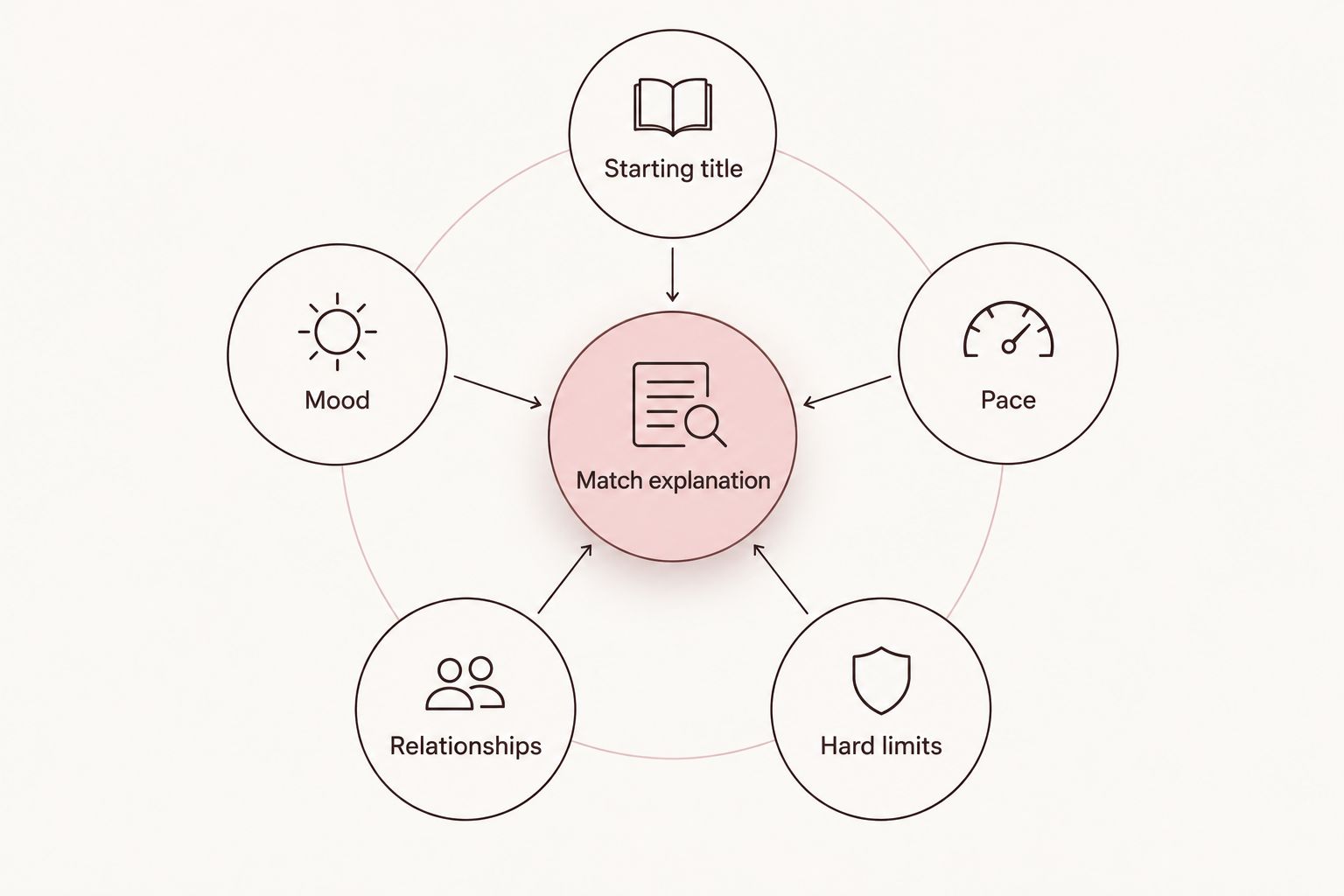
- Starting title: Can you begin with the book you just finished, rather than describe your entire reading identity?
- Mood: Can you distinguish comforting, tense, unsettling, or emotionally heavy reading?
- Pace: Can you separate an urgent plot from a slower story built around atmosphere?
- Relationships: Can you say whether romance, friendship, or family conflict should carry the story?
- Hard limits: Can you identify content or storytelling choices you do not want?
- Match explanation: Does the result explain both the resemblance and the meaningful difference?
For 2026, prioritize a useful distinction over a long questionnaire. A result that says why a book fits gives you something to judge. An unexplained match percentage does not tell you whether the romance, writing style, or suspense will work for you.
Book recommendation tools at a glance
The order runs from a direct favorite-book match toward broader discovery. These are different routes to a recommendation, not interchangeable personality quizzes.
| Tool | Best for | Standout approach | Key limitation |
|---|---|---|---|
| GetSimilarBooks | Following a specific favorite | Five hand-curated read-alikes from a title | The longer personalized list requires email |
| The StoryGraph | Building an ongoing reading profile | Reading preferences and personalized recommendations | More setup than a title-only search |
| Whichbook | Choosing by mood | Interactive mood and reading-experience controls | Less direct when you want a particular book's closest match |
| What Should I Read Next? | Exploring from a book or author | A straightforward title-or-author starting point | A title alone cannot express your boundaries |
| NoveList | Exploring through your library | Read-alikes and reading-appeal information | Access depends on your library's subscriptions |
1. GetSimilarBooks: best for following a specific favorite
GetSimilarBooks is a free book recommendation tool for readers who know which title they want to follow. You enter a book you enjoyed and receive five hand-curated read-alike suggestions. An email-gated personalized list expands that selection to 20–30 titles.
The useful distinction is the starting point. You do not have to turn one reading experience into a permanent personality profile. You can want another Fourth Wing today and something closer to Verity next time.
GetSimilarBooks pros:
- Starts with a concrete book rather than an abstract reader type.
- Keeps the initial selection to five suggestions.
- Offers a longer personalized list for readers building a reading queue.
GetSimilarBooks cons:
- The longer list requires an email address.
- A favorite title does not, by itself, explain everything you liked or disliked.
Best for: Readers seeking a direct read-alike after finishing a specific novel.
Verdict: Use it first when you can name the book you want to follow. Before choosing a result, decide which quality you want repeated and which you want changed.
2. The StoryGraph: best for an ongoing reading profile
The StoryGraph combines reading tracking with personalized recommendations. Its preference-led approach suits readers who want discovery to sit alongside their wider reading life, rather than exist as a single quiz result.
Mood and pace are useful distinctions here. Wanting an intense book is not the same as wanting a fast book. A slower novel can remain deeply unsettling, while an action-heavy fantasy can have a very different emotional effect.
The StoryGraph pros:
- Gives reading preferences a role beyond a single favorite title.
- Uses mood and pace as useful ways to describe books.
- Keeps reading tracking and discovery in the same place.
The StoryGraph cons:
- Building a useful profile takes more input than entering a title.
- Broad preferences still need interpretation when you want one very specific relationship dynamic.
Best for: Readers who want a continuing recommendation habit rather than a one-off answer.
Verdict: Choose The StoryGraph when you want to describe your reading tastes over time. Skip the setup if your immediate question is simply what to read after one particular novel.
3. Whichbook: best for choosing a reading mood
Whichbook lets you explore books through reading-experience choices, including mood, character, and plot. Its interactive controls make it a useful alternative when a standard genre question feels too broad.
This approach works particularly well when you cannot name a comparison title. You might know you want something disturbing rather than comforting, or unpredictable rather than familiar. Those are actionable preferences even without a favorite author.
Whichbook pros:
- Starts with how you want a book to feel.
- Helps you move beyond familiar titles and authors.
- Makes contrasting reading preferences visible during selection.
Whichbook cons:
- Mood alone does not guarantee the relationship dynamic you want.
- It is a less direct route to a close Fourth Wing or Verity read-alike.
Best for: Readers who can describe the experience they want but cannot name a starting book.
Verdict: Choose Whichbook for a mood-led change of direction. Use a title-led finder instead when preserving a particular story dynamic matters most.
4. What Should I Read Next?: best for a quick starting point
What Should I Read Next? begins with a book or author search and returns reading suggestions. That makes it easy to start without translating your preferences into a questionnaire.
Treat the results as possibilities, not explanations of your taste. Searching for Verity cannot tell a tool whether you loved the manuscript device, the romantic tension, or the uncomfortable uncertainty. You still need to make that distinction yourself.
What Should I Read Next? pros:
- Gives you a straightforward book-or-author starting point.
- Avoids a lengthy personality-style questionnaire.
- Provides another route into discovery when you already have a reference title.
What Should I Read Next? cons:
- The starting title cannot communicate every preference or exclusion.
- You need to check whether each suggestion matches the right part of the original.
Best for: Readers who want suggestions quickly and are comfortable checking the fit themselves.
Verdict: Use What Should I Read Next? to open a shortlist, not settle it. Keep only the suggestions whose descriptions support your actual reading priorities.
5. NoveList: best for library-based read-alike research
NoveList is a readers' advisory resource that libraries provide through subscription access. Its read-alikes and reading-appeal information help you look beyond a shared subject toward qualities such as tone, pace, and characterization.
That distinction matters when recommendations need an explanation. Two novels can feature secretive households yet offer different experiences: one might emphasize psychological pressure, while another spends more time on romantic relationships.
NoveList pros:
- Connects book discovery with library research.
- Supports read-alike searching beyond a simple genre label.
- Gives you vocabulary for explaining what kind of reading experience you want.
NoveList cons:
- Your library must provide access.
- Database exploration requires more involvement than receiving an immediate shortlist.
Best for: Library readers who want to investigate why a recommendation fits.
Verdict: Choose NoveList when you want to examine the reasoning. Check your library's electronic resources before making it your main discovery route.
Turn a quiz result into a book you actually want
Before starting a 2026 book recommendation quiz, write two sentences: one naming the quality you want again, and one naming what you want changed. This is a selection exercise, not another personality test.
After Fourth Wing, that might be: “Keep the dangerous competition and central romance. Change the amount of explicit sexual content.” A focused guide to books like Fourth Wing with less spice addresses that distinction more directly than a broad fantasy result.
After Verity, the request might be: “Keep the threatening household and uncertainty. Make romance less central.” That points toward a different reading experience than asking for another romantic thriller.
Two examples of a meaningful match
These examples show what a useful recommendation explanation should contain. Neither book duplicates its comparison title.
| Starting book | Possible next read | Best for | Meaningful difference |
|---|---|---|---|
| Fourth Wing | The Serpent and the Wings of Night by Carissa Broadbent | Deadly competition with a central romance | Vampire society replaces dragons and military training |
| Verity | Rebecca by Daphne du Maurier | An unsettling household and a relationship shadowed by another woman | Gothic atmosphere replaces Verity's contemporary thriller setting |
The Serpent and the Wings of Night fits the danger-and-romance request. Its competition and vampire setting give the match a specific basis. It is not the right substitute if dragon bonds or academy life were your main attraction.
Rebecca fits readers drawn to domestic unease and the influence of an absent woman. Its atmosphere is the connection. Do not choose it expecting Verity's contemporary setting or the same treatment of sexual content.
For mature-content boundaries, check the individual book rather than trusting a genre label. A mood match is not a content guarantee.
How the ranking works
This 2026 ranking favors a direct starting point, useful preference distinctions, and a clear role for each tool. It is an editorial fit assessment, not a measured contest between recommendation engines.
The first choice answers the narrowest question: what follows a specific favorite? The later choices serve broader preferences, mood exploration, quick discovery, and library research. Order carries meaning, but your starting question determines the winner.
Which book recommendation quiz should you choose?
Choose a title-led finder when you have a favorite; choose a preference-led tool when you have a reading mood. That is the simplest way to avoid answering questions that do not help your decision.
For your next 2026 read, start narrow. Name the book, preserve one important quality, and change one thing. Expand into mood-led browsing only when you want the recommendation to take you somewhere less familiar.
Find your next read
Start with five hand-curated suggestions, then request a free personalized list of 20–30 titles by email.
FAQ
What’s the best book recommendation quiz after Fourth Wing?
A title-led read-alike finder is the strongest starting point after Fourth Wing. Decide whether you want the romance, dragon bonds, dangerous training, or another specific quality before choosing a result.
Is a book recommendation quiz better than searching by title?
A quiz is better when you need help describing your preferences; a title search is more direct when you already have a favorite. Neither approach replaces checking why the suggested book fits.
Which book recommendation tool should I use if I only know my mood?
Whichbook is the clearest choice here for mood-led exploration. Its reading-experience controls let you start with how you want a book to feel rather than a comparison title.
Does GetSimilarBooks require an email address?
The personalized list of 20–30 titles requires an email address. The tool also provides an initial selection of five hand-curated read-alike suggestions from a title you enjoyed.
What should I ask for after reading Verity?
Ask for the specific feature you want repeated: romantic obsession, domestic unease, an unreliable account, or a manuscript-centered story. Those requests lead toward different books, even when all the results sit near psychological suspense.
Can a recommendation quiz tell me whether a book has explicit content?
Do not treat a recommendation quiz as a content guarantee. Check book-specific content information whenever explicit sex, violence, or another subject is a firm boundary.
How do I choose between several recommended books?
Choose the book whose match explanation names your main priority and whose difference you accept. A close genre match is less useful than a clear explanation of the reading experience.
One last thing
A useful recommendation includes a reason not to choose it. “Similar romantic tension, but no academy setting” tells you more than “perfect for fans.” Keep the difference in view. It is where you decide whether you want a close match or an interesting departure.
Related guides
- Books like Fourth Wing with slow-burn romance
- Books like Verity with romance at the center
- Books like Verity with a gothic atmosphere
Similar books finder: five picks for any title you loved

Best next to Fourth Wing: The Serpent and the Wings of Night. Best next to Verity: The Ghostwriter. This 2026 guide ranks five books by the specific experience they repeat, so you can find similar books without settling for a shared genre label.
- For similar books to Fourth Wing, choose The Serpent and the Wings of Night for deadly competition and dangerous attraction.
- The Ghostwriter matches Verity through writing, secrets, and an unsettling assignment—not the same romantic setup.
- Rebecca suits readers who want domestic unease; The Silent Patient shifts the focus toward psychological investigation.
- GetSimilarBooks provides five hand-curated read-alike suggestions, with a personalized list of 20–30 titles available by email.
Why this matters
Finishing Fourth Wing does not tell you whether your next book needs dragons, romantic friction, or a school where failure kills. Finishing Verity does not tell you whether you want another disturbing manuscript or another relationship you cannot trust. Those are different requests.
GetSimilarBooks is a similar books finder for readers who want five hand-curated read-alike suggestions from a title they enjoyed. Enter your starting title at GetSimilarBooks, then judge the suggestions against the part you actually want repeated.
The five recommendations below follow two reading paths. The fantasy picks come first, followed by the suspense picks. Compare closeness within your path, not across genres: a vampire tournament is not a substitute for domestic suspense just because both stories contain danger.
What makes the best similar books?
This 2026 shortlist uses five criteria. A useful match needs more than a familiar cover or a repeated trope.
- Story engine: What keeps the pages turning? A lethal competition, an unsettling writing job, and a psychological investigation create different kinds of momentum.
- Relationship pressure: Decide whether attraction must drive the danger or whether suspicion alone is enough. Romantic tension and distrust are not interchangeable.
- Reading texture: Compare atmosphere, narrative voice, and how quickly the book releases information. A slow accumulation of dread feels different from successive physical threats.
- Meaningful difference: Every recommendation needs a reason you might reject it. A match without a stated difference hides the decision you need to make.
- Reading boundaries: Check the treatment of sexual content, violence, abuse, and other sensitive material separately. Matching the mood does not establish matching content limits.
These criteria also explain the order. Within each reading path, the first suggestion preserves more of the starting book's machinery. Later suggestions preserve a narrower quality while changing the setting or structure.
Five similar books at a glance
| Book and author | Best for | Closest matching quality | Key limitation |
|---|---|---|---|
| The Serpent and the Wings of Night — Carissa Broadbent | Fourth Wing readers wanting lethal competition and attraction | A vulnerable contestant faces dangerous rivals and a consequential alliance | Vampires replace dragons; there is no rider bond |
| A Deadly Education — Naomi Novik | Fourth Wing readers drawn to survival at school | A magical education takes place under constant threat | Romance is less central, and the voice is more sardonic |
| The Ghostwriter — Alessandra Torre | Verity readers wanting writing and concealed truths | An author’s assignment becomes entangled with disturbing secrets | The writing relationship replaces Verity’s romantic configuration |
| Rebecca — Daphne du Maurier | Verity readers wanting oppressive domestic unease | A newcomer enters a household shaped by another woman’s presence | Suspense accumulates more slowly |
| The Silent Patient — Alex Michaelides | Verity readers wanting uncertainty and revelation | A professional tries to understand a woman whose story resists explanation | The central relationship is clinical, not romantic |
1. The Serpent and the Wings of Night: best for lethal competition
Best for: Fourth Wing readers who want attraction under survival pressure.
Carissa Broadbent’s The Serpent and the Wings of Night follows Oraya, a human raised by a vampire king, into a deadly tournament. Her position makes trust difficult and an alliance with a rival consequential. That combination—not simply the presence of fantasy creatures—is the strongest connection to Fourth Wing.
The book suits you if Violet’s exposure to stronger opponents mattered as much as her relationship with Xaden. Both stories make vulnerability part of the action rather than something the romantic plot can quietly ignore.
The important change is the source of attachment. You trade dragons and rider bonds for vampire power structures, tournament danger, and a fraught partnership.
The Serpent and the Wings of Night pros:
- Competition gives the story a clear survival problem.
- Attraction develops alongside reasons to distrust an ally.
- Oraya’s human status makes the imbalance of power concrete.
The Serpent and the Wings of Night cons:
- It cannot satisfy a specific wish for dragon companionship.
- Tournament structure replaces the ongoing military-school experience.
Content note: Sexual content and graphic violence.
Verdict: Buy for dangerous attraction and lethal competition; skip if dragons are essential.
2. A Deadly Education: best for a school built around survival
Best for: Fourth Wing readers who cared most about surviving an education.
Naomi Novik’s A Deadly Education places El inside the Scholomance, a magical school where monsters make ordinary student life hazardous. El’s abrasive, observant voice is central to the experience. The danger is not an occasional interruption to lessons; it shapes how students form alliances and get through the day.
Choose this when you want school rules, unequal advantages, and friendships made under pressure. The match lies in the institution and its costs, rather than a close recreation of Violet and Xaden’s relationship.
Expect a different rhythm, too. El explains and judges the world in a distinctive voice, so enjoying her company matters as much as enjoying the premise.
A Deadly Education pros:
- School survival gives even routine choices consequences.
- Student alliances connect personal safety with social power.
- El’s perspective provides a clear departure from a conventional fantasy heroine.
A Deadly Education cons:
- Romance is not the dominant attraction.
- The dense explanation and sardonic narration will not suit every reader.
Content note: Violence, monsters, and threats to students.
Verdict: Buy for a dangerous school and difficult alliances; skip for romance-first reading.
3. The Ghostwriter: best for writers hiding disturbing truths
Best for: Verity readers who want another writing assignment with secrets underneath.
Alessandra Torre’s The Ghostwriter centers on Helena Ross, a novelist facing a terminal diagnosis who wants to tell a final story with a ghostwriter’s help. The assignment raises questions about what Helena intends to reveal and why. That makes the act of writing part of the suspense, not just a character’s occupation.
This is the closest pick here if Verity held you through the gap between a writer’s public work and private life. The appeal is learning what a manuscript or confession means for the person producing it.
Do not choose it expecting the same romantic arrangement. The Ghostwriter directs its attention toward disclosure, responsibility, and the relationship formed around telling a difficult story.
The Ghostwriter pros:
- The writing process has a direct role in the mystery.
- Helena’s purpose gives the unfolding account emotional weight.
- Concealed personal history connects the suspense to character.
The Ghostwriter cons:
- It is not a substitute for Verity’s central romantic tension.
- Terminal illness adds a separate source of emotional heaviness.
Content note: Terminal illness and disturbing family themes.
Verdict: Buy for the writer-and-secrets connection; skip if romance must remain central.
4. Rebecca: best for a house overshadowed by another woman
Best for: Verity readers who want domestic unease more than rapid revelations.
Daphne du Maurier’s Rebecca follows an unnamed young woman who marries Maxim de Winter and arrives at Manderley. His first wife, Rebecca, remains a powerful presence in the household. The newcomer must interpret a marriage and a home that other people seem to understand better than she does.
The connection to Verity is the discomfort of entering an intimate space already shaped by another woman. Ordinary objects, routines, and conversations acquire weight because the newcomer lacks the history needed to read them confidently.
Rebecca is the slower choice. Its strength is sustained psychological pressure, not a promise to reproduce Verity’s pacing or sexual content.
Rebecca pros:
- The house contributes directly to the sense of unease.
- The narrator’s insecurity shapes how you interpret events.
- Marriage and unequal knowledge remain tightly connected.
Rebecca cons:
- The atmospheric opening asks for patience.
- The narrative voice differs sharply from contemporary commercial suspense.
Content note: Psychological manipulation, death, and coercive relationships.
Verdict: Buy for oppressive domestic atmosphere; skip if you need immediate momentum.
5. The Silent Patient: best for a psychological puzzle
Best for: Verity readers who want to question the account rather than follow a romance.
Alex Michaelides’s The Silent Patient follows psychotherapist Theo Faber as he becomes involved in the case of Alicia Berenson, an artist who stops speaking after killing her husband. The premise establishes a central question: what explains Alicia’s silence and the violence that preceded it?
Choose this if your favorite part of Verity was deciding how much confidence to place in the information reaching you. The professional’s interest in another person’s story creates the connection. The setting and relationship are substantially different.
This is the furthest recommendation from Verity’s romantic machinery. Treat it as a turn toward psychological investigation, not another version of the same household arrangement.
The Silent Patient pros:
- The central question is clear from the premise.
- Interpretation matters as much as discovering events.
- The investigative structure suits readers who enjoy revising assumptions.
The Silent Patient cons:
- Romance does not provide the central reading experience.
- The psychiatric setting replaces domestic isolation.
Content note: Murder, abuse, and psychiatric treatment.
Verdict: Buy for a psychological puzzle; skip for romance-led suspense.
How the recommendations are ranked
This 2026 guide ranks by matching qualities, not overall literary merit. The Serpent and the Wings of Night leads the Fourth Wing path because competition and attraction remain joined. A Deadly Education keeps the dangerous institution but changes the romantic emphasis.
The Ghostwriter leads the Verity path because writing and concealed personal history remain connected. Rebecca moves outward toward atmosphere and marital uncertainty. The Silent Patient moves further toward investigation and interpretation.
These are editorial comparisons of premises and reading qualities, not a claim that a human curator personally read every title for this article. None of the rankings requires treating a shared genre label as sufficient evidence of a match.
Which similar books should you choose?
For your next 2026 read, name the experience before choosing the title. Use these three starting points:
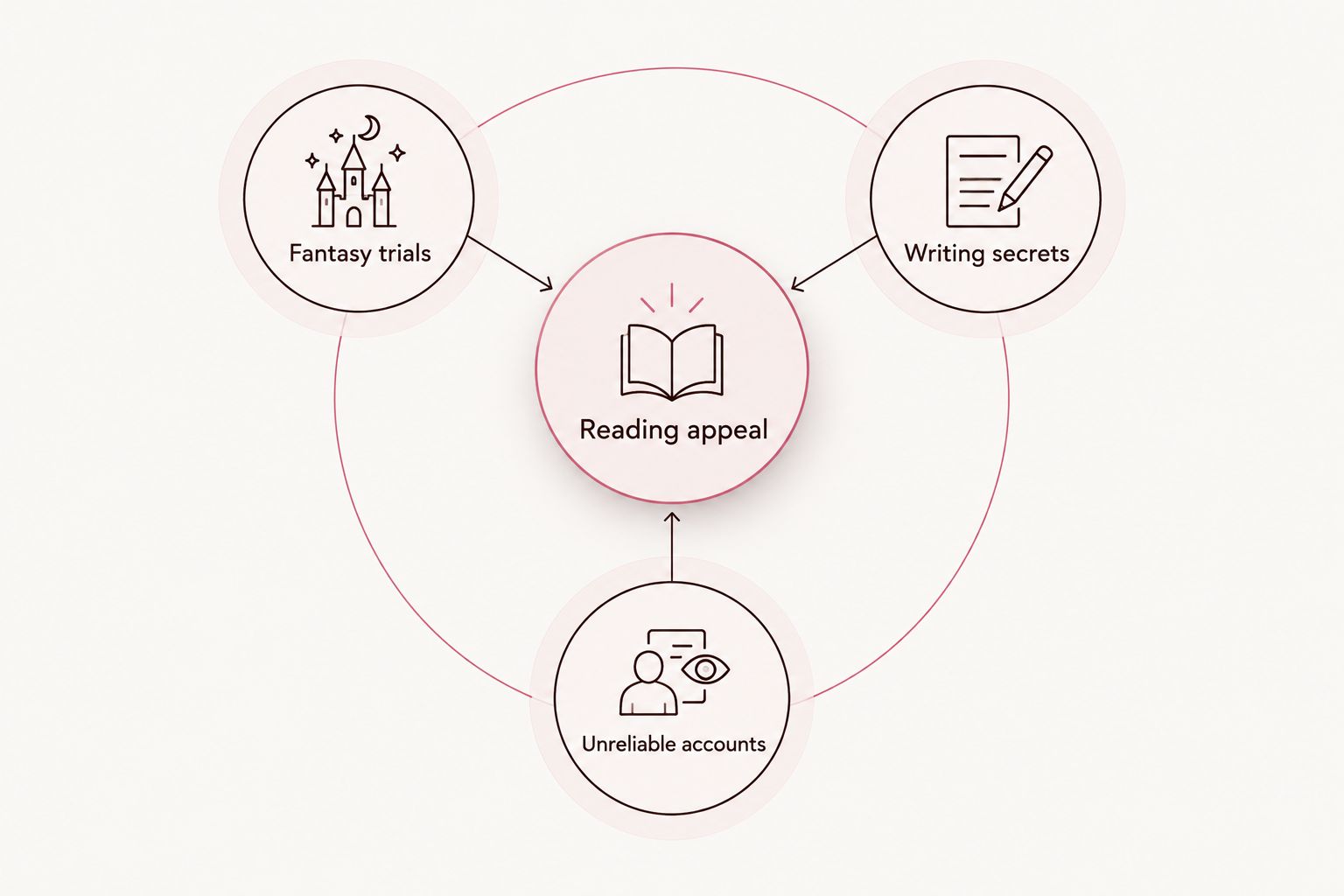
- Fantasy trials: Start with The Serpent and the Wings of Night. Choose A Deadly Education instead when school survival matters more than romantic intensity.
- Writing secrets: Start with The Ghostwriter. Choose Rebecca instead when the household’s emotional atmosphere matters more than the writing premise.
- Unreliable accounts: Start with The Silent Patient when you want a professional inquiry and uncertainty about how to interpret another person’s story.
The categories overlap, but they are not interchangeable. A book can preserve your favorite source of tension while removing the very feature another reader considers essential.
If none of those choices is exact, give GetSimilarBooks your starting title and separate what you want repeated from what you want changed. Five suggestions provide the preview; the email-gated personalized list contains 20–30 titles. That gives you a broader reading list without making every recommendation answer the same need.
Find your next read
Enter a title for five hand-curated suggestions, then request your free personalized list by email.
FAQ
What’s the closest book to Fourth Wing on this list?
The Serpent and the Wings of Night is the closest match here for lethal competition combined with dangerous attraction. It replaces dragons and rider bonds with vampires and a tournament, so it is not the closest choice for every Fourth Wing reader.
What’s the closest book to Verity if I liked the manuscript?
The Ghostwriter is the strongest choice here for writing tied to disturbing personal secrets. Its emotional focus and central relationship differ from Verity, so choose it for the writing premise rather than an equivalent romance.
Is A Deadly Education a romance like Fourth Wing?
A Deadly Education is a better match for Fourth Wing’s dangerous-school experience than its romantic emphasis. Choose it for student alliances, survival pressure, and a strongly voiced narrator.
Should I read Rebecca if I liked Verity?
Read Rebecca if the appeal of Verity was entering a household shaped by another woman’s presence. Expect slower, atmospheric suspense rather than the same pacing or sexual content.
Can a similar books finder match more than genre?
A useful similar books finder distinguishes the qualities you want repeated, such as atmosphere, relationship tension, or narrative uncertainty. GetSimilarBooks provides five hand-curated read-alike suggestions from a title you enjoyed, plus an email-gated personalized list of 20–30 titles.
How should I choose my next book in 2026?
Choose your next book in 2026 by naming one quality to keep and one to change. For example, wanting Fourth Wing’s survival pressure without making romance the priority points toward A Deadly Education on this list.
One last thing
The most useful detail is often what you do not want repeated. “Another Fourth Wing” leaves several paths open. “A dangerous school, but romance can take second place” points toward a specific choice.
Before starting another book, write that distinction in a sentence. You do not need a complete inventory of your taste. You need the feature that would make the next recommendation wrong.
Related guides
- Books like Fourth Wing, closest match first
- Books like Verity, ranked by fit
- Books like Fourth Wing with less spice
- Books like Verity about writers and hidden manuscripts
Books like Harry Potter with darker themes

Best overall: A Deadly Education by Naomi Novik. Best for disillusioned adults: The Magicians by Lev Grossman. Best for unsettling magical lessons: Vita Nostra by Marina and Sergey Dyachenko. These darker Harry Potter read-alikes keep different parts of the appeal: dangerous schooling, hidden magic, close friendships, or institutions you cannot trust.
- For books like Harry Potter darker in tone, start with Naomi Novik’s A Deadly Education.
- The Magicians suits readers who want magical college and adult disillusionment rather than another chosen-one adventure.
- Vita Nostra makes magical education psychologically disturbing; Ninth House brings occult horror to a real university.
- GetSimilarBooks offers five hand-curated read-alikes, with a personalized list of 20–30 titles available by email.
Why this matters
Darker does not mean the same thing to every reader. You might want Hogwarts with fewer protections, adult characters confronting disappointment, or magic tied to exploitation rather than wonder. A book that delivers one of those experiences can miss the others completely.
This 2026 guide orders recommendations from the closest school-and-survival match toward books that keep the institutional tension but change the reading experience. None is simply Harry Potter with more violence. Each has a different answer to the question: what does learning magic do to a person?
If your main requirement is grown-up characters rather than disturbing material, the guide to books like Harry Potter for adult readers addresses that separate need.
What makes the best darker Harry Potter read-alikes?
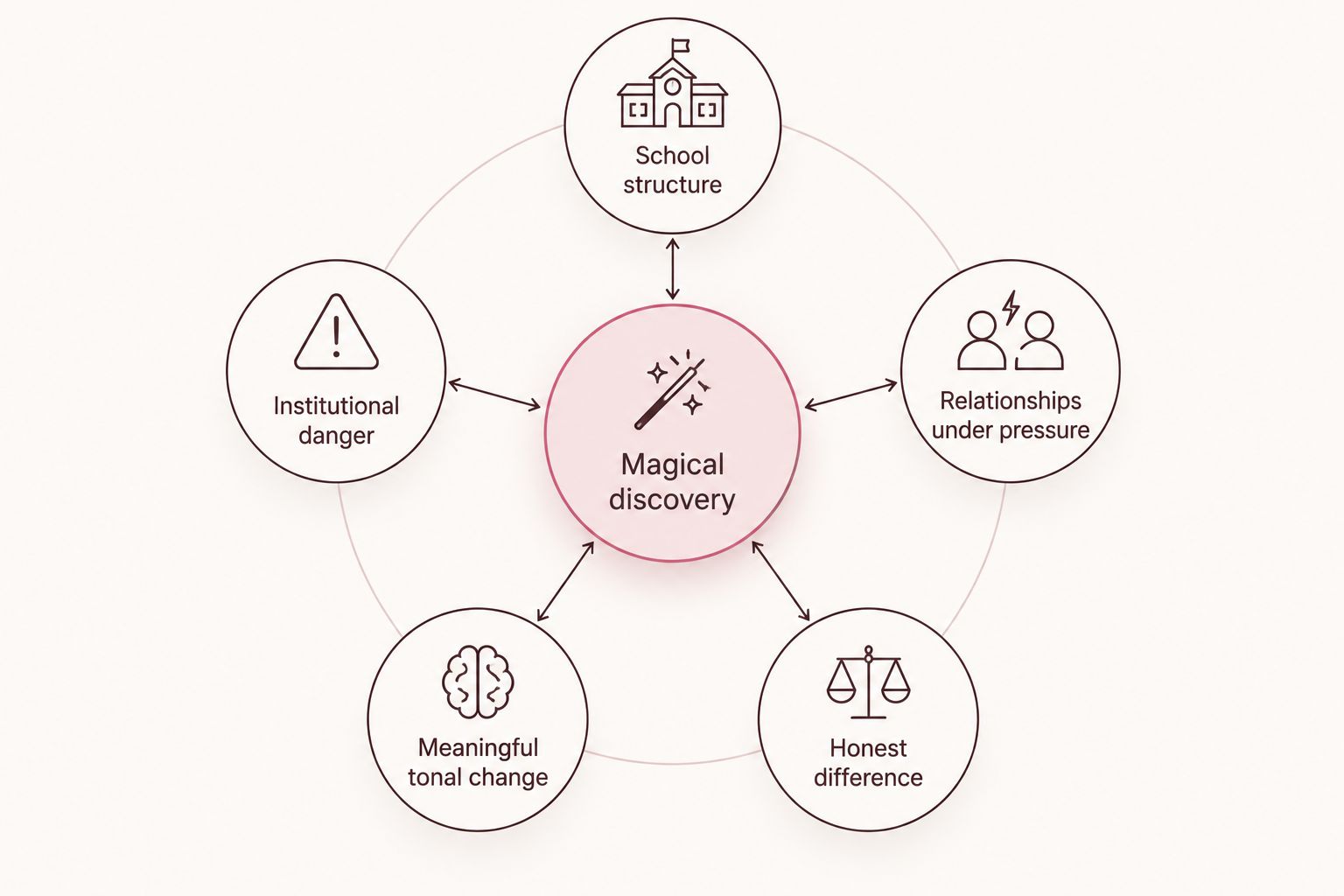
- School structure: Lessons, examinations, rivalries, and restricted spaces should shape the story, not merely decorate it.
- Magical discovery: Learning how magic works should matter to the reader’s curiosity and the character’s decisions.
- Institutional danger: The school or magical establishment should create problems, not just shelter students from an outside villain.
- Relationships under pressure: Friendship, rivalry, and dependence should have consequences beyond classroom competition.
- A meaningful tonal change: The darkness should come from something specific: predation, disillusionment, coercion, trauma, or colonial power.
- An honest difference: A close match needs a clear limit. Dense language theory and relentless psychological pressure are not substitutes for Hogwarts warmth.
For your 2026 reading list, choose the quality you want to preserve before choosing how much darkness you want to add. School routine and friendship produce a different recommendation from secret societies and occult violence.
Darker Harry Potter read-alikes at a glance
| Book | Best for | Matching quality | Key limitation |
|---|---|---|---|
| A Deadly Education — Naomi Novik | A dangerous magical school | Student alliances and magical survival | Little of Hogwarts’ everyday comfort |
| The Magicians — Lev Grossman | Adult disillusionment | Entry into an exclusive magical college | Alienation matters more than reassuring friendship |
| Vita Nostra — Marina and Sergey Dyachenko | Psychological unease | Opaque lessons at a coercive institute | Abstract, demanding, and emotionally cold |
| Ninth House — Leigh Bardugo | Occult campus horror | Hidden magical institutions and forbidden knowledge | An adult investigation, not a wizard-school progression |
| Babel — R. F. Kuang | Institutional and political darkness | A close student circle studying consequential magic | Language and empire take priority over adventure |
1. A Deadly Education: best for a dangerous magical school
Naomi Novik’s A Deadly Education is the closest starting point if you want students learning magic while a hostile school environment shapes every decision. El attends the Scholomance, where magical creatures prey on students and survival depends on preparation, resources, and alliances. There are no teachers providing a reliable safety net.
The match is structural rather than cosmetic. Schoolwork matters, other students matter, and the rules of magic affect who gets through the day. The difference is that danger is built into ordinary school life instead of arriving mainly as an interruption to it.
A Deadly Education pros:
- Magical education directly drives the survival plot.
- Student alliances make friendship materially important.
- El’s abrasive narration gives the story a distinct voice.
A Deadly Education cons:
- Explanations of magical systems interrupt the action.
- Constant threat leaves less room for comfortable school rituals.
Best for: Readers who want Harry Potter’s school setting with the protections removed.
A Deadly Education opens the three-volume Scholomance series. That makes it a useful choice if you want a continuing school story rather than a single campus mystery. Brief content note: violence and threats to young people.
Verdict: Buy A Deadly Education for the closest darker school-and-survival match.
2. The Magicians: best for adult disillusionment
Lev Grossman’s The Magicians follows Quentin Coldwater into Brakebills, an exclusive college for magical study. Admission gives him access to the extraordinary world he wanted. It does not resolve his dissatisfaction with ordinary life or with himself.
The Harry Potter connection is easy to identify: hidden magical education, talented students, difficult training, and the discovery that a larger magical world exists. The tonal break is the point. The Magicians questions the belief that entering that world will make you happy or give your life a satisfying shape.
The Magicians pros:
- Magical study feels demanding rather than automatically rewarding.
- Adult dissatisfaction changes the familiar discovery narrative.
- The story extends beyond the boundaries of its college.
The Magicians cons:
- Quentin is often self-absorbed and difficult company.
- Readers seeking loyal, comforting friendships face a colder experience.
Best for: Adults who still want hidden magic but no longer want a reassuring escape story.
Choose The Magicians for emotional disillusionment, not because you want a scarier Hogwarts mystery. Its relationship with portal fantasy is also important; the school is only part of its conversation with childhood reading. Brief content note: sexual violence, substance use, and depression.
Verdict: Buy The Magicians if the loss of wonder interests you as much as its discovery.
3. Vita Nostra: best for psychologically disturbing lessons
Vita Nostra, by Marina and Sergey Dyachenko, follows Sasha into an institute whose demands become increasingly difficult to understand. The education itself supplies the dread. Learning is not simply the acquisition of useful spells; it threatens Sasha’s understanding of herself and reality.
The connection to Harry Potter lies in a young person entering a concealed system of extraordinary education. The difference is profound. Vita Nostra gives you little reassurance that the adults, the curriculum, or even the purpose of studying can be understood in familiar moral terms.
Vita Nostra pros:
- Lessons create tension rather than serving as background.
- The atmosphere stays closely tied to Sasha’s uncertainty.
- Magical transformation reaches beyond practical spellcasting.
Vita Nostra cons:
- Abstract concepts demand patience.
- Warmth and clear explanations are deliberately scarce.
Best for: Readers who want magical education to feel coercive, strange, and destabilizing.
Vita Nostra is not the safest recommendation for someone who mainly misses the trio’s friendship. It is the stronger choice if forbidden lessons and unsettling authority figures were your favorite elements. Brief content note: coercion, psychological abuse, and sexual content.
Verdict: Buy Vita Nostra for educational dread; skip it if you need a comforting student community.
4. Ninth House: best for occult campus horror
Leigh Bardugo’s Ninth House places Alex Stern at Yale, where she monitors occult activity associated with the university’s secret societies. Her ability to see ghosts gives her access to a world where privilege and magical power reinforce each other. An investigation brings the costs of that arrangement into focus.
The Harry Potter resemblance is the concealed magical order operating behind a recognizable world. The difference is the narrative engine. Alex is not progressing through a conventional wizard-school curriculum; she is confronting dangerous practices and the people protected by them.
Ninth House pros:
- Secret societies give institutional power a concrete shape.
- Ghosts and rituals make the hidden world threatening.
- The investigation provides a clear thread through the occult setting.
Ninth House cons:
- Classroom learning is not the central attraction.
- Graphic violence and trauma make this a substantial tonal jump.
Best for: Readers who want forbidden magic, campus secrets, and adult horror.
Pick Ninth House when the restricted section interests you more than the timetable. It belongs farther down this ranking because its strongest connection is secrecy and power, not the experience of growing up through magical school years. Brief content note: sexual violence, drug use, and graphic violence.
Verdict: Buy Ninth House for occult investigation; skip it for a close Hogwarts-school experience.
5. Babel: best for political and institutional darkness
R. F. Kuang’s Babel follows Robin Swift into Oxford’s Royal Institute of Translation, where translation and silver-working connect language to imperial power. His student circle offers intellectual companionship. The institution employing their talents creates the central moral conflict.
Babel shares Harry Potter’s fascination with an elite educational world and a close group of students. Its magic, however, is inseparable from language and extraction. The darkness comes less from monsters than from understanding what a prestigious institution needs its students to support.
Babel pros:
- Language is integral to the magical system.
- Student relationships connect personal loyalties to political choices.
- Institutional belonging becomes a sustained moral problem.
Babel cons:
- Explanatory passages slow the forward movement.
- Readers seeking spell duels and magical creatures will find a distant match.
Best for: Readers who want the school’s relationship to power examined rather than a darker school adventure.
Babel is the outward edge of this list, not an interchangeable alternative to A Deadly Education. Choose it because you want language, complicity, and empire at the center. Brief content note: racism, colonial violence, and abuse.
Verdict: Buy Babel for institutional critique; skip it if adventure is your main requirement.
How the recommendations are ranked
This 2026 ranking gives priority to the reading experience you are trying to recover: magical education first, then student relationships, discovery, and institutional danger. It is not a ranking of literary merit or a claim that every reader will prefer the same book.
A Deadly Education comes first because the school’s rules organize the story. Babel comes last because its academic setting serves a different central concern. The order moves outward from the closest match rather than upward through increasingly graphic content.
Which darker Harry Potter book should you choose?
Start with A Deadly Education unless you already know you want something other than a school-survival story. It preserves the strongest combination of magical study, student alliances, and danger.
Choose The Magicians for disappointment after wish fulfillment. Choose Vita Nostra for fear of the lessons themselves. Choose Ninth House for occult investigation, or Babel for the politics of belonging to a powerful institution.
GetSimilarBooks is best for fiction readers who want title-based read-alikes rather than another broad fantasy list. Enter a book you enjoyed to receive five hand-curated suggestions. The free personalized list expands that selection to 20–30 titles and requires your email.
Find your next read-alike
Enter a title for five hand-curated suggestions, then request a free personalized list by email.
FAQ
What’s the closest book to Harry Potter but darker?
A Deadly Education by Naomi Novik is the closest match here for a darker magical-school story. Lessons, student alliances, and survival shape daily life, while reliable adult protection is absent.
What should I read after Harry Potter in 2026 if I want adult characters?
The Magicians by Lev Grossman is the strongest choice here for adult disillusionment within a hidden magical world. Choose Ninth House by Leigh Bardugo instead if you want an occult investigation rather than magical college as the main attraction.
Is A Deadly Education part of a completed series?
A Deadly Education opens Naomi Novik’s completed three-volume Scholomance series. The following books are The Last Graduate and The Golden Enclaves.
Is Ninth House a wizard-school book?
Ninth House is an adult occult campus novel, not a conventional wizard-school story. Alex Stern monitors Yale’s secret societies and becomes involved in an investigation; structured magical lessons are not the central experience.
Is Babel similar to Harry Potter?
Babel shares an elite academic setting, consequential magic, and a close student circle with Harry Potter. R. F. Kuang’s novel centers language, colonial power, and institutional complicity rather than a school-adventure structure.
Which recommendation is best if I want unsettling lessons rather than graphic horror?
Vita Nostra is the best fit here for dread rooted in learning and psychological pressure. It still includes coercion, abuse, and sexual content, so that distinction is not a promise of gentle material.
How does GetSimilarBooks help me choose another fantasy book?
GetSimilarBooks lets you enter a title you enjoyed and receive five hand-curated read-alike suggestions. You can also request a free personalized list of 20–30 titles by providing your email.
One last thing
For your 2026 shortlist, write down one thing you refuse to lose from Harry Potter. Make it specific: friendships formed under pressure, lessons that reveal a hidden world, or a school worth exploring.
Then choose the darker book that preserves it. More disturbing is not automatically a closer match. A Deadly Education is the default here because it keeps the school experience central, not because it wins a contest for the bleakest story.
Related guides
- Books like Harry Potter set in boarding schools
- Books like Fourth Wing with found family
- Books like Fourth Wing with deadly trials
Books like Project Hail Mary with first-contact aliens

Best overall: Contact by Carl Sagan. Best for physics-driven discovery: Dragon’s Egg by Robert L. Forward. Best short read: Story of Your Life by Ted Chiang. These books like Project Hail Mary put first contact, scientific reasoning, and the difficulty of understanding another intelligence at the center of your next read in 2026.
- For books like Project Hail Mary, first contact matters most in Contact: choose it for scientific communication and discovery.
- Dragon’s Egg suits readers who want alien biology and physics more than a human-alien friendship.
- Story of Your Life makes language the central problem; Blindsight makes understanding another intelligence deeply unsettling.
- GetSimilarBooks offers five hand-curated suggestions, with a free personalized list of 20–30 titles available by email.
Why this matters
Project Hail Mary combines several pleasures that do not always travel together: practical science, survival pressure, humor, and a relationship built across a biological divide. Another spaceship novel can share the setting and miss the reason you cared.
Start with Contact if understanding the aliens mattered more than the mission hardware. Choose Dragon’s Egg if working through unfamiliar physical conditions was the attraction. Neither reproduces Andy Weir’s particular balance of jokes, technical explanations, and companionship.
You can also enter a book you enjoyed at GetSimilarBooks for five hand-curated suggestions. The free personalized list expands that selection to 20–30 titles after you provide an email address.
What makes the best first-contact read-alike?
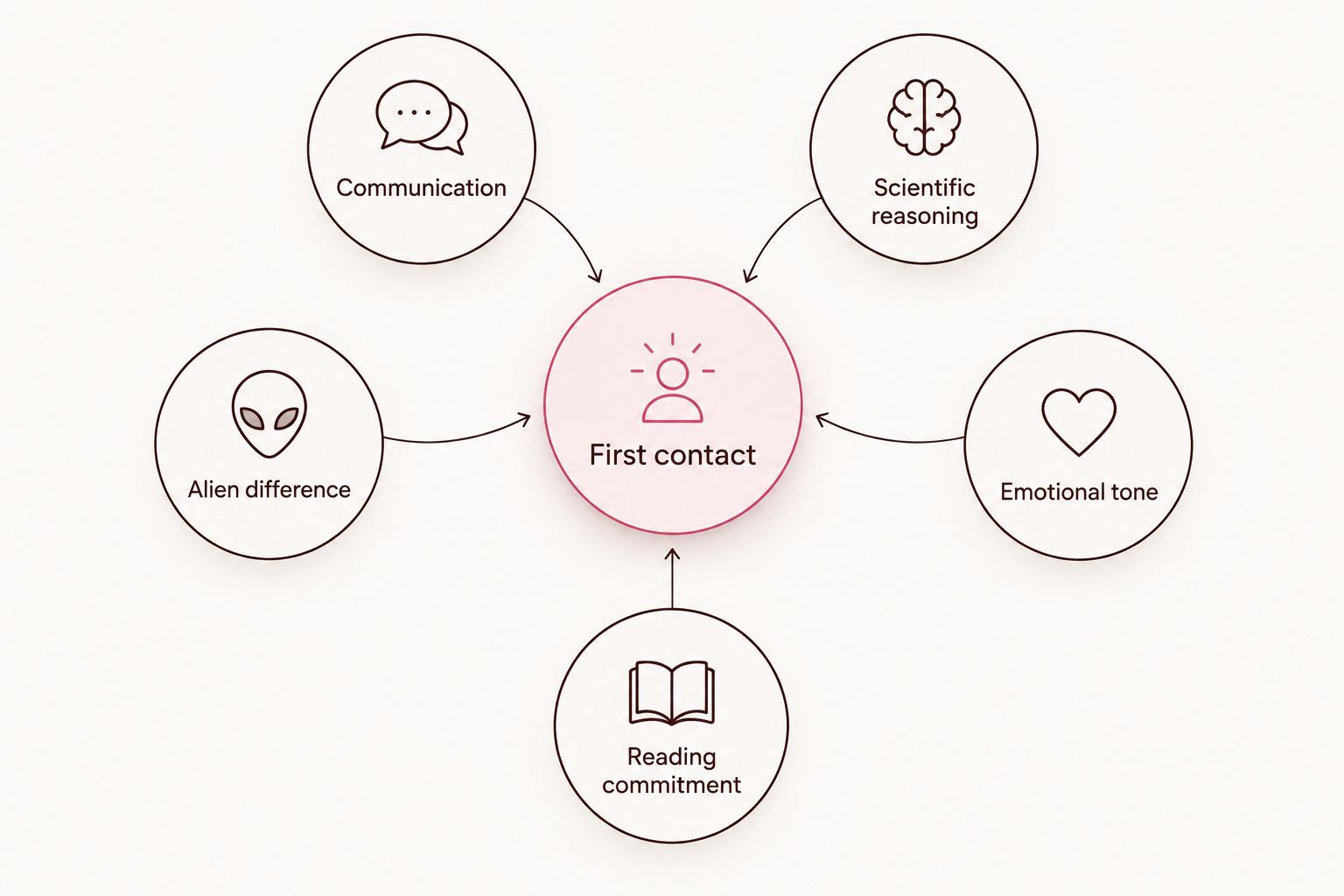
For this 2026 reading list, the match depends on what the encounter asks the characters—and you—to understand.
- Communication: Making sense of another intelligence drives the story rather than serving as background.
- Scientific reasoning: Observation, interpretation, or experimentation changes what happens next.
- Alien difference: The visitors are not simply humans with unfamiliar appearances.
- Emotional tone: Curiosity, companionship, dread, and suspicion produce very different reading experiences.
- Reading commitment: A concentrated novella and a viewpoint-heavy novel ask for different kinds of attention.
First contact is the shared subject. These criteria separate a close match in method from a close match in feeling; both matter when choosing what to read after Project Hail Mary.
First-contact books at a glance
The order moves from the closest broad match toward more specialized alternatives. The last recommendation deliberately exchanges reassurance for unease.
| Book | Best for | Standout quality | Key limitation |
|---|---|---|---|
| Contact — Carl Sagan | Scientific communication | Decoding an extraterrestrial signal connects discovery with questions of evidence | Earthbound institutions take substantial space |
| Dragon’s Egg — Robert L. Forward | Physics-driven discovery | Alien life develops under neutron-star conditions | Less emphasis on intimate human-alien companionship |
| Story of Your Life — Ted Chiang | Language and interpretation | A linguist’s encounter makes communication the central intellectual problem | Reflective rather than survival-driven |
| The Mote in God’s Eye — Larry Niven and Jerry Pournelle | Diplomatic uncertainty | An expedition must interpret an unfamiliar civilization | Military and political viewpoints replace the intimate scale |
| Blindsight — Peter Watts | Alien cognition and dread | First contact challenges assumptions about consciousness | Bleak, dense, and far from comforting |
1. Contact: best for scientific communication
Carl Sagan’s Contact follows radio astronomer Ellie Arroway as an extraterrestrial signal becomes a scientific and public event. The match with Project Hail Mary lies in treating contact as something to investigate, not merely something spectacular to witness.
The pleasure comes from asking what a signal means, what counts as evidence, and how a discovery changes when institutions become involved. You get scientific curiosity operating under pressure. You do not get the same tightly contained survival partnership.
Contact pros:
- Communication is a central scientific problem.
- Ellie provides a sustained viewpoint grounded in research.
- The story connects cosmic questions with recognizable human disagreements.
Contact cons:
- Politics, religion, and public debate interrupt the discovery thread.
- It lacks Project Hail Mary’s sustained buddy-story rhythm.
Best for: Readers who wanted more of the attempt to establish shared meaning with an extraterrestrial intelligence.
The meaningful difference is scale. Project Hail Mary makes a large problem personal through a small working relationship; Contact repeatedly asks what happens when a discovery belongs to the whole world. Choose it for the investigation, not as a promise of another Rocky.
Verdict: Read Contact first for the strongest broad match in scientific curiosity and communication.
2. Dragon’s Egg: best for physics-driven alien discovery
Robert L. Forward’s Dragon’s Egg imagines intelligent life on the surface of a neutron star. The environment is not decorative worldbuilding. Its physical conditions shape the aliens’ bodies, civilization, and relationship to human observers.
That makes Dragon’s Egg a strong next step if Project Hail Mary made you want fiction that reasons outward from an unfamiliar scientific premise. The book asks you to understand life on its own terms before expecting that life to resemble yours.
Dragon’s Egg pros:
- Physical conditions have direct consequences for alien life.
- Alien viewpoints make the civilization more than an object of human study.
- The contrast between human and alien timescales gives contact a distinctive shape.
Dragon’s Egg cons:
- Technical explanation takes priority over conversational warmth.
- Its broad civilizational scope reduces the focus on individual relationships.
Best for: Readers who enjoyed figuring out how an unfamiliar organism could function.
The difference matters: Dragon’s Egg is closer to an exercise in imagining a civilization than a survival story organized around a friendship. If your favorite passages in Project Hail Mary concerned biology and physical constraints, that trade is attractive. If your favorite passages were exchanges between companions, start elsewhere.
Verdict: Read Dragon’s Egg for alien life built from physical rules, not another buddy adventure.
3. Story of Your Life: best for language-centered first contact
Ted Chiang’s Story of Your Life follows linguist Louise Banks as she works to understand extraterrestrial language. It is a novella rather than a full-length novel, and its compact form suits a story built around interpretation.
The connection to Project Hail Mary is specific: understanding another species requires more than assigning familiar words to unfamiliar sounds. Communication changes the questions the human characters can ask. Chiang connects that intellectual problem with an intimate emotional story without relying on a sequence of survival repairs.
Story of Your Life pros:
- Linguistic work is central rather than incidental.
- The short form keeps the encounter concentrated.
- Personal experience and scientific inquiry belong to the same narrative.
Story of Your Life cons:
- It offers little of Project Hail Mary’s engineering momentum.
- Its reflective structure asks for attention rather than delivering constant action.
Best for: Readers who found the effort to understand another mind more compelling than the machinery of the mission.
Story of Your Life is the basis for the film Arrival. Familiarity with the film does not make the prose redundant, but avoid detailed explanations of the story’s structure before reading. Its method is part of the experience.
Verdict: Read Story of Your Life when you want a shorter, more reflective encounter centered on language.
4. The Mote in God’s Eye: best for diplomatic uncertainty
Larry Niven and Jerry Pournelle’s The Mote in God’s Eye places a human expedition in contact with an unfamiliar alien civilization. Understanding what the visitors see—and what their hosts mean—becomes a problem of diplomacy as much as science.
The Project Hail Mary connection is the need to reason carefully about another species. The difference is trust. Instead of centering a small cooperative relationship, the novel spreads uncertainty across an expedition, institutions, and competing interpretations.
The Mote in God’s Eye pros:
- Alien biology and social organization matter to the encounter.
- Diplomatic choices give interpretation immediate consequences.
- The wider cast supports disagreements about what contact means.
The Mote in God’s Eye cons:
- Military hierarchy and political discussion occupy substantial space.
- The broader viewpoint is less intimate than Project Hail Mary.
Best for: Readers who want to examine what a human delegation might misunderstand about an alien society.
Choose The Mote in God’s Eye if cooperation interested you because it required judgment, not just goodwill. It moves away from the warmth of a working partnership and toward the difficulty of making decisions with incomplete knowledge. That is a meaningful change of mood, not simply a larger cast.
Verdict: Read The Mote in God’s Eye for first contact shaped by diplomacy and uncertain motives.
5. Blindsight: best for unsettling alien cognition
Peter Watts’s Blindsight sends a specialized crew to investigate an extraterrestrial presence. It uses that encounter to question whether intelligence, consciousness, and recognizable personhood necessarily belong together.
This is the furthest recommendation from Project Hail Mary’s emotional tone. The connection is intellectual: both books insist that encountering alien life requires revising assumptions. Blindsight makes that revision disturbing rather than reassuring.
Blindsight pros:
- Alien cognition is a central problem, not a decorative mystery.
- The encounter challenges familiar definitions of intelligence.
- Scientific and philosophical questions remain closely connected.
Blindsight cons:
- Dense ideas and terminology make it a demanding read.
- Its bleak atmosphere offers little of Project Hail Mary’s warmth or humor.
Best for: Readers who want first contact to make human assumptions feel unsafe.
Brief content note: Blindsight includes violence, body horror, and disturbing medical material. Do not choose it merely because you liked a clever scientist solving problems. Choose it because you want the idea of understanding another intelligence placed under much harsher pressure.
Verdict: Read Blindsight for the interesting risk; skip it when you want comforting companionship.
How this 2026 list is ranked
The ranking prioritizes communication and scientific reasoning, then separates the books by emotional tone and reading commitment. It is a fit ranking, not a claim that the first book is objectively better than the last.
Contact comes first because it offers the broadest bridge from curiosity to extraterrestrial communication. Dragon’s Egg narrows toward physical speculation. Story of Your Life emphasizes language, The Mote in God’s Eye emphasizes diplomacy, and Blindsight changes the emotional contract altogether.
None is presented as a replacement for every part of Project Hail Mary. The honest recommendation names what carries over and what you leave behind.
Which first-contact book should you choose?
For your 2026 reading list, start with Contact unless a specific preference points elsewhere. It keeps the search for understanding at the center without requiring you to choose the bleakest or most technically specialized option.
Choose Dragon’s Egg for physical speculation, Story of Your Life for language, The Mote in God’s Eye for diplomacy, or Blindsight for unease. If none answers your particular reason for loving Project Hail Mary, request GetSimilarBooks’ free personalized list rather than settling for a shared genre label.
GetSimilarBooks is best for fiction readers who want hand-curated book recommendations based on a title they enjoyed. Five suggestions are the preview; the email-gated personalized list contains 20–30 titles.
Find your next read
Enter a book you enjoyed for five hand-curated suggestions, then request a personalized list by email.
FAQ
What’s the best book like Project Hail Mary for first contact?
Contact by Carl Sagan is the best starting point on this list for scientific communication and discovery. It focuses more on Earthbound institutions and public debate than Project Hail Mary’s intimate survival partnership.
Which book should I read if Rocky was my favorite part?
Start with Contact if learning to communicate was your favorite part of Rocky’s role. None of these recommendations reproduces the same warm human-alien friendship, so choose by the quality you want rather than expecting a substitute character.
What’s a short first-contact book like Project Hail Mary?
Story of Your Life by Ted Chiang is the short-form choice on this list. The novella centers on a linguist interpreting extraterrestrial language rather than an engineer solving survival problems.
Is Dragon’s Egg similar to Project Hail Mary?
Dragon’s Egg is similar in its attention to scientific constraints and unfamiliar alien biology. It differs by following a civilization shaped by neutron-star conditions rather than centering a small survival partnership.
Is Blindsight a good choice after Project Hail Mary?
Blindsight is a good choice if you want a darker examination of alien intelligence. Skip it if you primarily want humor, reassurance, or a warm working friendship.
Which first-contact book should I start with in 2026?
Start with Contact in 2026 for the broadest match on this list. Choose Story of Your Life instead if you want a shorter work focused tightly on language and interpretation.
How does GetSimilarBooks recommend my next book?
GetSimilarBooks lets you enter a title you enjoyed and receive five hand-curated read-alike suggestions. You can also request a free personalized list of 20–30 titles by providing an email address.
One last thing
Before choosing, finish this sentence: “I want another book where understanding someone changes what survival means.” If that feels right, prioritize communication and relationships over spaceship settings.
If you replace “someone” with “something,” Dragon’s Egg becomes a stronger choice. That small distinction separates wanting another connection from wanting another scientific puzzle.
Related guides
These guides address different genres but separate reader needs in the same practical way:
- Books like Fourth Wing with found family
- Books like Fourth Wing with deeper worldbuilding
- Books like Verity with unreliable narrators
Books like Project Hail Mary: five picks, closest match first

Best overall: The Martian by Andy Weir. Best for an expansive, funny space adventure: We Are Legion (We Are Bob) by Dennis E. Taylor. These five books like Project Hail Mary are ordered from the closest match outward for your 2026 reading list, with a clear reason to choose each and a difference to weigh before you start.
- The Martian leads these books like Project Hail Mary for practical science, escalating problems, and a funny narrator.
- We Are Legion (We Are Bob) trades a single survival mission for an expanding space adventure.
- Contact emphasizes first-contact science; Children of Time asks you to understand a radically different intelligence.
- The Long Way to a Small, Angry Planet prioritizes interspecies friendship over technical problem-solving.
- GetSimilarBooks suits fiction readers who want hand-curated read-alikes rather than another broad science-fiction list.
Why this matters
Project Hail Mary combines several pleasures that do not always travel together: practical science, an accessible voice, isolation, and connection across a profound divide. Another novel about a spaceship can miss the part you actually loved.
The useful question is not simply whether you want more science fiction. It is whether you want another problem to solve, another funny companion, or another relationship that makes the unfamiliar feel understandable. GetSimilarBooks lets you enter a title you enjoyed and receive five hand-curated suggestions; the distinctions below help you decide which part of that title to follow.
What makes the best Project Hail Mary read-alike in 2026
These are the criteria behind the order. A shared setting counts for less than a shared reading experience.
- Practical science: Discoveries change what characters can do. Explanations contribute to the action rather than sitting beside it.
- Narrative voice: Humor, clarity, and curiosity make technical material inviting. A serious scientific premise does not require a solemn narrator.
- Human connection: Cooperation matters, especially when characters cannot take shared assumptions for granted.
- Forward pressure: Each answer creates another decision. The story gives you a reason to keep reading beyond its central idea.
- Meaningful differences: A recommendation should disclose what you lose, whether that is comedy, intimacy, or a tightly bounded mission.
Reading priorities
Start with the quality you would miss most. Practical science points toward The Martian; narrative voice points toward We Are Legion (We Are Bob); human connection points toward The Long Way to a Small, Angry Planet. Those are different routes, not interchangeable promises.
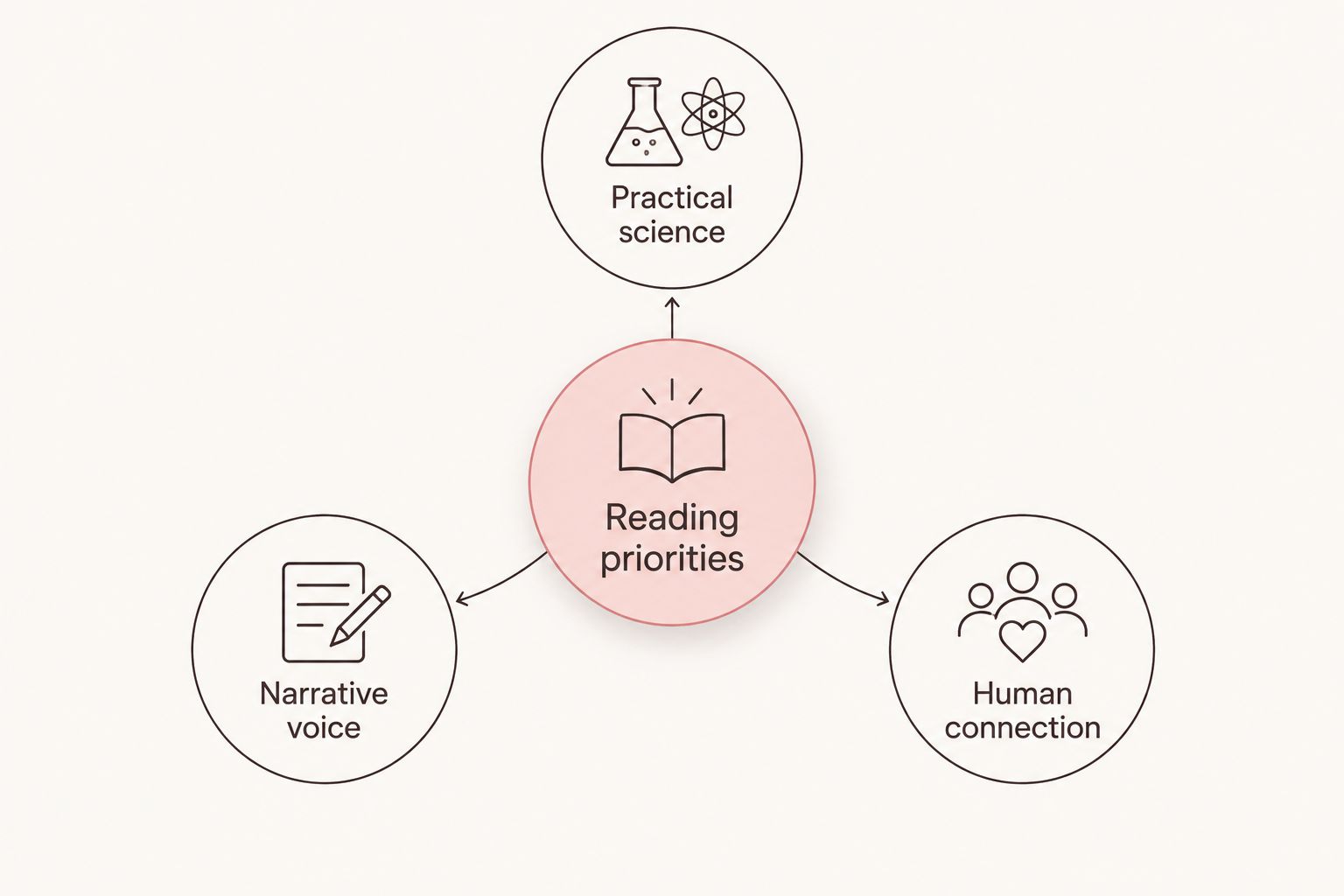
The five picks at a glance for 2026
The order follows overall similarity, not literary importance. The lower picks move further from Andy Weir's problem-solving structure while retaining a specific reason to read them next.
| Book and author | Best for | Strongest matching quality | Key limitation |
|---|---|---|---|
| The Martian — Andy Weir | Practical survival science | A resourceful narrator works through physical problems | No equivalent to the central cross-species relationship |
| We Are Legion (We Are Bob) — Dennis E. Taylor | Funny, expanding space adventure | Technical ingenuity and a conversational voice | Branching stories replace a concentrated mission |
| Contact — Carl Sagan | First-contact investigation | Scientific inquiry into an apparent extraterrestrial signal | More institutional debate and less comic momentum |
| Children of Time — Adrian Tchaikovsky | Understanding alien intelligence | Biology and perspective challenge human assumptions | A broader, more detached narrative |
| The Long Way to a Small, Angry Planet — Becky Chambers | Interspecies friendship | Everyday cooperation across differences | Less emphasis on scientific puzzles and urgent survival |
1. The Martian: best for practical survival science
Best for: Readers who want another resourceful scientist solving immediate physical problems.
Andy Weir's The Martian follows astronaut Mark Watney after he is stranded on Mars. Survival depends on making equipment, supplies, and scientific knowledge work together under conditions that leave little room for error.
The closest match is the rhythm. A problem becomes understandable, a solution takes shape, and the consequences force another adjustment. Watney's humor keeps that process conversational rather than instructional.
The meaningful difference is emotional. The Martian includes a wider human response to Watney's situation, but it does not offer an equivalent to Project Hail Mary's central cross-species relationship. Choose it for the engineering and voice, not as a substitute for that bond.
The Martian pros:
- Practical explanations directly affect survival decisions.
- A funny, accessible narrator carries technical passages.
- Concrete constraints give the story clear forward movement.
The Martian cons:
- The shared author makes the voice familiar rather than surprising.
- The relational appeal differs sharply from Project Hail Mary.
Verdict: Buy if solving the next physical problem was your favorite part. If you have already read it, move to the next pick rather than looking for a closer copy.
2. We Are Legion (We Are Bob): best for comic space exploration
Best for: Readers who want technical ingenuity and an informal voice on a larger canvas.
Dennis E. Taylor's We Are Legion (We Are Bob) follows a human mind that becomes the intelligence operating a space probe. Exploration brings engineering decisions, unfamiliar situations, and an expanding set of responsibilities.
The match is not simply that the narrator likes science. Bob approaches strange circumstances with practical curiosity and a conversational, frequently comic perspective. That combination suits readers who enjoyed being inside a capable person's running commentary.
The difference is structure. This opens the Bobiverse series, and its narrative branches rather than staying with a single tightly contained predicament. You exchange some of Weir's concentration for a larger ongoing adventure.
We Are Legion (We Are Bob) pros:
- An approachable voice accompanies technical problem-solving.
- Exploration repeatedly turns ideas into practical decisions.
- The series format offers somewhere to continue afterward.
We Are Legion (We Are Bob) cons:
- Branching viewpoints reduce the intimacy of a single mission.
- Pop-culture references are part of the humor, not incidental decoration.
Verdict: Buy if you want more comic scientific ingenuity and welcome a series. Skip this route if your priority is another self-contained emotional arc.
3. Contact: best for science-led first contact
Best for: Readers who want scientific discovery to raise questions about communication and evidence.
Carl Sagan's Contact centers on radio astronomer Ellie Arroway and the investigation of a signal apparently originating beyond Earth. The scientific discovery becomes inseparable from arguments about what it means and how humanity should respond.
The strongest match is curiosity under uncertainty. Understanding the unfamiliar requires evidence, interpretation, and cooperation rather than an assumption that human expectations are universal. The intellectual pleasure comes from taking the question seriously.
The difference is where the pressure sits. Contact spends more time with institutions, belief, and public consequences than with improvised repairs. Its tone is more reflective, and its momentum is less dependent on comic setbacks.
Contact pros:
- Scientific inquiry drives the premise and its central questions.
- Communication matters as much as the existence of another intelligence.
- The human response gives the discovery a wider social context.
Contact cons:
- Institutional and philosophical passages slow the immediate action.
- It does not reproduce Weir's sustained comic narration.
Verdict: Buy if first contact interested you more than survival engineering. Choose The Martian instead if you chiefly want another chain of tangible problems with tangible fixes.
4. Children of Time: best for radically different intelligence
Best for: Readers who want a larger challenge to human-centered thinking.
Adrian Tchaikovsky's Children of Time follows the development of an uplifted spider civilization alongside humans searching for a future beyond Earth. Its central interests include evolution, inheritance, and the difficulty of recognizing intelligence that does not resemble your own.
The connection to Project Hail Mary is the work of understanding. Different bodies and histories produce different assumptions. The novel asks you to pay attention to those differences rather than treating them as scenery.
The major departure is scale. Children of Time follows civilizations and generations, not a small cast working through a bounded mission. Its emotional effects accumulate across that larger structure rather than relying on a consistently chatty narrator.
Children of Time pros:
- Nonhuman perspectives affect the story's logic and form.
- Biology supplies both constraints and possibilities.
- The human and nonhuman strands give comparison real substance.
Children of Time cons:
- Broad scope creates more distance from individual characters.
- Spiders are central throughout; avoid it if that is a reading barrier.
Verdict: Buy if understanding another intelligence was the lasting pleasure. Hold if you need humor and close companionship to remain the main attraction.
5. The Long Way to a Small, Angry Planet: best for interspecies friendship
Best for: Readers who miss the companionship more than the scientific puzzles.
Becky Chambers's The Long Way to a Small, Angry Planet follows Rosemary Harper as she joins the mixed-species crew of a tunneling ship. Work, personal histories, and everyday differences shape the relationships aboard it.
The match is cooperation across unfamiliar customs and needs. Characters must learn how to live and work together without assuming that their own habits are the default. That gives the novel a clear connection to Project Hail Mary's relational appeal.
The difference is the engine of the story. Relationships and episodic encounters take precedence over an escalating sequence of technical emergencies. This is the furthest recommendation from Weir's structure, but the most direct choice here for readers seeking found family.
The Long Way to a Small, Angry Planet pros:
- Interspecies relationships receive sustained attention.
- Daily work makes differences concrete rather than abstract.
- The ensemble offers several kinds of connection.
The Long Way to a Small, Angry Planet cons:
- Scientific problem-solving is not the central attraction.
- Episodic pacing provides less continuous urgency.
Verdict: Buy for the crew and their relationships. Skip if your next book needs to keep a survival clock running.
How this 2026 reading order works
The Martian leads because practical problem-solving and voice overlap most directly with Project Hail Mary. We Are Legion (We Are Bob) keeps that combination while changing the structure. Contact, Children of Time, and The Long Way to a Small, Angry Planet then separate first contact, nonhuman perspective, and companionship into distinct choices.
This is a reading-fit order, not a claim of firsthand testing or a universal quality ranking. The reasons and differences are the useful part: you can reject the highest-ranked book and still make the right choice for your reading mood.
Which book should you choose next in 2026?
Choose The Martian unless you have already read it or care more about the central relationship than the engineering. It is the clearest default, not because every element matches, but because its narrative voice and problem-solving method require the smallest adjustment.
If you have read The Martian, ask yourself two questions:
- Do you want more technical ingenuity and jokes? Choose We Are Legion (We Are Bob).
- Do you want to understand someone fundamentally unlike yourself? Choose Contact for investigation, Children of Time for perspective, or The Long Way to a Small, Angry Planet for companionship.
For a narrower match, request GetSimilarBooks' free personalized list. Enter the title you enjoyed for five hand-curated suggestions; the email-gated personalized list contains 20–30 titles. GetSimilarBooks' book recommendations suit fiction readers who want specific read-alikes rather than another broad genre list.
Find your next read-alike
Start with five hand-curated suggestions, then request a personalized list of 20–30 titles with your email.
FAQ
What’s the closest book to Project Hail Mary?
The Martian by Andy Weir is the closest match here for practical science, resourceful problem-solving, and a funny narrator. It differs most in its relationships: it has no equivalent to Project Hail Mary’s central cross-species bond.
What should I read after Project Hail Mary if I’ve read The Martian?
Read We Are Legion (We Are Bob) by Dennis E. Taylor for another conversational narrator working through technical challenges in space. Expect a branching series rather than a tightly concentrated standalone mission.
Which book is best if I loved the friendship in Project Hail Mary?
The Long Way to a Small, Angry Planet by Becky Chambers is the strongest choice here for interspecies companionship. Its crew relationships take priority over scientific puzzles, so choose it for connection rather than urgency.
Is Children of Time similar to Project Hail Mary?
Children of Time is similar in its interest in understanding nonhuman intelligence. Adrian Tchaikovsky uses a broader evolutionary and civilizational scale, with less of Andy Weir’s conversational humor.
Is Contact a good read after Project Hail Mary?
Contact is a good choice if scientific discovery and communication interested you most. Carl Sagan gives more space to institutions, evidence, and belief than to improvised survival engineering.
Which of these books starts a series?
We Are Legion (We Are Bob), Children of Time, and The Long Way to a Small, Angry Planet begin series. The Martian and Contact work as standalone choices if you want a self-contained next read.
How do I get a personalized list of books like Project Hail Mary?
GetSimilarBooks provides five hand-curated read-alike suggestions when you enter a title you enjoyed. You can also request an email-gated personalized list of 20–30 titles.
One last thing
A spaceship is a setting, not a matching reason. Before choosing, finish this sentence: “I want another book where understanding the problem changes what the characters can do.” If that sounds right, start with The Martian. If you would replace “the problem” with “each other,” start with the relationship-led picks instead.
Related guides
- Books like Fourth Wing with found family
- Books like Harry Potter for adult readers
- Books like Verity without a romance plot
Books like ACOTAR with a morally gray hero

Best overall: A Court of Blood and Bindings. Best for court intrigue: A Kiss of Iron. Best for deadly trials: The Serpent and the Wings of Night. These five books like ACOTAR put a morally gray hero near the center, ordered from the closest match outward for your 2026 reading list.
- For books like ACOTAR, morally gray hero fans should start with A Court of Blood and Bindings.
- A Kiss of Iron pairs a dangerous fae love interest with an adult court-intrigue plot.
- The Serpent and the Wings of Night trades fae courts for vampires and a lethal competition.
- The Cruel Prince offers genuine cruelty, but romance occupies less of the story.
- GetSimilarBooks suits fiction readers who want title-based recommendations rather than another broad fantasy list.
Why this matters
A dangerous reputation does not make a character morally gray. The useful question is what the love interest actually does when affection conflicts with ambition, duty, or survival. A frightening man who always makes the kindest choice delivers a different romance from someone whose decisions remain difficult to defend.
ACOTAR also means different things to different readers. You might want fae politics, a threatening love interest, explicit romance, or the gradual discovery that someone's public role conceals a more complicated person. These recommendations separate those needs rather than treating a shared genre label as enough.
For the broader match, use the books like ACOTAR, closest match first guide. This list narrows the choice to dangerous love interests and the particular kinds of uncertainty they bring.
What makes the best ACOTAR read-alike?
- Consequential choices: The love interest's actions should create a real obstacle, not just establish a brooding appearance.
- Earned trust: Attraction should not erase reasons for suspicion. The relationship needs something difficult to negotiate.
- Romantic importance: Some books make the relationship the engine; others give political ambition more space. That difference matters.
- A specific fantasy connection: Fae courts, hostile alliances, magical danger, and divided loyalties offer different routes back to the ACOTAR reading experience.
- An honest tonal warning: Cruel banter, explicit sex, coercion, and violence are not interchangeable. Choose the kind of darkness you actually want.
The order below prioritizes the combination of fae danger and central romance first. The later picks move toward different settings or a less romance-led structure. Last does not mean worst; it means a larger departure.
The 2026 picks at a glance
| Book and author | Best for | Standout connection | Key limitation |
|---|---|---|---|
| A Court of Blood and Bindings — Lisette Marshall | Fae danger | A feared fae assassin whose relationship with the heroine complicates his reputation | Captivity creates a difficult power imbalance |
| A Kiss of Iron — Clare Sager | Court intrigue | An adult heroine drawn into espionage around a dangerous fae lord | Court maneuvering takes space from immediate romantic payoff |
| The Serpent and the Wings of Night — Carissa Broadbent | Deadly trials | Attraction and suspicion inside a competition where trust is dangerous | Vampires and survival replace fae-court atmosphere |
| The Bridge Kingdom — Danielle L. Jensen | Divided loyalties | A marriage alliance shaped by espionage and conflicting national interests | The hero is less villainous than the premise initially suggests |
| The Cruel Prince — Holly Black | Cruel antagonism | A fae prince whose cruelty is part of the actual relationship problem | Young adult political fantasy, not adult romance-first fantasy |
1. A Court of Blood and Bindings: best for fae danger
Lisette Marshall's A Court of Blood and Bindings is the closest starting point if you want a feared fae man, a human heroine, and an intimate relationship shaped by distrust. Emelin becomes entangled with Creon, a fae assassin known as the Silent Death. His inability to speak makes communication part of their developing connection rather than background decoration.
The ACOTAR connection is specific: the heroine must reconsider a dangerous figure while learning about the magical world around her. Creon's reputation gives her good reason to fear him. The relationship has to work through that fear rather than relying on attraction alone.
The meaningful difference is the initial captivity dynamic. This is not simply a courtship between people who dislike each other. If an imbalance of freedom makes a romance difficult for you to enjoy, that distinction outweighs the fae setting.
A Court of Blood and Bindings pros:
- Keeps the romantic relationship central to the fantasy story.
- Makes communication an active part of building trust.
- Connects the hero's dangerous role to the larger political conflict.
A Court of Blood and Bindings cons:
- Captivity complicates consent and the balance of power.
- Readers seeking a self-contained romantic story need a series rather than a standalone.
Best for: Readers who want the closest combination of adult fae romance, danger, and a feared love interest. Content includes explicit sex and violence.
Verdict: Buy for the closest fae-romance match; skip if captivity is a firm boundary.
2. A Kiss of Iron: best for court intrigue
Clare Sager's A Kiss of Iron suits readers who want a dangerous fae love interest inside a story about spying, status, and survival. Kat enters court espionage while facing trouble in her own circumstances. Bastian is a powerful fae lord, and getting close to him is neither a simple assignment nor a safe emotional choice.
The ACOTAR overlap lies in attraction to someone whose influence and intentions require scrutiny. The court is not just scenery. Kat must consider what people want from her and what apparent attention actually means.
The main difference is the heroine's starting point. Kat is an adult woman with an existing marriage and its consequences, not a heroine encountering adult responsibilities for the first time. That changes the emotional texture of the romance: desire sits beside damaged confidence and the need to regain agency.
A Kiss of Iron pros:
- Gives an adult heroine's history real weight in the romance.
- Makes political motives part of the attraction and uncertainty.
- Offers a strong match for readers who want fae power without another deadly tournament.
A Kiss of Iron cons:
- Espionage and court maneuvering require attention between romantic developments.
- An abusive marriage is part of Kat's situation, making this more than escapist flirtation.
Best for: Readers who want a politically dangerous fae man and a heroine rebuilding her sense of choice. Content includes explicit sex, violence, and domestic abuse.
Verdict: Buy for adult court intrigue with romantic stakes; skip if you want danger without domestic-abuse themes.
3. The Serpent and the Wings of Night: best for deadly trials
Carissa Broadbent's The Serpent and the Wings of Night is the strongest choice here for readers who want attraction to develop under immediate survival pressure. Oraya is a human raised by a vampire king. She enters a deadly competition and forms an alliance with Raihn, a vampire competitor she has reasons not to trust.
The ACOTAR connection is the combination of unequal power, attraction, and uncertainty about allegiance. Raihn is not merely intimidating in conversation. The competition gives every alliance a practical cost, so liking him does not settle whether trusting him is sensible.
The difference is the story's structure. Survival and the contest supply the immediate momentum; fae courts and their social atmosphere do not. If you also liked Fourth Wing's trials and dangerous alliances, this is a more direct bridge between those tastes.
The Serpent and the Wings of Night pros:
- Gives distrust an immediate purpose within the plot.
- Keeps the heroine's physical vulnerability relevant in a supernatural setting.
- Joins romantic tension to decisions about cooperation and survival.
The Serpent and the Wings of Night cons:
- Repeated danger makes this a poor choice for a gentler romantic escape.
- The vampire setting offers a different atmosphere from ACOTAR's fae world.
Best for: Readers who want a dangerous alliance, a central romance, and a competition that keeps forcing decisions. Content includes graphic violence and explicit sex.
Verdict: Buy for romance under survival pressure; skip if deadly trials already feel repetitive.
4. The Bridge Kingdom: best for divided loyalties
Danielle L. Jensen's The Bridge Kingdom works best when your real interest is the conflict between love and political duty. Lara is trained as a spy and sent into a marriage with Aren, the king of a rival nation. Her understanding of his kingdom and her obligations to her own people shape the relationship.
This is a more qualified morally gray recommendation than the books above. Aren's position makes him an enemy from Lara's perspective, but he is not the right pick if you specifically want a cruel or villainous romantic lead. The moral uncertainty belongs to the marriage, espionage, and competing loyalties as much as to him.
The ACOTAR connection is the need to reassess an apparently clear enemy. The important difference is that this fantasy romance does not depend on fae magic or supernatural attraction. Political geography and control of trade help explain why the relationship matters beyond the couple.
The Bridge Kingdom pros:
- Gives the central couple concrete reasons to distrust each other.
- Makes the heroine an active participant in the moral conflict.
- Connects intimate choices to consequences for other people.
The Bridge Kingdom cons:
- Aren is a weaker fit for readers demanding a genuinely villainous hero.
- Readers seeking magical courts lose that part of the ACOTAR experience.
Best for: Readers who want enemies-to-lovers tension built on espionage rather than a frightening reputation alone. Content includes violence and explicit sex.
Verdict: Buy for divided loyalties; skip if the hero himself must be the darkest person in the relationship.
5. The Cruel Prince: best for cruel antagonism
Holly Black's The Cruel Prince is the pick for readers who want the love interest's cruelty to be a genuine obstacle, not an attractive rumor. Jude is a mortal living among faeries. Cardan is a fae prince whose treatment of her gives the title substance.
The ACOTAR connection is a human heroine confronting a dangerous fae hierarchy. But Jude's pursuit of power matters more than delivering a reassuring romance. Attraction exists inside a struggle over belonging, humiliation, ambition, and control.
The difference is substantial. This is young adult political fantasy, and the first book is not structured to provide the same romantic emphasis or explicit content as adult romantasy. Choose it because you want sharper antagonism and an ambitious heroine, not because you expect an adult romance with fewer sex scenes.
The Cruel Prince pros:
- Makes fae hostility consequential rather than decorative.
- Gives Jude ambitions that exist independently of the romance.
- Offers a love interest whose cruelty needs more than a flattering explanation.
The Cruel Prince cons:
- Bullying and humiliation are central to the early relationship.
- Romance occupies less space than political conflict, especially at the beginning.
Best for: Readers who prioritize dangerous faeries, ambition, and antagonism over explicit romantic payoff. Content includes bullying, abuse, and violence.
Verdict: Buy for the sharpest antagonism; skip if you need an adult romance-first story.
How these recommendations are ranked
This 2026 ranking orders books by closeness to the requested reading experience, not popularity. Fae danger plus central adult romance comes first. A different supernatural setting comes next, followed by political romance and then a young adult story with less romantic emphasis.
The distinction matters because “morally gray” describes different things across these books. Creon's feared role, Bastian's political danger, Raihn's uncertain alliance, Aren's national obligations, and Cardan's cruelty are not interchangeable. Choose the conflict you want to read through, not just the label.
Which book should you choose?
Start with A Court of Blood and Bindings if you are choosing one ACOTAR read-alike in 2026. It preserves the most relevant combination here: a human heroine, a feared fae love interest, and a central romance complicated by power.
Choose A Kiss of Iron instead if an adult heroine and court espionage matter more. Choose The Serpent and the Wings of Night if you want the relationship tested by immediate danger. Save The Cruel Prince for when you actively want romance to share space with a struggle for power.
For a narrower match, GetSimilarBooks lets you enter a title you enjoyed and receive five hand-curated suggestions. GetSimilarBooks is a book recommendation tool for fiction readers who want a title-based starting point; its email-gated personalized list expands that to 20–30 titles.
FAQ
What’s the closest book to ACOTAR with a morally gray hero?
A Court of Blood and Bindings by Lisette Marshall is the closest match on this list. It combines a human heroine, a feared fae assassin, and a central adult romance, though its captivity dynamic is a meaningful difference.
Which book should I read after ACOTAR in 2026 if I want court politics?
Choose A Kiss of Iron by Clare Sager for court politics and an adult fae romance. Its espionage plot makes motives, status, and trust part of the relationship rather than background scenery.
Is The Serpent and the Wings of Night like ACOTAR?
The Serpent and the Wings of Night shares ACOTAR’s attraction across unequal power and uncertainty about allegiance. Its vampire competition puts more immediate emphasis on survival than on fae-court atmosphere.
Is Cardan a good choice if I want a morally gray love interest?
Cardan is a strong choice if you want cruelty and antagonism to create a genuine relationship problem. The Cruel Prince is young adult political fantasy, however, and romance takes less space than in adult romantasy.
Is The Bridge Kingdom’s hero actually villainous?
Aren is not the strongest choice for a genuinely villainous romantic lead. The Bridge Kingdom gets much of its moral conflict from espionage, political obligations, and the couple’s opposing loyalties.
Which of these books has less explicit sexual content?
The Cruel Prince is the clearest choice here for less explicit sexual content. It still includes bullying, abuse, and violence, so less explicit romance does not mean a gentle story.
Can I get recommendations based on another book I loved?
GetSimilarBooks lets you enter a title you enjoyed and receive five hand-curated read-alike suggestions. Readers can also request an email-gated personalized list of 20–30 titles.
One last thing
Before choosing, ask two questions: Do you want a man who seems dangerous, or a man whose choices remain difficult to excuse? Then ask whether you want that darkness directed at the heroine or at the world around her. Those distinctions narrow the field faster than another list of brooding fae princes.
Related guides
- Books like ACOTAR with slow-burn romance
- Books like ACOTAR without a love triangle
- Audiobooks like ACOTAR worth the listen
Books like Harry Potter set in boarding schools

Best overall: The Iron Trial. Best for gentle boarding-school mishaps: The Worst Witch. Best for a darker adult take: A Deadly Education. These six books like Harry Potter put school life at the center, with the closest matches first and the more substantial departures last.
- For a books like Harry Potter boarding school search, start with The Iron Trial by Holly Black and Cassandra Clare.
- The Worst Witch suits readers who want magical lessons, friendship, and mishaps rather than an escalating war.
- Choose The Marvellers for an outsider entering a magical boarding school with a broader cultural perspective.
- Carry On foregrounds queer romance; A Deadly Education makes the boarding school itself a survival problem.
Why this matters
A magical school is not automatically a Hogwarts read-alike. You might miss the friendships, the lessons, the hidden passages, or the feeling that an unfamiliar place is becoming home. Those are different reading needs.
This 2026 guide separates them. GetSimilarBooks offers five hand-curated read-alike suggestions from a title you enjoyed, plus a free personalized list of 20–30 titles when you provide your email. Here, the narrower question is which boarding-school book belongs next on your reading list.
Start with The Iron Trial if you want magical education, a central friendship group, and a mystery about the protagonist’s place in that world. Choose another entry when a particular part of school life matters more than overall resemblance.
What makes the best Harry Potter boarding-school read-alike?
The ranking uses these criteria for your 2026 reading list:
- School life: Lessons, accommodation, rules, and classmates shape the story rather than decorate it.
- Friendship: Relationships develop through shared school experiences, not just a common enemy.
- Hidden danger: Something beneath the institution’s ordinary routines gives you a reason to keep reading.
- Sense of belonging: The protagonist must work out whether this unfamiliar community has a place for them.
- Meaningful difference: Each recommendation offers something beyond familiar magical-school furniture.
The first four qualities explain the appeal. The last prevents the list from becoming a collection of castles and uniforms. A book can echo Hogwarts strongly while taking a very different position on whether its school deserves your trust.
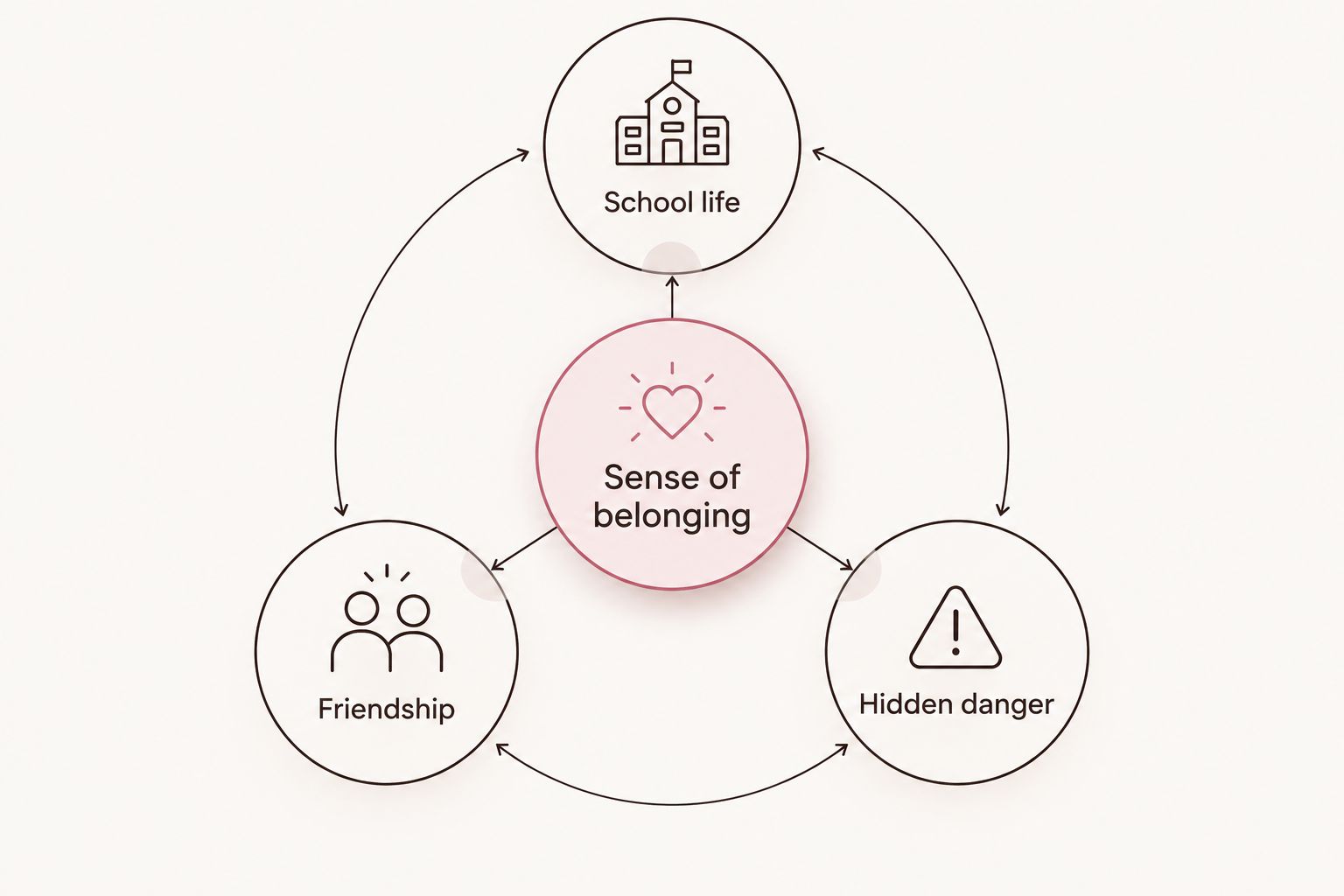
Boarding-school books at a glance
| Book | Best for | Standout matching quality | Key limitation |
|---|---|---|---|
| The Iron Trial | The closest overall match | An outsider, magical training, and a central friendship trio | Its school is underground, not a castle |
| The Worst Witch | Gentle school-day comfort | Boarding routines, spell lessons, and student mishaps | The tone is younger and the stories are shorter |
| The Marvellers | Belonging across magical cultures | An outsider entering an established magical institution | Its magic is not a familiar wand-and-spell system |
| The School for Good and Evil | Fairy-tale roles and school rivalries | Boarding-school divisions tied to identity | The fairy-tale framework dominates the curriculum |
| Carry On | Queer romance in a familiar school setting | A magical boarding school and a contentious roommate relationship | It begins late in the characters’ schooling |
| A Deadly Education | Adult survival-school fantasy | Lessons, alliances, and danger within a residential school | The school offers little Hogwarts-style comfort |
1. The Iron Trial: best for the closest overall match
The Iron Trial by Holly Black and Cassandra Clare follows Callum Hunt into the Magisterium, a school his father has taught him to fear. Magical training and his friendships with Aaron and Tamara give the story its strongest Harry Potter connection.
The match is structural, not just decorative. An uncertain newcomer enters a hidden magical institution, finds companions, and confronts questions that reach beyond the classroom. The underground setting gives the school a different physical character from Hogwarts.
The Iron Trial pros:
- Magical lessons are central to the plot.
- The friendship trio gives you a familiar emotional entry point.
- Callum’s distrust complicates the excitement of entering a magical world.
The Iron Trial cons:
- Readers avoiding chosen-one stories will find familiar territory here.
- The subterranean school does not supply castle-and-countryside atmosphere.
Best for: Readers who want the closest combination of school discovery, friendship, and larger mystery.
The book opens the 5-book Magisterium series. Treat it as the beginning of a continuing story, not a self-contained school adventure.
Verdict: Buy if you want the most direct next step after Harry Potter.
2. The Worst Witch: best for gentle boarding-school mishaps
The Worst Witch by Jill Murphy follows Mildred Hubble at Miss Cackle’s Academy for Witches. Classes, flying practice, friendships, and mistakes make school itself the attraction.
This is the right match when you miss ordinary magical routines more than an expanding conflict. Mildred’s difficulty getting things right keeps the story close to the experience of being a pupil. It is also a younger, lighter read than the later Harry Potter books.
The Worst Witch pros:
- Boarding-school routines remain in the foreground.
- Mildred’s mistakes give the magic an approachable, comic quality.
- Friendship matters alongside classroom performance.
The Worst Witch cons:
- The shorter stories offer less room for elaborate mysteries.
- Readers wanting older protagonists or substantial romance should look elsewhere.
Best for: Readers who want magical school to feel comforting rather than threatening.
For a 2026 comfort-reading choice, this is the gentlest option on the list. Choose it for the pleasure of returning to lessons and dormitories, not for a replacement for Harry Potter’s later stakes.
Verdict: Buy for school-day warmth; skip if you want an older-reader tone.
3. The Marvellers: best for belonging across magical cultures
The Marvellers by Dhonielle Clayton follows Ella Durand to the Arcanum Training Institute, a magical school in the sky. Ella enters as the institution’s first Conjuror, making acceptance and prejudice central to her school experience.
The Harry Potter connection lies in discovering an unfamiliar institution while finding friends within it. The difference is equally important: Ella’s background is not simply something to leave behind. Her existing identity shapes how the school receives her.
The Marvellers pros:
- The school has its own magical practices and traditions.
- Friendship provides support against exclusion.
- Ella’s outsider position gives school rules a personal consequence.
The Marvellers cons:
- Readers must learn a new magical vocabulary and institutional structure.
- The treatment of prejudice makes this more than an uncomplicated school escape.
Best for: Readers who want magical discovery alongside questions about who gets welcomed into a school.
Choose this over The Iron Trial when belonging matters more to you than a familiar adventure structure. The strongest connection is emotional: entering an extraordinary place does not guarantee that its established community will accept you.
Verdict: Buy for magical-school wonder with a sharper focus on inclusion.
4. The School for Good and Evil: best for fairy-tale school rivalries
The School for Good and Evil by Soman Chainani sends friends Sophie and Agatha into an institution that trains fairy-tale heroes and villains. Its divided school turns questions of appearance, character, and belonging into everyday pressures.
The match is strongest if you enjoyed student rivalries and arguments about where someone belongs. The departure is the fairy-tale logic. Lessons concern the roles students are expected to occupy in stories, rather than a broad education in wizardry.
The School for Good and Evil pros:
- School divisions create immediate tension.
- An existing friendship is tested by institutional expectations.
- Fairy-tale conventions give the curriculum a distinct purpose.
The School for Good and Evil cons:
- Beauty and romantic expectations occupy significant space.
- The exaggerated fairy-tale tone differs from Hogwarts’ everyday school texture.
Best for: Readers who want rival groups and a friendship tested by competing identities.
Choose this when the sorting question interests you more than the spellwork. The institution’s labels are part of the conflict, not a reliable guide to understanding its pupils.
Verdict: Buy for fairy-tale school politics; skip for a conventional wizard-school curriculum.
5. Carry On: best for queer romance at a magical boarding school
Carry On by Rainbow Rowell follows Simon Snow at Watford, where magical-school danger intersects with his difficult relationship with his roommate, Baz. The resemblance to familiar chosen-one fiction is deliberate.
The important difference is where the story starts. Simon is already deep into his school experience, so you do not receive the same gradual introduction to lessons and traditions. Relationships and the strain of being assigned a heroic role take priority.
Carry On pros:
- The residential school matters to the central relationship.
- Queer romance is central rather than peripheral.
- The story questions the expectations placed on a chosen hero.
Carry On cons:
- It offers less first-year discovery than the earlier recommendations.
- Readers uninterested in romance will lose a major source of its appeal.
Best for: Readers who want a familiar magical-school outline with a different romantic center.
If you finished Fourth Wing wanting another relationship-driven fantasy, this is the bridge on this list. Expect a different tone and setting, not another military academy. Content includes violence and strong language.
Verdict: Buy when the roommate relationship interests you as much as the school.
6. A Deadly Education: best for an adult survival-school story
A Deadly Education by Naomi Novik follows El at the Scholomance, a school where magical education is inseparable from staying alive. Student alliances matter because danger is built into the residential experience.
This is the furthest recommendation from Hogwarts as a comforting destination. The school has no reassuring staff structure to make danger feel exceptional. El’s voice is abrasive, and the story pays close attention to unequal access to protection.
A Deadly Education pros:
- The school’s conditions shape nearly every decision.
- Alliances give friendship practical stakes.
- Magical privilege has consequences beyond classroom success.
A Deadly Education cons:
- The dense explanation of magic slows the opening.
- Persistent danger makes this a poor choice for cozy escapism.
Best for: Adult readers who want to reconsider the magical boarding school as a hostile institution.
Content includes frequent threats of death and monster violence. For a 2026 reading list built around darker academy fiction, choose it because the school is dangerous, not because it resembles a safe home.
Verdict: Buy for survival and institutional critique; skip for Hogwarts-style comfort.
How the books are ranked
The order moves from close structural matches toward books that reinterpret the setting. Magical lessons, friendship, and discovering school life carry the most weight at the top. Romance and institutional danger become stronger deciding factors farther down.
This is a fit ranking, not a claim that one novel is universally better. GetSimilarBooks recommendations are most useful when you name the quality you want repeated rather than only the book you finished.
Which boarding-school book should you choose?
Choose The Iron Trial if you are undecided. It supplies the clearest combination of magical training, a central friendship group, and an unfolding mystery.
Choose The Worst Witch for gentler school routines, Carry On for queer romance, or A Deadly Education for adult danger. GetSimilarBooks is best for readers who want book recommendations matched to a title they already enjoyed.
Find your next school story
Enter a title for five suggestions, then request a free personalized list of 20–30 books by email.
FAQ
What is the closest boarding-school book to Harry Potter?
The Iron Trial by Holly Black and Cassandra Clare is the closest overall match on this list. It combines magical schooling, a central friendship trio, and a mystery surrounding its protagonist.
Which book should I choose if I mainly miss Hogwarts lessons?
Choose The Worst Witch by Jill Murphy for magical classes, boarding routines, and pupil mishaps. Its younger tone makes it a better match for gentle school life than for the later Harry Potter books’ danger.
Are all these books actually set at boarding schools?
Yes, all six recommendations feature residential magical schools. Their institutions differ substantially, from Miss Cackle’s Academy to the survival-focused Scholomance.
Which recommendation has queer romance?
Carry On by Rainbow Rowell puts the relationship between Simon and Baz at the center. Choose it for romance within a magical boarding-school setting rather than a first-year introduction to magic.
Is A Deadly Education suitable for someone wanting cozy fantasy?
A Deadly Education is not a good match for cozy magical-school reading. Its students face persistent danger, and the institution provides little of Hogwarts’ reassuring atmosphere.
Which book focuses most directly on being an outsider at school?
The Marvellers by Dhonielle Clayton makes Ella Durand’s reception as the school’s first Conjuror central to her experience. Friendship and magical discovery sit alongside prejudice and exclusion.
Where should I start with magical boarding-school books in 2026?
Start with The Iron Trial for the closest overall Harry Potter match. If you already know you want comfort, romance, or adult danger instead, choose The Worst Witch, Carry On, or A Deadly Education respectively.
One last thing
Ask whether you want the school to become a home or remain a problem. That distinction separates these recommendations more clearly than castles, uniforms, or spells.
For your next 2026 read, choose the feeling first. GetSimilarBooks can help you build outward from the title that delivered it.
Related guides
- Books like Fourth Wing set in a military academy
- Books like Fourth Wing with found family
- Books like Fourth Wing for young adult readers
- Books like Fourth Wing with queer romance
Books like Harry Potter for adult readers

Best overall: A Deadly Education. Best for a darker university-age cast: The Magicians. Best standalone for magical discovery: Piranesi. These are the strongest starting points for books like Harry Potter for adults in 2026, but each preserves a different part of the experience.
- A Deadly Education leads these books like harry potter for adults for its dangerous school, alliances, and magical rules.
- The Magicians suits readers who want magical education complicated by adult dissatisfaction, sex, and difficult friendships.
- Ninth House replaces boarding-school adventure with occult societies, institutional power, and a murder investigation.
- Piranesi is the standalone choice for wonder and discovery, not school rivalries or spell lessons.
Why this matters
Wanting another Harry Potter does not necessarily mean wanting another chosen one. You might miss the lessons, the friendships, the secret world beside ordinary life, or the pleasure of discovering how everything connects.
Those needs lead to different books. An adult fantasy can reproduce the school setting while discarding the warmth. Another can preserve the wonder without including a school at all.
GetSimilarBooks is a free book recommendation tool for readers who want read-alikes tied to a book they already enjoyed. You can enter a favorite title at GetSimilarBooks for five hand-curated suggestions, then request a personalized list of 20–30 titles by email.
What makes the best books like Harry Potter for adults?
These recommendations prioritize specific reading experiences rather than the presence of wands or young protagonists. For your 2026 reading list, decide which of these qualities matters most:
- School life: Lessons, rivalries, teachers, and rules shape the story rather than decorate it.
- Hidden worlds: Magic exists beyond what ordinary people understand, and discovering it changes the protagonist's life.
- Earned friendships: Relationships develop through shared pressure, disagreement, and difficult choices.
- Magical discovery: Learning how the world works is part of the pleasure, not background information.
- Adult perspective: Power, responsibility, class, trauma, or disillusionment complicate the adventure.
Adult perspective does not require explicit sex or relentless violence. It can also mean greater moral ambiguity, slower storytelling, or a protagonist who questions whether belonging to a magical institution is desirable.
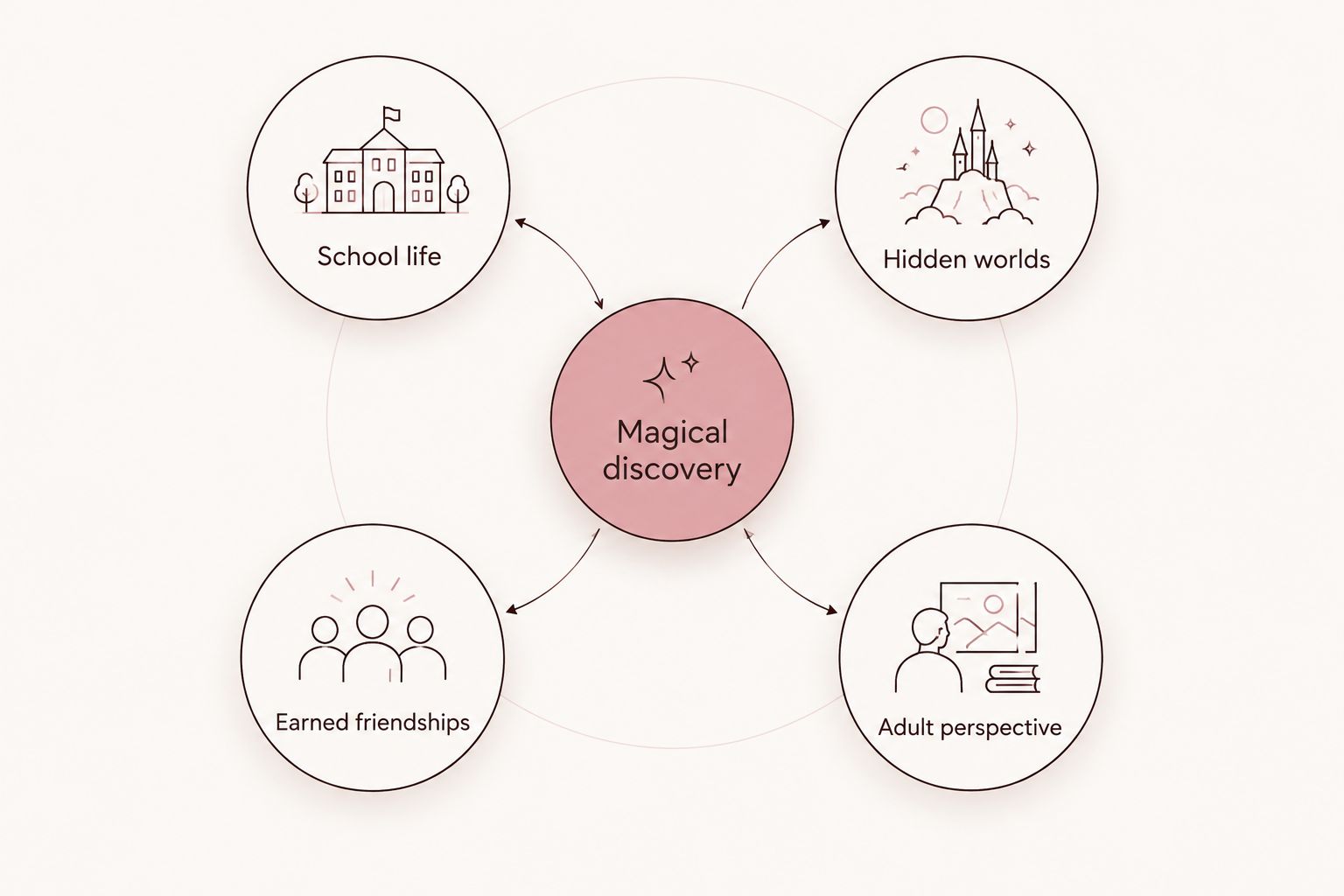
The recommendations at a glance
The order moves from recognizable magical education toward books that preserve discovery while changing the setting and structure. The limitation column matters as much as the match.
| Book and author | Best for | Specific match | Key limitation |
|---|---|---|---|
| A Deadly Education — Naomi Novik | Dangerous school life | Magical education, student alliances, survival | Much less comforting than Hogwarts |
| The Magicians — Lev Grossman | University-age disillusionment | Hidden magical college and demanding study | An unhappy, frequently abrasive central cast |
| Ninth House — Leigh Bardugo | Occult campus mystery | Secret societies and concealed magical power | Sexual violence and trauma are significant |
| The Name of the Wind — Patrick Rothfuss | Lessons and earned expertise | University study, rivalry, and magical systems | The central series remains unfinished |
| Jonathan Strange & Mr Norrell — Susanna Clarke | Adult magical society | Rival magicians and an expanding magical world | Historical pacing rather than school adventure |
| Piranesi — Susanna Clarke | Standalone wonder | An extraordinary setting revealed through discovery | No school, student ensemble, or spell curriculum |
1. A Deadly Education: best for dangerous magical school life
Naomi Novik's A Deadly Education is the closest starting point if Hogwarts itself was the attraction. El attends the Scholomance, a school where surviving the environment is inseparable from getting an education. Alliances matter because isolation carries real consequences.
The match is structural: students learn magic, assess one another, and prepare for dangers shaped by the institution. The difference is emotional. This school is not a reassuring refuge from the outside world, and El's prickly narration resists the welcoming tone you might expect.
A Deadly Education pros:
- Magical lessons and school rules directly affect survival.
- Student alliances give friendship practical and emotional weight.
- The completed trilogy spans 3 novels, providing a defined reading path.
A Deadly Education cons:
- Explanations of magic and school logistics interrupt the action.
- Constant danger leaves less room for cozy school routines.
Best for: Readers who want classrooms, rivalries, and a growing circle of allies, with harsher consequences.
Verdict: Buy if the school experience matters most and you accept losing much of Hogwarts's comfort. Start with A Deadly Education, not a later installment.
2. The Magicians: best for magical education without escapist comfort
Lev Grossman's The Magicians follows Quentin Coldwater into Brakebills, a hidden college for magic. It offers the discovery that a secret magical education exists, then questions whether getting that education resolves anything important in a person's life.
This is the clearest match for readers who want the students to be older and their problems less innocent. Magical ability coexists with dissatisfaction, sexual complications, and damaged relationships. The 3-novel trilogy offers a completed arc, but the opening book is deliberately uncomfortable company.
The Magicians pros:
- A concealed magical college provides an immediate point of connection.
- Difficult study makes magic feel like an acquired discipline.
- The story examines the gap between childhood fantasy and adult experience.
The Magicians cons:
- Quentin's unhappiness and self-absorption can be exhausting.
- Sexual violence and other mature material require content consideration.
Best for: Readers who want a university-age magical cast and a direct challenge to wish-fulfillment fantasy.
Verdict: Buy if you want the fantasy of magical admission questioned rather than protected. Skip this choice if warmth and dependable companionship are your main requirements.
3. Ninth House: best for an occult mystery on an adult campus
Leigh Bardugo's Ninth House follows Alex Stern into the concealed occult activities of Yale's secret societies. Her position gives her access to an institution whose magical practices are entangled with privilege, influence, and harm.
The Harry Potter connection is a hidden magical order operating inside a recognizable world. A dangerous mystery pulls the protagonist beyond official explanations. The important difference is that Yale is not presented as a conventional school for learning spells, and the investigation carries more weight than classroom progression.
Ninth House pros:
- Secret societies make institutional power part of the mystery.
- Alex's outsider position creates friction with the people around her.
- The campus setting supports an atmosphere of concealed danger.
Ninth House cons:
- Sexual violence, abuse, drug use, and trauma are substantial elements.
- Readers seeking magical lessons will find a different kind of campus story.
Best for: Readers who preferred hidden motives, forbidden knowledge, and investigations to sporting competitions or lessons.
Verdict: Buy if you want occult suspense with an adult protagonist. Skip it when your next read needs to feel safe or restorative.
4. The Name of the Wind: best for magical study and earned expertise
Patrick Rothfuss's The Name of the Wind follows Kvothe's account of his childhood, travels, and education at the University. Learning magic requires effort, and money, reputation, and rivalry affect his access to that education.
Choose this for the satisfaction of watching someone acquire knowledge inside an institution. Classes and teachers matter, but the University is only part of a larger life story. The narrative also spends substantial time on music, hardship, and the difference between a person's history and their legend.
The Name of the Wind pros:
- Magical instruction gives you processes to understand rather than unexplained power.
- Financial pressure makes educational access a recurring concern.
- Music and storytelling give the protagonist interests beyond magic.
The Name of the Wind cons:
- The central Kingkiller Chronicle sequence remains unfinished in 2026.
- The framed life story takes detours rather than maintaining a school-year structure.
Best for: Readers who loved lessons, academic competition, and watching skill develop through practice.
Verdict: Buy if the learning process matters more than having a completed central series. Wait if an unresolved larger story would spoil your enjoyment.
5. Jonathan Strange & Mr Norrell: best for a wider adult magical society
Susanna Clarke's Jonathan Strange & Mr Norrell imagines magic returning to an alternate England during the Napoleonic era. Two very different magicians become central to that return, with ambition, rivalry, and conflicting ideas about magic shaping their relationship.
The connection is the sense that magic has a history, institutions, and consequences beyond the protagonist's immediate needs. The difference is scale and tempo. This is historical fantasy concerned with society and power, not a school adventure driven by a close student group.
Jonathan Strange & Mr Norrell pros:
- Magical history makes the world feel larger than the main characters.
- The central rivalry gives competing approaches to magic real weight.
- Footnotes extend the folklore and historical texture.
Jonathan Strange & Mr Norrell cons:
- The deliberate pace asks for patience before major threads converge.
- Historical manners and digressions replace the immediacy of student adventures.
Best for: Readers who want the magical world to expand into politics, scholarship, and adult ambition.
Verdict: Buy if you want to inhabit a magical society rather than enroll in another school. Skip it when you need quick pacing and a compact cast.
6. Piranesi: best for standalone wonder and discovery
Susanna Clarke's Piranesi centers on a man documenting an immense House filled with statues, halls, and tides. His observations gradually change what the reader understands about his circumstances.
The match is not a magical education plot. It is the experience of entering an extraordinary place and learning its meaning alongside the protagonist. This is the furthest recommendation from Harry Potter's structure, but a strong choice if discovering the world mattered more than battles or school rivalries.
Piranesi pros:
- The setting is central to both atmosphere and discovery.
- The protagonist's attentive observations give the strange world emotional warmth.
- It tells a self-contained story in 1 novel.
Piranesi cons:
- There is no equivalent to a bustling school community.
- Explaining its central mystery in advance diminishes the reading experience.
Best for: Readers who want wonder, a distinctive setting, and a standalone rather than another long series.
Verdict: Buy if discovery is the feeling you want back. Skip it if you specifically need lessons, rival students, and a group adventure.
How these books are ranked
This 2026 list ranks similarity by the criteria above, not by sales or a claim that every book provides the same experience. School life comes first; hidden institutions and magical discovery carry the later recommendations.
An adult protagonist is not a requirement. An adult perspective is. That distinction keeps A Deadly Education relevant while making room for the very different pleasures of Jonathan Strange & Mr Norrell and Piranesi.
Which book should you choose?
Start with A Deadly Education if you cannot decide. It preserves the clearest combination of magical education, student relationships, institutional rules, and escalating danger.
Choose The Magicians instead if you specifically want older students and a less reassuring account of finding magic. Choose Piranesi if you want a complete, self-contained experience without committing to another sequence.
For a narrower match, tell GetSimilarBooks which part you want to keep: school life, friendship, discovery, or an adult cast. The book you loved is the starting point; the reason you loved it determines the next choice.
Find your next read-alike
Enter a favorite for five suggestions, then request a personalized list of 20–30 titles by email.
FAQ
What’s the best book like Harry Potter for adults?
A Deadly Education by Naomi Novik is the best starting point for magical school life, student alliances, and dangerous institutional rules. Its atmosphere is harsher and less comforting than Hogwarts.
Is The Magicians really an adult Harry Potter?
The Magicians shares the discovery of a hidden magical education, but it challenges the idea that magic makes life satisfying. Its university-age cast, sexual content, and disillusionment create a substantially different reading experience.
Which recommendation is a standalone?
Piranesi is a standalone that emphasizes wonder and discovery rather than school life. Jonathan Strange & Mr Norrell also tells a self-contained story, with a broader historical setting and more deliberate pacing.
Can adults enjoy A Deadly Education even though the characters are teenagers?
Yes. A Deadly Education uses its school setting to examine unequal resources, survival, and responsibility. Choose it for those concerns and its student relationships, not because it has an adult-aged cast.
Which books offer a completed series in 2026?
The Scholomance trilogy, beginning with A Deadly Education, and The Magicians trilogy are completed sequences. The central Kingkiller Chronicle sequence, beginning with The Name of the Wind, remains unfinished.
Is Ninth House a cozy magical school book?
No. Ninth House is an adult occult mystery involving secret societies, violence, and trauma. Its campus setting does not make it a comforting classroom fantasy.
How can I get recommendations based on what I liked about Harry Potter?
Enter the title into GetSimilarBooks for five hand-curated read-alike suggestions. You can also request an email-gated personalized list of 20–30 titles, using your preferred reading qualities to guide your choice.
One last thing
Before choosing your next book in 2026, finish this sentence: I want the feeling of discovering something, belonging somewhere, or learning something difficult. Those are different requests. Picking one is more useful than asking for the same story with older characters.
Related guides
- Books like Fourth Wing set in a military academy
- Books like Fourth Wing with found family
- Books like Fourth Wing with deeper worldbuilding
- Standalone books like Fourth Wing
Audiobooks like ACOTAR worth the listen

Best overall: The Serpent and the Wings of Night. Best for dangerous fae attraction: A Kiss of Iron. Best for political romance: The Bridge Kingdom. These audiobooks like ACOTAR match different parts of Sarah J. Maas’s series, with narration choices and meaningful differences explained below.
- The Serpent and the Wings of Night leads these audiobooks like ACOTAR for deadly trials and dangerous attraction.
- A Kiss of Iron suits listeners seeking adult fae romance and court intrigue.
- The Bridge Kingdom trades fae magic for espionage and divided loyalties.
- GetSimilarBooks offers five hand-curated read-alikes and an email-gated personalized list of 20–30 titles.
If you want recommendations built around the book you actually loved, GetSimilarBooks lets you enter a title and receive five hand-curated suggestions. GetSimilarBooks is best for readers choosing audiobooks like ACOTAR by story fit rather than a shared fantasy label.
Why this matters
ACOTAR means A Court of Thorns and Roses, but readers rarely want exactly the same thing from their next listen. Some want the dangerous court. Others want the emotional closeness, the hostility turning into attraction, or the feeling of finding people worth fighting beside.
Audio adds another decision. A story that fits your taste still needs a voice you want in your headphones. This 2026 guide separates the book match from the performance format, without treating narrator preference as an objective score.
What makes the best audiobooks like ACOTAR
- Specific romantic tension: Attraction should complicate trust, allegiance, or survival. A fantasy setting alone does not establish a match.
- A consequential fantasy world: Courts, trials, military orders, or kingdoms should affect the relationship rather than decorate it.
- An audible point of view: Notice whether the narrator’s delivery makes the protagonist’s fear, anger, and humor distinct.
- A meaningful difference: Every recommendation should explain what you lose as well as what you keep.
- The right edition: A conventional audiobook and a dramatized adaptation are different listening experiences. Read the recording’s credits before choosing.
The order below moves from the closest combination of danger and adult romance toward books that preserve a narrower part of the ACOTAR experience. It is not a ranking of literary merit.
Audiobooks like ACOTAR at a glance
These narrator credits identify conventional English-language recordings. When choosing an edition in 2026, match the title, author, and credited performers rather than relying on the cover alone.
| Book | Best for | Conventional narration | Standout match | Key limitation |
|---|---|---|---|---|
| The Serpent and the Wings of Night — Carissa Broadbent | Deadly trials | Amanda Leigh Cobb | Survival pressure tied to dangerous attraction | Vampires rather than fae |
| A Kiss of Iron — Clare Sager | Courtly tension | Carmen Rose | Adult fae romance amid court intrigue | Less emphasis on a survival contest |
| The Bridge Kingdom — Danielle L. Jensen | Divided loyalties | Lauren Fortgang and James Patrick Cronin | Marriage, espionage, and competing allegiances | No fae-centered magical world |
| Fourth Wing — Rebecca Yarros | Bonded dragons | Rebecca Soler and Teddy Hamilton | Training danger, attraction, and dragon bonds | Military college rather than fae court |
| The Cruel Prince — Holly Black | Fae scheming | Caitlin Kelly | A mortal confronting dangerous fae politics | YA focus; romance is not the main engine |
1. The Serpent and the Wings of Night: best for deadly trials
Carissa Broadbent’s The Serpent and the Wings of Night follows Oraya, a human raised by a vampire ruler, into a lethal competition. Her alliance with Raihn makes survival and attraction difficult to separate.
This is the closest starting point if ACOTAR’s appeal was a vulnerable human entering a dangerous supernatural order. The setting is not interchangeable with Maas’s fae courts: vampires, religious power, and the contest give the book its own structure.
Audio fit: Amanda Leigh Cobb narrates the conventional audiobook. Sample a passage with both dialogue and internal narration; Oraya’s private judgments are as important to the experience as the action. Choose it for sustained access to the heroine’s perspective, not for an expectation of a separate performer for every character.
The Serpent and the Wings of Night pros:
- Survival decisions and romantic decisions put pressure on each other.
- An unequal supernatural society gives the attraction consequences.
- The competition creates a clear narrative thread to follow in audio.
The Serpent and the Wings of Night cons:
- Vampire politics will not replace a specific desire for fae lore.
- The violent contest is a poor fit for a gentler romantic escape.
Best for: Listeners who want danger, distrust, and adult romantic tension in the same story. Brief content note: violence, blood, and explicit sexual content.
Verdict: Buy if the trials and dangerous attraction are what you want back.
2. A Kiss of Iron: best for adult fae court tension
Clare Sager’s A Kiss of Iron centers Kat, a financially precarious woman drawn into court intrigue and an entanglement with the fae lord Bastian. It belongs near the top because the attraction grows inside a system of power, secrecy, and unequal knowledge.
The useful distinction is emphasis. Choose this for charged encounters and an adult heroine managing a difficult life, rather than for a tournament with an obvious finish line. It is a closer match for readers who want the courtly romance expanded than for listeners chasing constant combat.
Audio fit: Carmen Rose narrates the conventional recording. Listen for whether Kat’s internal voice holds your attention between romantic encounters. A sample that contains only flirtation will not tell you enough about the rest of the listening experience.
A Kiss of Iron pros:
- A fae love interest makes the supernatural-romance connection direct.
- Court intrigue gives conversations stakes beyond attraction.
- An adult heroine brings concerns different from those of a school-age protagonist.
A Kiss of Iron cons:
- It is not the strongest choice for a tightly structured survival contest.
- Readers seeking YA-level sexual content should choose elsewhere.
Best for: Listeners who want adult fae romance, secrets, and a heroine negotiating power. Brief content note: explicit sexual content and abusive relationship dynamics.
Verdict: Buy if courtly attraction matters more than the next battle.
3. The Bridge Kingdom: best for romance across enemy lines
Danielle L. Jensen’s The Bridge Kingdom follows Lara, a princess trained to undermine the kingdom she enters through marriage. Her relationship with Aren puts personal attachment against the mission that shaped her.
The ACOTAR connection is emotional rather than creature-based. You get a woman reassessing what she has been taught, attraction complicated by allegiance, and decisions that affect more than the couple. You do not get fae courts or a magic-driven romantic bond.
Audio fit: Lauren Fortgang and James Patrick Cronin narrate the conventional audiobook. The alternating perspectives suit a story in which understanding both sides changes the meaning of an encounter. Do not confuse two credited narrators with duet narration: check the edition’s description if performance format determines your choice.
The Bridge Kingdom pros:
- The romance and the political conflict are directly connected.
- Opposing perspectives make distrust more than a misunderstanding.
- Espionage offers danger without requiring another magical competition.
The Bridge Kingdom cons:
- It will not satisfy a specific craving for fae or supernatural mates.
- Strategy and competing loyalties take space that another book might devote to courtship.
Best for: Listeners who want enemies-to-lovers tension built on incompatible obligations. Brief content note: violence and sexual content.
Verdict: Buy if you want the relationship tested by allegiance rather than magic.
4. Fourth Wing: best for bonded creatures and training danger
Rebecca Yarros’s Fourth Wing sends Violet Sorrengail into a military college for dragon riders. Training, physical danger, and attraction to Xaden Riorson share the foreground.
This is the outward move from fae romance toward an action-led setting. The connection to ACOTAR is the combination of romantic tension, a heroine under pressure, and a larger conflict that complicates what she believes. Dragons and the institution organizing their riders change the texture completely.
Audio fit: Rebecca Soler and Teddy Hamilton are credited on the conventional audiobook. Sample the recording rather than assuming the credits promise equal narration time. For your 2026 selection, check whether the listing describes a conventional recording or a dramatized adaptation; choose the format deliberately.
Fourth Wing pros:
- Training gives the story a clear source of immediate pressure.
- Dragon bonds add relationships beyond the central romance.
- A military setting makes danger part of ordinary life rather than an occasional interruption.
Fourth Wing cons:
- The college structure feels different from residence in a fae court.
- Training violence is central, not incidental background.
Best for: Listeners who want romantic fantasy with bonded dragons and a dangerous learning curve. Brief content note: violence and explicit sexual content.
Verdict: Buy if you want more training, dragons, and action around the romance.
5. The Cruel Prince: best for dangerous fae politics
Holly Black’s The Cruel Prince follows Jude, a mortal raised among fae, as she seeks power in a world that treats her humanity as a weakness. Cardan matters to that struggle, but the book is not organized primarily around delivering a central romance.
That difference is the reason to recommend it carefully. It preserves the menace of living among powerful fae while shifting attention toward ambition, manipulation, and political survival. Read it for the court itself, not as a substitute for ACOTAR’s adult romantic development.
Audio fit: Caitlin Kelly narrates the conventional audiobook. Jude’s first-person perspective makes the balance between outward restraint and inward anger especially relevant when you sample. Decide whether you want to inhabit that voice before choosing on the strength of the fae setting.
The Cruel Prince pros:
- The mortal–fae power imbalance shapes the protagonist’s choices.
- Political maneuvering gives dialogue consequences.
- Jude has ambitions beyond securing a romantic relationship.
The Cruel Prince cons:
- Romance takes a secondary role, especially in the opening book.
- Cruelty and manipulation remain prominent despite the YA category.
Best for: Listeners who miss dangerous fae society more than explicit romance. Brief content note: violence, bullying, and abusive family dynamics.
Verdict: Buy for fae scheming; skip if romance must drive every major turn.
How the recommendations are ranked
The Serpent and the Wings of Night comes first because it combines supernatural danger, an unequal power structure, and adult romantic tension. A Kiss of Iron follows for its direct fae-romance connection, with more emphasis on courtly encounters than competition.
The remaining choices each preserve a narrower feature: divided loyalties, bonded creatures, or dangerous fae politics. Narrator names help you identify recordings; they are not evidence of a universal performance winner. GetSimilarBooks’ five-pick approach is useful here: the first recommendation should establish the closest match, while later choices explain the risk they ask you to take.
Choose the recording, not just the title
Before starting your next audiobook in 2026, separate these decisions:
- Story fit: Choose the feature you want back: trials, court tension, divided loyalties, dragons, or fae scheming.
- Narrator fit: Sample both conversational dialogue and quieter internal narration.
- Edition fit: Check the performer credits and whether the recording is conventional or dramatized.
A conventional recording generally lets narration carry description and dialogue. A dramatized adaptation uses a cast and production elements to stage the story. Neither format is automatically more immersive; the useful question is whether you prefer a continuous telling or an enacted performance.
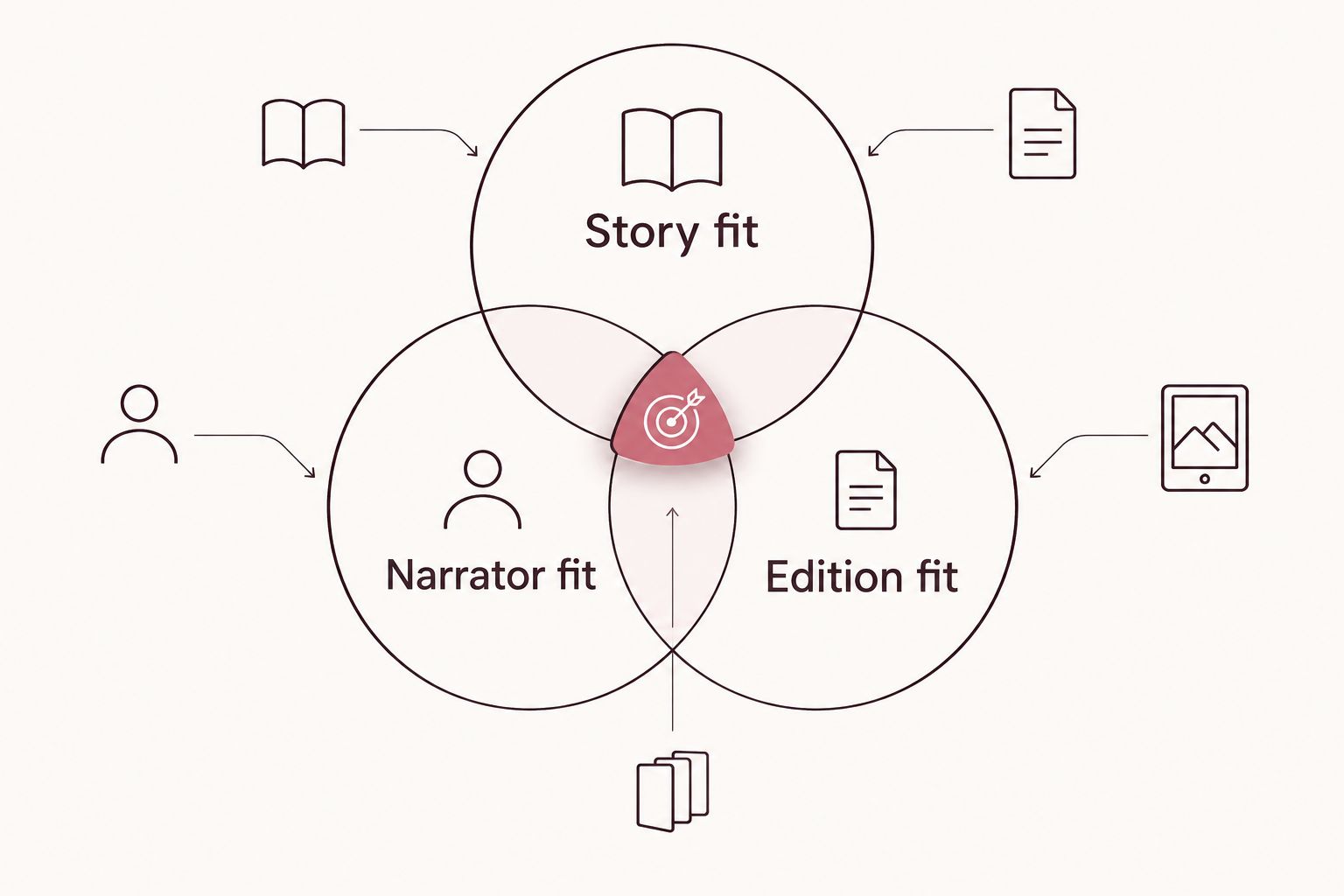
Try a 2-minute sample as a first screen, not a final verdict. Notice whether you can distinguish speakers without concentrating on the performance itself. If the sample contains music or effects, assess those too; they will be part of your listening experience, not just the story’s packaging.
Which audiobook should you choose?
Start with The Serpent and the Wings of Night if you cannot name the exact ACOTAR quality you want to repeat. It combines the most relevant features without asking you to trade away the adult romance.
Choose A Kiss of Iron for fae attraction and court tension. Choose The Bridge Kingdom for political obligations that make intimacy dangerous. Move to Fourth Wing for dragons and training, or The Cruel Prince when the court’s cruelty interests you more than the romance.
For a more personal next step, GetSimilarBooks provides five hand-curated read-alikes from a title you enjoyed. The personalized list expands to 20–30 titles and requires your email. Enter the book that best represents your current reading mood, not necessarily the most famous book you have finished.
Find your next read-alike
Start with five hand-curated suggestions. Request a personalized list of 20–30 titles with your email.
FAQ
What’s the best audiobook like ACOTAR to start with?
The Serpent and the Wings of Night is the strongest starting point for supernatural danger, deadly trials, and adult romantic tension. Amanda Leigh Cobb narrates the conventional audiobook. Its vampire setting is the main difference from ACOTAR’s fae world.
Which audiobook like ACOTAR has the closest fae-romance feel?
A Kiss of Iron is the closest choice here for adult fae attraction and court intrigue. It emphasizes charged encounters and secrets rather than a survival tournament.
Is The Cruel Prince a good choice after ACOTAR?
The Cruel Prince is a good choice for dangerous fae politics, not for an equally romance-centered story. Jude’s pursuit of power drives the opening book, and the YA category does not make the court gentle.
Should I choose Fourth Wing or The Bridge Kingdom next?
Choose Fourth Wing for dragons and military training; choose The Bridge Kingdom for espionage and divided loyalties. Both connect attraction to danger, but their settings create different kinds of pressure.
Are two narrators the same thing as duet narration?
No. Two credited narrators do not establish that each performer voices the same character throughout every scene. Check the edition’s format description and sample before choosing it for duet performance.
How do I choose between a conventional audiobook and a dramatized adaptation?
Choose a conventional audiobook for a narration-led telling, or a dramatized adaptation for a cast-based production with performance effects. Sample the exact edition because the production style changes the listening experience.
Can GetSimilarBooks recommend more books after ACOTAR?
GetSimilarBooks offers five hand-curated read-alike suggestions when you enter a title you enjoyed. You can also request an email-gated personalized list of 20–30 titles. Check audiobook editions separately when deciding what to hear next.
One last thing
Do not use the most dramatic scene in a sample as your only test. You will also spend time hearing explanations, transitions, and private thoughts. Choose a voice you enjoy when nothing explosive is happening.
For your next listen in 2026, name the missing ingredient before choosing the title. “I want dangerous fae” leads somewhere different from “I want two people forced to trust each other.” That distinction is more useful than another long list of fantasy romances.
Related guides
- Books like ACOTAR: five picks, closest match first
- Audiobooks like Fourth Wing: choosing by performance
- Books like Fourth Wing with slow-burn romance
- Books like Fourth Wing with found family