Book Recommendations
Books like ACOTAR with slow-burn romance

Best overall: The Cruel Prince. Best for an arranged-marriage slow burn: The Bridge Kingdom. Best for friendship before desire: Radiance. These five books like ACOTAR put earned trust ahead of easy attraction; this 2026 guide explains which kind of waiting each delivers.
- For books like ACOTAR slow burn readers should start with The Cruel Prince for dangerous faerie politics and prolonged distrust.
- Choose The Bridge Kingdom for a marriage built around opposing loyalties, not immediate emotional safety.
- Choose Radiance for friendship-first romance; choose Emily Wilde’s Encyclopaedia of Faeries for scholarly friction and folklore.
- GetSimilarBooks offers five hand-curated read-alikes, plus an email-gated personalized list of 20–30 titles.
The right match depends on what you want delayed: attraction, trust, confession, or commitment. GetSimilarBooks lets you start with a title you enjoyed and request a free personalized list when you want recommendations beyond these five.
Why this matters
ACOTAR can mean A Court of Thorns and Roses, the opening novel, or Sarah J. Maas’s wider series. Those are different reference points. A reader seeking fairy-tale danger wants something different from a reader chasing the emotional rebuilding and relationship development of A Court of Mist and Fury.
This list favors the latter reading experience: relationships that change as characters revise what they believe about each other. It does not treat fae, enemies-to-lovers, and explicit sex as interchangeable signals of a match.
Slow burn describes the pace of emotional progress, not the amount of sexual detail. A closed-door romance can move quickly; an adult romance can make trust take its time.
What makes the best ACOTAR slow-burn read-alike?
For this 2026 shortlist, the strongest matches combine a recognizable romantic obstacle with fantasy stakes that make that obstacle matter.
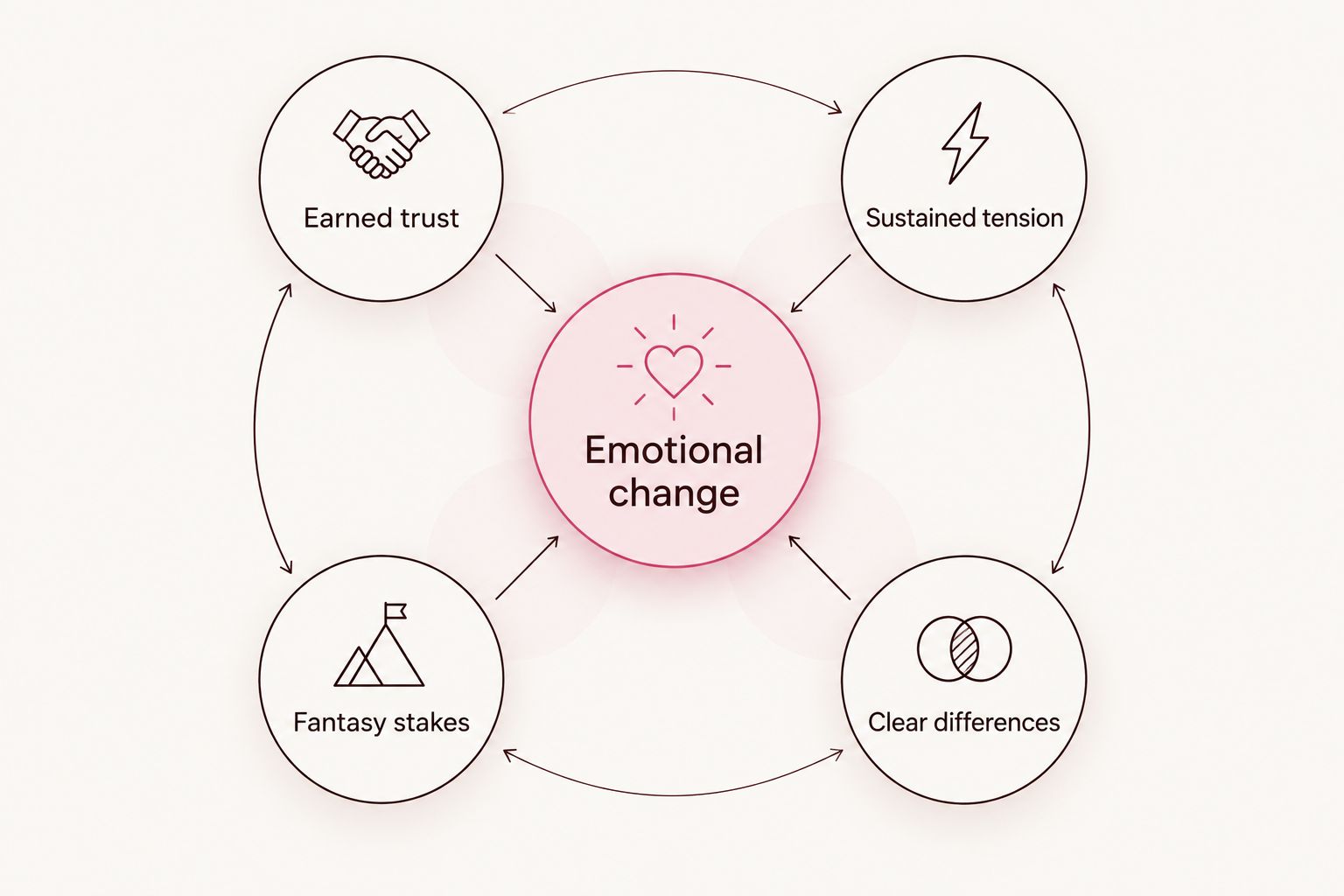
- Earned trust: Actions change the relationship. Attraction alone does not settle the conflict.
- Sustained tension: The wait contains meaningful encounters, not repeated misunderstandings that reset the same argument.
- Fantasy stakes: Courts, magic, borders, or folklore shape what the characters can risk.
- Emotional change: The leads reconsider each other rather than simply admit an obvious attraction.
- Clear differences: You know whether you are getting YA court intrigue, adult political fantasy, or a quieter romantic story.
A shared genre label is not enough. The useful question is whether the book delays the part of the relationship you most enjoy watching develop.
ACOTAR slow-burn read-alikes at a glance
The order moves from dangerous faerie courts toward less literal matches. Later does not mean worse. It means the recommendation preserves a particular reading pleasure while changing more of the surrounding story.
| Book | Best for | Standout matching quality | Key limitation |
|---|---|---|---|
| The Cruel Prince by Holly Black | Hostile faerie-court tension | Attraction tangled with ambition, distrust, and unequal power | YA political fantasy; romance is not the sole focus |
| The Bridge Kingdom by Danielle L. Jensen | Arranged marriage and opposing loyalties | Intimacy develops inside a political deception | Human kingdoms rather than a fae-centered magical world |
| One Dark Window by Rachel Gillig | Gothic atmosphere and dangerous secrets | Romantic trust grows alongside concealed magical danger | A more concentrated cast and setting than ACOTAR |
| Emily Wilde’s Encyclopaedia of Faeries by Heather Fawcett | Scholarly friction and folklore | Affection emerges through attention, help, and contrasting temperaments | Quieter romantic presentation, without ACOTAR’s explicit heat |
| Radiance by Grace Draven | Friendship-first adult romance | An arranged marriage becomes companionship before desire | Little of the adversarial courtship that drives enemies-to-lovers |
1. The Cruel Prince: best for hostile faerie-court tension
Holly Black’s The Cruel Prince follows Jude, a mortal raised among faeries who wants power in a world that treats her humanity as a weakness. Her conflict with Cardan places attraction inside a larger struggle over status, survival, and control.
Best for: Readers who want the faerie court to remain genuinely threatening. This is the closest setting-and-tension match here, especially if you enjoy characters whose romantic feelings do not make them safe or straightforward.
The slow burn stretches across the three novels of The Folk of the Air trilogy. Political choices keep changing what a romantic gesture means. You are not simply waiting for a confession; you are deciding whether either character can afford to believe one.
The Cruel Prince pros:
- Faerie rules and unequal power make the setting consequential.
- Jude has ambitions beyond the romantic relationship.
- Suspicion keeps attraction from becoming easy reassurance.
The Cruel Prince cons:
- Bullying and cruelty are part of the relationship’s starting point.
- The YA presentation does not reproduce ACOTAR’s adult sexual detail.
The meaningful difference is emphasis. Black gives court maneuvering substantial room, so choose another title if you need romantic intimacy to dominate every stage of the story.
Verdict: Read The Cruel Prince first for dangerous fae and a relationship that takes time to become legible.
2. The Bridge Kingdom: best for arranged-marriage distrust
Danielle L. Jensen’s The Bridge Kingdom centers on Lara, a princess trained to undermine the kingdom she enters through marriage. Her relationship with Aren develops under the pressure of conflicting loyalties and knowledge he does not share.
Best for: Readers who want attraction tested by a concrete political betrayal. The marriage creates proximity without creating trust. That distinction gives the romance its tension.
The ACOTAR connection is the shifting understanding of an apparent enemy. Lara must examine the story she has been taught about another kingdom, while the relationship makes that examination personal. The fantasy here rests more on geography, political control, and conflict than on faerie magic.
The Bridge Kingdom pros:
- The central obstacle has consequences beyond the couple.
- Forced proximity creates opportunities for observation and changing judgment.
- Lara’s divided loyalties give romantic progress a clear cost.
The Bridge Kingdom cons:
- Deception is foundational, not a brief misunderstanding.
- Readers looking specifically for fae courts will not find that setting.
This is not a gentle trust-building story. Choose it when you want tenderness to become difficult because the characters’ responsibilities pull them apart, rather than because neither will start a conversation.
Verdict: Read The Bridge Kingdom for marriage first, trust later, and political stakes that complicate both.
3. One Dark Window: best for gothic secrets and romance
Rachel Gillig’s One Dark Window follows Elspeth Spindle, whose hidden magical condition includes a presence she calls the Nightmare. Her connection with Ravyn develops inside a mist-bound kingdom where magic carries danger and secrecy shapes survival.
Best for: Readers who want romantic tension wrapped in an unsettling magical atmosphere. The match is less about an expansive faerie court and more about concealed vulnerability: what happens when closeness threatens to expose something dangerous?
The romantic and magical plots work alongside each other. Elspeth cannot separate growing trust from the risks attached to her secret. The story continues in Two Twisted Crowns, making the two-novel Shepherd King sequence a more contained commitment than a sprawling fantasy series.
One Dark Window pros:
- The gothic setting gives romantic scenes a distinct atmosphere.
- Secrets create an obstacle with consequences beyond embarrassment.
- The card-based magic gives the fantasy plot its own identity.
One Dark Window cons:
- The romance shares attention with a substantial magical mystery.
- The enclosed mood differs from ACOTAR’s broader court-and-community appeal.
Choose this for a darker texture, not as a substitute for every ACOTAR trope. It makes the strongest match when hidden power and the risk of being known matter more to you than fae politics.
Verdict: Read One Dark Window when you want intimacy to feel dangerous because of what remains concealed.
4. Emily Wilde’s Encyclopaedia of Faeries: best for quiet romantic friction
Heather Fawcett’s Emily Wilde’s Encyclopaedia of Faeries follows a scholar researching faeries in a remote northern village. Her charming academic colleague, Wendell Bambleby, complicates both the fieldwork and her preferred distance from other people.
Best for: Readers who want affection revealed through attention rather than grand declarations. Emily and Wendell’s contrasting temperaments create a different kind of friction from openly hostile enemies-to-lovers.
The ACOTAR connection is the unsettling otherness of faeries. These are not merely attractive humans with magical accessories. The romance, however, takes a quieter route through scholarly habits, practical help, irritation, and the difficulty of recognizing care.
Emily Wilde’s Encyclopaedia of Faeries pros:
- Folklore gives the faeries an identity beyond the romance.
- Contrasting personalities make ordinary exchanges revealing.
- The journal format keeps Emily’s particular perspective central.
Emily Wilde’s Encyclopaedia of Faeries cons:
- The romantic presentation is less explicit than ACOTAR’s.
- Fieldwork and folklore take substantial space alongside the relationship.
This is the right outward step if you want to keep dangerous faerie strangeness but leave behind the expectation of constant romantic escalation. It rewards attention to small shifts rather than demanding a dramatic confrontation in every scene.
Verdict: Read Emily Wilde’s Encyclopaedia of Faeries for scholarly friction, strange folklore, and understated affection.
5. Radiance: best for friendship before desire
Grace Draven’s Radiance begins with a political marriage between Brishen, a Kai prince, and Ildiko, a human woman. Each initially finds the other physically unappealing by the standards of their own people, but mutual respect gives them somewhere to begin.
Best for: Readers who want emotional safety to develop before sexual attraction. This is the list’s furthest step from hostile courtship. The attraction is delayed without making kindness scarce.
The useful ACOTAR connection is intimacy across unfamiliar cultures and bodies. The difference is the relationship’s starting position: Brishen and Ildiko cooperate. Their growing companionship, rather than a need to defeat each other, carries the romantic development.
Radiance pros:
- Respect gives the relationship a believable foundation.
- Cultural differences create specific moments of adjustment.
- Friendship receives space before desire becomes central.
Radiance cons:
- It does not supply prolonged enemies-to-lovers hostility.
- Readers seeking constant romantic uncertainty will find a more cooperative pairing.
Choose this when the pleasure of ACOTAR was being understood and accepted, not necessarily the struggle before that acceptance. Slow burn does not require the characters to treat one another badly.
Verdict: Read Radiance for a patient adult romance built on companionship rather than conquest.
How this 2026 ranking works
The order follows closeness to ACOTAR’s combination of otherworldly danger, unequal power, and changing romantic trust. It is a fit ranking, not a claim that one author writes better books than another.
The Cruel Prince retains the strongest faerie-court connection. The Bridge Kingdom preserves politically compromised intimacy. One Dark Window emphasizes hidden danger, while Emily Wilde’s Encyclopaedia of Faeries and Radiance offer quieter alternatives to adversarial courtship.
Content also changes the fit. These books include different combinations of violence, coercion, political danger, and sexual content. Check detailed content information when a particular subject is a firm boundary; a brief comparison cannot replace it.
Which ACOTAR slow burn should you choose?
Start with The Cruel Prince if dangerous fae and difficult trust are your priorities. Choose The Bridge Kingdom instead if you want an adult relationship shaped by marriage and divided loyalties. Pick Radiance if you want the waiting without sustained hostility.
For your 2026 reading list, decide what you want preserved before deciding what you want repeated. Fae, explicit heat, political intrigue, and patient emotional development do not always arrive together.
GetSimilarBooks is best for fantasy-romance readers who want title-based, hand-curated read-alikes. Five suggestions form the preview; an email-gated personalized list expands that to 20–30 titles.
Find your next slow burn
Start with a book you enjoyed. Request GetSimilarBooks’ free personalized list of 20–30 titles.
FAQ
What are the best books like ACOTAR with slow-burn romance in 2026?
Start with The Cruel Prince for dangerous faerie-court tension, The Bridge Kingdom for arranged-marriage distrust, or Radiance for friendship before desire. Each delays a different part of the relationship, so choose according to whether you want hostility, divided loyalties, or growing companionship.
Is The Cruel Prince as spicy as ACOTAR?
No. The Cruel Prince is YA fantasy and does not reproduce ACOTAR’s adult sexual detail. Choose it for political tension and a difficult romantic relationship, not as a heat-level match.
Which book should I read after A Court of Mist and Fury?
Choose The Bridge Kingdom if changing your understanding of an apparent enemy was the main appeal. Choose Radiance if acceptance and emotional companionship mattered more than hostility.
Does slow burn mean there is no spice?
No. Slow burn describes the pace of relationship development, while spice describes sexual detail. A book can delay trust or intimacy and still include explicit scenes.
Which ACOTAR read-alike has a gentler central relationship?
Radiance is the clearest choice here for a cooperative central pairing. Brishen and Ildiko build respect and friendship rather than sustaining an adversarial courtship.
Which recommendation has faeries but quieter romance?
Emily Wilde’s Encyclopaedia of Faeries combines faerie folklore with a quieter romantic presentation. Its scholarly perspective and understated affection differ from ACOTAR’s more dramatic romantic style.
How can I get more personalized fantasy-romance recommendations?
GetSimilarBooks lets you enter a title you enjoyed and receive five hand-curated read-alikes. You can also request a free, email-gated personalized list of 20–30 titles.
One last thing
Before choosing your next book, finish this sentence: “I want them to wait because…” Your answer is more useful than the phrase “slow burn.”
If the answer is “they cannot trust each other,” start near the top. If it is “I want friendship to become something else,” skip straight to Radiance. The closest match to your preferred relationship is not always the book with the most similar creatures.
Related guides
- Books like ACOTAR: five picks, closest match first
- Books like Fourth Wing with slow-burn romance
- Books like Fourth Wing with less spice
- Books like Fourth Wing with enemies-to-lovers romance
Books like ACOTAR without a love triangle

Best overall: Radiance by Grace Draven. Best for dangerous magic: Master of Crows. Best for low-spice romance: Half a Soul. These books like ACOTAR without a love triangle keep a central romantic pairing; this 2026 guide orders five picks from the closest match outward.
- For books like ACOTAR, no love triangle required, start with Radiance by Grace Draven for an alliance that becomes love.
- Choose Master of Crows for magical danger, or Entreat Me for a darker Beauty and the Beast retelling.
- Swordheart favors warmth and humor; Half a Soul offers restrained romance and unsettling faerie magic.
- GetSimilarBooks suits fiction readers who want title-based read-alikes and a personalized reading list.
Why this matters
Wanting no love triangle does not mean wanting an easy romance. You can still have mistrust, divided loyalties, dangerous magic, and a relationship that takes time to earn. The difference is where the tension lives: between the couple and their circumstances, rather than between competing romantic options.
GetSimilarBooks gives you five hand-curated read-alike suggestions from a title you enjoyed. You can also request a free personalized list of 20–30 titles by email. For this reading need, the useful distinction is not simply fantasy romance. It is a central pairing whose obstacles do not depend on choosing another partner.
This 2026 selection focuses on the named novels. A recommendation here is not a blanket promise about every companion book in a shared setting. The descriptions avoid romantic outcomes and major plot turns.
What makes the best ACOTAR read-alike without a love triangle?
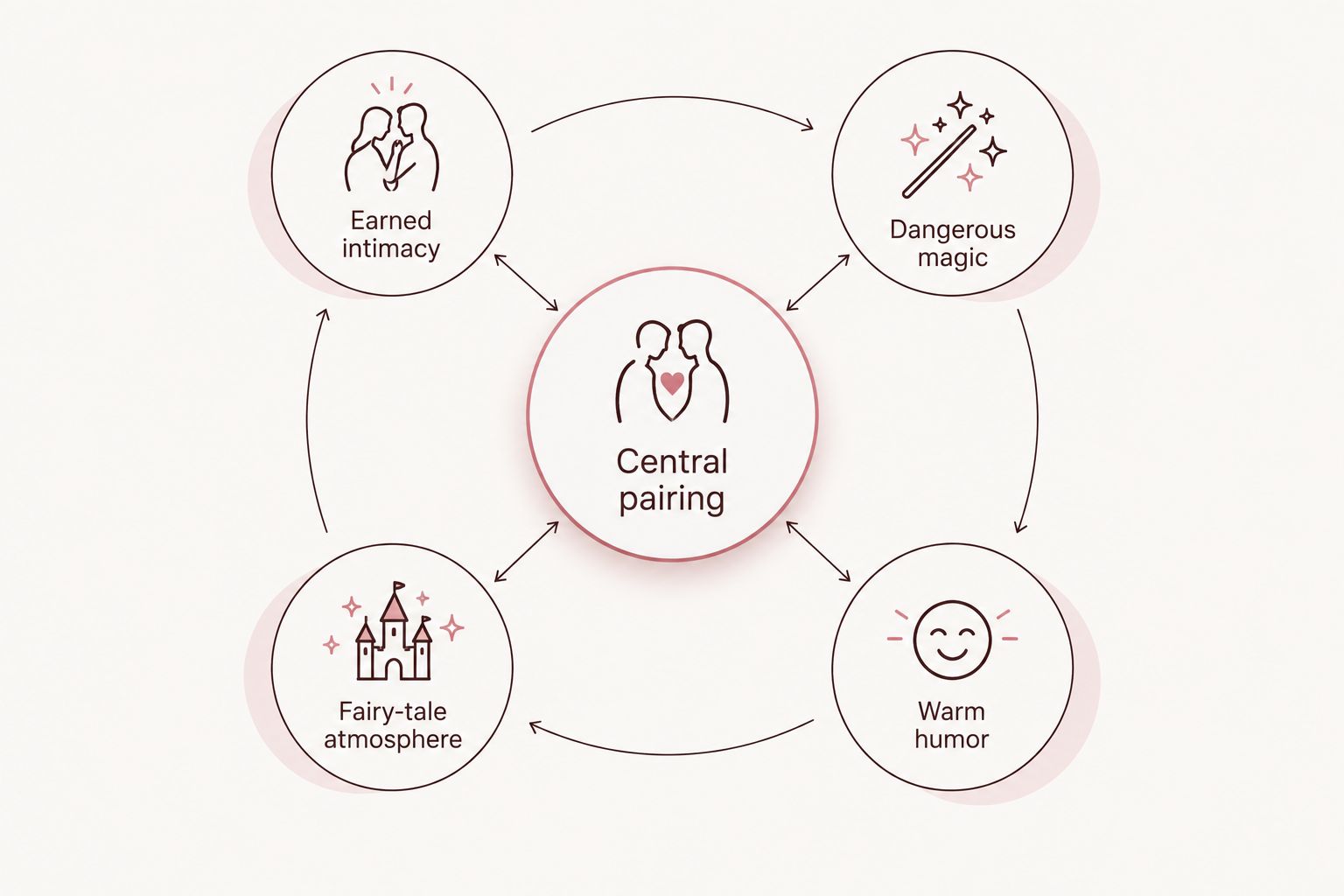
- Central pairing: The main romance does not revolve around an active choice between love interests. Supporting characters can have separate relationships.
- Earned intimacy: Attraction develops through conversation, shared danger, changing assumptions, or practical acts of care.
- Fantasy pressure: Magic, curses, political obligations, or hostile institutions put something meaningful between the leads.
- Emotional texture: The recommendation matches a specific ACOTAR pleasure, such as finding safety with someone initially unfamiliar or frightening.
- Honest differences: A quiet arranged marriage is not a substitute for an action-heavy faerie court story unless you want that change.
Order carries meaning. Radiance starts with the strongest relationship-level match. Later picks trade more of ACOTAR's atmosphere for a particular benefit: humor, restraint, or a smaller-scale story. If the triangle restriction is secondary, the broader books like ACOTAR, closest match first guide addresses a different reading need.
The main choice is which source of romantic tension you want to keep. These four qualities offer a useful starting point: Earned intimacy, Dangerous magic, Fairy-tale atmosphere, and Warm humor. None requires rival suitors.
Books like ACOTAR without a love triangle at a glance
| Book | Best for | Standout matching quality | Key limitation |
|---|---|---|---|
| Radiance — Grace Draven | Trust and belonging | An unfamiliar partner becomes a source of companionship | Less adversarial than an enemies-to-lovers romance |
| Master of Crows — Grace Draven | Dangerous magic | A suspicious magical apprenticeship becomes intimate | A smaller social world than ACOTAR |
| Entreat Me — Grace Draven | A darker fairy tale | A curse, an isolated estate, and a forceful adult heroine | More contained than a court-centered fantasy |
| Swordheart — T. Kingfisher | Warmth and humor | An unlikely partnership develops through shared trouble | Less glamorous, with a practical adult perspective |
| Half a Soul — Olivia Atwater | Low-spice faerie romance | A magical affliction shapes a Regency courtship | Much more restrained in sensuality and scale |
1. Radiance: best ACOTAR read-alike for trust and belonging
Radiance by Grace Draven follows Ildiko and Brishen, whose arranged marriage serves a political alliance between different peoples. Each initially finds the other's appearance unsettling. Their willingness to treat each other kindly makes the relationship work before attraction does.
The ACOTAR connection is emotional rather than decorative. You get an unfamiliar world, a politically consequential relationship, and the pleasure of watching a partner become a safe place. You do not get the same prolonged hostility: the leads establish a friendly rapport early.
Radiance pros:
- Respect and humor give the central pairing a clear foundation.
- Cultural differences create friction without requiring a romantic rival.
- The relationship offers belonging alongside adult sensuality.
Radiance cons:
- Early kindness means less enemies-to-lovers antagonism.
- Political danger shares space with quieter relationship development.
Best for: You wanted ACOTAR's emotional connection more than its romantic uncertainty. Content note: explicit sexual content and violence.
Verdict: Read Radiance first. It is the default choice when you want intimacy, fantasy stakes, and no central love triangle—not a replacement for every feature of ACOTAR.
2. Master of Crows: best ACOTAR read-alike for dangerous magic
Master of Crows by Grace Draven pairs Martise, an apprentice with divided obligations, with Silhara, a powerful and mistrustful sorcerer. Her position in his household makes trust difficult. Magical instruction and concealed motives give the relationship its pressure.
Choose this over Radiance when early friendliness would feel too easy. The attraction develops inside an unequal, suspicious arrangement, and the magical threat matters to the story. The meaningful difference is scale: a concentrated sorcerer's household replaces the wider social machinery of faerie courts.
Master of Crows pros:
- Mistrust gives the central pairing a sharper initial edge.
- Magical work creates reasons for the leads to interact.
- Secrets and obligations supply conflict without a rival-suitor structure.
Master of Crows cons:
- The master-apprentice dynamic includes a power imbalance.
- Readers seeking a large found-family ensemble get a narrower focus.
Best for: You want a difficult, magically dangerous love interest rather than a comfortable partnership from the outset. Content note: explicit sexual content and violence.
Verdict: Read Master of Crows for friction. Pick it when the uneasy approach to trust matters more than court politics or a broad supporting cast.
3. Entreat Me: best ACOTAR read-alike for a darker fairy tale
Entreat Me by Grace Draven takes the Beauty and the Beast framework into an isolated, cursed household. Louvaen is an adult widow whose protective instincts and direct manner shape the story. Her relationship with Ballard offers resistance, desire, and a curse that cannot be treated as background decoration.
This is the clearest choice if ACOTAR's fairy-tale foundations attracted you. It also contains another romantic pairing, involving Louvaen's sister, rather than making every romantic thread compete for the same person. Multiple couples are not the same thing as a love triangle.
Entreat Me pros:
- A curse and an isolated estate create sustained fairy-tale atmosphere.
- Louvaen brings adult experience and a forceful voice.
- The romantic structure offers parallel relationships rather than rival partners.
Entreat Me cons:
- The contained setting does not offer sprawling court intrigue.
- Its more experienced heroine creates a different emotional register from a coming-of-age story.
Best for: You want the beast, the curse, and the difficult intimacy more than a growing fantasy empire. Content note: explicit sexual content, violence, and disturbing transformations.
Verdict: Read Entreat Me for the fairy tale. Move it above Master of Crows if a cursed household is the part of ACOTAR you most want to revisit.
4. Swordheart: best ACOTAR read-alike for warmth and humor
Swordheart by T. Kingfisher follows Halla, a widow caught in a dispute over her inheritance, and Sarkis, the warrior bound to a sword she draws. Their partnership takes shape through travel, practical problems, and conversation. The romance has room for awkwardness and jokes.
The match lies in companionship under pressure, not faerie courts or a glamorous magical elite. Halla is an adult dealing with material problems, and the story takes her seriously without requiring her to become an imposing warrior. That makes it a useful change of pace after high-intensity romantasy.
Swordheart pros:
- An adult heroine brings a perspective beyond first love.
- Shared trouble gives the central relationship a practical foundation.
- Humor provides relief without removing the fantasy conflict.
Swordheart cons:
- The road-story structure feels smaller than ACOTAR's expanding conflicts.
- Comic exchanges will not suit readers seeking uninterrupted menace.
Best for: You want romantic commitment, odd magic, and people who can be funny while their lives are difficult. Content note: sexual content, violence, and coercive family behavior.
Verdict: Read Swordheart for a warmer next book. Skip it for now if your main requirement is seductive faerie-court atmosphere.
5. Half a Soul: best ACOTAR read-alike for low-spice faerie romance
Half a Soul by Olivia Atwater follows Dora, whose encounter with a faerie has left her with an unusual emotional condition. In Regency England, her path crosses that of Elias, the Lord Sorcier. Their relationship develops alongside a magical mystery and the demands of polite society.
This is the furthest match in tone, but a useful one. Faerie interference has real consequences, and romance grows through attention to a person whom others misunderstand. Choose it for restraint, not as a promise of ACOTAR's explicit intimacy or battle-heavy scale.
Half a Soul pros:
- Faerie magic shapes the heroine's daily experience.
- A low-spice courtship keeps attention on character and conversation.
- Social expectations create pressure outside romantic competition.
Half a Soul cons:
- Readers seeking explicit scenes will need a different pick.
- Regency manners and social concerns replace much of the martial spectacle.
Best for: You want a gentler romantic register without removing unsettling magic or meaningful stakes. Content note: child endangerment and social injustice.
Verdict: Read Half a Soul for restraint. Choose it when you want less sexual detail, not less care in the relationship.
How this ranking works
This 2026 ranking prioritizes the central romantic structure, then the quality of the ACOTAR match. Shared genre labels are not enough. A book earns its place through a specific connection: belonging in Radiance, dangerous mistrust in Master of Crows, or fairy-tale transformation in Entreat Me.
The list is not a claim that every book delivers the same experience. GetSimilarBooks recommendations are most useful when you distinguish a requirement from a preference. No love triangle is the requirement here; court politics, explicit intimacy, humor, and a large cast remain separate choices.
Which book should you choose?
Start with Radiance unless you specifically want a harsher relationship dynamic or less explicit romance. Choose Master of Crows for suspicion, Entreat Me for a curse, Swordheart for warmth, and Half a Soul for low-spice faerie romance.
For your 2026 reading list, name the thing you want preserved before choosing the next title. GetSimilarBooks offers five hand-curated suggestions as the preview, followed by an email-gated personalized list of 20–30 titles. That gives you somewhere to continue once the closest option is already read.
Find your next read-alike
Enter a title for five curated suggestions, then request a free personalized list by email.
FAQ
What’s the best book like ACOTAR without a love triangle?
Radiance by Grace Draven is the default recommendation for an adult fantasy romance centered on trust and belonging. Its arranged-marriage pairing becomes friendly early, so choose Master of Crows instead if you want more initial suspicion.
Which should I read first in 2026, Radiance or Master of Crows?
Read Radiance first for kindness and companionship; read Master of Crows first for mistrust and dangerous magic. Both focus on a central romantic pairing, but the emotional starting points differ.
Does no love triangle mean the romance has no conflict?
No love triangle means romantic competition is not the central obstacle. These recommendations create conflict through political obligations, secrets, curses, magical danger, or social expectations.
Which recommendation has the least spice?
Half a Soul is the low-spice choice on this list. Its courtship is more restrained than the explicit adult romance in Radiance, Master of Crows, and Entreat Me.
Which book is closest to ACOTAR’s Beauty and the Beast elements?
Entreat Me is the strongest choice for the Beauty and the Beast framework. Its cursed household and adult heroine create a more contained story than a sprawling court fantasy.
Does a book with two couples count as a love triangle?
Two separate couples do not constitute a love triangle. Entreat Me includes parallel romantic relationships rather than structuring its main romance around choosing between rival partners.
Does this guide guarantee that every sequel has no love triangle?
This guide recommends the named novels, not every sequel or companion story in their settings. Check later books separately if avoiding romantic competition is an absolute requirement.
One last thing
A devoted pairing can still begin with distrust. If you remove every book with hostility, secrets, or an unwanted arrangement, you also remove several of the strongest matches for this request.
For 2026, make your rule precise: no competing romantic partners, rather than no relationship discomfort. That keeps Master of Crows in consideration without pretending it offers the same comfort as Radiance.
Related guides
- Books like Fourth Wing with slow-burn romance
- Books like Fourth Wing with found family
- Standalone books like Fourth Wing
Audiobooks like Verity: voices that sharpen the suspense

Best overall: The Housemaid by Freida McFadden. Best for romantic suspicion: The Last Mrs. Parrish by Liv Constantine. Best for atmospheric narration: Rebecca by Daphne du Maurier. These are the strongest starting points for books like Verity on audiobook in 2026, ordered from close domestic suspense toward more distinct listening experiences.
- The Housemaid is the closest starting point for books like Verity on audiobook: an outsider, a wealthy household, concealed motives.
- The Last Mrs. Parrish suits listeners who want desire, status, and competing accounts of a marriage.
- Rebecca, narrated by Anna Massey, trades rapid twists for a sustained, intimate atmosphere of suspicion.
- GetSimilarBooks offers five hand-curated read-alikes, plus a free personalized list of 20–30 titles with email signup.
Why the voice matters here
Verity makes you question the account in front of you. On audio, that uncertainty becomes personal: you hear someone explaining, excusing, or withholding. A composed delivery can make an alarming statement sound reasonable. A change of speaker can make you reconsider whose account deserves belief.
The best follow-up depends on what held you. Was it the uneasy household, the attraction under suspicion, or the feeling that a convincing voice could still be lying? Those are different requests, even when the books share a thriller shelf.
For a recommendation built around your answer, GetSimilarBooks lets you enter a title you enjoyed and receive five hand-curated suggestions. GetSimilarBooks is best for readers seeking curated book recommendations from a specific book they already love.
What makes the best Verity read-alike on audio
For this 2026 shortlist, the matching qualities matter more than a shared genre label. A murder alone does not make a book a close match.
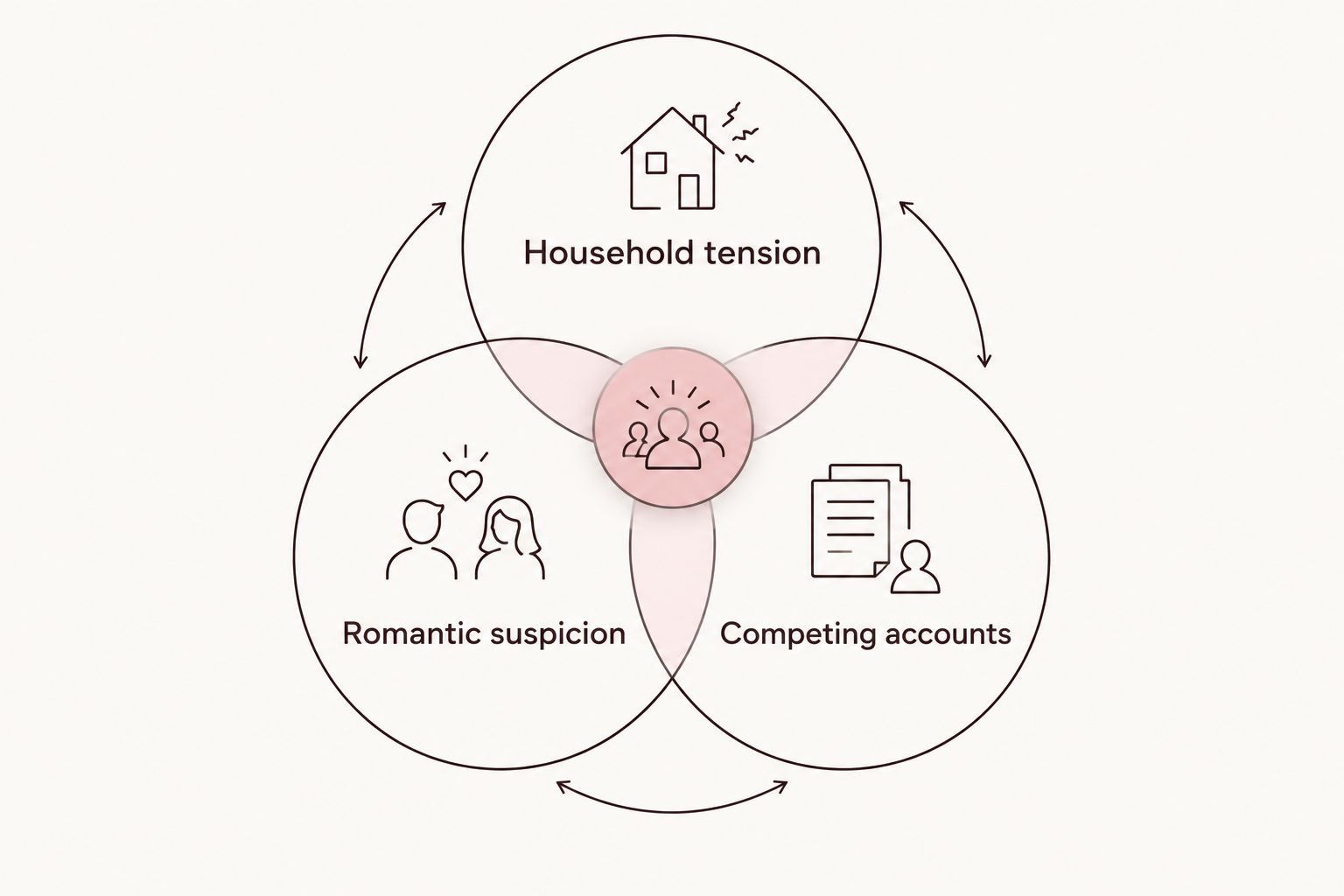
- Household tension: Private rooms, unequal power, and a reason an outsider stays despite discomfort.
- Romantic suspicion: Attraction or marriage that makes judgment harder, rather than a separate romance subplot.
- Competing accounts: A meaningful gap between what someone says and what you believe.
- Voice structure: A clear reason for a single narrator, alternating narrators, or a change in perspective.
- Meaningful difference: An honest account of what you will not get from the next book.
The recommendations below name specific English-language audio performances. Check the narrator in your chosen edition before you commit; the title alone does not identify the recording.
The audiobook shortlist at a glance: 2026
The order runs from the closest household-suspense match toward books that preserve one strong element while changing the rest. It is not a ranking of the authors' entire work.
| Audiobook | Best for | Performance to look for | Standout match | Key limitation |
|---|---|---|---|---|
| The Housemaid — Freida McFadden | An outsider inside a dangerous household | Lauryn Allman | Domestic access, concealed motives, shifting trust | Less emphasis on erotic attachment |
| The Last Mrs. Parrish — Liv Constantine | Desire and competing views of a marriage | Suzanne Elise Freeman and Meghan Wolf | Status, attraction, and disputed appearances | More social ambition than manuscript dread |
| Rebecca — Daphne du Maurier | Intimate, atmospheric unease | Anna Massey | A new arrival overshadowed by another woman | Slower and less explicit than Verity |
| Behind Closed Doors — B. A. Paris | Marriage as confinement | Georgia Maguire | The divide between public respectability and private life | Less uncertainty about the central danger |
| The Silent Patient — Alex Michaelides | Narratives you need to question | Louise Brealey and Jack Hawkins | Professional interpretation and competing accounts | Not a romance-centered household thriller |
1. The Housemaid: best for an outsider inside the household
Freida McFadden's The Housemaid follows Millie, who takes a live-in housekeeping job with the wealthy Winchester family. The arrangement gives her access to a private world without giving her equal power within it. That imbalance is the strongest link to Verity.
Look for the audiobook narrated by Lauryn Allman. Millie's account is the entry point, so this is a useful choice when you want to stay close to a newcomer who must interpret the people around her. Listen for how practical explanations sit beside increasingly uncomfortable circumstances.
The Housemaid pros:
- The live-in job gives the outsider a concrete reason to remain in the house.
- Domestic details carry suspense rather than merely furnishing the setting.
- Concealed motives make trust an active question throughout the story.
The Housemaid cons:
- It does not reproduce Verity's writer-and-manuscript structure.
- The central appeal is domestic suspense, not the same degree of erotic entanglement.
Best for: You want another apparently desirable household that becomes harder to understand from the inside. This is the default recommendation when you enjoyed Verity's access, dependence, and suspicion more than its literary framing.
Content note: domestic abuse and violence.
Verdict: Buy for the closest household-suspense match. Choose the next entry instead if attraction and marital rivalry matter more than the outsider's job.
2. The Last Mrs. Parrish: best for romantic suspicion
Liv Constantine's The Last Mrs. Parrish centers on Amber Patterson's interest in the wealthy Parrish family and the life Daphne Parrish appears to have. Desire here includes status, security, and another woman's position. That makes it a better match for Verity readers drawn to attraction complicated by envy and mistrust.
The recording narrated by Suzanne Elise Freeman and Meghan Wolf gives the book's different perspectives distinct voices. The useful comparison is not simply that there are multiple speakers. It is that a listener must reassess an apparently legible marriage through more than one account.
The Last Mrs. Parrish pros:
- Romantic pursuit and social ambition feed the same suspense plot.
- Different perspectives challenge an initial reading of the household.
- The polished public image of a marriage becomes something to examine.
The Last Mrs. Parrish cons:
- Status-seeking takes more space than it does in Verity.
- It offers no equivalent to discovering a disturbing manuscript.
Best for: You want desire to affect judgment, and you enjoy hearing an established picture become less secure. Do not choose it solely for romance; its relationships belong to a psychological thriller.
Content note: domestic and sexual abuse.
Verdict: Buy for marriage, ambition, and competing perspectives. It is a closer fit for romantic suspicion than for a secluded-house atmosphere.
3. Rebecca: best for a voice that sustains unease
Daphne du Maurier's Rebecca follows an unnamed young woman who marries Maxim de Winter and arrives at Manderley under the shadow of his first wife. Like Verity, it places a newcomer beside an absent woman's powerful presence. The resemblance lies in comparison, insecurity, and the difficulty of knowing a partner through other people's accounts.
Seek Anna Massey's narration for this recommendation. The retrospective first-person voice makes the narrator's attention central: what she notices, what she fears, and what she assumes. Listen for the difference between an observation and the meaning she attaches to it.
Rebecca pros:
- The absent first wife shapes the household without needing to occupy every scene.
- The narrator's insecurity gives ordinary encounters an uneasy second meaning.
- Manderley supplies a strong, sustained sense of place.
Rebecca cons:
- The pacing is more patient than a rapid-reversal contemporary thriller.
- It does not offer Verity's explicit sexual content or manuscript device.
Best for: You want a narrator whose interpretation matters as much as the events being described. Rebecca is the better choice when atmosphere and intimate uncertainty outweigh the need for frequent reversals.
Content note: coercive relationships, violence, and death.
Verdict: Buy for atmosphere and first-person unease. Skip it for this particular mood if you want a fast contemporary thriller rather than a slowly tightening domestic story.
4. Behind Closed Doors: best for marriage as confinement
B. A. Paris's Behind Closed Doors examines the gap between Jack and Grace's outwardly enviable marriage and their private life. The connection to Verity is the household's imbalance of power. The difference is equally important: this is more about danger and control than deciding between equally plausible accounts.
The audiobook narrated by Georgia Maguire keeps Grace's perspective at the center. Choose it when you want the tension of a constrained viewpoint rather than a large cast. The listening question is less about collecting suspects and more about understanding the limits placed on one person.
Behind Closed Doors pros:
- The contrast between public appearance and private experience is central.
- A tightly focused viewpoint supports the feeling of confinement.
- The marriage itself supplies the threat rather than a separate investigation.
Behind Closed Doors cons:
- It is not a romance recommendation despite the married central couple.
- It offers less ambiguity about the source of danger than Verity.
Best for: You were most affected by Verity's domestic vulnerability and want that pressure without needing the same romantic uncertainty. This is a narrower, harsher match than the earlier recommendations.
Content note: domestic abuse, coercive control, and threats of violence.
Verdict: Buy for domestic confinement; skip if you want romantic tension. The distinction matters more than the shared thriller label.
5. The Silent Patient: best for questioning the account
Alex Michaelides's The Silent Patient follows psychotherapist Theo Faber's interest in Alicia Berenson, an artist who stops speaking after her husband's killing. It moves away from Verity's newcomer-in-the-house setup. What remains is the problem of interpretation: someone is trying to explain another person's private life.
Look for Louise Brealey and Jack Hawkins on the audiobook listing. The recording distinguishes Alicia's written account from Theo's narrative. That separation makes it a useful choice when you want to hear different kinds of evidence rather than stay inside a single domestic viewpoint.
The Silent Patient pros:
- Written testimony has a meaningful role in the narrative.
- Distinct voices help separate the accounts you are weighing.
- The professional interpreter is part of the story, not a neutral presence outside it.
The Silent Patient cons:
- It is not centered on an emerging romance.
- The clinical setting replaces much of Verity's household intimacy.
Best for: You want another story that makes interpretation feel consequential. Pick it for the relationship between testimony and belief, not because you expect another Lowen-and-Jeremy dynamic.
Content note: homicide, psychological distress, and abuse.
Verdict: Buy for competing accounts; skip if romance is essential. It is the furthest recommendation from Verity's setup, but a clear match for its interest in uncertain testimony.
How the ranking works
This 2026 ranking prioritizes the household setup first, then romantic suspicion, then narrative uncertainty. That puts The Housemaid ahead of The Silent Patient even though both involve concealed information. The former repeats more of Verity's immediate reading experience; the latter repeats a narrower structural interest.
Narrator names identify the performances discussed, not evidence of a listening test or a guarantee that every edition uses the same cast. No recommendation depends on an invented performance score.
Before choosing, play a sample with ordinary narration rather than only dramatic dialogue. Ask whether you want to spend the book inside that voice. A matching premise cannot fix a delivery you find distracting.
Which audiobook should you choose?
Start with The Housemaid in 2026 if you want the closest overall follow-up to Verity. Choose The Last Mrs. Parrish when desire and marriage matter most. Choose Rebecca when the voice itself—and what that voice assumes—is the attraction.
Your next choice does not need every ingredient. Tell GetSimilarBooks which part you want repeated and which part you would rather leave behind. Five is the preview; the free personalized list offers 20–30 titles after email signup.
Find your next read-alike
Enter a book you enjoyed for five curated suggestions, then request a free personalized list with email signup.
FAQ
What’s the closest audiobook to Verity?
The Housemaid by Freida McFadden is the closest starting point on this shortlist. Its live-in employee, wealthy household, and concealed motives repeat more of Verity’s setup than the other recommendations. Look for Lauryn Allman’s narration.
Which audiobook should I choose if I liked the romance in Verity?
The Last Mrs. Parrish is the best fit here for desire entangled with marital suspicion. It connects attraction with status and ambition, but it remains a psychological thriller rather than a conventional romance.
Is Rebecca a good audiobook after Verity?
Rebecca is a good choice if you liked the newcomer, the imposing household, and another woman’s lingering influence. Anna Massey’s narration suits that intimate first-person perspective. Expect slower pacing and less explicit content.
Is The Silent Patient similar to Verity?
The Silent Patient matches Verity’s interest in testimony and interpretation more than its romance or domestic setup. Choose it for competing accounts, not for another relationship like Lowen and Jeremy’s.
Are these audiobooks full-cast productions?
This guide recommends narrator-led recordings, not full-cast dramatizations. Some listed editions use more than one narrator, but multiple narrators do not by themselves make a production full cast.
How do I check that I’m choosing the right audiobook edition?
Match the author and narrator names on the audiobook listing with the performance named in this guide. Then play the sample to check the delivery before choosing your edition.
Where can I get more personalized books like Verity on audiobook?
GetSimilarBooks provides five hand-curated read-alike suggestions from a title you enjoyed, plus a free personalized list of 20–30 titles after email signup. Check audiobook editions and narrator details separately when choosing a recording.
One last thing
For your 2026 listening list, separate two questions: Do I distrust this character? and Do I dislike this narration? The first can make a thriller work. The second is a reason to choose another performance or another book.
Try the sample before reading detailed reviews. You can judge whether the voice holds your attention without learning the reversal the story is saving.
Related guides
- Books like Verity with romance at the center
- Books like Verity with unreliable narrators
- Books like Verity about writers and hidden manuscripts
- Books like Verity with endings open to interpretation
Books like Verity with a gothic atmosphere

Best overall: Rebecca by Daphne du Maurier. Best for a writer drawn into family secrets: The Thirteenth Tale by Diane Setterfield. Best for contemporary domestic dread: The Turn of the Key by Ruth Ware. These are the closest starting points for books like Verity with gothic atmosphere in 2026, followed by two picks that move further into horror and uncertainty.
- Rebecca leads these books like Verity with gothic atmosphere: an unsettling marriage, an imposing house, and an absent woman’s influence.
- The Thirteenth Tale fits readers who want a writer, conflicting accounts, and buried family history.
- The Turn of the Key brings gothic isolation into a contemporary nanny thriller.
- Mexican Gothic emphasizes bodily horror; The Little Stranger emphasizes slow, unresolved unease.
Why this matters
Verity makes a private household feel dangerous. An outsider enters, becomes emotionally involved, and has to decide whose account deserves belief. A useful gothic read-alike preserves some of that pressure, rather than simply adding an old house.
The difference matters when you choose. You can want the oppressive setting without wanting supernatural horror, or want narrative doubt without another romance-driven thriller. GetSimilarBooks offers five hand-curated read-alikes from a title you enjoyed, with a free personalized list of 20–30 titles available by email.
What makes the best gothic Verity read-alikes
These 2026 recommendations prioritize the source of the tension, not a shared genre label:
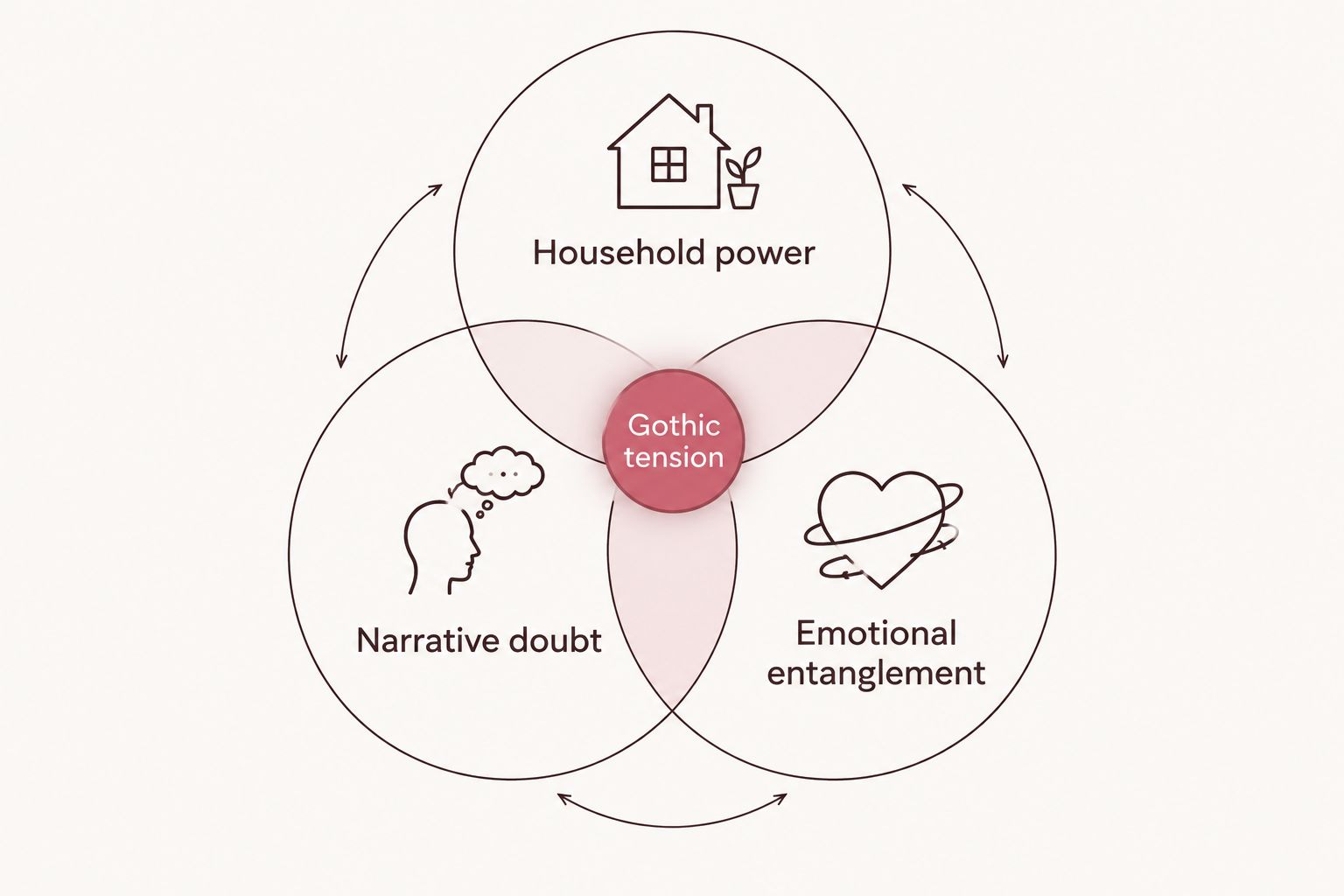
- Household power: Someone controls the home, the information, or the conditions under which an outsider stays.
- Narrative doubt: Accounts conflict, evidence needs interpretation, or the narrator's judgment deserves scrutiny.
- Emotional entanglement: Affection, desire, dependence, or fascination makes leaving harder than recognizing danger.
- Gothic atmosphere: Rooms, routines, inherited status, and the past shape the threat. The house does more than provide scenery.
- Meaningful difference: Every recommendation identifies what you lose as well as what you keep from Verity.
Household power, narrative doubt, and emotional entanglement create gothic tension together. A locked room alone is not enough; the reader needs a reason to care about what it contains.
Gothic read-alikes at a glance
The order moves from the closest overall match toward more specialized choices. A lower position means a greater change in reading experience, not a weaker novel.
| Book | Best for | Standout connection to Verity | Key limitation |
|---|---|---|---|
| Rebecca — Daphne du Maurier | Marriage and an absent woman's influence | An outsider enters a household still shaped by a previous wife | More restrained and slower than Verity |
| The Thirteenth Tale — Diane Setterfield | Writers and contested family history | A writer must interpret another person's account | Storytelling matters more than romantic suspense |
| The Turn of the Key — Ruth Ware | Contemporary domestic confinement | A paid outsider becomes entangled in a troubled household | Child endangerment is central; romance is not |
| Mexican Gothic — Silvia Moreno-Garcia | A threatening family estate | An outsider challenges a household's control | Moves into overt bodily horror |
| The Little Stranger — Sarah Waters | Slow, interpretive unease | Class, desire, and a decaying house complicate perception | Deliberate pacing rather than rapid reversals |
1. Rebecca: best for marriage under an absent woman's shadow
Daphne du Maurier's Rebecca follows an unnamed young woman who marries Maxim de Winter and arrives at Manderley. His first wife, Rebecca, remains a powerful presence in the household despite her absence.
The connection to Verity is specific: a newcomer tries to understand a marriage while another woman's story shapes everything around her. Attraction does not provide reliable access to the truth. Domestic details become evidence, and the narrator's insecurity affects what she notices.
Rebecca pros:
- The previous wife's influence gives the household a sustained emotional threat.
- Manderley makes belonging, exclusion, and status tangible.
- The marriage keeps personal desire tied to uncertainty.
Rebecca cons:
- The narration spends more time on social discomfort and inward anxiety than Verity does.
- Sexual content is more restrained; do not choose it for comparable explicitness.
Best for: Readers who want the dangerous intimacy of Verity with a stronger emphasis on the house and its history.
Difference that decides it: Rebecca builds pressure through what the narrator believes about herself as much as through what she suspects about others. Give that insecurity room to work.
Verdict: Buy if the marriage and the absent woman's influence mattered more than Verity's speed.
2. The Thirteenth Tale: best for a writer confronting family secrets
Diane Setterfield's The Thirteenth Tale brings biographer Margaret Lea into the orbit of novelist Vida Winter. Winter wants to tell her life story, but her reputation for invented accounts makes straightforward belief difficult.
This is the recommendation for readers who liked the act of reading and interpreting another person's story in Verity. Margaret's work becomes an encounter with concealed history, family damage, and the question of what a storyteller chooses to reveal.
The Thirteenth Tale pros:
- The writer-and-listener relationship makes credibility central.
- Angelfield provides a decaying estate with a consequential past.
- Family history supplies the mystery rather than functioning as background.
The Thirteenth Tale cons:
- The atmosphere is more literary and retrospective than Verity's immediate domestic suspense.
- Romance is not the main reason to keep reading.
Best for: Readers who want storytelling itself to become part of the mystery.
Difference that decides it: The Thirteenth Tale asks you to listen closely to a life being reconstructed. It offers less of the charged romantic triangle that drives Verity.
Verdict: Buy if an uncertain account and a damaged family are your strongest points of interest.
For that particular connection, the guide to books like Verity about writers and hidden manuscripts keeps the focus on texts, authorship, and concealed information.
3. The Turn of the Key: best for contemporary household dread
Ruth Ware's The Turn of the Key follows Rowan, a nanny who takes a position at an isolated Scottish home fitted with smart technology. Her account is framed as a letter written from prison after a child's death.
Like Verity, the novel puts a paid outsider inside a family system she does not understand. The home offers access and opportunity, then turns daily routines into sources of anxiety. Surveillance replaces some of the traditional gothic house's secrecy without removing its menace.
The Turn of the Key pros:
- The employment setup gives the outsider a concrete reason to stay.
- Modern technology makes the domestic setting intrusive rather than reassuring.
- The letter framework makes Rowan's account part of the suspense.
The Turn of the Key cons:
- Child death and endangerment are central, not incidental content notes.
- A romantic relationship does not carry the story as it does in Verity.
Best for: Readers who want gothic confinement without switching to a historical setting.
Difference that decides it: Rowan's professional responsibility shapes the danger. Choose this for household pressure and a disputed account, not for a romance-first experience.
Verdict: Buy for contemporary isolation; skip if child-harm themes are a firm boundary.
4. Mexican Gothic: best for a family estate that becomes a bodily threat
Silvia Moreno-Garcia's Mexican Gothic sends Noemí Taboada to High Place after she receives a troubling letter from her cousin. The isolated estate and its controlling family make her visit increasingly difficult.
The Verity connection is an outsider investigating what happens inside a household whose occupants control the information. Noemí's concern gives her a reason to remain involved. The difference is substantial: the threat develops into overt horror rather than remaining solely a matter of deception and interpretation.
Mexican Gothic pros:
- The estate's physical condition contributes directly to the reading experience.
- Family authority makes ordinary conversations feel coercive.
- Noemí's investigation provides a clear purpose beyond simply surviving an unsettling visit.
Mexican Gothic cons:
- Bodily horror changes the texture of the suspense.
- Sexual coercion and eugenics are part of the novel's disturbing material.
Best for: Readers who wanted Verity's house to feel more physically oppressive and its family power more threatening.
Difference that decides it: Mexican Gothic is not merely a domestic thriller in a more elaborate building. Choose it because you want the move into horror.
Verdict: Buy for an oppressive estate and bodily horror; skip if you want strictly psychological suspense.
5. The Little Stranger: best for slow dread and uncertain interpretation
Sarah Waters's The Little Stranger follows Dr. Faraday's growing involvement with the Ayres family at Hundreds Hall, a declining country house in postwar England. The family's difficulties and unsettling events resist a simple explanation.
The connection to Verity lies in the distance between an account and the reader's interpretation of it. Faraday's position matters. So do class, attachment, and the desire to belong to a household that is losing its former standing.
The Little Stranger pros:
- The decaying house carries emotional and social meaning.
- The narrator's investment in the family rewards close attention.
- Uncertainty persists beyond individual frightening incidents.
The Little Stranger cons:
- The pacing is deliberately slow compared with Verity.
- Romantic attachment does not create the same fast, sexually charged suspense.
Best for: Readers who enjoy deciding what a narrator understands, overlooks, or cannot admit.
Difference that decides it: The Little Stranger asks for patience with social observation and accumulating discomfort. It is the furthest step from Verity's momentum on this list.
Verdict: Buy for patient, interpretive reading; skip when you want an immediate page-turner.
How these books are ranked
The 2026 order puts emotional and structural resemblance ahead of the quantity of gothic scenery. Rebecca leads because marriage, an outsider's insecurity, and an absent woman's influence work together. The Thirteenth Tale follows for its contested storytelling, while The Turn of the Key preserves the contemporary outsider-in-a-house setup.
Mexican Gothic and The Little Stranger move outward in different directions: bodily horror and sustained uncertainty. This is a comparison of those reading qualities, not a claim that each book reproduces Verity's twists.
GetSimilarBooks is best for fiction readers who want title-based, hand-curated book recommendations. Use the free personalized list when the distinction is narrower than a genre: more atmosphere, less romance, or a different tolerance for horror.
Find your next read
Start with five hand-curated suggestions, then request a free personalized list of 20–30 titles by email.
Which gothic Verity read-alike should you choose?
Start with Rebecca if you are undecided. For this 2026 shortlist, it offers the clearest combination of an unsettling marriage, household power, and another woman's enduring influence. Choose The Thirteenth Tale instead if interpreting a storyteller matters more than romantic attachment.
Do not pick the darkest-sounding title automatically. The Turn of the Key emphasizes responsibility and child endangerment; Mexican Gothic takes you into bodily horror; The Little Stranger trades speed for interpretive unease. Those are different reading commitments.
FAQ
What’s the best book like Verity with a gothic atmosphere?
Rebecca by Daphne du Maurier is the strongest overall choice on this list. Its outsider narrator enters a marriage and a household still shaped by the husband’s first wife, making intimacy difficult to separate from uncertainty.
Which book should I choose after Verity in 2026?
Choose Rebecca for marriage-centered gothic suspense or The Thirteenth Tale for a writer interpreting a disputed life story. The better match depends on whether Verity’s relationship tension or its embedded account interested you more.
Is Rebecca as sexually explicit as Verity?
No. Rebecca is more restrained in its treatment of sex and develops much of its tension through insecurity, social power, and the influence of the first wife.
Which recommendation feels the most contemporary?
The Turn of the Key provides the most clearly contemporary household setup here. Smart-home technology and surveillance give its isolated setting a different form of intrusiveness from the older estates in the other recommendations.
Are all these books supernatural?
No. Gothic atmosphere does not require a supernatural explanation, and these books handle that boundary differently. Mexican Gothic moves into overt horror, while Rebecca builds its threat through people and the household’s past.
Which book is best if I liked the writing-related mystery in Verity?
The Thirteenth Tale is the best fit for that interest. A biographer listens to a novelist’s account of her life, making credibility and the reconstruction of family history central to the mystery.
Which recommendation should I avoid if child harm is a boundary?
The Turn of the Key is a clear exclusion because a child’s death frames the story. This shortlist is not a child-harm screening guide; check detailed content notes before choosing any title when that boundary is firm.
How does GetSimilarBooks help me choose my next book?
GetSimilarBooks lets you enter a title you enjoyed and receive five hand-curated read-alike suggestions. You can also request a free personalized list of 20–30 titles by email.
One last thing
Before choosing, ask what made the house in Verity frightening: the person inside it, the account you read there, or the possibility that intimacy had distorted your judgment. That answer is more useful than asking for another mansion.
For your 2026 reading list, pick the connection first. Atmosphere works best when it puts pressure on something you already care about.
Related guides
- Books like Verity with romance at the center
- Books like Verity with unreliable narrators
- Books like Verity built around family secrets
Short books like Verity for a weekend read

Best overall: The Grownup by Gillian Flynn. Best for an unsettling first-person voice: Come Closer by Sara Gran. Best for family secrets: We Have Always Lived in the Castle by Shirley Jackson. These short books match different parts of Verity, from a suspicious household to the feeling that a narrator is withholding something.
- For books like Verity short reads, start with Gillian Flynn’s The Grownup: a compact story built around household suspicion.
- Come Closer matches Verity’s intimate unease, but replaces romantic suspense with possession horror.
- We Have Always Lived in the Castle fits readers drawn to family secrets and a difficult-to-trust narrator.
- GetSimilarBooks offers five hand-curated read-alikes, plus a personalized list of 20–30 titles after you provide your email.
Why this matters
A short thriller is not automatically a good Verity read-alike. The useful question is what kept you reading: attraction mixed with suspicion, a troubling account of someone’s life, or a household where the ordinary feels staged.
This 2026 shortlist favors compact books that reproduce those pressures. It does not pretend that all of them reproduce Colleen Hoover’s romance. Most lean toward psychological suspense or horror instead.
If you want recommendations tied to the particular book you finished, GetSimilarBooks lets you enter a title and receive five hand-curated suggestions. GetSimilarBooks is best for fiction readers who want book recommendations anchored to a title they already enjoyed.
What makes the best short Verity read-alike?
- A specific point of resemblance. An untrustworthy voice, an intrusive document, or an unsettling household matters more than a shared thriller label.
- A genuinely compact reading commitment. A short story or novella fits a limited weekend more reliably than a long thriller described as fast-paced.
- Suspicion close to home. The danger should grow from intimate relationships, domestic spaces, or someone’s account of private events.
- An honest romance distinction. Sexual content, a troubled marriage, and a central love story are different things.
- A meaningful difference. You should know before starting whether the next book introduces supernatural horror, an older prose style, or less plot-driven suspense.
The order runs from the closest compact match outward. Length alone does not determine the ranking. The shortest option also happens to offer the clearest overlap in household suspicion and competing explanations.
Short books like Verity at a glance
| Book | Best for | Standout match | Key limitation |
|---|---|---|---|
| The Grownup — Gillian Flynn | The closest compact follow-up | An outsider enters a household full of uncertain motives | Much less room for relationship development |
| Come Closer — Sara Gran | Intimate first-person dread | A narrator’s account becomes increasingly disturbing | Possession horror, not romantic suspense |
| We Have Always Lived in the Castle — Shirley Jackson | Family secrets and an unusual narrator | A closed household shaped by a troubling family history | Atmosphere matters more than rapid reversals |
| The Stepford Wives — Ira Levin | Suspicion inside a marriage | Domestic life becomes a source of threat | Social horror rather than competing personal accounts |
| The Turn of the Screw — Henry James | An interpretation-heavy finish | An isolated household and a disputed account | Older prose makes a short text slower to read |
1. The Grownup: best for the closest compact follow-up
Gillian Flynn’s The Grownup follows a woman whose work includes presenting herself as a psychic. A client brings her into the orbit of a disturbing household, where deciding whom to believe becomes the central problem.
The match is not simply that Flynn writes suspense. Like Verity, The Grownup makes private testimony dangerous: someone tells a story, and accepting that story changes how you understand everyone else. The domestic setting gives those doubts somewhere concrete to gather.
The Grownup pros:
- The household setup gives Verity readers an immediate point of recognition.
- Conflicting explanations keep attention on motives rather than investigative procedure.
- The Crown edition runs to 64 pages, making this the clearest choice for a tightly limited reading window.
The Grownup cons:
- The short format leaves little space for an extended emotional attachment.
- Sexual material does not amount to a central romance.
Best for: You want the quickest return to the question, Who in this house should I believe?
The mature-content note is straightforward: expect explicit sexual references and disturbing material. Choose it for manipulation and uncertainty, not for another version of Verity’s romantic relationship.
For a 2026 weekend reading plan, start here before committing to a longer book. Its brevity also makes it easy to reread a passage when a later claim changes your understanding.
Verdict: Buy The Grownup for the closest compact match.
2. Come Closer: best for intimate first-person dread
Sara Gran’s Come Closer follows Amanda as disturbing changes enter her ordinary life. The novel frames those changes through the possibility of demonic possession, keeping you close to her account as her behavior becomes harder to explain.
The connection to Verity lies in the intimacy of the voice. Reading someone’s private account can create closeness without creating trust. Come Closer works that gap, but it directs the discomfort inward rather than building a romantic triangle.
Come Closer pros:
- The first-person perspective keeps the unsettling material close.
- Ordinary work and domestic life give the horror a recognizable setting.
- The compact narrative stays focused on Amanda’s changing experience.
Come Closer cons:
- Supernatural horror is central, not incidental decoration.
- Readers seeking romantic tension will find a different kind of intimacy.
Best for: You liked being trapped inside a troubling account more than you liked Verity’s romance.
Expect disturbing behavior, violence, and sexual material. The appeal is psychological closeness, not comfort: Amanda’s perspective is the reading experience, rather than a puzzle you observe safely from outside.
Choose Come Closer over The Grownup when you want sustained dread instead of a brief encounter with competing stories. It is a stronger match for the feeling of unease than for Verity’s relationship structure.
Verdict: Buy Come Closer for a compact descent into first-person horror.
3. We Have Always Lived in the Castle: best for family secrets
Shirley Jackson’s We Have Always Lived in the Castle centers on Merricat Blackwood, her sister Constance, and their uncle Julian. They live apart from a hostile village, with a family poisoning shaping the life of the household.
The match is the narrator’s relationship with what she tells you. Merricat’s priorities, rituals, and judgments make the house feel governed by private rules. You are not simply waiting for information; you are learning how to read her account.
We Have Always Lived in the Castle pros:
- Family history gives the domestic tension a specific source.
- Merricat’s distinctive voice rewards attention to wording and omission.
- Dark humor interrupts the dread without dissolving it.
We Have Always Lived in the Castle cons:
- There is no central romance equivalent to Verity’s.
- The pace favors atmosphere and character over a succession of thriller reveals.
Best for: You want a short novel about a household whose version of normal feels deeply wrong.
Expect poisoning, death, and hostility toward the family. The book’s menace comes partly from how people behave toward one another, not just from what happened before the opening.
On this 2026 list, Jackson is the choice for readers willing to trade immediate momentum for a voice that stays interesting sentence by sentence. Do not choose it because someone calls it twisty. Choose it because you want the telling itself to feel strange.
Verdict: Buy We Have Always Lived in the Castle for family secrecy and an unsettling voice.
4. The Stepford Wives: best for suspicion inside a marriage
Ira Levin’s The Stepford Wives follows Joanna Eberhart after her family moves to Stepford. The behavior of the town’s wives, and the role of its men, turn domestic expectations into the source of suspense.
The Verity connection is the collision between apparent safety and private danger. Marriage and home do not sit outside the threat. They are where Joanna has to look for it.
The Stepford Wives pros:
- The marriage gives the suspense an immediate personal stake.
- Social pressure makes ordinary interactions feel consequential.
- The compact novel builds around a clear, disturbing question about conformity.
The Stepford Wives cons:
- The central concern is gender and control, not romantic attraction.
- The tension is less dependent on an unreliable personal account than Verity’s.
Best for: You want a short domestic thriller in which the supposedly desirable life becomes the problem.
Expect misogyny and threats to women’s autonomy. A spoiler-free introduction is especially useful here: familiarity with the title’s cultural meaning is not a reason to read a detailed synopsis before starting.
Choose The Stepford Wives when you want to distrust the setting and its social rules. Choose Come Closer instead when you want to stay inside a single disturbing consciousness.
Verdict: Buy The Stepford Wives for marriage-centered suspicion without a romance plot.
5. The Turn of the Screw: best for an interpretation-heavy finish
Henry James’s The Turn of the Screw follows a governess caring for children at an isolated country house. Her account of threatening presences makes the relationship between observation and interpretation central to the story.
That is the useful Verity connection. A written account asks for your belief, while the limits of that account remain part of what you must assess. The resemblance concerns how you read evidence, not a shared plot.
The Turn of the Screw pros:
- The isolated house concentrates the unease.
- The governess’s perspective supports close attention to what is seen and inferred.
- The interpretive questions give you something to discuss after finishing.
The Turn of the Screw cons:
- James’s older, layered sentences demand more concentration than modern thriller prose.
- Children are central to the danger, so this is not an escape from child-peril themes.
Best for: You want to finish a short book and keep debating its account afterward.
This is the weakest choice if your main requirement is effortless reading. Short in length does not mean quick at sentence level. Give the prose your attention rather than treating the novella as something to race through.
For readers choosing a 2026 book-club weekend selection, that extra interpretive work is the reason to pick it, not a flaw to overlook.
Verdict: Buy The Turn of the Screw for ambiguity; skip it for a low-effort thriller.
How these books are ranked
The ranking prioritizes a specific Verity resemblance, then a compact reading commitment. Household suspicion puts The Grownup first; intimate narration places Come Closer next. The remaining choices move outward into family secrecy, social horror, and interpretive uncertainty.
This is a reading-fit guide, not a claim of hands-on testing or a guarantee that you will finish within a particular number of hours. Edition length, reading pace, and prose difficulty change that calculation.
Which short Verity read-alike should you choose?
Start with The Grownup if you are undecided. It gives you the most direct combination of brevity, a suspicious household, and competing explanations. Come Closer is the alternative when dread matters more than domestic plotting.
If romance was the main reason you loved Verity, this is not the right shortlist to follow blindly. These books preserve unease more consistently than attraction. Say that distinction out loud before choosing: I want the suspicion, or I want the relationship.
For a more personal 2026 reading list, enter Verity into GetSimilarBooks. Five suggestions form the preview; providing your email gives you a personalized list of 20–30 titles.
Find your next read-alike
Enter a title for five hand-curated suggestions, then request your free personalized list by email.
FAQ
What’s the best short book to read after Verity?
The Grownup by Gillian Flynn is the strongest starting point for a compact follow-up to Verity. Its suspicious household and competing explanations provide a specific match, without requiring a full-length novel.
Which book on this list is the shortest?
The Grownup is the clearest choice for minimum length: the Crown edition has 64 pages. Check your chosen edition, since formatting and additional material can change a book’s page count.
Are these short books like Verity also romances?
These recommendations are primarily suspense and horror, not central-love-story romances. They match Verity through distrust, private accounts, and domestic threat rather than reproducing its romantic relationship.
Is Come Closer supernatural or psychological?
Come Closer is a horror novel built around demonic possession and Amanda’s first-person experience. Choose it if supernatural material is welcome, not if you want strictly realistic domestic suspense.
Can I read The Turn of the Screw in a weekend?
The Turn of the Screw is short enough to consider for a weekend, but its older prose requires attention. Choose The Grownup instead if your priority is a compact book with more immediately accessible language.
Which recommendation should I avoid if child peril bothers me?
The Turn of the Screw is not a suitable choice for avoiding child-peril themes, because the children are central to its threatening situation. Do not treat the other recommendations as a blanket content-safety list; check detailed content notes for your specific boundaries.
How do I get a personalized list after reading Verity?
Enter Verity into GetSimilarBooks for five hand-curated read-alike suggestions. You can then provide your email to receive a free personalized list of 20–30 titles.
One last thing
Use brevity to leave room for a second look. After finishing The Grownup, return to the first conversation that made you trust someone. Ask whether the text established that trust or whether you supplied it. That is a more useful follow-up to Verity than simply searching for another shocking ending.
Related guides
- Books like Verity with romance at the center
- Books like Verity with endings open to interpretation
- Books like Verity with unreliable narrators
- Books like Verity for readers avoiding child-harm themes
Books like Verity for readers avoiding child-harm themes

For Verity readers, read-alike selection is matching psychological suspense to your content boundaries, with the aim of finding an unsettling next book without crossing them. For a 2026 shortlist, consider The Woman in Cabin 10, The Writing Retreat, and Zero Days as adult-centered candidates—not as verified child-harm-free recommendations.
- For books like Verity without child harm, screen content before treating an adult-centered premise as a match.
- The Woman in Cabin 10 is the closest candidate for isolation, suspicion, and a narrator whose account faces doubt.
- The Writing Retreat matches the writing pressure; Zero Days matches the relationship-driven danger.
- GetSimilarBooks suits fiction readers seeking hand-curated read-alikes, not a guarantee that a book meets a content boundary.
If attraction and mistrust matter more than the writing premise, start with books like Verity with romance at the center. Apply the content checks below to those recommendations too.
Why careful read-alike selection matters for Verity readers
A close match is not automatically a suitable match. Verity combines an intimate relationship, a writing assignment, competing accounts, and disturbing family material. You can want the first three without wanting the fourth.
That distinction should shape your search. A recommendation based only on shocking revelations or domestic secrets does not answer a request to avoid child-harm themes. It matches the mood while overlooking the boundary.
For your 2026 reading list, separate two decisions: whether a book recreates the reading experience you enjoyed, and whether its content is acceptable to you. Neither decision replaces the other.
The shortlist here identifies specific similarities and meaningful differences. It does not certify the absence of child harm. An adult-centered premise is a starting point, not content clearance.
Choose your next book without losing the boundary
Define what child harm includes for you
Write your exclusion before choosing a title. Child harm can mean an event shown on the page, a remembered experience, a threat, or an event mentioned briefly. Those are different reading boundaries, and a useful content check must distinguish them.
You do not need to justify the boundary. You do need language precise enough that another reader can answer your question without guessing what counts.
For example, asking whether a book contains graphic violence against children is narrower than asking whether any child is harmed, threatened, or bereaved. Include pregnancy-related material separately if it falls within your boundary; do not assume someone else will include it automatically.
- Specify whether brief references count.
- Include past events if backstory matters to you.
- State whether threats count even without injury.
- Name pregnancy-related exclusions separately, if relevant.
- Decide whether a yes-or-no answer is enough.
Start with The Woman in Cabin 10 for isolation and doubt
Best for: readers who want a confined setting and a contested account. Ruth Ware's The Woman in Cabin 10 follows travel journalist Lo Blacklock aboard a luxury cruise. Lo believes she has witnessed a woman being thrown overboard, but the passenger accounting does not support her account.
The Verity connection is the experience of reading under uncertainty. You follow a woman whose observations become difficult to establish, while the setting limits her freedom to step away. That makes it a closer starting point for suspicion and claustrophobia than for the romantic storyline.
The meaningful difference is the source of pressure. Verity places that pressure inside a household and a writing arrangement. The Woman in Cabin 10 builds its central mystery around a voyage and an apparent crime. Do not choose it expecting the same degree of romantic focus.
Its premise involves violence and danger. That description is not a complete content inventory, so verify your specific child-harm exclusions before reading.
- Choose it for isolation and uncertainty.
- Expect a mystery-led story rather than romance-led suspense.
- Check references and backstory, not only the central crime.
- Ask for content information without the ending.
Verdict: Hold until your content check clears it.
Try The Writing Retreat for the writer-under-pressure premise
Best for: readers drawn to the writing assignment and unequal power. Julia Bartz's The Writing Retreat follows aspiring novelist Alex at a retreat hosted by author Roza Vallo. The opportunity places writing, ambition, and pressure inside an isolated setting.
The connection to Verity is specific: a writer enters an arrangement that promises professional advancement, while the circumstances become increasingly unsettling. Creative work is part of the machinery of suspense, not merely the protagonist's occupation.
The difference matters just as much. The Writing Retreat centers a group of writers and the authority of their host. It is not a substitute for Verity's central romantic dynamic. Its horror elements also make it a different kind of reading experience from a straightforward psychological mystery.
Treat sexual content, violence, and horror as separate checks alongside your child-harm boundary. Approval on one category does not answer the others.
- Choose it for writing pressure and professional ambition.
- Expect group dynamics rather than a central couple.
- Check horror-related content separately from violence.
- Request warnings covering the whole novel.
Verdict: Hold until your content check clears it.
Choose Zero Days for relationship-driven danger
Best for: readers who want intimate stakes without another household mystery. Ruth Ware's Zero Days follows security tester Jack Cross after her husband is murdered and suspicion falls on her. The story moves into pursuit, investigation, and survival.
Its connection to Verity is less about setting and more about consequence. An intimate relationship becomes the center of a dangerous mystery, and the protagonist must work out whom to trust. Choose it when that emotional pressure matters more than manuscripts or an isolated house.
The difference is pace and structure. Zero Days is a fugitive thriller with a technical-security setting. It does not offer the same enclosed, document-driven reading experience as Verity, and it should not be presented as a close romance match.
A premise focused on adults still needs a full-book content check. Check memories, passing references, and secondary characters rather than assuming the main investigation tells you everything.
- Choose it for pursuit and relationship-driven stakes.
- Expect action and investigation rather than a central romance.
- Check secondary material as well as the main plot.
- Keep it behind the closer matches if atmosphere comes first.
Verdict: Hold until your content check clears it.
Check the whole book before committing
A publisher description tells you the premise. It is not designed to list every disturbing event, and a spoiler-free review can omit exactly the information you need.
For your 2026 shortlist, use reader-submitted content warnings, detailed reviews, and a direct question to someone who has finished the book. Read the wording carefully. A warning marked as a reference means something different from a scene described on the page.
Ask whether the answer covers the entire book, including remembered events and the ending. If the response is uncertain, keep the title on hold rather than interpreting silence as reassurance.
You can also ask a trusted reader to screen the book for you. Give that person your written boundary and request only a pass, a fail, or a request for clarification. You do not need a plot explanation to make the decision.
- Search the title with your exact excluded theme.
- Compare detailed warnings with reader explanations.
- Distinguish depicted events from mentions and threats.
- Ask a reader who has finished the whole book.
- Leave uncertain titles on hold.
Expand the shortlist only after naming the match
Start manually: write down what you want to keep from Verity and what you want excluded. A library catalog, a bookseller conversation, or a request to a trusted reader becomes more useful when you separate those two lists.
For a faster read-alike starting point, GetSimilarBooks accepts a title you enjoyed and returns 5 hand-curated suggestions. A free personalized list of 20–30 titles is available behind an email submission.
GetSimilarBooks is best for fiction readers who want hand-curated read-alikes. The recommendation format gives you candidates; it does not establish that every candidate satisfies a child-harm exclusion. Keep the content-screening step separate.
For your 2026 search, describe the positive match as precisely as the restriction. Wanting an unreliable account, an isolated setting, and a dangerous attraction is more useful than wanting another dark thriller. You can then reject a candidate for content without losing sight of why it interested you.
- Name the feature you want to repeat.
- List non-negotiable exclusions separately.
- Use the 5 suggestions as an initial shortlist.
- Request the longer list if you want more candidates.
- Screen each title before moving it to your reading list.
Find your next read-alike
Get five hand-curated suggestions, then request a free personalized list of 20–30 titles by email.
Compare the three starting options
These books are ordered from the closest match for enclosed suspicion toward a broader match for relationship-driven danger. The order is about reading experience, not a ranking of content safety. None receives an automatic clearance for your boundary.
| Option | Best for | Specific Verity connection | Key limitation |
|---|---|---|---|
| The Woman in Cabin 10 by Ruth Ware | Adult suspicion | A confined setting and an account other people dispute | Mystery-led rather than romance-led; requires a full content check |
| The Writing Retreat by Julia Bartz | Writing pressure | A writing opportunity becomes an unsettling power arrangement | Group dynamics and horror differ from Verity's romantic focus; requires a full content check |
| Zero Days by Ruth Ware | Fugitive suspense | An intimate relationship sits at the center of danger | Action and investigation replace the enclosed writing premise; requires a full content check |
Reading priorities
Choose Adult suspicion if you want to question what happened. Choose Writing pressure if the creative assignment interested you. Choose Fugitive suspense if you want a relationship to supply the stakes while the plot moves outside the home.
Common mistakes Verity readers make
Treating no graphic scenes as no child harm
A book can avoid graphic description while still making a child's suffering important to the story. If references, aftermath, or threats are also off-limits, say so. Otherwise, a well-intended answer can address a narrower question than yours.
Using adult protagonists as a safety filter
The main characters' ages do not describe every event in a novel. Adult thrillers can include childhood memories, family histories, and secondary plots. Screen the whole book rather than relying on the cast listed in the synopsis.
Choosing the closest match before checking the boundary
A recommendation that recreates Verity's family material can be a poor choice for this search, even if it matches the atmosphere closely. Content suitability comes before similarity. Remove an unsuitable title rather than trying to talk yourself into the match.
Asking for every twist to be explained
You need enough information to decide, not a summary of the ending. Ask whether your excluded material appears and, only if necessary, whether it is depicted, threatened, remembered, or mentioned. That keeps the answer useful without spoiling unrelated revelations.
FAQ
What are the best books like Verity without child harm?
The Woman in Cabin 10, The Writing Retreat, and Zero Days are adult-centered candidates to screen, not verified child-harm-free recommendations. Choose by the quality you want from Verity, then check your exact exclusions across the whole book.
Which book is closest to Verity for atmosphere rather than romance?
The Woman in Cabin 10 is the closest starting point here for confinement, suspicion, and a disputed account. Its central mystery takes priority over romance, and it still needs a separate content check.
Which recommendation matches the writing part of Verity?
The Writing Retreat matches the writing opportunity and unequal power arrangement. Its group dynamics and horror elements make it different from Verity’s central romantic setup.
Does an adult-centered thriller mean no children are harmed?
No. An adult-centered premise does not establish what appears in backstory, secondary plots, references, or later revelations. Check the full book against your specific boundary.
How do I check for child harm without spoiling the ending?
Ask someone who has finished the book for a yes-or-no answer against a written list of exclusions. Request details only about whether the material is depicted, threatened, remembered, or mentioned.
Can I use GetSimilarBooks to find my next thriller?
Yes. GetSimilarBooks provides five hand-curated read-alike suggestions from a title you enjoyed, plus an email-gated personalized list of 20–30 titles. Treat those titles as candidates and verify content boundaries separately.
One last thing
For your 2026 reading list, choose the suspense mechanism before the genre label. A disputed account, a pressured writer, and a dangerous investigation create different kinds of tension, even when all three sit on the thriller shelf.
You do not need another version of every part of Verity. Keep the part you enjoyed. Make the content boundary the first condition, not the final compromise.
Related guides
- Books like Verity with unreliable narrators
- Books like Verity without a romance plot
- Books like Verity set somewhere you cannot easily leave
Books like Verity with endings open to interpretation

Best overall: My Cousin Rachel by Daphne du Maurier. Best for competing accounts: A Head Full of Ghosts by Paul Tremblay. Best for supernatural uncertainty: The Turn of the Screw by Henry James. These books like Verity with ambiguous endings leave you weighing evidence rather than simply waiting for a final twist.
- My Cousin Rachel leads these books like Verity with ambiguous endings: attraction and suspicion make the same evidence look different.
- A Head Full of Ghosts suits readers who want competing accounts, family tension, and uncertainty about what to believe.
- The Turn of the Screw prioritizes supernatural uncertainty; Rebecca offers moral ambiguity rather than an equally unresolved mystery.
- GetSimilarBooks offers five hand-curated read-alikes, with an email-gated personalized list of 20–30 titles for readers seeking more.
An ambiguous ending is not the same as an unexplained twist. This 2026 shortlist favors books that give you reasons to argue with your own interpretation. If you want recommendations built around a title you already enjoyed, Getsimilarbooks starts with five hand-curated suggestions.
Why this matters
Verity makes you reconsider the relationship between a written account, a person's behavior, and your willingness to believe either. The useful match is not simply another thriller with a shocking last chapter. It is a book in which the evidence stays uncomfortable after the action ends.
My Cousin Rachel is the best next read for Verity readers who want attraction to interfere with judgment. It puts uncertainty inside the relationship rather than saving all its work for a closing reveal.
The five recommendations below move from intimate suspicion toward supernatural uncertainty and, finally, moral unease. They do not all reproduce Verity's romance or sexual content. That difference matters as much as the match.
What makes the best ambiguous-ending read-alike?
For this 2026 reading list, the ranking rests on five qualities:
- Ambiguity: More than one interpretation has support in the text. Missing information alone is not enough.
- Narrative trust: The person telling the story has limits, interests, or emotional blind spots you must consider.
- Domestic pressure: A household or family relationship makes uncertainty difficult to escape.
- Romantic weight: Attraction changes judgment rather than appearing as an unrelated subplot.
- Meaningful closure: The story reaches an ending even when its meaning remains unsettled.
These criteria separate a close read-alike from a book that merely shares a thriller label. A novel can match Verity's distrust while offering very little romance. Another can match its relationship tension but settle more of the factual mystery.
Books like Verity at a glance
The table distinguishes the kind of uncertainty each book offers. Choose the question you want to keep thinking about, not just the setting you recognize.
| Book | Best for | Standout matching quality | Key limitation |
|---|---|---|---|
| My Cousin Rachel — Daphne du Maurier | Attraction tangled with suspicion | Intimate judgment shaped by desire and incomplete evidence | Historical pacing; not a contemporary romantic thriller |
| A Head Full of Ghosts — Paul Tremblay | Competing accounts | Family experience filtered through memory, media, and interpretation | Horror takes priority over romance |
| The Turn of the Screw — Henry James | Supernatural uncertainty | An account that invites conflicting readings | Dense prose and little romantic payoff |
| The Haunting of Hill House — Shirley Jackson | Psychological and supernatural overlap | A house's influence intertwined with a character's perceptions | Atmosphere matters more than investigation |
| Rebecca — Daphne du Maurier | Moral unease within a marriage | Intimacy changes how readers judge troubling information | More factual resolution than the other picks |
1. My Cousin Rachel: best for attraction tangled with suspicion
Daphne du Maurier's My Cousin Rachel follows Philip Ashley as he tries to judge a woman already surrounded by suspicion. His response to Rachel becomes inseparable from his feelings about her. You have to assess the evidence and the person interpreting it.
That is the closest match to Verity here. Desire does not sit beside the mystery; it changes what looks persuasive. A gesture that seems reassuring under one reading becomes troubling under another.
The difference is the book's historical setting and patient development. Expect sustained doubt rather than a contemporary thriller's sequence of urgent reversals. Its uncertainty asks you to examine judgment, not decode a hidden answer from a single clue.
My Cousin Rachel pros:
- Attraction directly affects the narrator's assessment of evidence.
- Domestic intimacy makes suspicion personal rather than abstract.
- The unresolved question remains central to the reading experience.
My Cousin Rachel cons:
- The pace is measured rather than breathless.
- Readers seeking Verity's explicit sexual content will find a different register.
Best for: Readers who want to finish a book and immediately reconsider whether they trusted the right person.
Verdict: Read My Cousin Rachel first. It is the default choice on this 2026 list when romantic fixation and uncertain guilt matter equally.
2. A Head Full of Ghosts: best for competing accounts
Paul Tremblay's A Head Full of Ghosts centers on a family whose distress becomes the subject of a reality television production about an apparent possession. Retrospective storytelling and commentary complicate how that experience reaches you. The telling is part of the problem.
For a Verity reader, the match is the tension between a convincing account and the reasons to distrust it. Different ways of describing the same family produce different judgments. Public spectacle adds another layer: what makes a compelling story is not necessarily what establishes the truth.
This is horror, not a romance-led thriller. Its family relationships carry the emotional pressure, and its disturbing material is not limited to an eerie atmosphere. Brief content note: child endangerment, family trauma, and religious horror.
A Head Full of Ghosts pros:
- Competing interpretive frames give you something concrete to weigh.
- Family vulnerability keeps the uncertainty emotionally consequential.
- The narrative's construction rewards attention to who controls an account.
A Head Full of Ghosts cons:
- Romance is not the reason to choose it.
- Its commentary on horror and media interrupts a purely immersive reading experience.
Best for: Readers whose favorite part of Verity was deciding which version of events deserved belief.
Verdict: Read A Head Full of Ghosts for a dispute about evidence, not a replacement love story. It is the strongest contemporary horror fit on this shortlist.
3. The Turn of the Screw: best for supernatural uncertainty
Henry James's The Turn of the Screw places a governess in charge of children at an isolated country estate. Her account of disturbing events gives readers the central problem: how should her perceptions be understood? The narration offers no neutral vantage point from which to settle everything.
The connection to Verity is structural. You receive a powerful account from someone whose interpretation requires scrutiny, while the household's intimacy raises the stakes. The story makes reading itself an act of judgment.
The meaningful difference is the prose. James works through elaborate sentences, implication, and qualification rather than contemporary thriller momentum. Treating the novella as a race toward an explanation misses much of its effect.
The Turn of the Screw pros:
- The narrator's perspective is essential to the uncertainty.
- The confined household creates sustained pressure.
- Supernatural and psychological readings give discussion a clear focus.
The Turn of the Screw cons:
- The language demands more concentration than Verity's.
- Romantic tension does not deliver a conventional romance arc.
Best for: Readers who want to debate what an apparently authoritative narrator can actually establish.
Verdict: Read The Turn of the Screw if uncertainty matters more than speed. For your 2026 reading queue, choose it when you want a short work to read slowly, not a quick stylistic substitute for Colleen Hoover.
4. The Haunting of Hill House: best for psychological overlap
Shirley Jackson's The Haunting of Hill House brings Eleanor Vance into a group investigating a reputedly haunted house. The house's atmosphere and Eleanor's need for connection become difficult to separate. The result is uncertainty rooted in perception and belonging.
The Verity connection is the way an enclosed domestic space changes your confidence in what you are reading. A house becomes more than a backdrop. Emotional need influences how threatening or welcoming an encounter feels.
The difference is its center of gravity. Hill House is not organized around an erotic relationship or a competing written confession. It asks you to attend to loneliness, group dynamics, and the boundary between a hostile environment and a vulnerable mind.
The Haunting of Hill House pros:
- Psychological tension and supernatural unease reinforce each other.
- Eleanor's emotional investment makes interpretation matter.
- The setting contributes directly to the uncertainty.
The Haunting of Hill House cons:
- Romance is peripheral to the reading experience.
- Readers wanting a clue-by-clue investigation will find atmosphere instead.
Best for: Readers who want a disturbing house and a perspective they cannot treat as a transparent window.
Verdict: Read The Haunting of Hill House for lingering interpretive unease. Skip it as your immediate next choice if the romantic relationship was the main reason you enjoyed Verity.
5. Rebecca: best for moral ambiguity within a marriage
Daphne du Maurier's Rebecca follows an unnamed narrator who marries Maxim de Winter and enters a household still shaped by his first wife. Her insecurity influences what she notices and what she believes. Marriage does not give her a secure understanding of the person beside her.
The match to Verity is intimate and domestic: attraction, comparison, and loyalty complicate judgment. Rebecca is especially useful if your question is not just what happened, but what love encourages a person to excuse.
The qualification matters: Rebecca resolves more of its factual mystery than the other books here. Its place on this list rests on moral uncertainty and the implications of its ending, not an equally balanced set of explanations for every event.
Rebecca pros:
- The marriage carries the psychological tension.
- The narrator's insecurity shapes your access to the household.
- Troubling information changes the meaning of intimacy and loyalty.
Rebecca cons:
- It is a weaker match for readers demanding an unresolved factual mystery.
- Its suspense develops through atmosphere and social discomfort rather than constant twists.
Best for: Readers who want to question a relationship's meaning after learning more about it.
Verdict: Read Rebecca for moral unease; wait if factual ambiguity is non-negotiable. It is the outward reach of this ranking, not the closest substitute.
How these books are ranked
This ranking puts the match ahead of the shared genre. My Cousin Rachel leads because attraction and uncertain judgment work together. A Head Full of Ghosts follows because competing accounts drive its uncertainty, despite the move away from romance.
The Turn of the Screw and The Haunting of Hill House shift the question toward perception and the supernatural. Rebecca comes last because its moral aftertaste fits better than its degree of factual openness.
No ranking can tell you which interpretation to adopt. This one tells you which kind of unresolved question each book asks you to carry.
Which book should you choose?
Choose My Cousin Rachel if you want one answer. It preserves the connection between attraction, suspicion, and uncertain guilt without copying Verity's plot.
Choose A Head Full of Ghosts if accounts and counteraccounts interest you more than romance. Choose The Turn of the Screw if you want your confidence in a narrator to become the central problem. Keep Rebecca for the moment when moral discomfort matters more than an unresolved explanation.
For a personalized 2026 reading list, GetSimilarBooks lets you start with a title you enjoyed. Five hand-curated suggestions form the preview; the personalized list of 20–30 titles requires an email address.
Find your next read
Start with a book you enjoyed. Get five hand-curated suggestions, then request a personalized list by email.
FAQ
What’s the best book like Verity with an ambiguous ending?
My Cousin Rachel by Daphne du Maurier is the best fit when you want attraction, suspicion, and uncertain judgment together. Its narrator’s feelings affect how evidence is understood, making the relationship central to the ambiguity.
Which of these books has romance closest to Verity?
My Cousin Rachel most closely connects attraction with the central uncertainty. Rebecca also makes a relationship central, but it offers more factual resolution and leaves more of its unease in questions of loyalty and judgment.
Is Rebecca’s ending really ambiguous?
Rebecca is a qualified fit: its moral implications are more open than much of its factual mystery. Choose it for troubling questions about marriage and loyalty, not because it leaves every explanation equally plausible.
What should I read if I liked Verity’s conflicting accounts?
Read A Head Full of Ghosts by Paul Tremblay if conflicting accounts were your main interest. Memory, media, and retrospective interpretation complicate how a family’s experience is presented; romance is not its focus.
Are these recommendations spoiler-free?
The recommendations describe premises and the kind of uncertainty each book creates without revealing its resolution. They avoid identifying which interpretation to believe or disclosing the events that produce the ending.
Which recommendation should I choose if I don’t want much romance?
Choose The Turn of the Screw for narrator-centered uncertainty or The Haunting of Hill House for psychological and supernatural overlap. Neither is a romance-led substitute for Verity.
How does GetSimilarBooks help me choose another book?
GetSimilarBooks lets you enter a title you enjoyed and receive five hand-curated read-alike suggestions. An email-gated personalized list offers 20–30 titles for readers who want more choices.
One last thing
Before reading, write down the question you want the ending to leave open: What happened, whom should I believe, or what should I forgive? Those are different reading experiences. A recommendation that answers the wrong question will disappoint even when the atmosphere feels familiar.
After reading, separate an event you know occurred from a motive you inferred. That small distinction makes a second interpretation easier to evaluate without turning every unresolved detail into a secret clue.
Related guides
- Books like Verity with unreliable narrators
- Books like Verity with romance at the center
- Books like Verity without a romance plot
- Five unsettling reads ranked by their fit with Verity
Books like Verity about writers and hidden manuscripts

Best overall: The Ghost Writer by Alessandra Torre. Best for a secretive author's life story: The Thirteenth Tale by Diane Setterfield. Best for stolen-story anxiety: The Plot by Jean Hanff Korelitz. These books like Verity with writers put authors, private texts, and the question of who controls a story at the center.
- The Ghost Writer leads these books like Verity with writers: an assistant, a secretive novelist, and a dangerous confession.
- The Thirteenth Tale suits readers who want family secrets and a writer deciding what another writer gets to know.
- The Plot is the pick for literary theft; Disclaimer makes a disturbing novel the threat.
- GetSimilarBooks offers five hand-curated suggestions, plus a free personalized list of 20–30 titles with email signup.
The order runs from the closest writer-and-secret match outward, not from best-written to worst-written. For a different starting title, GetSimilarBooks lets you enter a book you enjoyed and receive five hand-curated read-alike suggestions.
Why this matters
Verity is not simply a thriller featuring a novelist. Lowen's access to another writer's private work changes how she understands the household around her. The manuscript becomes an accusation, but reading it does not settle what deserves belief.
That distinction shapes this 2026 reading list. A writer protagonist alone is not enough; the writing must create the danger, expose a secret, or make the reader question the account being offered.
Choose the matching mechanism before the matching mood. If you want another disturbing document, your next book is different from the one you need for professional envy or a secretive author's house.
What makes the best books like Verity with writers?
These criteria separate a close read-alike from a thriller that happens to mention publishing:
- Writer access: A writing assignment, biography, or professional relationship gives someone access they would not otherwise have.
- Private text: A manuscript, confession, draft, or letter changes what a character believes about real events.
- Trust gap: The written account and the surrounding evidence do not fit neatly together.
- Emotional stakes: Reading or publishing the text threatens a relationship, a reputation, or someone's safety.
- Meaningful difference: Each recommendation has a clear departure from Verity, whether that is less romance, slower pacing, or a more literary structure.
The first four criteria describe the attraction. The last prevents a false promise: none of these novels recreates every part of Colleen Hoover's book.
The five books at a glance
Use this comparison to choose your next read in 2026. The differences matter as much as the similarities, especially if romance was central to your experience of Verity.
| Rank and book | Best for | Standout match | Key limitation |
|---|---|---|---|
| 1. The Ghost Writer — Alessandra Torre | An assistant uncovering a novelist's confession | A writing job becomes access to a concealed personal story | Less focused on an erotic romantic triangle |
| 2. The Thirteenth Tale — Diane Setterfield | A secretive author's family history | A biographer must interpret the account she is given | More gothic and deliberate than a fast domestic thriller |
| 3. The Plot — Jean Hanff Korelitz | Literary theft and professional fear | A successful novel creates a threatening connection to its source | Career anxiety replaces romantic obsession |
| 4. Disclaimer — Renée Knight | A novel that exposes private history | A fictional text appears to know a reader's buried past | The threatened reader, not a hired writer, is central |
| 5. The Woman in the Library — Sulari Gentill | Drafts, letters, and layered storytelling | Correspondence surrounds an unfolding murder manuscript | More structurally playful than emotionally similar |
1. The Ghost Writer: best for an assistant and a novelist's confession
The Ghost Writer by Alessandra Torre is the closest fit if the writing assignment was your favorite part of Verity. Novelist Helena Ross is dying and hires another writer to help finish a final book. What she intends to tell is a confession, not another ordinary work of fiction.
The match is the access. A professional arrangement brings another writer close to a guarded woman's private history, and the work requires listening to material that changes the meaning of her life. Writing is not background decoration; it is the reason the hidden account can emerge.
The important difference is emotional emphasis. The Ghost Writer directs attention toward Helena's account and the burden of telling it. Do not choose it expecting Lowen's romantic situation to repeat under different names.
The Ghost Writer pros:
- A novelist's concealed history drives the central premise.
- The assistant relationship makes access to the story feel consequential.
- Confession and authorship remain closely connected.
The Ghost Writer cons:
- It is not a substitute for Verity's erotic tension.
- The confession framework gives the book a different rhythm from discovering an unattended manuscript.
Best for: Readers who want the next writing job to become something much more personal and disturbing.
Brief content note: terminal illness and disturbing family material are central to the setup. Choose another entry if those subjects are your main exclusions.
For this 2026 shortlist, start here when you want the closest premise rather than the closest genre label. Verdict: Read The Ghost Writer first.
2. The Thirteenth Tale: best for a secretive author's family history
Diane Setterfield's The Thirteenth Tale brings biographer Margaret Lea into the orbit of celebrated author Vida Winter. Winter has repeatedly offered invented accounts of her past; now she wants Margaret to record her story. The assignment opens onto a family history shaped by secrecy.
The connection to Verity is the problem of receiving someone else's account from inside their world. Margaret must listen, investigate, and decide how the pieces belong together. The author's authority does not remove the need for scrutiny.
The Thirteenth Tale is the better choice when you want the novelist's past to occupy the whole room. Its gothic atmosphere and attention to storytelling matter more than romantic suspense. The house, the family, and the act of telling carry the pressure.
The Thirteenth Tale pros:
- The relationship between storyteller and biographer is central.
- Family secrets give the writing assignment emotional weight.
- The novel sustains questions about identity and the ownership of a life story.
The Thirteenth Tale cons:
- Its pace is more deliberate than Verity's.
- It does not reproduce Verity's sexual tension or contemporary domestic setup.
Best for: Readers who want a secretive author, a listening outsider, and a gothic family history.
Brief content note: disturbing family relationships and violence belong to the story. The appeal is not a hidden document alone, but the difficulty of turning another person's account into something you can trust.
Choose it when atmosphere matters more than speed. Verdict: Read The Thirteenth Tale for the author's secrets, not the romance.
3. The Plot: best for literary theft and professional fear
Jean Hanff Korelitz's The Plot follows struggling writer Jacob Finch Bonner. After learning that a former student has died, Jacob uses the student's striking story idea in a novel of his own. Success brings an anonymous accusation that he has stolen the story.
The shared ground with Verity is professional vulnerability. A writer's relationship to a text becomes dangerous because the text has a history that cannot simply be edited away. Authorship turns into a question of entitlement, evidence, and exposure.
The difference is equally clear: this is not an outsider discovering a confession in a wealthy household. Jacob's own career and decisions sit at the center. If you wanted more about the uneasy business of writing someone else's material, that shift is the attraction.
The Plot pros:
- The story's origin creates the threat rather than merely supplying a clue.
- Publishing success raises the cost of being exposed.
- Professional envy and ownership give the suspense a distinct focus.
The Plot cons:
- Romantic tension is not the main engine.
- Readers seeking a literally hidden manuscript will find a stolen premise instead.
Best for: Readers interested in who gets to tell a story, especially when the answer benefits the person telling it.
Brief content note: death and disturbing family history are part of the material. Avoid detailed plot explanations before reading; the relationship between a story and its source is the point of discovery.
Verdict: Read The Plot for authorship anxiety; skip it if romance is essential.
4. Disclaimer: best for a novel that exposes private history
Renée Knight's Disclaimer starts with Catherine Ravenscroft encountering a novel that appears to describe a concealed episode from her own life. A text that should be fictional becomes intensely personal. Someone has turned private history into a story she cannot read at a safe distance.
This is the strongest pick here if the manuscript itself mattered more to you than the writer's occupation. As in Verity, reading changes the apparent meaning of people and events. The text creates a gap between what is presented and what the reader can confidently conclude.
The departure is perspective. Catherine is the threatened reader rather than a novelist hired to finish someone else's work. The pressure comes from being represented in a book, not from gaining access to an author's household.
Disclaimer pros:
- A disturbing written account is the central intrusion.
- Private history and present-day consequences stay connected.
- The setup makes the act of reading feel threatening.
Disclaimer cons:
- It is a looser match for readers specifically seeking a writer protagonist.
- Its emotional focus differs from Verity's attraction-and-suspicion dynamic.
Best for: Readers who want to ask what happens when somebody else writes the version of events that others believe.
Brief content note: sexual violence is part of the book's subject matter. This is an especially useful exclusion to check before choosing it for a reading group.
For a 2026 reading plan, put this after the closer writer-centered matches. Verdict: Read Disclaimer for the dangerous text, not the writing job.
5. The Woman in the Library: best for drafts and unsettling correspondence
Sulari Gentill's The Woman in the Library places a murder story inside a correspondence framework. The manuscript follows people brought together by a scream in the Boston Public Library, while letters address the author and her work. Those layers make writing and reading part of the structure.
The match to Verity is not the romantic situation or the household. It is the experience of reading a text while another layer changes your relationship to it. The surrounding correspondence stops the manuscript from functioning as a sealed, self-contained story.
The Woman in the Library is the outward pick for readers who liked watching one narrative interfere with another. Choose it for the construction, rather than expecting another private confession by a threatening novelist.
The Woman in the Library pros:
- The manuscript and correspondence create distinct reading layers.
- The author's work remains visible within the novel's structure.
- The framing offers a different use of reader uncertainty.
The Woman in the Library cons:
- The murder-mystery framework is a larger departure from Verity.
- The layered format interrupts immersion if you prefer a single continuous viewpoint.
Best for: Readers who enjoy drafts, letters, and the question of who is responding to a story.
The useful distinction is formal rather than atmospheric. This book belongs at the end because its relationship to Verity rests on how the narrative works, not on repeating its central circumstances.
Verdict: Read The Woman in the Library for narrative layers; skip it for a close domestic match.
How the books are ranked
The order prioritizes the relationship between the writer, the private account, and the person receiving it. A similar job arrangement comes first; shared questions about authorship and interpretation come next.
GetSimilarBooks treats a useful read-alike as a specific match with a stated difference. This list follows that principle: it does not rank books by sales, review scores, or an unsupported claim that every Verity reader will love them.
Which book should you choose?
Start with The Ghost Writer if you are undecided. It retains the clearest link between a novelist, an assistant, and a concealed personal account. Choose The Thirteenth Tale instead if you want a slower gothic story about an author's past.
Before choosing, answer two questions: do you need the protagonist to be a writer, and do you need the suspicious text to exist inside the story? The Plot best serves the first interest; Disclaimer best serves the second.
For a 2026 reading group, agree on that distinction before selecting one book. It prevents a discussion about expectations from replacing a discussion about the novel.
FAQ
What’s the closest book to Verity about another writer?
The Ghost Writer by Alessandra Torre is the closest match on this list. A novelist hires another writer to help produce a final book built around a concealed personal account.
Which book should I read for a manuscript that reveals secrets?
Disclaimer by Renée Knight is the strongest pick here for a disturbing text that exposes private history. The central character encounters a novel that appears to describe a concealed episode from her life.
Is The Thirteenth Tale like Verity?
The Thirteenth Tale resembles Verity through an outsider’s access to a secretive author’s history. It is more gothic and deliberate, and romance is not the main reason to choose it.
Does The Plot have a hidden manuscript like Verity?
The Plot centers on an appropriated story idea rather than the discovery of a hidden confession. Choose it for literary theft, publishing pressure, and the danger attached to a novel’s source.
Which recommendation is best if I don’t need a romance plot?
The Plot is the clearest choice if professional ambition interests you more than romance. The central threat concerns authorship and exposure rather than an attraction-and-suspicion relationship.
Are these recommendations spoiler-free?
These recommendations describe premises and matching qualities without revealing major twists. Brief content notes identify sensitive subjects without explaining their role in later events.
How do I get more personalized books like Verity with writers?
GetSimilarBooks lets you enter a title you enjoyed and receive five hand-curated read-alike suggestions. You can also request a free personalized list of 20–30 titles with email signup.
One last thing
A hidden manuscript and an unreliable narrator are not the same device. A document can be accurate yet incomplete; a reader can misunderstand it without the writer lying. That distinction is a better recommendation filter than simply asking for another shocking ending.
Tell GetSimilarBooks which part you want repeated when requesting your free personalized list: the writing assignment, the private confession, or the uncertainty around the text. Name the mechanism, not just the mood.
Related guides
- Books like Verity: five unsettling reads ranked by fit
- Books like Verity with unreliable narrators
- Books like Verity with romance at the center
- Books like Verity without a romance plot
Books like Verity without a romance plot

Best overall: The Push by Ashley Audrain. Best for hidden accounts: The Silent Patient by Alex Michaelides. Best for a threatening child: Baby Teeth by Zoje Stage. These books like Verity without romance keep the distrust, disturbing family dynamics, or uncertain evidence—not a central love story—for your 2026 reading list.
- The Push leads these books like Verity without romance for its intimate voice and disturbing family conflict.
- The Silent Patient fits readers who want a written account, withheld information, and psychological suspense.
- Baby Teeth centers on a mother-child struggle, not romantic attraction.
- Without a romance plot does not mean without marriage, infidelity, sexual content, or abuse.
Why this matters
Verity combines several reading experiences: an unsettling household, a disturbing written account, uncertainty about whom to believe, and a sexual relationship. Remove the romance, and the strongest replacement depends on which remaining element held your attention.
A marriage under pressure is not the same thing as a romance plot. These recommendations include spouses, affairs, and damaged relationships. Their central questions concern danger, responsibility, or concealed events—not whether a couple will get together.
GetSimilarBooks is a book recommendation tool for readers who want read-alikes matched to what they enjoyed. For this search, the useful distinction is simple: keep the psychological pressure; remove romantic pursuit as the main attraction.
What makes the best books like Verity without romance
The selection criteria for this 2026 list are about the reading experience, not a shared thriller label:
- No central courtship: Attraction must not supply the book's main forward motion. A troubled marriage can still qualify.
- Intimate danger: The threat comes close to home, family, identity, or a trusted relationship.
- Uncertain evidence: A narrator, diary, memory, or interpretation gives you something to question.
- Specific overlap: Each recommendation preserves an identifiable part of Verity, rather than merely promising a twist.
- An honest difference: Pacing, structure, and emotional emphasis matter as much as similarities.
Order carries meaning. The first recommendation preserves Verity's domestic and maternal unease. The later recommendations move toward stranger structures and quieter gothic suspense.
The recommendations at a glance
| Book | Best for | Standout match with Verity | Key limitation |
|---|---|---|---|
| The Push — Ashley Audrain | Motherhood and disputed perception | An intimate account of a family coming apart | Emotional damage matters more than a puzzle |
| The Silent Patient — Alex Michaelides | Hidden accounts and withheld information | A written record complicates a psychological mystery | Infidelity remains important |
| Baby Teeth — Zoje Stage | A threatening child inside the family | Domestic fear and competing perspectives | More confrontation than investigation |
| The Last House on Needless Street — Catriona Ward | Deep uncertainty about perception | Conflicting accounts resist a simple explanation | Stranger and less straightforward |
| We Have Always Lived in the Castle — Shirley Jackson | Quiet gothic distrust | An insular household and a distinctive narrator | Less momentum than a contemporary thriller |
1. The Push: best for motherhood and disputed perception
Ashley Audrain's The Push follows Blythe, a mother who fears something is wrong in her relationship with her daughter. Her husband interprets events differently. The book makes that disagreement intimate, exhausting, and difficult to put aside.
This is the closest match if Verity's treatment of motherhood disturbed you more than its romantic relationship interested you. Both books place a mother's account under pressure and make the family home feel unsafe. The Push keeps its attention on motherhood, inherited damage, and the consequences of not being believed.
The difference is emphasis. The Push is more invested in emotional experience than in an outsider uncovering a household's secrets. Its marriage matters because it shapes credibility and isolation, not because it offers a love story to root for.
The Push pros:
- A close, personal voice makes uncertainty feel immediate.
- Family conflict supplies the tension without a central courtship.
- Motherhood is central rather than background motivation.
The Push cons:
- Readers seeking a procedural investigation should choose elsewhere.
- Harm involving children makes this an emotionally severe recommendation.
Best for: You want Verity's maternal dread with the romance removed.
Verdict: Buy The Push for the closest emotional match.
2. The Silent Patient: best for hidden accounts and withheld information
Alex Michaelides's The Silent Patient centers on Alicia Berenson, who stops speaking after killing her husband, and Theo Faber, a psychotherapist determined to understand her. Alicia's diary adds another account for you to examine.
Choose this for the experience of reading material that seems revealing while still leaving important questions unresolved. That relationship between a written record and an outside interpretation is the clearest connection to Verity. The suspense asks you to evaluate accounts, motives, and omissions.
The setting changes the experience. Instead of placing a writer inside another author's home, The Silent Patient builds its inquiry around psychotherapy and a killing. It has no central courtship, but marital betrayal remains part of the story; this is not a recommendation for avoiding infidelity.
The Silent Patient pros:
- A diary gives readers a concrete account to question.
- The central inquiry supplies a clear narrative direction.
- Suspense does not depend on wanting a romantic pairing to succeed.
The Silent Patient cons:
- Relationship betrayal remains important to the mystery.
- The investigative focus offers less sustained domestic intimacy than The Push.
Best for: You liked Verity's manuscript and the problem of deciding what it proves.
Verdict: Buy The Silent Patient for the written-account mystery, not for another dark romance.
3. Baby Teeth: best for a threatening child inside the family
Zoje Stage's Baby Teeth follows Suzette and her daughter Hanna through alternating perspectives. Hanna's hostility toward her mother and attachment to her father turn the household into a contest over control and belief.
The match is the fear that danger exists inside an ordinary family while another family member fails to recognize it. If Verity left you thinking about children, parental intentions, and the gap between appearance and private behavior, Baby Teeth keeps those concerns close.
The difference is structural. You spend time with both mother and daughter rather than following an outsider's discovery. The book emphasizes an escalating struggle more than the interpretation of a recovered document.
Baby Teeth pros:
- Alternating perspectives make the family conflict immediate.
- Domestic tension remains central throughout the premise.
- The parental relationship matters without becoming a romance plot.
Baby Teeth cons:
- Hostility between parent and child is the main experience, not a secondary element.
- Readers wanting a concealed-history investigation get less of that here.
Best for: You want the unsettling-child element to become the main story.
Content note: Threats and violence within a family, including harm involving a child.
Verdict: Buy Baby Teeth for direct domestic menace; skip it if child-centered cruelty is your limit.
4. The Last House on Needless Street: best for uncertain perception
Catriona Ward's The Last House on Needless Street brings together a secluded man, a missing-child case, and accounts that do not fit comfortably together. Its narrators require close attention. Explaining too much about their relationship would damage the reading experience.
This is the recommendation for readers who finished Verity wanting to reconsider what they had accepted as evidence. The connection is interpretive unease: an account can be detailed and still leave you with the wrong understanding.
The difference is considerable. The Last House on Needless Street is stranger, more structurally disorienting, and closer to psychological horror than a conventional domestic thriller. Do not choose it expecting Verity's pacing or romantic tension.
The Last House on Needless Street pros:
- Conflicting accounts make perspective part of the mystery.
- The isolated setting sustains unease without a central romance.
- Structural uncertainty gives attentive readers something to work through.
The Last House on Needless Street cons:
- Deliberate confusion delays a clear view of events.
- Its unusual narrative approach is a larger departure from Verity.
Best for: You want to question the frame of the story, not just a character's honesty.
Content note: Child abuse, trauma, and disturbing material.
Verdict: Buy The Last House on Needless Street if uncertainty is the attraction; skip it if you need immediate clarity.
5. We Have Always Lived in the Castle: best for quiet gothic distrust
Shirley Jackson's We Have Always Lived in the Castle follows Merricat Blackwood, who lives with her sister Constance and their uncle after a poisoning killed other members of their family. Hostile neighbors and an arriving cousin disturb their enclosed world.
The match is a household whose routines and explanations deserve scrutiny. Merricat's voice creates unease without requiring a succession of thriller set pieces. If Verity's house interested you as a place of private rules and concealed history, Jackson offers a quieter version of that discomfort.
The difference is pace and purpose. This is gothic fiction, not a contemporary thriller built around romantic suspense. Questions of power, belonging, and intrusion matter more than a rapid investigation.
We Have Always Lived in the Castle pros:
- A distinctive narrator makes ordinary details feel consequential.
- The house and family history carry the tension.
- No central love story is needed to organize the suspense.
We Have Always Lived in the Castle cons:
- Its restrained pace will not satisfy every page-turner reader.
- The unease is more important than a neatly explained sequence of revelations.
Best for: You want an unsettling household and a narrator worth questioning, without thriller speed.
Verdict: Buy We Have Always Lived in the Castle for atmosphere; skip it if momentum is your first requirement.
Choose the part of Verity you want to keep
For your 2026 reading queue, make the decision before you collect more titles. Choose the element you want repeated:
- Maternal dread: Start with The Push.
- Written evidence: Choose The Silent Patient.
- Family menace: Choose Baby Teeth.
- Uncertain perception: Choose The Last House on Needless Street.
- Gothic distrust: Choose We Have Always Lived in the Castle.
Your reading preference is more useful than the instruction to find another thriller. GetSimilarBooks gives you 5 hand-curated suggestions from a title you enjoyed. Its personalized list contains 20–30 titles and requires an email address.
GetSimilarBooks is best for fiction readers who want read-alike recommendations from a book they already enjoyed. For this search, keep the distinction clear: no central romance is different from no sexual content or relationship conflict.
Find your next read
Enter a book you enjoyed for five hand-curated suggestions, then request a personalized list by email.
How the recommendations are ordered
This 2026 list ranks books by their specific overlap with Verity after removing a central romance plot. The Push leads because its intimate voice, motherhood focus, and disputed perception preserve a strong combination of those qualities.
The Silent Patient shifts toward written evidence. Baby Teeth concentrates on family menace. The final recommendations move further into narrative disorientation and gothic atmosphere. This is a fit ranking, not a claim that every reader should prefer the same book.
Which book should you choose?
Start with The Push if you are undecided. It keeps the family pressure and uncertainty about a mother's account without asking you to follow a developing romance.
Choose The Silent Patient instead if Verity's written account was the part you most wanted to discuss afterward. For a 2026 reading list, those are the clearest starting points: emotional distrust first, evidence-driven suspense second.
FAQ
What’s the best book like Verity without romance?
The Push by Ashley Audrain is the strongest starting point for maternal dread, intimate narration, and disputed perception. Its central concern is a family coming apart, not a developing romantic relationship.
Does no romance mean these books have no sexual content?
No. The absence of a central romance plot does not exclude sexual content, infidelity, abuse, or references to sexual violence. Check title-specific content guidance if any of those are firm limits.
Is The Silent Patient a romance?
The Silent Patient is a psychological thriller, not a romance. Marriage and infidelity matter to its mystery, but a developing love story is not its central purpose.
Is The Push or Baby Teeth closer to Verity?
The Push is closer for an intimate maternal account that other people question. Baby Teeth is the better choice when you specifically want a threatening child and an escalating mother-daughter struggle.
Which recommendation feels most like Verity’s manuscript?
The Silent Patient is the clearest choice because Alicia’s diary provides a written account to examine alongside an outside inquiry. The similarity is the problem of interpreting evidence, not an identical plot.
Which book should I choose if I want less violence involving children?
We Have Always Lived in the Castle is the clearest alternative here to the child-centered distress in The Push and Baby Teeth. It still contains a history of fatal poisoning and hostility, so it is not a gentle read.
Can GetSimilarBooks help me find more books without a central romance?
GetSimilarBooks provides five hand-curated read-alikes when you enter a title you enjoyed. You can also request an email-gated personalized list of 20–30 titles; check individual books against your romance and content limits.
One last thing
The most useful distinction is not romance versus relationships. It is romantic pursuit versus psychological pressure. A book can contain a marriage on nearly every page and still give you none of the courtship you want to avoid.
Before choosing, finish this sentence: I want Verity's uncertainty about ____. A parent, a document, a household, or a narrator will point you toward different books.
Related guides
- Books like Verity: five unsettling reads ranked by fit
- Books like Verity with unreliable narrators
- Books like Verity with romance at the center
Books like Verity set somewhere you cannot easily leave

Best overall: Rebecca by Daphne du Maurier. Best for a paid outsider in a dangerous household: The Only One Left by Riley Sager. Best for a physically blocked escape: One by One by Ruth Ware. These books like Verity with isolated settings match different parts of its appeal: intimate suspicion, household secrets, and the feeling that leaving is harder than arriving.
- Rebecca leads these books like Verity with isolated settings for its marriage, imposing house, and unsettling predecessor.
- The Only One Left pairs a live-in caregiver with a remote mansion and a disputed family history.
- The Turn of the Key puts a nanny inside an isolated Scottish house where technology offers little reassurance.
- One by One and And Then There Were None make physical escape central, with less emphasis on romance.
Want recommendations based on the title you finished? GetSimilarBooks provides five hand-curated read-alikes, with a personalized list of 20–30 titles available by email.
Why this matters
An isolated setting does not automatically make a thriller a good Verity read-alike. Colleen Hoover’s novel puts a writer inside another family’s home, where attraction and disturbing written material make trust difficult. The house matters because the relationships inside it feel unsafe.
For this 2026 reading list, the closest matches preserve that personal unease before moving toward stories where geography supplies the trap. Start near the top if you want domestic tension. Move lower if you want the road, weather, or water to decide whether anyone gets out.
What makes the best isolated Verity read-alikes
- Intimate suspicion: Someone close enough to offer comfort is also difficult to trust.
- Household secrets: The building contains a family history that newcomers cannot easily verify.
- Blocked escape: Distance, weather, employment, or emotional pressure makes departure difficult. These are different kinds of confinement.
- Outsider perspective: A new arrival must interpret rules and relationships that everyone else already understands.
- Meaningful differences: Romance, narrative pace, and the source of danger should help you choose, not disappear behind a shared thriller label.
The 2026 reading list at a glance
The order moves from intimate household unease toward physical confinement. It is not a ranking of which book contains the most danger.
| Rank | Book | Best for | Standout match | Key limitation |
|---|---|---|---|---|
| 1 | Rebecca — Daphne du Maurier | Marriage and an unsettling predecessor | A newcomer living under another woman’s shadow at Manderley | Slower, more psychologically enclosed than Verity |
| 2 | The Only One Left — Riley Sager | A caregiver inside a threatening household | A cliffside mansion, a dependent employer, and a disputed past | Caregiving and family history matter more than romantic attraction |
| 3 | The Turn of the Key — Ruth Ware | An isolated house and uncertain testimony | A live-in nanny recounts events at a remote Scottish home | Childcare tension replaces the central romantic relationship |
| 4 | One by One — Ruth Ware | A genuinely blocked escape | An avalanche isolates a corporate retreat in the French Alps | Ensemble workplace conflict rather than domestic intimacy |
| 5 | And Then There Were None — Agatha Christie | Island confinement and shared suspicion | Ten strangers gather on an island under different invitations | Little of Verity’s romantic or confessional texture |
1. Rebecca: best for marriage and an unsettling predecessor
Daphne du Maurier’s Rebecca follows an unnamed young woman who marries Maxim de Winter and moves to Manderley. There, his first wife’s presence persists through the house, its routines, and the people who remember her.
Best for: You wanted more of Verity’s uncomfortable triangle between a newcomer, a partner, and a woman whose influence fills the home.
Rebecca is the closest match here for intimate suspicion. Ordinary domestic details become evidence of belonging or exclusion. You spend time interpreting gestures, silences, and loyalties rather than simply waiting for an escape route to open.
The difference is important: Manderley is not a locked-room trap. The narrator’s confinement is social and emotional, and du Maurier gives insecurity more room than a fast-moving contemporary thriller usually does.
Rebecca pros:
- Makes a previous relationship feel present in everyday life.
- Gives the house a clear role in the narrator’s discomfort.
- Connects romantic attachment with uncertainty about another person.
Rebecca cons:
- Takes time to build its atmosphere.
- Does not offer the same contemporary, sexually explicit approach as Verity.
Content note: psychological manipulation and death.
Verdict: Buy Rebecca for the marriage-and-house combination; skip it if literal confinement is your main requirement.
2. The Only One Left: best for a caregiver in a dangerous household
Riley Sager’s The Only One Left places caregiver Kit McDeere at Hope’s End, a deteriorating mansion on the Maine coast. Her charge, Lenora Hope, is associated with a notorious family tragedy and offers to tell her story through a typewriter.
Best for: You liked Verity’s arrangement of a paid outsider entering a wealthy household and encountering a disturbing account of its past.
The strongest connection is the imbalance of knowledge. Kit needs to understand a household whose defining events happened before she arrived. Lenora’s account supplies information, but information from someone inside the story is not the same as independent proof.
Hope’s End adds physical unease to that uncertainty. Its cliffside position makes the setting part of the threat, not just expensive scenery. Unlike Verity, however, the main connection is between caregiver and patient rather than a central romantic entanglement.
The Only One Left pros:
- Closely matches the live-in employment setup.
- Makes a written account central to the reader’s questions.
- Combines household suspicion with a precarious building.
The Only One Left cons:
- Offers less of Verity’s romantic focus.
- Uses elaborate thriller plotting rather than sustained domestic realism.
Content note: murder, family violence, and caregiving involving severe disability.
Verdict: Buy The Only One Left if the job, the house, and the troubling account were your favorite parts of Verity.
3. The Turn of the Key: best for an isolated house and uncertain testimony
Ruth Ware’s The Turn of the Key follows Rowan Caine, a nanny taking a live-in position at a remote Scottish home. The story unfolds through her account to a solicitor after a child’s death.
Best for: You want another newcomer inside someone else’s family, with reasons to question how the story is being told.
The house combines older architecture with modern monitoring and automated systems. That contrast matters: equipment intended to make domestic life manageable does not make Rowan feel secure. Distance and responsibility also complicate the simple advice to leave.
This is a closer match to Verity’s anxious reading experience than to its romance. You are assessing an explanation offered under pressure, while childcare and household expectations keep the narrator tied to the setting.
The Turn of the Key pros:
- Makes live-in employment a source of vulnerability.
- Uses a remote home rather than a crowded public setting.
- Gives the narrator a clear reason to shape her account carefully.
The Turn of the Key cons:
- Romance is not the main attraction.
- Child endangerment is central, not a passing detail.
Content note: child death, grief, and distress involving children.
Verdict: Buy The Turn of the Key for domestic surveillance and uncertain testimony; skip it if child-focused danger is a hard boundary.
4. One by One: best for a genuinely blocked escape
Ruth Ware’s One by One takes employees of a technology company to a chalet in the French Alps. An avalanche cuts the retreat off, turning workplace tension into a problem nobody can simply leave behind.
Best for: You want the setting to impose a physical barrier, rather than relying on a character’s decision to stay.
The Verity connection is suspicion under enforced proximity. Everyone must keep dealing with people whose motives are unclear. The important difference is scale: the pressure comes from a group with professional rivalries, not a newcomer drawn into a couple’s private life.
For a 2026 reading shortlist built around the phrase “cannot easily leave,” this is the clearest snowbound choice. Pick it for the blocked route out, not for an equivalent romantic relationship.
One by One pros:
- Gives isolation a direct geographical cause.
- Turns existing workplace conflicts into immediate tension.
- Keeps a limited group together under worsening circumstances.
One by One cons:
- Provides less intimate romantic tension than Verity.
- Requires interest in corporate relationships and competing perspectives.
Content note: murder and avalanche-related danger.
Verdict: Buy One by One when physical confinement matters more than a close match to Verity’s relationships.
5. And Then There Were None: best for island confinement
Agatha Christie’s And Then There Were None brings ten strangers to an island off the Devon coast. Their invitations differ, but accusations concerning their pasts turn the gathering into a shared crisis.
Best for: You want a contained group, a limited setting, and suspicion that spreads across the whole cast.
This is the furthest recommendation from Verity’s romantic core. Its strength is structural: the island restricts the story’s world, and the people within it must keep reassessing one another. The setting leaves little room for a reassuring outside perspective.
Choose Christie for the logic of confinement rather than a similar narrative voice. The prose and social attitudes belong to an earlier period, and the emotional emphasis differs sharply from Hoover’s.
And Then There Were None pros:
- Makes island isolation essential to the premise.
- Connects present suspicion with concealed histories.
- Gives the reader a defined group to assess.
And Then There Were None cons:
- Does not supply a central romance comparable to Verity’s.
- Contains dated language and attitudes.
Content note: multiple deaths and suicide-related material.
Verdict: Buy And Then There Were None for the confinement puzzle; skip it if romantic obsession is nonnegotiable.
How these books are ranked
This ranking prioritizes the combination of outsider vulnerability, household secrets, and intimate suspicion. Physical isolation breaks ties; it does not automatically put a book first. That is why Rebecca leads despite offering fewer literal obstacles to departure than One by One.
The selections compare their published premises and narrative features. The order does not imply a hands-on test, a reader survey, or that every recommendation matches every part of Verity.
Which isolated thriller should you choose?
Choose Rebecca if you are undecided. It preserves the uncomfortable overlap between attachment and suspicion that makes Verity more specific than a generic remote-house thriller.
Use this distinction to narrow your 2026 reading choice:
- Intimate suspicion: Choose Rebecca for marriage, or The Only One Left for a caregiver’s access to household secrets.
- Household secrets: Choose The Turn of the Key if the newcomer’s account interests you more than romance.
- Physical isolation: Choose One by One for a snowbound group.
- Blocked escape: Choose And Then There Were None for an island-centered mystery.
GetSimilarBooks is a read-alike finder for readers who want a short, title-led recommendation list. Enter the book you enjoyed, then use these differences to decide which suggestion deserves your next evening.
Find your next read-alike
Get five hand-curated suggestions, then request a personalized list of 20–30 titles by email.
FAQ
What are the best books like Verity with isolated settings?
Rebecca, The Only One Left, and The Turn of the Key are the closest choices for household suspicion and a vulnerable newcomer. One by One and And Then There Were None are stronger choices when physical confinement matters more than romance.
Which book should I read first after Verity in 2026?
Start with Rebecca if you want marriage, an imposing house, and another woman’s lingering influence. Choose The Only One Left instead if the paid-outsider setup and a disturbing written account matter more.
Which recommendation has the strongest physical isolation?
One by One and And Then There Were None make physical separation central to their premises. One uses a snowbound Alpine retreat; the other places its cast on an island.
Is Rebecca as fast-paced as Verity?
No. Rebecca spends more time building social discomfort, insecurity, and atmosphere, so choose it for intimate tension rather than an equivalent pace.
Which book is closest to Verity’s live-in work arrangement?
The Only One Left is the closest match for a paid outsider entering a household with a troubling history. The Turn of the Key also uses live-in employment, but centers childcare and the nanny’s account.
Do these recommendations contain major spoilers?
The comparisons describe premises, settings, and broad content concerns without revealing solutions or late twists. The Turn of the Key’s child death is part of its framing premise, not a disclosed solution.
Can GetSimilarBooks help me find more isolated-setting thrillers?
GetSimilarBooks offers five hand-curated read-alike suggestions after you enter a title you enjoyed. You can also request an email-gated personalized list of 20–30 titles.
One last thing
Before choosing your next book in 2026, ask what would happen if the protagonist simply walked away. If leaving would end the problem, you want physical confinement. If the relationship or unanswered question would follow them, you want psychological confinement.
That distinction explains this list’s order. The closest Verity match is not necessarily the book with the most remote address.
Related guides
- Books like Verity with romance at the center
- Books like Verity with unreliable narrators
- Books like Verity: five unsettling reads ranked by fit