Book Recommendations
One book you loved to a 30-book reading list: complete 2026 workflow

Instead of searching for another book every time you finish one, build a personalized reading list from one book: enter a favorite at GetSimilarBooks, review five hand-curated suggestions, then request the personalized list of 20–30 titles. Use the workflow below to preserve what you loved about Fourth Wing or Verity without filling your queue with books that merely share a genre.
- GetSimilarBooks suits fiction readers seeking a personalized reading list from one book, with five hand-curated read-alike suggestions.
- Choose the quality you want repeated: romantic tension, dangerous trials, unreliable narration, or atmosphere.
- The personalized list contains 20–30 titles and requires an email address; five recommendations are the preview.
- Treat your reading list as a shortlist, not an obligation: keep clear matches and remove familiar disappointments.
Why Deeper Worldbuilding Matters in Fourth Wing Recommendations
A favorite novel contains several possible starting points. Fourth Wing can mean dragons, a military academy, romantic tension, or a heroine surviving an institution built to test her. Verity can mean an unsettling manuscript, intimate deception, or uncertainty about whom to believe.
Those are different reading requests. Name the experience you want repeated before choosing another title. A book can match the setting and miss the reason you stayed up reading.
For your 2026 reading list, the goal is not to collect the most titles. It is to make the next choice easier while leaving room for something less familiar.
Before you start
- Have the title and author of one book you enjoyed. Choose a specific novel rather than a broad category such as fantasy or psychological suspense.
- Have an email address ready if you want the personalized list of 20–30 titles. GetSimilarBooks provides five hand-curated suggestions as the preview; the longer list is email-gated.
- Write down one must-have and one deal-breaker in your own notes. A similar book is not automatically similar in sexual content, violence, narrative pace, or intended readership. Check those separately before committing.
You do not need a complicated tracking system. A note containing the title, the matching quality, and the reason to keep or reject a suggestion is enough.
Your starting-book brief
Choose the book and the reason
- Pick one starting book. Use Fourth Wing if that is the experience you want next, rather than whichever novel you happened to finish most recently.
- Name the strongest attraction. Complete this sentence: “I want another book where…” Describe the reading experience, not the entire plot.
- Name the meaningful difference you will accept. Decide whether you can trade dragons for another kind of danger, or a contemporary setting for a Gothic house.
- Record the boundary. Note what would make an otherwise close match wrong for you: explicit sex, child-harm themes, a slow opening, or an unfinished series.
Expected result: you have one starting title and a short selection rule. You can explain why a suggestion belongs on your list without saying only that it sounds similar.
For a Fourth Wing reader, a workable brief is: “Keep the dangerous competition and central romance; the creatures can change.” Another is: “Keep the academy survival story; romance can take less space.” Those briefs should produce different decisions.
For a Verity reader, distinguish “a relationship made threatening by deception” from “a disturbing narrative I cannot completely trust.” You might enjoy both. You do not need both in every recommendation.
Separate essentials from preferences
Keep the brief short enough to use. If every feature becomes mandatory, you are asking for the same book again.
Use these three labels in your notes:
- Must keep: the feature that made the original compelling.
- Can change: a setting, creature, period, or storytelling choice you can leave behind.
- Must avoid: a content boundary or structural choice that would spoil the experience.
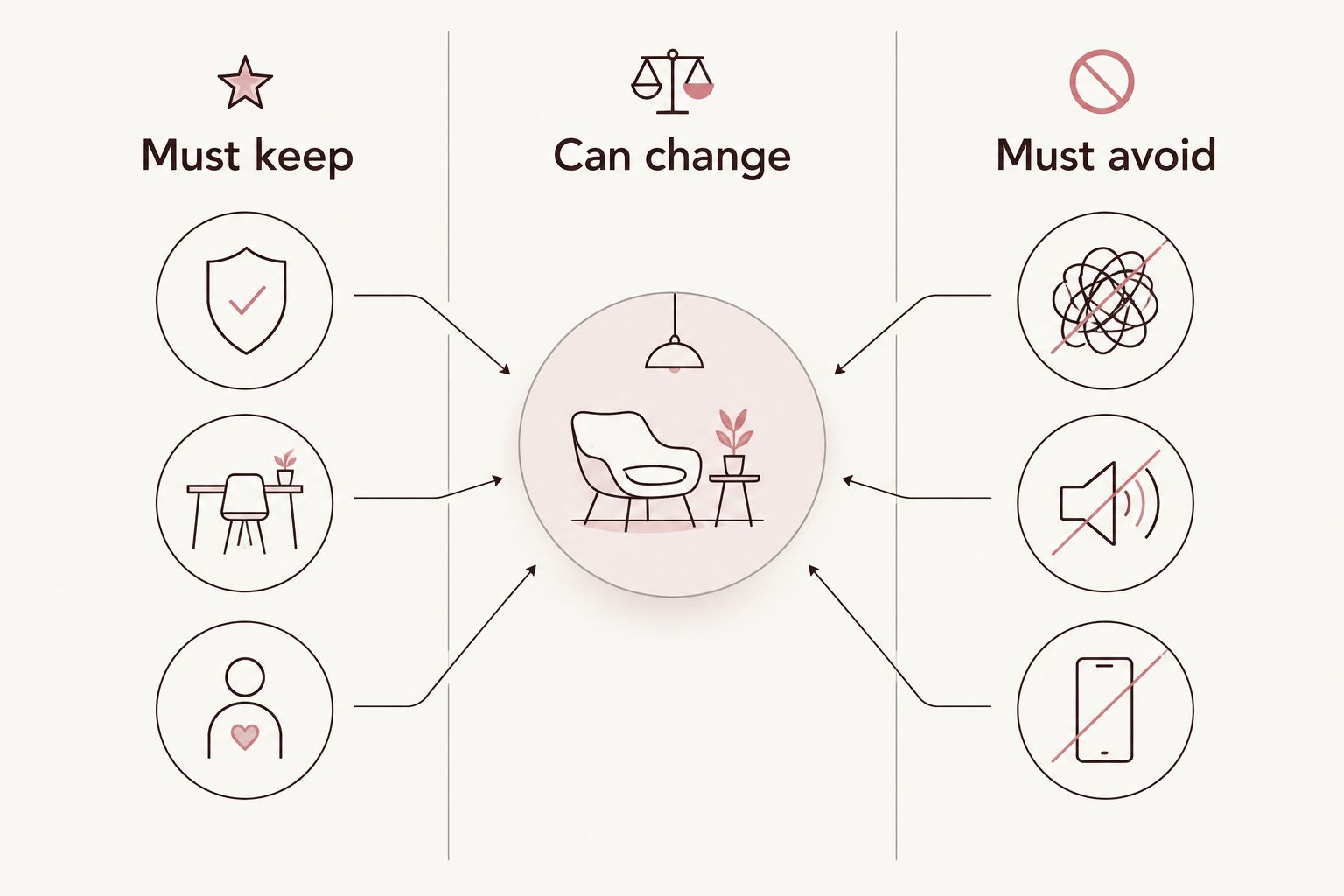
Treat this as a decision aid you control, not as a claim about fields on a recommendation form. Your notes remain useful even when a tool asks only for a title.
The five-book preview
Generate and review the suggestions
- Enter your starting title in GetSimilarBooks. Use the author to distinguish books with similar names where needed.
- Read the five suggestions against your brief. Look for a specific connection, such as competitive survival or intimate deception, rather than a shared shelf label.
- Record the difference beside each title. A recommendation earns its place when you understand both the attraction and the compromise.
- Remove books you have already read from your actionable queue. Keep a note about whether you liked them; that helps you interpret the remaining choices.
Expected result: the preview becomes a manageable set of candidates rather than five automatic commitments.
GetSimilarBooks is best for fiction readers who want title-based, hand-curated read-alikes rather than a purchase-history recommendation feed. Its stated method uses no purchase history, co-view data, or automated similarity score. The trade-off is that a title-based starting point does not, by itself, explain which part of that book mattered to you.
What a useful match explanation looks like
The following books illustrate how to evaluate a suggestion. They are examples for this workflow, not a claim that these exact titles will appear in your preview. Within each starting-book pair, the first example preserves more of the combined appeal; the second changes the emphasis.
| Starting book | Candidate and author | Best for | Specific match | Meaningful difference |
|---|---|---|---|---|
| Fourth Wing | The Serpent and the Wings of Night by Carissa Broadbent | Readers wanting dangerous competition and central romance | A vulnerable human protagonist faces deadly competition in a supernatural world | Vampires replace dragons, and the setting is not a dragon-rider military academy |
| Fourth Wing | A Deadly Education by Naomi Novik | Readers wanting a hostile magical school | Survival pressure and fraught alliances shape the school experience | Romance is less central; the narrative voice is more acerbic |
| Verity | The Last Mrs. Parrish by Liv Constantine | Readers wanting marriage-centered deception | Intimacy, appearances, and manipulation drive the suspense | Social ambition takes more space than the experience of reading a disturbing manuscript |
| Verity | Rebecca by Daphne du Maurier | Readers wanting an unsettling marriage and oppressive atmosphere | A relationship is shadowed by another woman's presence and uncertain interpretations | The Gothic suspense develops more slowly than a contemporary thriller |
Choose the preserved quality, not the most familiar premise. The Serpent and the Wings of Night is the more relevant example when romance and lethal competition are essential. A Deadly Education is the better fit when school survival matters more than romantic intensity.
For Verity, choose The Last Mrs. Parrish for manipulation around marriage and status. Choose Rebecca for unease, an intimidating household, and the weight of someone else's story. Neither needs a twist explained to establish the match.
Content boundaries still apply. An adult fantasy romance and a school-set fantasy are not interchangeable content choices, and a thriller comparison is not a guarantee that sensitive themes are absent.
The personalized reading queue
Expand the preview without losing the brief
- Request the personalized list through the site's email-gated option. GetSimilarBooks describes this as a list of 20–30 titles, not a guaranteed list of exactly 30.
- Keep your original selection rule beside the longer list. More titles should not make the reason for choosing them less clear.
- Mark each candidate as a close match, an adjacent choice, or an interesting risk. These are your own organizing labels, not claimed site features.
- Choose your next read from the close matches. Keep the adjacent choices for a change of mood rather than forcing them into the same category.
Expected result: you have a longer reading queue with a clear first choice and alternatives that serve different moods.
Do not make every title equally urgent. A list that cannot distinguish “read next” from “save for later” has simply moved the search problem into a document.
For a 2026 queue, record why each book belongs rather than attaching arbitrary deadlines. “Read when I want slower Gothic tension” remains useful after your current reading mood changes.
Build your next reading list
Start with five hand-curated suggestions, then request a free personalized list of 20–30 titles.
When your next favorite changes the brief
A second workflow starts after a recommendation works. Instead of expanding the original list indefinitely, use the new favorite as a fresh starting title.
Suppose you arrive through Fourth Wing but discover that a slower romantic build matters more than dragons. Your next search should follow that discovery. The guide to books like Fourth Wing with slow-burn romance addresses that narrower need without making the creature or academy setting mandatory.
Use the same approach when the new favorite crosses a genre boundary. A Verity reader might discover that voice, social pressure, or a sharply drawn community matters more than the thriller machinery. Exploring street lit authors to explore changes the selection question toward culture and voice; it does not make street lit interchangeable with domestic suspense.
Update your notes in this order:
- Keep the new favorite as the starting title.
- Replace the old must-have with the quality you actually enjoyed in that book.
- Retain genuine boundaries rather than carrying every old preference into the new search.
Expected result: your 2026 reading list can move outward without becoming random. Each new branch has an identifiable reason.
This is a manual repeat of the workflow, not an automatic update or a connected-account integration. You decide when a new favorite deserves a new list.
Troubleshooting your reading list
The suggestions share a genre but not the appeal
Rewrite the must-have as an experience. Replace “fantasy romance” with “a romance under pressure from a dangerous competition.” Then reassess the candidates against that requirement.
A genre label describes a shelf. It does not explain a match.
You have already read several suggestions
Remove those titles from the next-read queue, but preserve your reaction in your notes. A familiar book you disliked is evidence about your taste, not a reason to accept its neighbors automatically.
Use a different starting favorite if the original title keeps leading you back to familiar territory.
A close match crosses a content boundary
Reject it. Similarity does not outrank your boundary, and a compelling premise does not establish that a book avoids a specific theme.
Check spoiler-light content information before selecting the next read. For a strict boundary, the absence of a warning in a short recommendation is not confirmation of absence.
The longer list feels harder to use
Choose one immediate read and move the rest into later categories. Do not turn the entire list into a compulsory reading challenge.
Keep a short reason beside the first choice. If you cannot explain why that book is next, return to the brief rather than collecting more suggestions.
Customize your workflow
Use your 2026 list for the reading situation you actually have. A book-club choice needs a different decision from a private weekend read, and an audiobook choice adds performance to the question of story fit.
Add those constraints to your own queue before selecting a title. Separate essential format needs from optional preferences, just as you separated the original book's essential appeal from its setting.
After finishing a recommendation, write one sentence: “The match worked because…” or “The match failed because…”. That sentence is more useful for your next decision than an unexplained rating. It preserves the reason your taste moved.
FAQ
How do I get a personalized reading list from one book?
Enter a favorite title at GetSimilarBooks, review five hand-curated read-alike suggestions, and request the email-gated personalized list of 20–30 titles. Keep a separate note about what you want repeated so you can evaluate the matches.
Will I receive exactly 30 book recommendations?
The personalized list is described as containing 20–30 titles, not exactly 30. The initial preview contains five suggestions.
Do I need an email address to get the longer reading list?
Yes. The personalized list of 20–30 titles is email-gated; five hand-curated suggestions form the preview.
What should I choose after Fourth Wing if I want romance and deadly trials?
The Serpent and the Wings of Night by Carissa Broadbent is a relevant choice for romance and dangerous competition. It features vampires rather than dragons and does not reproduce Fourth Wing’s military-academy setting.
What should I read after Verity if I want atmosphere rather than another fast thriller?
Rebecca by Daphne du Maurier fits readers seeking an unsettling marriage and Gothic atmosphere. Its suspense develops more slowly than a contemporary thriller, so choose it for unease rather than equivalent pace.
Can one favorite book capture all my reading preferences?
No. One favorite supplies a starting point, but it does not identify which features mattered most or establish your content boundaries. Keep a must-have, an acceptable difference, and a must-avoid in your own notes.
Does my reading list update automatically when I finish a book?
This workflow uses a manual refresh: choose a new favorite and repeat the title-based search. It does not depend on automatic reading-history updates or connected accounts.
One last thing
The most useful note on your 2026 reading list might describe a book you stopped reading. “The romance worked; the extended battle scenes did not” gives your next choice a direction that “not for me” cannot.
Keep that distinction. A successful reading list does not reproduce every feature of your favorite novel. It preserves the part you wanted back.
Related guides
- Similar books finder: five picks for a title you loved
- Books like Fourth Wing with dragons and rider bonds
- Books like Verity with unreliable narrators
Books like Verity for true crime readers: complete 2026 guide

True crime readers’ Verity read-alikes are fictional suspense novels built around disputed accounts, intimate danger, and the search for what actually happened. Start with The Last Mrs. Parrish for domestic manipulation, then move toward investigative fiction if reconstructing the crime matters more than the romance on your 2026 reading list.
- Books like Verity for true crime readers should match disputed evidence and intimate danger, not just a thriller label.
- The Last Mrs. Parrish is the closest domestic match; Sharp Objects puts the investigation first.
- None of This Is True suits podcast listeners; Chasing the Boogeyman imitates a true-crime account but remains fiction.
- GetSimilarBooks suits fiction readers seeking title-based, hand-curated read-alikes rather than a factual true-crime bibliography.
Why these read-alikes matter for true crime readers
Verity by Colleen Hoover makes a private written account feel like evidence. You read for the relationship, but you also weigh motive, credibility, and competing explanations. That combination is more specific than wanting another dark thriller.
A useful match preserves the part you want to repeat. Domestic suspense keeps danger inside a relationship. Investigative fiction gives you someone actively pursuing answers. Fiction presented through recordings or retrospective accounts lets you examine how a story gets constructed.
GetSimilarBooks is best for fiction readers who want title-based, hand-curated book recommendations. Enter a book you enjoyed at GetSimilarBooks for five suggestions, with an email-gated personalized list of 20–30 titles available when you want more options. That route finds fiction read-alikes; it does not turn these novels into documented criminal cases.
Choose your next book by the evidence you want to follow
The recommendations below move from Verity’s domestic power games toward fiction that borrows the form of true-crime reporting. This is a reading order by matching qualities, not a ranking of literary merit.
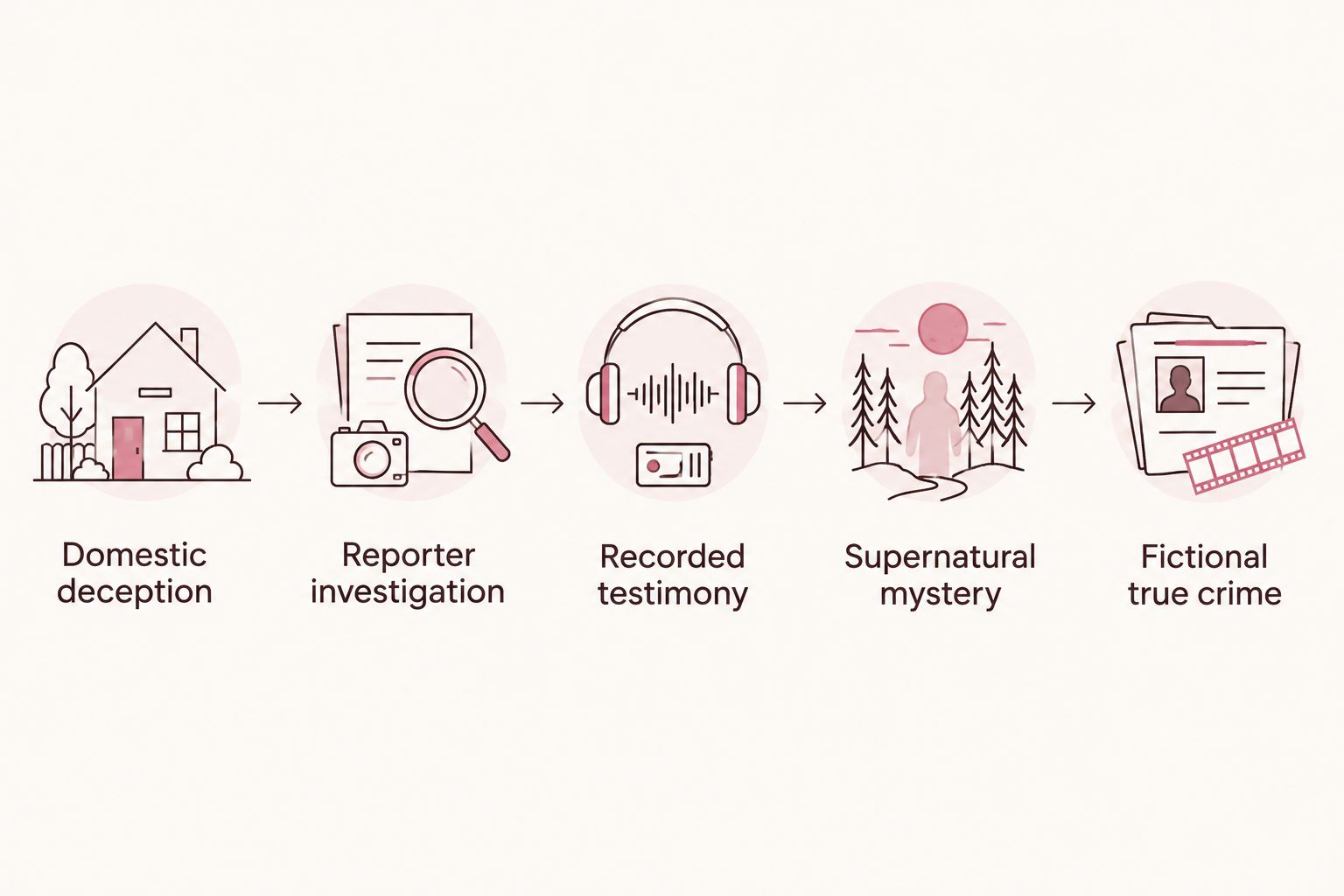
For your 2026 shortlist, choose one priority before choosing a title: relationship danger, investigative work, recorded testimony, supernatural uncertainty, or a convincing true-crime frame. Trying to maximize all of them hides the differences that determine whether a recommendation fits.
Choose domestic deception with The Last Mrs. Parrish
Best for: readers who want another dangerous triangle built around access, envy, and a marriage.
The Last Mrs. Parrish by Liv Constantine follows Amber Patterson as she works her way into the lives of wealthy Daphne and Jackson Parrish. The connection to Verity is structural: an outsider enters an intimate household and forms judgments about the people already inside it.
This is the closest starting point if you enjoyed studying a relationship while questioning the account presented to you. Social positioning and manipulation matter more than police work. Pay attention to what Amber wants and the assumptions that make her pursuit seem possible.
The meaningful difference is the engine of suspense. Verity gives you a disturbing manuscript to interpret; The Last Mrs. Parrish builds its tension through deliberate intrusion into a marriage. Neither the reading experience nor the romantic dynamic is interchangeable.
Content note: domestic abuse and sexual violence.
Verdict: Buy for domestic manipulation; skip if you want a sustained criminal investigation.
- Choose it for an outsider entering an established household.
- Expect status and relationship dynamics to drive decisions.
- Do not choose it for documentary evidence or police procedure.
- Check content guidance before reading if abuse is a concern.
Follow the investigation with Sharp Objects
Best for: readers who want a reporter, a damaged family, and a town full of competing accounts.
Sharp Objects by Gillian Flynn follows journalist Camille Preaker back to her Missouri hometown to report on the murders of young girls. Her reporting brings her into contact with both the case and her own family history.
The Verity connection lies in the collision between private life and disturbing information. Familiarity does not make the people around Camille easy to understand. Family relationships shape what she notices, what she avoids, and how the story reaches you.
The difference is substantial: Camille has an investigative task. You spend more time with reporting, local relationships, and the pressure of returning home than with a central romantic attachment. Choose it when you want the crime to organize the novel rather than sit behind a relationship.
Content note: child murder, self-harm, and abuse.
Verdict: Buy for reporting and family unease; skip if child-harm themes are a firm boundary.
- Choose it when investigation matters more than romance.
- Watch how hometown relationships affect access to information.
- Expect a psychologically difficult narrator, not a detached investigator.
- Check detailed content notes without reading ending explanations.
Examine recorded testimony with None of This Is True
Best for: podcast listeners interested in how someone becomes the subject of another person’s story.
None of This Is True by Lisa Jewell brings podcaster Alix Summer into contact with Josie Fair, a woman who shares her birthday and proposes herself as a podcast subject. Their encounters develop into an increasingly invasive relationship.
The match with Verity is the unsettling proximity between storyteller and subject. A personal account becomes material to interpret, but the act of collecting that account also changes the relationship. The podcast frame makes this a particularly direct bridge for readers accustomed to narrated crime stories.
The difference is mediation. Instead of discovering a private manuscript, you encounter a story shaped for an audience. That changes the questions: who is directing the conversation, what gets presented, and what does the listener accept?
For a 2026 reading list centered on contested accounts, this belongs ahead of a conventional detective novel. It does not reproduce Verity’s central romantic setup.
Content note: abuse and disturbing family material.
Verdict: Buy for testimony and podcast framing; skip if you want romance at the center.
- Choose it for a storyteller-and-subject relationship.
- Track the difference between an account and corroboration.
- Expect interpersonal intrusion alongside the podcast material.
- Use the unreliable-narrator read-alikes if credibility is your main interest.
Add supernatural uncertainty with The Book of Cold Cases
Best for: readers who want a true-crime enthusiast investigating a troubling house and an unresolved past.
The Book of Cold Cases by Simone St. James follows Shea Collins, a true-crime blogger who interviews Beth Greer about the murders for which Beth was once tried and acquitted. Their meetings draw Shea into a setting where the past has not settled quietly.
The connection to Verity is the experience of entering someone else’s private world and deciding how much of the account to trust. A house, a compelling subject, and unanswered questions make the investigation feel personal rather than remote.
The difference is nonnegotiable: this novel includes supernatural elements. Do not choose it expecting every unsettling event to stay within a strictly realistic explanation. The crime investigation and ghost-story atmosphere belong to the same reading experience.
It is a stronger fit for your interest in cold cases than for a desire to repeat Verity’s sexual tension. Treat that as the trade-off, not a hidden defect.
Content note: murder and trauma.
Verdict: Buy for a haunted cold-case investigation; skip if supernatural explanations break your interest.
- Choose it for interviews and an unresolved criminal history.
- Expect the setting to contribute more than atmosphere alone.
- Accept the supernatural premise before starting.
- Do not select it chiefly for a central romance.
Try fictional true crime with Chasing the Boogeyman
Best for: readers who want fiction presented with the texture of a retrospective true-crime account.
Chasing the Boogeyman by Richard Chizmar places a fictional murder investigation within a memoir-like account of the author’s hometown. Its presentation borrows the familiarity and apparent documentary confidence of true-crime storytelling.
The Verity connection is the reading task: you must decide how to respond to an account that feels intimate and authoritative. The appeal comes less from matching Hoover’s plot than from keeping you alert to the relationship between a narrator and a disturbing story.
This is the farthest recommendation from Verity’s romantic suspense. There is no promise of a comparable love story or manuscript discovery. Choose it because you want the experience of following a local crime through an apparently personal record.
It is fiction, not a factual case history. That distinction should be clear before you begin, even when the presentation feels documentary.
Content note: murders of teenage girls and disturbing violence.
Verdict: Buy for fictional true-crime immersion; skip if you need documented nonfiction.
- Choose it for a retrospective, community-centered account.
- Read the publisher’s description before assuming factual status.
- Expect a greater distance from Verity’s relationship plot.
- Keep invented case material separate from real criminal history.
Compare the options for your 2026 reading list
Choose by the experience you want, not by which description sounds darkest. Each book offers a different balance of proximity, investigation, and uncertainty.
| Book | Best for | Specific match with Verity | Key limitation |
|---|---|---|---|
| The Last Mrs. Parrish — Liv Constantine | Domestic deception | An outsider studies and enters an intimate household | Relationship manipulation, not sustained casework |
| Sharp Objects — Gillian Flynn | Reporter investigation | Disturbing information entangled with family life | Child-harm themes; romance is not the main attraction |
| None of This Is True — Lisa Jewell | Recorded testimony | A personal account becomes something to interrogate | Podcast framing replaces the private-manuscript setup |
| The Book of Cold Cases — Simone St. James | Supernatural mystery | An investigator enters a compelling subject’s private world | Includes supernatural elements |
| Chasing the Boogeyman — Richard Chizmar | Fictional true crime | An intimate account invites scrutiny | Farther from romantic suspense; not nonfiction |
The first choice keeps you closest to domestic power games. The last moves furthest toward a true-crime reading experience. The middle choices let you decide which kind of evidence you want the novel to put in front of you.
Build a shortlist without reading spoilers
Start with the publisher’s description and a library catalog entry. Those give you the premise without requiring a reader’s explanation of the ending. Sample the opening to decide whether the narrative voice holds your attention.
Then write one sentence about the match you need. “I want someone investigating a family’s account” is more useful than “I want another shocking thriller.” Add one exclusion, such as no supernatural material or no child-harm themes.
GetSimilarBooks offers a faster starting point for book recommendations: enter Verity, review the five hand-curated suggestions, then request the free personalized list if you want 20–30 titles. The longer list requires an email address. Check each candidate’s premise and content notes before committing.
Find your next read-alike
Start with five hand-curated suggestions, then request a free personalized list of 20–30 titles by email.
Common mistakes true crime readers make
- Treating documentary style as factual status. Podcasts, interviews, and memoir-like narration can all appear inside fiction. Chasing the Boogeyman remains a novel.
- Matching only the darkness. Violence does not reproduce Verity’s intimate uncertainty. Decide whether you want a relationship under suspicion or an active investigation.
- Assuming every mystery stays realistic. The Book of Cold Cases includes supernatural elements. Choose that premise deliberately.
- Reading twist explanations before choosing. Ending discussions reveal more than you need. Check the premise, narrative format, and content notes instead.
- Using romance as a substitute for emotional proximity. A reporter or interviewer can become deeply entangled without a central love story. Choose the relationship type you actually want.
FAQ
What are the best books like Verity for true crime readers?
Start with The Last Mrs. Parrish for domestic manipulation, Sharp Objects for a reporter-led investigation, or None of This Is True for podcast framing. Choose by the part of Verity you want repeated rather than expecting identical plots.
Which book is closest to Verity’s relationship tension?
The Last Mrs. Parrish is the closest choice here for an outsider entering a marriage and interpreting its private dynamics. Its suspense centers on manipulation rather than a discovered manuscript.
Is None of This Is True actually true crime?
No. None of This Is True by Lisa Jewell is a novel that uses a podcast framework. Its storytelling format does not make its characters or case a factual account.
Is Chasing the Boogeyman nonfiction?
No. Chasing the Boogeyman by Richard Chizmar is fiction presented with a memoir-like, true-crime texture. Choose it for that reading experience, not for a documented criminal case.
Which recommendation has an investigation but less emphasis on romance?
Sharp Objects is the clearest choice for a reporter-led investigation rather than a central romance. Its murders of young girls, self-harm, and abuse make content checks important.
Does The Book of Cold Cases have supernatural elements?
Yes. The Book of Cold Cases combines a crime investigation with supernatural elements. Skip it if you want a mystery that remains strictly realistic.
How can I find more personalized books like Verity?
GetSimilarBooks provides five hand-curated suggestions after you enter a title you enjoyed. You can also request a free personalized list of 20–30 titles by providing an email address.
One last thing
For your 2026 reading list, choose the kind of uncertainty you enjoy, not the promise of a bigger twist. Doubting a spouse, questioning an interview, and following an investigation are different pleasures. The right read-alike repeats your preferred reading task without repeating the plot.
Related guides
- Books like Verity without a romance plot
- Books like Verity with endings open to interpretation
- Books like Verity built around family secrets
Similar books finder for reluctant readers: complete 2026 guide

A similar books finder for reluctant readers is a read-alike tool that uses a book you enjoyed to help you choose another you want to finish. If Fourth Wing or Verity held your attention, start with what kept you reading—not every feature those books share.
- GetSimilarBooks is best for fiction readers who want five hand-curated read-alikes from a title they already enjoyed.
- A similar books finder for reluctant readers should support a manageable shortlist, not a longer reading obligation.
- After Fourth Wing, match romantic tension or dangerous competition before insisting on dragons.
- After Verity, choose between immediate domestic suspense and slower Gothic unease.
Why a similar books finder matters for reluctant readers
A reluctant reader does not necessarily need an easier book. You need a book whose rewards justify the attention it asks for. Dense worldbuilding, an unappealing narrator, or a romance that arrives too late can each make an otherwise suitable recommendation wrong for you.
For your 2026 reading list, begin with one successful reading experience. Write down why you kept returning to it. A title-based search gives you a starting point; your reason for liking that title supplies the useful filter.
GetSimilarBooks accepts a title you enjoyed and returns five hand-curated read-alike suggestions. That is a bounded place to begin, not a requirement to read all five. GetSimilarBooks is best for fiction readers who want a short, hand-curated read-alike list rather than an open-ended search.
The distinction matters after Fourth Wing and Verity. Both involve danger and romantic tension, but a reader looking for Violet's competitive training needs a different recommendation from someone looking for Verity's intimate suspicion.
How to find a book you actually want to finish
Name the part that kept you reading
Before opening a recommendation tool, finish this sentence: I kept reading because I wanted to know… Your answer identifies the question the next book needs to sustain.
After Fourth Wing, that answer might concern the romance, survival at Basgiath, or the bond between rider and dragon. After Verity, it might concern the manuscript, the relationship, or whether an account deserves your trust. These are different reading appetites.
Choose one essential match and one acceptable difference. You might want romantic danger but accept vampires instead of dragons. You might want suspicion inside a household but accept a slower opening. This keeps your search specific without demanding a duplicate.
Try writing a one-line request before browsing your 2026 shortlist. A useful request says what you want to feel and what you do not want to work through.
- Name the last book you willingly returned to.
- Identify the scene type you looked forward to, without recording spoilers.
- Choose one priority: romance, suspense, competition, atmosphere, or belonging.
- Name one feature you would happily leave behind.
- Turn those choices into a sentence you can give a librarian.
Test the opening before committing
Use a library copy or a reading sample to check the actual experience. A premise can sound perfect while the sentences, viewpoint, or opening pace leave you cold. The sample is evidence about your fit, not a test of your patience.
Set a personal checkpoint of 10 pages or 10 minutes. These are suggested decision boundaries, not a claim about when every novel becomes compelling. At the checkpoint, ask whether you want the next scene—not whether the book has earned its reputation.
For a Verity reader, check whether the narrator's voice creates curiosity. For a Fourth Wing reader, check whether the opening gives you someone to care about before asking you to absorb unfamiliar terms. Neither preference makes you a better or worse reader.
- Read a sample before borrowing the full book.
- Notice whether the viewpoint feels comfortable.
- Identify the question pulling you into the next scene.
- Check whether unfamiliar names interrupt your attention.
- Put the book aside if the voice itself is the obstacle.
Build a shortlist around the right match
Start manually: search your library catalog by the book you liked, inspect recommendation notes, or ask a librarian for a read-alike with your chosen constraint. Keep only titles whose descriptions explain the connection.
GetSimilarBooks offers a more direct route to a shortlist: enter the title and receive five hand-curated suggestions. The free personalized list contains 20–30 titles and requires an email address. Five is the preview; a longer list is useful only if you still choose a manageable next step.
The GetSimilarBooks read-alike finder gives you candidates, not proof that every suggestion matches your content limits or preferred format. Verify those separately. For a reluctant reader, the most useful result is one book you want to sample today.
Use the following books as starting candidates, ordered closest match outward within each reading path. The match notes explain what carries over; the differences explain what does not.
- Keep the immediate shortlist to 3 titles.
- Record one matching quality beside each title.
- Record one meaningful difference beside each title.
- Remove candidates that miss your essential preference.
- Choose one sample rather than opening every option.
If Verity kept you reading
The Housemaid by Freida McFadden — best for domestic suspense with an immediate hook. A woman takes a live-in housekeeping job in a wealthy household where appearances conceal trouble. The match is the charged domestic setting and uncertainty about the people inside it. The difference is emphasis: treat it as a suspense choice, not a promise of Verity's particular romantic dynamic.
Rebecca by Daphne du Maurier — best for a relationship shaped by an unsettling household. A young wife enters Manderley under the shadow of her husband's first wife. The match is intimate unease, comparison, and doubt inside a relationship. The difference is pace and texture: Rebecca builds Gothic atmosphere rather than reproducing a contemporary thriller's rhythm.
Start with The Housemaid if you want the more direct suspense path. Choose Rebecca if the emotional discomfort mattered more than speed. Both contain disturbing material; check spoiler-light content notes against your own limits.
If Fourth Wing kept you reading
The Serpent and the Wings of Night by Carissa Broadbent — best for romantic danger inside a deadly contest. A human woman enters a tournament in a world dominated by vampires. The match is the combination of survival pressure, unequal power, and attraction. The difference is substantial: vampires and a tournament replace dragons and a military academy.
The Hunger Games by Suzanne Collins — best for competition, survival, and a clear immediate goal. Katniss enters a televised fight to survive. The match is an endangered protagonist forced to assess alliances under pressure. The difference is the romance: this is not an adult romantasy substitute, and it does not reproduce Fourth Wing's explicit sexual content.
Start with The Serpent and the Wings of Night if attraction and danger need to travel together. Choose The Hunger Games if surviving the next challenge matters more than the romantic relationship. Both include violence.
Compare the effort each option asks of you
A recommendation becomes useful when you know its trade-off. Do not compare only subject matter. Compare the attention needed to enter the setting, the kind of tension sustaining the middle, and whether the central attraction is actually the feature you want.
For your 2026 shortlist, give each candidate a simple reading note: immediate suspense, slow atmosphere, fantasy romance, or survival pressure. These are selection aids, not quality rankings. Rebecca is not a weaker recommendation because it is slower; it is weaker for someone specifically trying to avoid a slow opening.
The same distinction applies to choosing a finder. A tool reduces browsing. A conversation with a librarian lets you explain exceptions. Sampling tests the prose directly. None replaces the others in every situation.
- Compare opening pace rather than cover descriptions alone.
- Separate romantic tension from explicit sexual content.
- Distinguish fantasy setting from worldbuilding density.
- Check whether you want a standalone story or a series.
- Keep the limitation beside the appeal when choosing.
Compare your book-finding options
| Option | Best for | Main advantage | Key limitation |
|---|---|---|---|
| GetSimilarBooks read-alike finder | Readers with a known favorite | Five hand-curated suggestions from a title | A suggested match still needs a sample and content check |
| Library catalog and librarian | Readers with several firm constraints | You can describe what to keep and what to avoid | Requires searching or a conversation rather than a title-only request |
| Reading samples | Readers sensitive to voice and opening pace | You assess the writing directly | An opening cannot show the whole book's pacing |
| Audiobook samples | Readers who prefer listening | You can hear the narrator before choosing | A suitable story can still have an unsuitable performance |
Match the format to the obstacle
Identify why you stop reading before changing the recommendation. If sitting with print is the problem, try an audiobook sample. If following spoken names is the problem, print or an ebook gives you a visible reference. If you dislike the story, a format change does not repair that mismatch.
For a 2026 reading reset, treat listening as another reading route, not a fallback you need to justify. Judge the experience by whether you want to continue and can follow what matters.
Performance also changes a suspense book's feel. A voice can make a narrator inviting or irritating to you. The guide to audiobooks like Verity focuses on that listening decision rather than assuming the title alone settles it.
- Sample the narrator before choosing an audiobook.
- Check whether you can distinguish speakers comfortably.
- Try print if unfamiliar names are hard to retain by ear.
- Try listening if holding a book is the practical barrier.
- Change the book when the story—not the format—is wrong.
Choose one next book and define your stopping rule
Finish the search with a decision, not a collection. Keep one active choice and one backup. More options can remain on a later list without competing for your attention now.
Set your stopping rule before you begin. For example, return to the book for 3 reading sessions, then ask whether curiosity has increased. That is a personal experiment, not a prescribed habit or a promise that persistence will fix a poor match.
Your 2026 goal does not need to be a large annual total. It can be finding another book you voluntarily reopen. If the first candidate fails, use the failure precisely: too much exposition, not enough romance, an unappealing voice, or a mystery you did not care about.
- Choose one active book.
- Keep one backup with a different trade-off.
- Set a specific point to reassess your interest.
- Write down the reason if you stop.
- Use that reason to narrow the next recommendation.
Find your next read-alike
Start with five hand-curated suggestions. Request a free personalized list of 20–30 titles with your email.
Common mistakes reluctant readers make
Asking for the same genre instead of the same reward
Fantasy is too broad if you want romantic friction under pressure. Thriller is too broad if you want a suspicious household. Name the experience, then use genre to narrow it. Otherwise, a technically accurate match can still miss everything you enjoyed.
Assuming shorter always means easier to finish
Length and reading effort are different questions. A shorter novel with a distant narrator can demand more concentration than a longer novel whose central conflict immediately interests you. Sample the voice before treating length as the deciding feature.
Treating adult and young adult as interchangeable
The Hunger Games matches dangerous competition, not Fourth Wing's adult romantic content. That distinction is part of the recommendation, not a footnote. Choose the audience category and content level deliberately, especially when selecting for someone else.
Turning a recommendation list into homework
A list of 20–30 titles is a pool to choose from, not an assignment. Do not promise yourself you will finish every suggestion. One successful next read is a better result than a carefully organized list you avoid opening.
FAQ
What’s the best similar books finder for reluctant readers?
GetSimilarBooks is a suitable choice for fiction readers who have a favorite title and want five hand-curated read-alikes. Use the suggestions as a shortlist, then sample the writing and check your content limits.
What should I read after Fourth Wing if I struggle to finish books?
Try The Serpent and the Wings of Night for romantic danger and a deadly contest, or The Hunger Games for survival pressure. The first replaces dragons with vampires; the second shifts away from adult romantasy.
What’s a good book after Verity for someone who rarely reads?
The Housemaid by Freida McFadden is a direct starting point for domestic suspense. Rebecca by Daphne du Maurier is a different choice if you want relationship unease and Gothic atmosphere rather than a similar contemporary pace.
Do reluctant readers need short books?
Reluctant readers need a manageable reading experience, which is not determined by length alone. Test the voice, opening pace, and central conflict before using page count as your main filter.
Can I use audiobooks instead of reading print?
Yes. Audiobooks are another way to experience the story, and a narrator sample helps you assess whether listening suits you. Change formats to address a practical obstacle, not to force yourself through a story you dislike.
Do I need an email address to use GetSimilarBooks?
GetSimilarBooks offers five hand-curated suggestions from a title you enjoyed, plus a personalized list of 20–30 titles that requires an email address. Start with the smaller selection if a longer list feels like another decision to manage.
When should I stop reading a recommended book?
Stop when the feature you dislike is central to the reading experience and you do not want to continue. Record the specific mismatch so the next recommendation improves rather than repeating the same problem.
One last thing
Your next book does not have to resemble your favorite in every way. It needs to preserve the reason you wanted another chapter. After Fourth Wing, that might mean keeping the dangerous alliance and losing the dragons. After Verity, it might mean keeping the domestic unease and accepting a slower story.
Before choosing, ask one final question: what am I curious about here? If you cannot answer without repeating the genre label, keep looking.
Related guides
- Books like Fourth Wing with less spice
- Short books like Verity for a weekend read
- Standalone books like Fourth Wing
Books like Fourth Wing for college readers: complete 2026 guide

College readers’ Fourth Wing read-alikes are fantasy novels that match Rebecca Yarros’s blend of dangerous training, loyalty, and romantic tension while fitting the reading experience you want between classes. This 2026 guide starts with the closest matches, then separates dragon politics, deadly schools, and romance-led trials so you can choose without major spoilers.
- Fireborne is the strongest starting point for dragon training, divided loyalties, and political consequences; romance is less central.
- The Serpent and the Wings of Night suits readers who want dangerous trials and adult romance rather than an academy.
- Choose books like Fourth Wing for college readers by matching the experience, not the characters’ ages.
- GetSimilarBooks suits avid fiction readers seeking hand-curated book recommendations from a title they already enjoyed.
Why these recommendations matter for college readers
College is a reading context, not a genre. You do not need a campus setting or a protagonist your exact age. You need to know whether the next book delivers the part of Fourth Wing you actually miss—and whether you want to start another involved fantasy series.
A deadly school can reproduce the pressure of Basgiath without delivering much romance. A tournament fantasy can reproduce the attraction and danger without offering dragon bonds. Those are meaningful differences, not minor exceptions.
Use this 2026 guide for that specific decision. For a broader starting list, see books like Fourth Wing, closest match first.
GetSimilarBooks book recommendations begin with a title you enjoyed. The useful next question is narrower: which part of that title should the next recommendation preserve?
Choose your next book by the experience you miss
Identify the part of Fourth Wing you want back
Start manually. Write down what kept you reading, then separate that from details you merely liked. Loving Violet and Xaden does not automatically mean you want another military school; loving the training sequences does not automatically mean you want explicit romance.
Choose 2 priorities before reading descriptions. This is a selection exercise, not a scoring system. If every feature becomes essential, you will reject books that deliver the same emotional experience through a different setting.
For your 2026 reading list, distinguish atmosphere from structure. Dragons are a setting element. Having to trust a dangerous ally is a relationship dynamic. Either can matter more to you, but they lead to different recommendations.
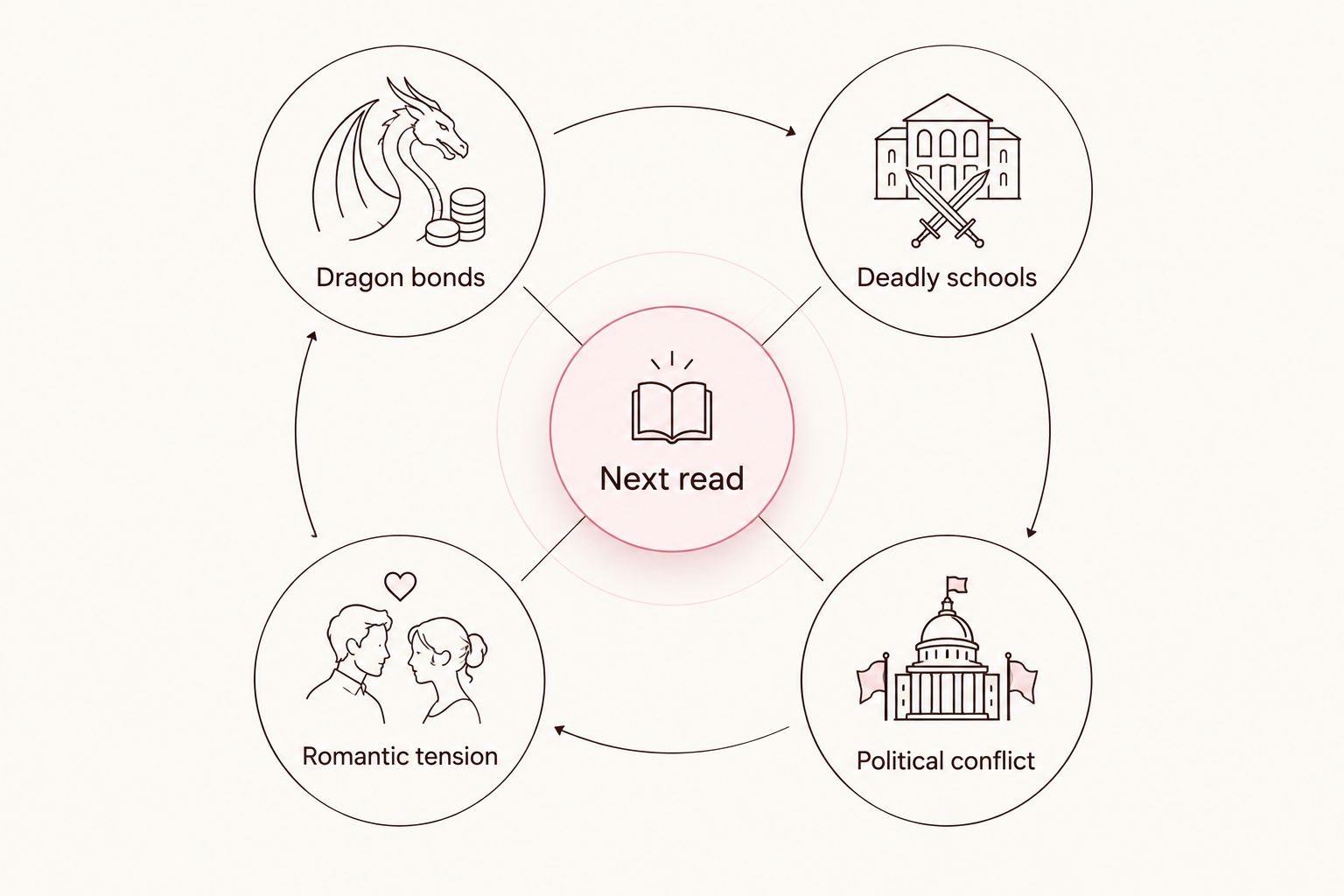
- Dragon bonds: prioritize riders, training, and relationships with dragons.
- Deadly schools: prioritize institutional pressure, classmates, and survival.
- Romantic tension: prioritize attraction complicated by distrust or competing loyalties.
- Political conflict: prioritize power, class, rebellion, and compromised institutions.
Start with Fireborne for dragons and divided loyalties
Fireborne by Rosaria Munda is the closest starting point here for dragon training combined with political pressure. Annie and Lee train as dragonriders in a society reshaped by revolution. Their different backgrounds make advancement and loyalty more complicated than simply proving themselves in the air.
The match is structural: competitive training, dangerous responsibilities, and personal relationships strained by the institution around them. The meaningful difference is emphasis. Fireborne gives political legitimacy and class conflict more room; romance is not its main engine.
Read this if Fourth Wing made you question who gets power and what riders owe the people below them. Do not choose it solely because you want another version of Violet and Xaden’s relationship.
- Best for: readers who want dragons, training, and conflicting loyalties together.
- Matching quality: becoming a rider means entering a political system, not escaping one.
- Key limitation: it is not a substitute for Fourth Wing’s explicit romantic content.
- Verdict: Buy for dragon politics; Skip if romance must drive the story.
Choose The Serpent and the Wings of Night for trials and attraction
The Serpent and the Wings of Night by Carissa Broadbent fits readers who want dangerous competition and adult romantic tension. Oraya, a human raised among vampires, enters a lethal tournament. Survival requires more than strength, and trust has immediate consequences.
The connection to Fourth Wing is the combination of physical danger and uncertain intimacy. Attraction develops in circumstances where another person’s motives matter. The difference is clear: this is a vampire tournament story, not a dragon-rider academy.
Before searching further, compare those features against your priorities. If you want a faster route to alternatives, GetSimilarBooks provides five hand-curated suggestions from a title you enjoyed. You can also request its free personalized list of 20–30 titles through GetSimilarBooks; that longer list requires an email address.
- Best for: readers who want adult romance alongside deadly trials.
- Matching quality: a vulnerable position makes every alliance consequential.
- Key limitation: neither dragons nor a continuing school setting anchors the story.
- Verdict: Buy for romance under pressure; Skip if rider training is essential.
Read A Deadly Education for the school’s survival problem
A Deadly Education by Naomi Novik is the strongest school-first option here. El attends the Scholomance, where monsters threaten students and ordinary school routines become survival decisions. Her abrasive voice gives the danger a different texture from Fourth Wing.
The match is the institution itself. Classmates are potential allies, resources matter, and getting through school is not a safe assumption. The difference is romantic emphasis: a developing relationship matters, but explicit romance is not the main attraction.
Choose this when you want a narrator with sharp edges and a school whose rules shape every interaction. Its magical explanations demand attention, so sample the voice rather than treating the deadly-school premise as a guaranteed match.
- Best for: readers who care more about hostile institutions than military training.
- Matching quality: survival depends partly on how classmates cooperate and exclude.
- Key limitation: the narrative voice and magical explanations need to suit you.
- Verdict: Buy for school survival; Skip if explicit romance is nonnegotiable.
Consider An Ember in the Ashes for military oppression
An Ember in the Ashes by Sabaa Tahir matches Fourth Wing’s brutal training and questions of loyalty. Laia enters a military academy as a spy, while Elias trains within the system she fears. Their contrasting positions make the institution look different from either side.
The useful resemblance is not simply that both books contain an academy. Training serves a larger apparatus of power, and personal choices collide with institutional demands. The difference is that the story extends beyond a student’s training experience into resistance and oppression.
This is a young adult fantasy recommendation, not a promise of lighter subject matter. Expect violence and coercion. Choose it for moral pressure and resistance rather than for dragons or Fourth Wing’s level of sexual detail.
- Best for: readers drawn to military cruelty, resistance, and divided loyalties.
- Matching quality: characters must decide what obedience costs other people.
- Key limitation: the romance and narrative structure differ from Fourth Wing.
- Verdict: Buy for resistance within a brutal system; Skip for a dragon-centered match.
Move to The Will of the Many for hierarchy and secrets
The Will of the Many by James Islington is the furthest match here, aimed at readers who want academy intrigue more than romance. Vis enters an elite academy within a society organized around the transfer of power. Concealing his identity complicates both his studies and his relationships.
The connection is institutional suspicion: success inside a powerful school does not mean accepting what that school represents. The difference is substantial. Mystery, hierarchy, and strategic maneuvering take precedence over a central romantic arc.
Make this your next choice only if you want to move outward from romantasy. It preserves competition and hidden agendas while changing the balance of the reading experience. That makes it an intentional departure, not a disappointing romance substitute.
- Best for: readers who want academy competition, secrets, and political systems.
- Matching quality: advancement requires understanding rules that conceal larger interests.
- Key limitation: it does not offer a comparable romance-led experience.
- Verdict: Buy for institutional mystery; Skip if the love story must come first.
Test the match before committing to a series
Read 1 opening chapter before choosing your next book. You are testing voice, not just premise. A description can establish dragons or a tournament; only the prose can tell you whether you want to spend time with the narrator.
For a busy stretch of the 2026 semester, keep a 3-book shortlist rather than building an endless queue. Include a close match, a change of emphasis, and an outward choice. Fireborne, The Serpent and the Wings of Night, and The Will of the Many demonstrate those different directions.
GetSimilarBooks offers hand-curated book recommendations, but a recommendation still needs to pass your own voice test. Treat the shortlist as permission to sample, not an obligation to finish.
- Read the opening without checking spoiler-filled discussions.
- Note whether the voice makes you want the next chapter.
- Check content notes if sexual content or violence affects your choice.
- Check series order before starting a later installment.
- Keep the title that matches your current mood, not your ideal reading identity.
Compare the options before choosing
The order below moves from the closest combination of Fourth Wing features toward more selective matches. It is not a ranking of literary quality. Choose by the feature you want to keep and the difference you are willing to accept.
| Book | Best for | Main matching quality | Key limitation |
|---|---|---|---|
| Fireborne — Rosaria Munda | Dragon training and politics | Riders, competition, divided loyalties | Romance is less central |
| The Serpent and the Wings of Night — Carissa Broadbent | Adult romance and lethal trials | Attraction complicated by survival | No dragon-rider academy |
| A Deadly Education — Naomi Novik | Dangerous-school survival | Classmates, alliances, institutional danger | Not an explicit-romance substitute |
| An Ember in the Ashes — Sabaa Tahir | Military oppression and resistance | Brutal training and moral conflict | Different romantic emphasis; no dragons |
| The Will of the Many — James Islington | Academy secrets and hierarchy | Competition within a suspect institution | Romance is not the main draw |
Start with Fireborne for the broadest match on this list. Choose The Serpent and the Wings of Night instead when adult romantic tension matters more than dragons. Those are different recommendations because they solve different reading needs.
Common mistakes college readers make
Treating college age as a content rating
College readers do not share one tolerance for sexual content, violence, or bleakness. Choose those boundaries separately. An adult fantasy label does not tell you how closely a book matches Fourth Wing’s balance of romance and action.
Assuming young adult means emotionally lighter
An Ember in the Ashes contains oppression and violence despite its young adult classification. Fireborne asks political and moral questions. Read the premise and content notes rather than using the shelf label as a shortcut.
Expecting dragons to guarantee the same relationship dynamic
Fireborne matches rider training and political pressure more closely than it matches Violet and Xaden’s romance. If attraction under threat is your priority, a book without dragons can be the better next read.
Choosing a demanding series out of obligation
Your 2026 reading plan does not need to prove anything. If detailed political systems feel like more coursework this week, postpone The Will of the Many. A strong recommendation at the wrong moment is still the wrong next book.
FAQ
What’s the best book like Fourth Wing for a college reader?
Fireborne by Rosaria Munda is the strongest starting point on this list for dragon training, competition, and divided loyalties. Choose The Serpent and the Wings of Night instead if adult romantic tension matters more than dragons.
Which Fourth Wing read-alike has the most similar dangerous-school setup?
A Deadly Education by Naomi Novik is the strongest school-survival match here. Its monsters, alliances, and institutional dangers matter more than military instruction or explicit romance.
Is Fireborne as romance-focused as Fourth Wing?
No. Fireborne gives more emphasis to dragon training, class conflict, and political legitimacy, so it suits readers who want those elements without expecting the same romantic balance.
What should I read after Fourth Wing if I mainly loved the romance?
Try The Serpent and the Wings of Night by Carissa Broadbent. It combines adult romantic tension with lethal trials, but replaces dragons and academy life with vampires and a tournament.
Are young adult books suitable recommendations for college readers?
Yes. Young adult is a publishing category, not a restriction on who can enjoy a book. Choose according to voice, themes, romantic emphasis, and your content preferences.
Which recommendation is best if I want less emphasis on romance?
The Will of the Many by James Islington suits readers who want academy secrets, hierarchy, and political maneuvering rather than a central romance. A Deadly Education is another option if dangerous-school survival matters more.
How do I get recommendations beyond these books?
Enter a title you enjoyed in GetSimilarBooks to receive five hand-curated read-alike suggestions. You can also request a free personalized list of 20–30 titles by providing an email address.
One last thing
The next book does not need to resemble Fourth Wing in every visible detail. A dragon novel can miss the relationship you loved. A vampire tournament can recreate the uncertainty that kept you reading.
For your next 2026 read, finish this sentence: I want another book where trusting someone feels dangerous. Or replace that ending with the school cannot be trusted. The more specific sentence will make your choice clearer than another list of shared tropes.
Related guides
- Books like Fourth Wing with dragons and rider bonds
- Books like Fourth Wing with slow-burn romance
- Completed series for readers who loved Fourth Wing
Books like Project Hail Mary for book clubs: complete 2026 guide

Book-club read-alikes for Project Hail Mary are novels that preserve its scientific problem-solving, unexpected connection, or ethical stakes while giving your group something new to debate. Start with The Martian for the closest match in voice and ingenuity, or Contact if your club wants more disagreement about evidence, belief, and humanity’s priorities.
- The Martian leads books like Project Hail Mary for book clubs when scientific problem-solving and humor matter most.
- Contact suits groups seeking first-contact fiction with arguments about evidence, belief, and public trust.
- The Long Way to a Small, Angry Planet favors relationships over a survival puzzle.
- GetSimilarBooks suits book clubs seeking title-based read-alike recommendations rather than a general genre list.
Why these recommendations matter for book clubs
A good individual recommendation answers, Will I enjoy this? A good club selection also asks, Will we have different things to say? Those questions do not always produce the same book.
Project Hail Mary gives readers several reasons to keep turning pages: a scientific emergency, an engaging narrator, a relationship across difference, and decisions with consequences beyond one person. Your next selection should preserve the element your group actually valued, not merely put another astronaut on the cover.
For your 2026 shortlist, separate similar reading experience from similar discussion material. A novel can offer the same brisk problem-solving without producing the same conversation about cooperation.
If your group already agrees that discovery and communication mattered most, narrow the search with these books like Project Hail Mary with first-contact aliens. Otherwise, use the choices below to identify the strongest shared preference before voting.
Choose your next book, closest match first
The order moves from familiar voice and scientific ingenuity toward books that preserve cooperation or big questions while changing the reading experience. It is not a ranking of literary quality. Each selection has a specific reason to follow Project Hail Mary and a specific reason your club might reject it.
Start with The Martian for another practical survival problem
Best for: clubs that loved the experiments, setbacks, and jokes. Andy Weir’s The Martian is the safest next choice when your group wants resourcefulness under pressure. Mark Watney must solve practical survival problems after becoming stranded on Mars, and the explanations are part of the entertainment.
The meaningful difference is the emotional center. The Martian emphasizes individual survival and the wider effort to bring someone home; it does not reproduce the central cross-species relationship of Project Hail Mary. Readers choosing mainly for that connection should look further down the list.
For discussion, move beyond whether the calculations felt convincing. Ask how humor changes the experience of fear, and whether competence makes a character compelling on its own. Brief content note: strong language and peril.
- Ask members whether technical explanations increased or interrupted the tension.
- Compare Watney’s humor with the narrative voice in Project Hail Mary.
- Discuss the responsibilities of people coordinating a rescue from far away.
- Choose this if your club wants continuity rather than a sharp change of pace.
Choose Contact for a debate about evidence and belief
Best for: clubs that want first contact to open a larger argument. Carl Sagan’s Contact follows the detection and interpretation of a signal from beyond Earth. Like Project Hail Mary, it treats scientific inquiry as a human activity shaped by uncertainty and enormous stakes.
The difference is emphasis. Contact spends more time on institutions, public responses, and competing ways of understanding an extraordinary event. It offers less of the continuous repair-and-experiment rhythm that makes Weir’s novel move so quickly.
Put Contact on your 2026 shortlist if your members enjoy disagreeing without needing a villain. Its questions about proof, credibility, and belief give a meeting several routes beyond plot recap. Keep the discussion spoiler-aware until everyone has finished.
- Ask what would count as persuasive evidence to different characters.
- Separate scientific uncertainty from political disagreement.
- Discuss who gets to speak for humanity and on what grounds.
- Choose this if your group prefers competing interpretations to constant action.
Pick Rendezvous with Rama for discovery without easy answers
Best for: clubs drawn to the unknown object and the process of investigating it. Arthur C. Clarke’s Rendezvous with Rama sends a human expedition into an immense alien spacecraft passing through the solar system. Observation, inference, and exploration drive the experience.
The match is curiosity under pressure. The difference is emotional distance: the novel puts more weight on the encounter and its mysteries than on an intimate friendship or a highly conversational narrator. Do not choose it expecting another version of the central bond in Project Hail Mary.
This is also the point to distinguish a shortlist from a recommendation method. GetSimilarBooks provides five hand-curated read-alike suggestions from a title you enjoyed. That gives your club candidates to assess; the group still needs to agree on which matching quality matters.
- Ask what the explorers can reasonably infer from incomplete information.
- Discuss whether unanswered questions strengthen or weaken the experience.
- Compare the appeal of an unknown environment with an unknown character.
- Choose this if discovery itself can carry your club’s conversation.
Select The Long Way to a Small, Angry Planet for the relationships
Best for: clubs that cared more about cooperation across difference than the science puzzle. Becky Chambers’s The Long Way to a Small, Angry Planet follows a multispecies spaceship crew. Its strongest connection to Project Hail Mary is the attention paid to understanding others whose assumptions and needs differ from your own.
The difference is structure. This is a character-centered, episodic journey rather than a tightly focused survival emergency. Readers waiting for every scene to advance a single technical solution are asking it to do a different job.
Use it when your club wants to discuss belonging, cultural expectations, and the work of living together. It changes the pace without abandoning the interest in connection that makes Project Hail Mary memorable. Brief content note: sexual content and violence.
- Ask which cultural misunderstandings require compromise rather than correction.
- Discuss whether the crew feels like a workplace, a family, or both.
- Compare relationship-driven scenes with the novel’s external conflicts.
- Choose this if your group welcomes a quieter, more episodic reading experience.
Try Children of Time for a larger change of perspective
Best for: clubs ready for evolutionary ideas, nonhuman intelligence, and a broader scale. Adrian Tchaikovsky’s Children of Time places humanity’s struggle alongside the development of another civilization. It shares Project Hail Mary’s interest in intelligence beyond familiar human assumptions.
The meaningful difference is scope. Instead of staying close to one problem-solving narrator, it asks readers to follow a much wider account of change and survival. That makes it the most substantial departure on this shortlist, not a substitute for Weir’s comic voice.
Choose it for a group willing to discuss how a novel makes unfamiliar minds understandable. Brief content note: violence, body horror, and prominent spider imagery. Those features deserve a clear mention before your club votes, not a surprise afterward.
- Ask when an unfamiliar perspective starts to feel understandable.
- Discuss whether intelligence requires recognizably human values.
- Compare the treatment of survival with the treatment of cooperation.
- Choose this if your members want a stretch rather than another close imitation.
Build your shortlist around a shared reading priority
Do this manually first: ask each member to name one element they want repeated and one they do not. Reduce the suggestions to 3 finalists, then read an opening sample of each before voting. A sample makes differences in voice and density easier to judge than a premise alone.
For your 2026 meeting plan, write the selection reason beside the title. We chose this for cross-cultural cooperation is a useful expectation. It is supposed to be just like Project Hail Mary is not.
GetSimilarBooks is best for book clubs seeking title-based read-alike recommendations. You can also request its free personalized list of 20–30 titles by email. The benefit is a wider candidate list; the limitation is that your club must still check tone, content, and discussion fit.
- Voice: decide whether humor is essential or merely welcome.
- Science: agree on your appetite for technical explanation.
- Connection: identify whether relationships should drive the story.
- Discussion: name the disagreement you hope the book will invite.
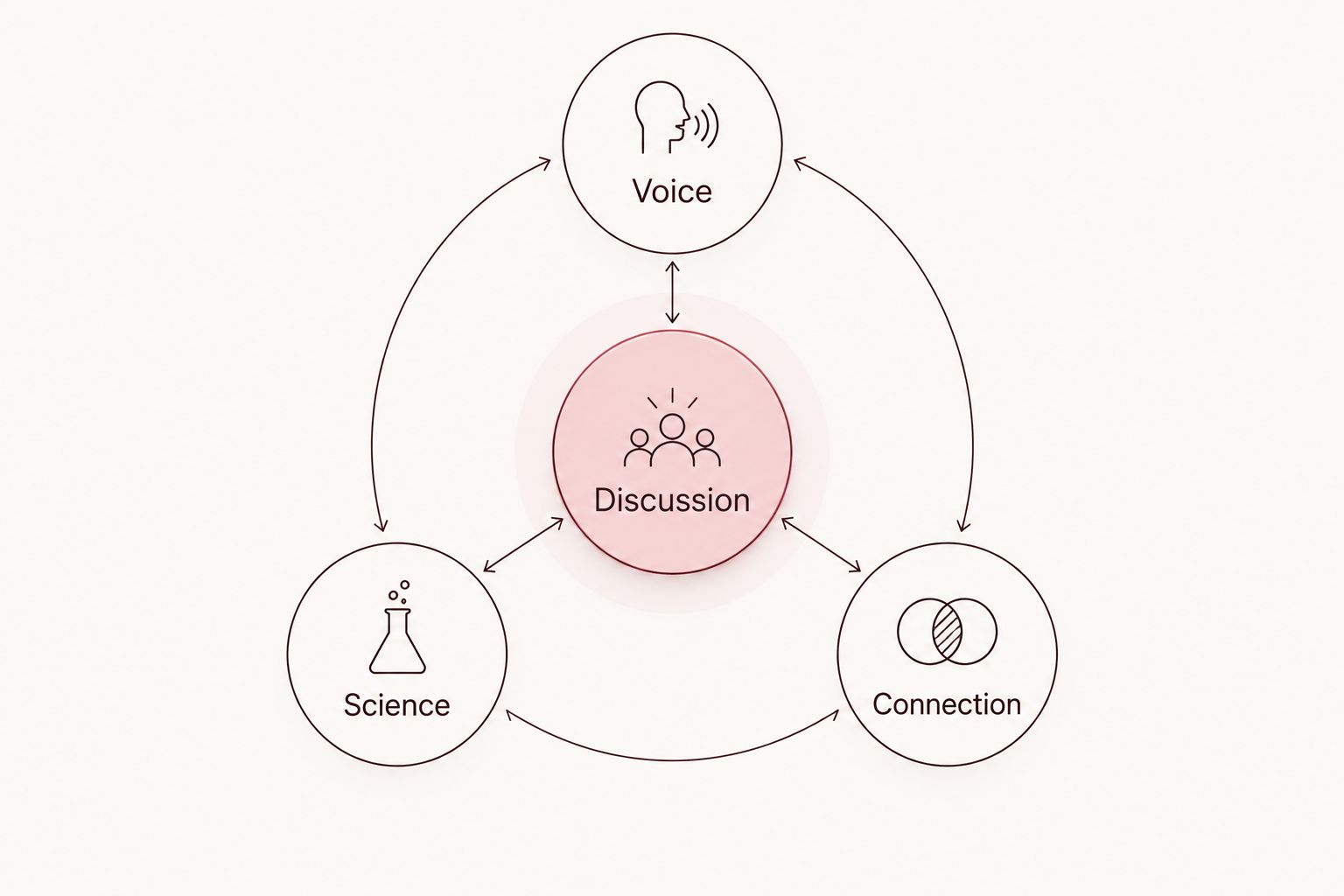
Your final vote should compare books against the same criteria. Otherwise, one member votes for jokes, another for aliens, and another for a friendship story without realizing they are making different requests.
Find your club’s next read
Start with five hand-curated suggestions, then request a personalized list of 20–30 titles by email.
Compare the book-club options
Use this table as a decision aid for your 2026 reading calendar. The limitation column matters as much as the match: it identifies the expectation most likely to make an otherwise suitable selection disappoint.
| Option | Best for | Specific match | Key limitation |
|---|---|---|---|
| The Martian — Andy Weir | Scientific ingenuity and humor | Practical problems solved under pressure | Not centered on a cross-species friendship |
| Contact — Carl Sagan | Evidence, belief, and public trust | Scientific inquiry with humanity-wide stakes | Less continuous survival action |
| Rendezvous with Rama — Arthur C. Clarke | Exploration and unanswered questions | Learning through observation of something alien | Less intimate characterization |
| The Long Way to a Small, Angry Planet — Becky Chambers | Relationships and cultural difference | Cooperation across unfamiliar perspectives | Episodic rather than a single urgent puzzle |
| Children of Time — Adrian Tchaikovsky | Evolution and nonhuman intelligence | Reconsidering human assumptions about other minds | Broader scope and more disturbing material |
Common mistakes book clubs make
Treating aliens as the whole match
An alien presence tells you little about tone, pacing, or emotional focus. Specify whether your group wants communication, exploration, or a relationship across difference. Those interests lead to different books.
Choosing the closest premise instead of the right experience
Another space emergency can satisfy readers who loved the experiments while disappointing those who loved the friendship. Match the reason your club kept reading, not the setting alone. Ask for that reason before collecting nominations.
Hiding the main difference until after the vote
Describe an episodic novel as episodic. Mention a broader scope or a less intimate style before members commit. A clear limitation helps readers choose; it does not cancel the recommendation.
Turning discussion into a science exam
Members do not need identical technical knowledge to discuss these novels. Ask what an explanation does to suspense or trust before debating its details. Your meeting should leave room for readers interested in character, ethics, and storytelling.
FAQ
What is the closest book to Project Hail Mary for a book club?
The Martian is the closest choice here for scientific problem-solving, survival pressure, and humor. Choose it if those qualities mattered more to your club than the cross-species relationship.
Which book gives a club more to debate: The Martian or Contact?
Contact is the stronger fit for debates about evidence, belief, and public trust. The Martian directs more attention toward practical survival decisions and the effort to bring a stranded person home.
What should we read if we loved the friendship in Project Hail Mary?
The Long Way to a Small, Angry Planet is the strongest fit here for relationships across cultural and species differences. Expect an ensemble and an episodic journey rather than a concentrated survival puzzle.
Is Children of Time a good follow-up for casual science-fiction readers?
Children of Time suits readers willing to try a broader scope and unfamiliar perspectives. It is not the closest follow-up for a club primarily seeking Andy Weir’s humor, and its spider imagery and body horror deserve advance notice.
Does Rendezvous with Rama offer the same emotional experience?
Rendezvous with Rama emphasizes exploration and mystery more than an intimate central relationship. Choose it for a club interested in what people can infer from an extraordinary encounter, not for another friendship-led story.
How should our book club choose between these recommendations?
Agree on the quality you want repeated, narrow the list to 3 finalists, and read opening samples before voting. Tell members the main difference from Project Hail Mary as clearly as the similarity.
Can GetSimilarBooks help us make a book-club shortlist?
GetSimilarBooks supplies five hand-curated read-alike suggestions from a title you enjoyed, plus an email-gated personalized list of 20–30 titles. Use those suggestions as candidates, then check each against your club’s shared reading priority.
One last thing
For your 2026 discussion, ask every member to bring 2 short passages: one that made an unfamiliar idea understandable, and one that changed their view of a character. That gives quieter readers a concrete starting point without requiring anyone to prepare a speech.
The safest next selection is not automatically the best meeting. Choose the book whose difference from Project Hail Mary your group actually wants to discuss.
Related guides
- Books like Project Hail Mary with humor in the science
- Books like Project Hail Mary: closest match first
- Best book recommendation quizzes for your next read
Books like ACOTAR for book clubs: complete 2026 guide

Book-club ACOTAR read-alikes are fantasy novels chosen to recreate the series’ romantic tension while giving your group something substantial to debate. Start with The Serpent and the Wings of Night for dangerous attraction and deadly trials; choose The Cruel Prince when faerie politics matter more than explicit romance.
- For books like ACOTAR for book clubs, start with Carissa Broadbent’s The Serpent and the Wings of Night.
- Choose The Cruel Prince for faerie politics, not an equally prominent or explicit romance.
- Choose Uprooted when your club wants a standalone rather than another series commitment.
- GetSimilarBooks suits fiction readers seeking hand-curated read-alikes from a title they already enjoyed.
Why ACOTAR read-alikes matter for book clubs
A useful 2026 shortlist needs more than the label romantasy. One member wants faerie courts. Another wants an absorbing relationship. Someone else wants a book that leaves room to discuss power rather than predict the next kiss.
ACOTAR means Sarah J. Maas’s A Court of Thorns and Roses series here, not just its opening novel. Ask which part your members want repeated. A match for the first book’s fairy-tale atmosphere is not automatically a match for the later books’ relationships and wider conflicts.
The closest-match ACOTAR reading guide is another starting point if your group still needs to identify its main attraction. For a club decision, add a second test: Does the book give members who disagree about the romance something else to discuss?
The recommendations below move from romance-forward danger toward more distant matches. They do not promise the same experience. Their differences are part of the choice.
How to choose books like ACOTAR for book clubs
Name the experience your members want repeated
Before collecting titles, ask everyone to finish this sentence: I want another book that makes me feel the way ACOTAR did when… Keep answers spoiler-free. The useful words are usually more specific than fantasy or romance: distrust, belonging, temptation, transformation, or divided loyalty.
For your 2026 ballot, reduce those answers to 2 matching qualities and 1 deal-breaker. That gives the group a shared brief without pretending everyone reads for the same reason. It also keeps the loudest enthusiast from choosing a whole series for everyone else.
- Pick the main attraction: relationship tension, faerie politics, or found family.
- State whether explicit sexual content is welcome, unwanted, or optional.
- Decide whether the selection must stand alone.
- Agree whether discussion can include later ACOTAR books.
Start with dangerous attraction and deadly trials
The Serpent and the Wings of Night by Carissa Broadbent is the closest opening choice here for a group that wants romance tied to survival. Oraya is a human raised within vampire society who enters a deadly tournament. Her alliance with Raihn makes trust both emotionally charged and practically necessary.
Best for: readers who want an adult romantic fantasy with dangerous tests, unequal power, and an uneasy alliance. The match is the pressure placed on intimacy: attraction does not remove the need to judge someone’s motives.
The meaningful difference is the setting. Vampires and tournament survival replace faerie courts, so do not choose it primarily for ACOTAR’s faerie atmosphere. Its violence and explicit sexual content also belong in the group’s decision, not in a surprise announcement after the vote.
Verdict: Buy for romance under pressure; skip if faeries are essential.
- Ask whether survival pressure changes what counts as a free choice.
- Discuss how Oraya’s upbringing shapes her judgments.
- Compare protective behavior with controlling behavior without revealing later developments.
Put political consequences ahead of magical spectacle
The Bridge Kingdom by Danielle L. Jensen follows Lara, a princess trained to undermine the kingdom she enters through a political marriage. The relationship is inseparable from competing national interests. Choosing whom to believe carries consequences beyond the couple.
Best for: clubs that want distrust, divided loyalty, and a romance that creates political problems. Its strongest ACOTAR connection is the collision between personal attachment and inherited assumptions about an enemy.
The difference is equally useful. This is not a faerie-court substitute, and its appeal rests on espionage, geography, and political marriage rather than the same magical atmosphere. Choose it because your group wants to argue about loyalty, not because every fantasy romance is interchangeable.
GetSimilarBooks’ book recommendation tool offers another route when these distinctions split the room: enter 1 title your group enjoyed to receive 5 hand-curated suggestions. The personalized list contains 20–30 titles and requires an email address. That expands the ballot; it does not replace your content boundaries.
Verdict: Buy for political mistrust; skip if elaborate magic is the priority.
- Ask what Lara owes her birthplace and what she owes the people she meets.
- Separate understandable motives from defensible actions.
- Decide whether secrecy strengthens the romantic tension or obstructs it.
Separate faerie intrigue from romance intensity
The Cruel Prince by Holly Black is the strongest choice here when faerie is the nonnegotiable word. Jude is a mortal trying to gain power in a dangerous faerie court. Status, humiliation, ambition, and belonging shape her decisions.
Best for: groups that want hostile attraction and court maneuvering, with less emphasis on explicit sexual content. The match lies in a human character confronting an unequal supernatural society and refusing to remain powerless.
The difference is the romance’s role. This is young adult fantasy in which political ambition takes substantial space; it is not an adult romance with equivalent on-page intimacy. Members expecting the relationship to dominate every development need that distinction before voting.
Its discussion value comes from Jude herself. Your group does not have to admire her choices to understand why she makes them. Keep content notes brief: bullying and violence matter even though the romance is less explicit.
Verdict: Buy for faerie power struggles; skip if romance must lead.
- Discuss whether belonging requires acceptance or control.
- Ask when adaptation to a cruel society becomes participation in it.
- Compare Jude’s stated goals with the choices she actually makes.
Choose a standalone when commitment is the obstacle
Uprooted by Naomi Novik offers a self-contained alternative to starting another romantic fantasy series. Agnieszka’s connection to her village, her friendship with Kasia, and the threat of a corrupted Wood give the story stakes outside its central romantic relationship.
Best for: clubs that want fairy-tale darkness, unsettling magic, and a complete story within the selected novel. Its ACOTAR connection is the combination of an initially unequal relationship, an unfamiliar magical world, and a heroine discovering her own abilities.
The difference is emphasis. Romance shares the book with friendship, community, and the struggle against corruption. The central relationship also involves a substantial power imbalance; do not present the novel as an uncomplicated comfort read. It includes violence and sexual content.
This is the better choice when finishing a story matters more than finding another long series to inhabit. You can discuss the ending without asking members to continue into another installment.
Verdict: Buy for a complete fairy-tale fantasy; skip if romance must dominate.
- Ask which relationship most strongly shapes Agnieszka’s choices.
- Discuss whether the magic feels intuitive, controlled, or contested.
- Examine how the story distinguishes protecting a place from possessing it.
Change the pace without abandoning faerie danger
Emily Wilde’s Encyclopaedia of Faeries by Heather Fawcett moves furthest from ACOTAR’s romance-forward experience. Emily is a scholar studying faeries, and the journal format makes her observations part of the story’s appeal. Her research brings questions of interpretation, expertise, and social understanding into the discussion.
Best for: groups that want folklore, an academic viewpoint, and a more restrained romantic thread. The connection is the encounter with faeries who do not simply follow human expectations.
The difference is tone and structure. Field research and journal entries replace the sustained romantic intensity some ACOTAR readers want. Do not call it an equivalent just because both books contain faeries. Its quieter presentation also does not mean its supernatural world is harmless.
Choose this when the group wants a change of pace rather than another version of the same emotional arc. It is a series opener, not the standalone alternative offered by Uprooted.
Verdict: Buy for scholarly folklore; skip if you want high-intensity romance.
- Ask what Emily understands better through scholarship than through conversation.
- Discuss where observation becomes interference.
- Compare the faeries’ rules with the assumptions human characters bring.
Run a short ballot and a spoiler-bounded discussion
Choose 3 candidates from the shortlist rather than asking everyone to assess every possible read-alike. Give each candidate a matching quality, a meaningful difference, and a brief content note. Let members rule out a genuine boundary before ranking their preferences.
For your 2026 meetings, keep the first discussion focused on the selected book. Later-series revelations can make a new reader’s contribution impossible, even when everyone technically finished the assigned title.
Use these decision labels to keep the ballot concrete:
- Closest match: choose The Serpent and the Wings of Night for romantic danger.
- Court politics: choose The Cruel Prince for faerie ambition.
- Standalone: choose Uprooted for a complete story.
- Change of pace: choose Emily Wilde’s Encyclopaedia of Faeries for scholarly folklore.
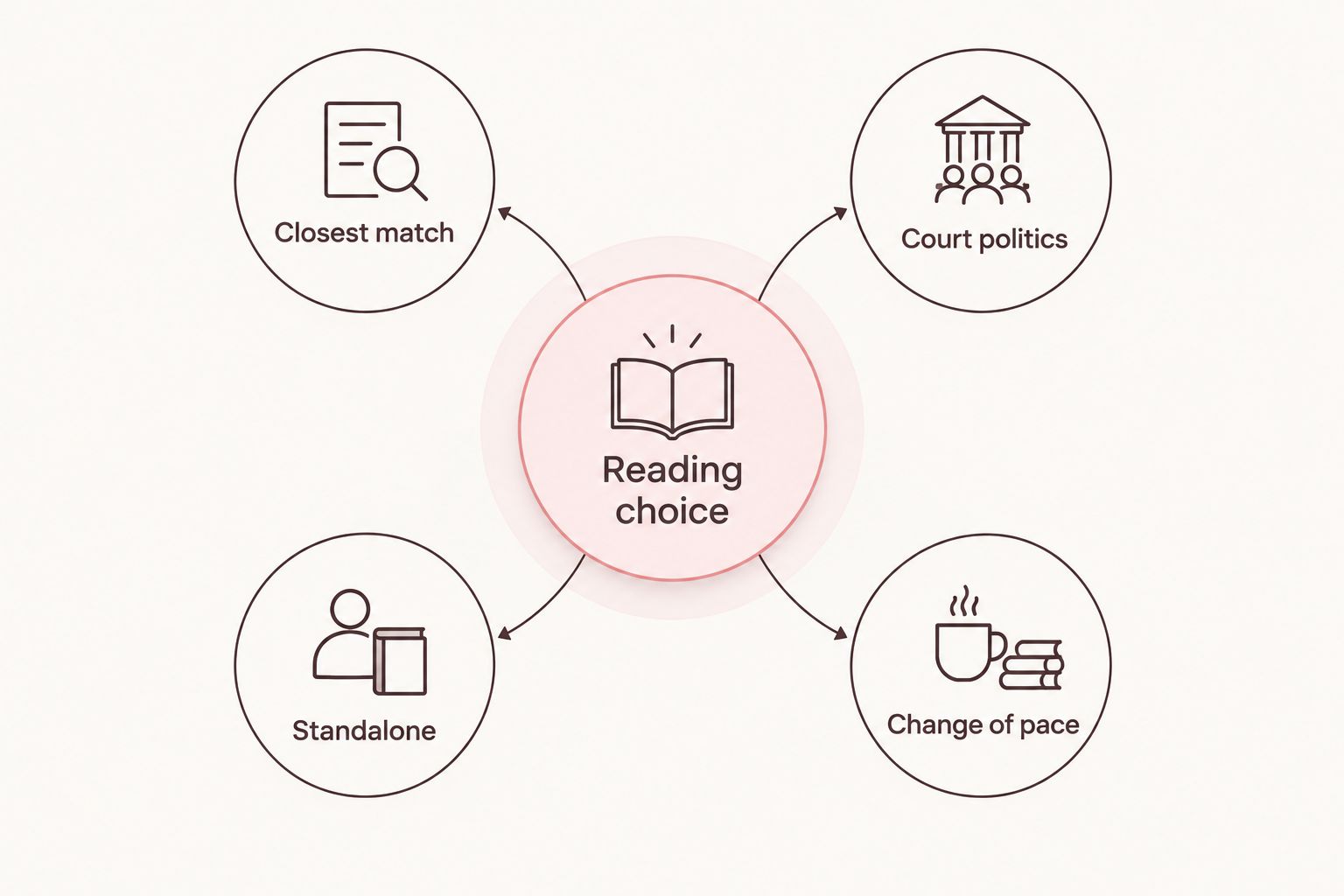
The reading choice should reflect the group’s shared interest, not just its favorite cover description. If the ballot stalls, GetSimilarBooks can supply a wider hand-curated shortlist from a title members already agree on; the email requirement applies to the longer personalized list.
Find your next shared read
Enter a title for five suggestions, or request the email-gated personalized list of 20–30 titles.
Compare the book-club options
These are reading-fit comparisons, not interchangeable recommendations. The limitation column matters as much as the match.
| Book | Best for | Strongest matching quality | Key limitation |
|---|---|---|---|
| The Serpent and the Wings of Night | Adult romance under pressure | Dangerous attraction and survival tests | Vampire setting rather than faerie courts; explicit content |
| The Bridge Kingdom | Arguments about loyalty | Political marriage and distrust | Not a substitute for faerie magic |
| The Cruel Prince | Faerie-court debate | Mortal ambition within an unequal court | Romance is less central and less explicit |
| Uprooted | A standalone selection | Dark fairy-tale magic and personal transformation | Friendship and community compete with romance for attention |
| Emily Wilde’s Encyclopaedia of Faeries | A quieter change of pace | Dangerous folklore and an outsider’s perspective | Journal format and restrained romance change the experience |
Common mistakes in a 2026 ACOTAR book club
- Treating all ACOTAR fans as one audience. Someone seeking explicit romance and someone seeking faerie politics need different recommendations. Name the attraction before the vote.
- Assigning a series without discussing continuation. Selecting an opening novel does not commit the club to its sequels. Make that boundary explicit.
- Calling a YA book an equivalent adult romance. The Cruel Prince matches court danger better than romantic explicitness. Describe the actual fit.
- Using future romantic developments as the sales pitch. Explain the initial tension and setup. Do not reveal relationship changes to prove that a recommendation works.
- Assuming less explicit means emotionally gentle. Bullying, coercion, violence, and power imbalances require their own brief content notes.
FAQ
What’s the best book like ACOTAR for a book club?
The Serpent and the Wings of Night is the first choice here for clubs seeking adult romance, dangerous attraction, and deadly trials. Choose The Cruel Prince instead when faerie politics matter more than explicit romance.
Which ACOTAR read-alike gives a book club the most political material?
The Bridge Kingdom is the clearest choice here for discussing political loyalty within a romance. The Cruel Prince is a better fit when the group specifically wants faerie-court ambition and status.
Is The Cruel Prince as romance-focused as ACOTAR?
No. The Cruel Prince gives substantial attention to Jude’s ambition and court politics, with a less explicit romantic thread. Recommend it for faerie intrigue rather than equivalent romantic intensity.
What’s a standalone alternative to ACOTAR for a book club?
Uprooted is the standalone selection in this guide. Its dark magic, friendship, and community stakes support discussion beyond the romance.
Which choice works for readers who want less explicit romance?
The Cruel Prince and Emily Wilde’s Encyclopaedia of Faeries are better fits for that preference than the adult romance-forward choices here. Less explicit romance does not mean an absence of violence or disturbing situations.
Does everyone need to finish the ACOTAR series first?
No. Agree on the ACOTAR spoiler boundary before the meeting and discuss the selected novel on its own terms. Do not use later-series revelations as required background.
How can GetSimilarBooks help our book club choose?
GetSimilarBooks’ book recommendation tool returns five hand-curated suggestions from a title you enjoyed. Its longer personalized list contains 20–30 titles and requires an email address; your club still needs to agree on content boundaries and series commitment.
One last thing
For your next 2026 meeting, ask every member to bring one moment when the book made them change their judgment of a character. Keep the explanation within the selected novel’s spoiler boundary.
That question connects romance, politics, and character without requiring everyone to love the same couple. A useful read-alike gives your club familiar pleasures and a new disagreement.
Related guides
- ACOTAR read-alikes with slow-burn romance
- ACOTAR read-alikes without a love triangle
- Audiobooks like ACOTAR worth the listen
Similar Books

In the age of information, the availability of educational resources has never been more abundant. While textbooks and traditional learning methods maintain their relevance, the rise of audiobooks and e-learning platforms has revolutionized how we consume knowledge. With a plethora of options at your fingertips, discerning which books to dive into can be overwhelming. If you’re looking to expand your horizons with similar books that provide value, enhance understanding, and foster personal growth, you’re in the right place.
Understanding the Need for Similar Books
Educational growth is not just about accumulating knowledge; it’s about expanding perspectives and exploring diverse approaches to learning. Similar books often echo core themes or methodologies that can reinforce learning and understanding. Whether you’re a student, a lifelong learner, or a professional seeking development, similar books serve as both resources and companions in your journey.
The Benefits of Exploring Similar Books
- Diverse Perspectives: Similar books often present different viewpoints on the same topic, helping you develop a well-rounded understanding.
- Reinforcement of Concepts: Revisiting themes through various authors can strengthen retention and comprehension.
- Expanding Knowledge Bases: Such books can introduce you to new ideas that complement what you’ve learned.
- Inspiration and Motivation: Encountering different writing styles can spark inspiration and encourage ongoing learning.

Recommended Similar Books in Education & E-Learning
To effectively harness the benefits of similar books, it’s crucial to select titles that align well with one another. Here’s a curated list of educational books, alongside recommendations for audiobooks that you can explore with platforms like Audible, to maximize your learning experience.
1. “Mindset: The New Psychology of Success” by Carol S. Dweck
This groundbreaking book introduces the concept of “fixed” vs. “growth” mindsets, emphasizing the importance of believing in one’s ability to develop skills through effort and learning. Fans of Dweck’s work will find similar insights in:
- “Grit: The Power of Passion and Perseverance” by Angela Duckworth – Duckworth’s exploration of grit complements Dweck’s mindset theory.
- “Outliers: The Story of Success” by Malcolm Gladwell – This book dives into the factors that contribute to high levels of achievement.
2. “The 7 Habits of Highly Effective People” by Stephen R. Covey
Covey’s classic outlines key habits that lead to personal and professional effectiveness. If you appreciate his insights, consider:
- “Atomic Habits: An Easy & Proven Way to Build Good Habits & Break Bad Ones” by James Clear – Clear provides practical strategies that build on Covey’s principles.
- “Essentialism: The Disciplined Pursuit of Less” by Greg McKeown – A guide on focusing on what truly matters, supporting Covey’s vision for effectiveness.
3. “How to Win Friends and Influence People” by Dale Carnegie
This timeless classic delves into the intricacies of interpersonal relationships and effective communication. For readers who want to further explore social dynamics, they can check out:
- “Never Split the Difference: Negotiating As If Your Life Depended On It” by Chris Voss – A fresh take on negotiation and communication strategies.
- “The Art of People: 11 Simple People Skills That Will Get You Everything You Want” by Dave Kerpen – Another excellent resource on building relating skills.
Utilizing Audiobooks and E-Learning Platforms
With the growing popularity of audiobooks, platforms like Audible offer an amazing selection for your educational needs. Audiobooks allow you to absorb knowledge while multitasking, whether you’re commuting, exercising, or cleaning. The comprehensive library covers not only these recommendations but also a vast array of educational content that can enrich your learning experience.
Exploring Online Courses and Webinars
In addition to books, various online courses and webinars can provide interactive learning environments. Websites such as Coursera, Udemy, and edX offer courses designed by leading institutions and experts. Many courses include reading lists where you can find similar books worth exploring.
Creating Your Own Learning Path
Integrating similar books into your education strategy can help you discover interconnected ideas, theories, and applications. It is beneficial to develop a reading plan that aligns with your personal goals, so consider building a list of books you wish to explore. Whether you’re aiming to enhance your career skills, delve deeper into a specific subject, or cultivate creative thinking, a well-rounded selection of books can significantly impact your trajectory.
Stay Curious and Engaged
As you explore these recommendations and similar titles, keep your curiosity alive. Are there specific topics you’re passionate about that require further exploration? Don’t hesitate to share your experiences and thoughts on similar books in the comments below. Engaging with like-minded individuals can lead to rich discussions and additional resource sharing.
Get Your Personal Reading List
Answer six questions about how you actually read: mood, pace, heat level, tropes you love, tropes you skip, and length. We send back a personal list of twenty to thirty titles, ranked by fit and built on the same curated data behind our finder.
- Twenty to thirty titles, ordered by fit and not by popularity
- A one line reason for every pick, tied to your answers
- Trope filters, so the ones you avoid stay off the list
- Audio availability flagged on every title
If you’re ready to embark on your learning journey with audiobooks or are looking to refresh your bookshelf, consider signing up for Audible today and explore a world of knowledge. The path to education is enriched by the myriad of resources available, and similar books are just one part of that journey.
#Education #E-Learning #Audiobooks #BookRecommendations #LearningJourney
Books like Harry Potter with found family themes

Best overall: Nevermoor: The Trials of Morrigan Crow. Best for camp friendships: The Lightning Thief. Best for an adult magical household: The House in the Cerulean Sea. These 5 books belong on your 2026 reading list if Harry Potter’s chosen family mattered more to you than its spells.
- For books like Harry Potter, found family makes Nevermoor the closest starting point: an excluded child finds magical belonging.
- Amari and the Night Brothers pairs an outsider’s supernatural education with friendships tested by prejudice and competition.
- The Lightning Thief replaces boarding-school life with camp friendships and a questing trio.
- The House in the Cerulean Sea and The Very Secret Society of Irregular Witches shift belonging into adult households.
Why Deeper Worldbuilding Matters in Fourth Wing Recommendations
A magical school does not automatically create a found-family story. The match comes from people repeatedly choosing one another: making room at the table, offering protection, and becoming a home that the protagonist did not inherit.
That distinction matters when you want another Ron, Hermione, or Weasley-family feeling rather than another sorting ceremony. GetSimilarBooks’ book recommendations start with a title you enjoyed; you can use GetSimilarBooks to request a free personalized list after narrowing down which kind of belonging you want.
The recommendations below move from close structural matches toward books that preserve the emotional appeal while changing the setting, age group, or pace. None requires a plot twist to explain its place here.
What makes the best Harry Potter found-family read-alikes
For this 2026 reading list, belonging matters more than matching magical furniture. A castle, a wand, or an unusual pet is not enough.
- Earned belonging: The protagonist builds a place among people who initially feel unfamiliar. Acceptance has an emotional cost or requires trust.
- Recurring relationships: Friends and caregivers matter beyond a convenient rescue. Their presence changes everyday life as well as dangerous moments.
- Shared refuge: A school, camp, or household offers an alternative to isolation. You understand why the character wants to return.
- Emotional fit: The recommendation identifies whether you are getting youthful adventure, adult comfort, or a more romance-centered household.
- Honest differences: Each book has a reason to choose it and a reason it will not reproduce Harry Potter exactly.
Use these criteria to separate a close read-alike from a book that merely shares a shelf. Choose the relationship pattern first; choose the magical setting second.
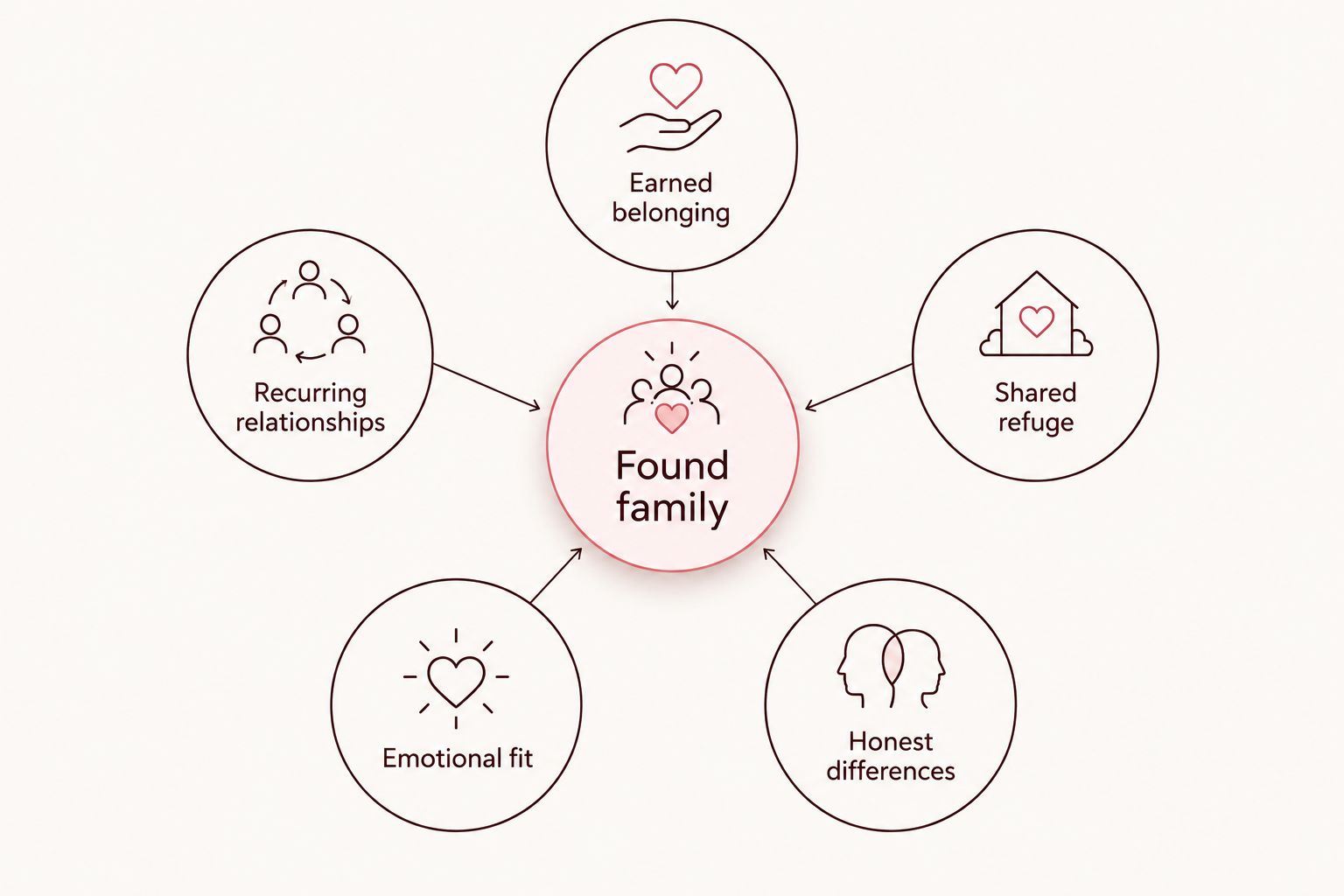
Found-family read-alikes at a glance
The order follows closeness to Harry Potter’s outsider-to-belonging experience, not a claim that one novel is better literature than another.
| Book | Best for | Standout match | Key difference |
|---|---|---|---|
| Nevermoor: The Trials of Morrigan Crow — Jessica Townsend | An excluded child finding magical belonging | An unexpected protector, friendships, and entry trials | A magical society and trials replace the familiar boarding-school structure |
| Amari and the Night Brothers — B. B. Alston | An outsider proving herself inside an institution | Supernatural training, friendship, and prejudice | A missing-brother investigation drives the story |
| The Lightning Thief — Rick Riordan | Camp friendships and a questing trio | A hidden identity and companions who share danger | Travel and Greek mythology outweigh school routines |
| The House in the Cerulean Sea — TJ Klune | An adult finding a magical household | Caregiving, acceptance, and children treated as outsiders | The central viewpoint belongs to an adult official |
| The Very Secret Society of Irregular Witches — Sangu Mandanna | Domestic belonging with adult romance | An isolated witch joins an unconventional household | Teaching and romance replace a school-age adventure |
1. Nevermoor: best for an excluded child finding magical belonging
Jessica Townsend’s Nevermoor: The Trials of Morrigan Crow is the closest starting point if you miss Harry’s movement from unwanted child to someone with friends and a place in a magical world. Morrigan enters Nevermoor with Jupiter North, whose protection opens a life she could not previously imagine.
The strongest match is emotional, not architectural. An unfamiliar place becomes somewhere worth staying, and relationships begin to challenge what Morrigan has been taught to believe about herself.
Nevermoor pros:
- Morrigan’s exclusion gives her search for acceptance a clear emotional foundation.
- Jupiter North provides an adult relationship alongside the developing friendships.
- The Hotel Deucalion supplies a distinctive home base, not just a backdrop for tests.
- Entry trials bring discovery and uncertainty into the same story.
Nevermoor cons:
- The trials occupy attention that Harry Potter gives to lessons and school routines.
- This opening volume begins a larger story rather than settling every question about belonging.
Best for: You want another child-centered fantasy in which entering the magical world also means finding people who care whether you stay.
Choose Nevermoor for your 2026 reading list if the early discovery of friendship and protection is the feeling you want back. Skip it if your priority is a self-contained adult novel or a romance-led plot.
Verdict: Buy if the outsider-to-belonging arc is your main requirement.
2. Amari and the Night Brothers: best for an outsider inside an institution
B. B. Alston’s Amari and the Night Brothers follows Amari Peters into the Bureau of Supernatural Affairs while she searches for her missing brother. Her entry into that world brings training, competition, and friendships under pressure.
The Harry Potter connection lies in the tension between a remarkable institution and the people within it. Access does not equal acceptance. Amari must find trustworthy relationships while others judge her through assumptions about who she is and what she can do.
Amari and the Night Brothers pros:
- Amari’s outsider status makes acceptance an active concern rather than an automatic reward.
- Her friendship with Elsie gives the institutional setting a personal center.
- Supernatural training supplies discovery alongside the central investigation.
- Family loyalty matters without making new friendships secondary or disposable.
Amari and the Night Brothers cons:
- The missing-brother mystery makes the story more investigation-driven than a school-year narrative.
- Institutional hostility means this is not an uninterrupted comfort read.
Best for: You want a capable young outsider to build alliances in a magical organization that does not immediately welcome her.
Choose Amari when you want belonging to involve resistance as well as refuge. It is a stronger fit for friendship under scrutiny than for long stretches of relaxed communal life; the pressure is part of the appeal, not a temporary interruption.
Verdict: Buy for supernatural training and friendships that challenge exclusion.
3. The Lightning Thief: best for camp friendships and a questing trio
Rick Riordan’s The Lightning Thief introduces Percy Jackson to a hidden world of Greek gods and demigods. Camp Half-Blood offers an explanation for experiences that have left Percy feeling out of place, while Annabeth and Grover become his companions on a dangerous quest.
The match is the combination of identity and companionship. Percy is not simply learning what he is; he is learning whom he can depend on. The friendships develop through disagreement and shared responsibility rather than instant agreement.
The Lightning Thief pros:
- Percy, Annabeth, and Grover provide a clear friendship-centered group.
- Camp Half-Blood gives the wider story a recurring place of belonging.
- Humor keeps the companionship visible even when danger takes over.
- The hidden-world discovery offers a familiar entry point without repeating Hogwarts.
The Lightning Thief cons:
- Much of the book follows a traveling quest rather than communal camp life.
- Greek mythology determines the world’s rules; classroom magic is not the attraction.
Best for: You miss the central trio more than the boarding school, and you want friends whose different strengths matter to the adventure.
For a 2026 reading choice, the useful distinction is camp versus journey. Choose The Lightning Thief if you want companions beside the protagonist through trouble; choose Nevermoor if discovering a new home matters more than leaving it on a quest.
Verdict: Buy for friendship in motion, not a school-life substitute.
4. The House in the Cerulean Sea: best for an adult magical household
TJ Klune’s The House in the Cerulean Sea follows Linus Baker, an official sent to assess an island home for magical children. His relationship with the household becomes the book’s central source of change.
This is the largest structural departure so far. Instead of following a child who needs a family, you follow an adult whose official task brings him close to one. The connection to Harry Potter is the insistence that people treated as dangerous or unwanted deserve care, dignity, and belonging.
The House in the Cerulean Sea pros:
- Daily household relationships receive sustained attention rather than serving only the adventure.
- Caregiving is central to the story’s understanding of family.
- The adult viewpoint makes room for questions about work, duty, and personal attachment.
The House in the Cerulean Sea cons:
- The pace favors conversations and changing attitudes over magical action.
- Its treatment of prejudice and institutional mistreatment sits alongside the comforting household scenes.
Best for: You want the emotional shelter of a chosen family, but you no longer need a child protagonist or a school setting.
The House in the Cerulean Sea is an adult alternative, not an older version of Harry’s school years. Choose it when your preferred scenes involve making a home and defending its inhabitants. Leave it for later if you need mysteries, lessons, and escalating adventure to carry the reading experience.
Verdict: Buy for adult belonging built through care rather than combat.
5. The Very Secret Society of Irregular Witches: best for domestic belonging with romance
Sangu Mandanna’s The Very Secret Society of Irregular Witches follows Mika Moon, a witch accustomed to keeping her magic separate from other people. An invitation to teach young witches at Nowhere House puts her inside an unconventional household.
The found-family connection comes from changing habits of isolation. Mika does not merely discover that other magical people exist; she has to learn what sharing space, responsibility, and affection asks of her.
The Very Secret Society of Irregular Witches pros:
- An established household gives the relationships a concrete daily setting.
- Teaching connects magical activity to care and responsibility.
- Adult romance develops alongside the broader question of belonging.
The Very Secret Society of Irregular Witches cons:
- Romance occupies more space than in the child-centered recommendations above.
- Domestic concerns replace the sustained danger and school mysteries some Harry Potter readers want.
- It includes adult sexual content; do not treat it as a younger-reader substitute.
Best for: You want a magical home, an adult protagonist, and a romance that belongs within a larger household story.
Choose this book when the desired change is from lonely independence to shared life. It is the furthest recommendation from Harry Potter’s adventure structure, but a direct match for readers who chiefly want the warmth of being expected, included, and needed.
Verdict: Buy for adult domestic fantasy; skip for a school-age adventure.
How these books are ranked
This 2026 ranking puts the child-outside-the-magical-world structure first, then moves toward looser emotional matches. Nevermoor and Amari combine entry into a magical institution with the work of finding allies. The Lightning Thief preserves youthful companionship but shifts the action toward a quest.
The adult novels come later because they answer a different need: finding a household rather than growing up within a school community. A lower position means a greater departure from Harry Potter, not a weaker found-family theme.
GetSimilarBooks’ book recommendations are most useful when you specify that difference: magical education, loyal companions, or an adult home built by choice.
Which found-family book should you choose?
Start with Nevermoor if you are undecided. It keeps the young outsider, the surprise of magical discovery, and the possibility of a new home in the same story. That makes it the clearest default without pretending that its trials are Hogwarts lessons.
Choose Amari for friendship inside a suspicious institution. Choose The Lightning Thief for a traveling group whose loyalty grows through action. Choose The House in the Cerulean Sea for caregiving and adult belonging, or The Very Secret Society of Irregular Witches when romance should share the center.
GetSimilarBooks is best for readers who want hand-curated read-alikes starting from a book they already enjoyed. Enter a title for five suggestions, then request the free personalized list of 20–30 titles with your email address.
Find your next read
Start with five hand-curated suggestions, then request a free personalized list of 20–30 titles by email.
FAQ
What’s the closest book to Harry Potter for found family?
Nevermoor: The Trials of Morrigan Crow is the closest starting point on this list. Morrigan’s movement from exclusion toward magical belonging combines a protective adult relationship with developing friendships.
Which Harry Potter read-alike focuses on a friendship trio?
The Lightning Thief is the strongest choice here for a friendship trio. Percy, Annabeth, and Grover share a quest, so their relationships develop through travel and danger rather than classroom routines.
What should I read if I want magical found family for adults?
Choose The House in the Cerulean Sea for an adult viewpoint centered on caregiving and acceptance. Choose The Very Secret Society of Irregular Witches if you also want adult romance within a magical household.
Is Amari and the Night Brothers a magical-school book?
Amari and the Night Brothers uses supernatural training within the Bureau of Supernatural Affairs rather than a conventional boarding school. Its missing-brother investigation and institutional competition give it a different structure from Harry Potter.
Which recommendation has adult sexual content?
The Very Secret Society of Irregular Witches includes adult sexual content. It is an adult romantic fantasy, not a direct replacement for Harry Potter for younger readers.
Do I need a magical school to get the same found-family feeling?
No. The Lightning Thief uses camp and a questing group, while The House in the Cerulean Sea uses a household. The stronger connection is people repeatedly choosing to care for one another.
How can I get more personalized found-family recommendations?
GetSimilarBooks provides five hand-curated read-alike suggestions when you enter a book you enjoyed. You can also request a free personalized list of 20–30 titles with your email address.
One last thing
Before choosing your next book in 2026, name the Harry Potter scene you actually miss. A shared meal points toward a household story; friends standing together under pressure points toward a quest or institutional conflict.
That is a better instruction than “more magic.” Ask for the relationship you want to return to, not just the setting you recognize.
Related guides
- Books like Harry Potter for adult readers
- Books like Harry Potter set in boarding schools
- Books like Harry Potter with darker themes
- Books like Fourth Wing with found family
Books like Harry Potter for middle schoolers: complete 2026 guide

Books like Harry Potter for middle schoolers are fantasy read-alikes that recreate magical discovery, close friendships, and dangerous mysteries without assuming readiness for adult fantasy. Start with Nevermoor: The Trials of Morrigan Crow for hidden-world wonder, or The Iron Trial if learning magic at school matters most; this 2026 guide compares five starting points without major spoilers.
- For books like Harry Potter for middle schoolers, start with Jessica Townsend’s Nevermoor for magical discovery and belonging.
- Choose The Iron Trial for magic lessons, Amari and the Night Brothers for a hidden supernatural institution.
- Keeper of the Lost Cities emphasizes friendship and identity; The Lightning Thief emphasizes quests and humor.
- GetSimilarBooks suits readers who want title-based book recommendations rather than another broad fantasy list.
Why these read-alikes matter for middle schoolers
A reader who loved Hogwarts does not automatically want every fantasy series. The attraction might be school routines, the friendship group, a secret world beside ordinary life, or a mystery that keeps changing shape. Match that experience before matching the genre.
For your 2026 reading list, separate reading confidence from comfort with frightening material. Finishing a long novel does not mean a reader wants stronger violence or adult romance. If the setting is the deciding factor, the guide to books like Harry Potter set in boarding schools offers a narrower route.
The recommendations below move from close magical-world matches toward different structures. Each has a reason to try it and a difference that can rule it out.
How to choose the next book
Identify the part of Harry Potter you want back
Before choosing a title, finish this sentence: “I want another book where…” Make the answer about the reading experience, not just the presence of magic. “Children discover a world adults have hidden” gives you a better starting point than “fantasy.”
Also identify what you do not want repeated. A reader can love the friendships while disliking the later books’ darker atmosphere. Another can enjoy the danger but feel no attachment to classrooms. Those readers need different recommendations.
Use these three overlapping attractions as your starting point. None is a reading level or an age rating.
- Hidden worlds: ordinary surroundings conceal an extraordinary society.
- School mysteries: lessons, teachers, and institutional secrets drive discovery.
- Found family: friendship provides the belonging the protagonist lacked.
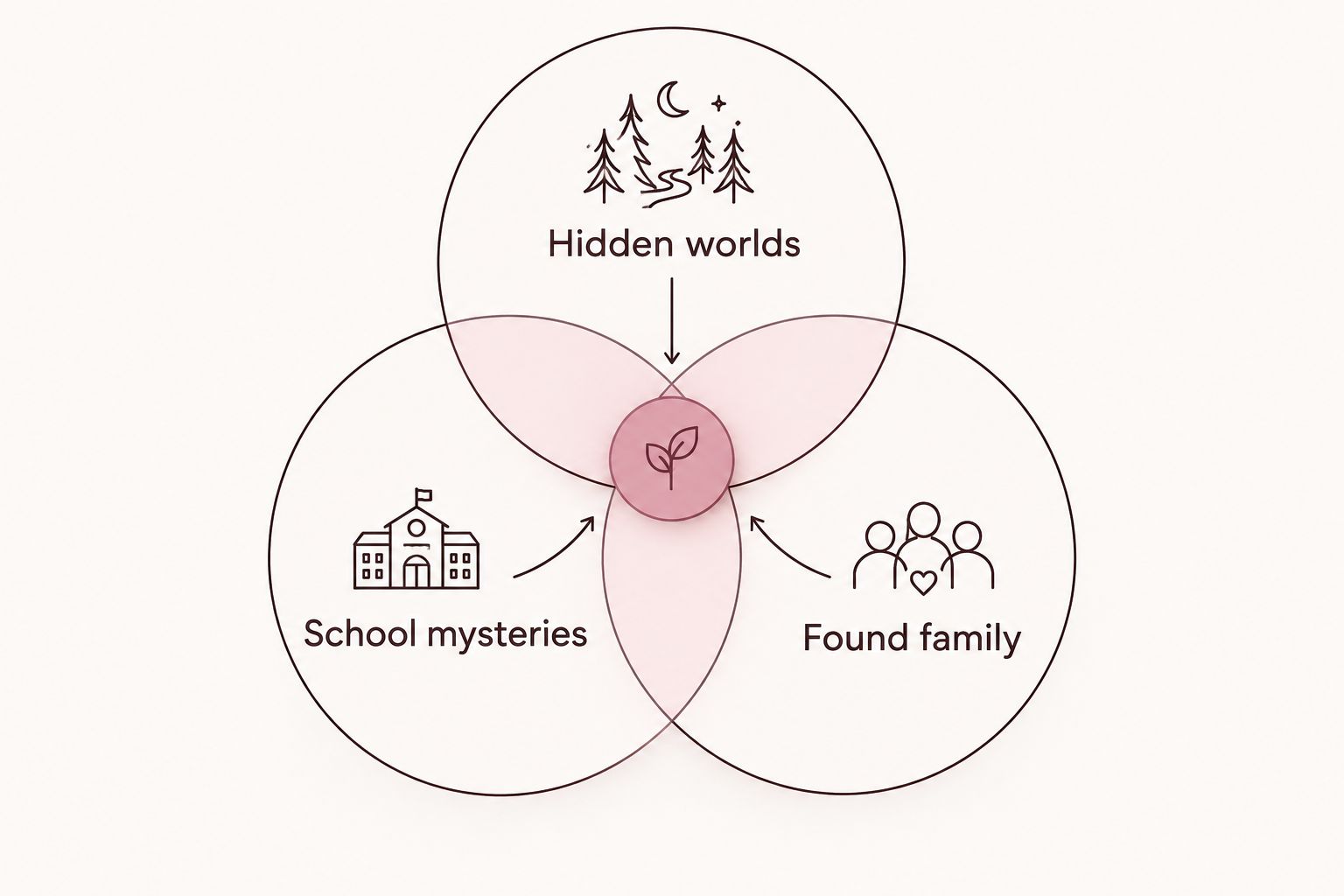
Start with Nevermoor for discovery and belonging
Best for: readers who miss entering a strange magical society. Jessica Townsend’s Nevermoor: The Trials of Morrigan Crow follows Morrigan into Nevermoor and the trials connected with joining the Wundrous Society. The strongest Harry Potter connection is emotional: a child treated as a problem discovers a place where belonging becomes possible.
The appeal is not simply that both books contain magic. Both make learning the world part of the pleasure, with unfamiliar rules, new relationships, and uncertainty about whom to trust. Nevermoor’s eccentric setting gives the discovery its own character.
The difference matters. This opening book centers on trials and entry into an institution rather than recreating a Hogwarts school year. It also includes threats and peril; its whimsical elements do not make it a danger-free choice.
Verdict: Buy for hidden-world wonder and an outsider’s search for belonging. Borrow a sample first if the reader mainly wants classroom scenes.
- Start with The Trials of Morrigan Crow.
- Choose it for magical discovery and institutional secrets.
- Expect trials rather than a direct Hogwarts substitute.
- Check comfort with threats, rejection, and danger.
Choose The Iron Trial for magical education
Best for: readers who want lessons, classmates, and uncertain teachers. Holly Black and Cassandra Clare’s The Iron Trial introduces Callum Hunt and the Magisterium, where young students learn elemental magic. Of these recommendations, it offers a particularly direct route back to the experience of entering a magical school.
The match rests on the school structure and the relationships formed inside it. Callum must work out how he fits into an institution while learning alongside other children. Adults’ expectations and warnings complicate that process.
The meaningful difference is Callum’s starting attitude. He does not arrive with a straightforward wish to embrace magical education. That resistance changes the emotional shape of the familiar school-entry setup. Choose it for the tension around learning and trust, not because you expect Hogwarts with renamed houses.
Verdict: Buy for magical-school structure and uneasy questions about trust. Skip it if you specifically want a break from school-based fantasy.
- Start with The Iron Trial, the opening Magisterium novel.
- Choose it for elemental magic and student relationships.
- Expect a reluctant approach to magical schooling.
- Check comfort with danger and threatening magical conflict.
Pick Amari for a supernatural institution and a personal mystery
Best for: readers who want discovery tied to a missing-person mystery. B. B. Alston’s Amari and the Night Brothers brings Amari Peters into the Bureau of Supernatural Affairs as she searches for answers about her missing brother. A hidden institution opens up a world she did not know existed.
The Harry Potter connection lies in discovering that ordinary life contains another society, complete with rules and prejudices. Amari has to understand that society while confronting other people’s assumptions about her. The personal mystery gives her a reason to keep pushing.
The distinction is setting and purpose. The Bureau is a supernatural organization, not a traditional boarding school, and Amari’s concern for her brother shapes the story. That makes it a stronger fit for a reader who wants an urgent investigation than one chiefly seeking cozy school routines.
Verdict: Buy for hidden-world discovery with a clear personal mystery. Hold if a missing sibling is an unwelcome subject.
- Start with Amari and the Night Brothers.
- Choose it for supernatural training and investigation.
- Expect an institutional setting rather than a Hogwarts-style school.
- Check comfort with a missing sibling, prejudice, and peril.
Try Keeper of the Lost Cities for friendship and identity
Best for: readers who want a newly discovered identity and an expanding cast. Shannon Messenger’s Keeper of the Lost Cities follows Sophie Foster as she discovers her connection to a hidden elven world. Learning where she belongs brings new relationships, unfamiliar expectations, and questions about her past.
The match is the disruption of ordinary life by a much larger magical society. Friendship and education help make that society understandable, while secrets keep it from feeling settled. Readers who enjoy discussing characters’ relationships have something specific to follow here.
The difference is emphasis. This is an elven society with its own abilities and social structures, not a wizarding-school recreation. The expanding cast and continuing questions also ask for patience. Choose it for an ongoing world to inhabit rather than a tightly contained mystery.
Verdict: Buy for friendship, identity, and a widening fantasy world. Skip it if you want a compact, self-contained reading experience.
- Start with Keeper of the Lost Cities.
- Choose it for belonging and character relationships.
- Expect an expanding cast and continuing questions.
- Check comfort with bullying, danger, and identity-related distress.
Follow The Lightning Thief for humor and a quest
Best for: readers who want friendship and danger without another school-year plot. Rick Riordan’s The Lightning Thief introduces Percy Jackson, Greek mythology in modern America, and Camp Half-Blood. It preserves the discovery of an extraordinary identity but puts a quest at the center.
The connection is strongest in the young protagonist’s voice, the importance of companions, and the sense that familiar places conceal something else. The story gives those elements a different engine: travel and encounters rather than a sustained classroom routine.
That difference makes this the outward step in the list. Camp Half-Blood is important, but you should not choose the book expecting most of the action to stay there. Greek gods, monsters, and family relationships replace wizarding traditions as the world’s organizing ideas.
Verdict: Buy for humor, mythology, and friendship under pressure. Hold if remaining inside a magical school is your main requirement.
- Start with The Lightning Thief.
- Choose it for a quest-driven story and conversational humor.
- Expect mythological encounters beyond the camp setting.
- Check comfort with monster violence and threatening situations.
Build a shortlist before requesting more recommendations
Use the manual route first: choose the strongest match above, read the opening chapter, and ask whether the voice works. A familiar premise cannot compensate for narration you do not enjoy. Library browsing and a librarian’s recommendation also let you describe the reader’s specific interests and boundaries.
For a broader 2026 shortlist, GetSimilarBooks provides title-based book recommendations: enter a book you enjoyed to receive five hand-curated read-alike suggestions. You can also request a personalized list of 20–30 titles by email.
The benefit is a smaller starting set than an unrestricted search. The limitation is equally clear: GetSimilarBooks is a recommendation tool, not an individual content assessment. Preview the books before treating a match as suitable for a particular middle schooler.
- Sample one opening chapter before committing to a series.
- Write down the matching quality you want repeated.
- Keep content boundaries separate from genre preferences.
- Request the personalized list when you want more options.
Find your next read-alikes
Enter a title for five suggestions, then request a personalized list of 20–30 titles by email.
Compare the five starting points for 2026
Choose by the matching quality, not by which series sounds biggest. This table summarizes the trade-offs; the content notes above are starting points, not exhaustive warnings.
| Starting book | Best for | Strongest matching quality | Key limitation |
|---|---|---|---|
| Nevermoor: The Trials of Morrigan Crow | Hidden-world wonder | An outsider discovers magical belonging | Trials take priority over a familiar school-year structure |
| The Iron Trial | Magical-school readers | Lessons, classmates, and uncertain authority | A reluctant student changes the emotional tone |
| Amari and the Night Brothers | Mystery-focused readers | A hidden institution and a personal investigation | A missing sibling is central to the premise |
| Keeper of the Lost Cities | Friendship-focused readers | Identity, belonging, and an expanding magical society | Continuing questions demand patience |
| The Lightning Thief | Quest and humor readers | An extraordinary identity and essential companions | The plot travels beyond its training setting |
Common mistakes when choosing for middle schoolers
Treating “less explicit” as “appropriate”
A book without explicit romance can still contain frightening violence or distressing family situations. Check the actual subjects. Adult fantasy described as having less sexual content is not automatically a middle-school recommendation.
Matching only the school setting
A magical school can host very different stories. Ask whether the reader wants lessons, friendship, mystery, or competition. The Iron Trial and Nevermoor offer institutional discovery through different structures.
Starting with a later installment
Begin with the opening book named in this guide. Continuing series build on earlier relationships and discoveries; a later volume is a poor sample of how the story introduces its world.
Ignoring the reader’s preferred tone
Do not choose solely because a reader managed Harry Potter’s length. Humor, narration, pacing, and emotional intensity affect enjoyment too. Let the reader reject a sample without treating that choice as a reading failure.
FAQ
What’s the best book like Harry Potter for middle schoolers in 2026?
Start with Nevermoor: The Trials of Morrigan Crow for magical discovery and belonging. Choose The Iron Trial instead if lessons and life inside a magical school are the main attraction.
Which recommendation feels most like going to Hogwarts?
The Iron Trial is the most direct school-based choice in this guide. Its magical education, classmates, and uncertain teachers provide the connection, though Callum’s reluctance gives it a different tone.
Is Percy Jackson a good next read after Harry Potter?
The Lightning Thief is a good next read for friendship, humor, and discovering an extraordinary identity. Choose something else if you want most of the story to remain inside a school.
Are all these books suitable for every middle schooler?
No single recommendation fits every middle schooler. These books include danger and emotionally difficult subjects, so use the brief content notes and preview your chosen title.
Which book should I pick for a reader who likes mysteries?
Choose Amari and the Night Brothers when a personal investigation is the strongest draw. The search for Amari’s missing brother gives the hidden supernatural world an immediate purpose.
Can GetSimilarBooks help me find more books after Harry Potter?
GetSimilarBooks provides five hand-curated suggestions when you enter a title you enjoyed. A personalized list of 20–30 titles is also available by email; preview recommendations for the reader’s individual needs.
One last thing
For your 2026 shortlist, write a rejection rule before adding another title: “Not another school,” “No missing-family storyline,” or “More humor.” Knowing what you do not want makes the next choice clearer. Start with one book that meets both your matching quality and your boundary.
Related guides
- Similar books finder: five picks for a title you loved
- Book recommendation quizzes for your next read
Books like ACOTAR for young adult readers

Best overall: The Cruel Prince. Best for romance-led court intrigue: These Hollow Vows. Best standalone: An Enchantment of Ravens. This 2026 guide to books like ACOTAR for YA readers ranks five choices from close faerie-court matches to a more distant fairy-tale alternative.
- The Cruel Prince leads these books like ACOTAR for YA readers: dangerous fae politics, less romance-led storytelling.
- These Hollow Vows puts romantic choices closer to the center; expect a love triangle and mature content.
- An Enchantment of Ravens offers a standalone human–faerie romance rather than a sprawling court saga.
- GetSimilarBooks provides five hand-curated read-alikes, with a personalized list of 20–30 titles available by email.
Why Deeper Worldbuilding Matters in Fourth Wing Recommendations
ACOTAR is shorthand for Sarah J. Maas’s A Court of Thorns and Roses series. But wanting something similar can mean several different things: a human entering faerie territory, a dangerous romantic interest, court alliances, or an emotionally central relationship. Those preferences do not always point to the same book.
YA is a publishing category, not a content guarantee. For your 2026 reading list, separate the atmosphere you want from the sexual content, violence, and relationship dynamics you want to avoid. The later ACOTAR books are not a reliable template for what every YA fantasy contains.
GetSimilarBooks starts with a title you enjoyed and returns five hand-curated read-alikes. Here, the useful distinction is narrower: which part of ACOTAR should your next book preserve?
What makes the best ACOTAR read-alike for YA readers?
These five criteria determine the order. Shared genre alone does not earn a high position.
- Fae courts: The setting should make faerie customs, power, or bargains consequential, not merely decorative.
- Romantic tension: Attraction should create difficult choices. The guide distinguishes romance-led stories from fantasies with romantic subplots.
- Human outsider: A mortal facing nonhuman power reproduces a specific ACOTAR tension: desire and danger operating together.
- Meaningful differences: Each recommendation should identify what you lose as well as what you keep.
- Content fit: Brief notes flag relevant mature material without treating the YA label as a universal age recommendation.
Before choosing, decide which matters most: Fae courts, Romantic tension, or Human outsider. A book can match one closely while departing sharply on another. That is more useful than treating every faerie novel as interchangeable.
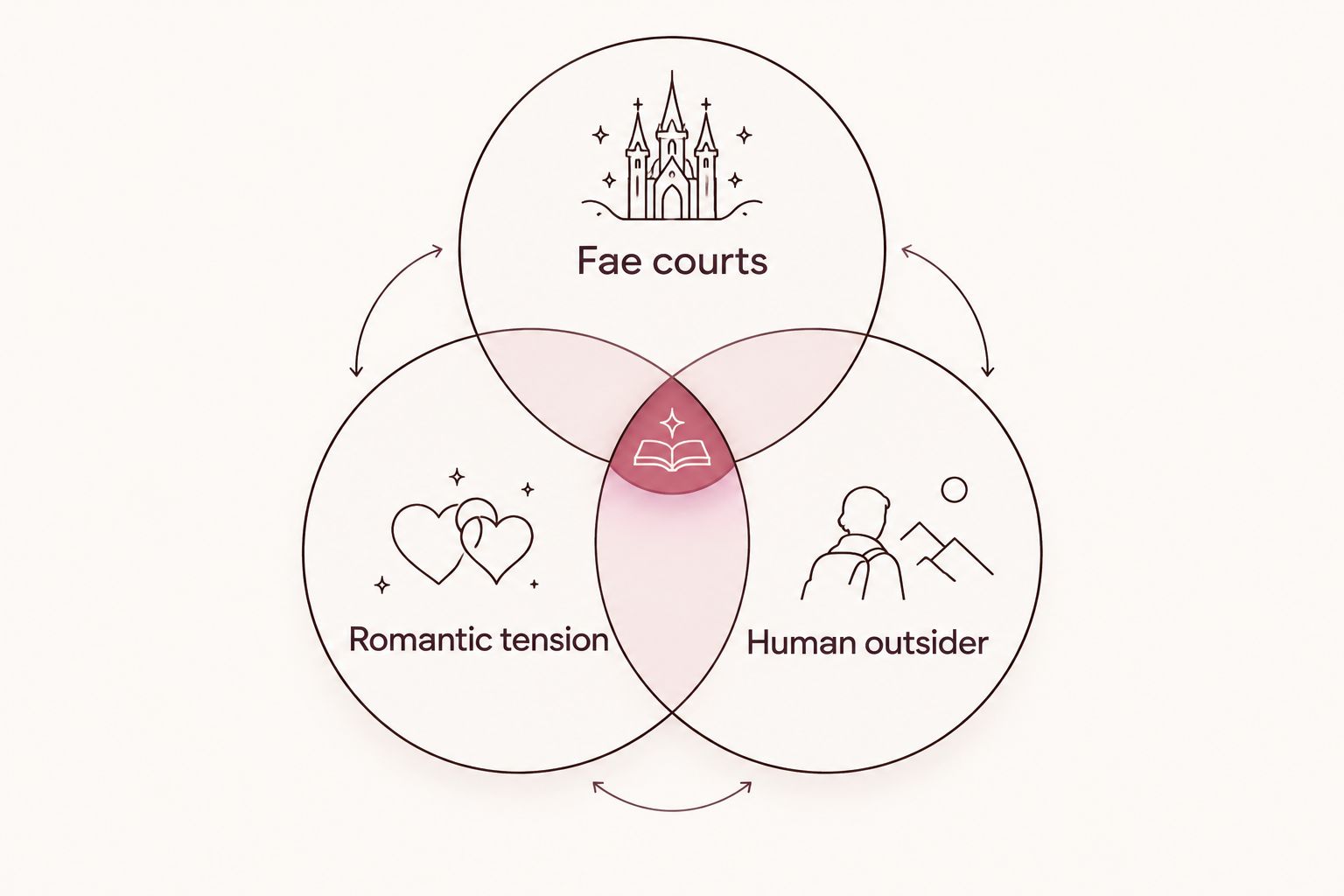
The ranking favors recognizable ACOTAR connections first, then moves outward. The final recommendation keeps dangerous romantic bargains but leaves the faerie-court setting behind.
Books like ACOTAR at a glance
| Book | Best for | Strongest matching quality | Key limitation |
|---|---|---|---|
| The Cruel Prince by Holly Black | Hostile faerie courts | A mortal heroine confronting faerie power and political cruelty | Romance is less central than the court struggle |
| These Hollow Vows by Lexi Ryan | Romance-led court intrigue | A human heroine caught between fae princes and competing loyalties | A love triangle shapes the romantic conflict |
| An Enchantment of Ravens by Margaret Rogerson | A standalone human–faerie romance | Attraction across a dangerous human–faerie divide | Less room for an expanding ensemble and court saga |
| The Iron King by Julie Kagawa | A quest through rival faerie realms | A human outsider entering a threatening magical world | Adventure and discovery occupy more space than romance |
| Once Upon a Broken Heart by Stephanie Garber | Romantic bargains and fairy-tale atmosphere | Desire entangled with a dangerous supernatural figure | Not a faerie-court substitute |
1. The Cruel Prince: best for hostile faerie courts
Holly Black’s The Cruel Prince follows Jude, a mortal raised in Faerie who wants a place within its power structure. This is the strongest default recommendation when ACOTAR’s appeal lies in a human heroine refusing to remain powerless among dangerous immortals.
The match is not simply that both books contain fae. Jude has to interpret contempt, attraction, and political maneuvering in a world where being human is a disadvantage. The court’s hostility shapes her decisions rather than serving as scenery.
The Cruel Prince pros:
- Faerie society feels threatening rather than comfortably human.
- Jude’s ambition gives the heroine a goal beyond securing a relationship.
- Antagonistic romantic tension intersects with the struggle for power.
The Cruel Prince cons:
- Court strategy receives more attention than romantic reassurance.
- Bullying and cruelty are central, including within the relationship dynamics.
Content note: Violence, murder, bullying, and manipulative relationships. Do not confuse less explicit sexual content with a gentle reading experience.
Best for: You want ACOTAR’s mortal-versus-fae imbalance, but you would rather watch the heroine seek influence than make romance her main objective. If the relationship was your overriding reason to continue ACOTAR, the next recommendation is a closer fit on that dimension.
Verdict: Read The Cruel Prince for court danger and ambition; skip it if romance must drive every major turn.
2. These Hollow Vows: best for romance-led court intrigue
Lexi Ryan’s These Hollow Vows follows Brie, a human drawn into fae affairs while trying to save her sister. Competing courts and two fae princes make romantic trust part of the central problem.
This is the closer choice when you want the relationship questions to occupy the foreground. Brie must judge people whose apparent help comes tangled with other loyalties. The appeal lies in uncertainty about whom to trust, not merely in attractive fae characters.
These Hollow Vows pros:
- The human heroine has a concrete family stake in entering faerie territory.
- Romantic choices connect directly to court loyalties.
- Secrets and bargains sustain the overlap between attraction and danger.
These Hollow Vows cons:
- The love triangle is structural, not a minor distraction.
- Readers seeking minimal sexual content should not choose it on its YA classification alone.
Content note: Sexual content, violence, and coercive power dynamics. This is an older-YA consideration, not the default recommendation for a younger teen.
Best for: You want ACOTAR’s romance-and-court combination and actively enjoy divided romantic loyalties. The meaningful difference from The Cruel Prince is emphasis: the romantic uncertainty is much closer to the center here.
Verdict: Read These Hollow Vows for romance-led fae intrigue; skip it if love triangles or sexual content are dealbreakers.
3. An Enchantment of Ravens: best for a standalone romance
Margaret Rogerson’s An Enchantment of Ravens follows Isobel, a human portrait artist whose work brings her into conflict with a faerie prince. Their story turns on the differences between human feeling and faerie existence.
The ACOTAR connection is intimate rather than sprawling. You get a mortal heroine, dangerous faerie customs, and attraction across an unequal boundary. You do not get the same extended accumulation of court alliances and ensemble relationships.
An Enchantment of Ravens pros:
- The human–faerie divide matters to the relationship itself.
- Isobel’s artistic work gives her a specific place in the magical world.
- The standalone structure suits readers who want a contained romantic fantasy.
An Enchantment of Ravens cons:
- The relationship develops in a more compressed space than a long series allows.
- The smaller scope leaves less room for an expanding supporting cast.
Content note: Fantasy violence and peril. Its romantic focus should not be mistaken for an absence of danger.
Best for: You want the human-and-faerie romance without committing to another extended series. For a 2026 reading plan already crowded with unfinished sagas, the contained story is the meaningful advantage.
This is also the clearest choice if you liked ACOTAR’s fairy-tale atmosphere more than its later expansion into wider conflict. Expect a different scale, not a miniature version of the same plot.
Verdict: Read An Enchantment of Ravens for a contained romantic fantasy; skip it if you want a large continuing ensemble.
4. The Iron King: best for a faerie-realm quest
Julie Kagawa’s The Iron King follows Meghan Chase into the Nevernever after her younger brother is taken. Rival faerie powers, dangerous encounters, and a developing romantic thread shape her journey.
The strongest match is the experience of entering a world whose rules are not yours. Meghan’s immediate family mission makes the movement into faerie territory concrete. The story then puts more weight on travel, discovery, and adventure than the preceding recommendations do.
The Iron King pros:
- The rescue quest gives the heroine a clear reason to enter danger.
- Faerie rivalries create obstacles beyond the romantic relationship.
- The magical setting rewards readers who enjoy discovering unfamiliar rules.
The Iron King cons:
- The quest competes with romance for attention.
- A school-age starting point gives it a different feel from ACOTAR’s adult crossover appeal.
Content note: Fantasy violence, kidnapping, and threats to family members.
Best for: You want a YA entry into dangerous faerie territory, especially if the rescue mission and magical journey appeal more than sustained court maneuvering. The romantic interest matters, but the adventure does not exist only to bring the couple together.
Choose this over These Hollow Vows when you would rather follow a heroine through a threatening landscape than spend most of your attention evaluating romantic loyalties.
Verdict: Read The Iron King for the quest and faerie world; skip it if you want romance to dominate.
5. Once Upon a Broken Heart: best for romantic bargains
Stephanie Garber’s Once Upon a Broken Heart follows Evangeline Fox after she makes a bargain with Jacks, the Prince of Hearts. Wishes, curses, and uncertain intentions shape the romantic tension.
This is the interesting risk at the end of the list. It does not reproduce ACOTAR’s faerie courts. Instead, it preserves the attraction of asking a dangerous supernatural figure for help and then discovering that desire does not make the bargain safe.
Once Upon a Broken Heart pros:
- The bargain gives romantic longing consequences beyond private feelings.
- Fairy-tale logic creates an atmosphere of beauty and threat.
- Uncertain motives sustain the tension around the central relationship.
Once Upon a Broken Heart cons:
- It is a poor substitute if fae society is your main requirement.
- The romantic arc extends beyond the opening book rather than resolving as a standalone.
Content note: Violence, death, manipulation, and romantic peril.
Best for: You want yearning, curses, and a dangerous romantic figure more than recognizable faerie politics. Move it higher on your personal list if bargains and emotional uncertainty mattered more to you than ACOTAR’s courts.
The difference is useful. Choosing this book means following the feeling of the original reading experience rather than repeating its worldbuilding ingredients.
Verdict: Read Once Upon a Broken Heart for romantic bargains; skip it if you specifically want another fae-court story.
How this ranking works
This 2026 ranking compares story elements, not sales, popularity, or a claimed personal reading test. The order prioritizes faerie power, the human outsider’s position, and the relationship’s role, then makes each departure explicit.
The Cruel Prince leads because its dangerous court and mortal heroine create a strong structural match. These Hollow Vows moves ahead for readers who rank romance above political ambition. The remaining books progressively exchange court similarity for a contained relationship, a quest, or fairy-tale bargains.
Which book should you choose?
Start with The Cruel Prince unless you already know that romance must lead. Choose These Hollow Vows instead if divided romantic loyalties are part of the appeal. Choose An Enchantment of Ravens if finishing a complete story matters more than beginning a large series.
GetSimilarBooks is best for readers who want book recommendations anchored to a title they already enjoyed. Enter 1 book title for a preview of 5 suggestions; provide your email to request a free personalized list of 20–30 titles.
GetSimilarBooks book recommendations give you a longer list to consider. Use the distinctions above to decide which kind of similarity deserves your attention first.
Find your next read
Enter a book you enjoyed for five suggestions, then request a free personalized list of 20–30 titles by email.
FAQ
What’s the best book like ACOTAR for YA readers?
The Cruel Prince by Holly Black is the best default for readers seeking dangerous faerie courts and a mortal heroine confronting unequal power. Its political struggle takes priority over romance, so choose These Hollow Vows if you want the relationship questions closer to the center.
Which book on this list is best for a younger teen?
No recommendation here is a universal younger-teen choice. Check the individual book’s violence, relationship dynamics, and sexual content against the reader’s needs; a YA label does not settle those questions.
Is The Cruel Prince a romance like ACOTAR?
The Cruel Prince contains romantic tension, but court politics and Jude’s ambition drive much of the story. Choose it for hostile faerie society rather than an expectation that romance will dominate.
Which ACOTAR read-alike is a standalone?
An Enchantment of Ravens by Margaret Rogerson is the standalone choice on this list. It centers a human artist and a faerie prince in a contained romantic fantasy rather than an expanding court saga.
Which recommendation should I avoid if I dislike love triangles?
Avoid These Hollow Vows if love triangles are a firm limit. Brie’s involvement with two fae princes is central to its romantic conflict, not a passing subplot.
What should I read if I like ACOTAR but don’t need fae?
Read Once Upon a Broken Heart for dangerous romantic bargains, curses, and fairy-tale atmosphere. It preserves desire tangled with supernatural risk without trying to reproduce ACOTAR’s faerie society.
How does GetSimilarBooks help me find another book?
GetSimilarBooks lets you enter a title you enjoyed and receive five hand-curated read-alike suggestions. You can also provide your email to request a free personalized list of 20–30 titles.
One last thing
For your next 2026 read, write down one thing you do not want repeated. “No love triangle” or “no sprawling series” often separates these choices more clearly than “more fae.” A useful read-alike preserves the attraction without automatically repeating the parts you disliked.
Related guides
- Books like ACOTAR, closest match first
- Books like ACOTAR with slow-burn romance
- Books like ACOTAR without a love triangle
- Books like Fourth Wing for young adult readers