Book Recommendations and Read-Alike Guides
Books like Fourth Wing with deadly trials

Best overall: The Serpent and the Wings of Night. Best for brutal military training: The Blood Trials. Best for a romance-led competition: Trial of the Sun Queen. These books like Fourth Wing with deadly trials are ranked from the closest combination of danger and attraction to books that preserve the survival pressure but change the romance.
- The Serpent and the Wings of Night leads these books like fourth wing with deadly trials for dangerous alliances and romance.
- The Blood Trials is the strongest choice for lethal military training, institutional hostility, and a combative heroine.
- Trial of the Sun Queen suits readers who want a deadly contest centered on romantic selection.
- A Deadly Education prioritizes magical-school survival; The Hunger Games prioritizes an organized fight to survive.
Why this matters
Deadly trials are not interchangeable. A military assessment, a tournament, and a school full of monsters create different kinds of suspense. Fourth Wing combines training pressure, hostile peers, physical vulnerability, and a romance that complicates survival. Matching only the danger misses much of the appeal.
This 2026 reading list separates those ingredients so you can choose what to keep. None of these recommendations requires a major spoiler to explain its fit.
If your favorite ingredient is harder to name, GetSimilarBooks lets you start with a title you enjoyed and receive five hand-curated read-alike suggestions. Its personalized list expands that selection to 20–30 titles after you provide an email address.
What makes the best Fourth Wing read-alike
For this 2026 ranking, the strongest matches combine a specific survival structure with relationships that change the stakes.
- Trial stakes: Failure threatens a character's life, not just a place on a leaderboard.
- Romance weight: Attraction affects trust, alliances, or decisions under pressure.
- Training pressure: Preparation exposes weaknesses before a consequential test.
- Survival method: Skill, strategy, allies, or unusual abilities matter more than convenient rescue.
- Match distance: Each recommendation states what you lose as well as what you gain compared with Fourth Wing.
The first three books preserve more of the romance-and-danger combination. The final two move outward: one keeps the hostile school, while the other strips the contest down to survival and political control.

Books like Fourth Wing with deadly trials at a glance
Read the limitation column before choosing. It tells you whether a book replaces dragon-rider training with a tournament, a courtship contest, or a different kind of dangerous education.
| Rank and book | Best for | Standout matching quality | Key limitation |
|---|---|---|---|
| 1. The Serpent and the Wings of Night — Carissa Broadbent | Romance under tournament pressure | A vulnerable human navigating lethal vampire competition | No military academy or dragon-rider bond |
| 2. The Blood Trials — N. E. Davenport | Brutal military initiation | Dangerous training, hostile peers, and concealed power | Military conflict takes more space than courtship |
| 3. Trial of the Sun Queen — Nisha J. Tuli | Romance-led deadly selection | A heroine competing in a dangerous contest for a ruler's favor | Court selection replaces military training |
| 4. A Deadly Education — Naomi Novik | A school that threatens its students | Magical education built around staying alive | Romance is not the main engine |
| 5. The Hunger Games — Suzanne Collins | Arena survival and contested trust | Preparation, alliances, and lethal competition | No magic, dragons, or adult-romance emphasis |
1. The Serpent and the Wings of Night: best for dangerous alliances
Carissa Broadbent's The Serpent and the Wings of Night is the closest overall match here for readers who want lethal competition and a central romance. Oraya is a human raised among vampires who enters the Kejari, a deadly tournament. Her physical disadvantage makes the question of whom to trust especially consequential.
The match is not simply that both books contain dangerous tests. Oraya, like Violet, must survive among people whose advantages make her position precarious. Attraction develops inside that imbalance rather than apart from it.
The meaningful difference: Broadbent builds the story around a tournament and vampire power, not a military curriculum. You get dangerous cooperation without the daily structure of a dragon-rider academy.
The Serpent and the Wings of Night pros:
- The tournament gives the danger a clear structure.
- Oraya's vulnerability makes strategy and alliances important.
- The romance remains closely connected to the survival plot.
The Serpent and the Wings of Night cons:
- It does not reproduce the training-school experience.
- Vampire politics replace dragons and rider bonds.
Best for: You want a romance that becomes harder, not easier, when survival requires trust.
Content note: Graphic violence and explicit sexual content.
Verdict: Read The Serpent and the Wings of Night first for the closest danger-and-romance match.
2. The Blood Trials: best for brutal military training
N. E. Davenport's The Blood Trials follows Ikenna through dangerous military initiation while she investigates her grandfather's death. Her concealed blood magic adds another threat to a setting already shaped by prejudice and institutional hostility. The trials test whether she can survive the organization she is trying to enter.
This is the strongest recommendation if Basgiath's training pressure mattered more to you than the dragons. Ikenna faces an institution that does not offer a neutral playing field. Her relationships with other recruits develop under that pressure.
The meaningful difference: The Blood Trials places military ambition, racism, and political conflict near the center. Romance is present, but do not choose it expecting every major turn to serve the love story.
The Blood Trials pros:
- Military initiation supplies a direct match for lethal training.
- Concealed power makes exposure another survival risk.
- Conflict among recruits gives alliances practical weight.
The Blood Trials cons:
- Military and political concerns take substantial space.
- Its science-fantasy setting differs from Fourth Wing's dragon-centered world.
Best for: You want a furious, determined heroine confronting a hostile military system.
Content note: Graphic violence, racism, and explicit sexual content.
Verdict: Read The Blood Trials if the training institution was your favorite source of tension.
3. Trial of the Sun Queen: best for romance-led selection
Nisha J. Tuli's Trial of the Sun Queen follows Lor, a human prisoner drawn into a competition for the Sun King's favor. The contest offers a possible escape from her previous circumstances, but it places her among rivals inside an unfamiliar system. Understanding that system matters as much as wanting to win.
The Fourth Wing connection lies in a heroine entering a dangerous hierarchy from a disadvantaged position. Rules, status, and attraction shape her choices. The contest keeps personal relationships close to the question of survival.
The meaningful difference: This is a court-centered selection story, not a military-school story. Its central setup asks whom a ruler will choose rather than who can become a rider or soldier.
Trial of the Sun Queen pros:
- The competition creates a clear reason for rivals to clash.
- Lor's outsider position supports the vulnerable-heroine match.
- Romantic selection is built into the premise.
Trial of the Sun Queen cons:
- Court dynamics replace much of the training atmosphere.
- The opening book begins a larger romantic story rather than resolving every relationship question.
Best for: You want dangerous trials but prefer court intrigue and romantic uncertainty to military procedure.
Content note: Violence, abuse, and sexual content.
Verdict: Read Trial of the Sun Queen for a deadly contest where romantic selection shapes the rules.
4. A Deadly Education: best for a hostile magical school
Naomi Novik's A Deadly Education takes place at the Scholomance, where magical students face monsters and survival depends on more than classroom performance. El has formidable destructive potential, but power does not automatically make her life straightforward. Resources, reputation, and alliances all matter.
The closest Fourth Wing connection is the sustained pressure of attending a school where staying alive is never a background concern. Ordinary student decisions carry unusual consequences. Cooperation becomes necessary even when trusting someone feels unwise.
The meaningful difference: The school is the ongoing survival problem, rather than merely the location of a tournament. El's sharp, argumentative narration also creates a different reading experience from Violet's.
A Deadly Education pros:
- School routines remain tied to danger.
- Alliances affect survival beyond individual combat ability.
- El's unwanted reputation complicates her access to help.
A Deadly Education cons:
- Romance is secondary to the school and its survival system.
- Dense explanations of magic interrupt the action-driven rhythm.
Best for: You want another dangerous education and do not require romance to dominate.
Content note: Monster attacks, violence, and threats to children.
Verdict: Read A Deadly Education for the school pressure; skip it if explicit romance is essential.
5. The Hunger Games: best for arena survival
Suzanne Collins's The Hunger Games follows Katniss Everdeen into a televised contest where young people must fight to survive. Preparation, public presentation, and alliances shape what happens inside the arena. Katniss must judge other people while knowing that the contest makes trust dangerous.
This is the furthest match in genre but a direct match in survival mechanics. Skills developed before the competition matter, and help comes with questions about motive. The system organizing the contest remains as important as the individual opponents.
The meaningful difference: There is no magical education or dragon bond. The romance operates within coercion, performance, and political control rather than an adult romantasy framework.
The Hunger Games pros:
- The contest has unmistakable life-or-death stakes.
- Preparation and practical skills affect survival.
- Alliances force difficult judgments about trust.
The Hunger Games cons:
- It offers no fantasy creatures or magical powers.
- Its treatment of romance differs sharply from Fourth Wing's explicit adult relationship.
Best for: You want the arena, the alliances, and the moral pressure more than another romantasy.
Content note: Violence involving children, death, and coercion.
Verdict: Read The Hunger Games for survival tension; skip it if dragons or explicit romance are non-negotiable.
How this 2026 reading order works
The ranking prioritizes the overlap between lethal tests, vulnerability, and romance. The Serpent and the Wings of Night keeps those elements tightly connected. The Blood Trials moves closer to military initiation, while Trial of the Sun Queen shifts toward courtship competition.
A Deadly Education and The Hunger Games sit lower because they change the romantic emphasis, not because their survival plots are weaker. Their places reflect distance from this particular reading request. This is a comparison of story premises and reading priorities, not a claim that every book was personally tested against a scoring system.
Before choosing, answer 3 questions:
- Do you need romance to drive the main plot?
- Do you want training before the danger, or a contest already underway?
- Are dragons essential, or was the pressure around them the attraction?
GetSimilarBooks suits readers who want book recommendations anchored to a title they already enjoyed. Start with Fourth Wing, then use these distinctions to identify what you want the next recommendation to preserve.
Find your next read-alike
Get five hand-curated suggestions, then request a personalized list of 20–30 titles with your email.
Which deadly-trials book should you choose?
For a single first pick in 2026, choose The Serpent and the Wings of Night. It preserves the strongest combination of physical disadvantage, dangerous cooperation, and a central romance.
Choose The Blood Trials instead if you keep thinking about the training, recruit rivalries, and institutional hostility. Choose Trial of the Sun Queen if the competition needs to revolve around romantic selection. Neither substitutes a shared genre label for a specific reason to read.
If you want only 1 book to try, stop at the match that preserves your favorite source of tension. Reading all five is not necessary to find your next book.
FAQ
What’s the closest book to Fourth Wing with deadly trials?
The Serpent and the Wings of Night is the closest overall pick here for lethal competition and a central romance. Its human heroine enters a vampire tournament where alliances complicate survival.
Which book is most like Fourth Wing’s military training?
The Blood Trials is the strongest match for dangerous military initiation. Ikenna faces hostile recruits, institutional prejudice, and the risk of exposing her concealed blood magic.
Are there books like Fourth Wing with deadly trials but less romance?
A Deadly Education and The Hunger Games put survival ahead of romance. Choose A Deadly Education for a magical school or The Hunger Games for an organized arena contest.
Is Trial of the Sun Queen a good Fourth Wing read-alike?
Trial of the Sun Queen fits readers who want an outsider heroine in a dangerous competition shaped by romantic selection. It replaces military training with court dynamics and rivalry for a ruler’s favor.
Does The Serpent and the Wings of Night have dragons?
The Serpent and the Wings of Night centers on vampires, not dragon riders. Its match with Fourth Wing comes from vulnerability, lethal trials, and romance under pressure.
Which recommendation has a dangerous magical school?
A Deadly Education has the clearest dangerous-school match. Students at the Scholomance must contend with monsters while managing magic, resources, and alliances.
How can I get more recommendations after these five books?
GetSimilarBooks provides five hand-curated suggestions based on a title you enjoyed. You can also request a personalized list of 20–30 titles by providing your email address.
One last thing
For your 2026 reading choice, separate dangerous trials from dangerous training. A tournament asks how someone wins a defined contest. A hostile school asks how someone survives the place meant to prepare them. That difference is more useful than matching two books because both contain magic and romance.
Related guides
- Books like Fourth Wing with dragons and rider bonds
- Books like Fourth Wing with less spice
- Books like Fourth Wing with enemies-to-lovers romance
- Books like Fourth Wing with more spice
Books like Fourth Wing with more spice

Best overall: The Ever King for dangerous attraction with a stronger erotic focus. Best for the training-and-trials side of Fourth Wing: Blood & Steel. Best for readers who want much darker sexual content: Feathers So Vicious. These 2026 picks move from familiar romantic-fantasy territory toward bigger departures, with the differences made clear.
- For books like Fourth Wing with more spice, start with The Ever King for dangerous attraction and explicit romance.
- Blood & Steel preserves warrior training, but its romantic payoff builds rather than arriving immediately.
- A Court of Silver Flames suits readers seeking explicit romance, physical training, and emotional recovery.
- Feathers So Vicious adds darker sexual content, not a closer match to Fourth Wing’s tone.
Why this matters
More spice does not necessarily mean a better Fourth Wing read-alike. You might want Violet and Xaden’s antagonistic attraction, the pressure of training, or the way intimacy develops alongside danger. A book can deliver explicit sex and still miss the part you actually loved.
GetSimilarBooks is best for fiction readers who want read-alike recommendations from a book they already enjoyed. Enter that title at GetSimilarBooks for five hand-curated suggestions, then request the free personalized list of 20–30 titles with your email. For this search, the useful distinction is not simply fantasy versus romance. It is what the romance replaces, preserves, or intensifies.
The recommendations below separate sexual explicitness from romantic pacing. A slow burn can become explicit without giving you frequent early encounters. A darker book can include more sexual material without offering the same kind of relationship you want to root for.
What makes the best spicy Fourth Wing read-alike?
For this 2026 selection, the strongest match combines recognizable relationship tension with a meaningful difference in heat or romantic emphasis.
- Dangerous attraction: The relationship creates complications rather than providing an escape from the plot.
- Pressure outside the romance: Training, political conflict, or survival gives the attraction consequences.
- On-page intimacy: Sexual encounters appear on the page rather than disappearing behind a closed door.
- Clear romantic pacing: You know whether to expect a gradual build or a more immediately erotic story.
- A tolerable tonal shift: Captivity, trauma, and sexual violence are distinctions, not interchangeable signs of spice.
Dragon bonds are a separate requirement. None of these books is a substitute for that exact element; use the guide to Fourth Wing read-alikes with dragons and rider bonds if the creatures and their relationships with riders matter more than the sex.
Books like Fourth Wing with more spice at a glance
The order favors familiar fantasy-romance dynamics before moving into recovery-focused romance and dark fantasy. It is not a ranking by the number of sex scenes.
| Book | Best for | Standout match | Key limitation |
|---|---|---|---|
| The Ever King — L. J. Andrews | Dangerous attraction with a stronger erotic focus | A hostile relationship shaped by captivity and political conflict | No military academy or dragon-rider bond |
| Blood & Steel — Helen Scheuerer | Warrior training and an earned romantic buildup | A determined heroine, a demanding mentor, and combat training | Not the choice for immediate sexual payoff |
| From Blood and Ash — Jennifer L. Armentrout | Forbidden desire under restrictive rules | A sheltered heroine drawn to a guard she should not want | More discovery and court intrigue than training |
| A Court of Silver Flames — Sarah J. Maas | Explicit romance tied to recovery | Physical training, difficult intimacy, and female friendship | Requires earlier series context |
| Feathers So Vicious — Liv Zander | Dark fantasy with raven shifters and explicit sexual content | Captivity, supernatural power, and hostile attraction | Sexual violence and a much darker relationship dynamic |
1. The Ever King: best for dangerous, explicit attraction
Best for: readers who want the threatening love interest and charged proximity, without another academy story.
L. J. Andrews’s The Ever King follows Erik, a sea-fae king, and Livia, the woman he takes captive as part of a revenge-driven conflict. Their relationship begins inside a power struggle. Attraction does not erase the hostility that brought them together.
The Fourth Wing connection is the friction between desire and distrust. The difference is structural: captivity and political grievances replace lessons, squad dynamics, and dragon selection. Pick this for the relationship’s dangerous edge, not for a similar daily setting.
Its explicit romance makes it a useful first stop when your priority is stronger erotic emphasis. You still need to enjoy a relationship shaped by unequal power and an antagonistic beginning. That is a different proposition from two people competing within the same military institution.
The Ever King pros:
- Hostile attraction remains central to the story.
- Fae politics give the relationship stakes beyond personal chemistry.
- Explicit intimacy suits readers seeking an open-door romance.
The Ever King cons:
- Captivity is part of the romantic setup.
- It does not reproduce Fourth Wing’s training or dragon bonds.
Verdict: Read The Ever King first if dangerous attraction matters more than the academy. Skip it if captivity is a firm boundary.
2. Blood & Steel: best for training and romantic tension
Best for: readers who want a heroine working toward a dangerous role and a demanding mentor relationship.
Helen Scheuerer’s Blood & Steel introduces Thea, who wants to become a warrior despite restrictions placed on women. Her ambition brings her into training with Wilder, whose position and responsibilities complicate their attraction.
This is the strongest structural match here for the work of becoming capable. Training is not just decorative background. Thea’s pursuit of a place among warriors gives you a recognizable reason to care about her progress, setbacks, and relationship with the person pushing her.
The important caveat is timing. Blood & Steel is a slow-burn recommendation, not a promise of more immediate sex than Fourth Wing. Choose it when you want romantic tension attached to a training arc and are willing to let the relationship develop across the story and series.
Blood & Steel pros:
- Warrior training preserves a central Fourth Wing appeal.
- The heroine has a concrete ambition outside the romance.
- The mentor dynamic gives attraction practical complications.
Blood & Steel cons:
- The sexual payoff is not the main early attraction.
- You will not find the same dragon-and-rider relationship.
Verdict: Read Blood & Steel for the closest training match. Wait if your next book must prioritize frequent explicit encounters from the start.
3. From Blood and Ash: best for forbidden desire
Best for: readers who liked a heroine questioning the rules while falling for someone those rules put out of reach.
Jennifer L. Armentrout’s From Blood and Ash centers on Poppy, whose role as the Maiden controls much of her life. Her attraction to Hawke, a guard, challenges restrictions that extend beyond ordinary romantic expectations.
The match is not simply that both books combine fantasy and sex. Poppy’s relationship develops while she questions the system defining her future. If you liked the tension between personal trust and institutional authority in Fourth Wing, that connection gives this recommendation substance.
The difference is the story’s center of gravity. Poppy starts from isolation and prescribed duties rather than a competitive rider-training environment. Expect forbidden attraction, discoveries, and an expanding fantasy plot rather than a familiar sequence of military tests.
From Blood and Ash pros:
- Restrictions make the romantic attraction consequential.
- Poppy’s growing independence connects romance with character development.
- On-page intimacy sits within a larger fantasy conflict.
From Blood and Ash cons:
- The setup takes time to establish its rules and mysteries.
- It is not a direct match for squad camaraderie or academy competition.
Verdict: Read From Blood and Ash for forbidden desire and a heroine challenging authority. Skip it if training is your non-negotiable ingredient.
4. A Court of Silver Flames: best for explicit romance and recovery
Best for: readers who want physical training, difficult emotional intimacy, and a more sustained focus on an adult relationship.
Sarah J. Maas’s A Court of Silver Flames follows Nesta and Cassian. Nesta’s recovery, her relationships with other women, and her physical training share the page with an explicit romance. The relationship has conflict, but the story also asks what it takes to accept help and build a life after trauma.
This is the fifth installment of A Court of Thorns and Roses when the novella A Court of Frost and Starlight is included. It is not the right starting point for the series. Earlier books establish the people, relationships, and events that give Nesta’s story its weight.
For a Fourth Wing reader, training and charged interactions provide recognizable entry points. The meaningful departure is emotional: recovery and self-worth take precedence over earning a place in a rider institution. This is the strongest pick here when explicit romance and rebuilding a life are the combination you want.
A Court of Silver Flames pros:
- Explicit intimacy has a substantial role in the relationship.
- Training gives physical progress a place in the story.
- Female friendship matters independently of the central couple.
A Court of Silver Flames cons:
- Earlier series context is necessary.
- Trauma and recovery create a different emotional experience from Fourth Wing.
Verdict: Read A Court of Silver Flames if you already have the series context. Wait if you need a standalone entry point.
5. Feathers So Vicious: best for a much darker departure
Best for: readers deliberately seeking dark fantasy, raven shifters, and explicit sexual content involving multiple partners.
Liv Zander’s Feathers So Vicious moves furthest from Fourth Wing’s tone. Its fantasy setting includes raven shifters, captivity, and hostile relationship dynamics. It begins a two-book story, so the opening volume is not the complete relationship arc.
The supernatural element gives this recommendation more substance than a shared romance label. The crucial difference is that shapeshifters are not bonded mounts, and captivity is not a training institution. The erotic material also belongs to a dark-romance framework rather than a straightforward increase in the heat of Violet and Xaden’s relationship.
Content includes sexual violence and coercion. Treat that as a reason to check boundaries, not as an endorsement of the book’s intensity. If you want explicit but reassuring romance, this is the wrong direction.
Feathers So Vicious pros:
- Raven shifters keep supernatural power central to the fantasy.
- Explicit sexual content is a substantial part of the reading experience.
- Multiple-partner dynamics offer a distinct departure from the other picks.
Feathers So Vicious cons:
- Sexual violence and coercion make it unsuitable for some readers.
- Its relationship dynamics are much darker than Fourth Wing’s.
Verdict: Read Feathers So Vicious only if dark romance is the goal. Skip it if you want more spice without that tonal change.
Choose the part you want to keep
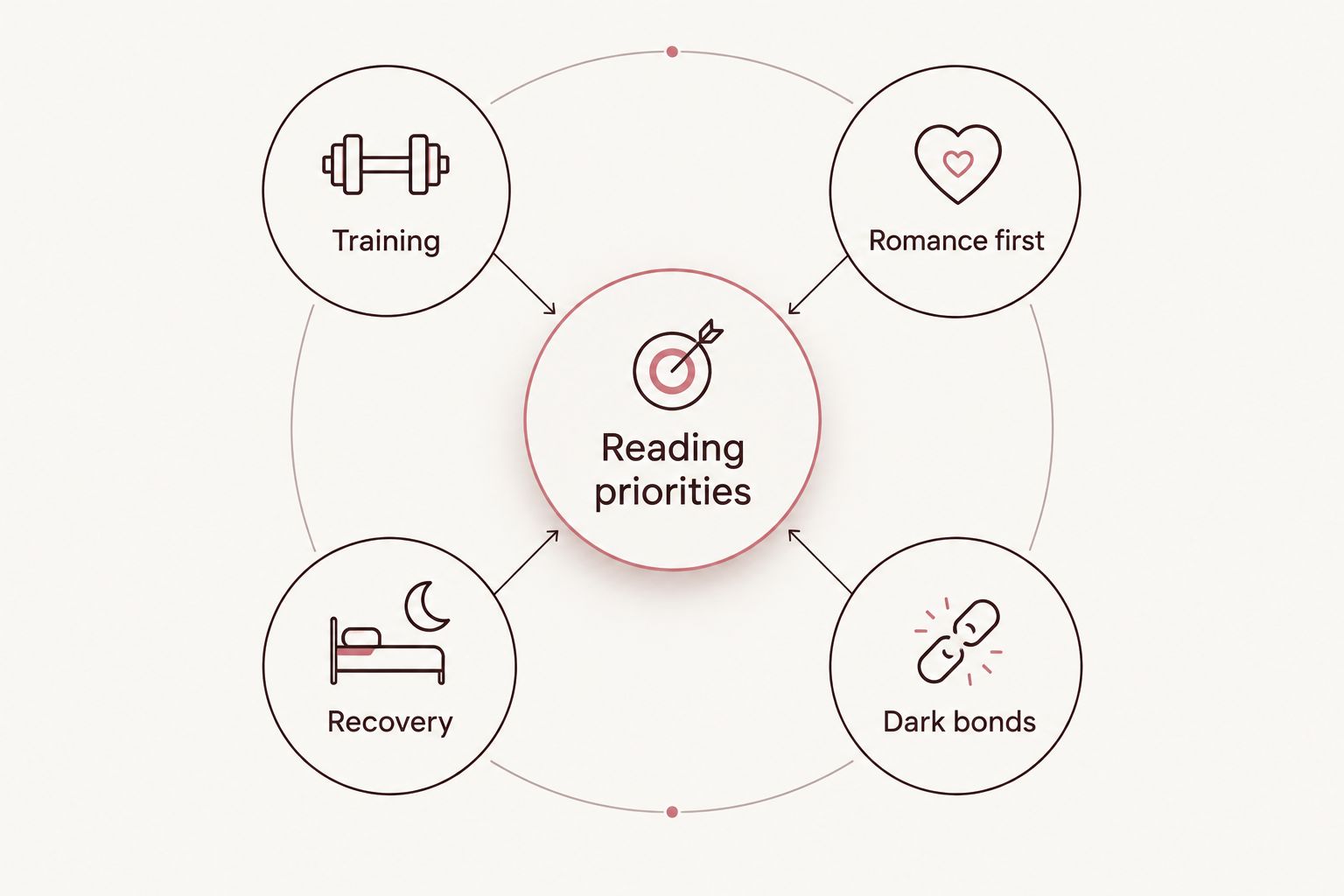
For your 2026 reading list, choose a priority before choosing a title. These categories separate books that otherwise get grouped together as spicy fantasy.
- Training: Blood & Steel keeps the heroine’s pursuit of combat competence central.
- Romance first: The Ever King puts dangerous attraction at the heart of its appeal.
- Recovery: A Court of Silver Flames connects intimacy with rebuilding a life.
- Dark bonds: Feathers So Vicious changes the relationship’s boundaries as well as its explicitness.
From Blood and Ash belongs between those choices: its strongest appeal is forbidden desire under restrictive rules. That matters if the thrill of breaking expectations was more memorable to you than combat practice or dragons.
GetSimilarBooks offers five hand-curated read-alikes as a preview and an email-gated personalized list of 20–30 titles. Request the free list when you want more options beyond these distinct starting points.
Find your next read
Enter a book you enjoyed for five hand-curated suggestions; request a personalized list of 20–30 titles by email.
How these recommendations are ranked
This 2026 ranking uses relationship tension, fantasy stakes, training, explicitness, and tonal distance. The Ever King is the default for the query’s emphasis on erotic romance. Blood & Steel follows for readers who value a closer training structure over immediate heat.
The remaining recommendations move outward: restrictive duties, recovery-focused romance, then dark shapeshifter fantasy. The order is a reading decision, not a numerical spice scale or a claim that every opening volume contains more sex than Fourth Wing.
Which book should you choose?
Start with The Ever King if you want books like Fourth Wing with more spice and can accept captivity instead of an academy. Choose Blood & Steel if the training was the reason you kept reading.
Already invested in Sarah J. Maas’s series? A Court of Silver Flames is the clearer choice for explicit romance paired with physical and emotional rebuilding. Save Feathers So Vicious for a deliberate move into darker material, not an automatic next step.
FAQ
What’s the best book like Fourth Wing with more spice?
The Ever King is the default recommendation for dangerous attraction and explicit romance. It replaces the academy with captivity and fae political conflict, so the relationship is the match rather than the setting.
Is Blood & Steel spicier than Fourth Wing?
Blood & Steel is better recommended for training and slow-burn tension than for an immediate increase in sex scenes. Choose it for the warrior arc, not as a guarantee of more early explicit content.
Which recommendation keeps the Fourth Wing training feel?
Blood & Steel is the strongest training match in this list. Thea’s ambition to become a warrior and her demanding mentor relationship give that comparison a specific basis.
Can I read A Court of Silver Flames first?
A Court of Silver Flames is not a good starting point for its series. Earlier installments establish the relationships and events behind Nesta and Cassian’s story.
Does Feathers So Vicious have dragons?
Feathers So Vicious features raven shifters rather than Fourth Wing-style dragon-rider bonds. It is a dark-fantasy departure with explicit sexual content, sexual violence, and coercion.
Which pick should I choose if I dislike captivity romance?
Blood & Steel is the better starting point if you want training rather than a captivity-centered romance. A Court of Silver Flames is another option if you already know its series.
How can GetSimilarBooks help me choose my next book in 2026?
GetSimilarBooks lets you enter a title you enjoyed and receive five hand-curated read-alike suggestions. You can also request a free personalized list of 20–30 titles by providing your email.
One last thing
For your next 2026 read, separate more explicit from more dangerous. Those are different requests. A book with coercion is not automatically a better answer than a consensual romance with more on-page intimacy.
Give GetSimilarBooks the book you enjoyed, then judge the suggestions by the experience you want to repeat. Keep the training, the forbidden attraction, or the emotional connection. You do not need to keep all three.
Related guides
- Fourth Wing read-alikes, closest match first
- ACOTAR read-alikes, closest match first
- Verity read-alikes ranked by fit
Books like Fourth Wing with less spice

Best overall: Fireborne by Rosaria Munda. Best for a dangerous school: A Deadly Education by Naomi Novik. Best for a gentler dragon story: Dragon Slippers by Jessica Day George. These books like Fourth Wing with less spice are ranked by matching qualities, with clear differences to help you choose your next read in 2026.
- For books like Fourth Wing with less spice, start with Fireborne: dragonrider training, rivalry, and restrained romance.
- Choose A Deadly Education for school survival; choose Eragon when the dragon bond matters more than romance.
- The Scorpio Races offers dangerous competition and quiet attraction, but replaces dragons with water horses.
- Dragon Slippers is the gentlest pick, with dragon friendships and a younger reading tone.
- GetSimilarBooks offers five hand-curated read-alikes and a free personalized list of 20–30 titles behind an email gate.
You can also enter a title you enjoyed into GetSimilarBooks and request a free personalized list. For this search, the useful distinction is simple: less explicit sex does not have to mean less tension.
Why this matters
Fourth Wing combines several different pleasures: a dangerous training environment, a dragon bond, competitive relationships, military pressure, and an explicit romance. You do not need all of them in equal measure. A book that preserves the school setting but removes the dragons answers a different need from a dragon adventure with little romantic development.
This 2026 guide separates those choices rather than treating every fantasy romance as a read-alike. The recommendations below keep sexual content non-graphic in the named book, but they do not promise gentle subject matter. Violence, death, abuse, and frightening creatures remain part of several stories.
What makes the best lower-spice Fourth Wing read-alike?
- Specific story overlap: Dragonrider training, school survival, or dangerous competition creates a stronger match than a shared fantasy label.
- Non-graphic romance: Attraction can matter without explicit sexual scenes. Romantic intensity and sexual detail are separate criteria.
- Relationships under pressure: Rivalry, mistrust, loyalty, and difficult alliances give the romance something to push against.
- An honest difference: A recommendation should tell you what disappears, whether that is dragons, an academy, or a central love story.
- Book-level boundaries: A restrained opening novel does not establish the content of every sequel.
Order carries meaning. Fireborne preserves the most important combination of dragonriders, training, rivalry, and political stakes. The later picks trade away more of Fourth Wing's structure to satisfy a narrower preference.
The recommendations at a glance
| Rank and book | Best for | Standout matching quality | Romance and content | Key limitation |
|---|---|---|---|---|
| 1. Fireborne — Rosaria Munda | Dragonrider training and rivalry | Riders compete within a politically divided society | Non-graphic romance; violence and traumatic histories | Political loyalties occupy more space than romantic heat |
| 2. A Deadly Education — Naomi Novik | A lethal school environment | Students need alliances to survive magical dangers | Limited romance in this opening book; horror and death | No dragons, and romance is not the main engine |
| 3. Eragon — Christopher Paolini | A central dragon bond | A young rider grows alongside Saphira | Little romance; violence and peril | A travel-and-training adventure, not an academy romance |
| 4. The Scorpio Races — Maggie Stiefvater | Dangerous competition and quiet attraction | Competitors contend with deadly water horses | Non-graphic romance; animal danger and violence | No dragons or magical school |
| 5. Dragon Slippers — Jessica Day George | A gentler dragon adventure | Dragon friendships connect to a heroine's independent ambitions | Light romance without explicit sex | A younger tone and less military intensity |
1. Fireborne: best for dragonrider training and rivalry
Fireborne is the closest starting point if you want Fourth Wing's riders, competitive training, and difficult loyalties without explicit sexual scenes. Rosaria Munda follows Annie and Lee as they train within a dragonrider system shaped by revolution and social division. Their relationship matters, but it shares the stage with questions about power, class, and allegiance.
The book uses 2 viewpoint characters, so you see the same social pressures from different positions. That gives the rivalry more substance than a simple contest between talented students. You understand why a relationship can feel intimate and politically difficult at the same time.
The meaningful difference is emphasis. Fireborne spends more attention on leadership and the consequences of a changed political order. Choose it because you liked the pressure surrounding Fourth Wing's relationships, not because you want its explicit romantic scenes reproduced off-page.
Fireborne pros:
- Dragonriders and competitive training provide a direct structural match.
- Annie and Lee bring contrasting histories to their relationship.
- Political stakes complicate personal loyalty rather than sitting in the background.
Fireborne cons:
- Political questions take substantial space alongside the romance.
- Non-graphic sexual content does not remove violence or traumatic backstory.
Best for: Readers who want dragons, training, rivalry, and emotionally complicated relationships together.
Verdict: Read Fireborne first. It preserves the strongest combination of Fourth Wing's features while changing the romantic presentation.
2. A Deadly Education: best for surviving a dangerous school
A Deadly Education is the strongest choice when the lethal school mattered more than the dragon bond. Naomi Novik's Scholomance is a school where magical creatures threaten students and alliances affect survival. El's abrasive voice gives the story a different texture from Violet's perspective.
El and Logan's developing relationship supplies friction and attraction, but the opening novel keeps survival at the center. The social problem is as important as the magical one: deciding whom to trust matters when classmates have practical reasons to seek protection.
The matching quality is institutional danger. You get students assessing threats, negotiating relationships, and finding ways through a hostile environment. You do not get dragonrider training, and you should not expect the romance to occupy the same proportion of the book as it does in Fourth Wing.
A Deadly Education pros:
- The school environment makes danger part of ordinary student life.
- Uneasy alliances connect interpersonal tension to survival.
- The opening book offers romantic development without graphic sex.
A Deadly Education cons:
- El's prickly narration is a distinct change in voice.
- Later Scholomance books include sexual content; this recommendation concerns the opening novel.
Best for: Readers who want a hostile magical school, an outsider heroine, and limited romantic heat.
Verdict: Read A Deadly Education for the school, not for dragons. Check sequel content separately before continuing.
3. Eragon: best for the rider-and-dragon relationship
Eragon is the clearest choice when you want the dragon bond without a central sexual romance. Christopher Paolini follows a young rider whose connection with Saphira draws him into a larger conflict. Learning, travel, and growing responsibility drive the story.
Saphira is a character in the relationship, not merely a creature that transports the hero. That makes Eragon a useful match for readers whose favorite Fourth Wing scenes involved the rider learning to live with a dragon's personality and judgment.
The difference is substantial. Eragon follows a classic quest structure rather than an academy structure, and romantic interest does not become the main attraction. If you primarily want an intense couple, this recommendation removes too much. If you want companionship with a dragon, it keeps the right element.
Eragon pros:
- Saphira's personality gives the dragon bond a central role.
- Rider training and magical learning support the coming-of-age story.
- The named book contains no explicit sexual scenes.
Eragon cons:
- Travel and quest progression replace the school-based competition.
- Romance offers much less emphasis than Fourth Wing readers seeking a love story will want.
Best for: Readers who would trade romantic intensity for a sustained rider-and-dragon partnership.
Verdict: Read Eragon if Saphira-style companionship is your priority. Skip it for this particular search if the couple, rather than the dragon, must remain central.
4. The Scorpio Races: best for dangerous competition and quiet attraction
The Scorpio Races matches Fourth Wing through risk, creature handling, and attraction under pressure—not through dragons. Maggie Stiefvater follows Puck and Sean as a deadly race involving water horses approaches. The setting is an island community rather than a military school.
The romance develops through attention, trust, and shared understanding. It does not rely on explicit sexual scenes. The dangerous creatures are integral to the characters' lives, so the competition carries emotional weight beyond the question of who wins.
This is the outward step in the ranking. The story offers a close connection between personal need and physical danger, but its atmosphere is quieter and more place-centered. Read it when you want tension without another academy, not when you want a substitute dragonrider system.
The Scorpio Races pros:
- Dangerous creatures make skill and judgment consequential.
- The romance remains non-graphic while supporting the emotional stakes.
- The island setting gives the competition a distinct social context.
The Scorpio Races cons:
- Water horses replace dragons entirely.
- Its quieter development differs from Fourth Wing's military-training momentum.
Best for: Readers who want a dangerous contest, strong creature connections, and restrained romantic attraction.
Verdict: Read The Scorpio Races when you want the pressure, not the academy. Expect animal danger and violence despite the lower romantic heat.
5. Dragon Slippers: best for a gentler dragon adventure
Dragon Slippers is the best pick here when you want dragons and a lighter romantic register. Jessica Day George's heroine, Creel, wants to build a life through her skill with embroidery. Encounters with dragons connect that personal ambition to a larger fantasy adventure.
The dragon relationships provide the most useful overlap with Fourth Wing. The match is not combat training or a high-intensity couple; it is the pleasure of discovering dragons with personalities, interests, and relationships of their own.
The younger tone is the main difference. That makes Dragon Slippers a deliberate change of pace rather than a close replacement. There is still danger and conflict, but Creel's practical ambitions give the story a different center from military survival.
Dragon Slippers pros:
- Dragon friendships remain important to the story.
- Creel has an independent goal beyond romance.
- Light romantic content avoids explicit sexual scenes.
Dragon Slippers cons:
- The younger reading tone changes the emotional register.
- It does not reproduce Fourth Wing's rider academy or intense romantic dynamic.
Best for: Readers who want a gentler dragon story and are happy to leave military training behind.
Verdict: Read Dragon Slippers for a change of pace. Skip it if adult romantic tension is still essential to your next book.
How the recommendations are ranked
This 2026 ranking gives the closest combined match the first position, then moves toward more specific needs. Fireborne keeps dragons, training, rivalry, and political pressure together. A Deadly Education keeps the lethal institution; Eragon keeps the dragon partnership.
The Scorpio Races and Dragon Slippers belong because they answer distinct preferences, not because every fantasy creature story resembles Fourth Wing. Genre is a starting point, not evidence of a match. Each recommendation above includes what you gain and what you give up.
Which book should you choose?
If you are undecided, choose Fireborne. Do not begin with the gentlest book automatically: reducing sexual detail and reducing narrative intensity are different decisions.
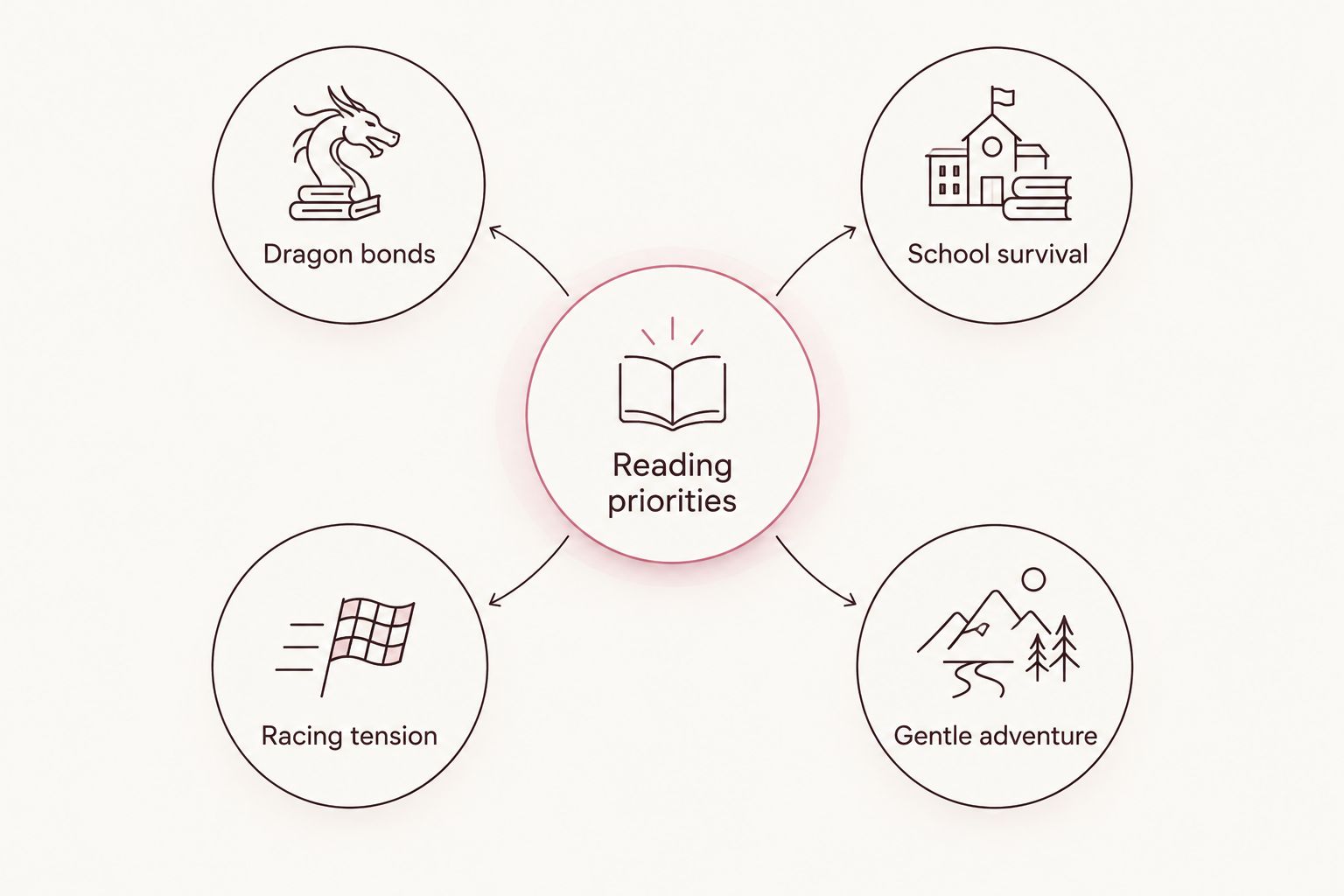
For your 2026 reading list, identify the feature you would most regret losing:
- Dragon bonds: Choose Eragon for a rider partnership, or Fireborne for that bond within competitive training.
- School survival: Choose A Deadly Education for hostile surroundings and uneasy alliances.
- Racing tension: Choose The Scorpio Races for dangerous competition and quiet romantic development.
- Gentle adventure: Choose Dragon Slippers for dragon friendships and a younger tone.
GetSimilarBooks is best for readers who want book recommendations starting from a title they already enjoyed. Its five hand-curated suggestions are the preview; the free personalized list contains 20–30 titles and requires an email address. GetSimilarBooks book recommendations give you another route when one title is not enough for your reading list.
Find your next read
Enter a book you enjoyed for five hand-curated suggestions, then request a free personalized list.
FAQ
What’s the closest book to Fourth Wing with less spice?
Fireborne by Rosaria Munda is the closest combined match in this guide. It brings together dragonrider training, competitive relationships, political pressure, and non-graphic romance.
Which books like Fourth Wing have dragons but no explicit sex?
Fireborne, Eragon, and Dragon Slippers offer dragons without explicit sexual scenes in the named books. Choose Fireborne for training and rivalry, Eragon for a rider partnership, or Dragon Slippers for a younger adventure tone.
Is Fireborne still romantic even though it has less spice?
Yes, Fireborne includes romantic tension without making explicit sex the focus. Annie and Lee’s relationship is intertwined with their different histories and political loyalties.
Is A Deadly Education a low-spice series?
The opening novel A Deadly Education has limited romance and no graphic sex, but that description does not cover the entire series. Later Scholomance books include sexual content, so assess them separately.
What’s the gentlest recommendation on this list?
Dragon Slippers is the gentlest recommendation here in tone and romantic presentation. It still contains fantasy danger and conflict, so lower spice does not mean an absence of peril.
Should I read Eragon if I mainly liked Fourth Wing’s romance?
Eragon is not the strongest match if the central romance was your main reason for enjoying Fourth Wing. Its stronger match is the relationship between a rider and a dragon, supported by training and adventure.
What should I read in 2026 if I want tension without dragons?
Choose The Scorpio Races for dangerous competition and quiet attraction, or A Deadly Education for school survival. Neither book depends on dragons to create pressure between characters.
How do I get more personalized lower-spice book recommendations?
Enter a title you enjoyed into GetSimilarBooks to receive five hand-curated read-alike suggestions. You can then request a free personalized list of 20–30 titles by providing an email address.
One last thing
Ask for the element you want to keep, not just the element you want removed. “Less spice” rules out one kind of reading experience, but it does not distinguish a lethal school from a quiet dragon friendship. For your next 2026 read, start with Fireborne unless you already know that dragons, school survival, or a gentler tone matters more than the combined match.
Related guides
- Books like Fourth Wing with dragons and rider bonds
- Books like Fourth Wing, closest match first
- Books like ACOTAR, closest match first
- Books like Verity, ranked by fit
Books like Fourth Wing with enemies-to-lovers romance

Best overall: The Serpent and the Wings of Night. Best for strategic betrayal: The Bridge Kingdom. Best for a slower burn: The Jasad Heir. These books like Fourth Wing with enemies to lovers lead this 2026 reading list because danger and divided loyalties give the attraction something real to overcome.
- The Serpent and the Wings of Night leads these books like Fourth Wing with enemies to lovers: deadly trials, dangerous attraction.
- The Bridge Kingdom suits readers who want marriage, espionage, and conflicting loyalties rather than a training academy.
- The Jasad Heir suits readers who want a slower romance built around concealed magic and political opposition.
- GetSimilarBooks offers five hand-curated read-alikes and an email-gated personalized list of 20–30 titles.
Why this matters
Fourth Wing gives Violet and Xaden reasons to distrust each other beyond their personalities. Family history, military authority, and competing loyalties make attraction dangerous. A useful read-alike needs that pressure, not just a sarcastic love interest.
For your 2026 reading list, decide which part matters most: the competition, the enemy relationship, or the gradual change from suspicion to trust. Those choices produce different recommendations. Dragons alone do not answer this search.
GetSimilarBooks is best for fiction readers who want curated book recommendations starting from a title they already enjoyed. Enter Fourth Wing, then use the distinctions below to identify what you want repeated—and what you want changed.
What makes the best Fourth Wing enemies-to-lovers read-alike?
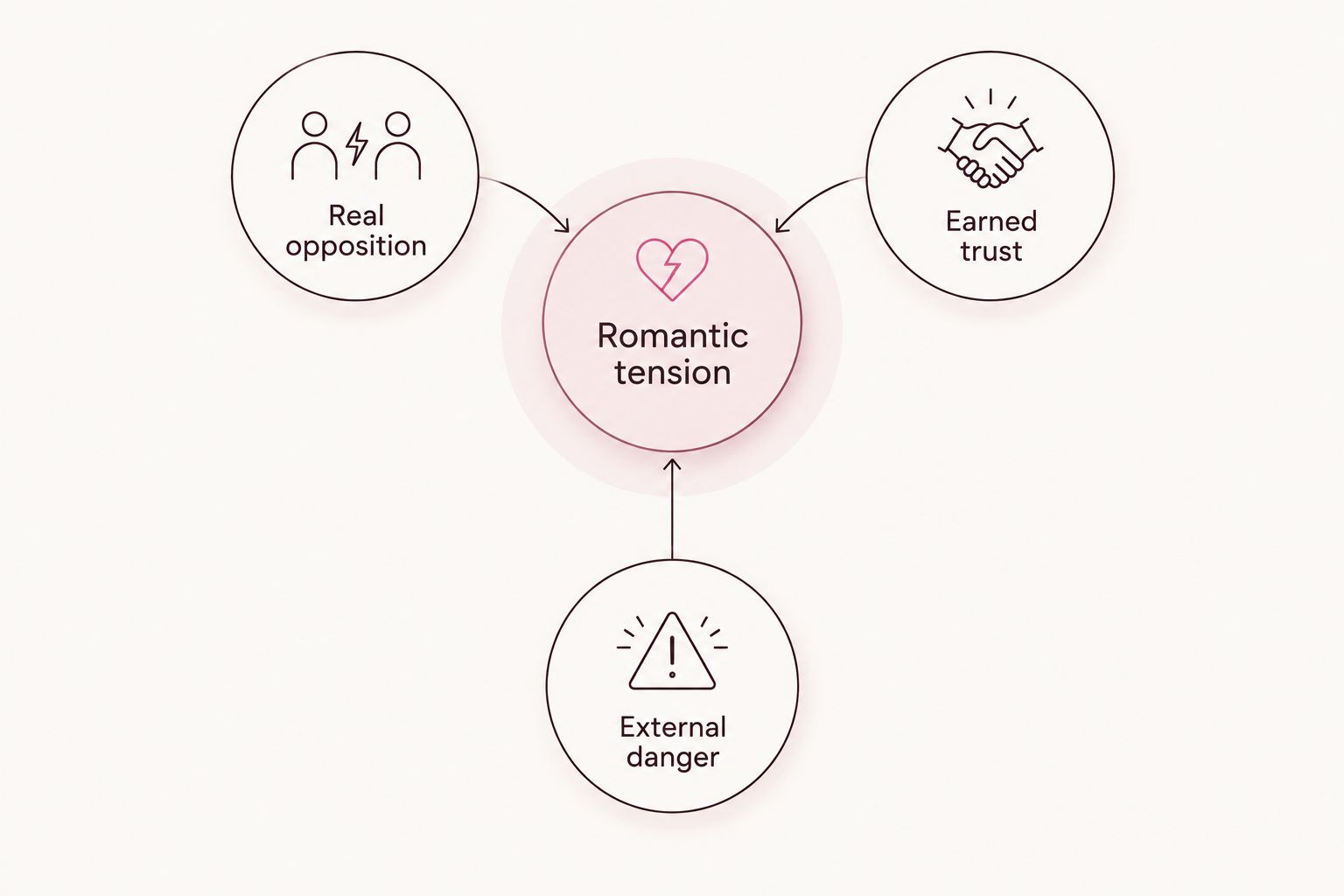
- Real opposition: The characters have conflicting goals, allegiances, or duties. Irritation alone is a weaker match.
- Earned trust: Cooperation changes the relationship through choices and consequences, not attraction alone.
- External danger: Trials, war, espionage, or persecution keep the romance attached to the wider story.
- Romantic tension: The relationship develops through resistance, vulnerability, and changing power between the characters.
- Meaningful differences: Each recommendation identifies what you lose from Fourth Wing, including dragons, academy life, or its particular pace.
These criteria separate an enemies-to-lovers fantasy from a fantasy that happens to contain a hostile first meeting. They also explain why a quieter rival romance belongs at the edge of this list rather than at the top.
The read-alikes at a glance
| Book | Best for | Standout matching quality | Key limitation |
|---|---|---|---|
| The Serpent and the Wings of Night — Carissa Broadbent | Deadly trials and dangerous attraction | A vulnerable human competes among vampires and forms a risky alliance | No dragon-rider academy |
| The Bridge Kingdom — Danielle L. Jensen | Marriage and strategic betrayal | A trained infiltrator marries the ruler of an enemy kingdom | Espionage replaces magical training |
| The Jasad Heir — Sara Hashem | Slow-burn political opposition | Concealed identity and magic make proximity to an enemy heir dangerous | More sustained political tension |
| The Hurricane Wars — Thea Guanzon | Battlefield enemies | Opposing sides of a war must confront attraction and political necessity | Denser worldbuilding and no academy structure |
| From Blood and Ash — Jennifer L. Armentrout | Forbidden attraction and hidden agendas | A restricted heroine develops a dangerous connection with her guard | The enemy dynamic is less explicit at the outset |
| Divine Rivals — Rebecca Ross | A gentler rival romance | Professional competition develops alongside a connection through letters | Rivals-to-lovers, not a strict enemy pairing |
1. The Serpent and the Wings of Night: best for deadly trials
Carissa Broadbent's The Serpent and the Wings of Night follows Oraya, a human raised by a vampire king, into a lethal competition. Her alliance with the vampire Raihn makes survival inseparable from the question of whom she can trust.
This is the closest match if Fourth Wing worked for you because physical vulnerability sharpened every encounter. Oraya cannot treat attraction as a separate, safe part of her life. The competition keeps the relationship under pressure.
The Serpent and the Wings of Night pros:
- The deadly contest gives cooperation an immediate purpose.
- Human-vampire differences create a concrete imbalance of power.
- Attraction develops alongside uncertainty about loyalty and survival.
The Serpent and the Wings of Night cons:
- You get vampires and a tournament, not dragons and rider training.
- The gothic atmosphere differs from Fourth Wing's military-academy setting.
Best for: Readers who want a dangerous alliance inside a survival story.
Content note: Graphic violence and explicit sexual content.
Verdict: Buy into this match first if trials and risky trust were your favorite combination.
2. The Bridge Kingdom: best for strategic betrayal
Danielle L. Jensen's The Bridge Kingdom follows Lara, a trained infiltrator sent to marry Aren, the ruler of a kingdom she has been taught to regard as an enemy. The marriage creates access. It also puts her beliefs about that enemy under pressure.
The matching quality is conflicting allegiance, not a shared fantasy label. Lara has a mission that makes intimacy dangerous; learning more about Aren does not erase the consequences of that mission. Choose this when you want the romance to collide with decisions about loyalty.
The Bridge Kingdom pros:
- The enemy relationship has a clear political basis.
- Forced proximity comes from marriage rather than a classroom assignment.
- Espionage makes withheld information central to the romantic tension.
The Bridge Kingdom cons:
- Magical abilities and creature bonds are not the main attraction.
- The central structure is infiltration and statecraft, not academy survival.
Best for: Readers who want a capable heroine divided between her assignment and her growing attachment.
Content note: Violence and explicit sexual content.
Verdict: Buy into The Bridge Kingdom if betrayal matters more to you than dragons.
3. The Jasad Heir: best for a slower political burn
Sara Hashem's The Jasad Heir centers on Sylvia, the surviving heir of a destroyed kingdom who conceals her identity and magic. Her involvement with Arin, the heir of an enemy kingdom, makes concealment harder and trust more costly.
The attraction matters because discovery has consequences. Sylvia cannot simply explain herself and clear up a misunderstanding. This fits readers drawn to Fourth Wing's dangerous secrets, but who want a romance that spends longer inside suspicion and political opposition.
The Jasad Heir pros:
- Concealed magic makes the heroine's vulnerability specific.
- The opposing kingdoms give distrust a history beyond personal friction.
- The slow burn leaves room for resistance and gradual reassessment.
The Jasad Heir cons:
- Political context asks for more attention than a direct survival setup.
- Readers seeking quick romantic payoff should choose a different match.
Best for: Readers who want concealed identity, an enemy heir, and prolonged tension.
Content note: Violence and trauma connected to persecution and war.
Verdict: Buy into The Jasad Heir for the slow burn; skip it if immediate romantic momentum is essential.
4. The Hurricane Wars: best for battlefield enemies
Thea Guanzon's The Hurricane Wars places Talasyn and Alaric on opposing sides of a war. Their light and shadow magic, enemy allegiances, and political circumstances keep the attraction tied to a conflict larger than either character.
This is the strongest choice here when you want enemies to mean enemies. The opposition begins with war, not workplace competition or an abrasive introduction. The difference from Fourth Wing is scale: the story moves through military and political conflict rather than an academy's daily trials.
The Hurricane Wars pros:
- Battlefield opposition gives the hostility an explicit foundation.
- Contrasting magic connects the characters through the fantasy premise.
- Political necessity creates pressure that attraction cannot resolve alone.
The Hurricane Wars cons:
- Worldbuilding and political background demand attention early on.
- It does not reproduce the rhythm of training, tests, and rider friendships.
Best for: Readers who prioritize opposing armies and reluctant proximity over academy life.
Content note: War violence and explicit sexual content.
Verdict: Buy into The Hurricane Wars if genuine enemy allegiance is your non-negotiable.
5. From Blood and Ash: best for forbidden attraction
Jennifer L. Armentrout's From Blood and Ash follows Poppy, a Maiden whose role restricts her contact with others and her control over her own life. Her connection with Hawke, a guard, challenges those restrictions while secrets complicate the relationship.
The close match is a heroine questioning the rules around her while attraction makes obedience harder. The important difference is timing. This does not introduce its central relationship as a straightforward pairing of openly declared enemies, so choose it for forbidden desire and hidden agendas rather than immediate enemy banter.
From Blood and Ash pros:
- Restrictions give the romance a clear forbidden element.
- Poppy's growing independence connects personal desire to wider conflict.
- Withheld information makes trust an active question.
From Blood and Ash cons:
- The enemy dimension is not as clear at the beginning as in The Hurricane Wars.
- It replaces academy competition with religious and social restrictions.
Best for: Readers who want sensual romantic fantasy about a heroine challenging her assigned role.
Content note: Explicit sexual content, violence, and abuse.
Verdict: Buy into From Blood and Ash for forbidden attraction; skip it for a strict enemies-from-the-start requirement.
6. Divine Rivals: best for a gentler rival romance
Rebecca Ross's Divine Rivals follows Iris and Roman, competing young journalists whose lives become connected through magical correspondence. A war between gods gives their personal relationship a wider and more dangerous setting.
This is the deliberate step outward. Iris and Roman are professional rivals, not enemies divided by opposing kingdoms. Pick it if what you loved was the movement from friction to emotional intimacy, and you want letters and vulnerability to carry more of that change.
Divine Rivals pros:
- Professional rivalry gives their early friction a recognizable cause.
- Letters make emotional intimacy central to the romantic development.
- The war setting keeps the relationship attached to external danger.
Divine Rivals cons:
- It does not satisfy a strict enemies-to-lovers requirement.
- Its romantic intensity differs from Fourth Wing's more sexually explicit approach.
Best for: Readers who want a softer romantic register without removing danger from the story.
Content note: War violence and grief.
Verdict: Buy into Divine Rivals for rivals-to-lovers; skip it if genuine enemy allegiance is essential.
How this ranking works
This 2026 ranking puts the closest narrative match first, then moves toward more specific preferences. The Serpent and the Wings of Night combines dangerous competition with uncertain trust. The Bridge Kingdom shifts that pressure into marriage and espionage. The final recommendation intentionally relaxes the enemy requirement.
The ranking compares the books' premises and relationship structures. It is not a claim that every reader will prefer the same book, or that every recommendation repeats Fourth Wing's full mix of dragons, military training, friendship, and romance.
Which book should you choose?
Start with The Serpent and the Wings of Night if you cannot decide. It preserves the combination of survival pressure and dangerous attraction that makes this particular search different from a general romantasy list.
For a 2026 reading plan built around one priority, choose The Bridge Kingdom for divided loyalties, The Jasad Heir for the slow burn, or The Hurricane Wars for explicit wartime opposition. Choose From Blood and Ash for forbidden attraction. Choose Divine Rivals only if rivals count as close enough.
GetSimilarBooks gives you five hand-curated recommendations as a preview. A personalized list of 20–30 titles is available through email if you want more options beyond these six books.
Find your next read
Start with a book you enjoyed. Get five curated suggestions, then request a personalized list through email.
FAQ
What’s the closest book to Fourth Wing with enemies-to-lovers romance?
The Serpent and the Wings of Night is the closest match on this list for deadly trials and dangerous attraction. Oraya’s human vulnerability and her alliance with a vampire connect survival to uncertain trust, although the book replaces dragons with vampires.
Which recommendation has the clearest actual enemies-to-lovers setup?
The Hurricane Wars has the clearest battlefield-enemy setup on this list. Talasyn and Alaric begin on opposing sides of a war, so the conflict is more substantial than teasing or personal irritation.
What’s the best slow-burn option after Fourth Wing?
The Jasad Heir is the best match here for a slower political burn. Sylvia’s concealed identity and magic make her involvement with an enemy heir dangerous before romance can become straightforward.
Is The Bridge Kingdom like Fourth Wing even without a dragon academy?
The Bridge Kingdom matches Fourth Wing through conflicting loyalties and attraction that threatens a mission. Choose it for espionage, marriage, and betrayal rather than creature bonds or magical training.
Is From Blood and Ash enemies-to-lovers from the start?
From Blood and Ash does not begin with a straightforward, openly declared enemy pairing. Its stronger initial matches are forbidden attraction, a restricted heroine, and hidden agendas.
Does Divine Rivals count as enemies-to-lovers?
Divine Rivals is better described as rivals-to-lovers. Iris and Roman compete professionally, so it suits readers willing to trade enemy allegiance for letters, emotional intimacy, and a wartime setting.
Are these recommendations suitable if I want less explicit romance?
Divine Rivals is the better choice on this list if you want a less sexually explicit romantic register. It still includes war violence and grief, so gentler romance does not mean an entirely light story.
How do I get more personalized recommendations after Fourth Wing?
GetSimilarBooks lets you enter a title you enjoyed and receive five hand-curated read-alike suggestions. You can also request an email-gated personalized list of 20–30 titles.
One last thing
For your 2026 reading list, write down the scene type you want repeated, not just the trope. A dangerous alliance points toward The Serpent and the Wings of Night. An intimate relationship compromised by a mission points toward The Bridge Kingdom.
That distinction helps you avoid a familiar disappointment: finding the right genre but the wrong reading experience. Tell GetSimilarBooks what held your attention, whether it was reluctant trust, concealed identity, or the pressure of survival.
Related guides
- Books like Fourth Wing with dragons and rider bonds
- Books like Fourth Wing: five picks, closest match first
- Books like ACOTAR: five picks, closest match first
Books like Fourth Wing with dragons and rider bonds

Best overall: Fireborne by Rosaria Munda. Best for a dragon bond inside an outsider-at-school story: To Shape a Dragon’s Breath by Moniquill Blackgoose. Best for classic telepathic riders: Dragonflight by Anne McCaffrey. These books like Fourth Wing with dragons match different parts of Rebecca Yarros’s novel: rider training, a dragon choosing its human, or a bond that changes both lives.
- Fireborne leads these books like Fourth Wing with dragons for competitive rider training and divided loyalties.
- To Shape a Dragon’s Breath combines a chosen dragon bond with an outsider’s fight against an oppressive school.
- Dragonflight is the strongest pick here for telepathic dragons and an established dragonrider society.
- Eragon favors dragon companionship and adventure; Dragonfall puts romance between a human and a dragon.
- GetSimilarBooks suits readers who want dragon fantasy recommendations matched to a favorite title.
Why this matters
A dragon on the cover does not guarantee a Fourth Wing read-alike. You might want the pressure of rider selection, the private conversations with a dragon, or the romance under military threat. Those are different requests.
GetSimilarBooks is best for readers who want dragon fantasy recommendations anchored to a book they already enjoyed. Enter a favorite title through GetSimilarBooks for five hand-curated suggestions. An email-gated personalized list expands that to 20–30 titles.
This 2026 shortlist puts the closest training-and-bond matches first, then moves toward classic dragonriders, adventure, and human-dragon romance. It does not rank books by how often their marketing uses the word romantasy.
What makes the best Fourth Wing dragon read-alike?
- A consequential bond: The dragon-human connection changes the story. The dragon is not just transport or battlefield scenery.
- Rider training: Learning to ride, competing for status, and earning trust recreate part of Fourth Wing’s pressure.
- Dragon personality: An independent dragon gives you something a magical weapon cannot: another character with its own priorities.
- Divided loyalties: Political conflict makes a bond more interesting when duty and personal allegiance disagree.
- Romance balance: A romantic subplot is not the same as a romance-led novel. Choose according to what you actually want next.
No book below duplicates all of Fourth Wing’s ingredients. The useful question is which ingredient you refuse to lose.
Books like Fourth Wing with dragons at a glance
| Book | Best for | Standout match | Key limitation |
|---|---|---|---|
| Fireborne — Rosaria Munda | Competitive dragonrider training | Rider rankings, political pressure, and divided loyalties | Romance is less central; dragon conversations are not the main attraction |
| To Shape a Dragon’s Breath — Moniquill Blackgoose | An outsider and her chosen dragon | A young woman enters formal dragon education without accepting its worldview | School politics and colonial conflict matter more than military spectacle |
| Dragonflight — Anne McCaffrey | Telepathic dragonrider bonds | A lifelong mental connection inside an established rider society | Older sexual politics and coercive content need consideration |
| Eragon — Christopher Paolini | Dragon companionship and adventure | A developing partnership between a young rider and an intelligent dragon | Not a romance-led academy story |
| Dragonfall — L. R. Lam | Human-dragon romantic tension | A bond entangles a thief and a dragon who takes human form | Not a conventional dragonriding-school novel |
1. Fireborne: best for competitive dragonrider training
Rosaria Munda’s Fireborne is the closest overall match when you want young dragonriders competing inside a politically charged system. Annie and Lee train in a society reshaped by revolution, where their backgrounds complicate what advancement means. Success carries public consequences, not just personal pride.
The specific Fourth Wing connection is the pressure around becoming an elite rider. Training, rankings, friendships, and loyalty all pull against one another. The story asks who deserves authority and what happens when talented young people become instruments of the state.
The meaningful difference is emphasis. Fireborne spends more attention on political legitimacy and competing perspectives than on a central romantic relationship. Do not choose it primarily for a Tairn-style stream of private dragon commentary.
Fireborne pros:
- Competitive rider training gives the story a clear point of contact with Basgiath.
- Annie and Lee’s perspectives make personal loyalties part of the political conflict.
- Dragons belong to the structure of power rather than appearing as decorative creatures.
Fireborne cons:
- Romance is not the book’s main organizing force.
- Readers seeking constant human-dragon banter should choose a bond-focused alternative.
Best for: Readers whose favorite Fourth Wing scenes involve training, rankings, and loyalty under pressure.
Verdict: Buy Fireborne for the rider system and political tension; skip it if an intense central romance is essential. It is the default recommendation in this 2026 list, not a promise of the same reading experience.
2. To Shape a Dragon’s Breath: best for an outsider’s dragon bond
Moniquill Blackgoose’s To Shape a Dragon’s Breath follows Anequs, an Indigenous young woman whose connection with a newly hatched dragon brings her into a formal dragon academy. The institution expects her to learn its rules. Anequs has reasons to question the assumptions behind them.
This is a strong match for the reader who liked watching Violet enter a system that does not make room for her on her own terms. The dragon bond creates both opportunity and exposure. Learning is inseparable from deciding whose knowledge counts.
The difference is the kind of pressure. To Shape a Dragon’s Breath centers colonial power, cultural conflict, and education rather than recreating Basgiath’s lethal military selection. Its school story has its own purpose; treating it as a softer Fourth Wing misses that purpose.
To Shape a Dragon’s Breath pros:
- The dragon’s choice creates a consequential relationship, not a convenient assignment.
- An outsider’s perspective makes the academy’s rules open to challenge.
- Cultural conflict gives the training story stakes beyond individual achievement.
To Shape a Dragon’s Breath cons:
- It is not built around the same military danger as Fourth Wing.
- Readers seeking a romance-first plot will encounter more attention to education and society.
Best for: Readers who want a young woman, a chosen dragon bond, and an institution she refuses to accept uncritically.
Verdict: Buy To Shape a Dragon’s Breath for the outsider-and-dragon connection; skip it if combat training is your main requirement. Expect colonial oppression and racism as substantive themes, not background decoration.
3. Dragonflight: best for classic telepathic rider bonds
Anne McCaffrey’s Dragonflight introduces Lessa and the dragonrider world of Pern. Riders and dragons share a mental connection, and their society exists around a dangerous responsibility: protecting their world from Thread. The partnership is central to how that society functions.
For a Fourth Wing reader, the strongest match is the bond itself. A dragon is a thinking partner whose relationship with a human changes that human’s place in the world. If the private connection mattered more to you than the college setting, move Dragonflight higher on your personal list.
The difference is substantial. This is not a contemporary romantasy built around academy trials and a modern romance arc. Its treatment of sex, consent, and gender also requires a content check; sexual coercion is part of that consideration.
Dragonflight pros:
- Telepathic communication makes the rider-dragon relationship explicit.
- Dragonriders have an established social role and a shared duty.
- The world gives dragons a purpose beyond supporting a protagonist’s romance.
Dragonflight cons:
- Sexual coercion and older gender assumptions can make the reading experience uncomfortable.
- Its style and relationship dynamics differ sharply from contemporary romantasy.
Best for: Readers who want the mental bond and dragonrider society more than a familiar academy romance.
Verdict: Buy Dragonflight for telepathic partnership; skip it if its consent-related content is a firm boundary. In a 2026 reading queue, recommend it for its particular strengths rather than assuming a classic automatically suits every reader.
4. Eragon: best for growing alongside a dragon
Christopher Paolini’s Eragon begins with a 15-year-old farm boy and the discovery that changes his life. His relationship with Saphira develops into a partnership involving communication, learning, and shared danger. The dragon is a character, not merely a mount.
The Fourth Wing match is the experience of becoming a rider before you fully understand what that identity demands. Eragon must learn while larger conflicts close around him. Saphira’s presence makes that learning a relationship rather than a solitary training montage.
The difference is genre balance. Eragon is a coming-of-age fantasy adventure, not a romance-led story about military cadets. Its journey moves through a wider world rather than remaining focused on an academy hierarchy.
Eragon pros:
- Saphira has a distinct presence within the central partnership.
- Rider training grows naturally from the relationship and the adventure.
- The story makes room for learning, travel, and a widening political conflict.
Eragon cons:
- Romance does not drive the plot in the way it drives Fourth Wing.
- Readers seeking a concentrated academy setting will get a broader journey instead.
Best for: Readers who want a dragon companion, developing magical skills, and an adventure beyond school walls.
Verdict: Buy Eragon for the partnership with Saphira; skip it if adult romantic tension is nonnegotiable. It is a useful change of pace when you want to keep the dragon bond but leave the romantasy structure behind.
5. Dragonfall: best for romance involving the dragon
L. R. Lam’s Dragonfall brings together Arc, a thief, and Everen, a dragon who takes human form. Their connection places attraction alongside conflicting intentions. The dragon is directly involved in the romantic tension rather than standing beside a romance between human riders.
That makes Dragonfall a deliberate outward step from Fourth Wing. It answers a different desire: keep dragons and dangerous intimacy, but change the relationship at the center. Choose it because you want that change, not because you expect another rider college.
The limitation is clear. A human-dragon entanglement does not reproduce the experience of a rider learning to fly with a separate dragon partner. Readers looking for training formations, rider rankings, or academy friendships should start earlier in this list.
Dragonfall pros:
- The dragon participates directly in the central romantic tension.
- Conflicting intentions give the relationship a source of danger beyond attraction.
- The human-form premise offers a distinct alternative to conventional rider stories.
Dragonfall cons:
- It does not provide the dragonriding-school structure of Fourth Wing.
- Its bond works differently from a straightforward rider-and-mount partnership.
Best for: Readers willing to trade the academy for romantic tension between a human and a dragon.
Verdict: Buy Dragonfall for the changed romantic premise; skip it if you specifically want conventional dragonriders. This is the interesting risk at the end of the list, not the safest first match.
How this shortlist is ranked
The order favors overlap with Fourth Wing’s combined rider-training and bond premise. Fireborne leads on training and political pressure. To Shape a Dragon’s Breath follows for the outsider’s academy experience and chosen dragon connection.
Dragonflight and Eragon move away from the academy-romance combination while keeping a direct rider partnership. Dragonfall comes last because it changes the shape of that partnership most sharply. These are story-based comparisons, not claims that every book was personally tested or read by a named curator.
Which dragon book should you choose?
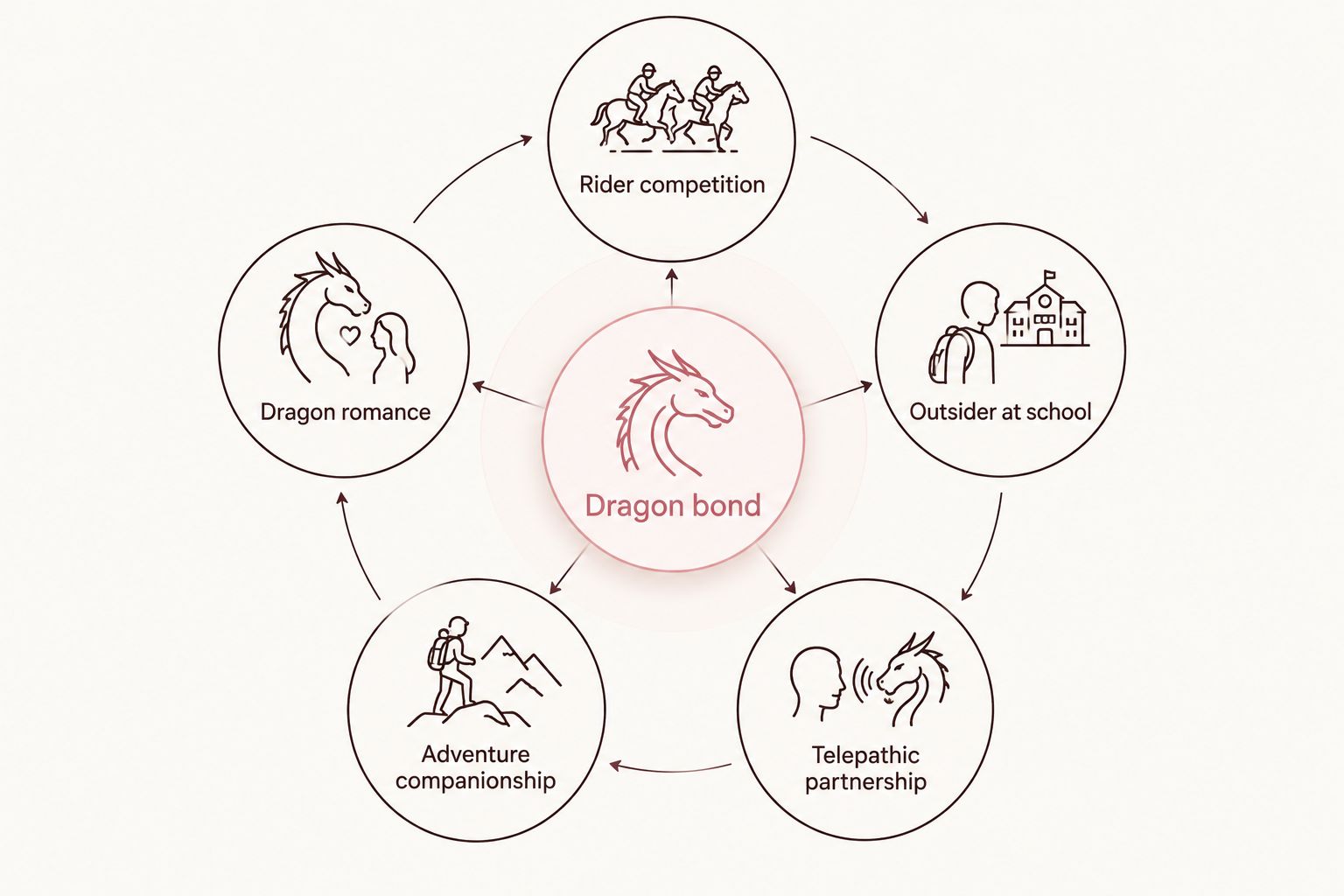
For your 2026 reading list, name the experience you want before choosing a title:
- Rider competition: Choose Fireborne for training, status, and political loyalty.
- Outsider at school: Choose To Shape a Dragon’s Breath for a bond that challenges institutional expectations.
- Telepathic partnership: Choose Dragonflight for a society built around mentally connected dragons and riders.
- Adventure companionship: Choose Eragon for learning and traveling with Saphira.
- Dragon romance: Choose Dragonfall for attraction involving the dragon directly.
If you are undecided, start with Fireborne. If your favorite Fourth Wing moments were conversations with the dragons rather than rider competition, choose Dragonflight or Eragon instead, after checking their differences above.
GetSimilarBooks gives you five hand-curated recommendations from a title you enjoyed. The personalized 20–30-title list requires an email. Use that route when your next read needs a narrower match than this dragon-focused shortlist.
Find your next dragon read
Start with five hand-curated suggestions, then request an email-gated personalized list of 20–30 titles.
FAQ
What are the best books like Fourth Wing with dragons?
Fireborne is the closest overall pick here for competitive dragonrider training and political pressure. To Shape a Dragon’s Breath is a stronger choice for an outsider’s chosen dragon bond, while Dragonflight emphasizes telepathic rider partnerships.
Which book has a dragon bond most like Violet’s?
Dragonflight and Eragon are the strongest choices here for direct mental communication between a rider and a dragon. Their settings and romance balance differ from Fourth Wing, so the bond is the match rather than the whole plot.
Is Fireborne a romance like Fourth Wing?
Fireborne is not as romance-led as Fourth Wing. Choose it for rider competition, relationships under political pressure, and divided loyalties rather than expecting the romance to carry the story.
Which recommendation has a dragon academy?
To Shape a Dragon’s Breath places its protagonist in a formal dragon academy. The school conflict centers colonial power and cultural expectations rather than duplicating Basgiath’s military selection.
Is Eragon a good choice for an adult Fourth Wing reader?
Eragon fits an adult reader who wants dragon companionship and coming-of-age adventure. It does not fit the same need as an adult romance-led novel, so choose it for Saphira and the developing rider partnership.
Does Dragonfall have conventional dragonriders?
Dragonfall is not a conventional dragonrider-school recommendation. Its central connection involves a human thief and a dragon who takes human form, making it a better match for dragon-related romance than rider training.
Should I read Iron Flame instead of a Fourth Wing read-alike?
Read Iron Flame if you want to continue Violet’s story rather than begin a different one. This shortlist serves readers who want another author’s take on dragons, bonds, and training.
How do I get a personalized dragon-book list in 2026?
Enter a title you enjoyed in GetSimilarBooks to receive five hand-curated read-alike suggestions. An email-gated personalized list offers 20–30 titles when you want a longer selection.
One last thing
Separate a dragon choosing a human from a human choosing a dragon story. The first is a plot event. The second depends on whether you want companionship, competition, or romance.
Your next book does not need every Fourth Wing ingredient. It needs the one you would miss most. Start with Fireborne unless the bond itself outranks everything else.
Related guides
Books like ACOTAR: five picks, closest match first

Best overall: A Court of Blood and Bindings. Best for deadly trials: The Serpent and the Wings of Night. Best for court politics: The Cruel Prince. These five books like ACOTAR move from the closest fae-romance match toward more distinct alternatives, so you can choose your next 2026 read by what you actually loved.
- A Court of Blood and Bindings leads these books like ACOTAR for dangerous fae, forbidden magic, and central romance.
- The Serpent and the Wings of Night matches ACOTAR’s danger and attraction, but replaces fae courts with vampires.
- These Hollow Vows suits readers seeking rival fae courts and romantic uncertainty, with a younger narrative voice.
- The Cruel Prince prioritizes fae politics over romance; choose it for scheming, not explicit intimacy.
Why the match matters
ACOTAR means different things to different readers. Some want the fairy-tale atmosphere of A Court of Thorns and Roses. Others want the relationship development, emotional recovery, and expanded social world of A Court of Mist and Fury. Those are different requests.
A book can contain fae and still miss the part you loved. A vampire novel can feel closer because its romance develops through danger, distrust, and difficult choices. Match the reading experience, not just the creatures.
GetSimilarBooks is best for fiction readers who want title-based, hand-curated read-alike recommendations. Its five-book preview gives you a starting point; the free personalized list offers 20–30 titles and requires an email address. Start with the title that best represents your taste, rather than treating every book in a series as interchangeable.
What makes the best books like ACOTAR
These recommendations use five criteria. Each book matches a different combination, and the differences matter as much as the similarities.
- Central romance: The relationship should shape the story, not appear as a reward after the fantasy plot ends. The Cruel Prince is the deliberate exception for readers who prefer political tension.
- Dangerous power: Unequal power, hidden motives, and uncertain loyalties create the attraction-and-threat dynamic that makes these matches useful.
- Court politics: Factions, bargains, and rules should complicate personal choices. A palace setting alone does not make a meaningful read-alike.
- Expanding world: The setting should offer more than a couple in isolation. Trials, rival courts, religious authority, or political conflict give the relationship something to push against.
- Emotional stakes: Desire should come with consequences. Decide whether you want intimacy, distrust, belonging, or the satisfaction of watching a vulnerable character gain influence.
Before choosing, name your non-negotiable. If it is adult romance, do not substitute a young-adult political fantasy just because its fae are memorable.
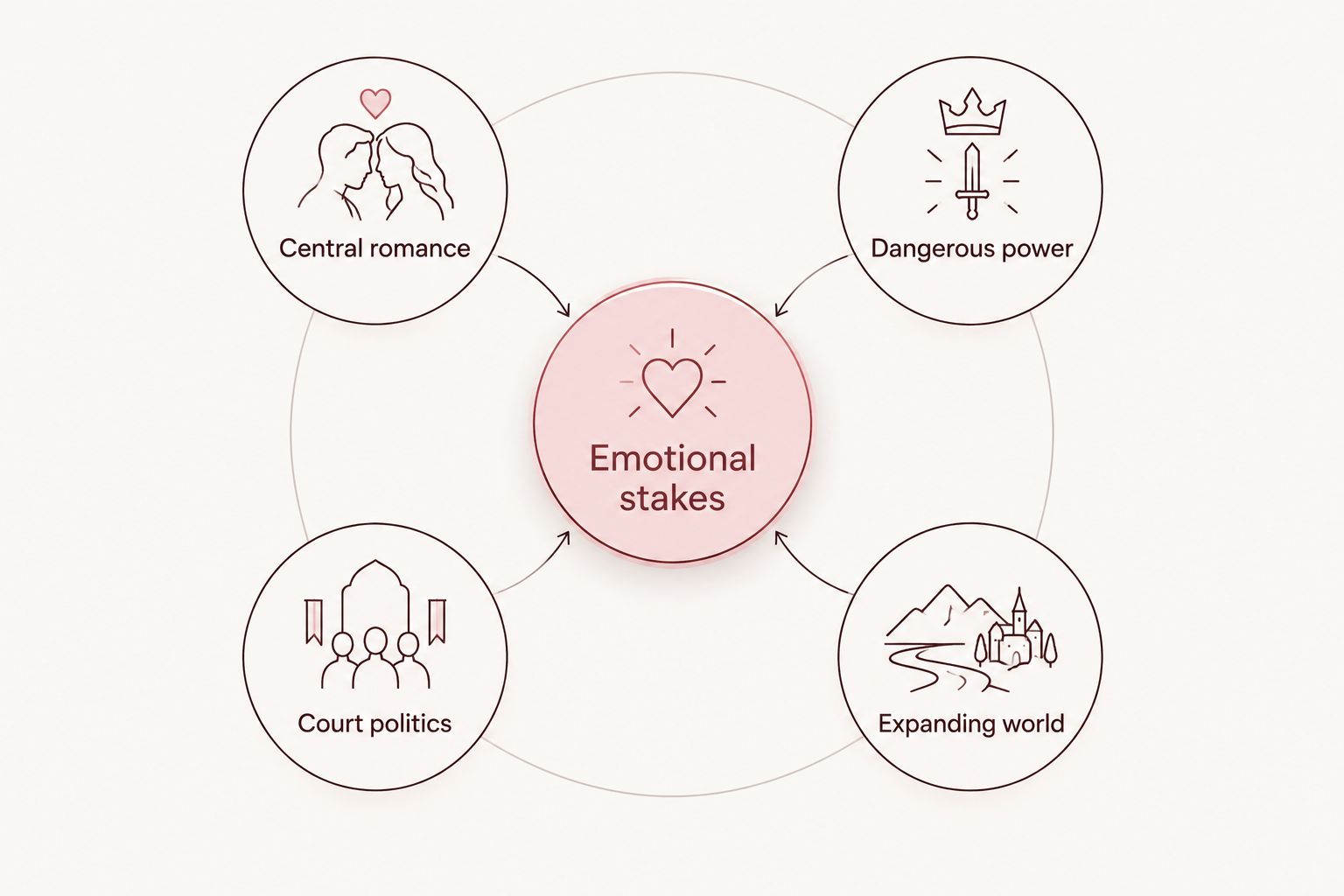
Books like ACOTAR at a glance: 2026 picks
The order moves from a close adult fae-romance match toward alternatives that preserve a particular part of the experience. The last pick is not a weaker book. It serves a different reader.
| Book | Best for | Standout match | Key limitation |
|---|---|---|---|
| A Court of Blood and Bindings — Lisette Marshall | Adult fae romance | Forbidden magic and a dangerous fae love interest | Does not duplicate ACOTAR's social world |
| The Serpent and the Wings of Night — Carissa Broadbent | Deadly trials | A vulnerable heroine, lethal competition, and uneasy attraction | Vampires rather than fae |
| From Blood and Ash — Jennifer L. Armentrout | Forbidden attraction | Desire constrained by duty and religious authority | More lore exposition than a direct fae-court match |
| These Hollow Vows — Lexi Ryan | Rival courts and romantic uncertainty | A human heroine caught between competing fae interests | Young-adult voice and a love triangle |
| The Cruel Prince — Holly Black | Political scheming | Cruel fae, precarious status, and struggles for influence | Romance is secondary and not explicit |
1. A Court of Blood and Bindings: best for adult fae romance
Lisette Marshall's A Court of Blood and Bindings is the closest starting point if your ACOTAR request means dangerous fae, forbidden magic, and a romance that drives the reading experience. Emelin's encounter with a feared fae figure draws her into a world where power and personal safety are inseparable.
The matching quality is the pressure between attraction and distrust. The love interest's inability to speak also changes how the characters communicate, giving their relationship a different texture from ACOTAR's verbal sparring.
The meaningful difference: This is not a replacement cast for Sarah J. Maas's series. Choose it for the central relationship and magic, rather than expecting the same friendships, court identities, or emotional arc. Familiar ingredients do not promise familiar outcomes.
A Court of Blood and Bindings pros:
- Adult romance is central rather than incidental.
- Fae power and forbidden magic create a direct thematic match.
- Communication barriers give the relationship a distinctive source of tension.
A Court of Blood and Bindings cons:
- Readers seeking ACOTAR's exact ensemble dynamic need a different expectation.
- Explicit sexual content makes it unsuitable for readers avoiding on-page intimacy.
Best for: Readers who want another adult fae romance before branching into a different fantasy setting.
Read this first if the combination matters more than any single trope. It keeps romance, magic, and a threatening fae world in the same recommendation, without asking you to trade one away.
Verdict: Buy for the closest adult fae-romance match; skip if you want romance kept off-page.
2. The Serpent and the Wings of Night: best for deadly trials
Carissa Broadbent's The Serpent and the Wings of Night follows Oraya, a human raised by a vampire ruler, into a deadly competition. Survival brings her into an uneasy alliance with Raihn, another competitor whose interests are not simply her own.
The ACOTAR connection is vulnerability inside a powerful supernatural society. Oraya must judge whom to trust while attraction complicates decisions that already carry serious consequences. The competition gives that tension a clear external structure.
The meaningful difference: Vampires replace fae, and the trials provide a more concentrated survival framework. This is a stronger match for readers who liked danger and shifting trust than for readers seeking another fae court with familiar customs.
The Serpent and the Wings of Night pros:
- The competition gives the story a clear source of urgency.
- A human heroine's precarious position creates meaningful power imbalance.
- Romance develops alongside consequential questions of loyalty.
The Serpent and the Wings of Night cons:
- Vampire society changes the atmosphere of the read-alike.
- Graphic violence and explicit sexual content require a different comfort level from gentler fantasy romance.
Best for: Readers who want romance under survival pressure, especially after enjoying fantasy trials or competitions.
Choose this over the first pick when you want the external challenge to organize the story. The question is not only whether the characters trust each other, but what that trust costs inside the competition.
Verdict: Buy for dangerous trials and uneasy attraction; skip if fae are your non-negotiable.
3. From Blood and Ash: best for forbidden attraction
Jennifer L. Armentrout's From Blood and Ash introduces Poppy, whose role as the Maiden restricts her everyday life and personal choices. Her attraction to Hawke, a guard, puts desire in conflict with the duties imposed on her.
The strongest ACOTAR match is a heroine discovering the gap between the life prescribed for her and the life she wants. Romantic tension connects to larger questions about authority, knowledge, and whom she can believe.
The meaningful difference: Religious structures and lore take the place of a straightforward fae-court premise. The story spends time explaining its world, so choose it for forbidden desire and challenges to authority rather than for an identical setting.
From Blood and Ash pros:
- Restrictions on Poppy make the forbidden relationship concrete.
- Romance and questions about institutional authority overlap.
- The heroine's developing agency gives the attraction a broader emotional purpose.
From Blood and Ash cons:
- Worldbuilding exposition interrupts the pace for readers who prefer leaner narration.
- Explicit sexual content and violence are part of the reading experience.
Best for: Readers who want a sheltered heroine questioning her assigned role while pursuing an adult romantic connection.
Pick this when your favorite ACOTAR element was personal awakening. It is less useful when your request is specifically for fae bargains, court etiquette, or a compact fantasy world.
Verdict: Buy for forbidden attraction and a heroine challenging authority; skip if heavy lore frustrates you.
4. These Hollow Vows: best for rival courts and romantic uncertainty
Lexi Ryan's These Hollow Vows follows Brie, a human whose effort to rescue her sister draws her into fae territory. Competing interests and competing romantic attachments make trust difficult to separate from necessity.
This is a direct setting match: human vulnerability, fae bargains, and rival courts all matter. Its two fae courts also give readers a concrete political divide, rather than a generic enchanted backdrop.
The meaningful difference: The young-adult voice and love triangle change the romantic experience. If your favorite part of ACOTAR is sustained adult intimacy within an established relationship, this recommendation answers a different need.
These Hollow Vows pros:
- Fae bargains and rival courts make the comparison specific.
- Brie's rescue goal gives her a reason to enter an unfamiliar world.
- Romantic uncertainty connects naturally to competing loyalties.
These Hollow Vows cons:
- The love triangle is a poor fit for readers who dislike divided romantic attention.
- The younger narrative voice differs from adult romantasy.
Best for: Readers who want fae-court intrigue with romantic uncertainty and a human outsider's perspective.
Move this higher on your personal list if courts and bargains matter more than explicitness. Move it lower if you want one central couple to carry the emotional focus without competing romantic possibilities.
Verdict: Buy for rival fae courts and divided loyalties; skip if love triangles are a deal-breaker.
5. The Cruel Prince: best for political scheming
Holly Black's The Cruel Prince follows Jude, a human raised in Faerie who wants influence in a society that treats her humanity as a weakness. Her conflict with Cardan belongs to a wider struggle over status, ambition, and power.
The match is the danger of living among fae, not the amount of romance. Jude responds to vulnerability by pursuing leverage within the court. Political decisions carry the story, while romantic tension complicates them.
The meaningful difference: This is young-adult political fantasy with a romantic thread, not an adult romance-first substitute for ACOTAR. Expect hostility, maneuvering, and a heroine determined to secure a place for herself.
The Cruel Prince pros:
- Fae cruelty makes the outsider's position genuinely precarious.
- Court maneuvering gives ambition and status sustained attention.
- Jude's pursuit of power offers a different kind of heroine-driven satisfaction.
The Cruel Prince cons:
- Readers seeking frequent romantic scenes will find a different balance.
- Bullying and violence shape the atmosphere; the romance is not explicit.
Best for: Readers who want fae politics first and are willing to let romance remain secondary.
This is the interesting risk at the end of the list. Choose it because you want to change the balance of your next read, not because a shared fae label guarantees the same experience.
Verdict: Buy for scheming and a power-seeking heroine; skip if adult romance is the main requirement.
How these books were ranked
This 2026 reading order prioritizes matching qualities, not sales, ratings, or a claim of firsthand testing. Adult fae romance comes first, followed by survival-driven romance, forbidden attraction, rival-court uncertainty, and politics-led fantasy.
Every recommendation has a cost in fit. You exchange fae for vampires, adult narration for a younger voice, or romance-first pacing for political maneuvering. The strongest recommendation names that exchange before you commit.
Which books like ACOTAR should you choose in 2026?
Start with A Court of Blood and Bindings if you cannot narrow your request beyond adult fae romance. It preserves the most direct combination of setting, magical danger, and central attraction.
Choose The Serpent and the Wings of Night if you want a clearer survival challenge. Choose The Cruel Prince if you would happily give up explicit romance for more scheming. Those are different choices, not competing promises of the same book.
GetSimilarBooks offers five hand-curated suggestions after you enter a title you enjoyed. The personalized list expands that to 20–30 titles through an email-gated request. The preview is useful for a quick next-book decision; the longer list requires sharing your email address.
Find your next read
Enter a title for five hand-curated suggestions, then request a free personalized list of 20–30 titles.
FAQ
What’s the closest book to ACOTAR on this 2026 list?
A Court of Blood and Bindings is the closest match here for adult fae romance, forbidden magic, and a dangerous love interest. Choose it for that combination, not for an identical cast or emotional arc.
What should I read after ACOTAR if I liked the trials?
Read The Serpent and the Wings of Night for romance shaped by a deadly competition. Its vampire setting differs from ACOTAR, but vulnerability, distrust, and survival make the comparison useful.
Is The Cruel Prince a romance like ACOTAR?
The Cruel Prince is primarily a young-adult political fantasy with a romantic thread. It suits readers seeking fae scheming more than readers seeking adult, explicit romance.
Which book like ACOTAR has rival fae courts?
These Hollow Vows features rival fae courts and a human heroine caught between competing interests. Its love triangle and young-adult voice are the main differences to consider.
Are all these ACOTAR read-alikes explicit?
No, these recommendations do not share the same level of sexual content. A Court of Blood and Bindings, The Serpent and the Wings of Night, and From Blood and Ash contain explicit sexual content; The Cruel Prince is not an explicit romance.
Which recommendation suits readers who dislike love triangles?
Start with A Court of Blood and Bindings rather than These Hollow Vows. These Hollow Vows makes romantic uncertainty between competing interests part of its appeal.
How does GetSimilarBooks help me find my next book?
GetSimilarBooks lets you enter a title you enjoyed and receive five hand-curated read-alike suggestions. You can also request a free personalized list of 20–30 titles by providing your email address.
One last thing
The most useful starting title is not always the first book in the series. If A Court of Mist and Fury is the book you want to recreate, use that title when requesting recommendations from GetSimilarBooks. It describes your preference more precisely than ACOTAR as a series label.
Then name the difference you will accept. Vampires instead of fae? Less romance and more politics? A love triangle instead of a single romantic focus? A clear trade-off makes the next-book choice easier than another list of shared tropes.
Related guides
Books like Verity: five unsettling reads, ranked by fit

Best overall: Rebecca by Daphne du Maurier. Best for fast-moving domestic deception: The Wife Upstairs by Rachel Hawkins. Best for a psychological puzzle: The Silent Patient by Alex Michaelides. This 2026 guide ranks five books like Verity by the qualities that matter: attraction tangled with suspicion, secrets inside a household, and uncertainty about whose account deserves your trust.
- Rebecca is the strongest overall match for Verity’s unsettling household, romantic insecurity, and competing accounts of another woman.
- The Wife Upstairs suits readers seeking domestic suspense with attraction, social ambition, and concealed histories.
- The Last Mrs Parrish emphasizes manipulation; Behind Closed Doors emphasizes danger rather than romantic uncertainty.
- The Silent Patient suits readers who preferred Verity’s interpretive puzzle to its romance.
For a list shaped around your favorite part of Verity, GetSimilarBooks gives you five hand-curated read-alike suggestions. You can also request a free personalized list of 20–30 titles by email.
Why this matters
Verity combines several reading pleasures that do not always travel together. There is the uneasy attraction, the intimidating household, the disturbing written account, and the question of what a reader should believe. A thriller can match one of those qualities and miss the others completely.
The useful question is not simply whether another book contains a twist. It is whether you want to feel seduced, trapped, suspicious, or forced to reconsider an explanation. These five recommendations move from the closest emotional match toward more specialized alternatives. None requires revealing a major twist to explain the connection.
What makes the best books like Verity?
For this 2026 shortlist, the matching criteria are specific:
- Household unease: A home should feel like a place where access, knowledge, or control is unevenly distributed.
- Romantic suspicion: Attraction should complicate judgment, not sit beside the suspense as an unrelated subplot.
- Competing accounts: Different versions of a person or relationship should make belief an active part of reading.
- Narrative momentum: The book should give you reasons to keep investigating, whether through urgent scenes or accumulating discomfort.
- Meaningful differences: The recommendation should explain what changes, especially pace, sexual explicitness, and the kind of danger involved.
A shared genre label is not enough. A domestic thriller about a marriage can still feel very different from Verity if the danger is obvious and the romance offers no uncertainty. Likewise, a slower gothic novel can be a close match if its household and emotional tensions create the right unease.

Books like Verity at a glance
| Rank and book | Best for | Standout matching quality | Key limitation |
|---|---|---|---|
| 1. Rebecca — Daphne du Maurier | An unsettling household and romantic insecurity | Another woman’s presence shapes a marriage and a home | Slower gothic suspense; not an explicit romantic thriller |
| 2. The Wife Upstairs — Rachel Hawkins | Fast-moving domestic deception | Attraction, ambition, and concealed histories collide | More focused on reinvention than a disturbing manuscript |
| 3. The Last Mrs Parrish — Liv Constantine | Calculated manipulation | A desirable marriage becomes a contest over appearances | Social ambition takes more space than gothic atmosphere |
| 4. Behind Closed Doors — B. A. Paris | Claustrophobic relationship danger | A polished marriage conceals private control | Less romantic ambiguity; more sustained threat |
| 5. The Silent Patient — Alex Michaelides | Interpreting an elusive account | A psychotherapist tries to understand a woman who will not speak | The central pursuit is clinical, not romantic |
1. Rebecca: best Verity read-alike for household unease
Daphne du Maurier’s Rebecca follows an unnamed young woman who marries Maxim de Winter and enters Manderley, his country estate. His first wife, Rebecca, remains a powerful presence in the house and in other people’s accounts. The new wife has access to the rooms but not to an explanation she can comfortably trust.
That imbalance makes Rebecca the strongest overall recommendation here. Like Verity, it places romantic insecurity inside a household shaped by another woman. The tension comes from wondering whether the relationship offers belonging or whether the narrator has misunderstood the situation she entered.
Rebecca pros:
- The home itself carries emotional pressure rather than functioning as scenery.
- Accounts of another woman shape the narrator’s understanding of her marriage.
- Attraction and insecurity remain connected to the suspense.
Rebecca cons:
- The pacing is more gradual than Verity’s immediate shocks.
- The sexual tension is less explicit, and the gothic style requires more patience.
The specific match is not a manuscript, an identical plot, or a promise of the same ending. It is the experience of entering an intimate arrangement whose history belongs to everyone except you. That makes Rebecca especially useful if you finished Verity still thinking about the household and the competing images of its central woman.
Best for: Readers who want romantic unease, a charged setting, and uncertainty about another woman’s story.
Verdict: Read Rebecca first. Choose it for the closest emotional architecture, not for an identical pace.
2. The Wife Upstairs: best for fast-moving domestic deception
Rachel Hawkins’s The Wife Upstairs follows Jane, a dog walker in a wealthy Alabama neighborhood, as she becomes involved with widower Eddie Rochester. His late wife’s history complicates the appeal of the life Jane wants. The novel reworks elements of Jane Eyre within a contemporary domestic thriller.
The Verity connection is the mixture of attraction and incomplete information. Jane’s interest in Eddie is entangled with ambition, while the apparent promise of his household gives you something to distrust. You are watching a relationship develop without treating its surface explanation as settled.
The Wife Upstairs pros:
- Romantic interest creates access to the central mystery.
- Concealed histories keep the household from feeling secure.
- Social ambition gives the protagonist motives beyond simple curiosity.
The Wife Upstairs cons:
- The emphasis falls on reinvention and deception rather than disturbing written testimony.
- The contemporary social setting creates a different atmosphere from Verity’s enclosed household.
Choose this over Rebecca if you want the next read to feel more like a contemporary thriller. The attraction remains part of the problem, but the novel spends more attention on who wants a particular life and what they conceal to obtain it.
That distinction matters. Wanting access to someone’s world is not the same as knowing the person who controls it. The Wife Upstairs makes that gap central to its appeal.
Best for: Readers who want attraction, domestic secrets, and a more immediate thriller rhythm.
Verdict: Read The Wife Upstairs if Rebecca sounds too slow. It is the stronger alternative for contemporary relationship suspense.
3. The Last Mrs Parrish: best for calculated manipulation
Liv Constantine’s The Last Mrs Parrish centers on Amber Patterson, who envies Daphne Parrish’s affluent life and sets out to get close to her family. The attraction is not only to a person. It is to a marriage, a social position, and an image of having everything.
This is a good Verity follow-up when manipulation mattered more to you than atmosphere. The connection lies in the gap between a relationship’s outward presentation and the motives operating inside it. The novel asks you to examine the picture of a desirable household rather than accept it.
The Last Mrs Parrish pros:
- Deliberate manipulation drives the story rather than appearing only at the end.
- Envy and social ambition give the household an outsider’s perspective.
- The contrast between public appearance and private experience supports the suspense.
The Last Mrs Parrish cons:
- Status and wealth occupy more of the story than in a purely gothic read-alike.
- It is not the closest choice for readers seeking a manuscript-centered puzzle or intimate romantic tension.
The meaningful difference is the direction of desire. Rather than simply becoming attracted to a mysterious partner, Amber wants entry into another woman’s life. That makes the reading experience more strategic: you are tracking an effort to gain position, not only an effort to uncover truth.
Content note: the novel includes abuse and sexual violence. Those elements belong to its relationship dynamics, so choose another recommendation if that is not what you want next.
Best for: Readers who liked Verity’s manipulation, distrust, and competing impressions of a marriage.
Verdict: Read The Last Mrs Parrish for the contest over appearances. Skip it if romantic chemistry is your main requirement.
4. Behind Closed Doors: best for claustrophobic relationship danger
B. A. Paris’s Behind Closed Doors presents Jack and Grace Angel as a couple whose marriage looks enviable from outside. The suspense depends on the difference between that appearance and Grace’s private circumstances. The household becomes a place of control rather than reassurance.
It matches Verity’s domestic discomfort, but not the same kind of romantic uncertainty. The important question is less whether attraction has distorted your judgment and more how a threatening relationship operates beyond other people’s view. That change makes the book a narrower recommendation, not a weaker one.
Behind Closed Doors pros:
- The household is central to the danger.
- The contrast between public charm and private control is clear and sustained.
- The relationship creates pressure without requiring an elaborate external mystery.
Behind Closed Doors cons:
- The emphasis is sustained threat rather than seductive ambiguity.
- Coercive control and abuse make it a poor choice for a lighter follow-up.
Choose this book if the isolation in Verity unsettled you most. Do not choose it because you want a romance with a suspicious edge. Its strength is the experience of a private reality that outsiders do not recognize.
The difference also changes how you read. Instead of mainly weighing rival explanations, you follow the constraints placed on someone inside a dangerous arrangement. That is a more direct form of tension.
Best for: Readers who want a threatening household and the contrast between a polished marriage and private fear.
Verdict: Read Behind Closed Doors for domestic dread. Skip it if you want romantic attraction to remain the central pull.
5. The Silent Patient: best for a psychological puzzle
Alex Michaelides’s The Silent Patient follows psychotherapist Theo Faber’s interest in Alicia Berenson, an artist who stops speaking after killing her husband. His effort to understand her silence drives the novel. Written material also plays a role in how her story reaches the reader.
The connection to Verity is interpretive rather than romantic. You are asked to examine an account, consider what it leaves out, and decide how much confidence to place in the person pursuing an explanation. The professional setting changes the emotional balance substantially.
The Silent Patient pros:
- Understanding an elusive account is the central reading task.
- Written material offers a useful connection to Verity’s interest in testimony.
- The search for an explanation gives the narrative a clear direction.
The Silent Patient cons:
- Romantic chemistry is not the main reason to read it.
- The clinical investigation creates a different atmosphere from domestic intimacy.
This is the furthest recommendation from Verity’s relationship dynamics. It belongs on the list because some readers want another story that makes interpretation feel consequential, not another unsettling romance.
Best for: Readers who preferred the question of what happened to the attraction between characters.
Verdict: Read The Silent Patient for the puzzle. Skip it if romance is essential to your next book.
How this ranking works
This 2026 ranking prioritizes matching qualities over surprise endings. Rebecca comes first because household pressure, romantic insecurity, and another woman’s story work together. The Wife Upstairs follows because attraction and concealed domestic history remain closely connected.
The remaining books each isolate a different need: manipulation, private danger, or interpretation. Their lower placement reflects a narrower match, not a judgment that they are worse novels. This is a comparison of reading experiences, not a claim that every title has been personally tested by a curator.
Which book should you choose?
Start with Rebecca unless you specifically want faster contemporary suspense. In that case, choose The Wife Upstairs. Those are the clearest defaults for a reader who wants more than a thriller containing a dramatic revelation.
For a narrower preference, choose The Last Mrs Parrish for calculated manipulation, Behind Closed Doors for domestic danger, or The Silent Patient for an interpretive puzzle. Your answer should follow what you want to feel while reading, not just what you want the ending to do.
GetSimilarBooks is best for readers seeking book recommendations built around a title they already enjoyed. Its five suggestions are the preview; the email-gated personalized list contains 20–30 titles. That gives you a separate route when this 2026 shortlist matches only part of your taste.
Find your next read
Get five hand-curated suggestions, then request a free personalized list of 20–30 titles by email.
FAQ
What is the best book like Verity to read in 2026?
Rebecca by Daphne du Maurier is the best overall choice on this list. Its unsettling household, romantic insecurity, and competing accounts of another woman make it a close emotional match, though its pace is slower.
Which book like Verity has the strongest contemporary domestic suspense?
The Wife Upstairs by Rachel Hawkins is the clearest choice for contemporary domestic suspense. Attraction, ambition, and concealed histories shape its central relationship, without duplicating Verity’s manuscript premise.
Is Rebecca too different from Verity?
Rebecca differs in pace and sexual explicitness, but closely matches Verity’s household unease. Choose it for romantic insecurity and another woman’s influence over a marriage, not for the same style of immediate shocks.
What should I read if I liked Verity’s manipulation most?
Read The Last Mrs Parrish by Liv Constantine. Its focus on envy, access to an affluent household, and calculated deception makes it a stronger choice for manipulation than for gothic atmosphere.
Which recommendation is best if I do not need romance?
The Silent Patient by Alex Michaelides is best if you want an interpretive puzzle rather than romantic chemistry. Behind Closed Doors is the alternative if you prefer relationship danger and domestic confinement.
Do these Verity read-alikes include disturbing content?
Yes, these recommendations involve disturbing relationship dynamics or violence. The Last Mrs Parrish includes abuse and sexual violence, while Behind Closed Doors centers coercive control and abuse; check detailed content guidance before choosing if those subjects are a concern.
How can I get personalized books like Verity?
GetSimilarBooks lets you enter a title you enjoyed and receive five hand-curated read-alike suggestions. You can then request a free personalized list of 20–30 titles by email.
One last thing
Before choosing your next book in 2026, finish this sentence: I want another Verity because of the household, the attraction, the manipulation, or the uncertainty. Pick one. It tells you more than asking for another twist.
A close read-alike does not need the same plot device. Rebecca earns its place through the pressure surrounding a marriage and a home. That is the distinction to keep when requesting your next GetSimilarBooks list: name the reading experience you want repeated, not just the book you finished.
Related guides
Books like Fourth Wing: five picks, closest match first

The Serpent and the Wings of Night is the closest starting point if you want Fourth Wing’s mix of lethal competition and dangerous attraction. Choose Fireborne if the dragon riders mattered more than the romance; the other three picks move further from Basgiath while keeping a specific part of its appeal.
- For books like Fourth Wing, start with The Serpent and the Wings of Night for deadly trials and romance.
- Fireborne is the dragon-rider pick; romance is less central than politics and loyalty.
- A Deadly Education keeps the lethal school setting, not the dragon bonds.
- A Court of Thorns and Roses favors fae romance; When the Moon Hatched favors dragon mythology.
At GetSimilarBooks, the book recommendation finder gives you five matches, ordered by closeness. This 2026 reading shortlist explains the trade-offs behind five possible next reads, without revealing their major twists.
Why the right match matters
Fourth Wing combines several pleasures that do not always travel together: dragons, an institution built around danger, an underestimated heroine, and attraction complicated by distrust. A book can share the dragons and lose the romantic tension. Another can recreate the tension without a single rider.
Before choosing, finish this sentence: the part I would most like to read again is ___. You do not need another book that copies every feature. You need one that protects the feature you would miss.
That is also why this list separates an overall match from a dragon-specific match. The first pick follows the emotional pattern of survival and attraction. The second follows the dragon-rider premise more closely. Treat the ranking as a useful default, not a rule that overrules your taste.
What makes a good Fourth Wing read-alike?
These are the criteria behind the order, rather than popularity or a shared fantasy label:
- Survival pressure: danger changes what the characters can risk and whom they can trust.
- Romance under strain: attraction creates problems instead of simply decorating the adventure.
- An outsider’s position: the protagonist has to function inside a world that is not arranged for their benefit.
- Bonds and loyalties: relationships matter to the choices, whether the bond involves a dragon, a rival or an ally.
- A clear difference: every recommendation names what you will not get from it.
No numerical similarity score is needed to explain these matches. The useful question is whether the book preserves your preferred reading experience, not how many genre tags overlap.
Five books like Fourth Wing at a glance
| Order | Book and author | Best for | Specific connection | Important difference |
|---|---|---|---|---|
| 1 | The Serpent and the Wings of Night — Carissa Broadbent | Deadly trials plus romantic distrust | A vulnerable human must compete and form a dangerous alliance | Vampires and a tournament, not dragons and a war college |
| 2 | Fireborne — Rosaria Munda | Dragon riders and divided loyalties | Young riders compete for leadership while war approaches | Politics carries more weight than adult romantic heat |
| 3 | A Deadly Education — Naomi Novik | A school where survival shapes every decision | An outsider heroine has to make alliances in a lethal institution | A sharper, more argumentative voice and no dragon-rider premise |
| 4 | A Court of Thorns and Roses — Sarah J. Maas | Romance in a dangerous magical world | A human heroine faces powerful beings and uncertain loyalties | Fae courts replace military training |
| 5 | When the Moon Hatched — Sarah A. Parker | Dragon mythology and an emotionally heavy romance | Dragons, power and a complicated romantic connection | Denser worldbuilding rather than a familiar academy structure |
The order runs from the closest combined match to the largest change of reading experience. It is not a claim that the fifth book is worse than the first.
1. The Serpent and the Wings of Night: best for deadly trials and romantic distrust
Carissa Broadbent’s novel follows Oraya, the human adopted daughter of a vampire king. She enters the Kejari, a lethal tournament, and forms an alliance with Raihn, a rival whose loyalties make trusting him dangerous.
The connection to Fourth Wing is the pressure behind the attraction. A relationship is not safely separate from survival. Oraya has to judge whether closeness makes her stronger or exposes a weakness in a world where she is already vulnerable.
That makes The Serpent and the Wings of Night the default recommendation for a reader who wants both danger and romance. You do not have to transfer your interest from the romantic plot to an entirely different kind of fantasy story.
The Serpent and the Wings of Night strengths:
- The tournament gives the danger a clear structure.
- Oraya’s human vulnerability makes her position among vampires immediately meaningful.
- The alliance creates a concrete reason for attraction and distrust to coexist.
The Serpent and the Wings of Night limitations:
- It does not reproduce dragon bonds or a military academy.
- Its vampire setting changes the atmosphere, even when the emotional pattern feels familiar.
Brief content note: violence, blood and adult sexual content. This is not a lighter alternative simply because the setting changes.
Best for: readers who want the survival stakes and romantic uncertainty together. Read first if both were essential to your enjoyment of Fourth Wing; skip it as your first choice if dragons are non-negotiable.
2. Fireborne: best for dragon riders and divided loyalties
Rosaria Munda’s Fireborne follows Annie and Lee, young dragon riders whose different backgrounds complicate their shared ambition. Competition for leadership sits inside a larger question about the society they serve and what they owe it.
This is the strongest premise-level match in the list. The dragons are part of the characters’ responsibilities, not just scenery. Training, rivalry and the prospect of war give their relationships practical consequences.
The honest difference is emphasis. Fireborne asks you to care about political loyalties and the costs of leadership. If you are choosing books like Fourth Wing in 2026 chiefly for adult romantic heat, the dragon-rider resemblance does not make this the automatic winner.
Fireborne strengths:
- Dragon riding remains central to the characters’ lives.
- Rivalry is shaped by history and social position, not only attraction.
- Questions about loyalty give the war setting something personal to test.
Fireborne limitations:
- It is not a like-for-like replacement for Fourth Wing’s adult romance.
- Political conflict asks for more attention than a simple good-side-versus-bad-side adventure.
Brief content note: war, violence and loss. Its young adult positioning does not mean an absence of difficult themes.
Best for: readers who miss the riders, training and difficult loyalties. Read first if you would happily trade some romantic intensity for a closer dragon-centered premise.
3. A Deadly Education: best for the school where staying alive is work
Naomi Novik’s A Deadly Education begins the Scholomance trilogy. Its heroine, El, has dangerous magical potential and a difficult relationship with the people around her; the school makes survival a constant problem rather than an occasional interruption.
The match is institutional pressure. In Fourth Wing, entering the college means learning how to survive the institution as well as the larger conflict. A Deadly Education makes the school itself a persistent source of threat, with alliances carrying real weight.
The reading voice is the major adjustment. El’s perspective is sharp and argumentative, with explanations that are part of how she understands the world. Choose it for the hostile environment and outsider position, not because you expect Violet’s narration or Xaden’s romantic role to be recreated.
A Deadly Education strengths:
- The dangerous school affects everyday choices.
- An outsider heroine gives the social structure a pointed perspective.
- Alliances connect practical survival with the problem of trusting other people.
A Deadly Education limitations:
- Dragons are not the reason to choose it.
- The narrative voice and explanatory passages differ from Fourth Wing’s direct action-and-romance rhythm.
Brief content note: lethal peril, monsters and death.
Best for: readers who found the college’s danger as compelling as its relationships. Read next if the question of who survives the school matters more to you than repeating the dragon lore.
4. A Court of Thorns and Roses: best for moving toward fae romance
Sarah J. Maas’s A Court of Thorns and Roses follows Feyre, a human drawn into a dangerous faerie world after killing a wolf. Hostility, attraction and incomplete knowledge shape her relationship with Tamlin and her understanding of the land around her.
The match is a human heroine facing powerful beings while a romantic relationship complicates her judgment. You still get the uncertainty of entering a world where the rules and motives are not fully visible.
The setting changes the experience. Courts and faerie lore replace the structure of lessons, military hierarchy and rider training. It belongs lower in this 2026 shortlist because the romantic fantasy connection is stronger than the dragon-rider connection.
A Court of Thorns and Roses strengths:
- The romance grows inside a world that remains dangerous.
- Feyre’s outsider status gives unfamiliar customs personal stakes.
- It offers a clear change of setting without leaving romantic fantasy.
A Court of Thorns and Roses limitations:
- There is no equivalent dragon-rider training premise.
- The opening court-centered story is not organized around a continuous sequence of academy trials.
Brief content note: violence and sexual content; check content notes for each later book separately.
Best for: readers ready to follow the romance into a fae setting. Read next if the relationship is the part you want to keep and the war college is the part you can leave.
5. When the Moon Hatched: best for dragon mythology and a larger change of pace
Sarah A. Parker’s When the Moon Hatched follows Raeve, an assassin connected to a rebellion, and Kaan, a grieving ruler. Its world gives dragons a distinctive place in the mythology: dead dragons become moons, and those moons can fall.
The connection is dragons joined to emotionally charged romantic fantasy. But the machinery of the story is different from a cadet learning to survive a college. The world asks you to absorb unfamiliar terms, mythology and a complicated past.
That is why this is the interesting risk rather than the safest first pick. If you want your next book in 2026 to broaden what dragon romantasy can feel like, it earns its place. If you want the quickest return to a recognizable academy structure, move it down your personal list.
When the Moon Hatched strengths:
- Dragon mythology changes the world rather than merely furnishing it.
- Rebellion and power place the romance inside a larger conflict.
- Its distinctive setting gives you more than a renamed version of Basgiath.
When the Moon Hatched limitations:
- Dense worldbuilding can interrupt the pace you expect after Fourth Wing.
- It is not an academy story, despite the shared dragon appeal.
Brief content note: graphic violence, grief and adult sexual content.
Best for: readers who want dragons but welcome a less familiar reading experience. Hold for later if you need an immediately accessible follow-up; read it next if the mythology is the main draw.
How this 2026 shortlist was ranked
These are editorial judgments about fit, not measured scores or claims that every reader will agree. The order favors the combined experience of survival pressure and attraction, then separates out dragon riding, lethal schooling, fae romance and dragon mythology.
Premises were checked against publisher descriptions and published reading guides on October 11, 2026. Macmillan’s description supplies Oraya’s tournament and alliance; Bloomsbury supplies Feyre’s fae-world premise; Penguin Random House identifies A Deadly Education and its trilogy. OwlCrate’s Empyrean guide and Owl Recommends’ Moonfall guide support the dragon-centered comparisons.
GetSimilarBooks’ book recommendations work best when the reason for a match is specific enough to disagree with. If your priority is different from this list’s default, changing the order is the right response.
Which book should you choose?
Start with The Serpent and the Wings of Night unless dragons are the deciding factor. If they are, start with Fireborne. That one distinction resolves more of the choice than adding another dozen titles to the list.
For a more personal answer, GetSimilarBooks offers a free list of 20–30 titles after six questions about how you read. Mood, pace, heat level, preferred tropes, avoided tropes and length help turn a general read-alike list into a next-book decision. The five-book finder remains usable without an account.
The limitation is straightforward: the finder’s curated title list is not every book ever written. If your title is missing, the questionnaire is the better route. GetSimilarBooks is best for readers who want book recommendations with an explicit reason and a choice ordered by fit.
FAQ
What should I read after Fourth Wing?
Start with The Serpent and the Wings of Night for deadly competition and romantic distrust. Choose Fireborne instead if dragon riders are the feature you most want to keep.
Which book on this list has the closest dragon-rider premise?
Fireborne has the closest dragon-rider premise in this list. Its emphasis on politics and loyalty differs from Fourth Wing’s adult romantic intensity.
Is A Deadly Education similar to Fourth Wing?
A Deadly Education shares the lethal school environment and an outsider heroine. Its narrative voice and magical-school premise differ from Fourth Wing’s dragon-rider romance.
Is A Court of Thorns and Roses a good follow-up to Fourth Wing?
A Court of Thorns and Roses is a good follow-up if you want dangerous romantic fantasy rather than more rider training. Fae courts replace the military academy setting.
Should I choose When the Moon Hatched for the dragons?
Choose When the Moon Hatched if dragon mythology matters more than returning to an academy story. Expect denser worldbuilding and a different narrative rhythm.
Does this guide reveal the endings?
This guide avoids major twists and endings. It uses opening premises, matching qualities and broad content notes to help you choose.
Can I get a reading list based on my own preferences?
GetSimilarBooks offers a free personalized list of 20–30 titles after six questions about your reading preferences. The five-book finder is also free and needs no account.
One last thing
Your next book does not have to win every comparison. Pick the one feature you refuse to lose, then accept a deliberate difference elsewhere. For this list, that means choosing The Serpent and the Wings of Night for the dangerous attraction, or Fireborne for the riders. Five is enough to make a decision.