
admin
Books like Fourth Wing with enemies-to-lovers romance

Best overall: The Serpent and the Wings of Night. Best for strategic betrayal: The Bridge Kingdom. Best for a slower burn: The Jasad Heir. These books like Fourth Wing with enemies to lovers lead this 2026 reading list because danger and divided loyalties give the attraction something real to overcome.
- The Serpent and the Wings of Night leads these books like Fourth Wing with enemies to lovers: deadly trials, dangerous attraction.
- The Bridge Kingdom suits readers who want marriage, espionage, and conflicting loyalties rather than a training academy.
- The Jasad Heir suits readers who want a slower romance built around concealed magic and political opposition.
- GetSimilarBooks offers five hand-curated read-alikes and an email-gated personalized list of 20–30 titles.
Why this matters
Fourth Wing gives Violet and Xaden reasons to distrust each other beyond their personalities. Family history, military authority, and competing loyalties make attraction dangerous. A useful read-alike needs that pressure, not just a sarcastic love interest.
For your 2026 reading list, decide which part matters most: the competition, the enemy relationship, or the gradual change from suspicion to trust. Those choices produce different recommendations. Dragons alone do not answer this search.
GetSimilarBooks is best for fiction readers who want curated book recommendations starting from a title they already enjoyed. Enter Fourth Wing, then use the distinctions below to identify what you want repeated—and what you want changed.
What makes the best Fourth Wing enemies-to-lovers read-alike?
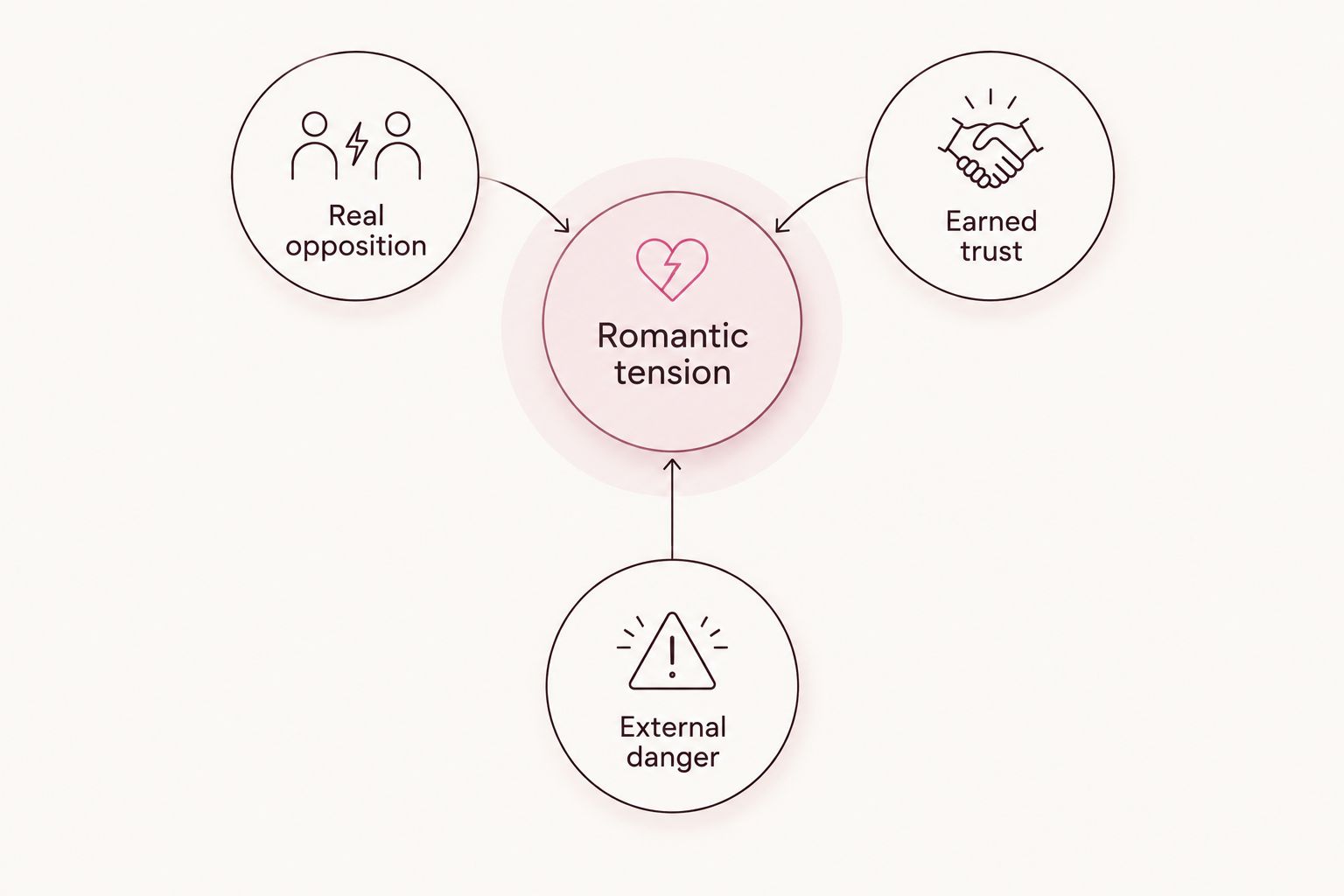
- Real opposition: The characters have conflicting goals, allegiances, or duties. Irritation alone is a weaker match.
- Earned trust: Cooperation changes the relationship through choices and consequences, not attraction alone.
- External danger: Trials, war, espionage, or persecution keep the romance attached to the wider story.
- Romantic tension: The relationship develops through resistance, vulnerability, and changing power between the characters.
- Meaningful differences: Each recommendation identifies what you lose from Fourth Wing, including dragons, academy life, or its particular pace.
These criteria separate an enemies-to-lovers fantasy from a fantasy that happens to contain a hostile first meeting. They also explain why a quieter rival romance belongs at the edge of this list rather than at the top.
The read-alikes at a glance
| Book | Best for | Standout matching quality | Key limitation |
|---|---|---|---|
| The Serpent and the Wings of Night — Carissa Broadbent | Deadly trials and dangerous attraction | A vulnerable human competes among vampires and forms a risky alliance | No dragon-rider academy |
| The Bridge Kingdom — Danielle L. Jensen | Marriage and strategic betrayal | A trained infiltrator marries the ruler of an enemy kingdom | Espionage replaces magical training |
| The Jasad Heir — Sara Hashem | Slow-burn political opposition | Concealed identity and magic make proximity to an enemy heir dangerous | More sustained political tension |
| The Hurricane Wars — Thea Guanzon | Battlefield enemies | Opposing sides of a war must confront attraction and political necessity | Denser worldbuilding and no academy structure |
| From Blood and Ash — Jennifer L. Armentrout | Forbidden attraction and hidden agendas | A restricted heroine develops a dangerous connection with her guard | The enemy dynamic is less explicit at the outset |
| Divine Rivals — Rebecca Ross | A gentler rival romance | Professional competition develops alongside a connection through letters | Rivals-to-lovers, not a strict enemy pairing |
1. The Serpent and the Wings of Night: best for deadly trials
Carissa Broadbent's The Serpent and the Wings of Night follows Oraya, a human raised by a vampire king, into a lethal competition. Her alliance with the vampire Raihn makes survival inseparable from the question of whom she can trust.
This is the closest match if Fourth Wing worked for you because physical vulnerability sharpened every encounter. Oraya cannot treat attraction as a separate, safe part of her life. The competition keeps the relationship under pressure.
The Serpent and the Wings of Night pros:
- The deadly contest gives cooperation an immediate purpose.
- Human-vampire differences create a concrete imbalance of power.
- Attraction develops alongside uncertainty about loyalty and survival.
The Serpent and the Wings of Night cons:
- You get vampires and a tournament, not dragons and rider training.
- The gothic atmosphere differs from Fourth Wing's military-academy setting.
Best for: Readers who want a dangerous alliance inside a survival story.
Content note: Graphic violence and explicit sexual content.
Verdict: Buy into this match first if trials and risky trust were your favorite combination.
2. The Bridge Kingdom: best for strategic betrayal
Danielle L. Jensen's The Bridge Kingdom follows Lara, a trained infiltrator sent to marry Aren, the ruler of a kingdom she has been taught to regard as an enemy. The marriage creates access. It also puts her beliefs about that enemy under pressure.
The matching quality is conflicting allegiance, not a shared fantasy label. Lara has a mission that makes intimacy dangerous; learning more about Aren does not erase the consequences of that mission. Choose this when you want the romance to collide with decisions about loyalty.
The Bridge Kingdom pros:
- The enemy relationship has a clear political basis.
- Forced proximity comes from marriage rather than a classroom assignment.
- Espionage makes withheld information central to the romantic tension.
The Bridge Kingdom cons:
- Magical abilities and creature bonds are not the main attraction.
- The central structure is infiltration and statecraft, not academy survival.
Best for: Readers who want a capable heroine divided between her assignment and her growing attachment.
Content note: Violence and explicit sexual content.
Verdict: Buy into The Bridge Kingdom if betrayal matters more to you than dragons.
3. The Jasad Heir: best for a slower political burn
Sara Hashem's The Jasad Heir centers on Sylvia, the surviving heir of a destroyed kingdom who conceals her identity and magic. Her involvement with Arin, the heir of an enemy kingdom, makes concealment harder and trust more costly.
The attraction matters because discovery has consequences. Sylvia cannot simply explain herself and clear up a misunderstanding. This fits readers drawn to Fourth Wing's dangerous secrets, but who want a romance that spends longer inside suspicion and political opposition.
The Jasad Heir pros:
- Concealed magic makes the heroine's vulnerability specific.
- The opposing kingdoms give distrust a history beyond personal friction.
- The slow burn leaves room for resistance and gradual reassessment.
The Jasad Heir cons:
- Political context asks for more attention than a direct survival setup.
- Readers seeking quick romantic payoff should choose a different match.
Best for: Readers who want concealed identity, an enemy heir, and prolonged tension.
Content note: Violence and trauma connected to persecution and war.
Verdict: Buy into The Jasad Heir for the slow burn; skip it if immediate romantic momentum is essential.
4. The Hurricane Wars: best for battlefield enemies
Thea Guanzon's The Hurricane Wars places Talasyn and Alaric on opposing sides of a war. Their light and shadow magic, enemy allegiances, and political circumstances keep the attraction tied to a conflict larger than either character.
This is the strongest choice here when you want enemies to mean enemies. The opposition begins with war, not workplace competition or an abrasive introduction. The difference from Fourth Wing is scale: the story moves through military and political conflict rather than an academy's daily trials.
The Hurricane Wars pros:
- Battlefield opposition gives the hostility an explicit foundation.
- Contrasting magic connects the characters through the fantasy premise.
- Political necessity creates pressure that attraction cannot resolve alone.
The Hurricane Wars cons:
- Worldbuilding and political background demand attention early on.
- It does not reproduce the rhythm of training, tests, and rider friendships.
Best for: Readers who prioritize opposing armies and reluctant proximity over academy life.
Content note: War violence and explicit sexual content.
Verdict: Buy into The Hurricane Wars if genuine enemy allegiance is your non-negotiable.
5. From Blood and Ash: best for forbidden attraction
Jennifer L. Armentrout's From Blood and Ash follows Poppy, a Maiden whose role restricts her contact with others and her control over her own life. Her connection with Hawke, a guard, challenges those restrictions while secrets complicate the relationship.
The close match is a heroine questioning the rules around her while attraction makes obedience harder. The important difference is timing. This does not introduce its central relationship as a straightforward pairing of openly declared enemies, so choose it for forbidden desire and hidden agendas rather than immediate enemy banter.
From Blood and Ash pros:
- Restrictions give the romance a clear forbidden element.
- Poppy's growing independence connects personal desire to wider conflict.
- Withheld information makes trust an active question.
From Blood and Ash cons:
- The enemy dimension is not as clear at the beginning as in The Hurricane Wars.
- It replaces academy competition with religious and social restrictions.
Best for: Readers who want sensual romantic fantasy about a heroine challenging her assigned role.
Content note: Explicit sexual content, violence, and abuse.
Verdict: Buy into From Blood and Ash for forbidden attraction; skip it for a strict enemies-from-the-start requirement.
6. Divine Rivals: best for a gentler rival romance
Rebecca Ross's Divine Rivals follows Iris and Roman, competing young journalists whose lives become connected through magical correspondence. A war between gods gives their personal relationship a wider and more dangerous setting.
This is the deliberate step outward. Iris and Roman are professional rivals, not enemies divided by opposing kingdoms. Pick it if what you loved was the movement from friction to emotional intimacy, and you want letters and vulnerability to carry more of that change.
Divine Rivals pros:
- Professional rivalry gives their early friction a recognizable cause.
- Letters make emotional intimacy central to the romantic development.
- The war setting keeps the relationship attached to external danger.
Divine Rivals cons:
- It does not satisfy a strict enemies-to-lovers requirement.
- Its romantic intensity differs from Fourth Wing's more sexually explicit approach.
Best for: Readers who want a softer romantic register without removing danger from the story.
Content note: War violence and grief.
Verdict: Buy into Divine Rivals for rivals-to-lovers; skip it if genuine enemy allegiance is essential.
How this ranking works
This 2026 ranking puts the closest narrative match first, then moves toward more specific preferences. The Serpent and the Wings of Night combines dangerous competition with uncertain trust. The Bridge Kingdom shifts that pressure into marriage and espionage. The final recommendation intentionally relaxes the enemy requirement.
The ranking compares the books' premises and relationship structures. It is not a claim that every reader will prefer the same book, or that every recommendation repeats Fourth Wing's full mix of dragons, military training, friendship, and romance.
Which book should you choose?
Start with The Serpent and the Wings of Night if you cannot decide. It preserves the combination of survival pressure and dangerous attraction that makes this particular search different from a general romantasy list.
For a 2026 reading plan built around one priority, choose The Bridge Kingdom for divided loyalties, The Jasad Heir for the slow burn, or The Hurricane Wars for explicit wartime opposition. Choose From Blood and Ash for forbidden attraction. Choose Divine Rivals only if rivals count as close enough.
GetSimilarBooks gives you five hand-curated recommendations as a preview. A personalized list of 20–30 titles is available through email if you want more options beyond these six books.
Find your next read
Start with a book you enjoyed. Get five curated suggestions, then request a personalized list through email.
FAQ
What’s the closest book to Fourth Wing with enemies-to-lovers romance?
The Serpent and the Wings of Night is the closest match on this list for deadly trials and dangerous attraction. Oraya’s human vulnerability and her alliance with a vampire connect survival to uncertain trust, although the book replaces dragons with vampires.
Which recommendation has the clearest actual enemies-to-lovers setup?
The Hurricane Wars has the clearest battlefield-enemy setup on this list. Talasyn and Alaric begin on opposing sides of a war, so the conflict is more substantial than teasing or personal irritation.
What’s the best slow-burn option after Fourth Wing?
The Jasad Heir is the best match here for a slower political burn. Sylvia’s concealed identity and magic make her involvement with an enemy heir dangerous before romance can become straightforward.
Is The Bridge Kingdom like Fourth Wing even without a dragon academy?
The Bridge Kingdom matches Fourth Wing through conflicting loyalties and attraction that threatens a mission. Choose it for espionage, marriage, and betrayal rather than creature bonds or magical training.
Is From Blood and Ash enemies-to-lovers from the start?
From Blood and Ash does not begin with a straightforward, openly declared enemy pairing. Its stronger initial matches are forbidden attraction, a restricted heroine, and hidden agendas.
Does Divine Rivals count as enemies-to-lovers?
Divine Rivals is better described as rivals-to-lovers. Iris and Roman compete professionally, so it suits readers willing to trade enemy allegiance for letters, emotional intimacy, and a wartime setting.
Are these recommendations suitable if I want less explicit romance?
Divine Rivals is the better choice on this list if you want a less sexually explicit romantic register. It still includes war violence and grief, so gentler romance does not mean an entirely light story.
How do I get more personalized recommendations after Fourth Wing?
GetSimilarBooks lets you enter a title you enjoyed and receive five hand-curated read-alike suggestions. You can also request an email-gated personalized list of 20–30 titles.
One last thing
For your 2026 reading list, write down the scene type you want repeated, not just the trope. A dangerous alliance points toward The Serpent and the Wings of Night. An intimate relationship compromised by a mission points toward The Bridge Kingdom.
That distinction helps you avoid a familiar disappointment: finding the right genre but the wrong reading experience. Tell GetSimilarBooks what held your attention, whether it was reluctant trust, concealed identity, or the pressure of survival.
Related guides
- Books like Fourth Wing with dragons and rider bonds
- Books like Fourth Wing: five picks, closest match first
- Books like ACOTAR: five picks, closest match first
Books like Fourth Wing with dragons and rider bonds

Best overall: Fireborne by Rosaria Munda. Best for a dragon bond inside an outsider-at-school story: To Shape a Dragon’s Breath by Moniquill Blackgoose. Best for classic telepathic riders: Dragonflight by Anne McCaffrey. These books like Fourth Wing with dragons match different parts of Rebecca Yarros’s novel: rider training, a dragon choosing its human, or a bond that changes both lives.
- Fireborne leads these books like Fourth Wing with dragons for competitive rider training and divided loyalties.
- To Shape a Dragon’s Breath combines a chosen dragon bond with an outsider’s fight against an oppressive school.
- Dragonflight is the strongest pick here for telepathic dragons and an established dragonrider society.
- Eragon favors dragon companionship and adventure; Dragonfall puts romance between a human and a dragon.
- GetSimilarBooks suits readers who want dragon fantasy recommendations matched to a favorite title.
Why this matters
A dragon on the cover does not guarantee a Fourth Wing read-alike. You might want the pressure of rider selection, the private conversations with a dragon, or the romance under military threat. Those are different requests.
GetSimilarBooks is best for readers who want dragon fantasy recommendations anchored to a book they already enjoyed. Enter a favorite title through GetSimilarBooks for five hand-curated suggestions. An email-gated personalized list expands that to 20–30 titles.
This 2026 shortlist puts the closest training-and-bond matches first, then moves toward classic dragonriders, adventure, and human-dragon romance. It does not rank books by how often their marketing uses the word romantasy.
What makes the best Fourth Wing dragon read-alike?
- A consequential bond: The dragon-human connection changes the story. The dragon is not just transport or battlefield scenery.
- Rider training: Learning to ride, competing for status, and earning trust recreate part of Fourth Wing’s pressure.
- Dragon personality: An independent dragon gives you something a magical weapon cannot: another character with its own priorities.
- Divided loyalties: Political conflict makes a bond more interesting when duty and personal allegiance disagree.
- Romance balance: A romantic subplot is not the same as a romance-led novel. Choose according to what you actually want next.
No book below duplicates all of Fourth Wing’s ingredients. The useful question is which ingredient you refuse to lose.
Books like Fourth Wing with dragons at a glance
| Book | Best for | Standout match | Key limitation |
|---|---|---|---|
| Fireborne — Rosaria Munda | Competitive dragonrider training | Rider rankings, political pressure, and divided loyalties | Romance is less central; dragon conversations are not the main attraction |
| To Shape a Dragon’s Breath — Moniquill Blackgoose | An outsider and her chosen dragon | A young woman enters formal dragon education without accepting its worldview | School politics and colonial conflict matter more than military spectacle |
| Dragonflight — Anne McCaffrey | Telepathic dragonrider bonds | A lifelong mental connection inside an established rider society | Older sexual politics and coercive content need consideration |
| Eragon — Christopher Paolini | Dragon companionship and adventure | A developing partnership between a young rider and an intelligent dragon | Not a romance-led academy story |
| Dragonfall — L. R. Lam | Human-dragon romantic tension | A bond entangles a thief and a dragon who takes human form | Not a conventional dragonriding-school novel |
1. Fireborne: best for competitive dragonrider training
Rosaria Munda’s Fireborne is the closest overall match when you want young dragonriders competing inside a politically charged system. Annie and Lee train in a society reshaped by revolution, where their backgrounds complicate what advancement means. Success carries public consequences, not just personal pride.
The specific Fourth Wing connection is the pressure around becoming an elite rider. Training, rankings, friendships, and loyalty all pull against one another. The story asks who deserves authority and what happens when talented young people become instruments of the state.
The meaningful difference is emphasis. Fireborne spends more attention on political legitimacy and competing perspectives than on a central romantic relationship. Do not choose it primarily for a Tairn-style stream of private dragon commentary.
Fireborne pros:
- Competitive rider training gives the story a clear point of contact with Basgiath.
- Annie and Lee’s perspectives make personal loyalties part of the political conflict.
- Dragons belong to the structure of power rather than appearing as decorative creatures.
Fireborne cons:
- Romance is not the book’s main organizing force.
- Readers seeking constant human-dragon banter should choose a bond-focused alternative.
Best for: Readers whose favorite Fourth Wing scenes involve training, rankings, and loyalty under pressure.
Verdict: Buy Fireborne for the rider system and political tension; skip it if an intense central romance is essential. It is the default recommendation in this 2026 list, not a promise of the same reading experience.
2. To Shape a Dragon’s Breath: best for an outsider’s dragon bond
Moniquill Blackgoose’s To Shape a Dragon’s Breath follows Anequs, an Indigenous young woman whose connection with a newly hatched dragon brings her into a formal dragon academy. The institution expects her to learn its rules. Anequs has reasons to question the assumptions behind them.
This is a strong match for the reader who liked watching Violet enter a system that does not make room for her on her own terms. The dragon bond creates both opportunity and exposure. Learning is inseparable from deciding whose knowledge counts.
The difference is the kind of pressure. To Shape a Dragon’s Breath centers colonial power, cultural conflict, and education rather than recreating Basgiath’s lethal military selection. Its school story has its own purpose; treating it as a softer Fourth Wing misses that purpose.
To Shape a Dragon’s Breath pros:
- The dragon’s choice creates a consequential relationship, not a convenient assignment.
- An outsider’s perspective makes the academy’s rules open to challenge.
- Cultural conflict gives the training story stakes beyond individual achievement.
To Shape a Dragon’s Breath cons:
- It is not built around the same military danger as Fourth Wing.
- Readers seeking a romance-first plot will encounter more attention to education and society.
Best for: Readers who want a young woman, a chosen dragon bond, and an institution she refuses to accept uncritically.
Verdict: Buy To Shape a Dragon’s Breath for the outsider-and-dragon connection; skip it if combat training is your main requirement. Expect colonial oppression and racism as substantive themes, not background decoration.
3. Dragonflight: best for classic telepathic rider bonds
Anne McCaffrey’s Dragonflight introduces Lessa and the dragonrider world of Pern. Riders and dragons share a mental connection, and their society exists around a dangerous responsibility: protecting their world from Thread. The partnership is central to how that society functions.
For a Fourth Wing reader, the strongest match is the bond itself. A dragon is a thinking partner whose relationship with a human changes that human’s place in the world. If the private connection mattered more to you than the college setting, move Dragonflight higher on your personal list.
The difference is substantial. This is not a contemporary romantasy built around academy trials and a modern romance arc. Its treatment of sex, consent, and gender also requires a content check; sexual coercion is part of that consideration.
Dragonflight pros:
- Telepathic communication makes the rider-dragon relationship explicit.
- Dragonriders have an established social role and a shared duty.
- The world gives dragons a purpose beyond supporting a protagonist’s romance.
Dragonflight cons:
- Sexual coercion and older gender assumptions can make the reading experience uncomfortable.
- Its style and relationship dynamics differ sharply from contemporary romantasy.
Best for: Readers who want the mental bond and dragonrider society more than a familiar academy romance.
Verdict: Buy Dragonflight for telepathic partnership; skip it if its consent-related content is a firm boundary. In a 2026 reading queue, recommend it for its particular strengths rather than assuming a classic automatically suits every reader.
4. Eragon: best for growing alongside a dragon
Christopher Paolini’s Eragon begins with a 15-year-old farm boy and the discovery that changes his life. His relationship with Saphira develops into a partnership involving communication, learning, and shared danger. The dragon is a character, not merely a mount.
The Fourth Wing match is the experience of becoming a rider before you fully understand what that identity demands. Eragon must learn while larger conflicts close around him. Saphira’s presence makes that learning a relationship rather than a solitary training montage.
The difference is genre balance. Eragon is a coming-of-age fantasy adventure, not a romance-led story about military cadets. Its journey moves through a wider world rather than remaining focused on an academy hierarchy.
Eragon pros:
- Saphira has a distinct presence within the central partnership.
- Rider training grows naturally from the relationship and the adventure.
- The story makes room for learning, travel, and a widening political conflict.
Eragon cons:
- Romance does not drive the plot in the way it drives Fourth Wing.
- Readers seeking a concentrated academy setting will get a broader journey instead.
Best for: Readers who want a dragon companion, developing magical skills, and an adventure beyond school walls.
Verdict: Buy Eragon for the partnership with Saphira; skip it if adult romantic tension is nonnegotiable. It is a useful change of pace when you want to keep the dragon bond but leave the romantasy structure behind.
5. Dragonfall: best for romance involving the dragon
L. R. Lam’s Dragonfall brings together Arc, a thief, and Everen, a dragon who takes human form. Their connection places attraction alongside conflicting intentions. The dragon is directly involved in the romantic tension rather than standing beside a romance between human riders.
That makes Dragonfall a deliberate outward step from Fourth Wing. It answers a different desire: keep dragons and dangerous intimacy, but change the relationship at the center. Choose it because you want that change, not because you expect another rider college.
The limitation is clear. A human-dragon entanglement does not reproduce the experience of a rider learning to fly with a separate dragon partner. Readers looking for training formations, rider rankings, or academy friendships should start earlier in this list.
Dragonfall pros:
- The dragon participates directly in the central romantic tension.
- Conflicting intentions give the relationship a source of danger beyond attraction.
- The human-form premise offers a distinct alternative to conventional rider stories.
Dragonfall cons:
- It does not provide the dragonriding-school structure of Fourth Wing.
- Its bond works differently from a straightforward rider-and-mount partnership.
Best for: Readers willing to trade the academy for romantic tension between a human and a dragon.
Verdict: Buy Dragonfall for the changed romantic premise; skip it if you specifically want conventional dragonriders. This is the interesting risk at the end of the list, not the safest first match.
How this shortlist is ranked
The order favors overlap with Fourth Wing’s combined rider-training and bond premise. Fireborne leads on training and political pressure. To Shape a Dragon’s Breath follows for the outsider’s academy experience and chosen dragon connection.
Dragonflight and Eragon move away from the academy-romance combination while keeping a direct rider partnership. Dragonfall comes last because it changes the shape of that partnership most sharply. These are story-based comparisons, not claims that every book was personally tested or read by a named curator.
Which dragon book should you choose?
For your 2026 reading list, name the experience you want before choosing a title:
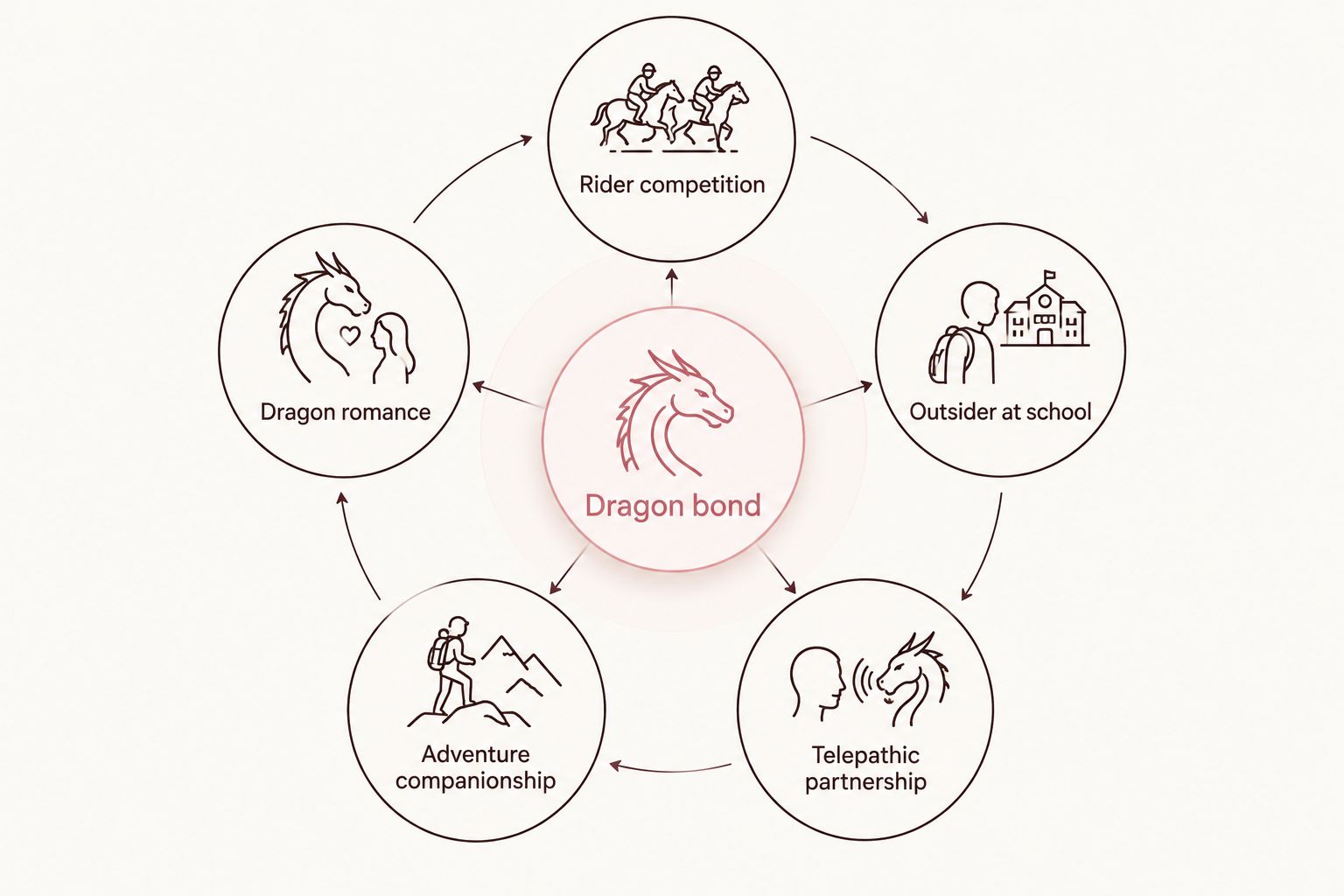
- Rider competition: Choose Fireborne for training, status, and political loyalty.
- Outsider at school: Choose To Shape a Dragon’s Breath for a bond that challenges institutional expectations.
- Telepathic partnership: Choose Dragonflight for a society built around mentally connected dragons and riders.
- Adventure companionship: Choose Eragon for learning and traveling with Saphira.
- Dragon romance: Choose Dragonfall for attraction involving the dragon directly.
If you are undecided, start with Fireborne. If your favorite Fourth Wing moments were conversations with the dragons rather than rider competition, choose Dragonflight or Eragon instead, after checking their differences above.
GetSimilarBooks gives you five hand-curated recommendations from a title you enjoyed. The personalized 20–30-title list requires an email. Use that route when your next read needs a narrower match than this dragon-focused shortlist.
Find your next dragon read
Start with five hand-curated suggestions, then request an email-gated personalized list of 20–30 titles.
FAQ
What are the best books like Fourth Wing with dragons?
Fireborne is the closest overall pick here for competitive dragonrider training and political pressure. To Shape a Dragon’s Breath is a stronger choice for an outsider’s chosen dragon bond, while Dragonflight emphasizes telepathic rider partnerships.
Which book has a dragon bond most like Violet’s?
Dragonflight and Eragon are the strongest choices here for direct mental communication between a rider and a dragon. Their settings and romance balance differ from Fourth Wing, so the bond is the match rather than the whole plot.
Is Fireborne a romance like Fourth Wing?
Fireborne is not as romance-led as Fourth Wing. Choose it for rider competition, relationships under political pressure, and divided loyalties rather than expecting the romance to carry the story.
Which recommendation has a dragon academy?
To Shape a Dragon’s Breath places its protagonist in a formal dragon academy. The school conflict centers colonial power and cultural expectations rather than duplicating Basgiath’s military selection.
Is Eragon a good choice for an adult Fourth Wing reader?
Eragon fits an adult reader who wants dragon companionship and coming-of-age adventure. It does not fit the same need as an adult romance-led novel, so choose it for Saphira and the developing rider partnership.
Does Dragonfall have conventional dragonriders?
Dragonfall is not a conventional dragonrider-school recommendation. Its central connection involves a human thief and a dragon who takes human form, making it a better match for dragon-related romance than rider training.
Should I read Iron Flame instead of a Fourth Wing read-alike?
Read Iron Flame if you want to continue Violet’s story rather than begin a different one. This shortlist serves readers who want another author’s take on dragons, bonds, and training.
How do I get a personalized dragon-book list in 2026?
Enter a title you enjoyed in GetSimilarBooks to receive five hand-curated read-alike suggestions. An email-gated personalized list offers 20–30 titles when you want a longer selection.
One last thing
Separate a dragon choosing a human from a human choosing a dragon story. The first is a plot event. The second depends on whether you want companionship, competition, or romance.
Your next book does not need every Fourth Wing ingredient. It needs the one you would miss most. Start with Fireborne unless the bond itself outranks everything else.
Related guides
Books like ACOTAR: five picks, closest match first

Best overall: A Court of Blood and Bindings. Best for deadly trials: The Serpent and the Wings of Night. Best for court politics: The Cruel Prince. These five books like ACOTAR move from the closest fae-romance match toward more distinct alternatives, so you can choose your next 2026 read by what you actually loved.
- A Court of Blood and Bindings leads these books like ACOTAR for dangerous fae, forbidden magic, and central romance.
- The Serpent and the Wings of Night matches ACOTAR’s danger and attraction, but replaces fae courts with vampires.
- These Hollow Vows suits readers seeking rival fae courts and romantic uncertainty, with a younger narrative voice.
- The Cruel Prince prioritizes fae politics over romance; choose it for scheming, not explicit intimacy.
Why the match matters
ACOTAR means different things to different readers. Some want the fairy-tale atmosphere of A Court of Thorns and Roses. Others want the relationship development, emotional recovery, and expanded social world of A Court of Mist and Fury. Those are different requests.
A book can contain fae and still miss the part you loved. A vampire novel can feel closer because its romance develops through danger, distrust, and difficult choices. Match the reading experience, not just the creatures.
GetSimilarBooks is best for fiction readers who want title-based, hand-curated read-alike recommendations. Its five-book preview gives you a starting point; the free personalized list offers 20–30 titles and requires an email address. Start with the title that best represents your taste, rather than treating every book in a series as interchangeable.
What makes the best books like ACOTAR
These recommendations use five criteria. Each book matches a different combination, and the differences matter as much as the similarities.
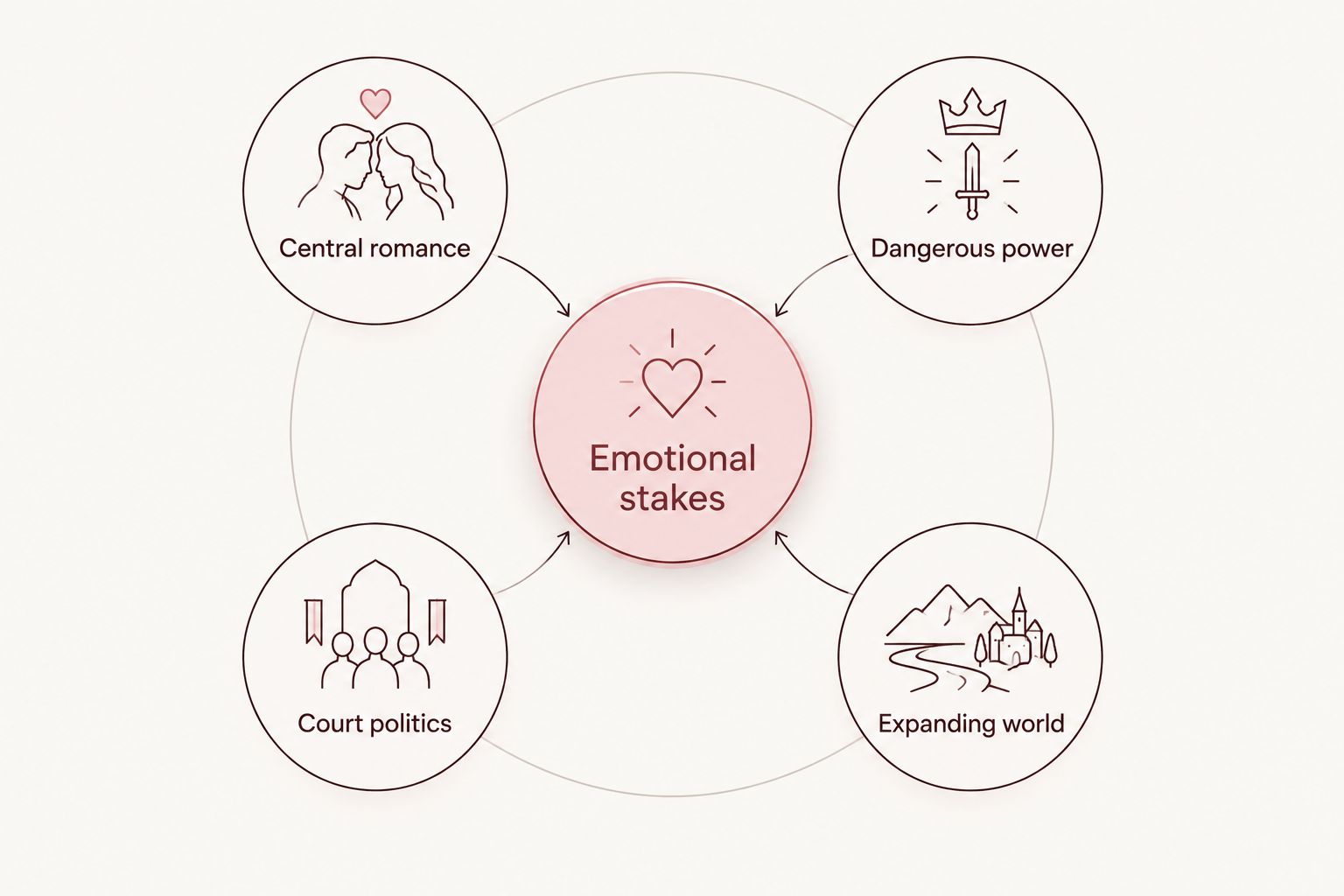
- Central romance: The relationship should shape the story, not appear as a reward after the fantasy plot ends. The Cruel Prince is the deliberate exception for readers who prefer political tension.
- Dangerous power: Unequal power, hidden motives, and uncertain loyalties create the attraction-and-threat dynamic that makes these matches useful.
- Court politics: Factions, bargains, and rules should complicate personal choices. A palace setting alone does not make a meaningful read-alike.
- Expanding world: The setting should offer more than a couple in isolation. Trials, rival courts, religious authority, or political conflict give the relationship something to push against.
- Emotional stakes: Desire should come with consequences. Decide whether you want intimacy, distrust, belonging, or the satisfaction of watching a vulnerable character gain influence.
Before choosing, name your non-negotiable. If it is adult romance, do not substitute a young-adult political fantasy just because its fae are memorable.
Books like ACOTAR at a glance: 2026 picks
The order moves from a close adult fae-romance match toward alternatives that preserve a particular part of the experience. The last pick is not a weaker book. It serves a different reader.
| Book | Best for | Standout match | Key limitation |
|---|---|---|---|
| A Court of Blood and Bindings — Lisette Marshall | Adult fae romance | Forbidden magic and a dangerous fae love interest | Does not duplicate ACOTAR's social world |
| The Serpent and the Wings of Night — Carissa Broadbent | Deadly trials | A vulnerable heroine, lethal competition, and uneasy attraction | Vampires rather than fae |
| From Blood and Ash — Jennifer L. Armentrout | Forbidden attraction | Desire constrained by duty and religious authority | More lore exposition than a direct fae-court match |
| These Hollow Vows — Lexi Ryan | Rival courts and romantic uncertainty | A human heroine caught between competing fae interests | Young-adult voice and a love triangle |
| The Cruel Prince — Holly Black | Political scheming | Cruel fae, precarious status, and struggles for influence | Romance is secondary and not explicit |
1. A Court of Blood and Bindings: best for adult fae romance
Lisette Marshall's A Court of Blood and Bindings is the closest starting point if your ACOTAR request means dangerous fae, forbidden magic, and a romance that drives the reading experience. Emelin's encounter with a feared fae figure draws her into a world where power and personal safety are inseparable.
The matching quality is the pressure between attraction and distrust. The love interest's inability to speak also changes how the characters communicate, giving their relationship a different texture from ACOTAR's verbal sparring.
The meaningful difference: This is not a replacement cast for Sarah J. Maas's series. Choose it for the central relationship and magic, rather than expecting the same friendships, court identities, or emotional arc. Familiar ingredients do not promise familiar outcomes.
A Court of Blood and Bindings pros:
- Adult romance is central rather than incidental.
- Fae power and forbidden magic create a direct thematic match.
- Communication barriers give the relationship a distinctive source of tension.
A Court of Blood and Bindings cons:
- Readers seeking ACOTAR's exact ensemble dynamic need a different expectation.
- Explicit sexual content makes it unsuitable for readers avoiding on-page intimacy.
Best for: Readers who want another adult fae romance before branching into a different fantasy setting.
Read this first if the combination matters more than any single trope. It keeps romance, magic, and a threatening fae world in the same recommendation, without asking you to trade one away.
Verdict: Buy for the closest adult fae-romance match; skip if you want romance kept off-page.
2. The Serpent and the Wings of Night: best for deadly trials
Carissa Broadbent's The Serpent and the Wings of Night follows Oraya, a human raised by a vampire ruler, into a deadly competition. Survival brings her into an uneasy alliance with Raihn, another competitor whose interests are not simply her own.
The ACOTAR connection is vulnerability inside a powerful supernatural society. Oraya must judge whom to trust while attraction complicates decisions that already carry serious consequences. The competition gives that tension a clear external structure.
The meaningful difference: Vampires replace fae, and the trials provide a more concentrated survival framework. This is a stronger match for readers who liked danger and shifting trust than for readers seeking another fae court with familiar customs.
The Serpent and the Wings of Night pros:
- The competition gives the story a clear source of urgency.
- A human heroine's precarious position creates meaningful power imbalance.
- Romance develops alongside consequential questions of loyalty.
The Serpent and the Wings of Night cons:
- Vampire society changes the atmosphere of the read-alike.
- Graphic violence and explicit sexual content require a different comfort level from gentler fantasy romance.
Best for: Readers who want romance under survival pressure, especially after enjoying fantasy trials or competitions.
Choose this over the first pick when you want the external challenge to organize the story. The question is not only whether the characters trust each other, but what that trust costs inside the competition.
Verdict: Buy for dangerous trials and uneasy attraction; skip if fae are your non-negotiable.
3. From Blood and Ash: best for forbidden attraction
Jennifer L. Armentrout's From Blood and Ash introduces Poppy, whose role as the Maiden restricts her everyday life and personal choices. Her attraction to Hawke, a guard, puts desire in conflict with the duties imposed on her.
The strongest ACOTAR match is a heroine discovering the gap between the life prescribed for her and the life she wants. Romantic tension connects to larger questions about authority, knowledge, and whom she can believe.
The meaningful difference: Religious structures and lore take the place of a straightforward fae-court premise. The story spends time explaining its world, so choose it for forbidden desire and challenges to authority rather than for an identical setting.
From Blood and Ash pros:
- Restrictions on Poppy make the forbidden relationship concrete.
- Romance and questions about institutional authority overlap.
- The heroine's developing agency gives the attraction a broader emotional purpose.
From Blood and Ash cons:
- Worldbuilding exposition interrupts the pace for readers who prefer leaner narration.
- Explicit sexual content and violence are part of the reading experience.
Best for: Readers who want a sheltered heroine questioning her assigned role while pursuing an adult romantic connection.
Pick this when your favorite ACOTAR element was personal awakening. It is less useful when your request is specifically for fae bargains, court etiquette, or a compact fantasy world.
Verdict: Buy for forbidden attraction and a heroine challenging authority; skip if heavy lore frustrates you.
4. These Hollow Vows: best for rival courts and romantic uncertainty
Lexi Ryan's These Hollow Vows follows Brie, a human whose effort to rescue her sister draws her into fae territory. Competing interests and competing romantic attachments make trust difficult to separate from necessity.
This is a direct setting match: human vulnerability, fae bargains, and rival courts all matter. Its two fae courts also give readers a concrete political divide, rather than a generic enchanted backdrop.
The meaningful difference: The young-adult voice and love triangle change the romantic experience. If your favorite part of ACOTAR is sustained adult intimacy within an established relationship, this recommendation answers a different need.
These Hollow Vows pros:
- Fae bargains and rival courts make the comparison specific.
- Brie's rescue goal gives her a reason to enter an unfamiliar world.
- Romantic uncertainty connects naturally to competing loyalties.
These Hollow Vows cons:
- The love triangle is a poor fit for readers who dislike divided romantic attention.
- The younger narrative voice differs from adult romantasy.
Best for: Readers who want fae-court intrigue with romantic uncertainty and a human outsider's perspective.
Move this higher on your personal list if courts and bargains matter more than explicitness. Move it lower if you want one central couple to carry the emotional focus without competing romantic possibilities.
Verdict: Buy for rival fae courts and divided loyalties; skip if love triangles are a deal-breaker.
5. The Cruel Prince: best for political scheming
Holly Black's The Cruel Prince follows Jude, a human raised in Faerie who wants influence in a society that treats her humanity as a weakness. Her conflict with Cardan belongs to a wider struggle over status, ambition, and power.
The match is the danger of living among fae, not the amount of romance. Jude responds to vulnerability by pursuing leverage within the court. Political decisions carry the story, while romantic tension complicates them.
The meaningful difference: This is young-adult political fantasy with a romantic thread, not an adult romance-first substitute for ACOTAR. Expect hostility, maneuvering, and a heroine determined to secure a place for herself.
The Cruel Prince pros:
- Fae cruelty makes the outsider's position genuinely precarious.
- Court maneuvering gives ambition and status sustained attention.
- Jude's pursuit of power offers a different kind of heroine-driven satisfaction.
The Cruel Prince cons:
- Readers seeking frequent romantic scenes will find a different balance.
- Bullying and violence shape the atmosphere; the romance is not explicit.
Best for: Readers who want fae politics first and are willing to let romance remain secondary.
This is the interesting risk at the end of the list. Choose it because you want to change the balance of your next read, not because a shared fae label guarantees the same experience.
Verdict: Buy for scheming and a power-seeking heroine; skip if adult romance is the main requirement.
How these books were ranked
This 2026 reading order prioritizes matching qualities, not sales, ratings, or a claim of firsthand testing. Adult fae romance comes first, followed by survival-driven romance, forbidden attraction, rival-court uncertainty, and politics-led fantasy.
Every recommendation has a cost in fit. You exchange fae for vampires, adult narration for a younger voice, or romance-first pacing for political maneuvering. The strongest recommendation names that exchange before you commit.
Which books like ACOTAR should you choose in 2026?
Start with A Court of Blood and Bindings if you cannot narrow your request beyond adult fae romance. It preserves the most direct combination of setting, magical danger, and central attraction.
Choose The Serpent and the Wings of Night if you want a clearer survival challenge. Choose The Cruel Prince if you would happily give up explicit romance for more scheming. Those are different choices, not competing promises of the same book.
GetSimilarBooks offers five hand-curated suggestions after you enter a title you enjoyed. The personalized list expands that to 20–30 titles through an email-gated request. The preview is useful for a quick next-book decision; the longer list requires sharing your email address.
Find your next read
Enter a title for five hand-curated suggestions, then request a free personalized list of 20–30 titles.
FAQ
What’s the closest book to ACOTAR on this 2026 list?
A Court of Blood and Bindings is the closest match here for adult fae romance, forbidden magic, and a dangerous love interest. Choose it for that combination, not for an identical cast or emotional arc.
What should I read after ACOTAR if I liked the trials?
Read The Serpent and the Wings of Night for romance shaped by a deadly competition. Its vampire setting differs from ACOTAR, but vulnerability, distrust, and survival make the comparison useful.
Is The Cruel Prince a romance like ACOTAR?
The Cruel Prince is primarily a young-adult political fantasy with a romantic thread. It suits readers seeking fae scheming more than readers seeking adult, explicit romance.
Which book like ACOTAR has rival fae courts?
These Hollow Vows features rival fae courts and a human heroine caught between competing interests. Its love triangle and young-adult voice are the main differences to consider.
Are all these ACOTAR read-alikes explicit?
No, these recommendations do not share the same level of sexual content. A Court of Blood and Bindings, The Serpent and the Wings of Night, and From Blood and Ash contain explicit sexual content; The Cruel Prince is not an explicit romance.
Which recommendation suits readers who dislike love triangles?
Start with A Court of Blood and Bindings rather than These Hollow Vows. These Hollow Vows makes romantic uncertainty between competing interests part of its appeal.
How does GetSimilarBooks help me find my next book?
GetSimilarBooks lets you enter a title you enjoyed and receive five hand-curated read-alike suggestions. You can also request a free personalized list of 20–30 titles by providing your email address.
One last thing
The most useful starting title is not always the first book in the series. If A Court of Mist and Fury is the book you want to recreate, use that title when requesting recommendations from GetSimilarBooks. It describes your preference more precisely than ACOTAR as a series label.
Then name the difference you will accept. Vampires instead of fae? Less romance and more politics? A love triangle instead of a single romantic focus? A clear trade-off makes the next-book choice easier than another list of shared tropes.
Related guides
Books like Verity: five unsettling reads, ranked by fit

Best overall: Rebecca by Daphne du Maurier. Best for fast-moving domestic deception: The Wife Upstairs by Rachel Hawkins. Best for a psychological puzzle: The Silent Patient by Alex Michaelides. This 2026 guide ranks five books like Verity by the qualities that matter: attraction tangled with suspicion, secrets inside a household, and uncertainty about whose account deserves your trust.
- Rebecca is the strongest overall match for Verity’s unsettling household, romantic insecurity, and competing accounts of another woman.
- The Wife Upstairs suits readers seeking domestic suspense with attraction, social ambition, and concealed histories.
- The Last Mrs Parrish emphasizes manipulation; Behind Closed Doors emphasizes danger rather than romantic uncertainty.
- The Silent Patient suits readers who preferred Verity’s interpretive puzzle to its romance.
For a list shaped around your favorite part of Verity, GetSimilarBooks gives you five hand-curated read-alike suggestions. You can also request a free personalized list of 20–30 titles by email.
Why this matters
Verity combines several reading pleasures that do not always travel together. There is the uneasy attraction, the intimidating household, the disturbing written account, and the question of what a reader should believe. A thriller can match one of those qualities and miss the others completely.
The useful question is not simply whether another book contains a twist. It is whether you want to feel seduced, trapped, suspicious, or forced to reconsider an explanation. These five recommendations move from the closest emotional match toward more specialized alternatives. None requires revealing a major twist to explain the connection.
What makes the best books like Verity?
For this 2026 shortlist, the matching criteria are specific:
- Household unease: A home should feel like a place where access, knowledge, or control is unevenly distributed.
- Romantic suspicion: Attraction should complicate judgment, not sit beside the suspense as an unrelated subplot.
- Competing accounts: Different versions of a person or relationship should make belief an active part of reading.
- Narrative momentum: The book should give you reasons to keep investigating, whether through urgent scenes or accumulating discomfort.
- Meaningful differences: The recommendation should explain what changes, especially pace, sexual explicitness, and the kind of danger involved.
A shared genre label is not enough. A domestic thriller about a marriage can still feel very different from Verity if the danger is obvious and the romance offers no uncertainty. Likewise, a slower gothic novel can be a close match if its household and emotional tensions create the right unease.

Books like Verity at a glance
| Rank and book | Best for | Standout matching quality | Key limitation |
|---|---|---|---|
| 1. Rebecca — Daphne du Maurier | An unsettling household and romantic insecurity | Another woman’s presence shapes a marriage and a home | Slower gothic suspense; not an explicit romantic thriller |
| 2. The Wife Upstairs — Rachel Hawkins | Fast-moving domestic deception | Attraction, ambition, and concealed histories collide | More focused on reinvention than a disturbing manuscript |
| 3. The Last Mrs Parrish — Liv Constantine | Calculated manipulation | A desirable marriage becomes a contest over appearances | Social ambition takes more space than gothic atmosphere |
| 4. Behind Closed Doors — B. A. Paris | Claustrophobic relationship danger | A polished marriage conceals private control | Less romantic ambiguity; more sustained threat |
| 5. The Silent Patient — Alex Michaelides | Interpreting an elusive account | A psychotherapist tries to understand a woman who will not speak | The central pursuit is clinical, not romantic |
1. Rebecca: best Verity read-alike for household unease
Daphne du Maurier’s Rebecca follows an unnamed young woman who marries Maxim de Winter and enters Manderley, his country estate. His first wife, Rebecca, remains a powerful presence in the house and in other people’s accounts. The new wife has access to the rooms but not to an explanation she can comfortably trust.
That imbalance makes Rebecca the strongest overall recommendation here. Like Verity, it places romantic insecurity inside a household shaped by another woman. The tension comes from wondering whether the relationship offers belonging or whether the narrator has misunderstood the situation she entered.
Rebecca pros:
- The home itself carries emotional pressure rather than functioning as scenery.
- Accounts of another woman shape the narrator’s understanding of her marriage.
- Attraction and insecurity remain connected to the suspense.
Rebecca cons:
- The pacing is more gradual than Verity’s immediate shocks.
- The sexual tension is less explicit, and the gothic style requires more patience.
The specific match is not a manuscript, an identical plot, or a promise of the same ending. It is the experience of entering an intimate arrangement whose history belongs to everyone except you. That makes Rebecca especially useful if you finished Verity still thinking about the household and the competing images of its central woman.
Best for: Readers who want romantic unease, a charged setting, and uncertainty about another woman’s story.
Verdict: Read Rebecca first. Choose it for the closest emotional architecture, not for an identical pace.
2. The Wife Upstairs: best for fast-moving domestic deception
Rachel Hawkins’s The Wife Upstairs follows Jane, a dog walker in a wealthy Alabama neighborhood, as she becomes involved with widower Eddie Rochester. His late wife’s history complicates the appeal of the life Jane wants. The novel reworks elements of Jane Eyre within a contemporary domestic thriller.
The Verity connection is the mixture of attraction and incomplete information. Jane’s interest in Eddie is entangled with ambition, while the apparent promise of his household gives you something to distrust. You are watching a relationship develop without treating its surface explanation as settled.
The Wife Upstairs pros:
- Romantic interest creates access to the central mystery.
- Concealed histories keep the household from feeling secure.
- Social ambition gives the protagonist motives beyond simple curiosity.
The Wife Upstairs cons:
- The emphasis falls on reinvention and deception rather than disturbing written testimony.
- The contemporary social setting creates a different atmosphere from Verity’s enclosed household.
Choose this over Rebecca if you want the next read to feel more like a contemporary thriller. The attraction remains part of the problem, but the novel spends more attention on who wants a particular life and what they conceal to obtain it.
That distinction matters. Wanting access to someone’s world is not the same as knowing the person who controls it. The Wife Upstairs makes that gap central to its appeal.
Best for: Readers who want attraction, domestic secrets, and a more immediate thriller rhythm.
Verdict: Read The Wife Upstairs if Rebecca sounds too slow. It is the stronger alternative for contemporary relationship suspense.
3. The Last Mrs Parrish: best for calculated manipulation
Liv Constantine’s The Last Mrs Parrish centers on Amber Patterson, who envies Daphne Parrish’s affluent life and sets out to get close to her family. The attraction is not only to a person. It is to a marriage, a social position, and an image of having everything.
This is a good Verity follow-up when manipulation mattered more to you than atmosphere. The connection lies in the gap between a relationship’s outward presentation and the motives operating inside it. The novel asks you to examine the picture of a desirable household rather than accept it.
The Last Mrs Parrish pros:
- Deliberate manipulation drives the story rather than appearing only at the end.
- Envy and social ambition give the household an outsider’s perspective.
- The contrast between public appearance and private experience supports the suspense.
The Last Mrs Parrish cons:
- Status and wealth occupy more of the story than in a purely gothic read-alike.
- It is not the closest choice for readers seeking a manuscript-centered puzzle or intimate romantic tension.
The meaningful difference is the direction of desire. Rather than simply becoming attracted to a mysterious partner, Amber wants entry into another woman’s life. That makes the reading experience more strategic: you are tracking an effort to gain position, not only an effort to uncover truth.
Content note: the novel includes abuse and sexual violence. Those elements belong to its relationship dynamics, so choose another recommendation if that is not what you want next.
Best for: Readers who liked Verity’s manipulation, distrust, and competing impressions of a marriage.
Verdict: Read The Last Mrs Parrish for the contest over appearances. Skip it if romantic chemistry is your main requirement.
4. Behind Closed Doors: best for claustrophobic relationship danger
B. A. Paris’s Behind Closed Doors presents Jack and Grace Angel as a couple whose marriage looks enviable from outside. The suspense depends on the difference between that appearance and Grace’s private circumstances. The household becomes a place of control rather than reassurance.
It matches Verity’s domestic discomfort, but not the same kind of romantic uncertainty. The important question is less whether attraction has distorted your judgment and more how a threatening relationship operates beyond other people’s view. That change makes the book a narrower recommendation, not a weaker one.
Behind Closed Doors pros:
- The household is central to the danger.
- The contrast between public charm and private control is clear and sustained.
- The relationship creates pressure without requiring an elaborate external mystery.
Behind Closed Doors cons:
- The emphasis is sustained threat rather than seductive ambiguity.
- Coercive control and abuse make it a poor choice for a lighter follow-up.
Choose this book if the isolation in Verity unsettled you most. Do not choose it because you want a romance with a suspicious edge. Its strength is the experience of a private reality that outsiders do not recognize.
The difference also changes how you read. Instead of mainly weighing rival explanations, you follow the constraints placed on someone inside a dangerous arrangement. That is a more direct form of tension.
Best for: Readers who want a threatening household and the contrast between a polished marriage and private fear.
Verdict: Read Behind Closed Doors for domestic dread. Skip it if you want romantic attraction to remain the central pull.
5. The Silent Patient: best for a psychological puzzle
Alex Michaelides’s The Silent Patient follows psychotherapist Theo Faber’s interest in Alicia Berenson, an artist who stops speaking after killing her husband. His effort to understand her silence drives the novel. Written material also plays a role in how her story reaches the reader.
The connection to Verity is interpretive rather than romantic. You are asked to examine an account, consider what it leaves out, and decide how much confidence to place in the person pursuing an explanation. The professional setting changes the emotional balance substantially.
The Silent Patient pros:
- Understanding an elusive account is the central reading task.
- Written material offers a useful connection to Verity’s interest in testimony.
- The search for an explanation gives the narrative a clear direction.
The Silent Patient cons:
- Romantic chemistry is not the main reason to read it.
- The clinical investigation creates a different atmosphere from domestic intimacy.
This is the furthest recommendation from Verity’s relationship dynamics. It belongs on the list because some readers want another story that makes interpretation feel consequential, not another unsettling romance.
Best for: Readers who preferred the question of what happened to the attraction between characters.
Verdict: Read The Silent Patient for the puzzle. Skip it if romance is essential to your next book.
How this ranking works
This 2026 ranking prioritizes matching qualities over surprise endings. Rebecca comes first because household pressure, romantic insecurity, and another woman’s story work together. The Wife Upstairs follows because attraction and concealed domestic history remain closely connected.
The remaining books each isolate a different need: manipulation, private danger, or interpretation. Their lower placement reflects a narrower match, not a judgment that they are worse novels. This is a comparison of reading experiences, not a claim that every title has been personally tested by a curator.
Which book should you choose?
Start with Rebecca unless you specifically want faster contemporary suspense. In that case, choose The Wife Upstairs. Those are the clearest defaults for a reader who wants more than a thriller containing a dramatic revelation.
For a narrower preference, choose The Last Mrs Parrish for calculated manipulation, Behind Closed Doors for domestic danger, or The Silent Patient for an interpretive puzzle. Your answer should follow what you want to feel while reading, not just what you want the ending to do.
GetSimilarBooks is best for readers seeking book recommendations built around a title they already enjoyed. Its five suggestions are the preview; the email-gated personalized list contains 20–30 titles. That gives you a separate route when this 2026 shortlist matches only part of your taste.
Find your next read
Get five hand-curated suggestions, then request a free personalized list of 20–30 titles by email.
FAQ
What is the best book like Verity to read in 2026?
Rebecca by Daphne du Maurier is the best overall choice on this list. Its unsettling household, romantic insecurity, and competing accounts of another woman make it a close emotional match, though its pace is slower.
Which book like Verity has the strongest contemporary domestic suspense?
The Wife Upstairs by Rachel Hawkins is the clearest choice for contemporary domestic suspense. Attraction, ambition, and concealed histories shape its central relationship, without duplicating Verity’s manuscript premise.
Is Rebecca too different from Verity?
Rebecca differs in pace and sexual explicitness, but closely matches Verity’s household unease. Choose it for romantic insecurity and another woman’s influence over a marriage, not for the same style of immediate shocks.
What should I read if I liked Verity’s manipulation most?
Read The Last Mrs Parrish by Liv Constantine. Its focus on envy, access to an affluent household, and calculated deception makes it a stronger choice for manipulation than for gothic atmosphere.
Which recommendation is best if I do not need romance?
The Silent Patient by Alex Michaelides is best if you want an interpretive puzzle rather than romantic chemistry. Behind Closed Doors is the alternative if you prefer relationship danger and domestic confinement.
Do these Verity read-alikes include disturbing content?
Yes, these recommendations involve disturbing relationship dynamics or violence. The Last Mrs Parrish includes abuse and sexual violence, while Behind Closed Doors centers coercive control and abuse; check detailed content guidance before choosing if those subjects are a concern.
How can I get personalized books like Verity?
GetSimilarBooks lets you enter a title you enjoyed and receive five hand-curated read-alike suggestions. You can then request a free personalized list of 20–30 titles by email.
One last thing
Before choosing your next book in 2026, finish this sentence: I want another Verity because of the household, the attraction, the manipulation, or the uncertainty. Pick one. It tells you more than asking for another twist.
A close read-alike does not need the same plot device. Rebecca earns its place through the pressure surrounding a marriage and a home. That is the distinction to keep when requesting your next GetSimilarBooks list: name the reading experience you want repeated, not just the book you finished.
Related guides
Books like Fourth Wing: five picks, closest match first

The Serpent and the Wings of Night is the closest starting point if you want Fourth Wing’s mix of lethal competition and dangerous attraction. Choose Fireborne if the dragon riders mattered more than the romance; the other three picks move further from Basgiath while keeping a specific part of its appeal.
- For books like Fourth Wing, start with The Serpent and the Wings of Night for deadly trials and romance.
- Fireborne is the dragon-rider pick; romance is less central than politics and loyalty.
- A Deadly Education keeps the lethal school setting, not the dragon bonds.
- A Court of Thorns and Roses favors fae romance; When the Moon Hatched favors dragon mythology.
At GetSimilarBooks, the book recommendation finder gives you five matches, ordered by closeness. This 2026 reading shortlist explains the trade-offs behind five possible next reads, without revealing their major twists.
Why the right match matters
Fourth Wing combines several pleasures that do not always travel together: dragons, an institution built around danger, an underestimated heroine, and attraction complicated by distrust. A book can share the dragons and lose the romantic tension. Another can recreate the tension without a single rider.
Before choosing, finish this sentence: the part I would most like to read again is ___. You do not need another book that copies every feature. You need one that protects the feature you would miss.
That is also why this list separates an overall match from a dragon-specific match. The first pick follows the emotional pattern of survival and attraction. The second follows the dragon-rider premise more closely. Treat the ranking as a useful default, not a rule that overrules your taste.
What makes a good Fourth Wing read-alike?
These are the criteria behind the order, rather than popularity or a shared fantasy label:
- Survival pressure: danger changes what the characters can risk and whom they can trust.
- Romance under strain: attraction creates problems instead of simply decorating the adventure.
- An outsider’s position: the protagonist has to function inside a world that is not arranged for their benefit.
- Bonds and loyalties: relationships matter to the choices, whether the bond involves a dragon, a rival or an ally.
- A clear difference: every recommendation names what you will not get from it.
No numerical similarity score is needed to explain these matches. The useful question is whether the book preserves your preferred reading experience, not how many genre tags overlap.
Five books like Fourth Wing at a glance
| Order | Book and author | Best for | Specific connection | Important difference |
|---|---|---|---|---|
| 1 | The Serpent and the Wings of Night — Carissa Broadbent | Deadly trials plus romantic distrust | A vulnerable human must compete and form a dangerous alliance | Vampires and a tournament, not dragons and a war college |
| 2 | Fireborne — Rosaria Munda | Dragon riders and divided loyalties | Young riders compete for leadership while war approaches | Politics carries more weight than adult romantic heat |
| 3 | A Deadly Education — Naomi Novik | A school where survival shapes every decision | An outsider heroine has to make alliances in a lethal institution | A sharper, more argumentative voice and no dragon-rider premise |
| 4 | A Court of Thorns and Roses — Sarah J. Maas | Romance in a dangerous magical world | A human heroine faces powerful beings and uncertain loyalties | Fae courts replace military training |
| 5 | When the Moon Hatched — Sarah A. Parker | Dragon mythology and an emotionally heavy romance | Dragons, power and a complicated romantic connection | Denser worldbuilding rather than a familiar academy structure |
The order runs from the closest combined match to the largest change of reading experience. It is not a claim that the fifth book is worse than the first.
1. The Serpent and the Wings of Night: best for deadly trials and romantic distrust
Carissa Broadbent’s novel follows Oraya, the human adopted daughter of a vampire king. She enters the Kejari, a lethal tournament, and forms an alliance with Raihn, a rival whose loyalties make trusting him dangerous.
The connection to Fourth Wing is the pressure behind the attraction. A relationship is not safely separate from survival. Oraya has to judge whether closeness makes her stronger or exposes a weakness in a world where she is already vulnerable.
That makes The Serpent and the Wings of Night the default recommendation for a reader who wants both danger and romance. You do not have to transfer your interest from the romantic plot to an entirely different kind of fantasy story.
The Serpent and the Wings of Night strengths:
- The tournament gives the danger a clear structure.
- Oraya’s human vulnerability makes her position among vampires immediately meaningful.
- The alliance creates a concrete reason for attraction and distrust to coexist.
The Serpent and the Wings of Night limitations:
- It does not reproduce dragon bonds or a military academy.
- Its vampire setting changes the atmosphere, even when the emotional pattern feels familiar.
Brief content note: violence, blood and adult sexual content. This is not a lighter alternative simply because the setting changes.
Best for: readers who want the survival stakes and romantic uncertainty together. Read first if both were essential to your enjoyment of Fourth Wing; skip it as your first choice if dragons are non-negotiable.
2. Fireborne: best for dragon riders and divided loyalties
Rosaria Munda’s Fireborne follows Annie and Lee, young dragon riders whose different backgrounds complicate their shared ambition. Competition for leadership sits inside a larger question about the society they serve and what they owe it.
This is the strongest premise-level match in the list. The dragons are part of the characters’ responsibilities, not just scenery. Training, rivalry and the prospect of war give their relationships practical consequences.
The honest difference is emphasis. Fireborne asks you to care about political loyalties and the costs of leadership. If you are choosing books like Fourth Wing in 2026 chiefly for adult romantic heat, the dragon-rider resemblance does not make this the automatic winner.
Fireborne strengths:
- Dragon riding remains central to the characters’ lives.
- Rivalry is shaped by history and social position, not only attraction.
- Questions about loyalty give the war setting something personal to test.
Fireborne limitations:
- It is not a like-for-like replacement for Fourth Wing’s adult romance.
- Political conflict asks for more attention than a simple good-side-versus-bad-side adventure.
Brief content note: war, violence and loss. Its young adult positioning does not mean an absence of difficult themes.
Best for: readers who miss the riders, training and difficult loyalties. Read first if you would happily trade some romantic intensity for a closer dragon-centered premise.
3. A Deadly Education: best for the school where staying alive is work
Naomi Novik’s A Deadly Education begins the Scholomance trilogy. Its heroine, El, has dangerous magical potential and a difficult relationship with the people around her; the school makes survival a constant problem rather than an occasional interruption.
The match is institutional pressure. In Fourth Wing, entering the college means learning how to survive the institution as well as the larger conflict. A Deadly Education makes the school itself a persistent source of threat, with alliances carrying real weight.
The reading voice is the major adjustment. El’s perspective is sharp and argumentative, with explanations that are part of how she understands the world. Choose it for the hostile environment and outsider position, not because you expect Violet’s narration or Xaden’s romantic role to be recreated.
A Deadly Education strengths:
- The dangerous school affects everyday choices.
- An outsider heroine gives the social structure a pointed perspective.
- Alliances connect practical survival with the problem of trusting other people.
A Deadly Education limitations:
- Dragons are not the reason to choose it.
- The narrative voice and explanatory passages differ from Fourth Wing’s direct action-and-romance rhythm.
Brief content note: lethal peril, monsters and death.
Best for: readers who found the college’s danger as compelling as its relationships. Read next if the question of who survives the school matters more to you than repeating the dragon lore.
4. A Court of Thorns and Roses: best for moving toward fae romance
Sarah J. Maas’s A Court of Thorns and Roses follows Feyre, a human drawn into a dangerous faerie world after killing a wolf. Hostility, attraction and incomplete knowledge shape her relationship with Tamlin and her understanding of the land around her.
The match is a human heroine facing powerful beings while a romantic relationship complicates her judgment. You still get the uncertainty of entering a world where the rules and motives are not fully visible.
The setting changes the experience. Courts and faerie lore replace the structure of lessons, military hierarchy and rider training. It belongs lower in this 2026 shortlist because the romantic fantasy connection is stronger than the dragon-rider connection.
A Court of Thorns and Roses strengths:
- The romance grows inside a world that remains dangerous.
- Feyre’s outsider status gives unfamiliar customs personal stakes.
- It offers a clear change of setting without leaving romantic fantasy.
A Court of Thorns and Roses limitations:
- There is no equivalent dragon-rider training premise.
- The opening court-centered story is not organized around a continuous sequence of academy trials.
Brief content note: violence and sexual content; check content notes for each later book separately.
Best for: readers ready to follow the romance into a fae setting. Read next if the relationship is the part you want to keep and the war college is the part you can leave.
5. When the Moon Hatched: best for dragon mythology and a larger change of pace
Sarah A. Parker’s When the Moon Hatched follows Raeve, an assassin connected to a rebellion, and Kaan, a grieving ruler. Its world gives dragons a distinctive place in the mythology: dead dragons become moons, and those moons can fall.
The connection is dragons joined to emotionally charged romantic fantasy. But the machinery of the story is different from a cadet learning to survive a college. The world asks you to absorb unfamiliar terms, mythology and a complicated past.
That is why this is the interesting risk rather than the safest first pick. If you want your next book in 2026 to broaden what dragon romantasy can feel like, it earns its place. If you want the quickest return to a recognizable academy structure, move it down your personal list.
When the Moon Hatched strengths:
- Dragon mythology changes the world rather than merely furnishing it.
- Rebellion and power place the romance inside a larger conflict.
- Its distinctive setting gives you more than a renamed version of Basgiath.
When the Moon Hatched limitations:
- Dense worldbuilding can interrupt the pace you expect after Fourth Wing.
- It is not an academy story, despite the shared dragon appeal.
Brief content note: graphic violence, grief and adult sexual content.
Best for: readers who want dragons but welcome a less familiar reading experience. Hold for later if you need an immediately accessible follow-up; read it next if the mythology is the main draw.
How this 2026 shortlist was ranked
These are editorial judgments about fit, not measured scores or claims that every reader will agree. The order favors the combined experience of survival pressure and attraction, then separates out dragon riding, lethal schooling, fae romance and dragon mythology.
Premises were checked against publisher descriptions and published reading guides on October 11, 2026. Macmillan’s description supplies Oraya’s tournament and alliance; Bloomsbury supplies Feyre’s fae-world premise; Penguin Random House identifies A Deadly Education and its trilogy. OwlCrate’s Empyrean guide and Owl Recommends’ Moonfall guide support the dragon-centered comparisons.
GetSimilarBooks’ book recommendations work best when the reason for a match is specific enough to disagree with. If your priority is different from this list’s default, changing the order is the right response.
Which book should you choose?
Start with The Serpent and the Wings of Night unless dragons are the deciding factor. If they are, start with Fireborne. That one distinction resolves more of the choice than adding another dozen titles to the list.
For a more personal answer, GetSimilarBooks offers a free list of 20–30 titles after six questions about how you read. Mood, pace, heat level, preferred tropes, avoided tropes and length help turn a general read-alike list into a next-book decision. The five-book finder remains usable without an account.
The limitation is straightforward: the finder’s curated title list is not every book ever written. If your title is missing, the questionnaire is the better route. GetSimilarBooks is best for readers who want book recommendations with an explicit reason and a choice ordered by fit.
FAQ
What should I read after Fourth Wing?
Start with The Serpent and the Wings of Night for deadly competition and romantic distrust. Choose Fireborne instead if dragon riders are the feature you most want to keep.
Which book on this list has the closest dragon-rider premise?
Fireborne has the closest dragon-rider premise in this list. Its emphasis on politics and loyalty differs from Fourth Wing’s adult romantic intensity.
Is A Deadly Education similar to Fourth Wing?
A Deadly Education shares the lethal school environment and an outsider heroine. Its narrative voice and magical-school premise differ from Fourth Wing’s dragon-rider romance.
Is A Court of Thorns and Roses a good follow-up to Fourth Wing?
A Court of Thorns and Roses is a good follow-up if you want dangerous romantic fantasy rather than more rider training. Fae courts replace the military academy setting.
Should I choose When the Moon Hatched for the dragons?
Choose When the Moon Hatched if dragon mythology matters more than returning to an academy story. Expect denser worldbuilding and a different narrative rhythm.
Does this guide reveal the endings?
This guide avoids major twists and endings. It uses opening premises, matching qualities and broad content notes to help you choose.
Can I get a reading list based on my own preferences?
GetSimilarBooks offers a free personalized list of 20–30 titles after six questions about your reading preferences. The five-book finder is also free and needs no account.
One last thing
Your next book does not have to win every comparison. Pick the one feature you refuse to lose, then accept a deliberate difference elsewhere. For this list, that means choosing The Serpent and the Wings of Night for the dangerous attraction, or Fireborne for the riders. Five is enough to make a decision.
The Beach
Some novels transport readers to exciting destinations, while others use those settings to explore human nature and the pursuit of happiness. The Beach by Alex Garland does both. Combining adventure, psychological suspense, and social commentary, the novel follows a young backpacker who believes he has found paradise, only to discover that even the most beautiful places cannot escape the flaws of human behavior.
Set against the breathtaking backdrop of Thailand, The Beach captures the excitement of backpacking through Southeast Asia during the 1990s. The novel explores the desire to experience something authentic and untouched, away from crowded tourist attractions and modern conveniences. At its heart, the story asks whether paradise can truly exist or whether human nature inevitably changes every place it touches.
The protagonist, Richard, is a young British traveler searching for excitement and meaning. Like many backpackers, he wants more than ordinary sightseeing. He dreams of discovering hidden places that few people know about and experiencing adventures that cannot be found in guidebooks.
His journey takes an unexpected turn when he meets a mysterious traveler who gives him a hand-drawn map leading to a secret island. According to the map, the island is home to a hidden beach with crystal-clear waters, lush forests, and a small community of people living far away from the outside world.
Together with two French travelers, Richard decides to follow the map. After a difficult and dangerous journey, they finally arrive at the secluded island and discover what appears to be everything they have been searching for.
Life on the island initially feels perfect. The residents live as a close community, share responsibilities, grow food, and enjoy the natural beauty surrounding them. There are no crowded resorts, no schedules, and few reminders of modern society.
However, as time passes, Richard begins to notice that maintaining paradise requires strict rules, secrecy, and difficult decisions. Tensions grow within the community, and the dream of escaping civilization slowly transforms into something much darker.
|
Story Element |
Description |
|
Genre |
Adventure, psychological thriller, literary fiction |
|
Author |
Alex Garland |
|
Setting |
Thailand and a hidden tropical island |
|
Main Character |
Richard |
|
Major Themes |
Utopia, isolation, survival, obsession, human nature |
|
Tone |
Suspenseful, reflective, adventurous |
|
Ideal Readers |
Fans of psychological fiction, travel adventures, and survival stories |
Rather than simply telling an adventure story, The Beach explores what happens when people attempt to create a perfect society while carrying all the imperfections of the real world with them.
The Characters Who Bring the Island to Life
Although the tropical setting captures readers’ attention, it is the characters who make The Beach such a compelling novel. Each person represents different motivations for leaving ordinary life behind and reveals how individuals respond when isolated from society.
Richard serves as both the narrator and central character. Curious, adventurous, and eager for new experiences, he initially views the secret island as the ultimate discovery. He enjoys taking risks and often imagines himself as the hero of an exciting adventure.
As the novel progresses, Richard changes dramatically. The pressures of island life, combined with increasing paranoia and responsibility, force him to confront uncomfortable truths about himself. His emotional journey becomes just as important as the physical adventure.
Françoise is one of the French travelers who accompanies Richard to the island. Intelligent, independent, and compassionate, she develops a close relationship with Richard while also forming her own opinions about life within the community. Her presence adds emotional depth to the story and highlights the challenges of balancing personal relationships with communal expectations.
Étienne, Françoise’s traveling companion, is thoughtful and loyal. Although quieter than Richard, he provides a steady perspective during moments of uncertainty and often reflects the experiences of someone trying to adapt to unfamiliar circumstances.
Sal, one of the island’s leaders, plays a crucial role in maintaining order. She is determined to preserve the community’s isolation and believes that strict control is necessary to protect their way of life. While her leadership helps the island function, her decisions also reveal how power can influence even those with good intentions.
The remaining island residents each contribute to the sense of community while demonstrating how different personalities react to isolation, conflict, and shared responsibility.
What Makes the Characters Memorable?
- Richard evolves from an enthusiastic traveler into a deeply reflective individual.
- Françoise brings empathy and emotional balance to the story.
- Étienne represents loyalty and quiet resilience.
- Sal illustrates both the strengths and dangers of leadership.
- Supporting characters create a believable and complex community.
Their interactions make the island feel like a living society rather than simply a beautiful location.
Themes, Symbolism, and the Questions the Novel Explores
One of the reasons The Beach has remained popular is its exploration of ideas that extend far beyond travel and adventure.
Perhaps the most significant theme is the search for paradise.
Many people dream of escaping stress, responsibilities, and routine. The hidden island appears to offer exactly that. However, the novel gradually reveals that paradise is far more complicated than simply finding a beautiful place.
Another major theme is isolation.
The community deliberately separates itself from the outside world to preserve its lifestyle. While isolation initially creates freedom, it also leads to secrecy, mistrust, and increasing psychological pressure.
Human nature is another central focus.
The island begins as a cooperative community where everyone contributes equally. Over time, disagreements, fear, jealousy, and ambition begin to emerge. The novel suggests that changing locations does not automatically change human behavior.
Adventure itself is also examined.
Richard constantly seeks excitement and extraordinary experiences. Yet his desire for adventure sometimes causes him to overlook danger and underestimate the consequences of his choices.
Nature serves as both a source of beauty and a reminder of life’s unpredictability. The lush forests, clear waters, and peaceful beaches contrast sharply with the emotional conflicts unfolding among the island’s residents.
The hand-drawn map symbolizes possibility and temptation. It promises access to something hidden and exclusive, encouraging readers to consider why people are often drawn to secrets and forbidden places.
Major Themes Throughout the Novel
- The search for an ideal society
- Adventure and exploration
- Isolation from civilization
- Human nature under pressure
- Leadership and responsibility
- Friendship and loyalty
- Freedom versus control
- Psychological resilience
- The cost of secrecy
- The illusion of perfection
These themes encourage readers to reflect on whether true happiness comes from changing surroundings or from understanding ourselves.
Why The Beach Continues to Attract Readers
Years after its publication, The Beach remains one of the most recognizable adventure novels of its era. Its combination of breathtaking scenery, psychological tension, and philosophical questions gives it lasting appeal.
Readers are immediately drawn into Richard’s search for something extraordinary. His excitement mirrors the dreams of many travelers who hope to discover places untouched by commercialization. This sense of exploration makes the novel engaging from the very beginning.
The pacing also contributes to its popularity. The story begins with curiosity and optimism before gradually introducing uncertainty, conflict, and suspense. As the atmosphere shifts, readers become increasingly invested in the characters’ choices and the future of the island community.
Another reason the novel continues to resonate is its examination of idealism. Many people imagine that changing their environment will solve their problems or lead to a happier life. The Beach challenges this assumption by showing that personal struggles often follow us wherever we go.
The novel also explores the responsibilities that come with belonging to a community. Individual desires frequently clash with the group’s needs, forcing characters to make difficult decisions that reveal their values and priorities.
Despite its darker moments, the story remains compelling because it presents no simple answers. Instead, readers are encouraged to think about freedom, responsibility, and the meaning of happiness for themselves.
Reasons Readers Continue Recommending the Book
- A unique blend of travel adventure and psychological suspense.
- Rich descriptions of tropical landscapes.
- Complex and believable characters.
- Thought-provoking themes about society and human nature.
- A steadily building sense of mystery and tension.
- Meaningful exploration of idealism and reality.
- Memorable storytelling that combines excitement with reflection.
- A satisfying balance of adventure and philosophical depth.
Whether someone enjoys survival stories, travel fiction, or psychological novels, The Beach offers a reading experience that is both entertaining and intellectually engaging.
Conclusion
The Beach is much more than an adventure about discovering a hidden island. It is a thoughtful exploration of humanity’s desire to escape ordinary life and create something better. Through Richard’s journey, Alex Garland examines the promises and dangers of pursuing perfection, reminding readers that even the most beautiful places cannot erase the complexities of human nature.
The novel’s vivid setting, memorable characters, and steadily unfolding psychological tension make it a compelling read from beginning to end. At the same time, its exploration of community, freedom, leadership, and personal responsibility gives the story lasting significance beyond its adventurous plot.
For readers seeking a novel that combines suspense, travel, and meaningful reflection, The Beach remains an engaging and rewarding choice. Its enduring message encourages readers to look beyond the idea of paradise and consider what truly creates a fulfilling and balanced life.
The Art of War
For more than two thousand years, The Art of War has remained one of the most influential books ever written about strategy. Although it was originally created as a military guide, its lessons extend far beyond the battlefield. Business leaders, entrepreneurs, athletes, politicians, students, and everyday readers continue to study its principles because they offer practical ways to think, plan, compete, and solve problems.
Written by the ancient Chinese military strategist Sun Tzu, The Art of War focuses on the importance of preparation, discipline, intelligence, adaptability, and careful decision making. Instead of glorifying war, the book repeatedly emphasizes that the greatest victory is achieved with the least amount of conflict. Winning through wisdom is always better than winning through force.
Despite being centuries old, the ideas remain surprisingly relevant. Whether someone is leading a company, negotiating a contract, managing a team, preparing for an examination, or simply trying to overcome life’s challenges, the principles encourage careful observation, patience, and strategic thinking.
Rather than presenting long stories or dramatic battles, the book consists of concise teachings that encourage readers to think critically before acting. Each chapter introduces concepts that build upon one another, creating a practical guide to achieving success while minimizing unnecessary risks.
|
Book Information |
Details |
|
Title |
The Art of War |
|
Author |
Sun Tzu |
|
Original Language |
Classical Chinese |
|
Genre |
Military Strategy, Philosophy |
|
Primary Themes |
Strategy, Leadership, Planning, Adaptability |
|
Lasting Influence |
Military, Business, Politics, Sports, Personal Development |
The Foundation of Strategic Thinking
One of the first lessons presented in The Art of War is that success begins long before any conflict takes place. Careful preparation determines outcomes more than strength or luck. Sun Tzu argues that thoughtful planning allows leaders to recognize opportunities, avoid unnecessary dangers, and make better decisions.
Before taking action, several important factors should be evaluated:
- Goals and objectives
- Available resources
- Strengths and weaknesses
- Environmental conditions
- Capabilities of competitors
- Potential risks
This method encourages patience instead of impulsiveness. Many people rush into difficult situations hoping they can solve problems along the way. Sun Tzu teaches the opposite. The more preparation completed beforehand, the greater the chances of success.
Another important principle is understanding both yourself and your opponent. Self-awareness allows leaders to recognize their own limitations while identifying areas where they possess advantages. Equally important is gathering reliable information about competitors or challenges before making major decisions.
This lesson applies well beyond military situations. Businesses study markets before launching products. Athletes analyze opponents before competitions. Students review examination topics before taking tests. Successful preparation consistently reduces uncertainty and increases confidence.
The book also stresses flexibility during planning. Even the most detailed strategy may require adjustments as circumstances change. Effective leaders remain prepared to adapt without abandoning their overall objectives.
Leadership, Discipline, and the Power of Adaptability
Leadership occupies a central role throughout The Art of War. Sun Tzu believes that successful leaders earn trust through wisdom, integrity, discipline, courage, and sound judgment rather than fear alone.
Strong leadership includes several essential qualities:
- Clear communication
- Emotional control
- Consistent decision making
- Responsibility for outcomes
- Respect for those being led
- Confidence without arrogance
According to the book, discipline creates stability during uncertain situations. Teams perform better when expectations are clearly defined and everyone understands their responsibilities. A well-organized group can often overcome larger or stronger opponents because coordination produces efficiency.
Adaptability is another recurring theme. Circumstances constantly change, making rigid plans ineffective over time. Sun Tzu compares strategy to flowing water, which naturally adjusts to the shape of its surroundings. This metaphor reminds readers that flexibility is a strength rather than a weakness.
In modern settings, adaptability is essential because industries, technology, and markets evolve rapidly. Companies that refuse to innovate often struggle against competitors willing to embrace change. Likewise, individuals who continuously learn new skills are better prepared for unexpected opportunities.
The book encourages leaders to remain calm under pressure. Emotional reactions often lead to poor judgment, while patience allows better solutions to emerge. Instead of responding immediately to every challenge, successful leaders observe, analyze, and choose the most effective course of action.
Applying Ancient Wisdom to Modern Life
Although The Art of War focuses on military strategy, many of its principles can be applied to everyday situations. Readers frequently interpret its lessons as guidance for personal growth, career development, business management, negotiation, and competitive environments.
Consider how its teachings relate to modern life:
|
Principle |
Everyday Application |
|
Know yourself |
Understand your strengths and weaknesses before making important decisions. |
|
Know your opponent |
Research competitors, challenges, or situations thoroughly. |
|
Prepare carefully |
Plan ahead before beginning major projects. |
|
Adapt quickly |
Adjust strategies when circumstances change. |
|
Avoid unnecessary conflict |
Solve disagreements through communication whenever possible. |
|
Protect resources |
Manage time, money, and energy wisely. |
Business leaders often use strategic planning to anticipate market trends and customer needs. Entrepreneurs evaluate competition before launching products. Sports coaches analyze game footage to develop winning strategies. Negotiators seek solutions that achieve objectives while minimizing confrontation.
Students can also benefit from these principles. Preparing study schedules, managing time effectively, identifying weak subjects, and adapting learning methods all reflect strategic thinking.
The emphasis on patience remains especially valuable today. Modern culture often rewards speed, but The Art of War reminds readers that rushing without preparation frequently creates greater problems. Deliberate planning usually leads to stronger long-term results.
One of the book’s most memorable ideas is that the highest form of victory comes from preventing conflict whenever possible. Negotiation, diplomacy, careful planning, and understanding often accomplish more than direct confrontation.
Conclusion
The Art of War continues to influence readers because its lessons extend beyond warfare into nearly every aspect of life. Sun Tzu presents strategy as a way of thinking rather than a collection of military tactics. His teachings encourage preparation, wisdom, adaptability, disciplined leadership, and thoughtful decision making.
The book demonstrates that success rarely depends on strength alone. Instead, lasting achievements come from understanding situations clearly, making informed choices, and remaining flexible as circumstances evolve. These principles remain relevant whether leading an organization, building a business, pursuing personal goals, or solving everyday challenges.
Perhaps the greatest lesson of The Art of War is that true victory is not measured by defeating others but by achieving objectives with intelligence, efficiency, and minimal conflict. Through careful planning, self-awareness, and strategic thinking, individuals can overcome obstacles while preserving valuable relationships and resources.
For readers interested in leadership, philosophy, personal development, or decision making, The Art of War remains an enduring classic whose wisdom continues to offer practical guidance across generations.
Romeo and Juliet
Romeo and Juliet by William Shakespeare is one of the most famous plays ever written. First performed in the late sixteenth century, it has remained a cornerstone of English literature because of its unforgettable characters, emotional storytelling, and exploration of universal themes. Although it is widely known as a love story, the play is equally a tragedy that examines family conflict, impulsive decisions, fate, and the consequences of hatred.
Set in the Italian city of Verona, the story follows two young people from rival families whose love develops despite generations of hostility between their households. Their relationship offers hope for reconciliation, yet the ongoing feud creates obstacles that ultimately lead to heartbreaking consequences.
Over the centuries, Romeo and Juliet has inspired countless adaptations in theater, film, literature, music, and popular culture. Its themes continue to resonate because they reflect emotions and conflicts that remain relevant regardless of time or place.
|
Book Information |
Details |
|
Title |
Romeo and Juliet |
|
Author |
William Shakespeare |
|
Genre |
Tragedy, Drama |
|
Setting |
Verona, Italy |
|
Main Themes |
Love, Fate, Family Conflict, Youth, Sacrifice |
|
Writing Style |
Poetic, Dramatic, Symbolic |
The play demonstrates how love can flourish even in the midst of division while also showing how anger, revenge, and misunderstanding can destroy lives.
The Story, Main Characters, and Dramatic Conflict
The story begins with a long-standing feud between two noble families, the Montagues and the Capulets. Their rivalry has created constant tension throughout Verona, affecting not only family members but also the wider community.
During a masquerade hosted by the Capulet family, Romeo Montague unexpectedly meets Juliet Capulet. Although they come from opposing families, they are immediately drawn to one another and soon decide to marry in secret with the hope that their union might eventually bring peace between their households.
As the story unfolds, a series of misunderstandings, acts of revenge, and unfortunate circumstances place increasing pressure on the young couple. Their attempts to preserve their love become more difficult as violence and family expectations continue to shape their choices.
Rather than portraying love as simple or idealized, Shakespeare presents it as both inspiring and vulnerable when surrounded by conflict.
Main Characters
- Romeo Montague
- Juliet Capulet
- Friar Laurence
- Mercutio
- Tybalt
- Benvolio
- Nurse
- Lord Capulet
- Lady Capulet
- Prince Escalus
Each character contributes to the unfolding tragedy. Some encourage reconciliation, while others allow anger and revenge to deepen the conflict between the families.
Story Progression
|
Stage |
Focus |
|
Family Feud |
Conflict between the Montagues and Capulets is established |
|
First Meeting |
Romeo and Juliet fall in love |
|
Secret Marriage |
The couple hopes love can overcome hatred |
|
Escalating Violence |
Personal losses intensify the conflict |
|
Miscommunication |
Plans begin to unravel |
|
Tragic Conclusion |
The feud ends only after great sacrifice |
The story is driven by both personal choices and unfortunate circumstances, creating a tragedy in which several events build upon one another until a heartbreaking conclusion becomes unavoidable.
Important elements throughout the play include:
- Family rivalry
- Secret romance
- Friendship and loyalty
- Honor and revenge
- Miscommunication
- Fate and coincidence
These elements combine to create a story that remains emotionally compelling centuries after it was written.
Major Themes, Literary Style, and Lasting Influence
One reason Romeo and Juliet continues to be studied around the world is its exploration of themes that remain relevant across generations.
Love
Love is the central theme of the play.
Romeo and Juliet’s relationship develops quickly, but Shakespeare presents their emotions with sincerity and intensity. Their love inspires hope while also revealing how difficult it can be to maintain peace in a world filled with hatred.
The play suggests that love has the power to unite people, even when society seeks to divide them.
Family Conflict
The hostility between the Montagues and Capulets shapes every major event.
Neither Romeo nor Juliet created the feud, yet both suffer because of it.
Shakespeare demonstrates how unresolved conflict can affect innocent people and continue across generations.
Fate
The idea of fate appears throughout the play.
Characters often speak about destiny, fortune, and events beyond their control. While individual decisions influence the outcome, the story also raises questions about whether some tragedies are unavoidable.
This balance between free will and destiny continues to inspire discussion among readers and scholars.
Youth and Impulsiveness
Many of the characters act quickly without considering long-term consequences.
Examples include:
- Making important decisions rapidly
- Acting out of emotion
- Seeking revenge
- Keeping dangerous secrets
- Ignoring advice
- Allowing pride to guide actions
These choices create much of the dramatic tension while emphasizing the challenges of youth and inexperience.
Writing Style
Shakespeare’s language is celebrated for its poetic beauty and emotional power.
The play combines memorable dialogue with vivid imagery, symbolism, and dramatic contrasts. Although some readers initially find the language challenging, its rhythm and expressive qualities remain one of the work’s greatest strengths.
Characteristics of Shakespeare’s writing include:
- Poetic dialogue
- Symbolic imagery
- Dramatic irony
- Memorable metaphors
- Emotional intensity
- Carefully developed scenes
Strengths of the Play
|
Strength |
Why It Endures |
|
Universal Themes |
Love and conflict remain relatable |
|
Memorable Characters |
Romeo and Juliet remain iconic literary figures |
|
Emotional Storytelling |
The tragedy leaves a lasting impression |
|
Beautiful Language |
Shakespeare’s poetic style remains influential |
|
Dramatic Structure |
Builds tension effectively from beginning to end |
|
Cultural Impact |
Continues to inspire adaptations across many forms of media |
The enduring popularity of Romeo and Juliet comes from its ability to balance personal emotion with broader themes about society, family, and human nature.
Conclusion
Romeo and Juliet remains one of the most influential works in world literature because it combines a deeply personal love story with timeless reflections on conflict, fate, and the human condition. William Shakespeare’s portrayal of two young people caught between love and family loyalty continues to captivate readers and audiences centuries after the play was first performed.
Beyond its famous romance, the play serves as a powerful warning about the destructive consequences of hatred and division. The longstanding feud between the Montagues and the Capulets affects not only those directly involved but also friends, family members, and the broader community. Shakespeare illustrates how pride, revenge, and poor communication can escalate conflict until the cost becomes irreversible.
The play also explores the intensity of youth, highlighting both its passion and its impulsiveness. Romeo and Juliet make courageous yet risky decisions as they pursue happiness in a world that refuses to accept their relationship. Their story reminds readers that love can inspire extraordinary acts of hope, but it also requires understanding, patience, and peace to flourish.
For readers and students alike, Romeo and Juliet offers much more than a tragic ending. It presents unforgettable characters, poetic language, and meaningful themes that encourage reflection on relationships, family, forgiveness, and personal responsibility. Its lasting influence on literature, theater, and popular culture demonstrates the universal appeal of Shakespeare’s storytelling, ensuring that this classic tragedy continues to speak to new generations around the world.
Michael Bennett
Michael Bennett is the central character in a long-running crime thriller series co-created by James Patterson and several co-authors. Unlike many fictional detectives who work alone or struggle with isolated personal lives, Bennett is portrayed as a devoted father raising a large family while serving as one of New York City’s most respected homicide detectives. This unique combination of demanding police work and family responsibilities gives the series a distinctive voice within the crime fiction genre.
The novels typically follow Bennett as he investigates high-profile murders, terrorist threats, serial killers, kidnappings, and organized crime. While each book features a self-contained mystery, the series also develops Bennett’s personal life over time, allowing readers to watch his relationships, career, and family evolve across multiple installments.
One of the defining characteristics of the series is its fast pacing. Short chapters, constant plot twists, and multiple storylines keep readers engaged while balancing action, suspense, and emotional moments. Bennett’s dedication to justice is matched by his commitment to his children, making him a relatable and well-rounded protagonist.
Who Is Michael Bennett?
Michael Bennett is an experienced detective with the New York Police Department. Throughout the series, he is recognized for his intelligence, determination, and ability to remain calm under pressure. Rather than relying solely on force, he solves cases through observation, persistence, teamwork, and careful investigation.
Outside of work, Bennett’s life is far from ordinary. He is the widowed father of ten adopted children from diverse backgrounds, creating a lively and often chaotic household. Helping him manage family life is Mary Catherine, a trusted nanny who provides guidance, support, and stability for the children.
Balancing dangerous investigations with the responsibilities of raising a large family is one of the series’ recurring themes. Bennett often finds himself making difficult decisions as he tries to protect both the public and the people he loves most.
Key Character Traits
|
Trait |
Description |
|
Compassionate |
Deeply cares about victims, colleagues, and family |
|
Determined |
Refuses to abandon difficult investigations |
|
Intelligent |
Solves complex crimes through careful reasoning |
|
Courageous |
Faces dangerous criminals despite personal risk |
|
Honest |
Maintains strong moral principles |
|
Protective |
Prioritizes the safety of his children and coworkers |
These qualities help distinguish Bennett from many traditional fictional detectives, emphasizing empathy and responsibility alongside investigative skill.
Major Themes and What Makes the Series Stand Out
The Michael Bennett novels explore much more than criminal investigations. They focus on the emotional challenges that come with balancing professional duty and personal life.
Justice and Responsibility
Each novel centers on Bennett’s determination to bring criminals to justice while remaining faithful to his ethical principles. Even when cases become politically complicated or personally dangerous, he continues pursuing the truth.
Family
The large Bennett household is one of the defining features of the series. Family interactions provide warmth, humor, and emotional depth that contrast with the darker elements of the investigations.
Leadership
Bennett frequently works with teams of detectives, emergency responders, and government agencies. His leadership style emphasizes cooperation, respect, and trust rather than intimidation.
Resilience
Whether facing personal loss, professional setbacks, or dangerous adversaries, Bennett consistently demonstrates perseverance. The novels highlight the importance of adapting to adversity while remaining committed to one’s values.
Recurring Themes
- Family and parenthood
- Loyalty
- Courage under pressure
- Justice and accountability
- Personal sacrifice
- Teamwork
- Trust
- Moral integrity
Common Elements Throughout the Series
|
Story Element |
Purpose |
|
High-profile investigations |
Creates suspense and urgency |
|
Short chapters |
Maintains a fast reading pace |
|
Unexpected plot twists |
Keeps readers engaged |
|
Family scenes |
Adds emotional balance |
|
Police teamwork |
Demonstrates collaborative investigations |
|
Personal challenges |
Humanizes the main character |
These recurring elements contribute to the series’ popularity among readers who enjoy fast-moving crime fiction with strong character development.
Notable Books in the Michael Bennett Series
The series includes numerous novels, each presenting Bennett with new challenges while continuing his personal story. Some of the most well-known entries include:
- Step on a Crack
- Run for Your Life
- Worst Case
- Tick Tock
- I, Michael Bennett
- Gone
- Burn
- Ambush
- Blindside
- The Russian
- Obsession
- Crosshairs
- Shattered
- Fear No Evil
- The House of Cross (featuring Michael Bennett alongside Alex Cross)
While each novel tells its own investigation, reading the books in publication order allows readers to better appreciate the development of Bennett’s family, career, and personal relationships.
Conclusion
The Michael Bennett series offers an engaging blend of crime investigation, suspense, and heartfelt family drama. James Patterson and his co-authors have created a protagonist who is both a skilled detective and a devoted father, giving the novels a unique emotional dimension that sets them apart from many traditional police procedurals.
Readers who enjoy fast-paced mysteries, intricate investigations, memorable supporting characters, and recurring personal storylines are likely to find the series highly rewarding. With its combination of action, emotional depth, and compelling mysteries, the Michael Bennett series continues to be a favorite among fans of modern crime fiction.
Lonesome Dove
Lonesome Dove is a sweeping Western novel by Larry McMurtry that follows two retired Texas Rangers, Augustus “Gus” McCrae and Woodrow F. Call, as they embark on an ambitious cattle drive from the small Texas border town of Lonesome Dove to the untamed lands of Montana. More than a classic adventure story, the novel explores friendship, loyalty, courage, love, regret, aging, and the relentless challenges of life on the American frontier.
Although it contains dramatic gunfights, cattle drives, and encounters with outlaws and Native American tribes, the heart of the novel lies in its unforgettable characters. Each individual carries personal dreams, fears, and flaws that make the story feel deeply human rather than simply heroic.
Throughout the journey, readers witness how survival depends not only on physical strength but also on emotional resilience, wise leadership, and meaningful relationships. The novel balances humor with tragedy, creating an emotional experience that remains compelling from beginning to end.
The Journey Across the American Frontier
The story begins in the dusty settlement of Lonesome Dove, where former Texas Rangers Gus McCrae and Woodrow Call have settled into a quiet life operating a modest cattle business. When Call proposes driving a large herd of cattle north to Montana, many consider the plan unrealistic. The route is dangerous, largely unexplored, and filled with countless threats.
Despite the risks, the expedition gradually comes together.
The group includes experienced cowboys, young hands seeking adventure, immigrants searching for opportunity, gamblers, former soldiers, and several women whose own stories become just as significant as the cattle drive itself.
As the journey progresses, they encounter numerous hardships:
- Violent river crossings
- Stampeding cattle
- Severe weather
- Disease
- Hunger
- Outlaws
- Conflicts with Native American warriors
- Personal tragedies
- Difficult leadership decisions
Rather than presenting these events as nonstop action, the novel spends considerable time exploring how each challenge changes the people involved.
Major Stages of the Journey
|
Stage |
Main Events |
Impact |
|
Life in Lonesome Dove |
Introduction of characters and motivations |
Establishes emotional connections |
|
Beginning the Cattle Drive |
Gathering crew and livestock |
Launches the adventure |
|
Crossing Texas |
First major dangers emerge |
Tests teamwork |
|
Rivers and Plains |
Natural obstacles increase |
Reveals leadership qualities |
|
Encounters with Violence |
Bandits and hostile forces |
Demonstrates the harshness of frontier life |
|
Montana Arrival |
Final destination reached |
Shows the cost of achieving dreams |
The cattle drive itself becomes a symbol of ambition. Every mile traveled demands sacrifice, and the destination ultimately proves different from what many imagined.
Characters, Themes, and Lasting Lessons
One of the greatest strengths of Lonesome Dove is its remarkable cast of characters.
Main Characters
- Augustus “Gus” McCrae
- Charming
- Witty
- Philosophical
- Enjoys conversation and companionship
- Often provides humor during difficult moments
- Woodrow F. Call
- Disciplined
- Quiet
- Duty-driven
- Exceptional leader
- Keeps emotions hidden beneath a tough exterior
- Jake Spoon
- Charismatic
- Friendly
- Often makes poor decisions
- Represents how small choices can have lasting consequences
- Lorena Wood
- Seeks independence and security
- Experiences significant personal growth throughout the novel
- Newt Dobbs
- Young cowboy learning responsibility
- Represents innocence gradually transformed by experience
Major Themes
Friendship
The relationship between Gus and Call serves as the emotional center of the novel. Although they possess vastly different personalities, mutual respect and shared history bind them together.
Duty
Many characters continue forward because they believe responsibility matters more than comfort. Personal happiness is often sacrificed for obligations to others.
Survival
The frontier offers little mercy. Nature proves just as dangerous as human enemies, requiring constant adaptability and determination.
Love
Romantic relationships are complicated, often marked by missed opportunities, misunderstandings, and difficult choices rather than fairy-tale endings.
Mortality
Death remains a constant companion throughout the story. Rather than glorifying violence, the novel emphasizes its emotional consequences.
Key Themes Summary
|
Theme |
How It Appears |
|
Friendship |
Loyalty between longtime companions |
|
Leadership |
Difficult decisions under pressure |
|
Courage |
Facing danger despite fear |
|
Responsibility |
Choosing duty over comfort |
|
Growth |
Characters mature through hardship |
|
Freedom |
Pursuing dreams despite uncertainty |
|
Loss |
Accepting life’s unavoidable tragedies |
These themes elevate the novel beyond the Western genre, making it resonate with readers interested in human nature as much as frontier adventure.
Why Lonesome Dove Remains a Classic
Few novels combine adventure, humor, emotional depth, and unforgettable storytelling as successfully as Lonesome Dove. Larry McMurtry uses the Western setting not simply to tell an exciting tale but to examine what gives life meaning.
Readers are drawn to the novel because its characters feel authentic. Heroes possess flaws, villains sometimes reveal humanity, and nearly everyone must confront difficult choices without easy answers.
The pacing allows relationships to develop naturally, making both joyful and heartbreaking moments feel earned. Even readers unfamiliar with Western fiction often find themselves invested because the central conflicts revolve around universal experiences such as friendship, ambition, loyalty, aging, family, and the search for purpose.
Ultimately, Lonesome Dove is about more than a cattle drive. It is about the people who undertake impossible journeys, the bonds they form, the sacrifices they make, and the legacy they leave behind. Its rich storytelling, memorable characters, and timeless themes have secured its place as one of the most celebrated novels in American literature, continuing to captivate new generations of readers with every passing year.